The explosion of generative AI has created unprecedented demand for structured learning about ChatGPT and similar large language models. Organizations worldwide are racing to upskill their workforce, while individual professionals seek competitive advantages through formal training. ChatGPT courses have emerged as essential professional development tools, offering everything from foundational prompt engineering to advanced API integration and enterprise deployment strategies. Understanding which courses deliver genuine value and how to design effective training programs has become critical for both learners and organizations navigating the AI transformation.
What Makes Effective ChatGPT Training Different
Traditional technology courses focus on syntax, commands, and tool mechanics. ChatGPT courses require a fundamentally different pedagogical approach because the technology responds to natural language and context rather than rigid code structures.
The most effective training programs emphasize critical thinking over memorization. Instead of teaching specific prompts to memorize, quality courses develop learners' ability to decompose problems, articulate requirements clearly, and iterate based on outputs. This analytical framework remains valuable even as ChatGPT's capabilities evolve through updates.
Core Curriculum Components
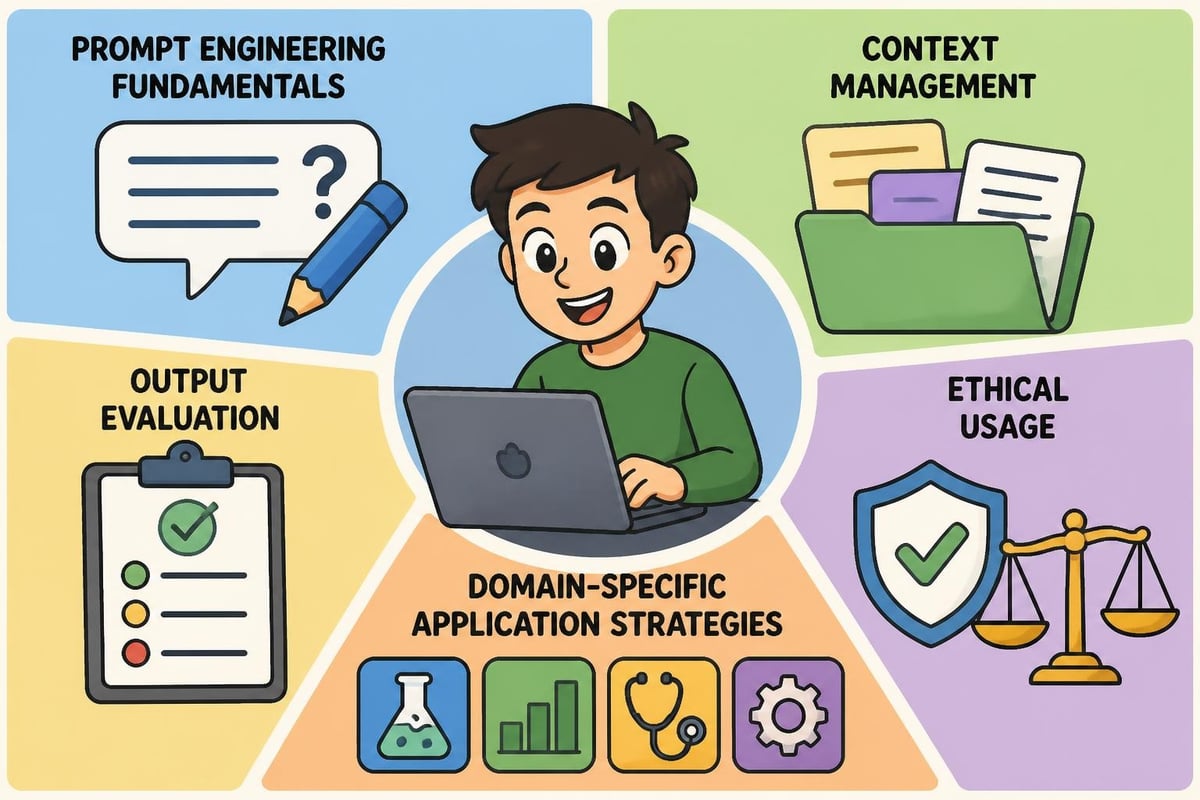
Professional chatgpt courses typically cover five foundational areas:
- Prompt engineering principles: Understanding how language models interpret instructions, controlling tone and format, managing context windows, and chain-of-thought reasoning
- Use-case development: Identifying appropriate applications, recognizing limitations, building workflows that combine ChatGPT with other tools
- Quality assurance: Evaluating outputs for accuracy, detecting hallucinations, implementing verification processes
- Ethical frameworks: Privacy considerations, bias awareness, transparency requirements, and responsible deployment
- Integration strategies: API usage, automation opportunities, enterprise security considerations
Programs that isolate these components into discrete modules often struggle. The best courses weave these elements together through realistic scenarios where learners must simultaneously consider technical capabilities, ethical implications, and business value.
Choosing Between Self-Paced and Structured Programs
The chatgpt courses market offers vastly different learning modalities, each suited to specific learner profiles and organizational needs.
Self-paced online courses provide flexibility and affordability. Platforms like MammothClub offer on-demand content that professionals can complete alongside existing responsibilities. These programs work well for self-motivated learners with clear objectives who need to upskill quickly without disrupting their schedules.
However, self-paced learning presents challenges. Without structured deadlines and peer interaction, completion rates often fall below 20%. Learners lack opportunities to discuss edge cases, share discoveries, or receive personalized feedback on their prompt engineering approaches.
Comparing Learning Formats
| Format | Time Commitment | Interaction Level | Typical Cost | Best For |
|---|---|---|---|---|
| Self-paced online | 10-40 hours | Low (forums only) | $50-$500 | Individual professionals, budget-conscious learners |
| Live bootcamps | 2-12 weeks | High (cohort-based) | $1,000-$5,000 | Career transitions, intensive skill development |
| Corporate programs | 3-6 months | Medium-High | $2,000-$10,000 per employee | Team alignment, standardized proficiency |
| University certificates | 6-12 months | High (academic rigor) | $3,000-$15,000 | Formal credentials, theoretical foundations |
Interactive bootcamps create urgency and community. Cohort-based programs compress learning into intensive periods, forcing rapid skill acquisition. The social pressure and scheduled sessions dramatically improve completion rates, while live instructors can address emerging questions about ChatGPT's latest capabilities.
Corporate training programs blend elements of both approaches. Organizations increasingly partner with platforms to deliver customized AI certification programs that balance flexibility with accountability, using dashboards to track team progress and identify skill gaps.
Technical Depth: From Prompts to Production
Entry-level chatgpt courses focus on prompt writing and basic applications. Professional programs must go significantly deeper to prepare learners for real-world implementation challenges.
Advanced prompt engineering involves sophisticated techniques that dramatically improve output quality. Learners study few-shot learning patterns, role-based prompting, structured output formatting, and prompt chaining strategies. Research from Stanford's NLP program demonstrates how understanding transformer architecture helps practitioners craft more effective prompts by aligning with the model's actual processing mechanisms.
The systematic survey of prompting techniques published in 2024 cataloged over 50 distinct approaches. Professional courses should cover at least 15-20 core patterns, providing learners with a robust toolkit for diverse scenarios.
API Integration and Automation
Organizations need employees who can move beyond the ChatGPT web interface to build automated workflows. Intermediate and advanced courses must cover:
- Authentication and API basics: Setting up developer accounts, managing API keys, understanding rate limits and token counting
- Request construction: Formatting JSON payloads, setting temperature and other parameters, managing conversation history
- Error handling: Dealing with timeouts, parsing error messages, implementing retry logic
- Cost optimization: Minimizing token usage, caching strategies, choosing appropriate models for different tasks
- Security practices: Protecting API credentials, sanitizing user inputs, implementing content filtering
These technical skills transform ChatGPT from a productivity tool into a platform for building custom applications. Courses that omit API integration leave learners unable to scale their ChatGPT usage beyond personal productivity hacks.
Industry-Specific Applications and Case Studies
Generic chatgpt courses produce generic results. The most valuable training programs incorporate domain-specific examples and workflows relevant to learners' actual work contexts.
Healthcare professionals need courses addressing HIPAA compliance, medical terminology accuracy, clinical decision support limitations, and patient communication templates. A marketing professional's needs differ entirely, focusing on brand voice consistency, content calendar automation, SEO optimization, and campaign ideation.
Research published in Nature emphasizes that ChatGPT's educational impact depends heavily on thoughtful integration within specific disciplinary contexts rather than generic application. This finding extends to professional training as well.

Real-World Implementation Examples
Quality courses include detailed case studies showing complete workflows:
- Customer service automation: Building a tiered support system where ChatGPT handles common inquiries, escalates complex issues, and maintains conversation context across multiple interactions
- Content production pipelines: Creating blog outlines, generating first drafts, producing social media variations, and maintaining brand consistency across outputs
- Research assistance: Summarizing academic papers, identifying knowledge gaps, generating literature review frameworks, and synthesizing findings across multiple sources
- Code generation and review: Writing boilerplate code, explaining complex functions, identifying potential bugs, and suggesting optimization opportunities
These scenarios should include not just the successful outcomes but also the iterations, failures, and refinements that occurred during development. Learners benefit most from understanding the messy reality of implementation rather than sanitized success stories.
Certification Value and Professional Recognition
The chatgpt courses market includes hundreds of certification programs with wildly varying credibility and market recognition. Understanding which credentials provide genuine professional value requires examining several factors.
Vendor-neutral certifications from established educational institutions or recognized training platforms generally carry more weight than vendor-specific credentials. A certificate from MIT's Deep Learning program or a comprehensive AI training platform demonstrates broader competency than a single-vendor certification.
However, OpenAI itself offers official learning resources and collections that provide authoritative guidance on ChatGPT capabilities. Programs that align with OpenAI's documented best practices gain credibility through this association.
Evaluating Certification Programs
| Evaluation Criteria | Quality Indicators | Warning Signs |
|---|---|---|
| Curriculum rigor | Hands-on projects, technical depth, current research | Theory-only content, outdated examples |
| Instructor credentials | Published researchers, industry practitioners | Generic "AI experts" without verifiable background |
| Assessment quality | Complex scenarios, portfolio projects | Multiple-choice only, memorization-based |
| Industry recognition | Employer acceptance, job posting mentions | No market presence, new/unproven program |
| Update frequency | Regular content refreshes, version tracking | Static content, no ChatGPT updates mentioned |
Employers increasingly value demonstrated competency over credentials alone. Courses that emphasize portfolio development and practical projects produce graduates who can show rather than just tell their capabilities. Including completed ChatGPT automation projects, documented workflow improvements, or case studies in professional portfolios often matters more than the certificate itself.
Designing Corporate Training Programs
Organizations implementing chatgpt courses face unique challenges around standardization, measurement, and ongoing skill development. Unlike individual learners pursuing personal goals, companies need cohesive teams with aligned competencies.
Needs assessment must precede curriculum selection. Different departments require different ChatGPT capabilities. Software developers need API integration skills, while marketing teams focus on content generation and brand voice management. HR departments prioritize candidate screening and employee communication applications.
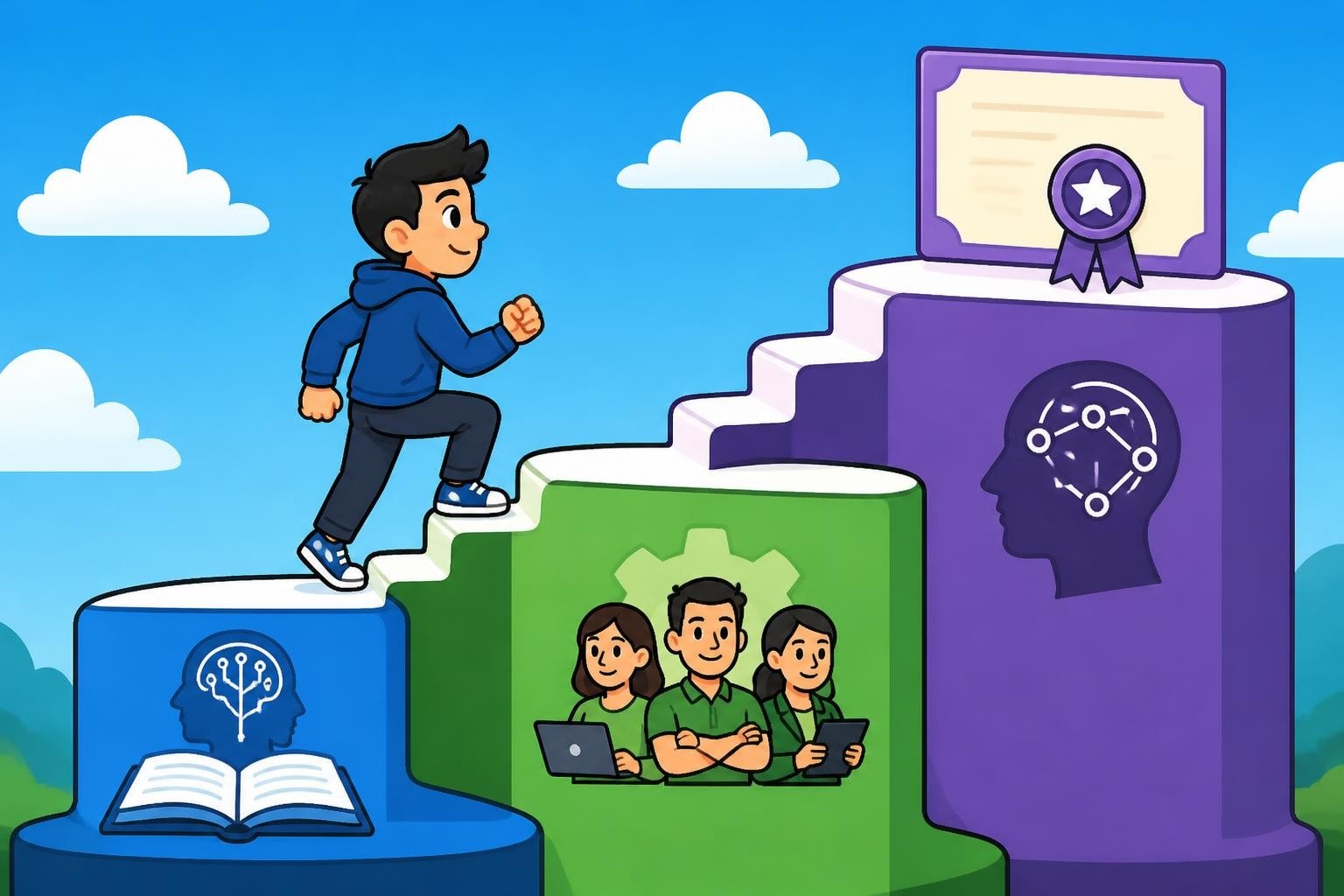
The most successful corporate programs include three phases:
- Foundation building: Universal training covering prompt basics, ethical guidelines, and company-specific usage policies
- Role-specific specialization: Targeted modules addressing department-specific applications and workflows
- Advanced application development: Select employees receive deeper technical training to become internal champions and resources
Measurement and Continuous Improvement
Organizations must track training effectiveness beyond completion rates. Meaningful metrics include:
- Time saved: Quantifying hours recovered through ChatGPT-assisted workflows
- Output quality: Measuring improvements in first-draft quality, error rates, or revision cycles
- Adoption rates: Tracking active usage patterns across teams post-training
- Innovation indicators: Counting new workflows, tools, or processes developed by trained employees
- Cost efficiency: Calculating ROI based on productivity gains versus training investment
Platforms with built-in analytics dashboards allow learning and development teams to identify which course modules correlate with actual workplace performance improvements. This data-driven approach enables continuous refinement of corporate training programs.
Addressing Ethical Considerations and Responsible Use
Comprehensive chatgpt courses must incorporate substantial ethics training beyond superficial warnings about plagiarism and misinformation. UNESCO's guidance on generative AI in education provides frameworks that extend naturally to professional training contexts.
Bias awareness forms a critical component. Learners need to understand how ChatGPT can perpetuate societal biases present in training data, recognize when outputs reflect problematic assumptions, and implement verification processes for sensitive applications. Courses should include exercises where learners actively identify bias in generated content and develop mitigation strategies.
Privacy and confidentiality training protects both organizations and individuals. Employees must understand that information entered into ChatGPT may be used for model training (depending on settings), recognize when company proprietary information should never be shared, and implement appropriate safeguards for sensitive data.
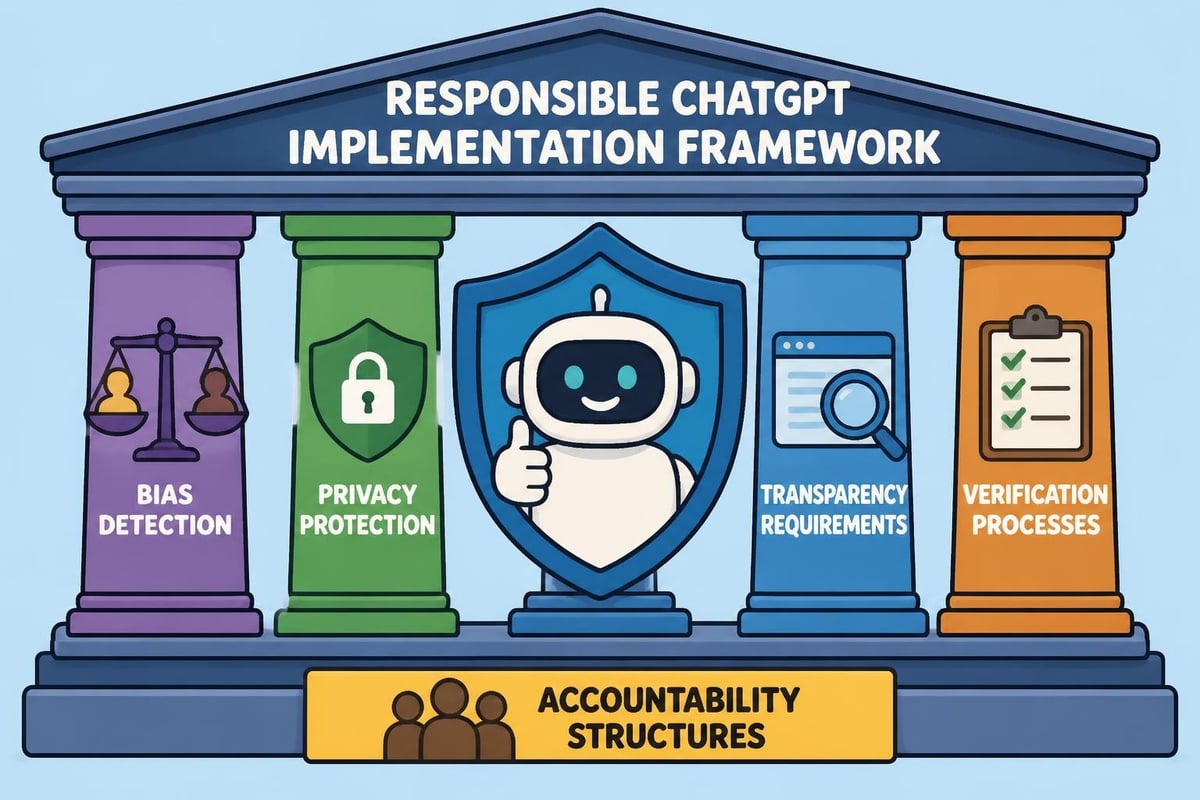
Research examining LLM performance on university assessments reveals both capabilities and concerning limitations. Professional courses must help learners develop realistic expectations about accuracy, understand domain-specific reliability variations, and implement appropriate verification workflows.
Integration with Broader AI Learning Pathways
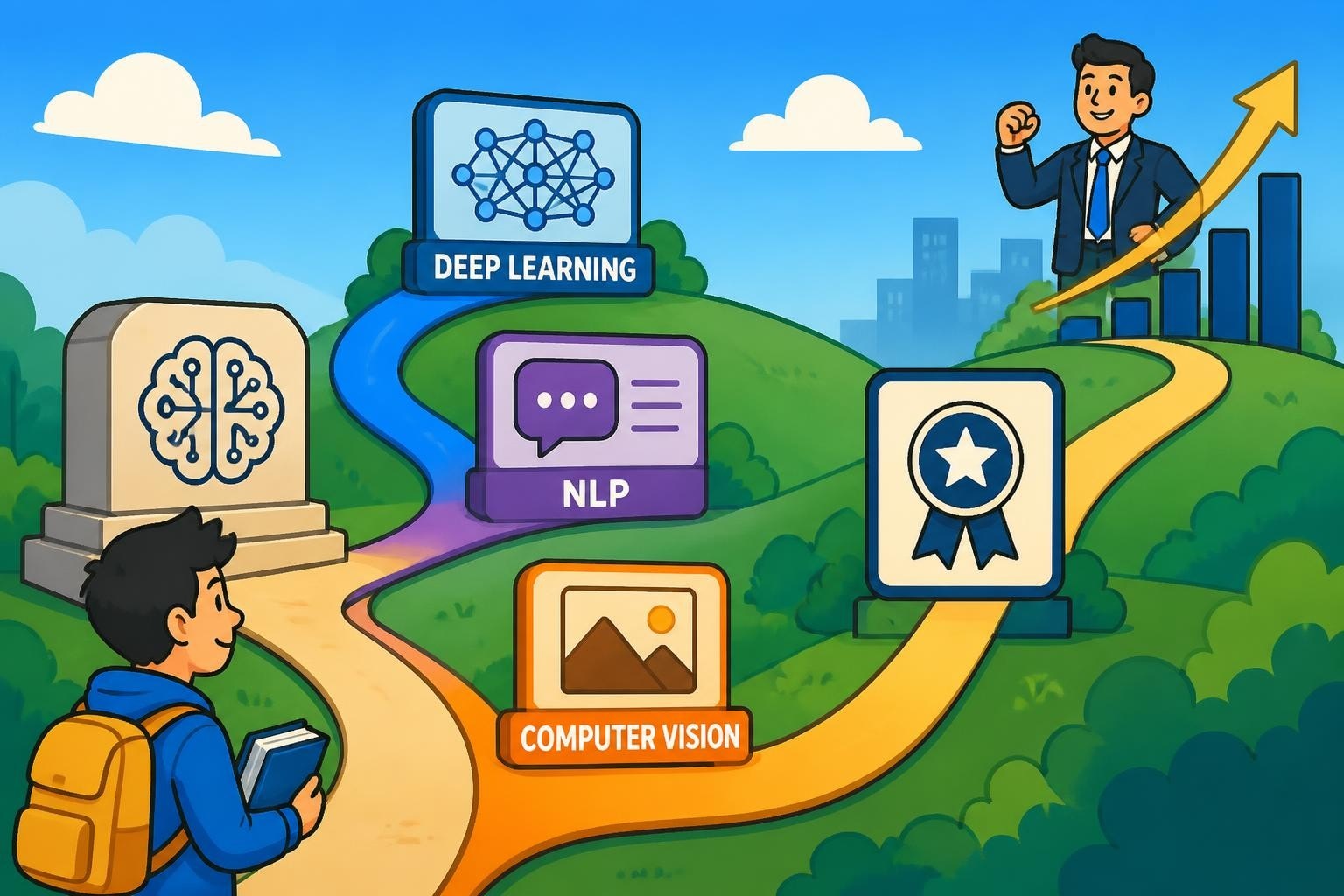
ChatGPT represents one component of a comprehensive AI skillset. The most effective courses position ChatGPT training within broader learning pathways that include machine learning fundamentals, data analysis, and specialized AI applications.
Professionals serious about AI careers benefit from understanding the foundational concepts covered in responsible AI courses before diving into specific tools. This grounding helps learners understand ChatGPT's capabilities and limitations within the broader AI landscape.
Similarly, organizations building AI competency should view chatgpt courses as entry points rather than destinations. After employees master prompt engineering and basic integration, specialized AI certifications develop capabilities in areas like model deployment, MLOps practices, and custom model development.
Complementary Skills and Sequential Learning
The optimal learning sequence typically follows this progression:
- Month 1-2: ChatGPT fundamentals and prompt engineering through focused courses
- Month 3-4: API integration and workflow automation, building practical projects
- Month 5-6: Broader AI concepts including machine learning fundamentals and model training basics
- Month 7-12: Specialized tracks based on role (e.g., AI in teaching, financial analysis, software development)
This staged approach prevents overwhelming learners while building toward genuine AI literacy rather than narrow tool proficiency. Employees who complete this progression can adapt to new AI tools quickly because they understand underlying principles rather than just specific interfaces.
The ACM's guidance on integrating generative AI into computing curricula emphasizes this principle: effective education balances hands-on tool usage with conceptual understanding that transcends any single technology.
Future-Proofing Skills in a Rapidly Evolving Field
ChatGPT capabilities evolve continuously through model updates, new features, and integration expansions. Courses created in early 2024 became partially obsolete within months as GPT-4's capabilities expanded and new tools emerged.
Adaptability training matters more than comprehensive coverage of current features. The best chatgpt courses teach learners how to experiment with new capabilities, interpret documentation, and adjust workflows as the technology evolves. This meta-skill ensures professionals remain effective even as specific techniques become outdated.
A global survey of ChatGPT's educational impact found that educators most successful at integrating the technology emphasized exploration and experimentation over rigid adherence to specific approaches. Professional training programs should adopt the same philosophy.
Organizations should budget for ongoing learning rather than one-time training events. Quarterly refresh sessions, access to updated course materials, and continuous learning platforms ensure teams stay current with ChatGPT's expanding capabilities. The investment in comprehensive AI learning platforms with regularly updated content often proves more cost-effective than repeatedly purchasing new standalone courses.
Selecting the right chatgpt courses requires balancing immediate skill needs with long-term career or organizational objectives, while ensuring training emphasizes critical thinking and adaptability over narrow tool mastery. Whether you're an individual professional seeking competitive advantages or an organization building AI capabilities across teams, MammothClub provides the comprehensive, continuously updated training infrastructure needed to thrive in the AI era. Our platform combines expert-designed courses with interactive learning tools and measurable outcomes tracking, helping thousands of professionals and hundreds of organizations transform AI potential into practical results.