Artificial intelligence has transformed from a specialized technical domain into an essential skill across industries. Whether you work in finance, healthcare, marketing, or technology, understanding AI fundamentals is no longer optional. The challenge for most professionals is knowing where to start. An ai learning path for beginners provides structure, eliminating the overwhelm of scattered resources and helping you build foundational knowledge systematically. This guide outlines a practical, results-driven approach to mastering AI concepts, tools, and applications in 2026, regardless of your technical background.
Understanding What AI Skills Actually Matter
Before diving into courses and tutorials, you need clarity on what AI competencies translate into professional value. The AI field encompasses multiple disciplines, and beginners often waste time on advanced topics before mastering basics.
Core Knowledge Areas Every Beginner Must Cover
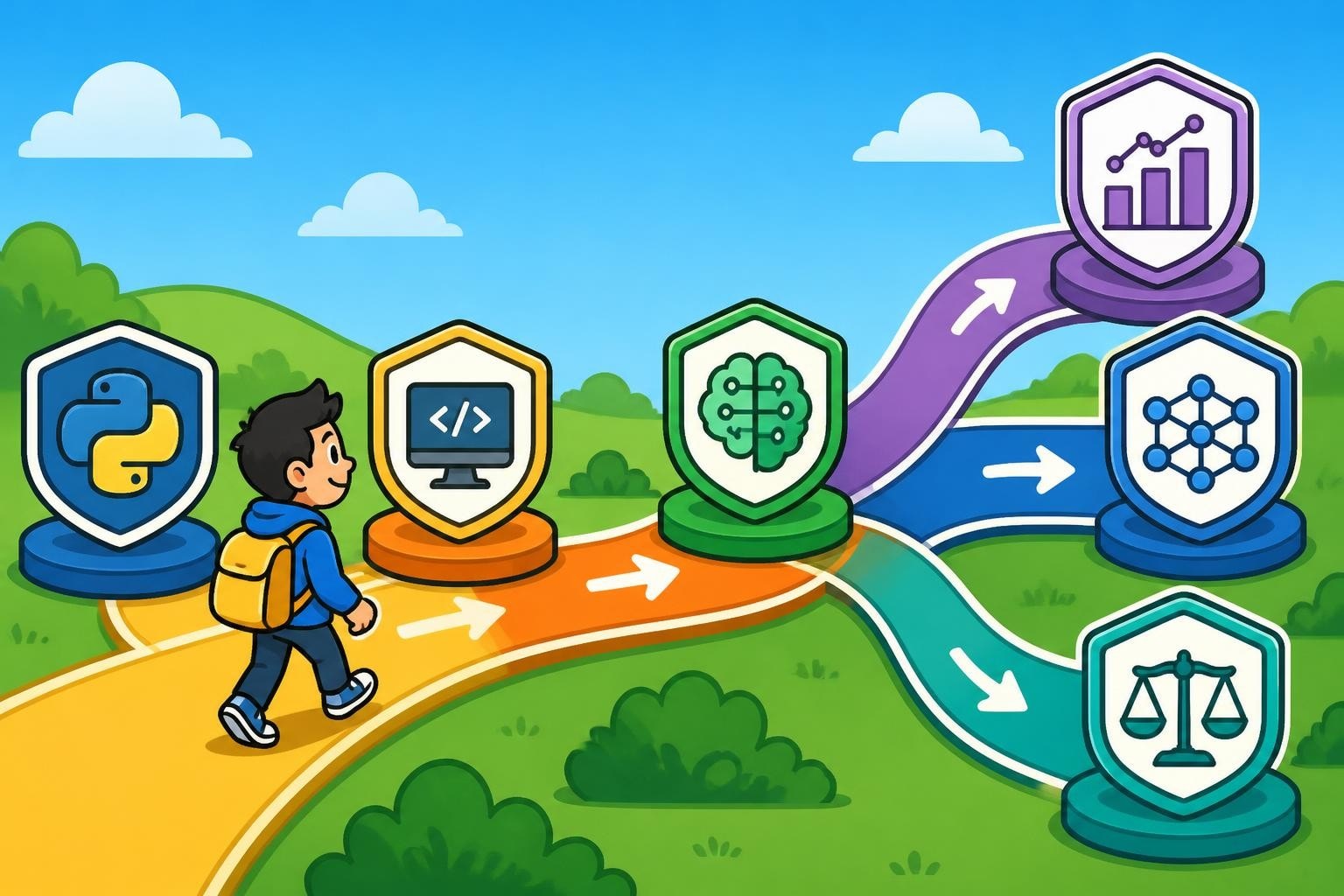
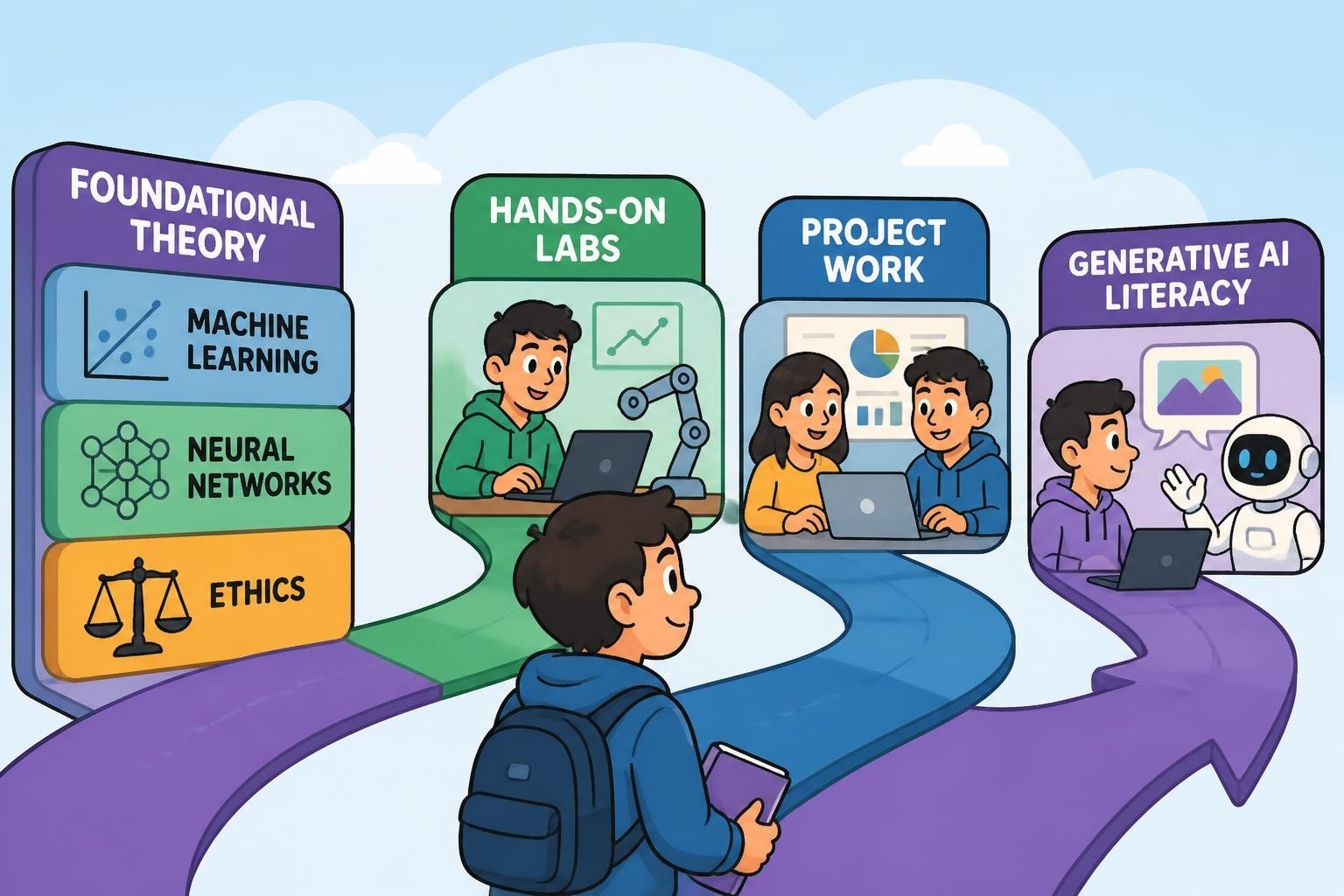
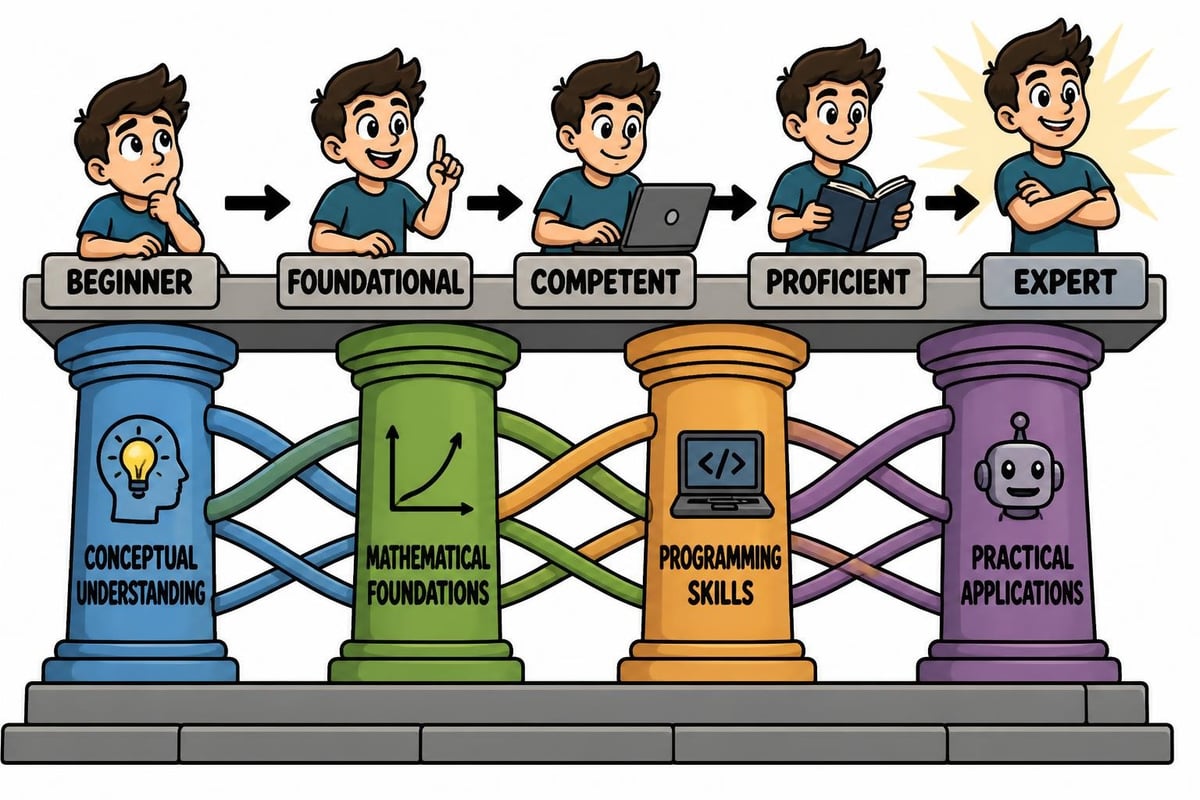
Your ai learning path for beginners should address four fundamental pillars: conceptual understanding, mathematical foundations, programming skills, and practical applications. Each pillar builds on the others, creating a comprehensive skill set.
Conceptual understanding includes knowing the difference between machine learning, deep learning, and traditional AI approaches. You should grasp supervised versus unsupervised learning, understand neural network basics, and recognize when AI solutions are appropriate versus when simpler approaches work better.
Mathematical foundations don't require a PhD, but you need comfort with linear algebra basics, probability and statistics fundamentals, and calculus concepts for optimization. Many beginners skip this step and struggle later when models don't perform as expected.
- Linear algebra: Vectors, matrices, and operations that power neural networks
- Probability: Understanding distributions, Bayes' theorem, and statistical inference
- Calculus: Gradients and optimization for training models
- Statistics: Hypothesis testing, confidence intervals, and experimental design
Programming proficiency centers on Python, the dominant language in AI development. You need familiarity with libraries like NumPy, Pandas, Scikit-learn, and TensorFlow or PyTorch for deep learning work.
Assessing Your Starting Point
Different backgrounds require different entry points. A software engineer transitioning to AI needs less programming instruction but more mathematical foundation. A business analyst needs conceptual frameworks first, then hands-on tools.
Complete a skills inventory before choosing courses. Rate yourself honestly on Python proficiency, statistical knowledge, and technical comfort level. This assessment determines whether you start with non-technical AI overview courses or jump directly into coding-focused material.
Building Your Foundation: First 30-60 Days
The initial phase of your ai learning path for beginners establishes core concepts and builds confidence. Focus on breadth over depth during this period, exposing yourself to various AI domains without getting lost in specialization.
Non-Technical Introduction (Weeks 1-2)
Start with conceptual courses that explain AI without requiring coding. The AI For Everyone course by Andrew Ng provides excellent business-focused context, explaining how organizations implement AI, what data scientists do, and how to evaluate AI project feasibility.
Complement this with Khan Academy's introductory machine learning videos, which use visual explanations perfect for absolute beginners. These resources answer fundamental questions like "What is machine learning?" and "How do neural networks work?" without overwhelming technical detail.
During this phase, focus on understanding:
- Real-world applications: How companies use AI for recommendations, fraud detection, automation
- AI capabilities and limitations: What AI can and cannot accomplish currently
- Data requirements: Why quality data matters more than complex algorithms
- Ethical considerations: Bias, privacy, and responsible AI deployment
Python and Programming Basics (Weeks 2-4)
Unless you already code proficiently in Python, dedicate significant time to programming fundamentals. AI work requires comfort with data structures, control flow, functions, and object-oriented concepts.
| Learning Resource | Time Investment | Best For |
|---|---|---|
| Python for Everybody | 3-4 weeks | Complete beginners with no coding experience |
| Codecademy Python Track | 2-3 weeks | Quick hands-on practice with immediate feedback |
| DataCamp Introduction to Python | 1-2 weeks | Data-focused Python for AI applications |
Practice daily, even if only for 30 minutes. Consistency matters more than marathon sessions. Write small programs, manipulate data files, and work through coding challenges to build muscle memory.
Mathematics Refresher (Weeks 3-6)
Mathematics causes the most anxiety for beginners, but you don't need graduate-level expertise. Focus on applied math relevant to machine learning algorithms. Microsoft Learn's AI learning hub includes practical mathematical modules integrated with AI applications, showing how linear algebra powers neural networks in real implementations.
The ArXiv Introduction to Machine Learning paper provides comprehensive mathematical foundations if you prefer a textbook-style approach. Work through sections systematically, pausing to implement examples in Python rather than just reading theory.
Prioritize understanding over memorization. You need to grasp why matrix multiplication enables efficient neural network computation, not memorize every formula. When concepts click conceptually, implementation becomes much easier.
Intermediate Development: Months 2-4
After establishing foundations, your ai learning path for beginners shifts toward hands-on machine learning and practical projects. This phase transforms theoretical knowledge into applicable skills.
Machine Learning Fundamentals
Google's Machine Learning Crash Course offers an outstanding next step, combining video lectures, interactive visualizations, and coding exercises. The recently refreshed content includes generative AI material, keeping you current with 2026's AI landscape.
Work through supervised learning algorithms systematically:
- Linear regression: Predicting continuous values from input features
- Logistic regression: Binary classification problems
- Decision trees and random forests: Interpretable models for complex decisions
- Support Vector Machines: Effective for high-dimensional classification
- Neural networks basics: Foundation for deep learning progression
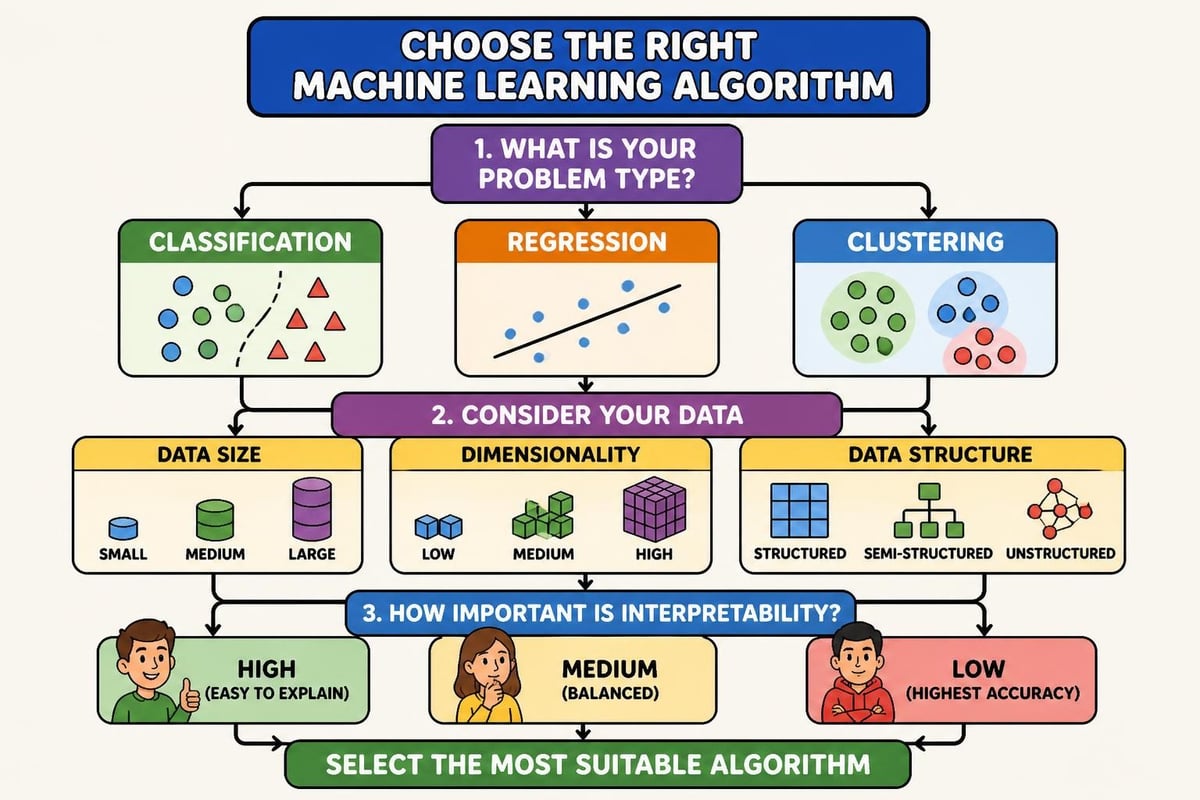
Each algorithm solves specific problem types. Understanding when to apply which technique separates competent practitioners from those who blindly apply fashionable models.
Hands-On Projects That Build Real Skills
Theory without application creates false confidence. Dedicate at least 40% of your learning time to building actual projects. Start simple and increase complexity gradually.
Beginner projects that reinforce fundamentals:
- Housing price prediction: Classic regression problem using publicly available real estate data
- Email spam classification: Binary classification introducing natural language processing concepts
- Customer segmentation: Unsupervised learning through clustering algorithms
- Image classification: Using pre-trained models before building from scratch
Document each project thoroughly. Writing explanations forces you to articulate what you've learned and creates portfolio pieces demonstrating capabilities to employers. Many professionals exploring AI-related courses underestimate how much project work differentiates candidates in competitive job markets.
Deep Learning Introduction
Once comfortable with traditional machine learning, progress to deep learning frameworks. The fast.ai Practical Deep Learning for Coders course takes a unique top-down approach, helping you build working models immediately while gradually explaining underlying principles.
This code-first methodology suits many beginners better than theory-heavy academic courses. You see results quickly, maintaining motivation through the steeper learning curve deep learning presents.
Alternatively, Stanford's CS231n provides rigorous academic depth if you prefer bottom-up understanding. The lecture notes and assignments remain valuable resources even for self-directed learners outside university settings.
Advanced Skill Development: Months 4-6
By month four, your ai learning path for beginners transitions toward specialization and advanced applications. You've built solid foundations and can now pursue specific interests aligned with career goals.
Choosing Your Specialization Focus
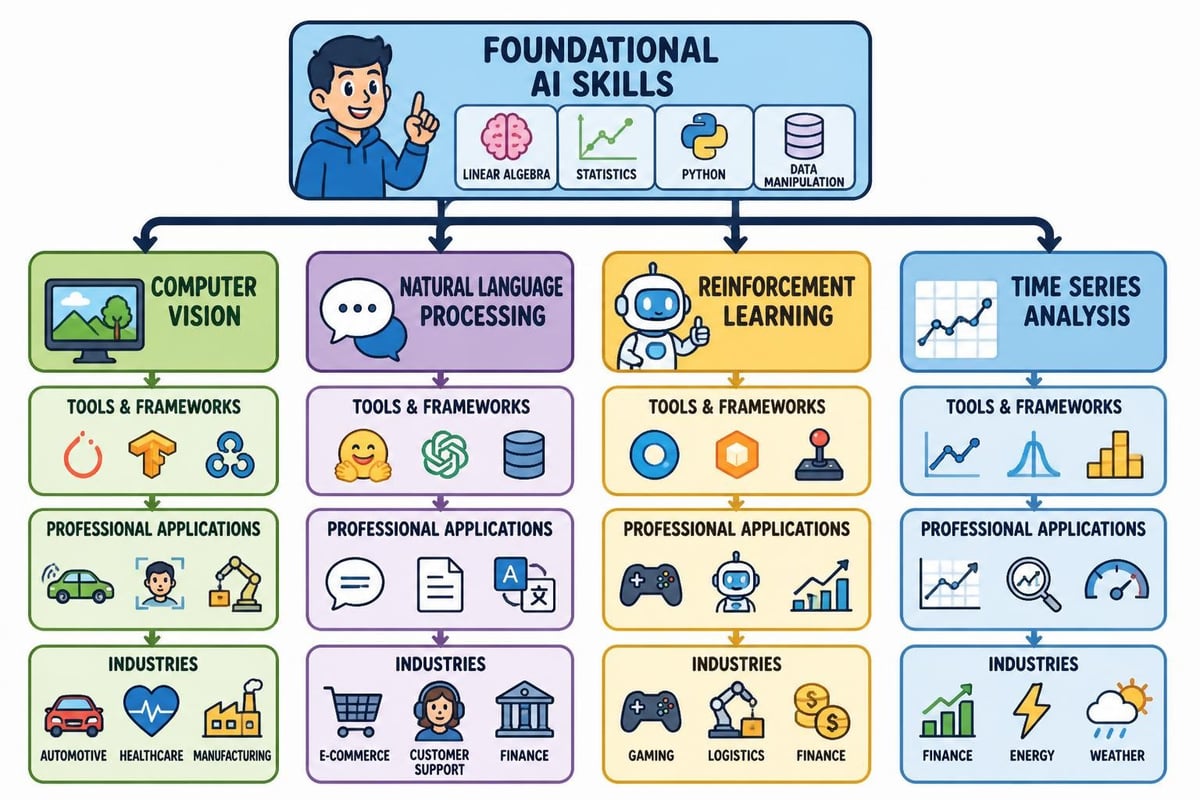
AI encompasses numerous subspecialties, each requiring targeted skill development. Evaluate which domain aligns with your professional objectives and industry focus.
| Specialization | Key Skills | Industry Applications |
|---|---|---|
| Computer Vision | CNNs, image processing, object detection | Healthcare imaging, autonomous vehicles, security |
| Natural Language Processing | Transformers, text processing, embeddings | Chatbots, content analysis, translation |
| Reinforcement Learning | Q-learning, policy gradients, simulation | Robotics, game AI, optimization problems |
| Time Series Forecasting | LSTM, ARIMA, seasonal decomposition | Finance, supply chain, demand prediction |
Professionals in finance might explore specialized AI for finance courses focusing on algorithmic trading, risk modeling, and fraud detection applications. Healthcare professionals benefit from AI in drug discovery courses covering molecular prediction and clinical trial optimization.
Industry-Recognized Certifications
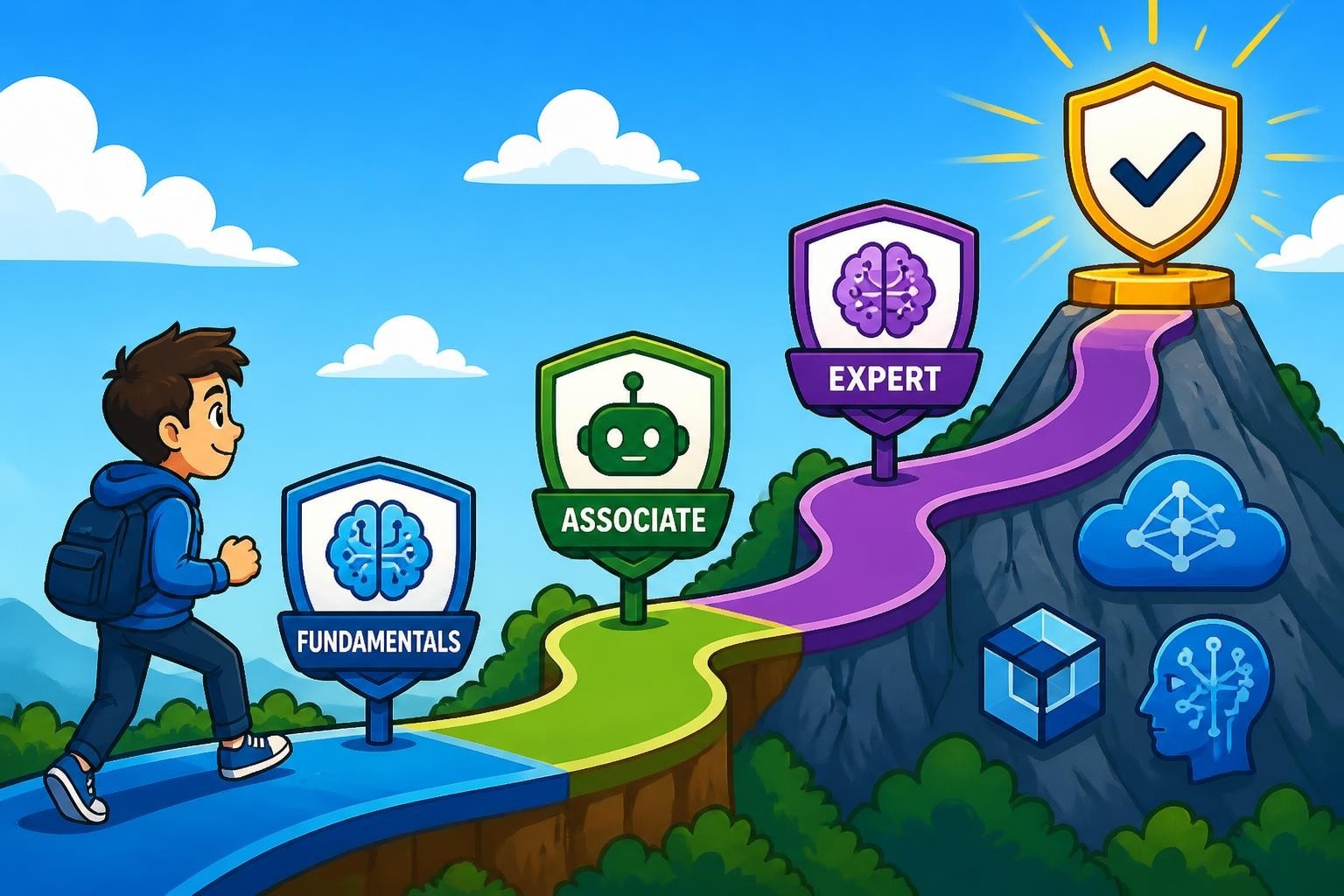
Certifications validate skills to employers and provide structured learning paths beyond self-study. Consider Microsoft Azure AI certifications if you work in enterprise environments using Microsoft technologies, or IBM AI certifications for IBM cloud platform expertise.
NVIDIA's certification programs, detailed in our NVIDIA AI certification guide, suit professionals working with GPU-accelerated computing and deep learning infrastructure. Understanding GPU requirements for AI training becomes crucial as you scale beyond tutorial datasets.
Advanced Learning Resources
University-level courses provide theoretical depth missing from many commercial offerings. MIT's OpenCourseWare hands-on deep learning materials demonstrate academic rigor combined with practical implementation, bridging research and application.
Reading research papers becomes increasingly important at advanced levels. Start with survey papers reviewing entire domains before tackling cutting-edge research. Services like ArXiv Sanity Preserver help filter the overwhelming volume of AI publications released daily.
Practical Implementation Strategies
Knowledge without execution delivers no value. Your ai learning path for beginners must include concrete implementation strategies ensuring consistent progress despite competing demands.
Time Management for Working Professionals
Most learners balance AI education with full-time employment. Sustainable progress requires realistic scheduling rather than unsustainable sprints followed by burnout.
Daily consistency beats weekend marathons. Commit to 60-90 minutes daily rather than attempting eight-hour Saturday sessions. Morning study before work distractions accumulate often proves most effective.
Use commute time for video lectures, dedicate lunch breaks to reading, and reserve evenings for hands-on coding practice. Track your time honestly using apps like Toggl to identify where hours actually go versus where you intend them to go.
Building an Effective Learning Environment
Setup matters more than most beginners recognize. Create dedicated workspace separating learning from entertainment. Use a different user profile on your computer for study sessions, eliminating social media and entertainment distractions.
Essential tools and platforms:
- Development environment: Jupyter Notebooks or Google Colab for interactive coding
- Version control: GitHub for project tracking and portfolio building
- Community access: Discord servers, Reddit communities, local meetups
- Cloud computing: AWS, Azure, or GCP free tiers for resource-intensive experiments
Comprehensive platforms like MammothClub's course library consolidate resources, eliminating the friction of scattered bookmarks across dozens of websites. Centralized learning dashboards track progress, maintain momentum, and surface relevant next steps as you advance.
Overcoming Common Learning Obstacles
Every AI beginner encounters predictable challenges. Anticipating these obstacles helps you persist when motivation wanes.
Mathematical anxiety paralyzes many learners. Remember that AI practitioners apply mathematical tools rather than prove theorems. You need conceptual understanding sufficient for implementation, not pure mathematics mastery. When stuck, seek applied explanations showing how concepts enable real applications.
Imposter syndrome intensifies in AI because the field evolves rapidly, making everyone feel perpetually behind. Recognize that senior practitioners also continuously learn. Focus on your progress relative to your starting point, not compared to researchers publishing papers.
Tutorial purgatory traps learners endlessly consuming courses without building original projects. Force yourself to implement concepts independently after each module. Struggle through debugging, Google frustrating errors, and solve problems without tutorial hand-holding. This struggle builds genuine competency.
Measuring Progress and Skill Validation
Your ai learning path for beginners requires measurable milestones confirming advancement. Subjective feelings of progress often mislead, creating either false confidence or unwarranted discouragement.
Skills Assessment Framework
Evaluate capabilities across three dimensions: theoretical knowledge, practical implementation, and problem-solving ability. Strength in all three dimensions indicates genuine proficiency.
Theoretical knowledge assessment includes explaining concepts to non-technical audiences, answering technical interview questions, and identifying appropriate algorithms for novel problems. If you can't explain regularization, overfitting, or bias-variance tradeoff clearly, you need deeper conceptual work.
Practical implementation demonstrates through working code repositories, completed projects solving real problems, and contributions to open-source AI projects. Your GitHub profile should showcase progressively sophisticated work documenting your learning journey.
Problem-solving ability emerges through Kaggle competitions, hackathons, and freelance projects. Can you take ambiguous business problems, frame them as machine learning tasks, implement solutions, and communicate results effectively?
Portfolio Development
Build a public portfolio demonstrating capabilities to potential employers or clients. Include 4-6 substantial projects showing range across different problem types and techniques.
For each project, document:
- Problem definition: Business context and success metrics
- Approach: Why you chose specific algorithms and techniques
- Implementation details: Code organization and key decisions
- Results: Quantitative performance and business impact
- Lessons learned: What worked, what didn't, what you'd change
Strong portfolios tell a story of progression. Early projects might be simple while later work tackles complex problems with sophisticated approaches. This narrative demonstrates growth better than claiming expertise without evidence.
Continuing Education After Initial Pathway
Completing a foundational ai learning path for beginners represents the start of your AI journey, not the conclusion. The field evolves continuously, requiring ongoing learning to maintain relevance.
Subscribe to AI newsletters like Import AI and The Batch to track developments without drowning in noise. Follow practitioners building real applications rather than just theorists publishing papers. Attend local AI meetups and virtual conferences to connect with community members facing similar challenges.
According to the IEEE-USA workforce alignment report on AI education pipelines, continuous skill updating has become essential as AI capabilities advance rapidly. Professionals who establish learning habits during their initial pathway maintain competitiveness more effectively than those treating education as a one-time event.
Explore comprehensive AI course collections regularly to identify emerging skills worth developing. As generative AI, edge computing, and quantum machine learning mature, new specializations will create opportunities for early adopters who commit to continuous learning.
Creating Your Personal Learning Roadmap
Generic advice helps only marginally. Your optimal ai learning path for beginners depends on your background, goals, industry, and available time. Building a personalized roadmap increases completion likelihood dramatically.
Conducting a Self-Assessment
Start by honestly evaluating your current state across multiple dimensions. Rate yourself on a 1-5 scale for:
- Python programming proficiency
- Statistical and mathematical comfort
- Machine learning conceptual knowledge
- Deep learning frameworks familiarity
- Domain-specific AI applications understanding
- Available weekly study hours
- Career timeline urgency
This assessment reveals where to focus initial effort. Someone rating high in programming but low in mathematics needs different resources than a business professional strong in domain knowledge but lacking technical skills.
Setting SMART Learning Objectives
Vague goals like "learn AI" guarantee failure. Specific, measurable, achievable, relevant, and time-bound objectives create accountability and progress markers.
Poor objective: "Get better at machine learning"
SMART objective: "Complete three supervised learning projects (regression, binary classification, multi-class classification) using Scikit-learn by March 15, 2026, achieving >85% accuracy on test sets"
Document objectives explicitly. Review weekly, adjusting timelines based on actual progress rather than initial optimistic estimates.
Resource Allocation Strategy
You'll encounter thousands of potential learning resources. Attempting all of them ensures completing none. Apply the 80/20 principle, identifying the 20% of resources delivering 80% of value.
Prioritize resources that:
- Match your learning style (video, text, interactive coding)
- Align with your specific career objectives
- Include hands-on practice, not just passive consumption
- Come from credible sources with updated 2026 content
- Integrate multiple concepts rather than teaching in isolation
Platforms like MammothClub curate pathways eliminating decision paralysis. Rather than researching hundreds of courses, follow structured progressions designed by AI education specialists who understand optimal sequencing.
Building competency in artificial intelligence requires structured progression from foundations through specialization, combining theoretical knowledge with extensive hands-on practice. The ai learning path for beginners outlined here provides a proven framework, but success ultimately depends on consistent execution and willingness to struggle through challenging concepts. Whether you're advancing your career, preparing for a transition into AI roles, or ensuring your organization stays competitive, systematic skill development delivers measurable results. MammothClub accelerates this journey with 3,000+ curated courses, interactive learning tools, and AI-powered dashboards that track your progress across the complete pathway from beginner fundamentals to advanced specializations, helping you build job-ready AI skills faster and more effectively than scattered self-study approaches.