The Azure AI Fundamentals certification is Microsoft's entry-level credential that confirms you understand core artificial intelligence concepts and how Azure services apply them. It requires no coding background, and it is designed for professionals and career switchers who need a recognized first AI credential. The current exam is AI-901, which Microsoft Learn lists as "Microsoft Azure AI Fundamentals", and it replaces the older AI-900 exam.
What Is the Azure AI Fundamentals Certification?
The Azure AI Fundamentals certification is a foundational Microsoft credential that proves you can describe common AI workloads and match them to the right Azure services. It sits at the base of Microsoft's certification structure, below the associate and expert tiers, and it assumes no prior cloud or data science experience.
The credential tests conceptual literacy rather than hands-on engineering. A candidate who passes should be able to explain what machine learning is, distinguish computer vision from natural language processing, describe what generative AI does, and recognize responsible AI principles. Candidates are not expected to build or deploy models.
That scope makes it useful for several audiences:
- Career switchers who want a verifiable signal of AI knowledge on a resume
- Business analysts and project managers who work alongside data and AI teams
- Sales and pre-sales staff who discuss Azure AI services with clients
- Aspiring cloud or AI engineers who want a low-risk first step before role-based exams
Is AI-900 Still Available, and What Replaced It?
The AI-900 exam is no longer available: it retired on June 30, 2026, at 11:59 p.m. Central Standard Time. Its successor, AI-901, now leads to the same Azure AI Fundamentals certification title.
This matters because many study resources, blog posts and video courses still reference AI-900. Content built for the retired exam is not worthless, since the underlying concepts overlap heavily, but you should verify it against the current AI-901 skills outline before relying on it. Practice questions that mention outdated services or omit recent generative AI topics can leave gaps.
A practical rule: check the date of any study material, and confirm the exam code on the Microsoft certification page before you schedule.
What Does the Exam Cover?
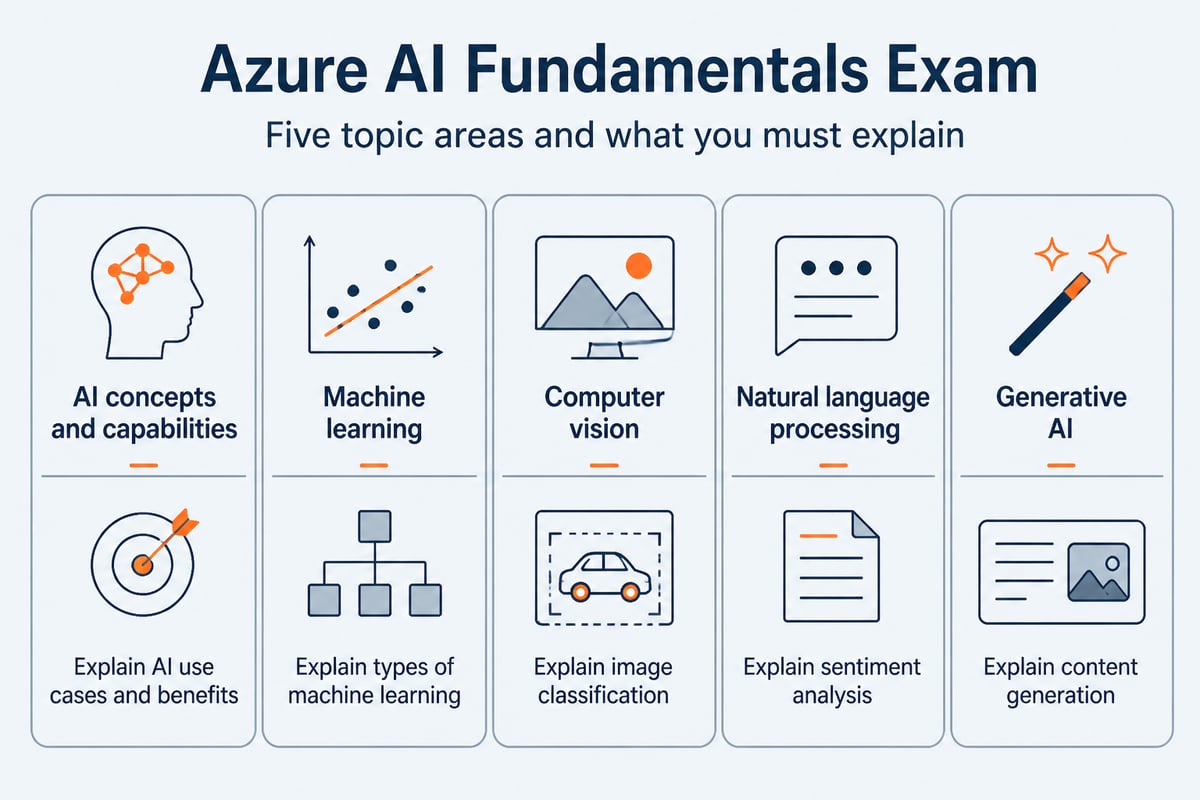
The AI-901 exam covers AI concepts and capabilities, machine learning, computer vision, natural language processing, and generative AI. These five areas mirror the structure Microsoft used for its predecessor, though the emphasis has shifted toward generative AI.
AI Concepts and Capabilities
This domain covers what AI workloads look like in practice: prediction, anomaly detection, conversational AI and content generation. It also includes responsible AI, such as fairness, reliability, privacy, transparency and accountability. Expect scenario questions that describe a business need and ask which type of AI fits.
Machine Learning
You need to understand the difference between supervised learning, unsupervised learning and reinforcement learning, along with core terms such as features, labels, training data and validation. Regression predicts a number, classification predicts a category, and clustering groups similar items without labels. Azure Machine Learning appears here as the platform for building and managing models.
Computer Vision
This area covers image classification, object detection, optical character recognition and face-related analysis. The questions typically present a use case, such as reading text from scanned invoices, and ask you to identify the matching capability.
Natural Language Processing
Topics include sentiment analysis, key phrase extraction, entity recognition, translation, speech-to-text and text-to-speech, and conversational language understanding. As with computer vision, the skill being tested is matching a requirement to the correct service or technique.
Generative AI
Generative AI is the area that has grown most. Generative AI is a core domain of the current exam, and it was also one of the five skill areas on the retired AI-900 exam. Expect questions on large language models, copilots, prompts, grounding, and the responsible use of generated content.
Is the AI-900 Exam Difficult?
The exam is widely considered easy to moderate, and it is among the most approachable certifications Microsoft offers. Difficulty depends on your background, but because the questions test recognition and concept matching rather than configuration or code, most motivated beginners can prepare in a few weeks.
Microsoft's AI-900 study guide stated that a score of 700 or greater was required to pass that exam. Confirm the passing score for AI-901 on the official exam page, since Microsoft publishes it there.
The most common reasons candidates struggle are not technical:
- Confusing similar services. Several Azure AI services sound alike, and questions hinge on choosing the best fit.
- Studying with outdated material. Content written for the retired exam may miss generative AI details.
- Memorizing instead of understanding. Scenario wording changes, so memorized answers fail.
- Skipping responsible AI. It looks like a soft topic but appears in multiple questions.
How to Get a Microsoft Azure Certification
You earn a Microsoft Azure certification by passing the required exam through Microsoft's certification system, and for Azure AI Fundamentals that means a single exam. The process is straightforward:
- Sign in to Microsoft Learn with a Microsoft account and open the certification page.
- Review the current skills outline for the exam.
- Work through study material and practice questions.
- Schedule the exam through Microsoft's exam delivery partner, either at a test center or online.
- Pass the exam to receive the credential, which appears on your Microsoft Learn profile.
Fees vary by country and region, so check the exam page for the price that applies to you rather than relying on a figure from a third-party site.
Is AZ-104 for Beginners?
AZ-104, the Azure Administrator exam, is not a beginner exam. It is an associate-level credential that expects hands-on experience with virtual machines, networking, storage and identity. If you are new to cloud and AI, start with a fundamentals certification and move to role-based exams once you have some practical exposure.
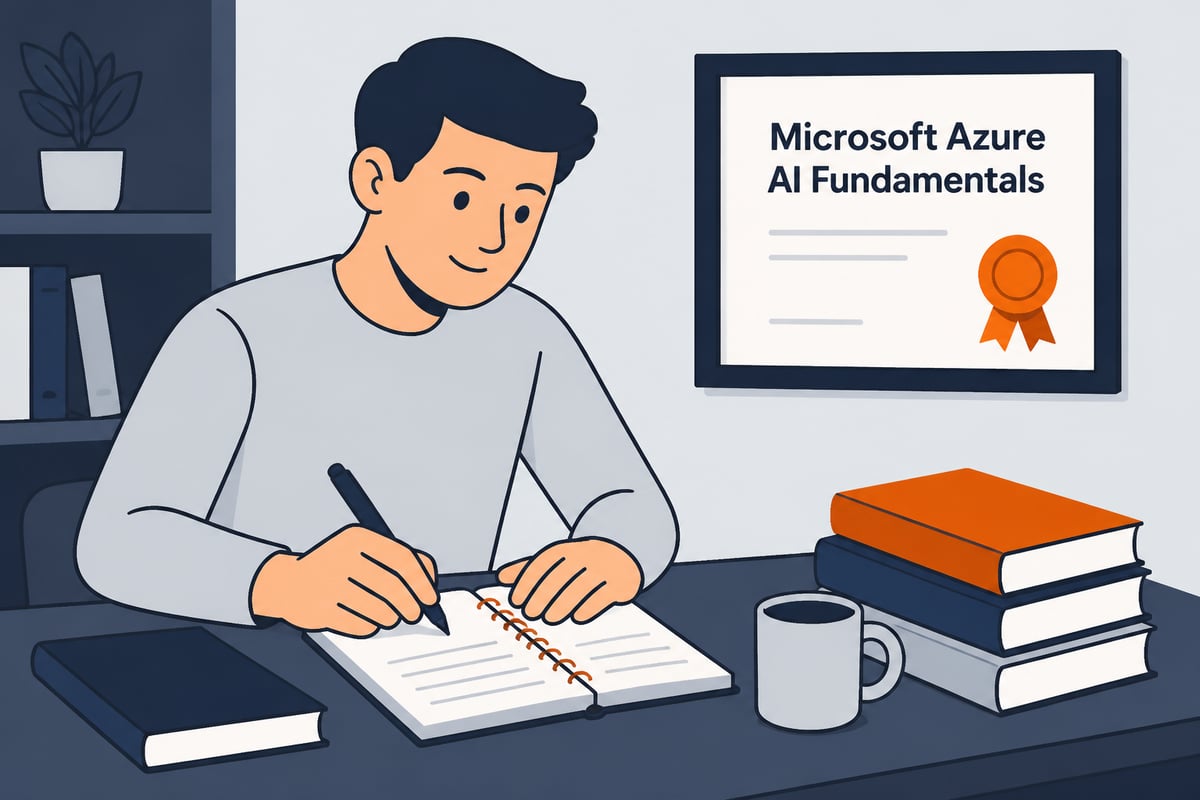
How to Prepare for the Certification
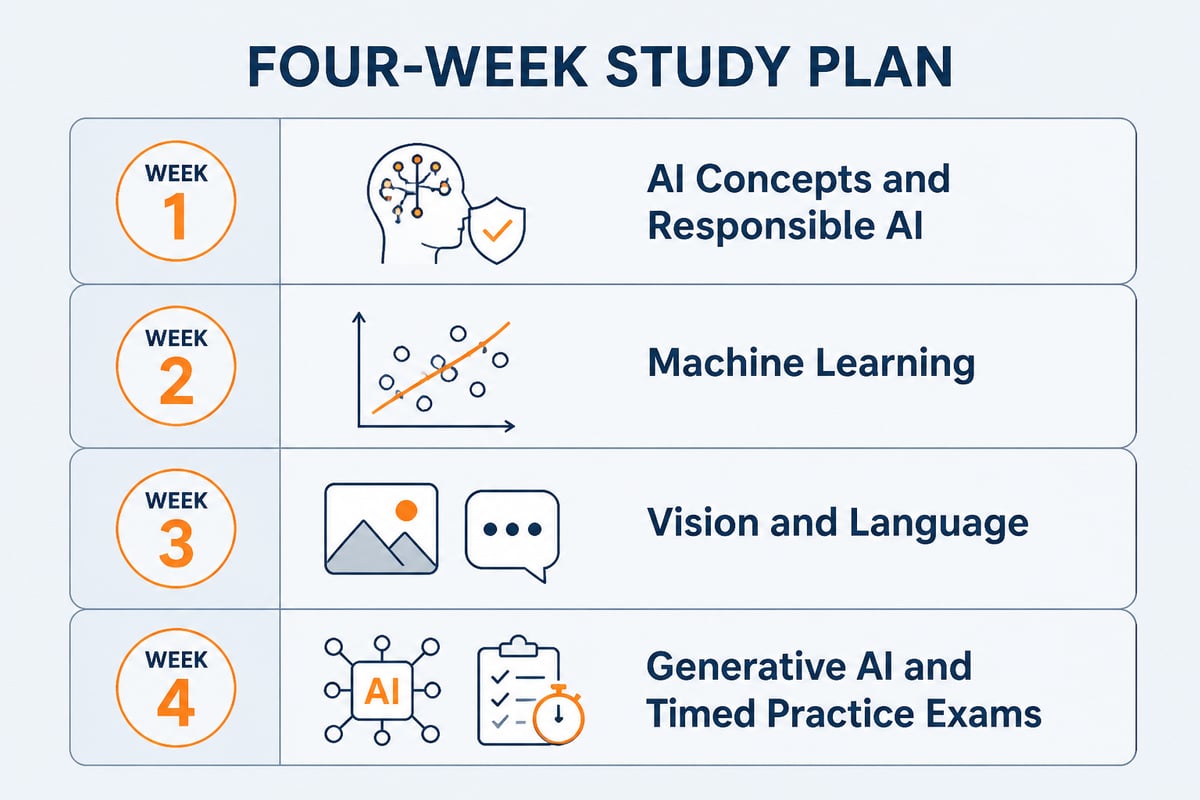
Effective preparation combines the official skills outline, structured study and timed practice. A realistic plan for a beginner runs two to four weeks at a few hours per week.
- Download the skills outline first. It tells you exactly what is measured and in what proportions.
- Study each domain in order. Finish AI concepts and machine learning before moving to vision, language and generative AI.
- Use Microsoft's free tools. Microsoft's AI-900 study guide links to a free practice assessment and an exam sandbox, which let you see the question formats before test day.
- Take timed practice exams. Aim to explain every wrong answer, not just record it.
- Review weak domains and retake the practice test.
For learners who prefer a single structured source, Mammoth Club Unlimited Membership covers certification paths, practice exams and labs under one subscription, and its Microsoft Azure AI certification course with 10 practice exams is built around this credential. MammothClub's platform includes practice exam questions, and its courses and assessments are updated as tools change, which helps when exam content shifts. Anyone seeking only free material would be better served by Microsoft Learn's own resources.
If you want broader context before committing, this overview of AI certifications available online compares the main options.
Why the Certification Matters for Your Career
The credential matters because it gives a recognized, vendor-backed signal that you understand AI fundamentals, which is hard to show through experience alone when you are changing fields. It also gives you shared vocabulary for conversations with technical teams.
Concrete benefits include:
- A resume and LinkedIn credential that hiring managers can verify through Microsoft
- A foundation for role-based paths, such as Azure data and AI engineering tracks
- Credibility in AI-adjacent roles, including product, project and business analysis roles
- A structured way to learn generative AI, which now sits inside the exam rather than outside it
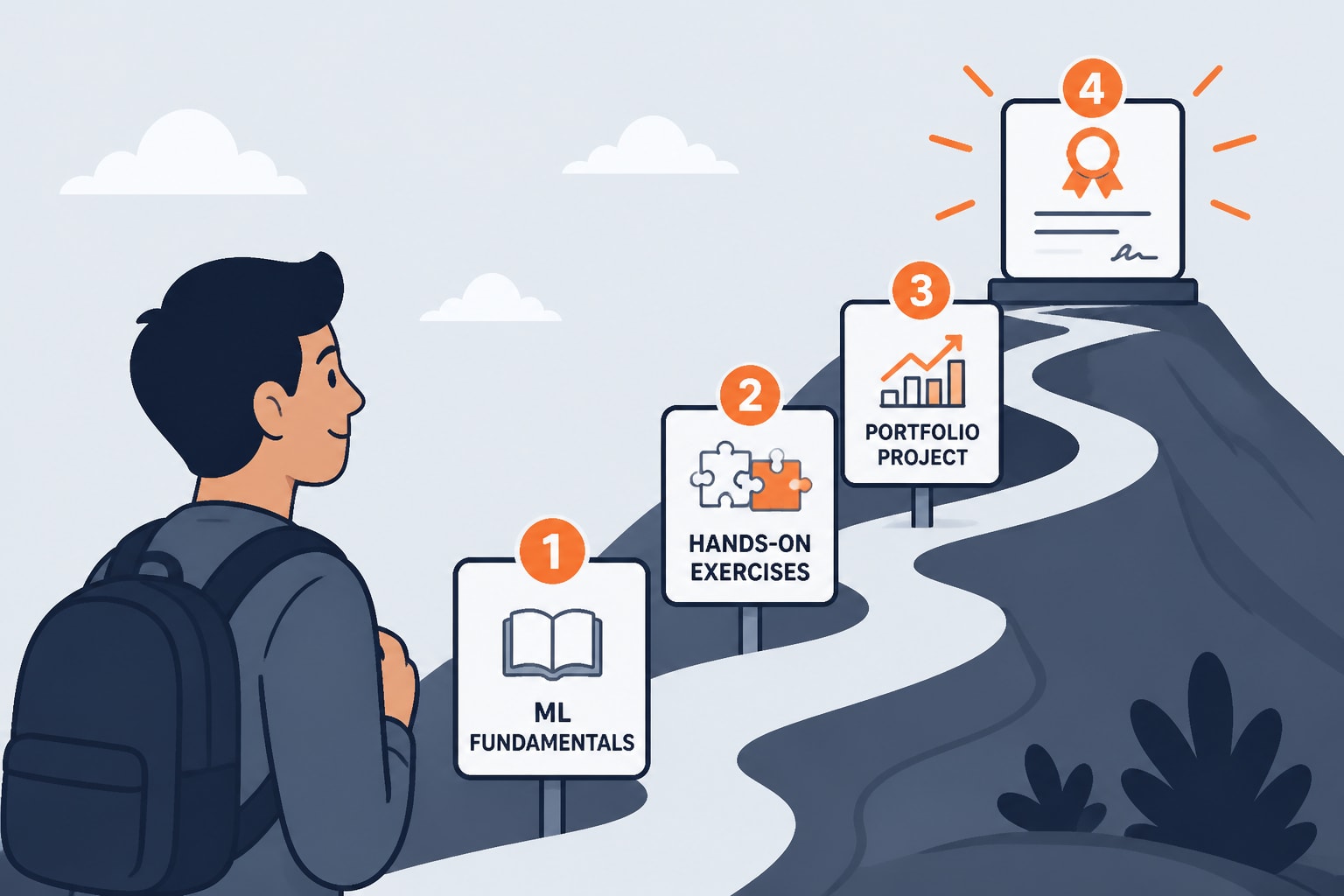
It is worth being realistic about its limits. A fundamentals certification shows knowledge, not engineering ability, so it works best as the first step in a sequence rather than a standalone qualification for technical roles. Pairing it with portfolio projects strengthens the signal considerably, and learners who want hands-on grounding can look at the essential machine learning foundations video bundle or the Intro to AI foundation specialist course.
Which Microsoft AI Certification Is Best?
The best Microsoft AI certification depends on your role and experience, and for beginners the Azure AI Fundamentals certification is the right starting point. Role-based credentials come later and suit people with hands-on skills. The deciding factor is what you do day to day. If your work involves discussing, scoping or managing AI projects, the fundamentals credential already covers what you need, and an associate exam would add cost without adding relevance. If you plan to build, deploy or maintain AI solutions on Azure, fundamentals is still the cheapest way to confirm the vocabulary before you invest months in a technical exam.
| Credential level | Best for | Prerequisite experience |
|---|---|---|
| Fundamentals (Azure AI Fundamentals) | Beginners, career switchers, business roles | None |
| Associate-level role-based exams | Engineers and developers building AI solutions | Hands-on Azure and programming experience |
| Expert-level credentials | Senior practitioners and architects | Extensive practical experience |
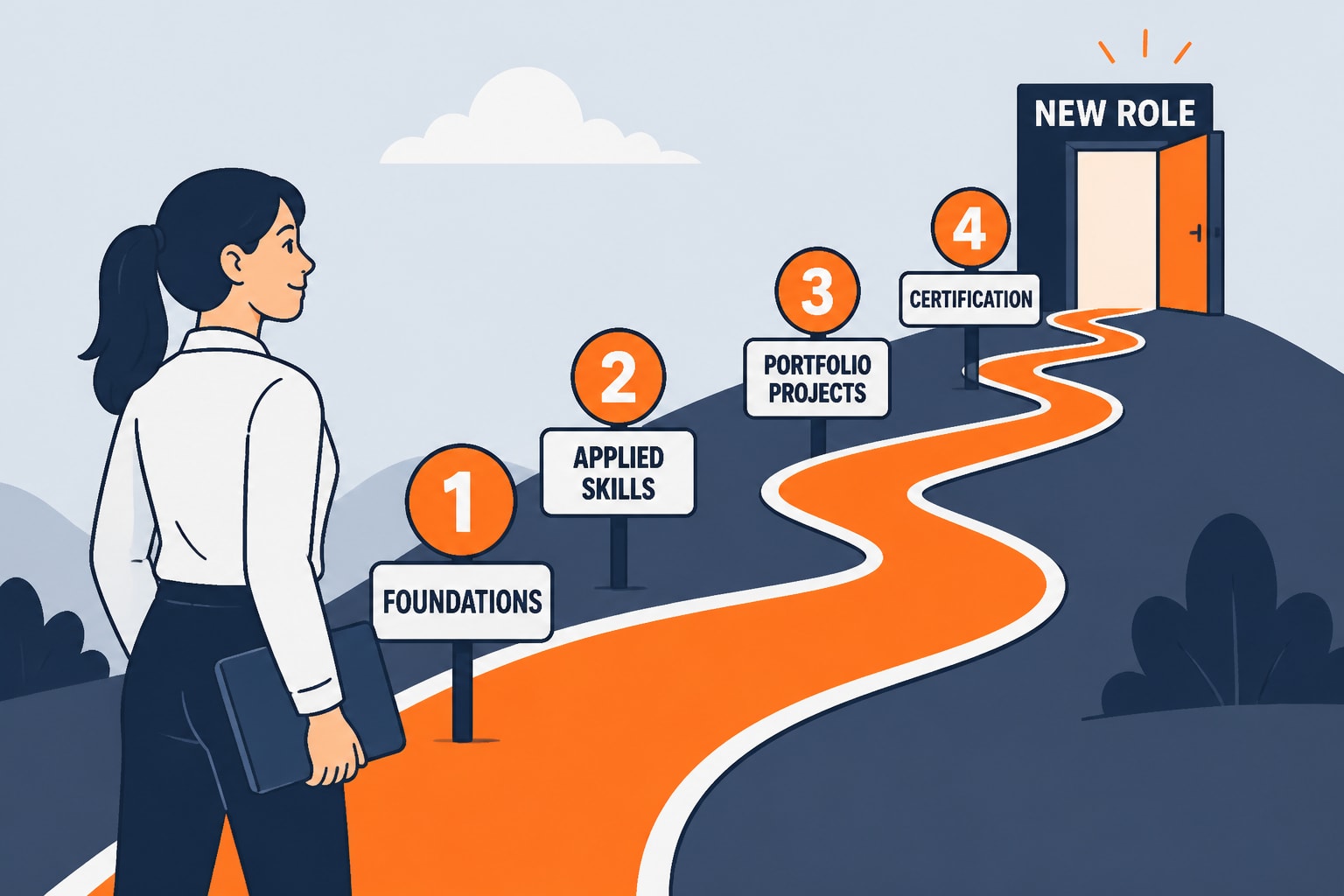
A sensible sequence is fundamentals first, then one associate exam aligned to the job you want, then deeper specialization. For example, someone aiming at a developer role would pick the associate exam that matches building AI applications, while someone aiming at data work would pick the one centered on data and models. Check the current exam list on Microsoft Learn before choosing, since role-based offerings change. Comparing across vendors is a separate decision; this guide to Google's artificial intelligence certification shows how another major provider structures its credentials.
Key Takeaways
- The Azure AI Fundamentals certification is now earned through the AI-901 exam, because AI-900 retired on June 30, 2026. Anyone still booking against the old exam code should confirm the current code on Microsoft's certification page before paying for a voucher or a course.
- The exam covers AI concepts, machine learning, computer vision, natural language processing and generative AI. For the retired exam, generative AI was weighted 20 to 25 percent, so give it real study time rather than treating it as an add-on.
- It is beginner-friendly and requires no coding, though similar service names cause most missed questions. A useful habit is to write a one-line "use this when" note for each service, such as which one reads text from scanned documents and which one analyzes sentiment.
- Free practice tools from Microsoft, including the practice assessment and exam sandbox, are a sound starting point, followed by timed practice exams. Review every wrong answer until you can explain why the correct option fits the scenario.
- Treat it as a first step: pair it with projects and a role-based exam for technical careers. Fundamentals shows knowledge, while a small portfolio project shows you can apply it.
Frequently Asked Questions
How long does the certification last?
Fundamentals-level Microsoft certifications have historically not expired, but policies can change. Confirm the current status on the certification page, which lists any renewal requirement.
Do I need to know how to code?
No. The exam tests conceptual understanding and service selection, not programming.
How long should I study?
Most beginners allow two to four weeks of part-time study. People with some data or cloud exposure may need less.
Should I use AI-900 study material?
Use it only with caution. Concepts overlap, but verify any resource against the current AI-901 skills outline, especially for generative AI.
Can the certification help me change careers?
It can support a switch by showing verified foundational knowledge. Combine it with practical projects for the strongest case with employers.
Your next step is to open the official skills outline on Microsoft Learn and book a date for your exam, since a fixed deadline keeps preparation on track. If you want structured study in one place, Mammoth Club Unlimited Membership bundles courses, practice labs and exams, and MammothClub is a platform where many learners earn certifications each month. Start unlimited and work through a certification path with built-in assessments and a proctored final exam.