The artificial intelligence landscape continues to evolve at an unprecedented pace, and professionals need structured, industry-recognized training to stay competitive. Microsoft has developed a comprehensive ecosystem of AI learning resources that guide learners from foundational concepts through advanced implementation, with clear pathways aligned to real-world job roles. Whether you're a developer transitioning into AI engineering, a data scientist expanding into Azure-based solutions, or a business leader evaluating AI adoption, understanding how to navigate the microsoft ai learning path can accelerate your career trajectory and organizational impact in 2026.
Understanding the Microsoft AI Learning Ecosystem
Microsoft structures its AI education around three core pillars: role-based learning paths, hands-on labs with Azure services, and industry-recognized certifications. This approach differs fundamentally from generic online courses because it connects theoretical knowledge directly to production environments used by Fortune 500 companies worldwide.
The Microsoft Learn AI hub serves as the central repository for all official learning content, offering over 200 modules specifically designed for AI practitioners. These modules cover everything from machine learning fundamentals to advanced topics like responsible AI implementation and multi-agent orchestration.
Key components of the microsoft ai learning path include:
- Self-paced learning modules with integrated Azure sandboxes
- Role-based certification tracks (AI Engineer, Data Scientist, Solutions Architect)
- Hands-on projects using real Azure AI services
- Community support through Microsoft Q&A forums
- Regular content updates reflecting the latest Azure AI capabilities
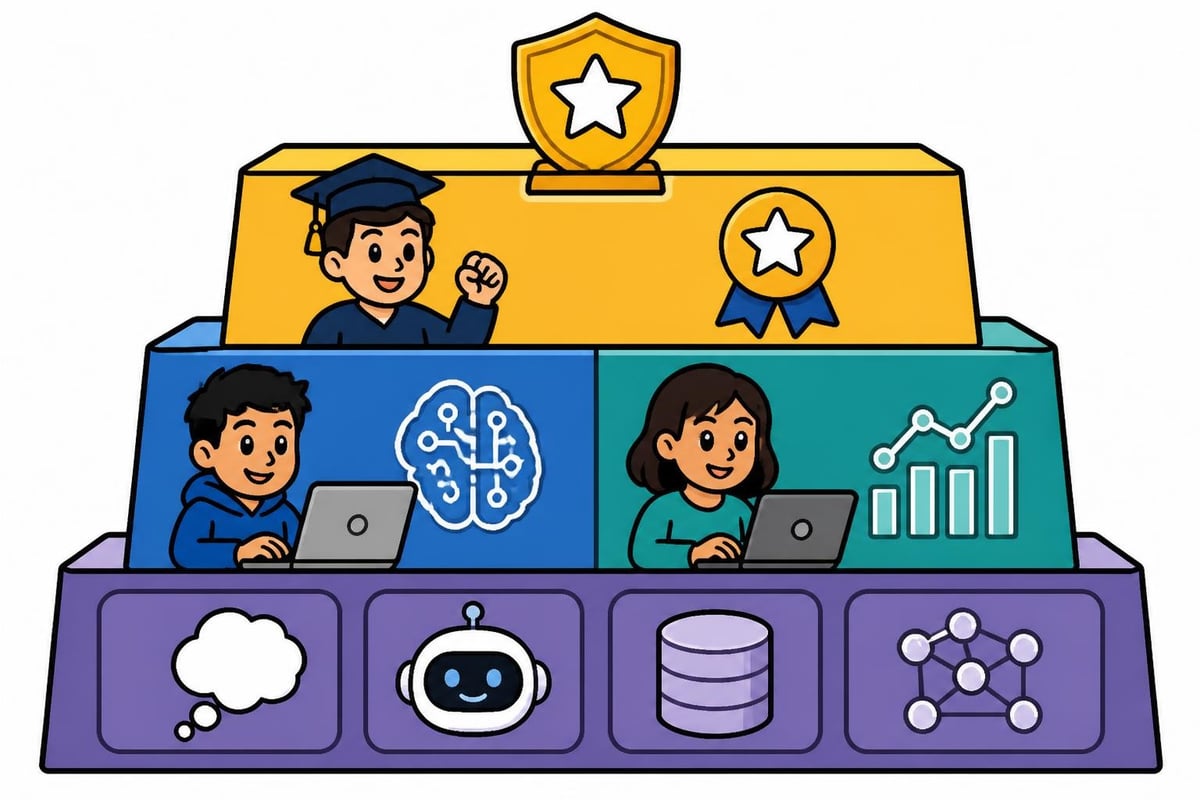
What sets Microsoft's approach apart is the emphasis on applied learning. Rather than watching passive video lectures, learners work directly in Azure environments, deploying models, configuring cognitive services, and troubleshooting real scenarios. This experiential methodology mirrors how professionals actually work with AI in production settings.
Foundational Learning: Where Every AI Journey Begins
The microsoft ai learning path starts with AI-900: Microsoft Azure AI Fundamentals, a prerequisite for anyone new to artificial intelligence or Azure services. This certification covers essential concepts including machine learning principles, computer vision capabilities, natural language processing, and conversational AI.
Core Topics in AI Fundamentals
The AI-900 curriculum introduces learners to Azure's AI service portfolio without requiring programming expertise. You'll explore Azure Machine Learning workspaces, cognitive services APIs, and bot frameworks through browser-based labs.
| Learning Module | Time Investment | Skills Acquired |
|---|---|---|
| AI Concepts & Responsible AI | 2-3 hours | Ethical frameworks, bias detection, transparency principles |
| Machine Learning Fundamentals | 3-4 hours | Supervised vs unsupervised learning, model evaluation metrics |
| Computer Vision | 2-3 hours | Image classification, object detection, OCR implementation |
| Natural Language Processing | 2-3 hours | Text analytics, sentiment analysis, language understanding |
| Conversational AI | 2-3 hours | Bot design, QnA Maker, Azure Bot Service configuration |
This foundational knowledge creates the framework for more advanced specializations. Many organizations, including those training teams through platforms like MammothClub, start entire cohorts with AI-900 before branching into specialized tracks.
The certification exam itself costs $99 and can be taken online or at testing centers. Preparation typically requires 20-30 hours of study for someone without prior AI experience, though professionals with adjacent technical skills often complete it faster.
Responsible AI as a Core Principle
Microsoft embeds responsible AI principles throughout every learning path, not as an afterthought but as foundational competency. You'll learn to evaluate models for fairness across demographic groups, implement transparency mechanisms, and design AI systems that respect privacy and security requirements.
This emphasis aligns with regulatory trends worldwide. As discussed in responsible AI training curricula, organizations increasingly demand proof that their AI practitioners understand ethical implications alongside technical capabilities. The microsoft ai learning path integrates these considerations from day one, preparing you for compliance-focused environments.
Role-Based Specialization: Choosing Your AI Career Track
After establishing fundamentals, the microsoft ai learning path diverges into specialized tracks aligned with distinct job roles. This role-based approach ensures you're learning skills directly applicable to your target position rather than accumulating generic knowledge.
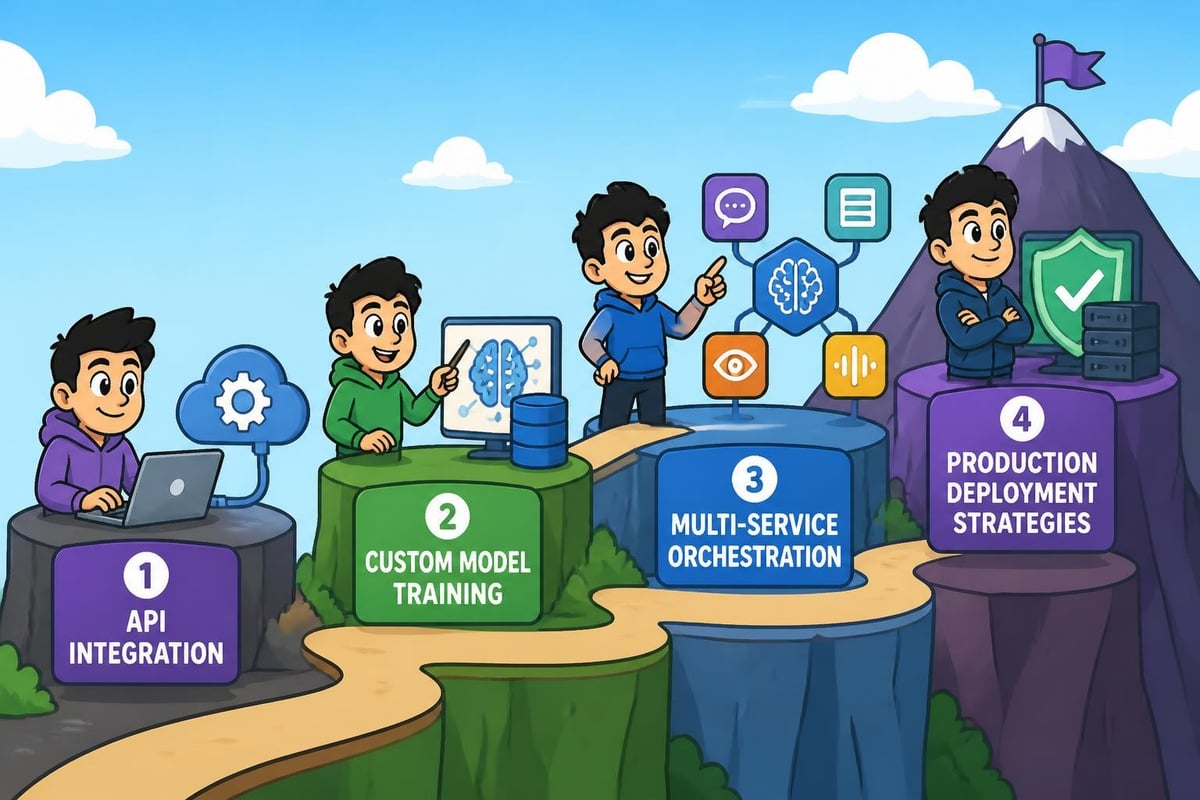
Azure AI Engineer Associate (AI-102)
The AI Engineer career path represents the most popular specialization for developers building production AI systems. This track focuses on implementing Azure AI services, designing knowledge mining solutions, and creating conversational interfaces at scale.
Prerequisites and preparation:
- Proficiency in Python or C# programming
- Understanding of REST APIs and JSON data structures
- Familiarity with Azure fundamentals (AZ-900 recommended)
- Completion of AI-900 or equivalent knowledge
The AI-102 certification validates your ability to design and implement Azure AI solutions, work with computer vision and NLP models, and integrate AI capabilities into applications. Unlike AI-900, this is a technical certification requiring hands-on coding experience.
Exam preparation typically demands 40-60 hours of focused study, including lab exercises deploying cognitive services, training custom models, and implementing responsible AI practices. The Azure AI Engineer Associate certification has become a standard requirement for mid-level AI engineering positions across industries.
Data Scientist Associate (DP-100)
For professionals focused on model development rather than implementation, the DP-100 track teaches Azure Machine Learning workflows. You'll learn to prepare data, train models, optimize hyperparameters, and deploy machine learning solutions using Azure's managed services.
This path emphasizes experimentation, model versioning, and MLOps practices. The curriculum covers AutoML capabilities, designer workflows for no-code solutions, and SDK-based development for maximum flexibility. Many data scientists pursuing this certification already have strong statistical backgrounds and use the microsoft ai learning path to translate existing skills into Azure-specific implementations.
Solutions Architect Expert (AI Specialization)
Senior professionals targeting architectural roles can pursue the Azure Solutions Architect Expert certification with AI specialization. This advanced track requires passing both AZ-305 and demonstrating comprehensive understanding of how AI components integrate into enterprise architectures.
Accelerating Learning Through Structured Programs and Events
While self-paced modules form the backbone of the microsoft ai learning path, Microsoft offers complementary resources that accelerate skill acquisition through instructor guidance and peer collaboration.
Microsoft Reactor Workshops and Live Events
Microsoft Reactor events provide free, instructor-led sessions covering specific topics within the broader learning paths. These workshops range from introductory sessions on Azure AI Fundamentals to advanced workshops on developing multi-agent systems.
The value of these events extends beyond content delivery. Participants can ask questions in real-time, see troubleshooting in action, and network with other learners pursuing similar goals. In 2026, Microsoft hosts hundreds of Reactor events monthly across global time zones, making live learning accessible regardless of location.
AI Skills Navigator: Personalized Path Planning
The AI Skills Navigator serves as an interactive planning tool that maps your current role and goals to recommended learning sequences. By answering questions about your technical background, target job role, and timeline, you receive a customized roadmap through Microsoft's certification ecosystem.
This tool proves particularly valuable for career changers who need guidance selecting between parallel tracks. Should a software engineer pursue AI-102 or DP-100 first? The Skills Navigator analyzes your inputs and provides evidence-based recommendations, often citing job market data and skill demand trends.
Organizations training multiple employees benefit from this tool's ability to create cohort-based learning plans. HR teams can input various roles (developers, analysts, managers) and generate coordinated training schedules that align with organizational AI adoption timelines.
Practical Implementation: From Learning to Production
The microsoft ai learning path emphasizes applied skills, but transitioning from lab exercises to production systems requires additional considerations. Understanding this gap helps you maximize the value of your certification journey.
Hands-On Labs and Sandbox Environments
Every learning module includes integrated Azure sandbox environments where you can practice without incurring cloud costs. These sandboxes provision real Azure resources for limited timeframes, allowing you to experiment with services like Azure OpenAI Service, Custom Vision, and Language Understanding without credit card requirements.
Best practices for lab work:
- Complete labs sequentially rather than skipping ahead
- Document your configurations and troubleshooting steps
- Experiment beyond the prescribed instructions
- Take screenshots of successful deployments for portfolio documentation
- Review Azure pricing calculators to understand production cost implications
Many learners create personal Azure subscriptions with free credits to extend their practice beyond module sandboxes. This investment pays dividends during certification exams, which include scenario-based questions requiring practical experience to answer correctly.
Bridging Theory and Production Reality
Academic research examining certification impact on employability reveals that Microsoft AI certifications correlate with measurably higher placement rates and salary offers compared to non-certified candidates. However, the research also indicates that certifications prove most valuable when combined with portfolio projects demonstrating real-world application.
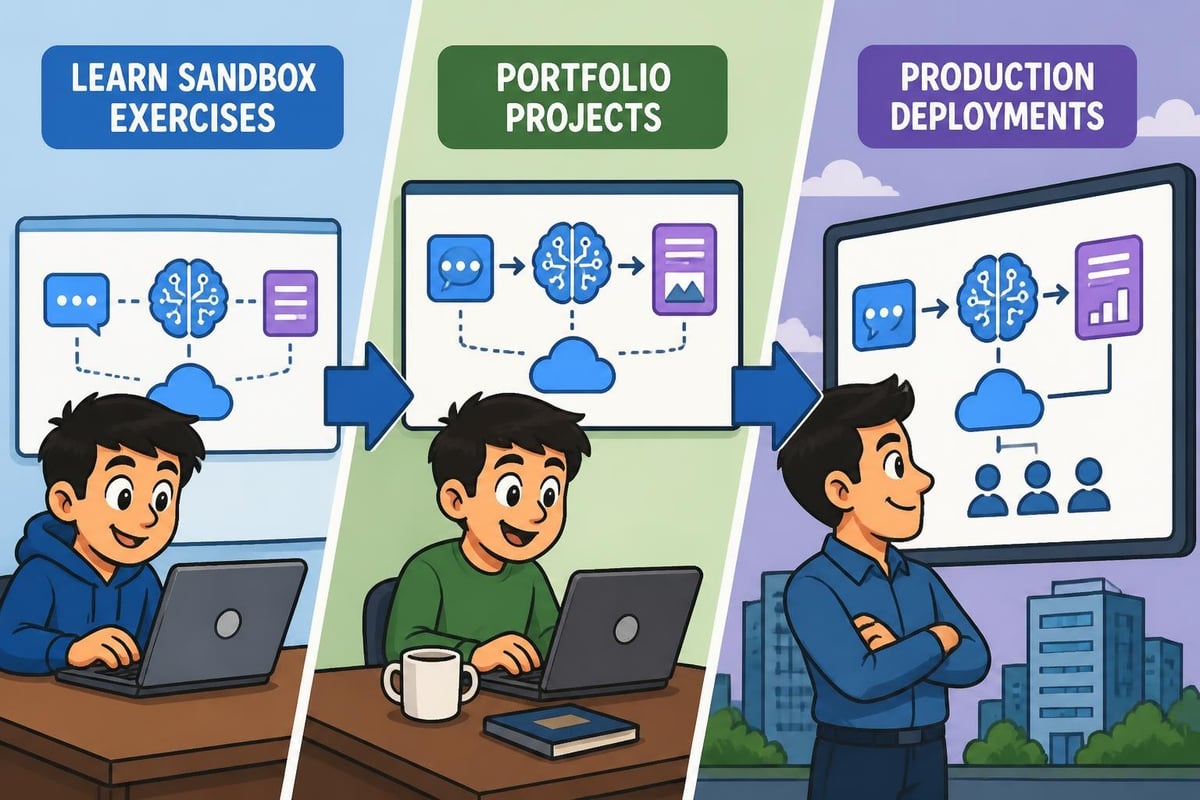
Platforms like MammothClub address this gap by offering capstone projects that extend beyond certification prep. After completing the microsoft ai learning path certifications, many professionals enhance their credentials through specialized courses in AI agent foundations or local LLM deployment, creating differentiated portfolios that showcase implementation capabilities.
Advanced Topics and Emerging Specializations
As the AI landscape evolves, Microsoft continuously expands the microsoft ai learning path to cover emerging capabilities. In 2026, several advanced topics represent frontier areas where early specialization can yield significant career advantages.
Multi-Agent Systems and AI Orchestration
The Microsoft AI Decision Framework provides architectural guidance for designing systems where multiple AI agents collaborate to solve complex problems. This open-source resource complements formal learning paths by offering real-world patterns and decision trees for selecting appropriate agent architectures.
Multi-agent orchestration represents one of the fastest-growing specializations within enterprise AI. Organizations struggle to find professionals who understand not just individual AI services but how to coordinate them effectively. Mastering these patterns positions you for senior engineering and architectural roles.
Responsible AI Implementation at Scale
While foundational courses introduce responsible AI concepts, implementing them in production environments requires deeper expertise. Advanced modules cover:
- Bias detection and mitigation across training datasets
- Explainability frameworks for regulated industries
- Privacy-preserving machine learning techniques
- Governance frameworks for AI model deployment
Organizations in healthcare, finance, and government sectors specifically seek professionals with verified responsible AI capabilities. Complementing Microsoft's official curriculum with specialized training, such as comprehensive responsible AI courses, demonstrates commitment to ethical AI development.
Certification Strategy: Sequencing and Timeline Planning
Successfully navigating the microsoft ai learning path requires strategic planning around certification sequencing, study schedules, and exam timing. Different career goals necessitate different approaches.
Career-Based Sequencing Recommendations
| Career Goal | Recommended Sequence | Timeline | Priority Skills |
|---|---|---|---|
| AI Application Developer | AI-900 → AI-102 → AZ-204 | 6-9 months | API integration, SDK usage, deployment |
| Data Scientist | AI-900 → DP-100 → DP-203 | 8-12 months | Model training, MLOps, data engineering |
| AI Solutions Architect | AI-900 → AI-102 → AZ-305 | 12-18 months | System design, integration patterns, governance |
| Business/Technical Leader | AI-900 → AI-102 (no exam) → Custom workshops | 3-6 months | Use case identification, vendor evaluation |
The timelines above assume 8-12 hours of weekly study commitment. Accelerated paths exist for professionals with strong technical foundations or those studying full-time.
Maintaining Certification Currency
Microsoft requires certification renewals annually through completion of online assessments. These renewal processes test knowledge of newly released features and updated best practices, ensuring your credentials reflect current capabilities rather than outdated skills.
Plan for 4-6 hours annually to maintain each active certification. This ongoing requirement, while demanding, ensures the microsoft ai learning path evolves with the technology rather than becoming obsolete.
Corporate Training Programs and Team Enablement
Organizations deploying AI at scale face unique challenges when building internal capabilities. The microsoft ai learning path supports corporate training through dedicated resources and licensing models designed for cohort-based learning.
Enterprise Learning Paths and Dashboards
Microsoft offers enterprise agreements that provide teams with:
- Centralized dashboards tracking completion rates and competency development
- Custom learning paths tailored to organizational technology stacks
- Private sandboxes mirroring production environments
- Dedicated support channels for technical questions
Companies frequently combine Microsoft's official curriculum with complementary platforms. For instance, organizations might license Microsoft Learn for certification prep while using MammothClub's corporate programs for specialized workshops on AI specialization topics aligned with specific business initiatives.
Building AI Centers of Excellence
Leading organizations don't just certify individuals but cultivate communities of practice around AI. The microsoft ai learning path provides the structured curriculum, but sustainable AI adoption requires ongoing knowledge sharing, collaborative problem-solving, and continuous learning cultures.
Components of successful AI learning programs:
- Clear role definitions aligned to certification tracks
- Dedicated time allocation for learning (10-20% of work hours)
- Internal showcases where teams present projects
- Mentorship pairing experienced practitioners with learners
- Recognition systems tied to certification milestones
These program elements transform certification from individual achievement into organizational capability building. Teams that complete learning paths together develop shared vocabularies and mental models, accelerating collaboration on AI initiatives.
Comparing Microsoft's Path to Alternative AI Training Routes
While the microsoft ai learning path offers compelling advantages, understanding how it compares to alternatives helps you make informed decisions about time and resource investments.
Microsoft vs. Cloud-Agnostic AI Courses
Generic AI courses teach theoretical concepts applicable across platforms but lack the production-readiness that comes from hands-on experience with specific cloud services. The microsoft ai learning path trades some theoretical breadth for practical depth within the Azure ecosystem.
When cloud-agnostic training makes sense:
- You're exploring AI fundamentals before committing to a platform
- Your organization hasn't selected a cloud provider
- You're pursuing academic research rather than commercial implementation
- You want flexibility to work across AWS, Azure, and GCP
When Microsoft-specific paths prove superior:
- Your organization has standardized on Azure
- You're targeting roles specifically requiring Azure AI expertise
- You value integrated labs over theoretical exercises
- You need certifications recognized by enterprise hiring managers
Many professionals pursue hybrid strategies, building foundational knowledge through university courses or platforms like MammothClub's comprehensive AI programs, then specializing in Azure through Microsoft's official paths. This combination provides both theoretical grounding and practical implementation skills.
Certification Value in Hiring Processes
Research consistently demonstrates that Microsoft AI certifications influence hiring decisions, particularly for enterprise positions. However, certification alone rarely suffices for competitive roles. Successful candidates combine certifications with:
- GitHub portfolios demonstrating applied projects
- Contributions to open-source AI initiatives
- Technical blog posts explaining implementation decisions
- Presentations at meetups or conferences
The microsoft ai learning path provides the credibility foundation, but differentiation comes from how you apply and extend that knowledge. Employers increasingly value professionals who can articulate not just how to use Azure AI services but when to use them versus alternative approaches.
Learning Resources Beyond Official Curriculum
While Microsoft Learn contains comprehensive official content, supplementary resources can accelerate understanding and provide alternative explanations when concepts prove challenging.
Community-Driven Learning Materials
The Azure AI community actively contributes tutorials, quickstart templates, and troubleshooting guides that complement the microsoft ai learning path. GitHub repositories contain sample applications demonstrating production patterns, often with more realistic complexity than simplified learning modules.
Microsoft's official documentation sometimes assumes significant prior knowledge, particularly for advanced topics. Community resources often fill gaps by providing:
- Step-by-step walkthroughs with explicit commands
- Troubleshooting guides for common error messages
- Architecture diagrams showing service integration patterns
- Cost optimization strategies for production deployments
Engaging with Azure AI communities through forums, Slack channels, and local user groups provides peer support that makes challenging concepts more accessible. These relationships often prove as valuable as the technical knowledge itself, creating professional networks that support long-term career development.
Integrating Specialized Deep-Dive Courses
The microsoft ai learning path provides broad coverage across Azure's AI portfolio, but specialists often need deeper expertise in specific domains. For instance, professionals working with financial time-series forecasting might benefit from AI trading courses that apply Azure Machine Learning to market prediction scenarios.
Similarly, those implementing conversational AI might supplement Azure Bot Service training with specialized programs on AI agent architecture that explore design patterns beyond Microsoft's official curriculum. This layered approach builds both certification credentials and specialized expertise valued in niche markets.
Emerging Trends Shaping the 2026 AI Learning Landscape
The microsoft ai learning path continues evolving to address emerging technologies and methodologies. Understanding these trends helps you invest learning time in future-proof skills rather than soon-to-be-deprecated capabilities.
Generative AI and Large Language Models
Azure OpenAI Service integration represents one of the fastest-growing areas within Microsoft's AI curriculum. The 2026 learning paths now extensively cover prompt engineering, retrieval-augmented generation (RAG), and fine-tuning strategies for enterprise applications.
These additions reflect market reality: organizations increasingly evaluate AI talent based on LLM implementation experience. Certifications now test practical knowledge of token optimization, responsible generation policies, and integration patterns for GPT-4 and successor models.
Edge AI and Hybrid Deployments
Cloud-first AI solutions face latency, privacy, and connectivity constraints in many real-world scenarios. Microsoft's updated learning paths address hybrid architectures where models train in Azure but deploy to edge devices, IoT gateways, and on-premises infrastructure.
This shift toward distributed AI aligns with regulatory requirements and operational realities across manufacturing, healthcare, and retail sectors. Professionals comfortable designing these hybrid systems find themselves in high demand as organizations balance cloud capabilities with edge requirements.
AI Governance and Model Operations
The microsoft ai learning path increasingly emphasizes MLOps practices that treat machine learning models as production assets requiring versioning, monitoring, and lifecycle management. Topics like model drift detection, A/B testing frameworks, and automated retraining pipelines now feature prominently in certification curricula.
This evolution reflects organizational maturation in AI adoption. Early AI initiatives often deployed models without systematic governance, leading to performance degradation and compliance risks. Modern AI professionals must understand both model creation and operational excellence.
The microsoft ai learning path offers a structured, credible route from AI fundamentals through advanced specializations, with certifications recognized globally by enterprise hiring managers. By combining role-based learning tracks, hands-on Azure labs, and progressive skill development, Microsoft's curriculum prepares professionals for real-world AI implementation challenges rather than purely theoretical knowledge. Whether you're beginning your AI journey or advancing into specialized domains, strategic navigation of these learning resources accelerates capability development and career progression. MammothClub complements Microsoft's official paths with 3,000+ on-demand courses, interactive bootcamps, and corporate programs that help professionals and organizations master AI skills faster, with measurable results and AI-powered learning tools that keep your team competitive in 2026 and beyond.


