The demand for professionals who can design, build, and deploy AI solutions on cloud platforms has never been higher. Microsoft's azure ai associate certification has become a critical credential for developers, engineers, and technical professionals aiming to validate their expertise in building intelligent applications. This certification proves your ability to implement production-ready AI solutions using Azure's comprehensive suite of cognitive services, machine learning tools, and generative AI capabilities. Whether you're transitioning into AI development or expanding your cloud expertise, understanding what the azure ai associate certification entails and how it aligns with industry needs is essential for career advancement in 2026.
Understanding the Azure AI Associate Certification Landscape
Microsoft restructured its AI certification path in 2024-2025, consolidating earlier credentials into a more focused framework. The current Azure AI Apps and Agents Developer Associate certification validates your ability to design, develop, and deploy AI-powered applications and intelligent agents using Azure services.
This credential replaced the legacy AI-102 exam, reflecting the rapid evolution of generative AI, large language models, and agentic systems. The azure ai associate certification now emphasizes practical implementation skills rather than theoretical knowledge alone.
What the Certification Validates
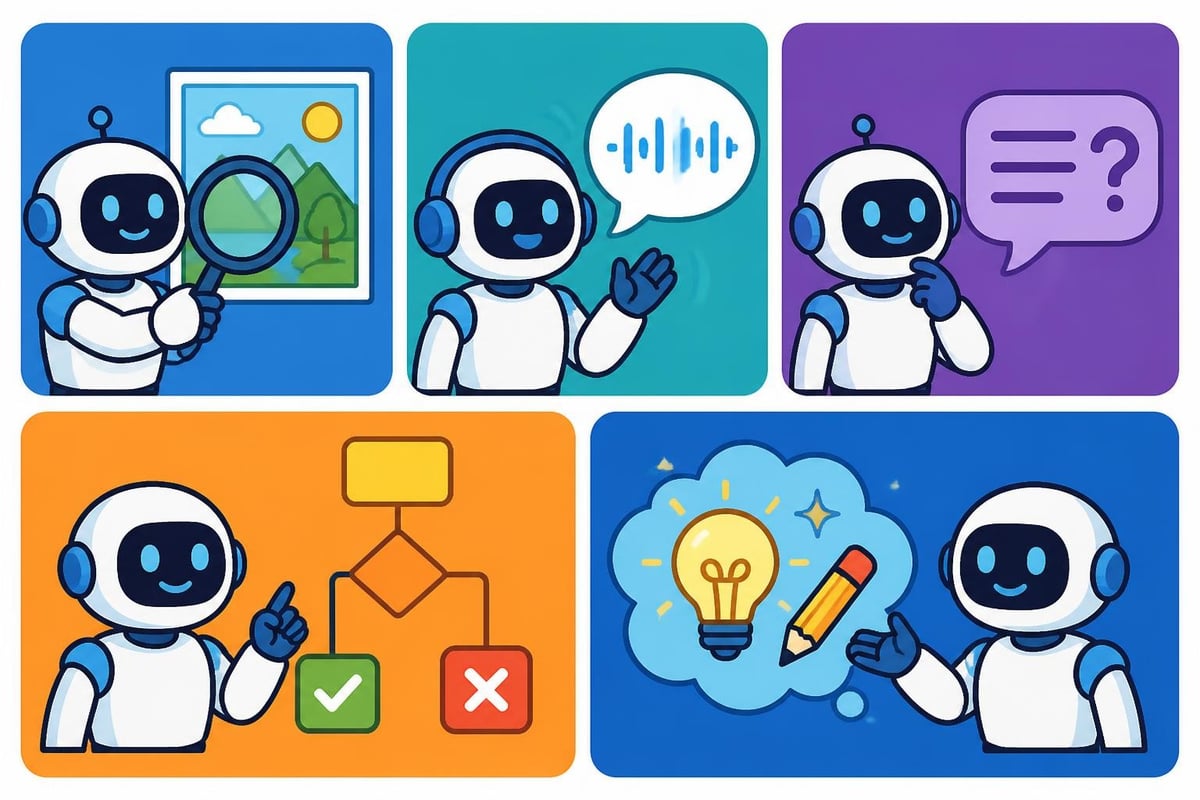
The azure ai associate credential demonstrates proficiency across multiple technical domains:
- Azure AI Services integration: Implementing vision, speech, language, and decision APIs
- Generative AI application development: Building solutions with Azure OpenAI Service
- Intelligent agent creation: Designing conversational AI and autonomous systems
- Responsible AI practices: Applying fairness, reliability, and safety principles
- Solution architecture: Designing scalable, secure AI implementations
The exam measures your hands-on ability to solve real-world problems, not just memorize service names. You'll need experience provisioning resources, writing code, optimizing performance, and troubleshooting production issues.
Exam AI-103: Structure and Skill Requirements
The AI-103 exam forms the foundation of the azure ai associate certification. Microsoft publishes a detailed study guide for Exam AI-103 that breaks down the assessed skills into measurable domains.
Exam Domains and Weighting
| Domain | Weight | Focus Areas |
|---|---|---|
| Plan and manage Azure AI solutions | 20-25% | Resource provisioning, security, monitoring, cost optimization |
| Implement computer vision solutions | 15-20% | Image analysis, face detection, OCR, custom vision models |
| Implement natural language processing | 20-25% | Text analytics, language understanding, translation services |
| Implement knowledge mining and document intelligence | 10-15% | Azure Cognitive Search, form recognition, data extraction |
| Implement generative AI solutions | 25-30% | Azure OpenAI, prompt engineering, RAG patterns, agent frameworks |
The heaviest emphasis on generative AI reflects current industry priorities. You must understand how to integrate large language models into applications, implement retrieval-augmented generation, and build conversational agents that maintain context across interactions.
Technical Prerequisites
Before pursuing the azure ai associate certification, you should have:
- Programming proficiency: Python or C# experience with REST APIs, SDKs, and asynchronous patterns
- Azure fundamentals: Resource groups, authentication, networking, storage concepts
- AI/ML basics: Understanding of training vs. inference, model evaluation, and bias detection
- Development tools: Familiarity with Visual Studio Code, Azure Portal, CLI, and DevOps practices
The exam includes scenario-based questions requiring you to select appropriate services, write code snippets, identify configuration errors, and recommend architectural improvements. Memorization alone won't suffice-you need practical implementation experience.
Core Azure AI Services for Associate-Level Professionals
The azure ai associate certification covers Microsoft's entire AI services portfolio. Understanding when to use each service and how they integrate is critical for exam success and real-world effectiveness.
Vision and Image Analysis
Azure Computer Vision enables applications to analyze visual content at scale. The Azure Architecture Center provides reference patterns for implementing vision solutions in production scenarios.
Key capabilities you'll implement:
- Image classification and object detection: Identifying products, defects, or security threats
- Optical character recognition (OCR): Extracting text from documents, receipts, and forms
- Face detection and verification: Building authentication and personalization features
- Spatial analysis: Monitoring physical spaces for occupancy and behavior patterns
You'll need to understand model customization, confidence thresholds, data privacy requirements, and integration with other services like Azure Functions for event-driven processing.
Speech and Audio Processing
The Azure Speech service converts spoken language to text, generates natural speech from text, and provides real-time translation capabilities.
Implementation scenarios include:
- Building accessible applications with voice interfaces
- Transcribing customer service calls for analysis
- Creating multilingual support systems
- Developing voice-activated IoT devices
The azure ai associate exam tests your ability to configure speech recognition for specific domains, handle multiple languages simultaneously, and optimize for accuracy versus latency tradeoffs.
Language Understanding and Text Analytics
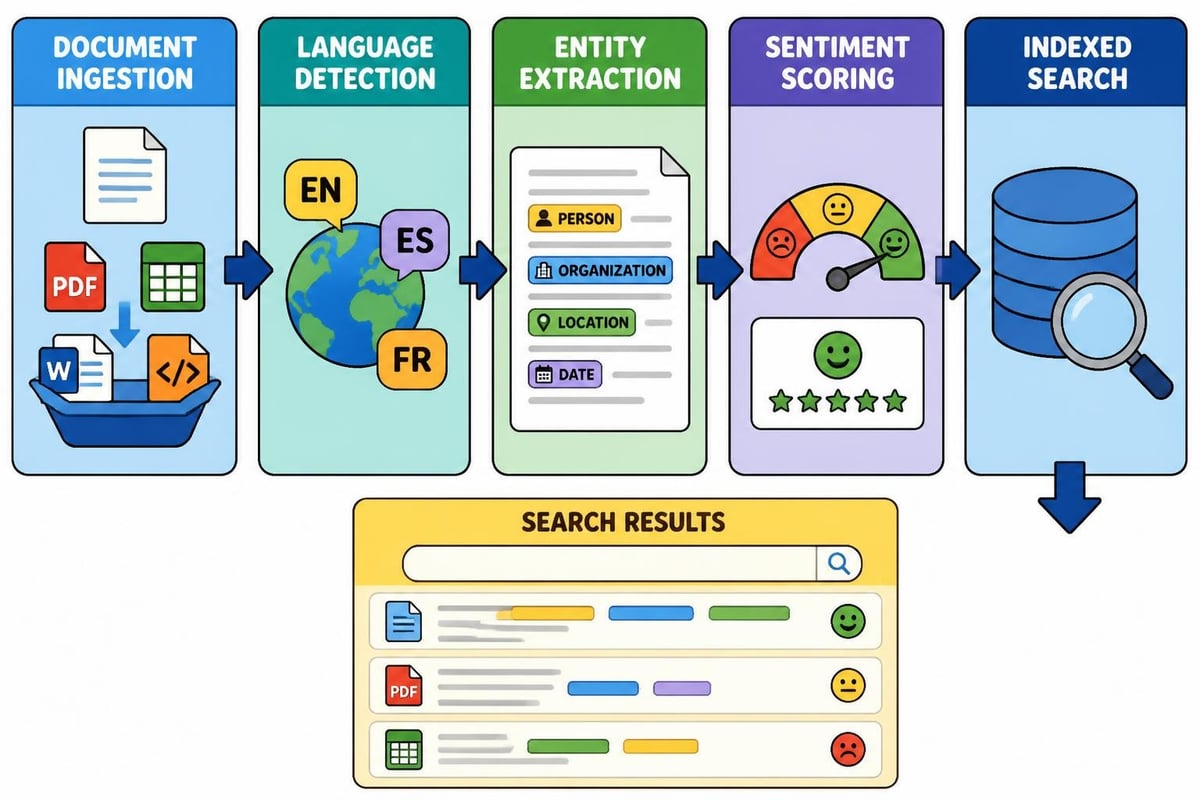
Natural language processing capabilities enable applications to extract meaning, sentiment, and actionable insights from unstructured text.
- Named entity recognition: Identifying people, places, organizations, and dates
- Sentiment analysis: Measuring emotional tone in customer feedback
- Key phrase extraction: Summarizing main topics from documents
- Language detection: Automatically identifying text language
- Custom models: Training domain-specific classifiers
Understanding how to combine these capabilities with Azure Cognitive Search creates powerful knowledge mining solutions that surface insights from vast document collections.
Generative AI and Azure OpenAI Service
The most transformative addition to the azure ai associate certification is comprehensive coverage of generative AI implementation. Azure OpenAI Service provides access to GPT-4, GPT-4 Turbo, DALL-E, and other frontier models through enterprise-grade APIs.
Production Deployment Patterns
Building production generative AI applications requires more than calling an API. You must understand:
Prompt engineering fundamentals: Crafting effective system messages, few-shot examples, and chain-of-thought prompts that produce consistent, accurate outputs.
Retrieval-augmented generation (RAG): Connecting language models to your organization's data through vector databases, semantic search, and dynamic context injection.
Function calling and tool use: Enabling models to invoke APIs, query databases, and interact with external systems while maintaining safety guardrails.
Conversation management: Implementing message history truncation, context summarization, and multi-turn dialog state management.
Many professionals expanding their AI expertise explore AI and ML courses to build foundational knowledge before tackling certification preparation.
Building Intelligent Agents
The azure ai associate certification now includes agent development-creating AI systems that can plan, reason, and take autonomous actions.
| Agent Component | Purpose | Azure Implementation |
|---|---|---|
| Planning | Breaking complex tasks into steps | GPT-4 with prompt chains |
| Memory | Maintaining conversation context | Cosmos DB, Redis Cache |
| Tools | Executing actions | Azure Functions, Logic Apps |
| Orchestration | Coordinating multi-step workflows | Semantic Kernel, LangChain |
You'll need hands-on experience building agents that can research information, make decisions, and execute tasks across multiple systems while handling errors gracefully.
Responsible AI Implementation and Governance
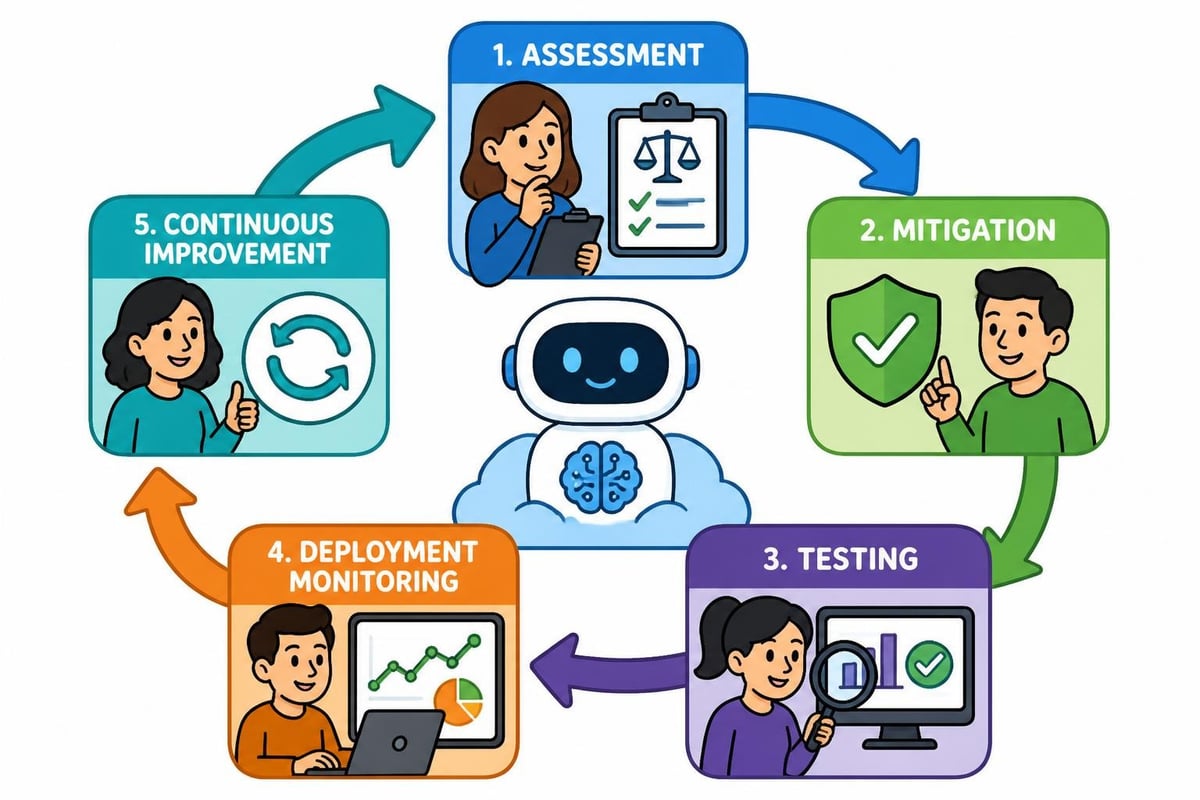
Microsoft emphasizes responsible AI principles throughout its certification program. The azure ai associate exam tests your knowledge of implementing AI ethically, safely, and transparently.
Core Principles from Microsoft
Microsoft's Responsible AI approach establishes six foundational principles:
- Fairness: Treating all people equitably without systematic bias
- Reliability and safety: Performing consistently under defined conditions
- Privacy and security: Protecting sensitive data and respecting user consent
- Inclusiveness: Designing for diverse populations and accessibility needs
- Transparency: Enabling users to understand AI system behavior
- Accountability: Establishing clear responsibility for AI system outcomes
Practical Implementation Strategies
Translating principles into practice requires concrete technical measures:
- Data governance: Auditing training data for representation gaps and historical biases
- Model evaluation: Testing across demographic segments to identify performance disparities
- Explainability: Implementing interpretable models or post-hoc explanation techniques
- Human oversight: Designing human-in-the-loop workflows for high-stakes decisions
- Content filtering: Deploying safety systems to prevent harmful outputs
The exam includes case studies where you must identify potential harms, recommend mitigation strategies, and select appropriate Azure tools like Content Safety APIs and Responsible AI dashboards.
Preparing for the Azure AI Associate Certification
Success on the AI-103 exam requires structured preparation combining theoretical study, hands-on labs, and practice assessments. The GitHub repository with AI-102 resources still contains valuable learning materials applicable to current exam objectives.
Building Practical Experience
Create personal projects: Deploy working applications using Azure AI services to solve real problems. Build a document analysis tool, conversational chatbot, or image classification system.
Use free tier resources: Azure provides monthly free allocations for most AI services, enabling extensive experimentation without significant cost.
Study reference architectures: Microsoft publishes proven patterns for common scenarios-study these to understand production-ready design decisions.
Join community forums: Engage with other learners and certified professionals through Microsoft Learn communities and technical forums.
Professionals pursuing AI engineer certification often benefit from structured learning paths that combine video instruction, hands-on labs, and assessment tools.
Recommended Study Timeline
| Phase | Duration | Activities |
|---|---|---|
| Foundation | 2-3 weeks | Azure fundamentals, Python/C# review, AI concepts |
| Service Deep-Dive | 4-6 weeks | Hands-on labs with each AI service category |
| Integration Practice | 3-4 weeks | Building multi-service solutions, architecture patterns |
| Generative AI Focus | 3-4 weeks | Azure OpenAI, RAG implementation, agent development |
| Exam Preparation | 2-3 weeks | Practice tests, weak area review, scenario analysis |
This timeline assumes 10-15 hours of weekly study. Adjust based on your existing experience and learning pace.
Cost-Effective Learning Resources
Microsoft Learn provides free, comprehensive learning paths aligned directly with exam objectives. Combine these with:
- Microsoft technical documentation: Official service docs with quickstarts and tutorials
- Azure AI samples repository: Reference implementations demonstrating best practices
- Community-created content: Blog posts, video tutorials, and study groups
- Practice exams: Third-party assessment tools identifying knowledge gaps
Many organizations invest in AI management courses for their technical leaders to understand how AI certifications fit into broader workforce development strategies.
Career Impact and Professional Opportunities
Earning the azure ai associate certification demonstrates verified expertise that employers recognize and value. The credential opens doors across multiple career paths.
Roles Aligned with Azure AI Associate Skills
AI Application Developer: Building customer-facing applications with computer vision, NLP, and generative AI capabilities. You'll integrate Azure AI services into web apps, mobile solutions, and enterprise platforms.
Machine Learning Engineer: Implementing and deploying AI models at scale, focusing on MLOps practices, model monitoring, and performance optimization.
Solutions Architect: Designing end-to-end AI solutions that meet business requirements while balancing cost, performance, security, and compliance constraints.
Data Scientist: Augmenting analytical workflows with Azure AI services for tasks like document processing, sentiment analysis, and automated insights generation.
DevOps Engineer: Implementing CI/CD pipelines for AI applications, managing infrastructure as code, and monitoring production AI systems.
Salary and Demand Trends
As of 2026, professionals with the azure ai associate certification command competitive compensation:
- Entry-level AI developers: $85,000-$110,000 annually
- Mid-career AI engineers: $110,000-$150,000 annually
- Senior solutions architects: $150,000-$200,000+ annually
Geographic location, industry sector, and complementary skills significantly influence compensation. Professionals who combine Azure AI expertise with domain knowledge in healthcare, finance, or manufacturing often command premium salaries.
Building a Certification Portfolio
The azure ai associate credential works best as part of a broader certification strategy:
Foundational certifications: Azure Fundamentals (AZ-900) and Azure AI Fundamentals (AI-900) establish baseline knowledge.
Associate-level specializations: Data engineering, security, or infrastructure certifications complement AI expertise.
Expert-level advancement: Azure Solutions Architect Expert or Azure DevOps Engineer Expert represent next-tier credentials.
Vendor diversity: Consider certifications from AWS, Google Cloud, or specialized AI frameworks to demonstrate platform flexibility.
Advanced Topics and Future-Proofing Your Skills
The AI landscape evolves rapidly. Staying current beyond initial certification requires continuous learning and skill expansion.
Emerging Capabilities to Monitor
Multimodal AI systems: Models that process text, images, audio, and video simultaneously are becoming standard. Understanding how to build applications leveraging GPT-4V and similar technologies provides competitive advantages.
Autonomous agents and workflows: The shift from single-turn interactions to multi-step reasoning and action represents a fundamental change in how we build AI applications.
Edge AI deployment: Moving inference to edge devices for lower latency, enhanced privacy, and reduced costs requires understanding Azure IoT Edge and containerization.
Hybrid AI architectures: Combining cloud AI services with on-premises systems for regulated industries demands knowledge of Azure Arc and hybrid cloud patterns.
Continuous Learning Strategies
Maintain relevance by:
- Following Microsoft AI blog: Staying informed about new services, features, and best practices
- Experimenting with preview features: Testing beta services to understand future capabilities
- Contributing to open-source projects: Building practical experience while demonstrating expertise
- Attending conferences and webinars: Networking with practitioners and learning from case studies
- Renewing certifications: Microsoft certifications require periodic renewal through continued learning
The pace of change means your azure ai associate certification represents a starting point, not an endpoint, in your professional development journey.
Integrating Azure AI Skills into Organizational Strategy
For businesses investing in AI transformation, understanding what the azure ai associate certification represents helps inform hiring, training, and strategy decisions.
Building Internal AI Capabilities
Organizations face a build-versus-buy decision when developing AI expertise. Upskilling existing staff through certification programs offers several advantages:
Cultural alignment: Current employees understand business context, processes, and challenges.
Retention: Professional development investments increase employee satisfaction and loyalty.
Customization: Internal teams can tailor AI solutions to specific organizational needs rather than forcing business processes into off-the-shelf products.
Knowledge retention: Expertise remains in-house rather than depending on external consultants.
Companies developing comprehensive training strategies often explore how AI training platforms deliver measurable results through structured learning paths and progress tracking.
Measuring Certification ROI
Quantify training program success through:
| Metric | Measurement Approach |
|---|---|
| Time to competency | Weeks from training start to first production deployment |
| Project success rate | Percentage of AI initiatives meeting business objectives |
| Cost efficiency | Reduction in external consulting expenses |
| Innovation velocity | Number of AI features shipped per quarter |
| Employee retention | Comparison of turnover between trained and untrained cohorts |
The azure ai associate certification provides an objective benchmark for technical capability, enabling consistent evaluation across teams and geographies.
Compliance and Risk Management
Regulated industries face unique challenges deploying AI systems. Certified professionals understand:
- Data residency requirements: Configuring Azure regions and data sovereignty controls
- Audit trails: Implementing logging and monitoring for regulatory compliance
- Access controls: Applying least-privilege principles and identity management
- Model documentation: Maintaining records of training data, architecture decisions, and validation results
These skills directly reduce organizational risk while enabling innovation within regulatory constraints.
Earning the azure ai associate certification positions you at the forefront of the AI revolution, validating your ability to build intelligent applications that solve real business problems on Microsoft's cloud platform. Whether you're advancing your career, transitioning into AI development, or leading organizational transformation, this credential provides recognized proof of practical expertise in vision, language, speech, and generative AI technologies. MammothClub helps professionals and organizations master these skills through interactive courses, hands-on bootcamps, and AI-powered learning tools that make certification preparation engaging and measurable-accelerating your journey from aspiring AI developer to certified Azure AI professional.