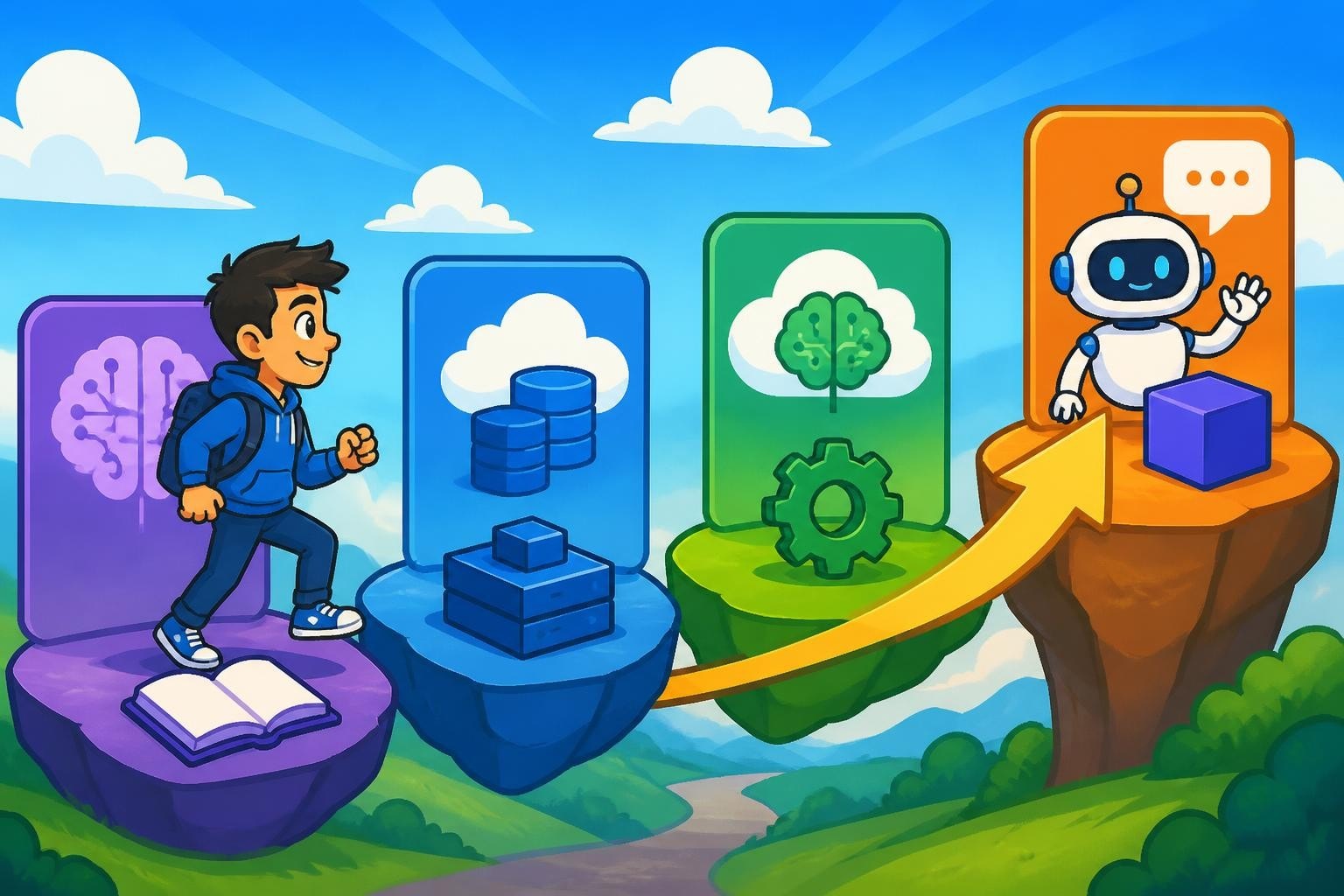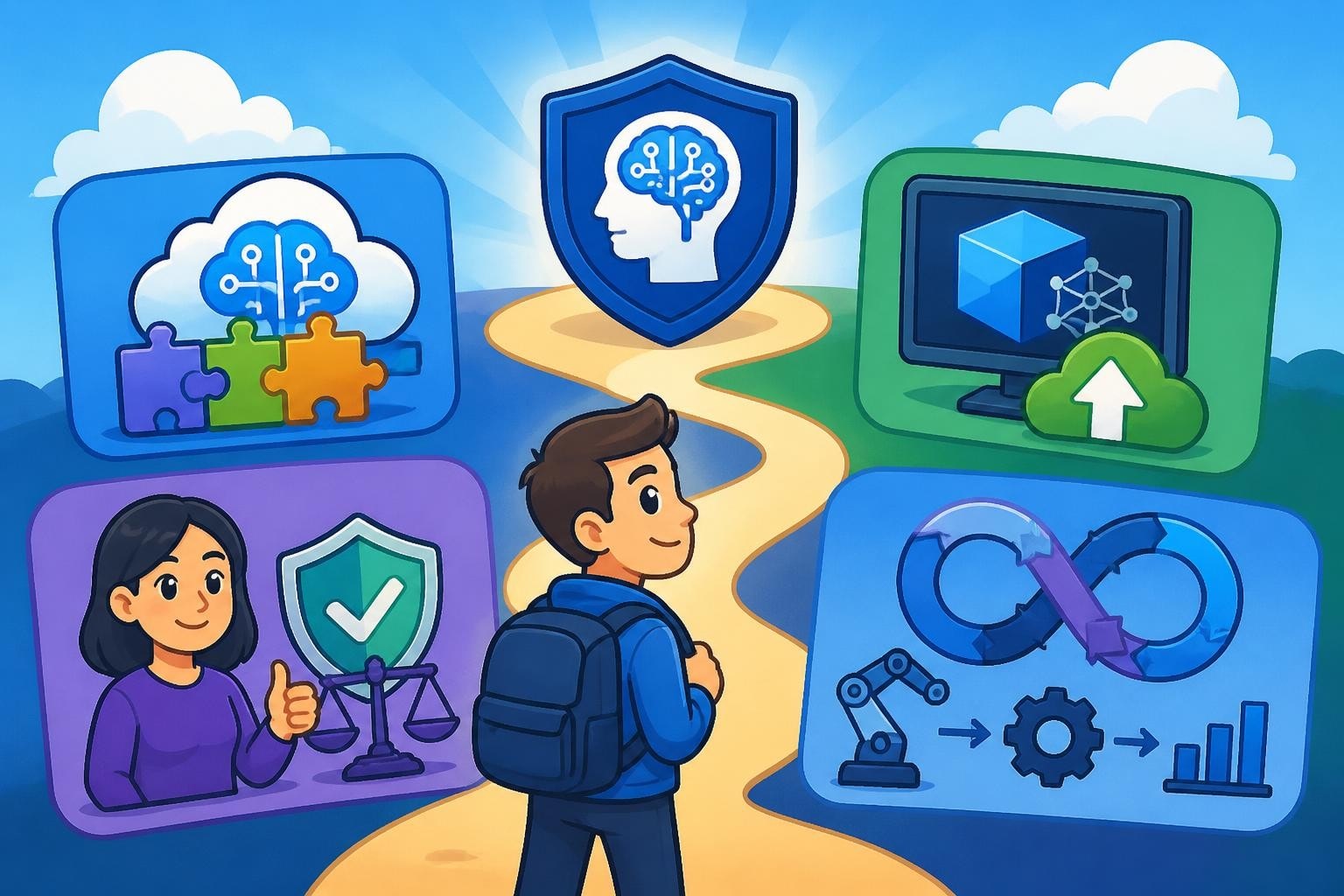
The rapid evolution of generative artificial intelligence has created unprecedented demand for structured education that goes beyond surface-level tutorials. Professionals across industries now face a critical choice: invest time in comprehensive training that builds genuine competency, or risk falling behind as generative models reshape how we work, create, and solve problems. A well-designed generative AI course bridges the gap between theoretical understanding and practical application, equipping learners with the skills to build, deploy, and optimize systems that generate text, images, code, and more. As organizations compete to integrate these capabilities, the question is no longer whether to pursue generative AI education, but rather which approach delivers measurable results in the shortest time frame.
What Defines an Effective Generative AI Course in 2026
The landscape of generative AI education has matured significantly, moving from experimental workshops to rigorous certification programs. An effective generative AI course today must address multiple dimensions simultaneously: technical depth, practical application, ethical considerations, and business integration.
Core Technical Components
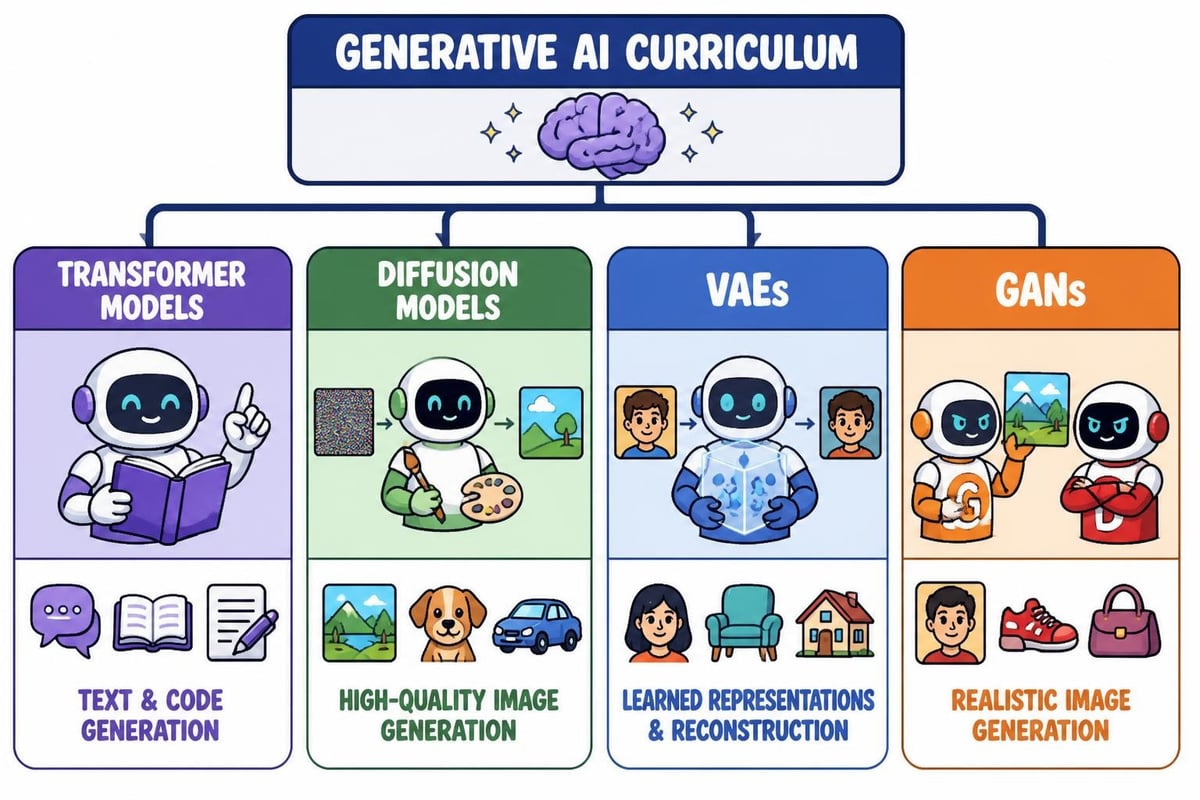
Modern generative AI training must cover the full spectrum of architectures and techniques that power today's systems. Learners need exposure to transformer models, diffusion processes, variational autoencoders, and generative adversarial networks-not as abstract concepts, but as implemented systems they can build and modify.
The Stanford CS236 course on deep generative models demonstrates the academic standard for technical rigor, covering variational autoencoders, GANs, normalizing flows, and diffusion models with mathematical foundations and implementation projects. This level of depth ensures students understand not just how to use pre-trained models, but how these systems learn and generate new content.
Key technical modules should include:
- Transformer architecture and attention mechanisms
- Fine-tuning large language models for specific domains
- Prompt engineering strategies for optimal outputs
- Diffusion model training and customization
- Multimodal generation techniques
- Model evaluation and performance metrics
Hands-On Laboratory Work
Theory without practice produces students who can discuss generative AI but cannot build with it. The MIT OpenCourseWare hands-on deep learning materials exemplify how academic institutions structure practical exercises that reinforce conceptual learning. Students work with actual datasets, train models on real problems, and troubleshoot performance issues that emerge during development.
A comprehensive generative AI course must provide access to computational resources that make experimentation possible. Whether through cloud credits, managed environments, or guidance on GPU selection for AI training, learners need infrastructure that supports their projects without becoming a barrier to entry.
| Lab Component | Learning Objective | Typical Duration |
|---|---|---|
| Prompt Engineering Workshop | Master structured prompts, chain-of-thought, few-shot learning | 4-6 hours |
| Fine-Tuning Session | Adapt pre-trained models to custom datasets | 8-12 hours |
| Diffusion Model Implementation | Build and train image generation pipeline | 12-16 hours |
| RAG System Development | Create retrieval-augmented generation application | 10-14 hours |
| Model Deployment Project | Deploy generative system to production environment | 8-10 hours |
Curriculum Design for Different Skill Levels
Not every learner arrives with the same background or goals. Effective generative AI courses segment instruction to meet students where they are, then accelerate their progress through structured pathways.
Beginner Track: Foundations and Applications
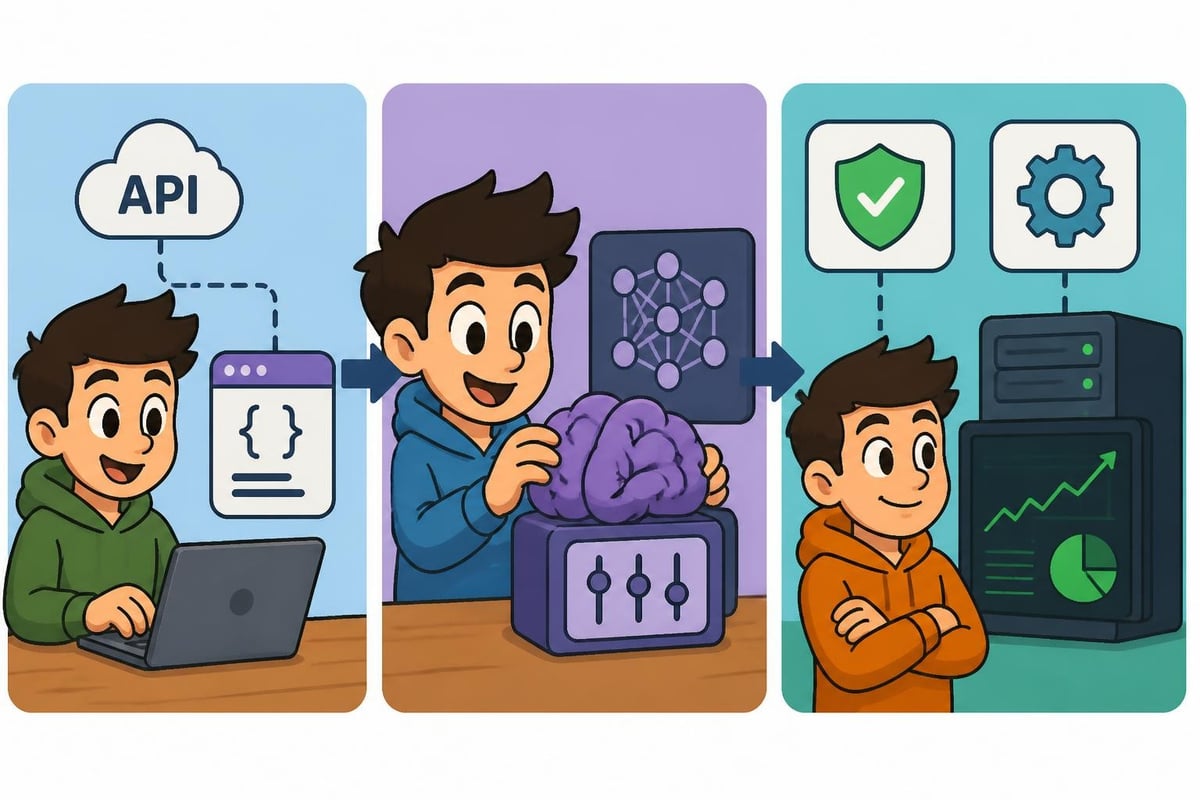
Entry-level students benefit from understanding generative AI through practical applications before diving into architectural details. They should work with established APIs and platforms, learning to integrate generative capabilities into workflows and applications.
This track focuses on:
- Understanding what generative models can and cannot do
- Working with commercial APIs (OpenAI, Anthropic, Google)
- Crafting effective prompts for text, image, and code generation
- Building simple applications that leverage generative AI
- Recognizing ethical implications and limitations
Beginners often progress through foundational AI and ML courses before specializing in generative systems, ensuring they grasp core machine learning principles first.
Intermediate Track: Model Customization and Fine-Tuning
Once comfortable with APIs and basic applications, intermediate learners dive into model customization. This level requires understanding how to adapt existing models to specific domains, datasets, and use cases.
Students at this stage work with:
- Transfer learning techniques for efficient adaptation
- Dataset curation and preparation for fine-tuning
- Hyperparameter optimization strategies
- Evaluation frameworks for generative outputs
- Cost-performance tradeoffs in model selection
The Stanford NLP course materials provide excellent frameworks for understanding how modern language models work, which becomes essential when customizing these systems for specific applications.
Advanced Track: Architecture Development and Research
Advanced learners engage with cutting-edge research, implementing novel architectures and pushing the boundaries of what generative systems can accomplish. This track emphasizes research literacy, experimental design, and contribution to the field.
Advanced curriculum elements:
- Reading and implementing research papers
- Developing custom architectures for specific generation tasks
- Optimizing training efficiency and inference speed
- Contributing to open-source generative AI projects
- Publishing findings and sharing innovations
The comprehensive survey of deep generative modeling techniques serves as essential reading for advanced students, providing theoretical grounding across the full landscape of generative approaches.
Practical Project Structures That Build Real Skills
The gap between completing tutorials and building production systems is where most generative AI education fails. Well-designed courses bridge this gap through progressively complex projects that mirror real-world challenges.
Starter Projects for Skill Building
Initial projects should be achievable within days, providing quick wins that build confidence and familiarity with generative tools.
- Custom Chatbot Development: Build a domain-specific conversational agent using prompt engineering and conversation management
- Content Generation Pipeline: Create a system that generates blog outlines, drafts, and editing suggestions
- Image Customization Tool: Develop an application that applies consistent style transformations using diffusion models
- Code Assistant Integration: Build a development tool that generates, explains, and debugs code snippets
Intermediate Capstone Projects
These projects require 2-4 weeks of focused work and integrate multiple techniques learned throughout the course.
- Multi-Modal Content Studio: System that coordinates text, image, and audio generation for marketing campaigns
- Domain-Specific Fine-Tuned Model: Custom model trained on specialized corpus (legal, medical, technical)
- Retrieval-Augmented Generation System: Application that combines vector databases with LLMs for accurate, sourced responses
- Automated Design Tool: Platform that generates and iterates on design assets based on natural language specifications
Advanced Research and Production Projects
These culminating projects demonstrate production-ready skills and research capabilities that employers value.
- Building scalable inference infrastructure for generative models
- Developing evaluation frameworks for specific generation tasks
- Creating novel training techniques for improved efficiency or quality
- Implementing safety and alignment mechanisms for deployed systems
Understanding diffusion models through accessible technical resources helps students grasp the mathematical foundations needed for these advanced projects.
Assessment and Certification Approaches
How a generative AI course measures learning outcomes determines whether students gain genuine competency or simply collect credentials. Effective assessment combines multiple evaluation methods that test understanding, application, and innovation.
Performance-Based Evaluation
Rather than multiple-choice tests, strong programs assess through working systems and documented results. Students submit functioning code, deployed applications, and performance metrics that demonstrate their capabilities.
| Assessment Type | What It Measures | Weight in Final Grade |
|---|---|---|
| Project Portfolio | Application of techniques to real problems | 40-50% |
| Technical Documentation | Communication of approach and reasoning | 15-20% |
| Code Review Participation | Understanding of best practices and standards | 10-15% |
| Research Presentation | Ability to synthesize and explain advanced concepts | 15-20% |
| Peer Evaluation | Collaboration and knowledge sharing | 5-10% |
Industry-Recognized Credentials
Professional learners often seek certifications that carry weight with employers. The most valuable credentials combine technical validation with practical demonstration of skills.
Organizations pursuing AI engineer certification look for programs that assess real-world competencies, not just theoretical knowledge. Certificates should indicate specific capabilities: "Can fine-tune language models for domain applications" rather than generic "Completed Generative AI Course" statements.
Continuous Learning Pathways
The rapid pace of generative AI development means education never truly ends. Quality programs provide alumni with ongoing resources, updated content, and community access that supports continuous skill development.
Students benefit from:
- Regular webinars covering new research and techniques
- Access to updated course materials as the field evolves
- Community forums for troubleshooting and collaboration
- Office hours with instructors for career guidance
- Job placement assistance and employer connections
Choosing Between Academic and Professional Training
The choice between university courses and professional training platforms depends on learning goals, timeline constraints, and career objectives. Each approach offers distinct advantages for different learner profiles.
University and Academic Programs
Academic institutions provide structured rigor, research opportunities, and credentials that carry significant weight in certain contexts. Students gain deep theoretical grounding and often access to cutting-edge research before it reaches commercial applications.
Advantages:
- Strong mathematical and theoretical foundations
- Access to research labs and advanced computational resources
- Networking with faculty conducting frontier research
- Credential recognition in academic and research careers
Limitations:
- Longer time commitment (semester or multi-year programs)
- Higher cost, especially for degree programs
- Less flexibility in pacing and scheduling
- Potential lag between research and industry practice
Professional Training Platforms
Platforms focused on professional upskilling prioritize practical outcomes, current industry practices, and rapid skill development. These programs serve learners who need to apply generative AI skills immediately in their work.
MammothClub's approach exemplifies this model, offering on-demand access to comprehensive generative AI courses alongside specialized tracks for specific tools and frameworks. The platform's AI-powered learning dashboard enables personalized pacing while maintaining structured progression through essential concepts.
Benefits of professional platforms:
- Learn at your own pace with on-demand content
- Focus on practical application over theoretical depth
- Update frequency matches industry development
- Lower cost and time investment than formal degrees
- Direct applicability to current job responsibilities
The GenAI Handbook serves as an excellent supplementary resource for either path, offering curated explainers and reading materials that instructors and self-directed learners can incorporate into their study plans.
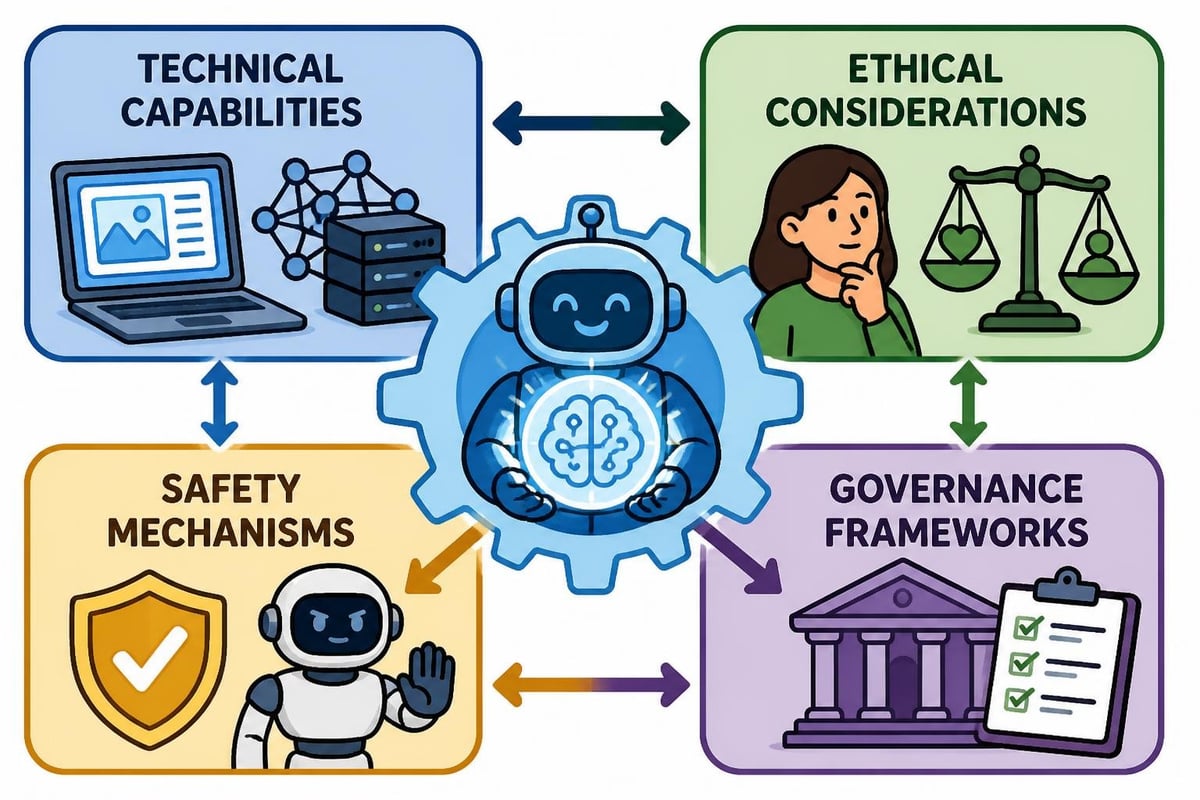
Integration of Ethical Considerations and Responsible AI
No generative AI course is complete without serious treatment of ethics, safety, and responsible deployment. As these systems become more powerful and accessible, understanding their societal implications becomes as important as mastering their technical operation.
Core Ethical Topics
Students must grapple with real challenges that emerge when deploying generative systems at scale.
- Bias and Fairness: How training data biases propagate through generated content and methods for detection and mitigation
- Misinformation and Deepfakes: Technical and policy approaches to authenticating content and preventing harmful generation
- Intellectual Property: Legal and ethical questions around training data, generated outputs, and commercial use
- Privacy and Data Protection: Safeguarding personal information in training sets and preventing model memorization
- Environmental Impact: Energy consumption of training and inference, sustainability considerations
Practical Safety Implementation
Beyond discussing ethics abstractly, effective courses teach concrete techniques for building safer systems.
- Content Filtering and Moderation: Implementing input and output validation
- Adversarial Testing: Red-teaming generative systems to discover failure modes
- Human-in-the-Loop Design: Building systems that appropriately defer to human judgment
- Audit Trails and Transparency: Creating systems that explain their generations and decision processes
- Incident Response: Planning for and responding to system failures or misuse
The NIST AI Resource Center provides practical frameworks and tools for operationalizing AI risk management, essential resources for students preparing to deploy generative systems in production environments.
Corporate Training and Team Upskilling Programs
Organizations face unique challenges when implementing generative AI capabilities across teams. A generative AI course designed for corporate contexts must address organizational readiness, cross-functional collaboration, and measurable business outcomes.
Team-Based Learning Approaches
Corporate programs succeed when they bring together diverse roles-engineers, product managers, designers, business analysts-to learn shared fundamentals while developing specialized skills relevant to each function.
Role-specific learning paths within a unified program:
| Role | Focus Areas | Key Deliverables |
|---|---|---|
| Engineers | Model training, deployment, optimization | Production-ready implementations |
| Product Managers | Capability assessment, roadmap planning | Feature specifications, success metrics |
| Designers | Prompt engineering, asset generation | User interface mockups, content prototypes |
| Business Analysts | ROI calculation, process automation | Process improvement proposals, cost-benefit analyses |
| Executives | Strategic positioning, competitive analysis | Investment recommendations, partnership strategies |
Organizations exploring AI management courses find that effective programs blend technical understanding with strategic decision-making frameworks that help leaders guide AI adoption across their enterprises.
Measuring Training ROI
Corporate stakeholders need evidence that generative AI training delivers business value. Effective programs establish clear metrics before training begins and track outcomes systematically.
Key performance indicators:
- Time reduction on content creation tasks
- Automation percentage for routine coding or documentation
- New product features enabled by generative capabilities
- Employee retention and satisfaction scores
- Internal innovation project proposals incorporating generative AI
- Customer-facing application deployments
The most successful corporate programs include post-training support that helps teams apply their learning to actual business challenges within 30-60 days of course completion.
Emerging Specializations in Generative AI Education
As the field matures, generative AI courses increasingly offer specialized tracks that address specific industries, use cases, or technical approaches. These focused programs serve learners with clear application domains who benefit from targeted instruction.
Domain-Specific Applications
Vertical specializations teach generative AI through the lens of particular industries or problem types.
- Healthcare and Life Sciences: Medical imaging generation, drug discovery, clinical documentation
- Creative Industries: Content production, design automation, artistic collaboration
- Software Development: Code generation, testing automation, documentation creation
- Financial Services: Report generation, risk modeling, algorithmic trading strategies
- Education: Personalized learning content, assessment generation, adaptive tutoring
Students pursuing AI trading courses or AI robotics courses benefit from instructors who understand both the generative AI techniques and the domain-specific requirements that shape successful applications.
Technical Specializations
Some learners need deep expertise in particular generative approaches rather than broad survey coverage.
- Large Language Model Engineering: Fine-tuning, prompt optimization, context window management
- Diffusion Model Development: Image and video generation, customization, style transfer
- Multimodal Systems: Coordinating text, image, audio, and video generation
- Reinforcement Learning from Human Feedback: Alignment, preference learning, safety tuning
- Efficient Inference Optimization: Quantization, pruning, distillation for deployment
These specializations often build on foundational courses, allowing students to progress from generalist understanding to expert-level capability in their chosen focus area.
Tools, Platforms, and Infrastructure Considerations
Technical education in generative AI must address the practical realities of development environments, computational resources, and software ecosystems. Students need guidance on selecting and configuring the tools that support their learning and work.
Development Environment Setup
Modern generative AI work spans multiple frameworks, each with strengths for different tasks. A comprehensive course provides experience with industry-standard tools while teaching students to evaluate new platforms as they emerge.
Essential toolkit components:
- Python environments (PyTorch, TensorFlow, JAX)
- API access to major LLM providers (OpenAI, Anthropic, Google)
- Vector database systems (Pinecone, Weaviate, Chroma)
- Experiment tracking (Weights & Biases, MLflow)
- Deployment platforms (HuggingFace, Replicate, cloud services)
Computational Resource Management
Understanding the relationship between model size, training time, and computational cost is essential for practical work. Students learn to make informed tradeoffs between model capability and resource constraints.
Courses should cover:
- Cloud GPU rental and management (AWS, GCP, Azure)
- Local development with consumer hardware limitations
- Optimization techniques that reduce compute requirements
- Cost estimation and budgeting for training experiments
- Free tier resources and academic credits for learning
Continuous Updates and Staying Current
Perhaps the greatest challenge in generative AI education is maintaining relevance as research advances at unprecedented speed. The best generative AI course today becomes outdated within months unless actively maintained and updated.
Content Update Mechanisms
Quality programs implement systematic processes for incorporating new developments without destabilizing core curriculum.
- Quarterly Content Reviews: Assess which techniques have become standard practice and which remain experimental
- Modular Course Structure: Update individual units without rerecording entire programs
- Supplementary Webinars: Address breakthrough papers and new capabilities between major releases
- Community Contributions: Leverage student discoveries and experiments to enhance curriculum
- Industry Partnership: Maintain connections with AI companies to understand emerging needs
Building Adaptable Learning Skills
Beyond teaching current techniques, effective courses develop meta-skills that enable continuous learning as the field evolves.
Students learn to:
- Read and implement research papers efficiently
- Evaluate new frameworks and tools systematically
- Join and contribute to technical communities
- Experiment safely with beta features and new releases
- Distinguish fundamental concepts from temporary trends
This approach transforms a generative AI course from a one-time credential into a foundation for career-long learning and adaptation.
Mastering generative AI requires structured education that balances theoretical foundations with hands-on application across progressively complex projects. Whether you're an individual professional seeking to enhance your capabilities or an organization preparing your team for AI-driven workflows, the right training program accelerates competency development while building adaptable skills that remain valuable as the field evolves. MammothClub delivers this comprehensive approach through 3,000+ on-demand courses, interactive bootcamps, and corporate certification programs, combining technical depth with AI-powered learning tools that make training measurable and results-driven for professionals and organizations competing in the AI era.