.png)
In 2025, the rapid integration of AI systems across industries highlights the urgent need for responsible use. High-profile ethical failures have shown that neglecting ai ethics training can lead to real-world consequences, from biased decisions to major breaches of public trust.
This guide offers a clear roadmap for mastering ai ethics training, giving organizations and professionals the tools to navigate the evolving world of responsible AI. Inside, you will explore the latest ethical challenges, regulatory changes, and proven steps for implementing effective training.
Ready to future-proof your AI initiatives? Let’s begin with a step-by-step blueprint for ethical success.
The Evolving Landscape of AI Ethics in 2025
As organizations accelerate their adoption of artificial intelligence, the need for robust ai ethics training has never been more urgent. In 2025, the landscape is shaped by rapid innovation, rising risks, and an evolving web of regulations. Understanding these dynamics is essential for anyone seeking to build responsible, future-proof AI systems.
Key Drivers Shaping AI Ethics
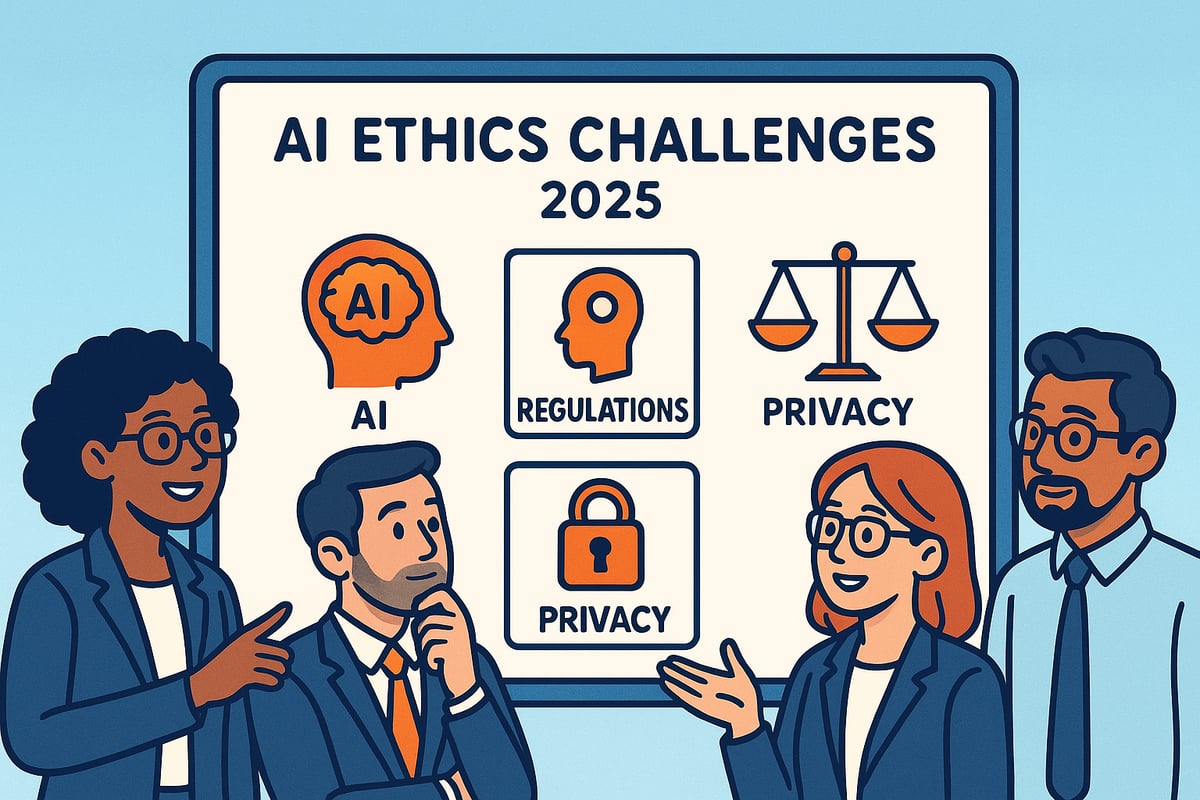
Several powerful forces are redefining how organizations approach ai ethics training in 2025. The widespread integration of AI across sectors like healthcare, finance, and public services has brought both opportunity and scrutiny. As AI becomes central to decision-making, its ethical implications have moved into the spotlight.
High-profile failures, such as biased facial recognition or flawed recruitment algorithms, have eroded public trust. These events underscore the importance of ethical safeguards. The rise of generative AI, deepfakes, and autonomous systems introduces new dilemmas, from misinformation to loss of human oversight.
Stakeholder expectations are also evolving. Consumers demand transparency and fairness, while regulators and advocacy groups push for greater accountability. According to Gartner (2024), 68% of organizations now cite ethics as a top AI concern.
Key drivers shaping the landscape:
Surge in AI adoption and its ethical consequences
Societal response to high-profile AI failures
Generative AI and deepfakes creating novel risks
Heightened scrutiny from regulators, consumers, and advocates
Data showing growing prioritization of ai ethics training
These drivers are prompting organizations to invest in comprehensive ai ethics training that addresses both current and emerging risks.
Emerging Regulatory and Industry Standards
Regulatory frameworks are evolving quickly to keep pace with AI's impact. In 2025, major regions have introduced stringent rules to guide ethical AI development. The EU AI Act sets a global benchmark, establishing risk-based requirements for AI deployment. The US Blueprint for an AI Bill of Rights outlines principles for transparency, privacy, and civil rights. China has issued its own governance guidelines, emphasizing national security and social harmony.
Industry-led frameworks add another layer. Standards from IEEE and ISO/IEC, along with sector-specific codes of conduct, are shaping best practices. Increasingly, organizations seek certifications and compliance badges to demonstrate ethical readiness.
A comparative table of major regulatory frameworks:
Region/Framework | Focus Areas | Compliance Features |
|---|---|---|
EU AI Act | Risk management, transparency | Mandatory audits, reporting |
US Blueprint | Privacy, fairness, explainability | Voluntary guidelines |
China Guidelines | Security, social stability | Government oversight |
For a deeper exploration of these emerging standards and their implications, see AI trends for 2025: AI regulation, governance and ethics.
As new certifications emerge, organizations are integrating regulatory requirements directly into their ai ethics training programs. This ensures teams stay compliant and competitive as the landscape shifts.
Common AI Ethics Challenges in 2025
Despite advances in policy and awareness, significant challenges persist. Algorithmic bias remains a critical issue, especially in high-stakes domains like healthcare and criminal justice. Ensuring fairness in automated decisions is a top priority for ai ethics training initiatives.
Transparency and explainability are equally important. Complex AI models can act as black boxes, making it difficult to understand or contest their outputs. Responsible data sourcing and privacy protection are ongoing concerns, particularly with the expansion of biometric and surveillance technologies.
Societal impacts such as job displacement and increased surveillance present ethical dilemmas that reach beyond technology teams. Real-world cases—like misuse of biometric AI in public spaces or biased recruitment tools—highlight the need for vigilant oversight.
Addressing these challenges requires a holistic approach to ai ethics training, combining technical solutions with organizational culture and stakeholder engagement.
Core Principles of Responsible AI
Understanding the core principles of responsible AI is the foundation of effective ai ethics training. These principles guide organizations in building, deploying, and managing AI systems that foster trust and minimize harm.
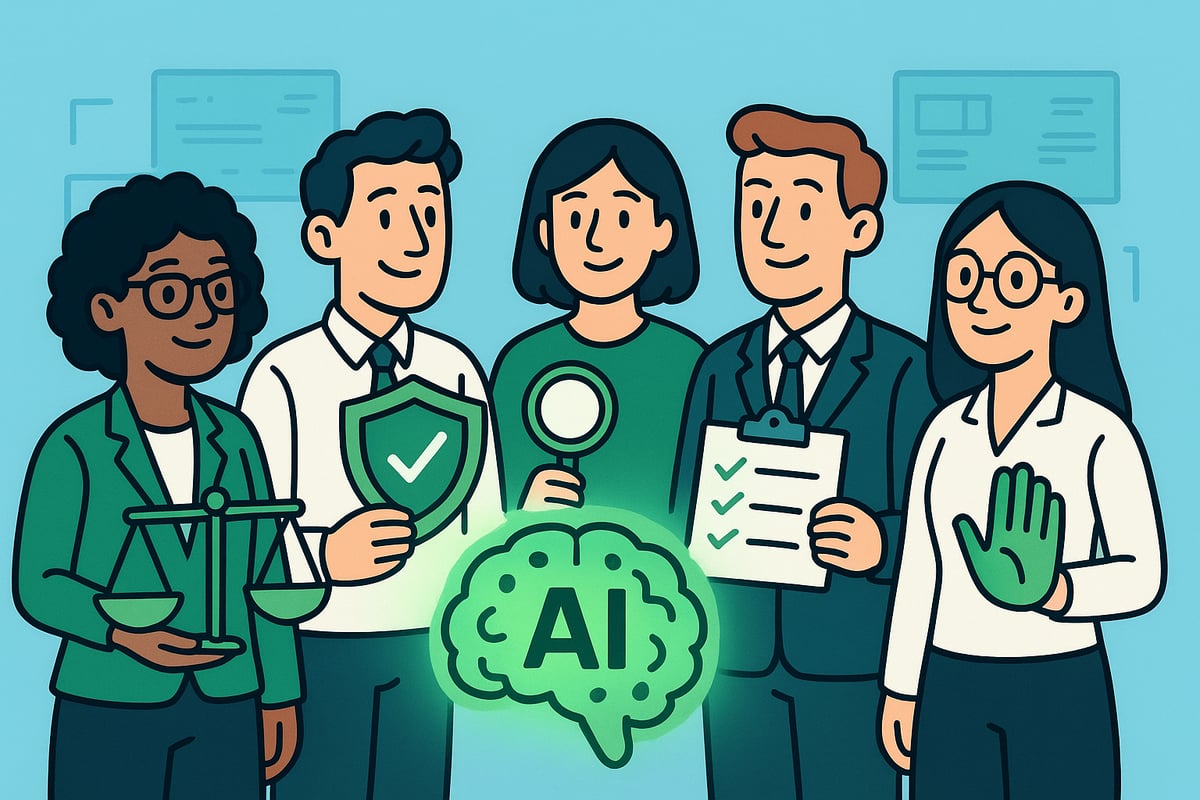
Fundamental Ethical Principles
Responsible AI rests on a set of well-established ethical principles, which every ai ethics training program must address. These principles ensure AI technologies serve humanity and avoid unintended consequences.
Fairness: AI systems should deliver equitable outcomes and prevent discrimination. This means ensuring algorithms do not reinforce bias against any group.
Accountability: Clear responsibility must be assigned for AI-driven decisions. Organizations need mechanisms to trace and explain outcomes.
Transparency: Stakeholders should understand how AI models make decisions. Transparent processes help build trust and facilitate regulatory compliance.
Privacy and Data Protection: Personal and sensitive data must be safeguarded. AI systems should comply with privacy laws and ethical standards for data use.
Human Oversight: Humans should remain involved in critical decisions. Oversight ensures that AI complements, rather than replaces, human judgment.
Embedding these principles into ai ethics training prepares teams to anticipate ethical risks. For example, by prioritizing transparency, organizations can meet stakeholder expectations and regulatory demands.
Applying Principles in Practice
Translating ethical principles into daily operations is a central goal of ai ethics training. Effective programs use real-world scenarios to show how these values shape outcomes across sectors.
Consider healthcare, where fairness ensures diagnosis tools do not disadvantage minority populations. In finance, accountability means tracing credit decisions to prevent unjust denials. Public sector organizations, meanwhile, rely on transparency to maintain public trust and explain automated processes.
Balancing innovation with risk mitigation is essential. Cross-functional collaboration is key, involving IT, legal, HR, and compliance teams. According to McKinsey, 74% of AI leaders now prioritize transparency to build stakeholder trust.
Aligning ai ethics training with global standards is vital as regulations evolve. Many organizations look to frameworks like those discussed in AI Governance in 2025: Navigating Global AI Regulations and Ethical Frameworks to guide their programs.
By embedding these principles and practices, organizations set the stage for responsible AI that stands up to scrutiny and change.
Step-by-Step AI Ethics Training Framework
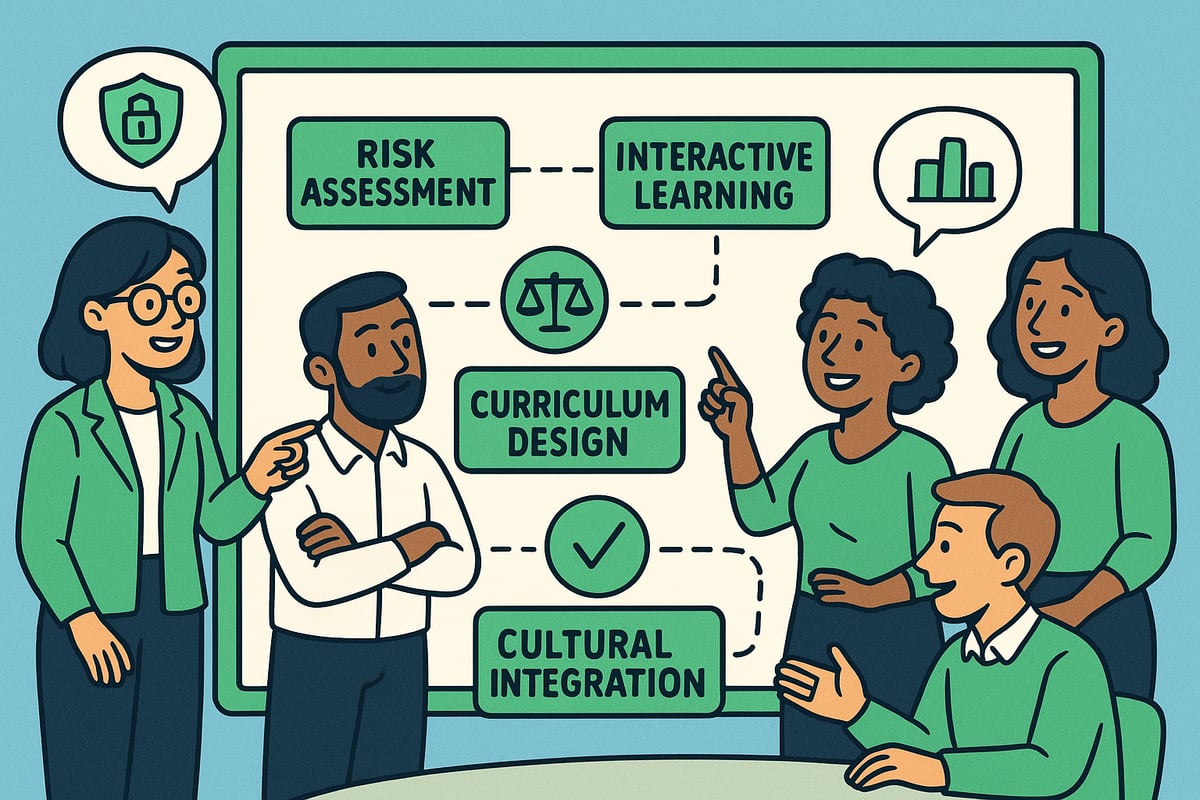
Mastering ai ethics training requires a structured approach that aligns with your organization's unique needs, regulatory environment, and culture. The following five-step framework provides a practical blueprint to guide professionals and teams through every phase of responsible AI adoption.
Step 1: Assessing Organizational Needs and Risks
Every successful ai ethics training initiative starts with a clear understanding of where you stand. Begin by conducting a thorough AI ethics risk assessment. Evaluate current and planned AI projects, mapping out where ethical challenges such as bias or privacy concerns may arise.
Engage representatives from technical, legal, compliance, and operational teams to gain a holistic perspective. Consider using the AI fluency assessment tool to benchmark your organization's current AI and ethics knowledge. This diagnostic step helps identify critical gaps, prioritize high-impact use cases, and set measurable training goals.
Identify current AI deployments and their ethical risks
Gather input from diverse internal stakeholders
Document findings to inform the training strategy
By clarifying your risk landscape, you lay a strong foundation for targeted ai ethics training.
Step 2: Designing a Tailored AI Ethics Curriculum
With risks and needs identified, the next step is to build an ai ethics training curriculum that addresses your organization's specific context. Core topics should include:
Bias mitigation strategies
Explainability and transparency techniques
Data privacy and responsible data sourcing
Navigating regulatory compliance requirements
Customize content for different audiences, such as technical teams, managers, and executives, to ensure relevance and engagement. Incorporate real-world case studies and interactive scenarios to bridge theory and practice.
Collaboration between IT, legal, HR, and compliance departments is essential to shape a curriculum that supports both innovation and risk mitigation. This approach ensures that ai ethics training resonates across all levels of your organization.
Step 3: Delivering Effective Training Programs
Delivering ai ethics training requires a blend of instructional methods to maximize impact. Utilize a combination of in-person workshops, e-learning modules, and real-world simulations to cater to diverse learning preferences.
Gamification and interactive exercises can increase engagement and knowledge retention. Determine the optimal frequency—ongoing microlearning often yields better results than one-off sessions.
Key practices include:
Scheduling regular refresher courses
Incorporating scenario-based learning
Providing resources for self-paced study
By embracing a flexible, learner-centric strategy, you build an environment where ai ethics training becomes an ongoing part of professional development.
Step 4: Measuring Training Effectiveness and Impact
To ensure your ai ethics training drives meaningful change, establish clear metrics for success. Define key performance indicators (KPIs) such as:
Knowledge retention rates
Behavioral changes observed post-training
Compliance with relevant regulations
Implement pre- and post-training assessments to measure learning outcomes. Gather feedback from participants to identify areas for improvement.
Regularly review training results and adjust content or delivery methods as needed. Continuous measurement not only demonstrates value but also fosters a culture of accountability around ethical AI practices.
Step 5: Embedding Ethics into Organizational Culture
Sustained impact from ai ethics training requires integration into daily operations and long-term strategy. Appoint AI ethics champions to advocate for responsible practices across teams.
Create cross-functional committees that oversee ethical considerations throughout the AI project lifecycle. Embed ethical checkpoints in project workflows and recognize employees who demonstrate ethical leadership.
Establish incentives for ethical behavior
Include ethics criteria in performance evaluations
Communicate successes and lessons learned organization-wide
By making ai ethics training part of your organization's DNA, you ensure that responsible AI is not just a compliance requirement, but a competitive advantage and a core value.
Best Practices for Implementing Responsible AI
Implementing responsible AI is not just about technology—it is about people, process, and culture. To make the most of ai ethics training, organizations must embed best practices at every stage of their AI journey. Here, we break down proven strategies to ensure your efforts drive real impact.
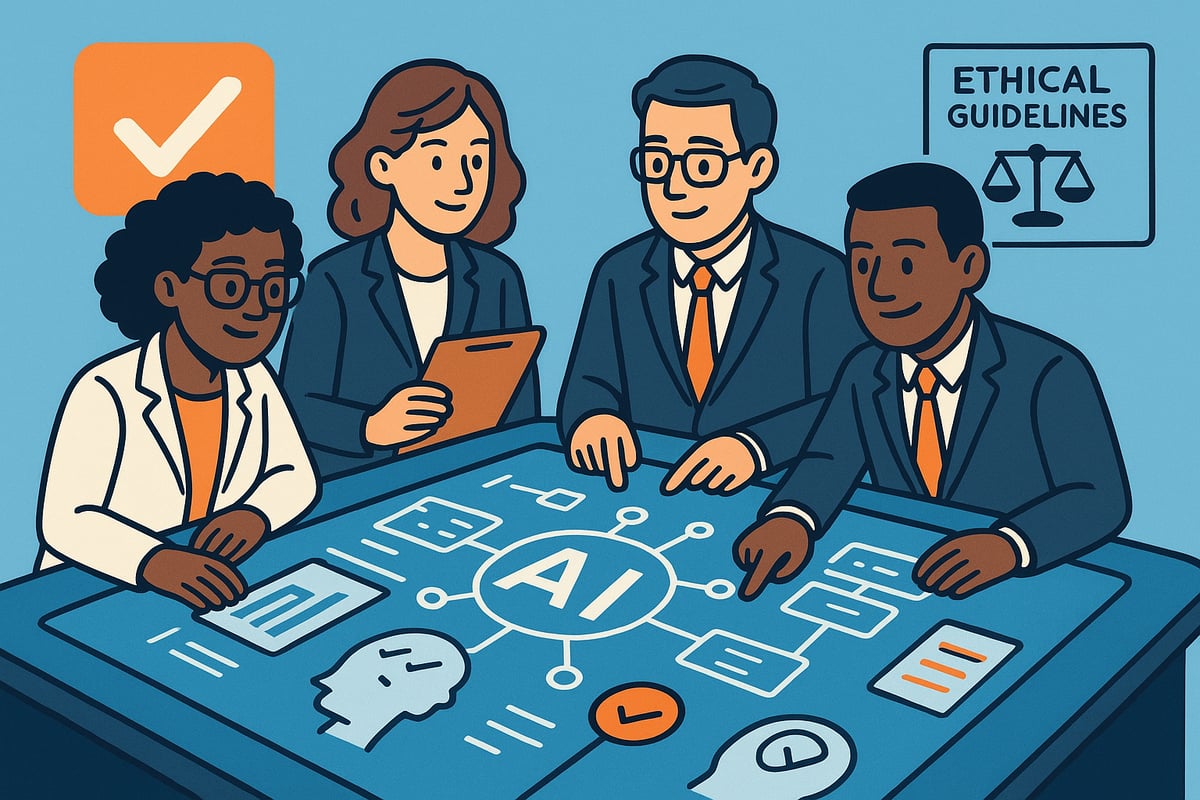
Building a Multidisciplinary AI Ethics Team
A robust ai ethics training program starts with the right team. Responsible AI requires collaboration between data scientists, ethicists, legal experts, and business leaders. Each role brings unique perspectives to identify, assess, and address ethical risks in AI systems.
To maximize impact, organizations should:
Form cross-functional committees dedicated to AI ethics.
Schedule regular meetings for open dialogue and knowledge sharing.
Empower team members to act as ai ethics training champions within their departments.
Encourage ongoing learning and professional development.
By uniting diverse expertise, teams can anticipate challenges and set the tone for ethical innovation. This approach ensures that ai ethics training is not siloed but becomes a shared organizational priority.
Integrating Ethics into the AI Lifecycle
Embedding ethics into every stage of the AI lifecycle is crucial for sustainable, responsible outcomes. ai ethics training should emphasize the importance of ethical checkpoints from design to deployment.
Key practices include:
Conducting ethical impact assessments during model development.
Using tools like Model Cards and Datasheets for Datasets to document decisions.
Reviewing and updating ethical guidelines as technology evolves.
By making ethics a continuous thread throughout the lifecycle, organizations reduce the risk of unintended consequences. ai ethics training empowers teams to apply these frameworks consistently, creating a culture of accountability.
Continuous Monitoring and Auditing
Responsible AI does not end at deployment. Ongoing monitoring and auditing are essential to detect, diagnose, and correct ethical issues as they arise. ai ethics training should cover the setup of feedback loops and incident reporting systems.
Best practices involve:
Implementing AI audit tools for bias detection and explainability.
Setting up dashboards to track ethical performance metrics.
Regularly reviewing compliance with internal and external standards.
Continuous improvement is only possible when teams are equipped to measure and respond to real-world outcomes. ai ethics training ensures everyone understands their role in this ongoing process.
Engaging Stakeholders and Increasing Transparency
Transparency builds trust with users, regulators, and the public. Effective ai ethics training includes strategies for stakeholder engagement and clear communication.
Organizations should:
Publish accessible AI ethics policies and transparency reports.
Involve end-users and affected communities in system design.
Use feedback to refine AI practices and address concerns.
For teams seeking tailored resources, Business AI training solutions offer comprehensive programs that help organizations address unique stakeholder needs, making ai ethics training actionable and relevant.
Example: Leading Companies’ Approaches in 2025
In 2025, industry leaders are setting new benchmarks for responsible AI through practical application of ai ethics training. For example, a global financial services firm now uses real-time bias monitoring in its loan approval algorithms, reducing discrimination and increasing regulatory compliance.
In the public sector, smart city projects integrate transparent AI usage dashboards for residents, ensuring accountability and openness. These examples highlight how organizations leverage ai ethics training not just for compliance, but as a driver of innovation and public trust.
Tools, Resources, and Certification Paths for AI Ethics Training
In 2025, organizations and professionals face greater pressure than ever to master ai ethics training. The right combination of platforms, toolkits, and credentials is crucial to building expertise and future-proofing responsible AI initiatives.
Leading AI Ethics Training Platforms and Resources
Selecting the right ai ethics training platform requires evaluating content depth, flexibility, and alignment with industry standards.
Here is a comparison of top platforms:
Platform | Key Features | Certification | Industry Relevance |
|---|---|---|---|
Coursera | University-led, interactive modules | Yes | Broad, academic focus |
edX | Rigorous, self-paced, global reach | Yes | Recognized, wide selection |
MammothClub | 3,000+ AI/tech courses, dashboards | Yes | Real-world, compliance-led |
MammothClub stands out by offering a vast AI and tech course catalog with adaptive learning paths and real-world scenarios. These features support both foundational and advanced ai ethics training needs for organizations.
Blended learning options, such as workshops and simulations, are also growing in popularity. Look for platforms offering certification tracks, progress dashboards, and case-based learning to maximize impact.
Essential AI Ethics Toolkits
Effective ai ethics training relies on practical tools that help teams detect bias, explain decisions, and protect privacy. Open-source toolkits are widely adopted for their transparency and adaptability.
Key resources include:
AI Fairness 360: Detects and mitigates bias in datasets and models.
What-If Tool: Interactive model inspection for fairness and performance.
LIME and SHAP: Explainability libraries for interpreting complex AI outputs.
TensorFlow Privacy and OpenMined: Enable privacy-preserving machine learning.
These toolkits are frequently integrated into ai ethics training programs, allowing learners to apply ethical principles directly to real-world data and models.
Hands-on experience with these solutions ensures organizations can build, audit, and deploy AI systems responsibly.
Certification Programs and Career Pathways
With demand for skilled professionals rising, ai ethics training certifications are increasingly valuable. Recognized credentials include IEEE’s Certified AI Ethics Professional, ISO/IEC’s AI ethics standards, and sector-specific certificates.
A typical ai ethics training career roadmap involves foundational courses, practical tool experience, and formal certification. Many programs offer stackable micro-credentials, making it easier to demonstrate ongoing learning.
According to LinkedIn, there has been a 43 percent increase in AI ethics-related job postings since 2023. This trend highlights the importance of formal recognition and continuous development for professionals.
Employers now prioritize candidates with both hands-on skills and official credentials, ensuring a workforce ready for ethical AI challenges.
Staying Ahead: Keeping Up with Evolving Standards
Staying current in ai ethics training means more than earning a certificate. Professionals must engage with communities, attend conferences, and subscribe to relevant newsletters.
Ongoing learning is supported by platforms that regularly update content to reflect new laws and ethical standards. For those seeking alternatives to traditional options, EdX alternative for AI courses provides flexible pathways for continuous growth.
Active participation in ethics working groups and policy discussions fosters a culture of shared responsibility. By embracing professional development and knowledge sharing, organizations can adapt their ai ethics training programs to an ever-changing regulatory landscape.
Future Trends in AI Ethics Training
As AI continues to evolve, the future of ai ethics training is rapidly transforming to meet new complexities. Organizations must look beyond today’s best practices and anticipate challenges that will define the next era of responsible AI. Staying proactive in this landscape is essential to safeguard trust, compliance, and innovation.
Anticipating Next-Generation Ethical Challenges
The landscape of AI is shifting quickly, bringing new ethical dilemmas. By 2025, autonomous agents, AI-generated content, and synthetic media present risks that traditional frameworks cannot fully address. Deepfakes and generative models challenge our ability to verify information, while the collaboration between humans and AI raises questions about accountability and trust.
To prepare, ai ethics training must evolve to cover these scenarios. Professionals need guidance on emerging risks and decision-making in environments where boundaries between human and machine intelligence blur. For more on how these trends shape the future, explore The Future of AI Governance: What 2025 Holds for Ethical Innovation.
Advances in AI Ethics Training Methodologies
Training approaches are advancing alongside AI itself. Adaptive, AI-powered learning platforms now deliver personalized ai ethics training, adjusting content based on individual progress. Immersive technologies like VR and AR create realistic simulations, helping employees practice ethical decision-making in lifelike scenarios.
Microlearning modules provide just-in-time guidance, supporting busy professionals without overwhelming them. These innovations ensure ai ethics training remains engaging, relevant, and practical for organizations facing rapidly changing environments.
The Role of Global Collaboration and Policy
Global alignment is becoming crucial as AI crosses borders. International organizations, such as OECD, UNESCO, and G20, are working to harmonize ethical standards. Cross-border data flows and varying regulations demand that ai ethics training programs address compliance across multiple jurisdictions.
Staying informed about AI Regulations in 2025: How Global AI Laws Are Changing and What Businesses Must Do helps organizations anticipate new compliance requirements and adapt their training accordingly. Collaboration between nations and sectors is key to building trust and ensuring responsible AI worldwide.
Preparing for the Unknown: Building Resilient AI Ethics Programs
The future is unpredictable, but organizations can build resilience by making ai ethics training adaptable. Scenario planning and ethical foresight exercises help teams respond to unexpected challenges. Encouraging a culture of ethical innovation ensures that employees are prepared to handle new situations responsibly.
Agility is vital. Regularly updating training materials and policies keeps organizations ahead of emerging risks. As AI technologies advance, ongoing commitment to ai ethics training will be the foundation for responsible, future-proof AI initiatives.
As you navigate the evolving world of AI ethics, it’s clear that staying ahead means more than just knowing the rules—it’s about developing the skills and confidence to lead responsibly. We’ve explored the challenges, best practices, and essential steps for building a robust AI ethics program. If you’re ready to take the next step, why not get certified and strengthen your foundation? You can start your journey today—at your own pace—with expert-led resources designed for real-world impact. Explore what it means to become a trusted leader in responsible AI:
Become a certified AI Foundation Specilaist. Start for free