Artificial intelligence has transformed from a specialized field into a foundational skill required across nearly every industry. As organizations race to integrate AI capabilities, professionals need structured, credible learning paths to build competency quickly. Microsoft Learn AI Fundamentals represents one of the most accessible and comprehensive entry points into AI education, combining theoretical knowledge with practical Azure cloud implementation. This program serves as the cornerstone for anyone seeking to understand machine learning, natural language processing, computer vision, and conversational AI within the Microsoft ecosystem.
Understanding the Microsoft Learn AI Fundamentals Framework
The microsoft learn ai fundamentals program is built around a structured approach to teaching artificial intelligence concepts without requiring extensive programming experience or advanced mathematics. Microsoft designed this pathway specifically for business professionals, aspiring data scientists, and technologists who need practical AI knowledge applicable to real-world scenarios.
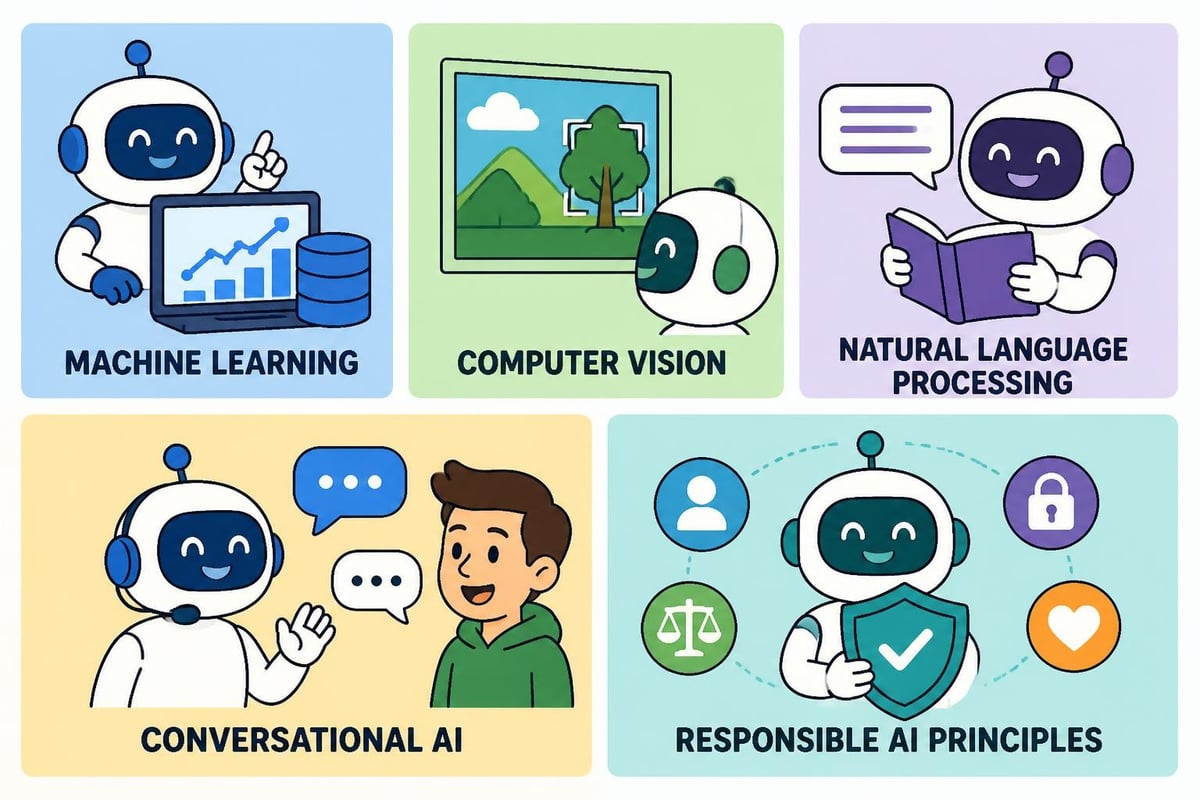
The framework covers five core domains that form the foundation of modern AI systems:
- Machine learning principles and model types
- Computer vision capabilities for image and video analysis
- Natural language processing for text understanding
- Conversational AI through chatbots and virtual agents
- Responsible AI practices and ethical considerations
These domains align directly with Azure AI services, enabling learners to immediately apply concepts using Microsoft's cloud platform. The program emphasizes hands-on learning through interactive modules, labs, and sandbox environments where students can experiment without financial risk.
Learning Path Structure and Progression
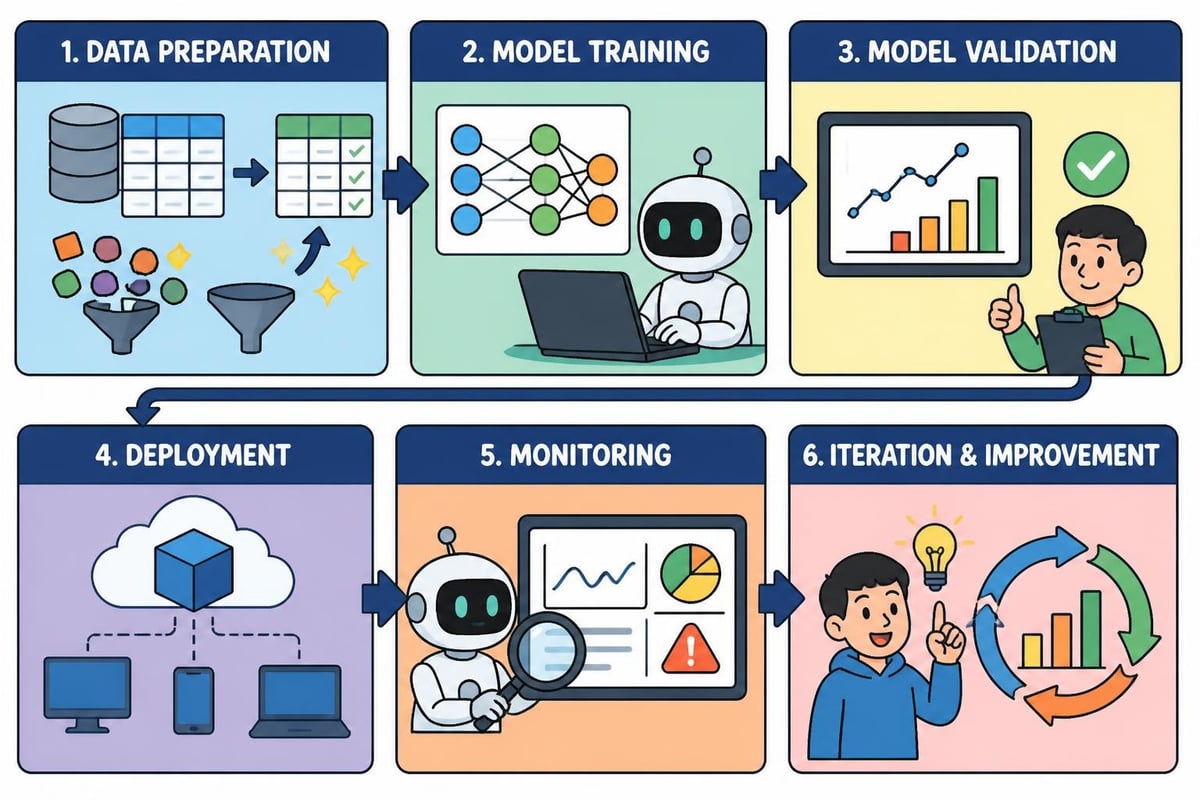
Microsoft structures the microsoft learn ai fundamentals content into digestible modules that build upon each other systematically. Each module typically requires 30-60 minutes to complete, making it feasible for working professionals to progress during lunch breaks or after hours.
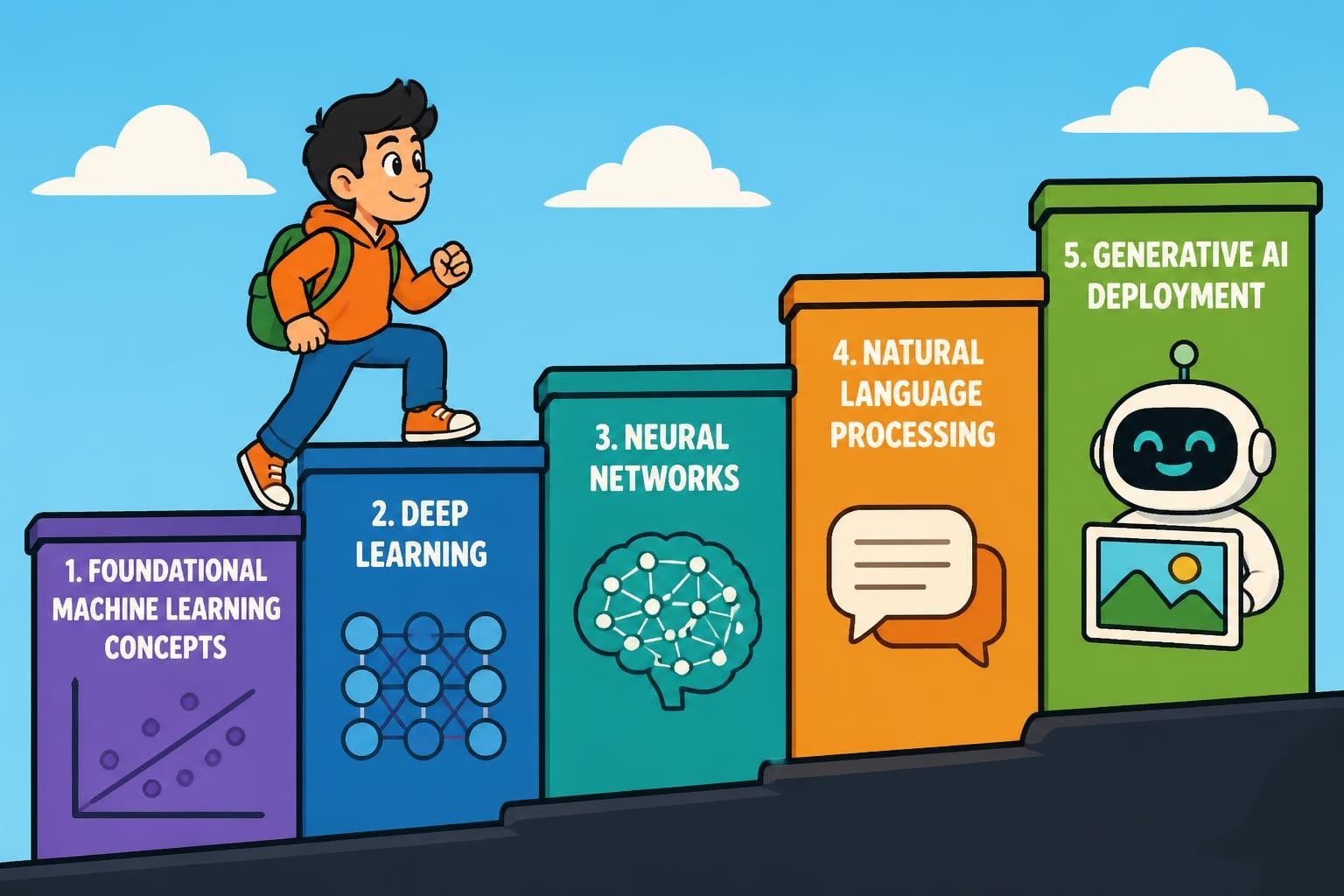
The learning path begins with fundamental AI concepts, explaining how machines process data to make predictions and decisions. From there, it advances through specialized AI workloads, demonstrating how different algorithms solve specific business problems. This progression mirrors how organizations typically adopt AI, starting with simple automation and advancing toward sophisticated predictive systems.
Many professionals complement this foundation with AI specialization courses that dive deeper into specific domains after completing the fundamentals. This layered approach ensures learners build comprehensive skills rather than scattered knowledge.
Certification Value and Career Impact
The Microsoft Certified: Azure AI Fundamentals credential validates foundational knowledge of machine learning and artificial intelligence concepts, along with related Azure services. This certification demonstrates to employers that you understand AI terminology, workflows, and implementation considerations within enterprise environments.
Certification Exam Details
| Aspect | Details |
|---|---|
| Exam Code | AI-900 |
| Duration | 45 minutes |
| Question Format | Multiple choice, case studies |
| Passing Score | 700/1000 |
| Cost | $99 USD |
| Renewal | Not required (fundamentals level) |
The Azure AI Fundamentals certification serves as an excellent starting point before pursuing more advanced credentials like Azure Data Scientist Associate or Azure AI Engineer Associate. Many organizations now include this certification in job requirements for roles involving AI strategy, project management, or technical sales.
Professionals who complete the microsoft learn ai fundamentals program report increased confidence when discussing AI initiatives with technical teams and stakeholders. This common language becomes particularly valuable in cross-functional projects where business objectives must align with technical capabilities.
Career Paths and Opportunities
Completing AI fundamentals training opens diverse career trajectories across industries. Marketing professionals use AI knowledge to implement personalization engines and predictive analytics. Project managers leverage AI understanding to scope initiatives realistically and manage vendor relationships effectively. Even finance teams benefit from comprehending how AI impacts forecasting and risk assessment.
The credential particularly benefits:
- Business analysts translating requirements into AI solutions
- Product managers defining AI-powered features
- IT professionals supporting AI infrastructure
- Consultants advising on digital transformation
- Entrepreneurs evaluating AI opportunities
According to industry research, professionals with AI certifications command salary premiums averaging 15-25% compared to peers without formal credentials. This financial incentive combined with increasing demand makes microsoft learn ai fundamentals an attractive investment in professional development.
Key Concepts Covered in the Curriculum
Machine Learning Fundamentals
The machine learning section introduces core concepts including supervised learning, unsupervised learning, and reinforcement learning. Students learn when to apply regression versus classification algorithms, how to evaluate model performance, and what factors influence prediction accuracy.
Practical examples demonstrate how regression models forecast sales, classification algorithms detect fraudulent transactions, and clustering techniques segment customers. These real-world applications help learners connect abstract concepts to business value.
The curriculum emphasizes that explaining AI fundamentals requires demystifying complex mathematics into operational understanding. You don't need to derive algorithms from scratch, but you must comprehend their inputs, outputs, and limitations.
Computer Vision Applications
Computer vision modules explore how AI systems interpret visual information from images and videos. The training covers object detection, image classification, optical character recognition, and facial recognition technologies.
Students work with Azure Computer Vision services to:
- Upload and analyze images for content moderation
- Extract text from documents using OCR capabilities
- Detect and track objects in video streams
- Generate image descriptions automatically
- Implement custom vision models for specific use cases
Understanding computer vision proves essential as organizations increasingly deploy visual AI for quality control, security monitoring, retail analytics, and autonomous systems. The microsoft learn ai fundamentals program provides enough depth to evaluate vendor solutions intelligently without requiring computer science expertise.
Natural Language Processing and Understanding
Natural language processing (NLP) represents one of the most rapidly advancing AI domains, with applications ranging from sentiment analysis to document summarization. The fundamentals curriculum introduces key NLP concepts including tokenization, entity recognition, key phrase extraction, and language translation.
Learners discover how Azure services process unstructured text to extract insights, automate customer service, and enable multilingual communication. Practical exercises demonstrate analyzing customer feedback, categorizing support tickets, and building searchable knowledge bases.
For professionals seeking deeper expertise, platforms like MammothClub offer advanced NLP courses that extend beyond fundamentals into transformer models, fine-tuning, and production deployment strategies.
Conversational AI and Bot Development
The conversational AI section teaches how intelligent chatbots and virtual agents work, covering dialogue management, intent recognition, and context handling. Students learn to design conversation flows, implement FAQ bots, and integrate with existing business systems.
Microsoft emphasizes responsible design principles for conversational AI, ensuring bots clearly identify as automated systems and gracefully handle unexpected inputs. These ethical considerations become increasingly important as organizations deploy AI systems that directly interact with customers and employees.
Hands-On Learning and Practice Environments
One significant advantage of the microsoft learn ai fundamentals program involves its extensive hands-on components. Microsoft provides free sandbox environments where learners experiment with Azure AI services without incurring charges or risking production systems.
These practice environments include:
- Interactive coding exercises with pre-configured Azure resources
- Guided projects solving realistic business scenarios
- Knowledge checks reinforcing key concepts
- Achievement badges tracking progress
The sandbox approach removes common barriers to cloud learning, particularly cost concerns and complex setup procedures. Students can immediately apply theoretical knowledge, reinforcing retention and building practical competence.
Many organizations integrate similar hands-on methodologies through AI training and placement programs that combine certification preparation with real-world project experience.
Responsible AI and Ethical Considerations
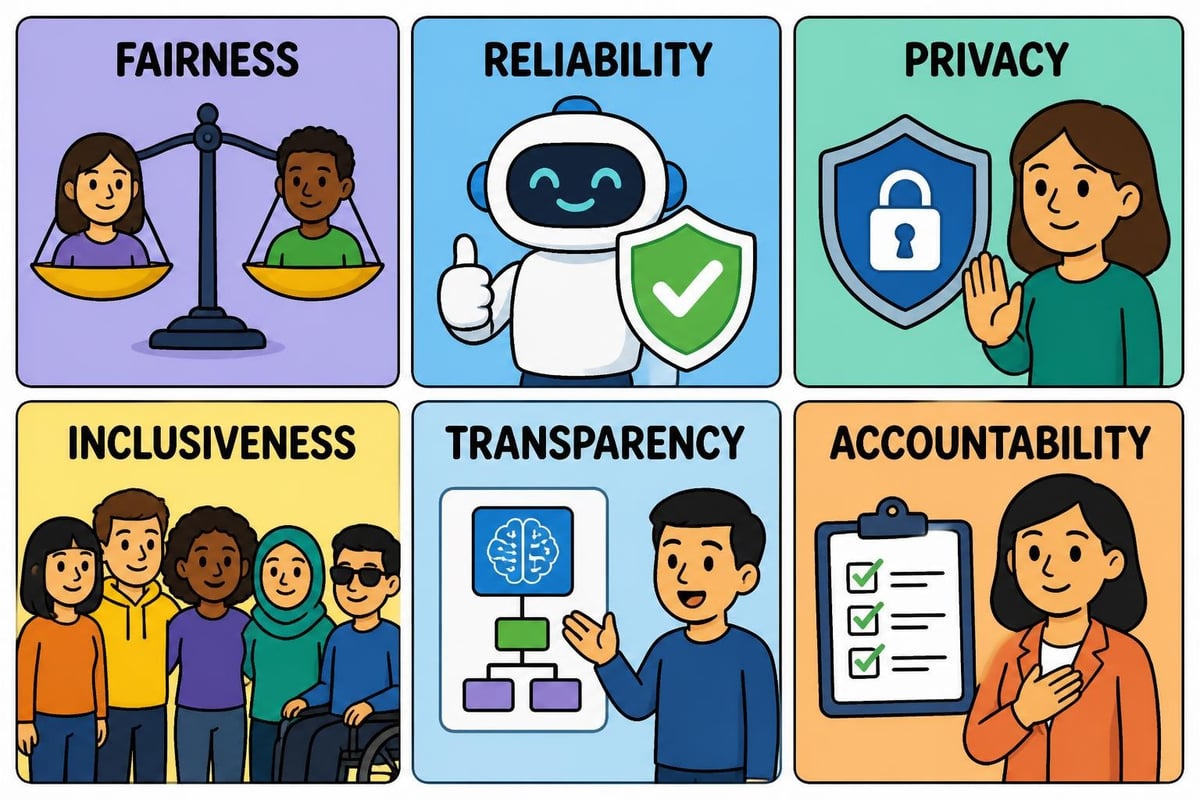
Microsoft dedicates substantial curriculum time to responsible AI principles, reflecting growing industry awareness of AI's societal impact. The microsoft learn ai fundamentals program covers six key principles that should guide AI development and deployment:
| Principle | Description |
|---|---|
| Fairness | AI systems should treat all people equitably |
| Reliability | AI should perform consistently and safely |
| Privacy | AI must protect personal data and respect confidentiality |
| Inclusiveness | AI should empower everyone and engage people |
| Transparency | AI systems should be understandable |
| Accountability | People should be accountable for AI systems |
These principles translate into practical considerations like testing for bias in training data, implementing appropriate human oversight, and ensuring explainability in high-stakes decisions. Understanding AI security fundamentals becomes increasingly critical as organizations face regulatory scrutiny and reputational risks.
Comparing Microsoft Learn to Alternative AI Fundamentals Programs
While microsoft learn ai fundamentals offers comprehensive Azure-focused training, professionals should understand how it compares to alternative learning paths from Google, Amazon, IBM, and independent platforms.
Microsoft strengths:
- Deep integration with Azure services
- Extensive free learning resources
- Industry-recognized certification
- Enterprise-focused use cases
- Strong responsible AI emphasis
Considerations:
- Platform-specific knowledge may not transfer directly to AWS or GCP
- Fundamentals level provides breadth over depth
- Self-paced learning requires strong motivation
- Limited instructor-led options in free tier
Alternatives like Google's AI fundamentals course emphasize TensorFlow and Google Cloud, while edX AI courses often provide more theoretical computer science foundations. The optimal choice depends on your existing technology stack, career objectives, and learning preferences.
Many professionals pursue multiple certifications to build cloud-agnostic AI knowledge. Platforms offering comprehensive AI courses enable learners to compare approaches and develop versatile skills applicable across different environments.
Preparation Strategies and Study Resources
Successfully completing the microsoft learn ai fundamentals certification requires strategic preparation beyond simply consuming content. Effective learners combine multiple resources and study techniques to reinforce understanding.
Recommended Study Approach
- Complete official Microsoft Learn modules sequentially to build foundational knowledge
- Practice with Azure AI services using free tier accounts
- Join study groups or forums to discuss challenging concepts
- Take practice exams to identify knowledge gaps
- Review incorrect answers thoroughly to understand mistakes
- Teach concepts to others to solidify understanding
Allocating 20-30 hours of focused study typically prepares motivated learners adequately for the AI-900 exam. Spreading preparation over 4-6 weeks allows concepts to solidify through spaced repetition rather than cramming.
Supplementing Microsoft's materials with AI for beginners courses provides alternative explanations that may clarify difficult topics. Different instructors emphasize various aspects, helping learners develop comprehensive understanding.
Common Preparation Mistakes to Avoid
Many candidates underestimate the exam's practical orientation, focusing excessively on memorizing definitions rather than understanding application scenarios. The AI-900 certification tests your ability to select appropriate AI services for specific business problems, not just recall terminology.
Other frequent mistakes include:
- Skipping hands-on labs in favor of passive reading
- Neglecting responsible AI principles sections
- Underestimating time required for computer vision topics
- Failing to understand cost and performance trade-offs
- Ignoring case study questions during practice
Integration with Organizational AI Strategies
For business leaders and decision-makers, understanding microsoft learn ai fundamentals content helps evaluate vendor proposals, assess team capabilities, and define realistic AI roadmaps. Organizations that invest in foundational AI literacy across departments experience more successful implementations and better ROI from AI initiatives.
Building AI-Ready Teams
Progressive organizations recognize that AI competency cannot reside exclusively within data science teams. Marketing, operations, finance, and human resources departments all benefit from AI fluency when:
- Identifying automation opportunities within existing workflows
- Evaluating AI vendor solutions critically rather than accepting marketing claims
- Collaborating effectively with technical teams on requirements
- Understanding privacy and compliance implications of AI systems
- Championing change management as AI transforms roles
Many enterprises sponsor microsoft learn ai fundamentals training for employees across functions, establishing common vocabulary and baseline understanding. This democratization of AI knowledge accelerates digital transformation by reducing communication barriers between business and technology stakeholders.
Corporate training programs often combine foundational certifications with specialized courses addressing industry-specific applications. For instance, financial services firms might emphasize AI in financial services while healthcare organizations focus on clinical decision support systems.
Advanced Learning Pathways After Fundamentals
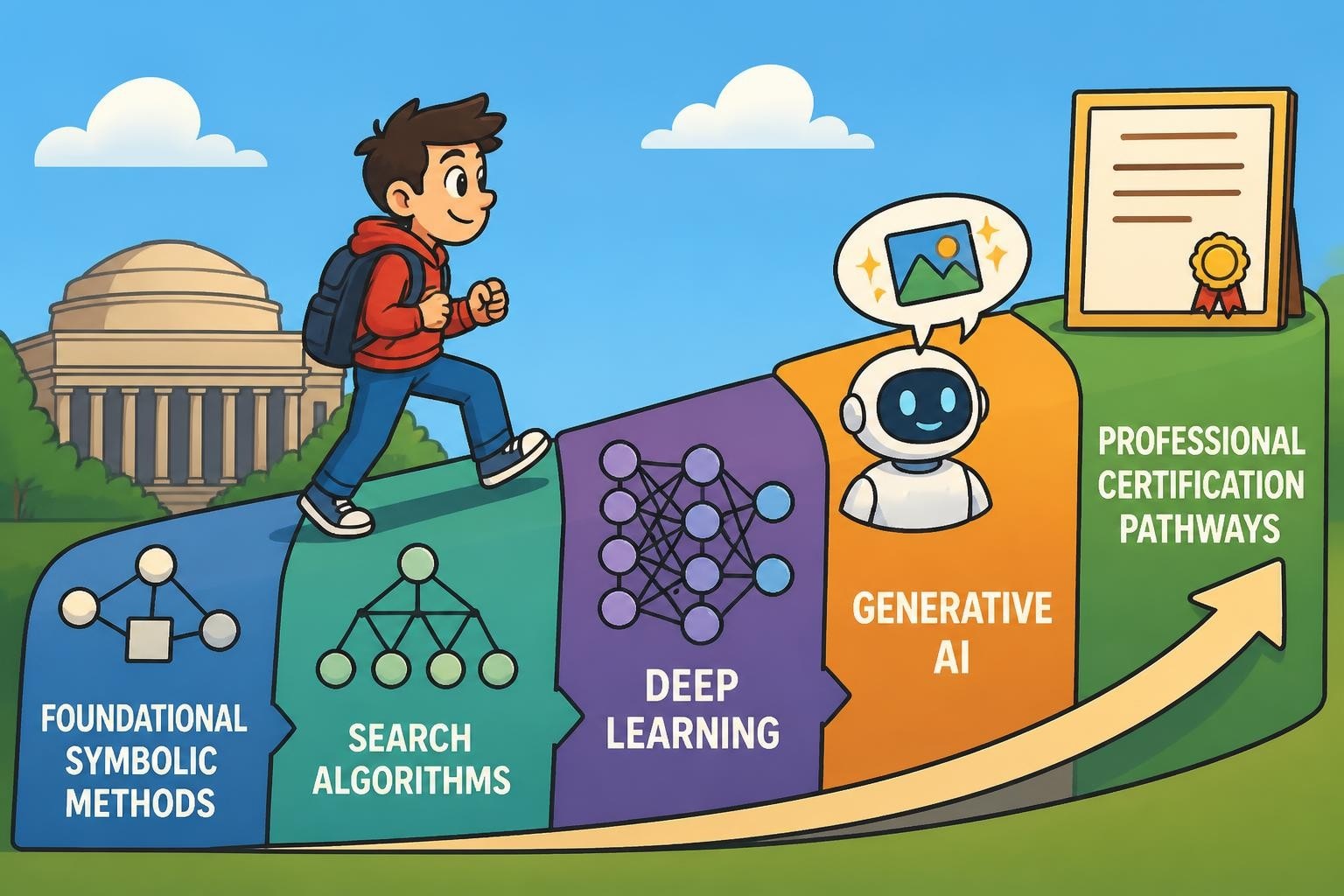
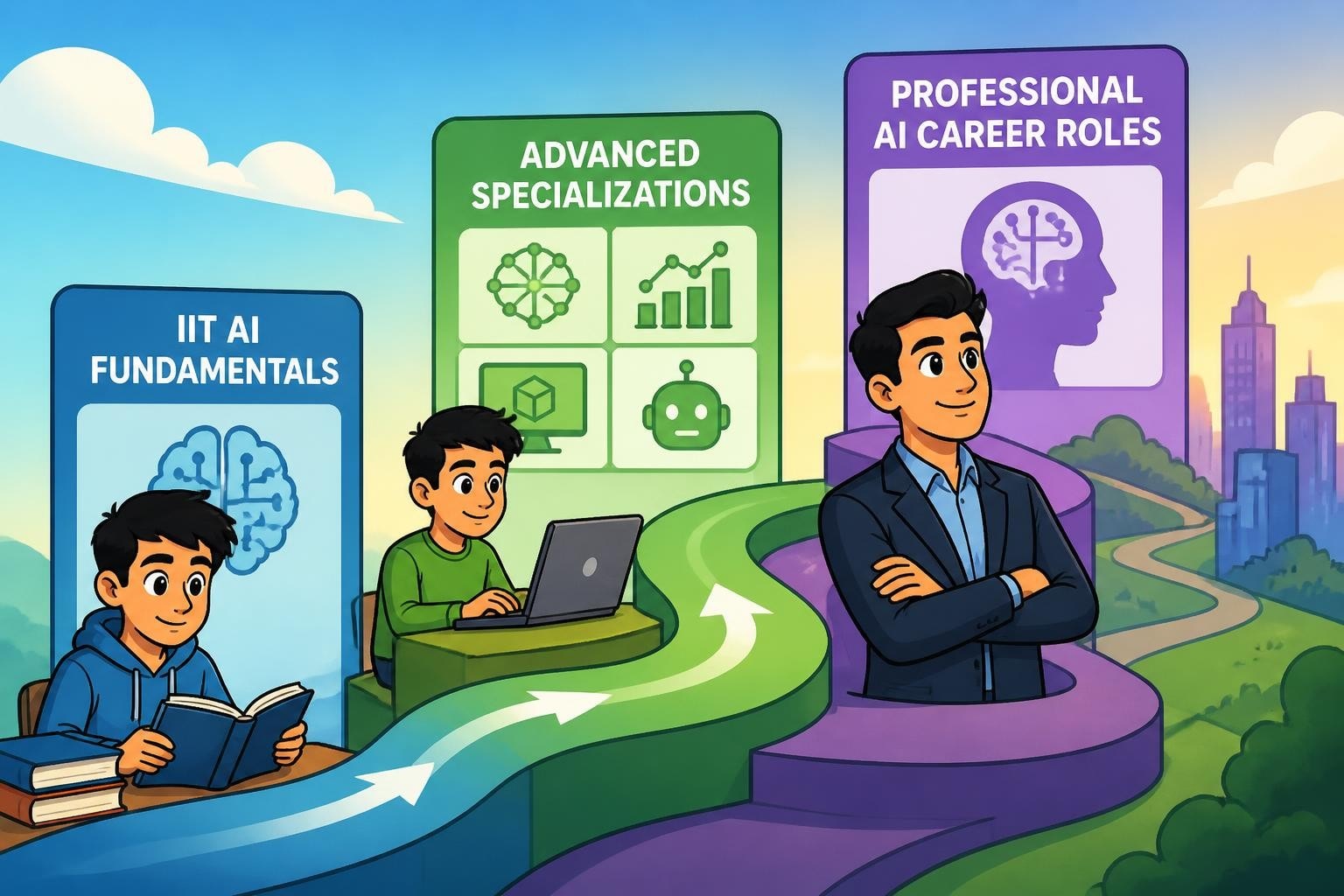
Completing microsoft learn ai fundamentals opens multiple progression paths depending on career objectives and technical interests. The fundamentals certification serves as prerequisite or recommended preparation for several advanced Microsoft credentials.
Technical advancement paths:
- Azure Data Scientist Associate (DP-100)
- Azure AI Engineer Associate (AI-102)
- Azure Data Engineer Associate (DP-203)
- Azure Solutions Architect Expert
Specialized skill development:
- Generative AI and large language models
- MLOps and model deployment
- Computer vision engineering
- Conversational AI development
Professionals seeking comprehensive AI education often supplement Microsoft credentials with broader machine learning expertise through university programs, bootcamps, or platforms offering AI and ML courses online. This combination of vendor-specific and vendor-agnostic knowledge creates versatile skill sets valued in competitive job markets.
The Azure AI overview provides guidance on which advanced certifications align with different career trajectories, helping learners make informed investment decisions about continuing education.
Real-World Applications and Case Studies
Understanding microsoft learn ai fundamentals concepts gains significance when applied to actual business challenges. Organizations across industries leverage these foundational skills to implement transformative AI solutions.
Retail and E-commerce
Retailers use computer vision for automated checkout systems, inventory management, and visual product search. Natural language processing powers recommendation engines that analyze customer reviews and search patterns. Conversational AI handles customer service inquiries, reducing response times while maintaining quality.
A typical implementation might combine several AI services: computer vision identifies products, NLP extracts customer sentiment from reviews, and machine learning predicts inventory needs based on historical patterns and external factors.
Healthcare and Life Sciences
Healthcare organizations apply AI fundamentals to medical imaging analysis, patient risk stratification, and administrative automation. Computer vision assists radiologists in detecting abnormalities, while NLP extracts insights from clinical notes and research literature.
Responsible AI principles prove particularly critical in healthcare applications where algorithmic decisions directly impact patient outcomes. Understanding fairness, transparency, and accountability helps organizations deploy AI ethically and maintain regulatory compliance.
Manufacturing and Supply Chain
Manufacturing companies leverage AI for predictive maintenance, quality inspection, and supply chain optimization. Computer vision systems detect product defects with higher consistency than human inspectors. Machine learning models predict equipment failures before they occur, reducing downtime and maintenance costs.
Foundational AI knowledge enables manufacturing professionals to identify automation opportunities and work effectively with data science teams to implement solutions that drive operational efficiency.
Cost Considerations and Return on Investment
Investing in microsoft learn ai fundamentals training involves both direct costs (certification fees, study materials) and indirect costs (time spent learning). Understanding the financial equation helps individuals and organizations make informed decisions about AI education investments.
| Cost Category | Individual Learner | Corporate Program |
|---|---|---|
| Microsoft Learn modules | Free | Free |
| Certification exam | $99 | $99 per employee |
| Practice tests | $20-50 | Volume discounts available |
| Study time | 20-30 hours | Paid work hours |
| Azure practice account | Free tier sufficient | Potentially enterprise agreement |
The return on investment manifests through increased productivity, better decision-making, career advancement, and organizational competitiveness. Certified professionals often recoup education costs within months through salary increases, promotions, or improved job performance.
Organizations calculate ROI by measuring reduced project failure rates, faster implementation timelines, and improved vendor negotiation outcomes when teams possess AI literacy. Some enterprises report 300-500% ROI on foundational AI training within the first year.
Staying Current with Evolving AI Technologies
The artificial intelligence field evolves rapidly, with new capabilities, services, and best practices emerging continuously. While microsoft learn ai fundamentals provides solid foundation knowledge, professionals must commit to ongoing learning to maintain relevance.
Microsoft regularly updates Learn modules to reflect new Azure AI services and capabilities. Learners should revisit content annually to understand new features and revised best practices. Following Microsoft's AI blog, attending virtual events, and participating in user communities helps professionals stay informed about emerging trends.
The fundamentals certification does not require renewal, but practical knowledge depreciates without active maintenance. Professionals serious about AI careers often pursue advanced certifications every 1-2 years and supplement formal credentials with continuous experimentation and project work.
Platforms offering diverse AI training options enable learners to explore emerging topics like generative AI, reinforcement learning, and federated learning that extend beyond fundamentals while building on established foundations.
Mastering microsoft learn ai fundamentals establishes essential knowledge for navigating the AI-driven business landscape in 2026 and beyond. Whether you're seeking certification, career advancement, or organizational AI literacy, this structured learning path provides accessible entry into one of technology's most transformative fields. MammothClub accelerates your AI journey with 3,000+ courses, interactive bootcamps, and corporate certification programs designed to help professionals and organizations build measurable AI competency quickly. Our AI-powered learning platform delivers engaging, results-driven training that keeps you competitive in the rapidly evolving AI era.