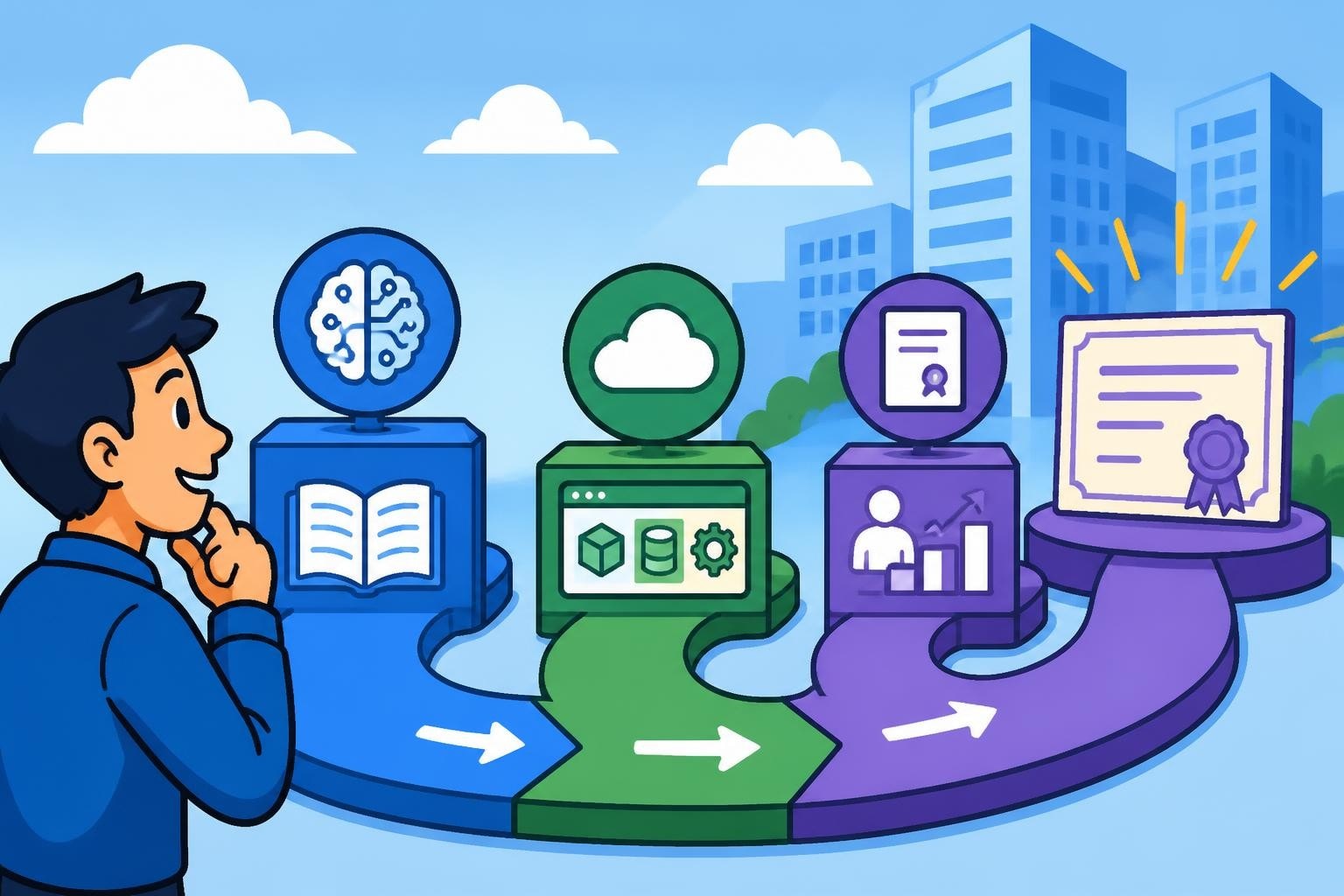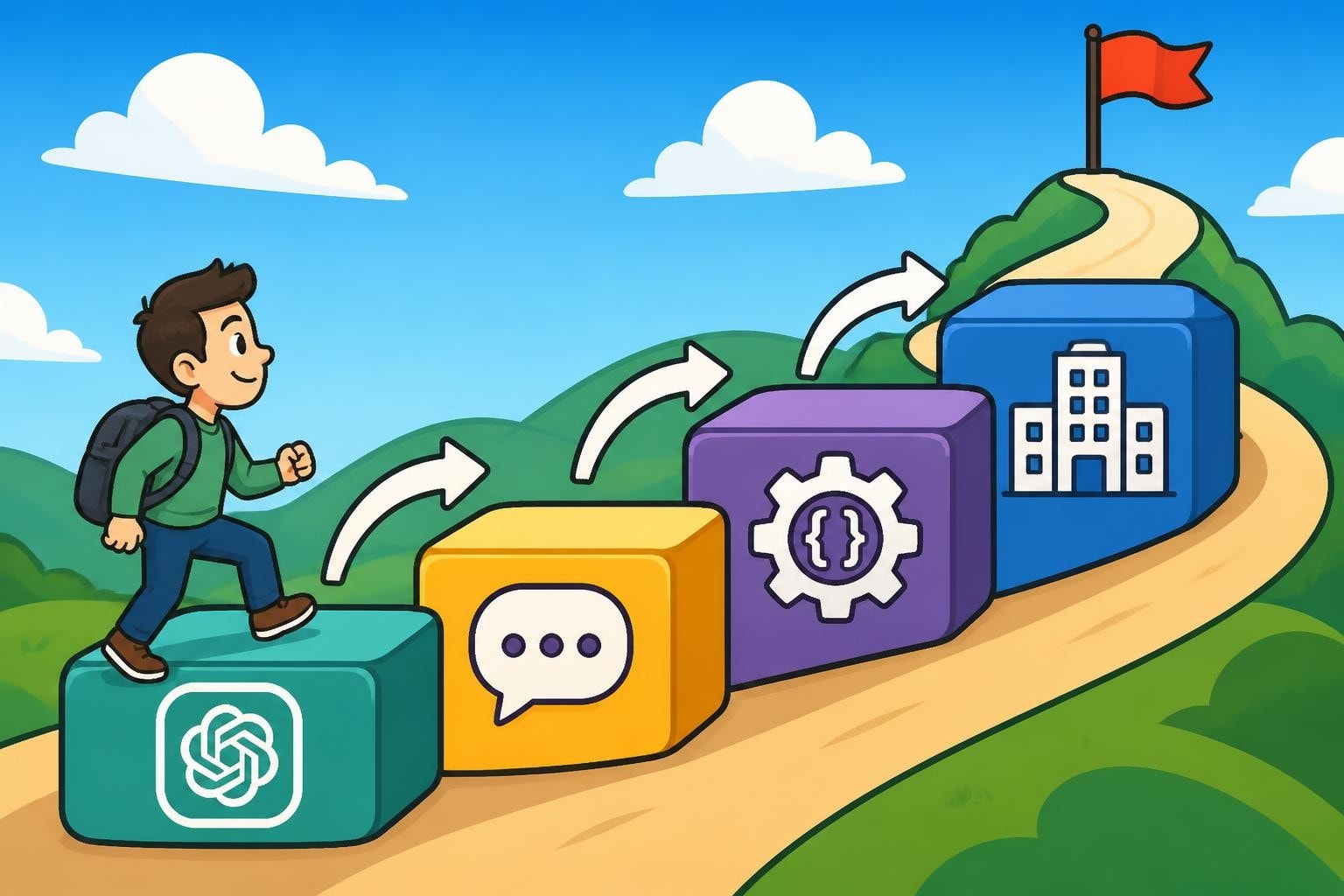
Artificial intelligence has evolved from a futuristic concept into a fundamental skill that professionals across industries need to master. Whether you're a marketing manager seeking to automate workflows, a business analyst wanting to leverage predictive models, or a career changer exploring new opportunities, an ai for beginners course offers the structured foundation you need to thrive in 2026's AI-driven workplace. The challenge isn't finding educational resources-it's choosing the right program that matches your goals, learning style, and time constraints while delivering practical, job-ready skills.
Understanding What Makes an Effective AI Beginners Course
The best ai for beginners course doesn't just teach theory. It balances conceptual understanding with hands-on application, ensuring you can implement what you learn immediately in real-world scenarios.
Core components that separate exceptional programs from mediocre ones include:
- Structured curriculum progression from fundamentals to intermediate concepts
- Hands-on projects using industry-standard tools and platforms
- Clear explanations of machine learning, neural networks, and deep learning
- Ethical AI considerations and responsible implementation practices
- Community support and expert guidance throughout your learning journey
An effective program recognizes that beginners come from diverse backgrounds. Some may have technical experience but no AI knowledge, while others bring domain expertise from fields like healthcare, finance, or education with minimal coding background. The curriculum should accommodate these variations while maintaining rigorous standards.
Key Learning Outcomes You Should Expect
When evaluating any ai for beginners course, examine the specific competencies you'll develop. Microsoft's comprehensive curriculum available at Microsoft's AI for Beginners GitHub repository exemplifies the structured approach needed, covering 12 weeks of material with practical labs and ethical frameworks.
| Learning Area | Beginner Skills | Practical Application |
|---|---|---|
| Machine Learning Basics | Supervised vs unsupervised learning | Customer segmentation models |
| Neural Networks | Architecture fundamentals | Image recognition systems |
| Natural Language Processing | Text analysis techniques | Sentiment analysis tools |
| AI Ethics | Bias detection and mitigation | Responsible AI deployment |
| Tools & Frameworks | TensorFlow, PyTorch basics | Building first AI models |
Your program should provide certificates or credentials that employers recognize. MammothClub's certification programs align with industry standards, ensuring your credentials carry weight in hiring decisions.
Choosing Between Free and Paid Learning Pathways
The ai for beginners course landscape offers both free and premium options, each with distinct advantages. Your choice depends on your learning objectives, budget, and desired level of support.
Free courses excel at providing:
- Foundational knowledge without financial commitment
- Flexibility to explore before investing
- Access to quality content from reputable institutions
- Self-paced learning without enrollment deadlines
Microsoft's generative AI for beginners series delivers 18 comprehensive lessons at no cost, covering modern AI application development. Davidson College's Building AI Agents for Beginners through edX demonstrates how quality education transcends price points.
Premium Course Advantages
Paid programs typically offer structured support that accelerates learning and improves completion rates. According to 2026 data, learners in premium courses complete 73% more modules than those in self-directed free programs.
Premium ai for beginners course features include:
- Personalized mentorship from industry practitioners
- Project feedback that refines your practical skills
- Career services connecting you with employment opportunities
- Structured timelines that maintain momentum
- Advanced tools access including specialized software and computing resources
The investment often pays dividends quickly. Professionals who complete comprehensive AI training report average salary increases of 22% within 18 months, according to recent industry surveys.
Curriculum Components That Deliver Results
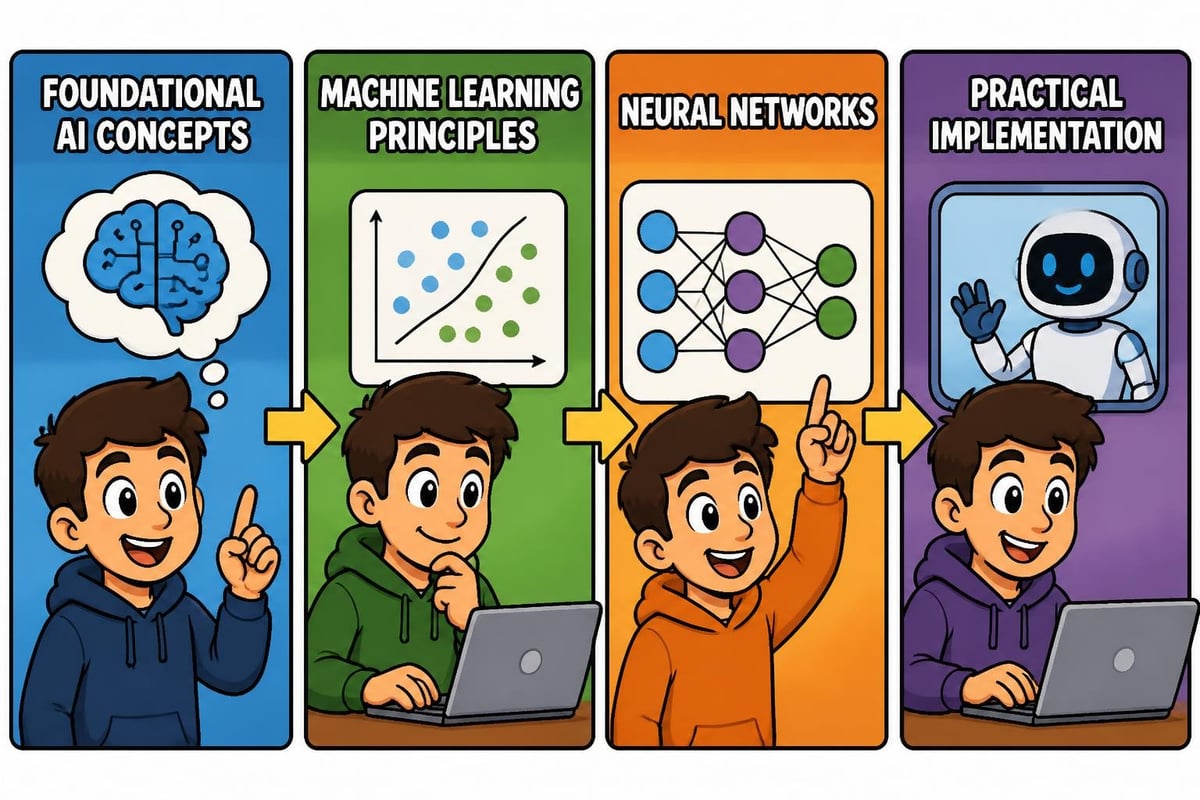
An outstanding ai for beginners course balances theoretical foundations with practical application. The curriculum should follow a logical progression that builds confidence while expanding capabilities.
Foundational Modules
Your journey begins with understanding what AI actually means and how it differs from traditional programming. This includes:
- History and evolution of artificial intelligence
- Types of AI systems from narrow to general intelligence
- Real-world applications across industries
- Terminology that enables professional communication
The Introduction to Artificial Intelligence course on Coursera provides this foundation through IBM's structured framework, connecting concepts to business applications immediately.
Machine Learning Fundamentals
This section forms the core of any ai for beginners course. You'll explore how algorithms learn from data without explicit programming.
Critical concepts include:
- Regression analysis for prediction
- Classification for categorization tasks
- Clustering for pattern discovery
- Feature engineering and selection
- Model evaluation and validation
Hands-on projects might involve building a recommendation system, creating a spam filter, or developing a price prediction model. These exercises transform abstract concepts into tangible skills.
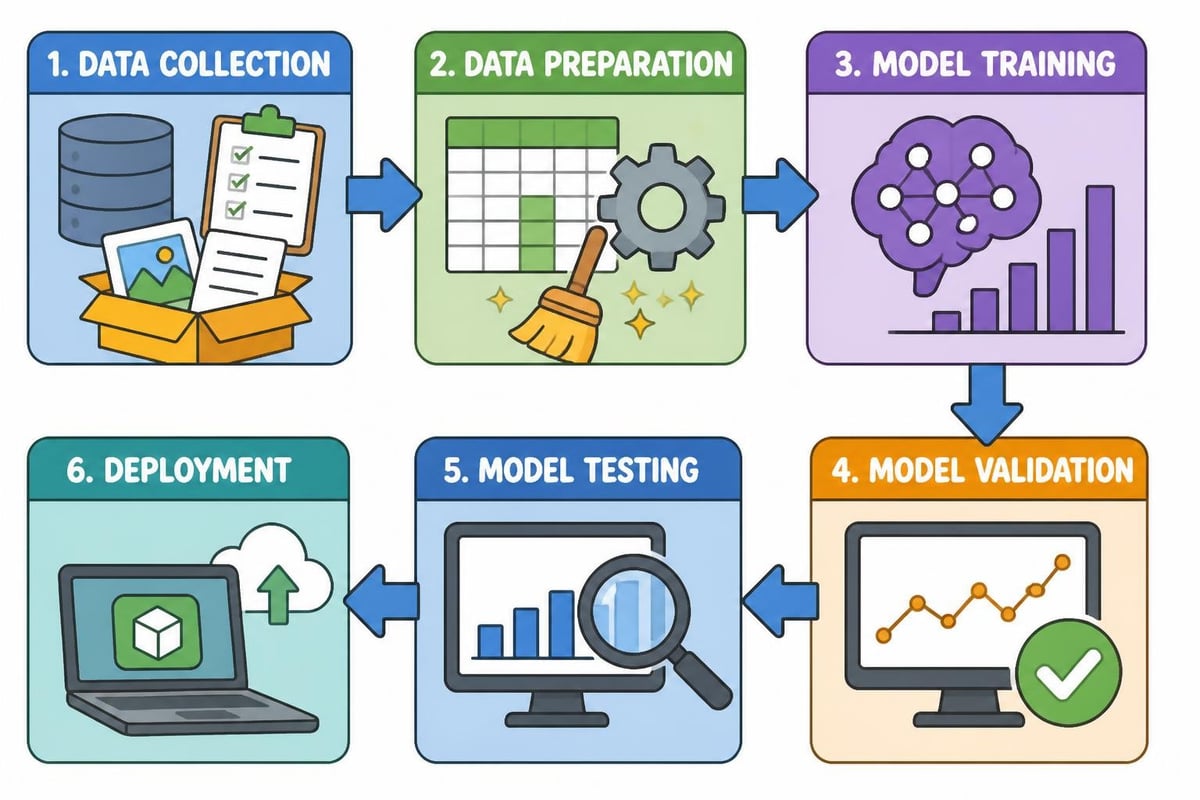
Deep Learning and Neural Networks
As you progress beyond basic machine learning, an ai for beginners course introduces neural networks and deep learning architectures. This advanced module explores:
| Neural Network Type | Primary Use Case | Beginner Project Example |
|---|---|---|
| Feedforward Networks | Structured data prediction | Customer churn prediction |
| Convolutional Networks (CNNs) | Image recognition | Photo classification system |
| Recurrent Networks (RNNs) | Sequential data | Text generation tool |
| Transformers | Language understanding | Chatbot development |
Understanding these architectures prepares you for specialized work in computer vision, natural language processing, or speech recognition. The AI basics course offers additional context for building this knowledge systematically.
Practical Tools and Platforms You'll Master
Theory without implementation creates knowledge gaps. An effective ai for beginners course emphasizes hands-on experience with industry-standard tools.
Programming Languages and Frameworks
Python dominates AI development due to its readability and extensive libraries. Your course should provide comprehensive Python training covering:
- NumPy for numerical computing
- Pandas for data manipulation
- Matplotlib and Seaborn for visualization
- Scikit-learn for machine learning
- TensorFlow or PyTorch for deep learning
Even programs marketed for non-coders should introduce basic programming concepts. While no-code platforms exist, understanding fundamental coding principles enhances your AI capabilities significantly. For those seeking accessible entry points, no-code AI courses provide alternative pathways.
Cloud Platforms and Development Environments
Modern AI development happens in cloud environments that provide scalable computing resources. Your ai for beginners course should include experience with:
- Google Colab for free GPU access and collaborative notebooks
- Azure Machine Learning for enterprise-scale deployment
- AWS SageMaker for building and training models
- Jupyter Notebooks for interactive development
Microsoft's AI Agents for Beginners series demonstrates practical implementation across these platforms through 10 structured lessons.
Building Portfolio Projects That Impress Employers
Completing an ai for beginners course means little without demonstrable projects. Employers evaluate candidates based on portfolio quality, not just certificates.
Effective beginner projects include:
- Sentiment analysis tool analyzing customer reviews
- Image classifier identifying objects or categories
- Recommendation engine suggesting products or content
- Chatbot handling customer service queries
- Predictive model forecasting business metrics
Each project should solve a real business problem. Rather than creating a generic image classifier, build one that identifies product defects in manufacturing or categorizes inventory items. This specificity demonstrates practical thinking.
Documenting Your Learning Journey
Transform your coursework into professional assets through documentation. Create GitHub repositories with clear README files explaining:
- The problem you're solving
- Your approach and methodology
- Technologies and frameworks used
- Results and performance metrics
- Lessons learned and future improvements
This documentation serves dual purposes: reinforcing your learning and showcasing your capabilities to potential employers or clients. The AI ML learning path provides frameworks for organizing your portfolio progression.
Specialized AI Learning Tracks for Different Goals
Not every ai for beginners course serves identical purposes. Your career objectives should guide program selection.
Business Professional Track
If you're in management, sales, marketing, or operations, you need AI literacy more than deep technical expertise. Programs like Babson College's Fundamentals of AI focus on practical applications such as using AI tools for email drafting, document summarization, and workflow automation.
This track emphasizes:
- Understanding AI capabilities and limitations
- Identifying automation opportunities
- Managing AI implementation projects
- Ethical considerations in AI deployment
- ROI calculation for AI investments
Technical Implementation Track
Aspiring data scientists, machine learning engineers, and AI developers need comprehensive technical training. This path dives deeper into mathematics, statistics, and programming.
Your ai for beginners course should cover:
| Technical Area | Depth Required | Time Investment |
|---|---|---|
| Linear Algebra | Matrix operations, eigenvalues | 30-40 hours |
| Calculus | Derivatives, gradients | 25-35 hours |
| Probability & Statistics | Distributions, hypothesis testing | 40-50 hours |
| Python Programming | Advanced data structures, OOP | 60-80 hours |
| Machine Learning Algorithms | Implementation from scratch | 80-100 hours |
The AI ML full course approach provides comprehensive coverage suitable for technical career paths.
Industry-Specific Applications
Some professionals need AI training tailored to specific sectors. Healthcare workers require different competencies than financial analysts or manufacturing engineers.
Specialized tracks might explore:
- Healthcare AI: Medical imaging analysis, patient outcome prediction
- Financial AI: Algorithmic trading, fraud detection, risk assessment
- Marketing AI: Customer segmentation, campaign optimization, personalization
- Manufacturing AI: Quality control, predictive maintenance, supply chain optimization
Understanding your industry context ensures immediate applicability of learned concepts.
Time Commitment and Learning Schedules
A realistic ai for beginners course acknowledges that most learners balance education with work and personal commitments. Program duration varies significantly based on depth and format.
Accelerated Bootcamp Format
Intensive bootcamps compress learning into 8-16 weeks with full-time commitment. These programs suit career changers or professionals taking sabbaticals.
Typical schedule:
- 40-60 hours per week of instruction and project work
- Morning lectures followed by afternoon labs
- Evening portfolio development and review
- Weekend projects and peer collaboration
Completion rates hover around 85% for immersive programs due to structured accountability and instructor support.
Part-Time Extended Programs
Working professionals typically choose part-time options spanning 4-9 months. This format allows skill building without career interruption.
You might expect:
- 10-15 hours weekly of video lessons and reading
- 5-10 hours weekly of hands-on practice and projects
- 2-3 hours weekly of community interaction or office hours
- Flexible pacing with deadline extensions available
The AI training and placement programs often use this format to accommodate diverse learner needs.
Self-Paced Flexible Learning
Self-directed programs offer maximum flexibility but require exceptional discipline. Without deadlines, completion rates drop to 15-20% across the industry.
Success strategies include:
- Setting personal deadlines and tracking progress
- Joining study groups or accountability partnerships
- Creating dedicated learning time blocks
- Celebrating milestone completions
- Connecting learning to immediate work applications
LearnAI's comprehensive course provides structured content suitable for self-paced learners with downloadable materials and practice projects.
Measuring Progress and Validating Skills
An ai for beginners course should include clear assessment mechanisms that validate your growing expertise.
Formative Assessments
Regular quizzes and knowledge checks throughout the curriculum ensure concept retention. These low-stakes assessments identify gaps before they compound.
Effective assessments include:
- Multiple-choice questions testing conceptual understanding
- Code challenges requiring algorithm implementation
- Case study analysis applying concepts to scenarios
- Peer review exercises evaluating project work
- Reflection prompts encouraging metacognition
Capstone Projects
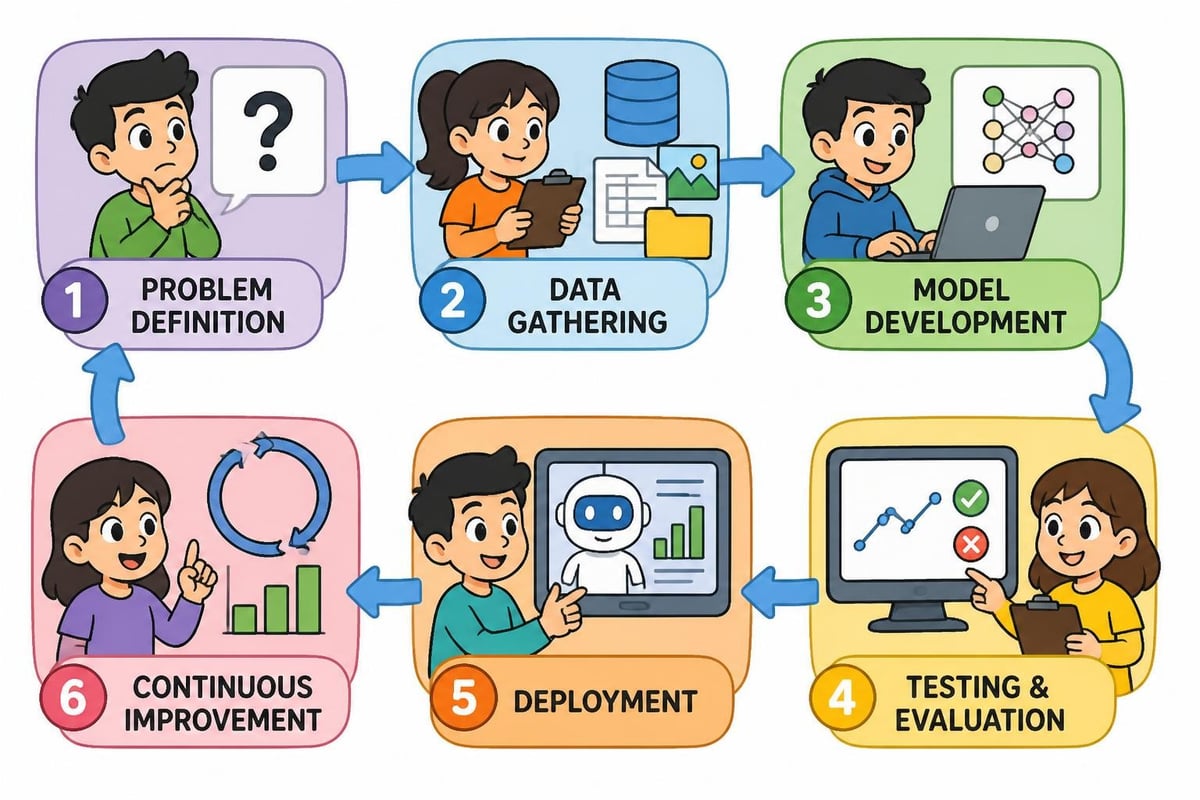
The culmination of your ai for beginners course should be a comprehensive project demonstrating integrated skills. This capstone typically involves:
- Identifying a real-world problem worth solving
- Gathering and preparing relevant datasets
- Selecting and implementing appropriate algorithms
- Evaluating model performance against benchmarks
- Presenting findings to technical and non-technical audiences
Your capstone becomes the centerpiece of your portfolio, proving capability beyond theoretical knowledge.
Industry-Recognized Certifications
Credentials matter in competitive job markets. Programs offering recognized certifications provide measurable validation of your skills. The Microsoft AI certification course pathway demonstrates how major technology companies structure their credentialing.
Certification benefits include:
- Resume differentiation in applicant tracking systems
- Salary negotiation leverage
- Professional network access
- Continuing education requirements maintaining relevance
- Employer confidence in verified competencies
Overcoming Common Beginner Challenges
Every learner encounters obstacles when starting their AI education. An exceptional ai for beginners course anticipates these challenges and provides resources to overcome them.
Mathematical Anxiety
Many beginners worry that AI requires advanced mathematics beyond their capabilities. While mathematical understanding helps, modern tools abstract much complexity.
Strategies for managing math requirements:
- Focus on conceptual understanding before diving into proofs
- Use visualization tools to grasp abstract concepts
- Apply formulas in code before deriving them manually
- Leverage libraries that handle computational complexity
- Build intuition through practical examples before theoretical rigor
The KDnuggets review of Microsoft's free AI course highlights how quality programs make complex mathematics accessible.
Information Overload
The AI field evolves rapidly, with new techniques and tools emerging constantly. Beginners often feel overwhelmed by the breadth of knowledge.
Combat this by:
- Following a structured curriculum rather than random tutorials
- Mastering fundamentals before exploring cutting-edge techniques
- Building one complete project before starting another
- Limiting information sources to avoid conflicting advice
- Accepting that continuous learning is inherent to AI careers
Imposter Syndrome
Feeling inadequate despite progress affects most learners, particularly in technically demanding fields. Recognize that expertise builds gradually through consistent practice.
Practical responses include:
| Feeling | Reality Check | Action Step |
|---|---|---|
| "Everyone knows more than me" | Experts were beginners once | Document your progress weekly |
| "My projects are too simple" | Start simple, then iterate | Add one new feature per project |
| "I'll never understand this" | Understanding takes time | Explain concepts to others |
| "Real AI work is different" | Learning transfers to practice | Apply skills to work problems |
Creating Your Personalized Learning Strategy
Success in an ai for beginners course requires more than enrollment. You need a deliberate strategy aligned with your goals, schedule, and learning preferences.
Assessing Your Starting Point
Before choosing a program, evaluate your current knowledge honestly. This prevents frustration from courses either too basic or too advanced.
Consider your background in:
- Programming (especially Python)
- Statistics and probability
- Data analysis and visualization
- Linear algebra and calculus
- Domain expertise in specific industries
Those with technical backgrounds might skip introductory programming modules, while business professionals may need additional foundation building. The AI specialization courses offer various entry points based on experience levels.
Setting Measurable Objectives
Vague goals like "learn AI" lead to abandoned courses. Define specific, measurable outcomes.
Effective goal examples:
- Build three portfolio projects demonstrating different ML techniques
- Earn a recognized certification within six months
- Apply AI to solve a current work challenge
- Transition to a data science role by year-end
- Launch a side business using AI tools
Track progress through weekly check-ins and adjust your approach as needed.
Optimizing Your Learning Environment
Physical and digital environment significantly impacts retention and completion. Optimize both for success.
Physical space considerations:
- Dedicated learning area free from distractions
- Reliable internet connection for cloud-based tools
- Dual monitors for following tutorials while coding
- Whiteboard or notebook for working through concepts
- Comfortable setup preventing fatigue during long sessions
Digital environment:
- Organized folder structure for course materials
- Bookmarked resources and documentation
- GitHub account for version control and sharing
- Cloud storage for project backups
- Communication platforms for peer support
Leveraging Community and Networking
An ai for beginners course provides more than content. The community connections you build accelerate learning and create career opportunities.
Peer Learning Groups
Study groups transform solitary learning into collaborative experiences. Form or join groups of 4-6 learners with similar goals and schedules.
Effective group activities include:
- Weekly code review sessions
- Collaborative project development
- Concept explanation rounds (each person teaches a topic)
- Resource sharing and recommendations
- Accountability check-ins and progress updates
Virtual tools like Discord, Slack, or Microsoft Teams facilitate ongoing communication beyond scheduled meetings.
Expert Mentorship
Direct guidance from experienced practitioners shortens your learning curve. Many programs include mentorship, but you can also seek informal relationships.
Finding mentors:
- Participate actively in course forums and office hours
- Attend AI meetups and professional events (virtual or in-person)
- Contribute to open-source AI projects
- Engage thoughtfully with experts on LinkedIn or Twitter
- Join professional organizations like AI associations
Quality mentorship provides perspective on industry realities, career paths, and skill prioritization that textbooks cannot offer.
Building Professional Visibility
As you progress through your ai for beginners course, begin establishing professional presence. This creates opportunities and reinforces learning through teaching others.
Visibility strategies include:
- Publishing blog posts explaining concepts you've learned
- Sharing projects on GitHub with detailed documentation
- Creating YouTube tutorials demonstrating techniques
- Answering questions in online communities
- Speaking at local meetups or webinars
This content becomes both a learning tool and a professional portfolio demonstrating your growing expertise. The Learnetto AI learning paths model shows how structured progression builds toward professional competency.
Selecting the right ai for beginners course in 2026 represents a pivotal career decision that can unlock new opportunities across industries. The programs, strategies, and resources outlined above provide a comprehensive roadmap for building practical AI skills that employers value and that solve real-world problems. Whether you choose free resources to explore fundamentals or invest in comprehensive certification programs with mentorship and career support, the key is starting with clear goals and maintaining consistent progress. MammothClub offers over 3,000 on-demand AI and tech courses designed for professionals at every level, with interactive bootcamps, corporate certification programs, and AI-powered learning tools that make your training measurable and results-driven, helping you stay competitive as AI transforms every industry.