.png)
Artificial intelligence is redefining the future of work, and in 2025, an artificial intelligence apprenticeship could be your launchpad into this dynamic industry. This guide delivers a comprehensive roadmap for pursuing an artificial intelligence apprenticeship, including eligibility requirements, application steps, curriculum, and long-term career prospects.
Explore how these programs are structured, what you need to qualify, the learning experience, funding options, and strategies to maximize your success. The AI skills gap is widening as organizations rapidly adopt machine learning and data science. Apprenticeships now offer a fast-track, practical pathway into the AI field.
Discover how to qualify, what to expect, and how these programs can transform your career. Ready to take the first step? Follow this guide to secure your place in the AI workforce of tomorrow.
Understanding Artificial Intelligence Apprenticeships in 2025
Artificial intelligence apprenticeship programs are rapidly emerging as a preferred pathway for those seeking to launch or advance their careers in AI. These structured, work-based training schemes blend academic study with practical, real-world projects, offering a unique bridge between theory and hands-on experience.
Unlike traditional university degrees, an artificial intelligence apprenticeship places heavy emphasis on on-the-job learning. Participants are directly engaged with employers, allowing them to contribute to real AI initiatives while studying. For example, the UK’s Level 7 AI Data Specialist apprenticeship integrates an MSc degree, offering both academic and industry-recognized credentials. Most programs last between 21 and 24 months, combining online modules with occasional in-person sessions. According to government data, there was a 40% surge in AI apprenticeship enrollments in the UK between 2022 and 2024, underscoring the growing industry recognition of these programs.

What Is an AI Apprenticeship?
An artificial intelligence apprenticeship is a structured training pathway that combines academic coursework with real-world application. Apprentices split their time between studying advanced AI topics and working on live projects within their employer’s organization.
This approach stands apart from traditional degrees in several ways. While university courses typically focus on theory, an artificial intelligence apprenticeship prioritizes practical experience, mentorship, and immediate job relevance. Employers are directly involved, shaping curricula to meet current business needs.
Industry acceptance of the artificial intelligence apprenticeship model is accelerating. Many tech and non-tech sectors now recognize these programs as a credible entry point for high-demand roles. For instance, the UK Level 7 AI Data Specialist apprenticeship allows participants to earn an integrated MSc while contributing to real business solutions. Program durations are typically 21–24 months, balancing online learning, self-paced modules, and in-person bootcamps.
The recent spike in enrollments reflects shifting attitudes. Between 2022 and 2024, the UK saw a 40% increase in artificial intelligence apprenticeship participation, highlighting the program’s appeal and its alignment with workforce needs.
Key Trends Shaping AI Apprenticeships in 2025
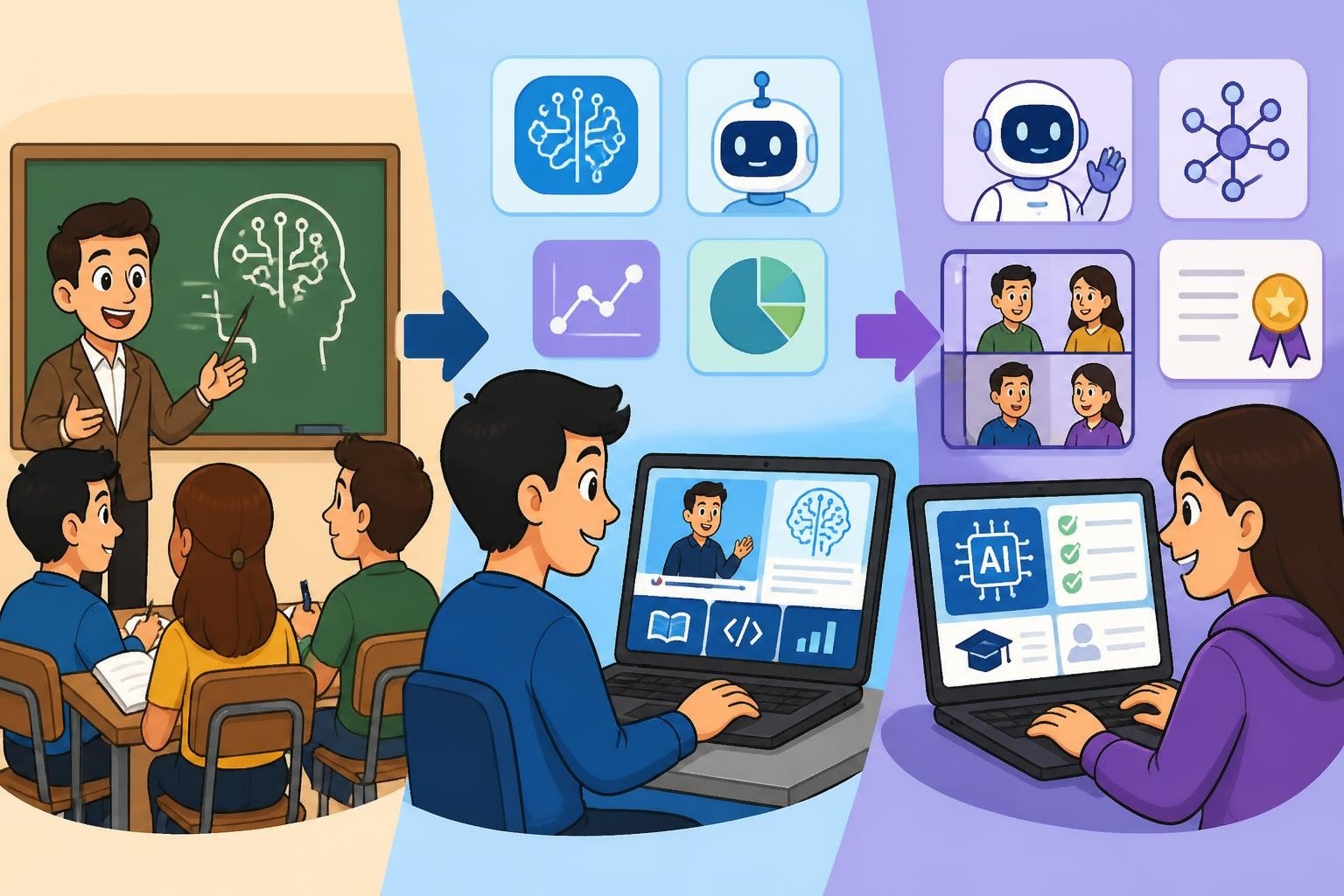
The landscape of artificial intelligence apprenticeship programs is evolving rapidly in 2025. One major trend is the adoption of hybrid and distance learning models, enabling greater flexibility for both learners and employers. Apprentices now access virtual inductions, online seminars, and collaborative platforms, making participation more accessible.
Curricula are constantly updated to include the latest advances in machine learning, data engineering, and ethical AI. Employers play a central role in shaping content, ensuring apprentices gain skills that match industry demand. This employer-driven approach means that artificial intelligence apprenticeship programs remain highly relevant as business needs change.
Demand for AI skills is also expanding beyond the tech sector. Industries such as finance, healthcare, manufacturing, and logistics are seeking talent trained through artificial intelligence apprenticeship routes. Many governments are investing in these programs to address talent shortages and support economic growth. For a detailed analysis of growth patterns, sector adoption, and demographic insights, see the State of AI-Related Apprenticeships.
Benefits for Learners and Employers
Artificial intelligence apprenticeship programs offer substantial benefits for both learners and organizations. Learners have the opportunity to earn while they learn, gaining practical skills and industry-recognized qualifications without incurring student debt. They apply classroom knowledge directly to real business challenges, accelerating their professional development.
Employers benefit by upskilling existing staff, improving employee retention, and fostering innovation. By aligning training with organizational goals, companies ensure that apprentices contribute value from the outset. For example, apprentices frequently lead applied AI research or implement new solutions, driving business growth.
Increasingly, artificial intelligence apprenticeship schemes are viewed as strategic investments. They not only close the AI skills gap but also prepare both individuals and organizations for the evolving demands of the digital economy. This dual benefit makes these programs a compelling choice for anyone considering a career in artificial intelligence.
Eligibility and Entry Requirements for AI Apprenticeships
Gaining entry into an artificial intelligence apprenticeship in 2025 involves meeting both academic and practical criteria. As these programs become more popular, institutions and employers are seeking applicants with a mix of technical skills, relevant experience, and the right educational background. Understanding the requirements will help you prepare a strong application and increase your chances of success.

Academic and Technical Prerequisites
Most artificial intelligence apprenticeship programs require a solid academic foundation. Typically, applicants need at least a bachelor’s degree in a STEM field, such as computer science, mathematics, engineering, or physics. A 2:2 classification or above is generally expected.
Alongside academic qualifications, technical skills are crucial. You should be comfortable with Python programming and familiar with popular data science libraries, including Jupyter, pandas, and scikit-learn. Many programs also value experience with machine learning algorithms and basic data analysis.
If you are looking to strengthen your technical background before applying, consider enrolling in a data engineering and machine learning course. This type of training aligns well with the hands-on requirements of an artificial intelligence apprenticeship and helps you build confidence in essential tools and frameworks.
Non-traditional backgrounds are often considered if you can demonstrate relevant work experience or self-taught expertise. Institutions like Northeastern University London recognize prior learning, allowing experienced professionals to compete for places even without a conventional degree.
Additional Eligibility Criteria
Beyond academics, several other factors determine your eligibility for an artificial intelligence apprenticeship. Most programs require candidates to be at least 16 years old. Residency is another key condition; for example, UK applicants typically need to have lived in the country for three years before their start date.
Employment is essential. You must hold a job in a role that matches the apprenticeship standard, ensuring your day-to-day work supports your learning. Additionally, applicants must have left full-time education before starting the apprenticeship.
Funding eligibility is critical as well. You need to show that you can complete the program within any visa or contract limits. This ensures you qualify for government or employer sponsorship, which can cover most or all of your training costs.
Here is a summary table for quick reference:
Eligibility Factor | Typical Requirement |
|---|---|
Age | 16+ |
Residency | 3 years in country (e.g., UK) |
Employment | Relevant job role |
Education | Left full-time education |
Funding | Eligible within visa/contract limits |
Application Materials and Assessment
The application process for an artificial intelligence apprenticeship is thorough and designed to assess both technical and practical readiness. You will need to submit academic transcripts, proof of employment, and evidence of residency. If you have prior learning or work experience, include documentation to support recognition or credit transfer.
Assessment methods usually involve technical interviews, coding challenges, and references from current or previous employers. These steps allow providers to evaluate your programming abilities, problem-solving skills, and fit for the apprenticeship environment.
Many programs are adopting greater flexibility in entry routes. Recognition of prior learning and credit transfer policies enable experienced professionals to access opportunities that were once reserved for traditional graduates. This shift is broadening the talent pool and making artificial intelligence apprenticeship programs more inclusive.
Careful preparation of your application materials and a clear demonstration of your skills will help you stand out in a competitive field. As the demand for AI talent grows, these steps are essential for launching a successful career in this rapidly evolving sector.
The AI Apprenticeship Journey: Structure, Curriculum, and Learning Experience
Embarking on an artificial intelligence apprenticeship in 2025 offers a unique blend of academic rigor and workplace immersion. This journey is carefully structured to help you gain both foundational knowledge and applied skills, making you job-ready for the evolving AI sector. Let’s break down what you can expect from the structure, curriculum, and learning experiences that define these programs.
Program Structure and Timeline
The structure of an artificial intelligence apprenticeship is designed for flexibility and real-world impact. Most programs last between 21 and 24 months, allowing you to balance full-time employment with structured study.
You’ll typically spend one day per week on off-the-job learning, which may include virtual lectures, online workshops, or in-person bootcamps. Programs offer multiple intakes per year, such as April, October, and December, to fit varying schedules.
Learning modes are diverse:
Distance learning through interactive online platforms
Virtual induction sessions to build foundational skills
Occasional in-person bootcamps for hands-on experience
For example, Northeastern University London’s MSc AI & Data Science apprenticeship offers a hybrid approach, blending remote learning with periodic campus sessions. This flexible structure ensures the artificial intelligence apprenticeship adapts to your needs while maintaining academic standards.
Core Curriculum and Modules
The core curriculum of any artificial intelligence apprenticeship is crafted to build both technical depth and breadth. You’ll start with programming for data science, focusing on Python, integrated development environments, and version control systems.
Key modules include:
Data-driven analytics using statistical techniques and visualization tools like matplotlib and seaborn
Advanced statistical and mathematical methods, covering probability, regression, and optimization
Applied machine intelligence, which delves into deep learning, NLP, and computer vision
Data engineering, focusing on pipelines, databases, and cloud integration
A major highlight is the AI Capstone Project—a 30-credit, real-world assignment where apprentices develop innovative solutions for business challenges. Foundational resources such as the Machine learning fundamentals course can greatly accelerate your understanding and success in these technical areas. This comprehensive approach ensures graduates of an artificial intelligence apprenticeship emerge with industry-relevant expertise.
Workplace Integration and Experiential Learning
A defining feature of the artificial intelligence apprenticeship is the integration of classroom learning with live business problems. Apprentices apply new concepts directly to workplace projects, driving tangible value for their employers while building a robust portfolio.
Support structures include:
One-on-one academic mentoring and dedicated success managers
Peer collaboration through cross-industry cohorts
Flexible, self-paced study options using interactive case studies and online seminars
For instance, apprentices might design scalable data architectures or develop real-time analytics solutions tailored to their organization’s needs. This experiential approach ensures that every artificial intelligence apprenticeship bridges the gap between theory and practice, preparing you to tackle complex challenges in any sector.
Assessment and Progress Tracking
Assessment in an artificial intelligence apprenticeship is continuous and multi-faceted. You’ll complete quizzes, assignments, and project milestones throughout the program, ensuring steady progress and skill mastery.
At the end of the journey, an external end-point assessment evaluates your technical and soft skills. Regular review meetings with mentors and managers provide actionable feedback, helping you refine both technical abilities and essential soft skills like communication and project management.
A typical progress review might include:
Discussion of recent project milestones
Analysis of coding assessments and technical interviews
Feedback on teamwork and leadership development
This comprehensive assessment system ensures that every artificial intelligence apprenticeship graduate is well-prepared for the demands of the modern AI workforce.
AI Learning Platforms: Supporting Your Apprenticeship Journey
AI learning platforms play a vital role in supplementing your artificial intelligence apprenticeship experience. Platforms like Mammoth Club offer on-demand courses, interactive bootcamps, and certification preparation, all designed to reinforce and expand your technical skills.
You can access thousands of tech and AI courses, practice exams, and personalized learning paths. Features such as AI-adaptive lessons and real-world projects help fill knowledge gaps and keep you current with the latest tools and frameworks.
For organizations, these platforms provide scalable options to upskill teams alongside formal apprenticeship programs. By integrating such resources with your artificial intelligence apprenticeship, you accelerate your learning, stay ahead of industry trends, and build a strong foundation for career advancement.
Funding, Employer Involvement, and Application Process
Understanding how to fund your artificial intelligence apprenticeship, the employer's role, and the steps to apply is critical for success. In this section, we break down the financial models, employer expectations, application process, and solutions to common challenges, providing a comprehensive foundation for your journey.
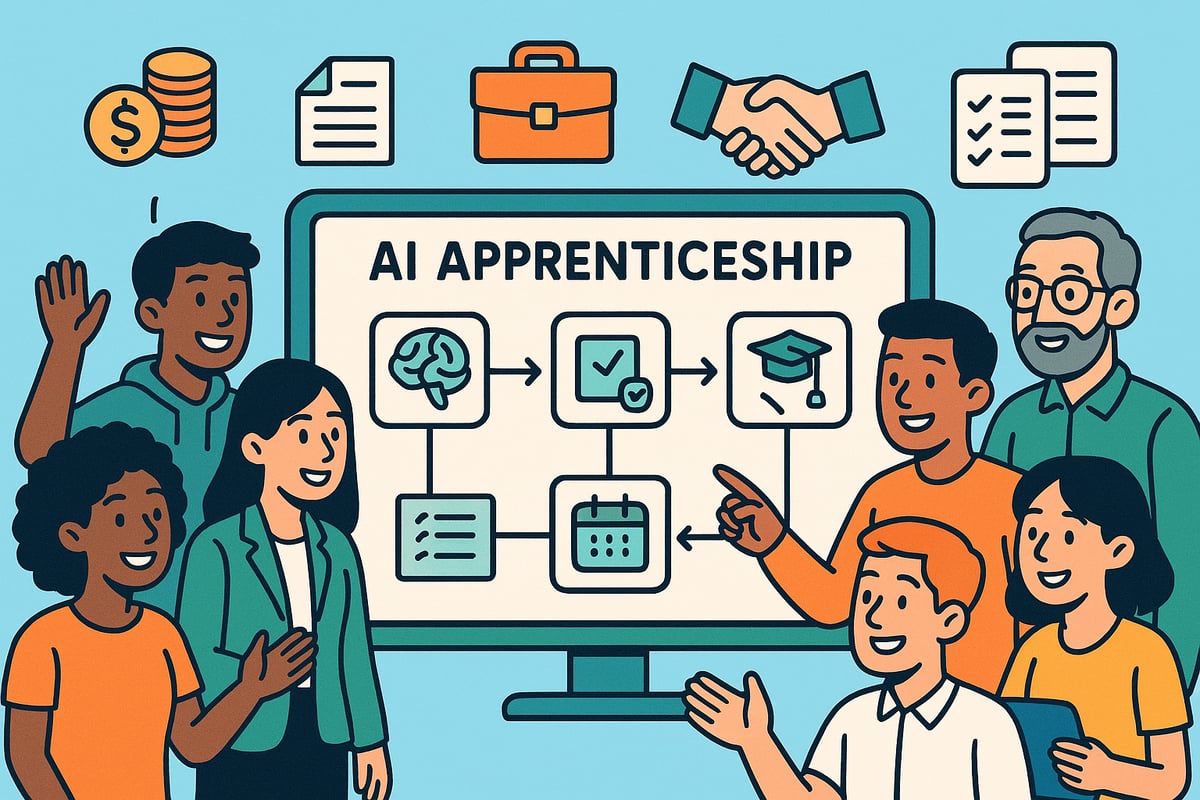
Funding Models and Financial Support
Funding an artificial intelligence apprenticeship is often more accessible than traditional degrees. Most programs are supported by government initiatives, such as apprenticeship levies or co-investment models. For example, in the UK, the government can cover up to 100 percent of training costs for eligible apprentices, significantly reducing financial barriers.
Employers typically contribute to training expenses, with the proportion depending on the size and location of the company. Some organizations may also offer additional stipends or resources to support professional development. Documentation and compliance are essential for securing funding, so ensure all required paperwork is in order before starting.
A recent AI Talent Report by CEA highlights how public funding and employer partnerships are expanding access to artificial intelligence apprenticeship programs across the U.S. and Europe. These initiatives make apprenticeships a debt-free path to advanced AI qualifications and help address the growing talent gap.
Here is a summary of common funding models:
Model | Who Pays | Coverage |
|---|---|---|
Government Levy | Government | 95–100% of training costs |
Co-investment | Employer + Gov. | Shared (varies by program) |
Employer-Sponsored | Employer | Full or partial |
By leveraging these funding options, an artificial intelligence apprenticeship becomes a realistic and financially sustainable choice.
Employer Roles and Responsibilities
Employers are central to the success of any artificial intelligence apprenticeship. They must provide relevant job roles that align with the apprenticeship standard and allocate dedicated time for off-the-job learning. This ensures apprentices gain both theoretical knowledge and hands-on experience.
Support structures within organizations are crucial. Most employers assign workplace mentors and success managers to guide apprentices throughout their journey. Regular feedback sessions and performance reviews help apprentices stay on track and continuously improve.
Employers also collaborate with universities and training providers to tailor the curriculum to evolving business needs. This partnership drives innovation and ensures that the artificial intelligence apprenticeship remains relevant in a fast-changing field.
Benefits for employers include improved workforce capacity, higher retention rates, and a stronger culture of learning and development. By investing in an artificial intelligence apprenticeship program, companies position themselves at the forefront of AI-driven change.
Step-by-Step Application Process
Securing a spot in an artificial intelligence apprenticeship program involves several key steps. Here’s a straightforward guide to help you navigate the process:
Research Programs
Identify apprenticeship programs that match your career goals and technical background.Secure Employment
Obtain a role with an employer authorized to support apprenticeships.Prepare Application Materials
Gather transcripts, proof of employment, residency documents, and evidence of prior learning.Complete Assessments
Pass technical interviews, coding assessments, and provide employer references.Enroll and Onboard
Attend virtual induction sessions and begin structured learning activities.
Application windows open multiple times per year, allowing flexibility for candidates. Early preparation and careful attention to each step will increase your chances of success in an artificial intelligence apprenticeship.
Common Challenges and Solutions
Balancing work and study is a frequent challenge for artificial intelligence apprenticeship participants. Effective time management strategies, such as using digital calendars and setting clear goals, can help maintain focus. Employer flexibility, including adjusting workloads during intensive learning periods, is also essential.
Some candidates may need to bridge technical knowledge gaps before starting. Many providers offer preparatory bootcamps or online courses to help you meet prerequisites. Navigating funding requirements can be complex, so early engagement with HR and training providers is recommended.
States and organizations are increasingly using apprenticeships to help workers transition into high-demand AI roles, as shown in Combating AI Job Threats with Apprenticeships. Proactive planning and open communication with employers are vital to overcoming obstacles and making the most of your artificial intelligence apprenticeship.
Career Outcomes, Roles, and Future Opportunities After an AI Apprenticeship
Completing an artificial intelligence apprenticeship in 2025 opens doors to a wide range of high-impact careers. The demand for skilled professionals continues to surge as organizations across industries adopt AI-driven solutions. Let us explore the roles, skills, growth pathways, and industry trends that define your career trajectory after an artificial intelligence apprenticeship.
In-Demand AI Roles for Apprenticeship Graduates
Graduates of an artificial intelligence apprenticeship are well positioned for a broad spectrum of roles. These include:
Data Scientist
Machine Learning Engineer
AI Research Scientist
Data Engineer
Advanced Data Analyst
AI Solutions Architect
R&D Scientist (AI/Data)
Leadership positions such as Head of Data, Chief Data Officer, and AI/Data Product Manager
A recent statistic shows that 70% of UK artificial intelligence apprenticeship graduates secure relevant positions within six months. Sectors like finance, manufacturing, healthcare, and technology are actively recruiting talent with this background.
For a deeper understanding of how AI is shaping the job market, see the AI Impacts in Employment Projections, which highlights the continued expansion of AI-related occupations from 2023 to 2033.
Employers increasingly value the practical experience gained through an artificial intelligence apprenticeship. This hands-on approach leads to faster integration into real-world business challenges and greater career mobility.
Skills and Competencies Developed
An artificial intelligence apprenticeship equips you with both technical and business skills. Core technical competencies include machine learning, data engineering, analytics, and software development. Apprentices also develop business acumen through project management, stakeholder negotiation, and effective communication.
Ethical AI is a growing focus. Apprentices learn to assess risks, quantify bias, and apply ethical frameworks in real-world scenarios. For example, graduates often lead applied research or champion responsible AI adoption within their organizations.
Practical project experience is critical. Supplement your artificial intelligence apprenticeship by building hands-on skills with resources like Learn Unity artificial intelligence, which offers interactive projects aligned with industry needs.
This robust skill set enables you to contribute immediately to AI initiatives and positions you for advancement as the field evolves.
Long-Term Career Progression and Upskilling
The journey does not end after completing an artificial intelligence apprenticeship. Many graduates pursue advanced degrees such as a PhD or specialized certifications. Continuous learning is essential to stay current with emerging tools, frameworks, and best practices.
Career growth extends into leadership, innovation, and digital transformation roles. Alumni frequently progress to senior technical or management positions within two to three years, driving organizational change and shaping AI strategy.
Employers often support ongoing education and provide opportunities for professional development. This commitment to growth ensures sustained relevance in a fast-evolving landscape.
Industry and Global Trends Impacting AI Careers; Support and Alumni Networks
Artificial intelligence apprenticeship graduates are in demand across sectors like agriculture, travel, media, logistics, and public services. Human-AI collaboration skills are increasingly important as automation augments rather than replaces roles.
Internationally recognized qualifications help you compete in a global talent market. Staying connected to industry trends and participating in professional networks enhances your adaptability and career resilience.
Support does not end at graduation. Alumni networks, mentorship programs, and ongoing learning resources offer guidance throughout your career journey. Lifelong learning and strong professional relationships are vital for sustained success in artificial intelligence.
Stepping into the fast-evolving world of AI can feel overwhelming, but as we’ve explored, apprenticeships offer a hands-on, practical pathway to build real skills and launch your career. Whether you’re looking to gain foundational knowledge or supplement your apprenticeship journey, having the right resources makes all the difference. That’s where MammothClub can help—you can start your AI learning journey completely risk-free and earn a credential that employers value. If you’re ready to take the next step and gain hands-on experience, check out the Become a certified AI Foundation Specilaist. Start for free program and begin building your future in AI today.