.png)
The AI revolution is reshaping industries worldwide, making openai certification a highly sought-after credential for professionals at every level. Organizations are increasingly seeking individuals who can demonstrate verified AI expertise to drive innovation and growth.
This guide provides a clear pathway for anyone interested in pursuing openai certification. You will discover why certification matters, how to navigate the process, and ways to leverage your new credentials for career advancement.
Whether you are aiming to stand out in a competitive job market or future-proof your skills, this resource will equip you with the knowledge to succeed in the dynamic world of AI.
The Rise of OpenAI Certifications in 2025
Artificial intelligence is reshaping the professional landscape at a rapid pace. As organizations race to harness new technologies, the demand for validated AI skills has never been higher. OpenAI certification is quickly becoming a crucial asset for anyone aiming to stand out in today's job market.
The Growing Demand for AI Skills
The need for AI expertise is surging across industries. Recent studies show that nearly two-thirds of employers now list AI skills as a core requirement for new hires. This shift is not limited to technical roles; business leaders, marketers, HR professionals, and project managers are all expected to demonstrate some level of AI competency.
OpenAI certification addresses a significant skills gap. Traditional education systems often lag behind the pace of AI innovation, leaving many organizations struggling to find talent with up-to-date capabilities. As a result, professionals are turning to independent learning and certification pathways. Platforms like LinkedIn and OpenAI Academy have seen a marked increase in users seeking to validate their AI knowledge.
Large employers are taking notice. For example, Walmart has partnered with OpenAI to offer free certifications to associates, aiming to upskill its workforce and drive digital transformation. This highlights how openai certification is becoming a differentiator in a crowded labor market.
Government and industry initiatives are also influencing the landscape. The White House task force on AI and education is encouraging collaboration between employers and certification providers, further cementing the role of openai certification in workforce development.
For job seekers and organizations alike, openai certification provides a reliable way to measure, validate, and showcase practical AI skills. As more companies integrate AI into their daily operations, holding a recognized credential can open doors to new roles, promotions, and career growth.
OpenAI’s Strategic Position in the AI Talent Marketplace
OpenAI is positioning itself as a central player in the evolving AI talent ecosystem. The recent launch of the OpenAI Jobs Platform connects certified professionals directly with employers seeking proven AI expertise. This move places OpenAI in direct competition with established platforms such as LinkedIn and Microsoft's AI hiring tools.
Integration is key to OpenAI’s approach. Major employers, professional services firms, and government agencies are now able to access pools of openai certification holders through seamless digital platforms. This streamlines the hiring process and ensures that organizations can quickly identify candidates with trusted, up-to-date skills.
OpenAI offers multi-level certifications, from basic AI fluency to advanced prompt engineering. This allows professionals to pursue the right credential for their current role or career aspirations. The certification process is designed to be accessible, with options for online, proctored, and self-paced assessments.
One of OpenAI’s most ambitious goals is to certify 10 million Americans by 2030. According to the OpenAI's AI Jobs Platform Announcement, this initiative will help address the national AI skills shortage and prepare the workforce for future challenges.
With openai certification, individuals gain not only technical validation but also access to exclusive job opportunities and professional networks. As AI continues to transform business operations and drive innovation, OpenAI’s credentials are set to become a key standard for career advancement and organizational success.
Understanding OpenAI Certification Pathways
The landscape of openai certification is evolving rapidly, offering professionals and organizations a clear route to demonstrate AI skills. As demand for verified expertise grows, understanding these pathways is essential for anyone looking to advance in the AI-driven workforce.
Types of OpenAI Certifications
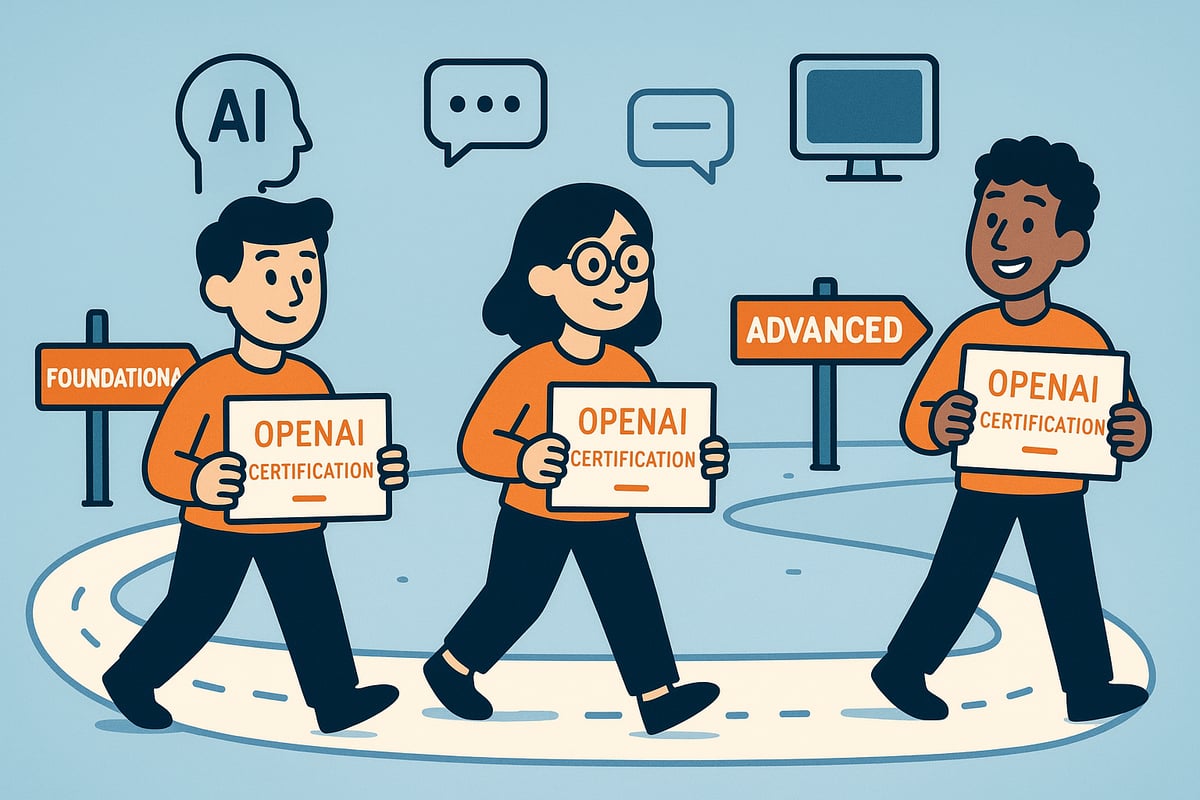
Openai certification programs are structured to support learners at every stage of their AI journey. OpenAI offers three main levels:
Level | Focus Area | Audience | Format |
|---|---|---|---|
Foundational | AI Fluency, Workplace AI | Beginners, all professionals | Self-paced, online |
Intermediate | Generative AI, Prompt Engineering | Those with some AI experience | Online, proctored |
Advanced | Advanced Prompt Engineering, AI Integration | Technical specialists | Proctored, in-app |
Tracks include:
AI Fluency: Covers key AI concepts, terminology, and practical use in business.
Generative AI: Focuses on leveraging AI to create content, automate workflows, and solve problems.
Prompt Engineering: Teaches advanced techniques for designing and refining AI prompts.
Workplace AI Skills: Applies AI tools to real-world business scenarios.
Openai certification pathways are accessible directly in ChatGPT, with in-app learning modules guiding users from preparation to testing. Both technical and non-technical tracks are available, ensuring that openai certification meets the needs of diverse professionals.
Enterprise integration is a priority, allowing organizations to embed openai certification into their learning and development programs. This flexibility supports both individual learners and large-scale corporate upskilling initiatives.
What Skills Do OpenAI Certifications Validate?
Openai certification validates a comprehensive set of in-demand skills. Candidates are assessed through scenario-based tasks that mirror real workplace challenges. The focus is not just on theory, but on practical application.
Key skills validated include:
Proficient use of AI tools such as ChatGPT and Copilot
Prompt engineering and generative AI best practices
Data literacy, automation, and workflow optimization
Critical thinking and ethical use of AI
Problem solving using real-world case studies
For those unsure of their readiness, the AI Fluency Assessment Tool provides a benchmark for current skills and highlights areas to target for openai certification success.
Testing formats are flexible, including self-paced online exams, proctored sessions, and in-app assessments. This ensures candidates can demonstrate openai certification skills in environments that suit their needs.
Who Should Pursue OpenAI Certifications?
Openai certification is designed for a broad audience, reflecting the expanding role of AI across industries. Professionals in technology, business, marketing, human resources, and beyond can benefit from earning these credentials.
Openai certification is also highly valuable for:
Students and recent graduates aiming to enter AI-driven roles
Career changers looking to pivot into the AI sector
Organizations seeking to upskill teams for digital transformation
Small businesses leveraging dedicated SMB tracks
By pursuing openai certification, individuals demonstrate a commitment to continuous learning, while organizations signal readiness for the future of work. Whether you are seeking to stand out in a crowded job market or lead your team into the AI era, openai certification offers a recognized, practical pathway forward.
Step-by-Step Guide: How to Earn Your OpenAI Certification
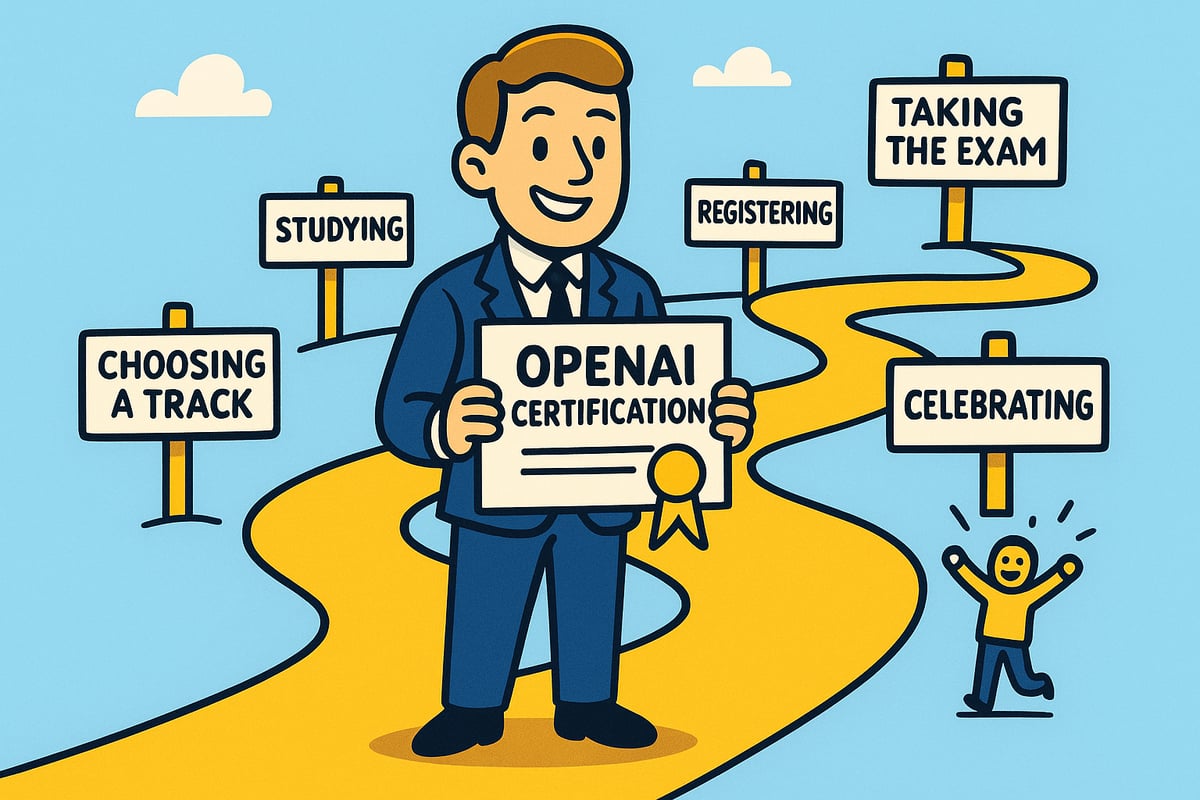
Earning an openai certification is a strategic move for anyone aiming to validate their AI skills and stand out in the evolving tech landscape. This step-by-step guide breaks down the process, offering practical advice and resources at each stage. Whether you are just starting or looking to advance, following these steps will help you achieve your openai certification goals with confidence.
Step 1: Choose the Right Certification Track
Your journey to openai certification begins by selecting the track that best fits your career aspirations and current expertise. OpenAI offers multiple certification pathways, ranging from foundational to advanced levels, each designed to validate distinct skill sets.
Start by assessing your professional goals. Are you seeking to demonstrate general AI fluency, or do you want to specialize in prompt engineering or workplace AI skills? Review the prerequisites for each track, noting any recommended experience or prior knowledge.
Consider the following comparison:
Certification Level | Target Audience | Focus Areas |
|---|---|---|
Foundational | Beginners, students | AI basics, ethical use |
Intermediate | Working professionals | Generative AI, automation |
Advanced | Specialists, engineers | Prompt engineering, apps |
Reflect on your current skill set and desired outcomes. Choosing the right openai certification track will set a strong foundation for your learning journey.
Step 2: Prepare with Official OpenAI Academy Resources
Preparation is key to succeeding in your openai certification exam. Access the official OpenAI Academy for comprehensive study guides, practice exams, and sample questions tailored to each certification level.
Interactive bootcamps and workshops offer hands-on learning opportunities, helping you bridge theory and practice. Many candidates benefit from in-app learning modules within ChatGPT, which present real-world scenarios and adaptive challenges.
For those seeking a structured approach, the Complete AI Foundations Bootcamp provides foundational skills aligned with openai certification standards. These resources ensure you build confidence and mastery ahead of the exam.
Make the most of practice materials, and set a regular study schedule. Consistent preparation significantly improves your chances of earning openai certification on your first attempt.
Step 3: Hands-On Practice and Skill Building
Applying your knowledge in real situations is essential for openai certification success. Complete practical projects that mirror workplace challenges, such as designing prompts, automating tasks, or solving scenario-based problems.
Join peer study groups and participate in online forums to exchange insights and get support. Collaborative learning can expose you to new perspectives and problem-solving approaches.
Simulate workplace scenarios using AI tools like ChatGPT or Copilot. This hands-on practice not only reinforces your understanding, but also prepares you for the practical components of the openai certification exam.
Dedicate time each week to skill-building activities. The more you engage with real-world tasks, the more confident you will feel when facing the exam.
Step 4: Register and Schedule Your Exam
Once you are ready, create your OpenAI Academy account to begin the openai certification registration process. You will be prompted to select your desired exam window, giving you flexibility to choose a time that suits your schedule.
Familiarize yourself with the available exam formats. OpenAI offers online proctored, in-person, and adaptive testing, each with specific technical requirements and policies. Make sure your testing environment meets the necessary criteria for a smooth experience.
Review all exam guidelines carefully. Being prepared for the logistics of your openai certification exam can reduce pre-test anxiety and help you focus on demonstrating your skills.
Mark your chosen exam date in your calendar and double-check your registration details for accuracy.
Step 5: Take the Certification Exam
On exam day, set yourself up for success. Arrive early or log in ahead of time to ensure your technology is working. Use time management strategies, such as answering easier questions first, and flagging more challenging ones to return to later.
During the openai certification exam, stay calm and read each question carefully. Apply test-taking techniques like eliminating incorrect answers and making educated guesses if necessary.
Expect immediate feedback upon completion. Your performance will be scored in real time, giving you instant insight into your results.
Take a moment to reflect on the experience, regardless of the outcome. Every attempt at openai certification is a valuable learning opportunity that contributes to your growth.
Step 6: Receive and Showcase Your Certification
After passing, you will receive a digital credential that verifies your openai certification. This credential can be added to your LinkedIn profile, resume, and digital portfolio to enhance your professional visibility.
OpenAI provides verification tools for employers and access to its talent marketplace, connecting certified professionals with exclusive job opportunities. Showcasing your openai certification demonstrates your commitment to professional development and helps you stand out in the job market.
Remember to keep your certification current by staying engaged with OpenAI Academy and industry updates. Your openai certification is not just a badge, but a gateway to ongoing learning and advancement in the AI field.
Maximizing the Value of Your OpenAI Certification
Unlocking the full potential of your openai certification goes far beyond passing an exam. This credential is your passport to a rapidly evolving AI job market, a signal to employers of your readiness for the future, and a building block for lifelong professional growth.
Leveraging Your Credentials in the Job Market
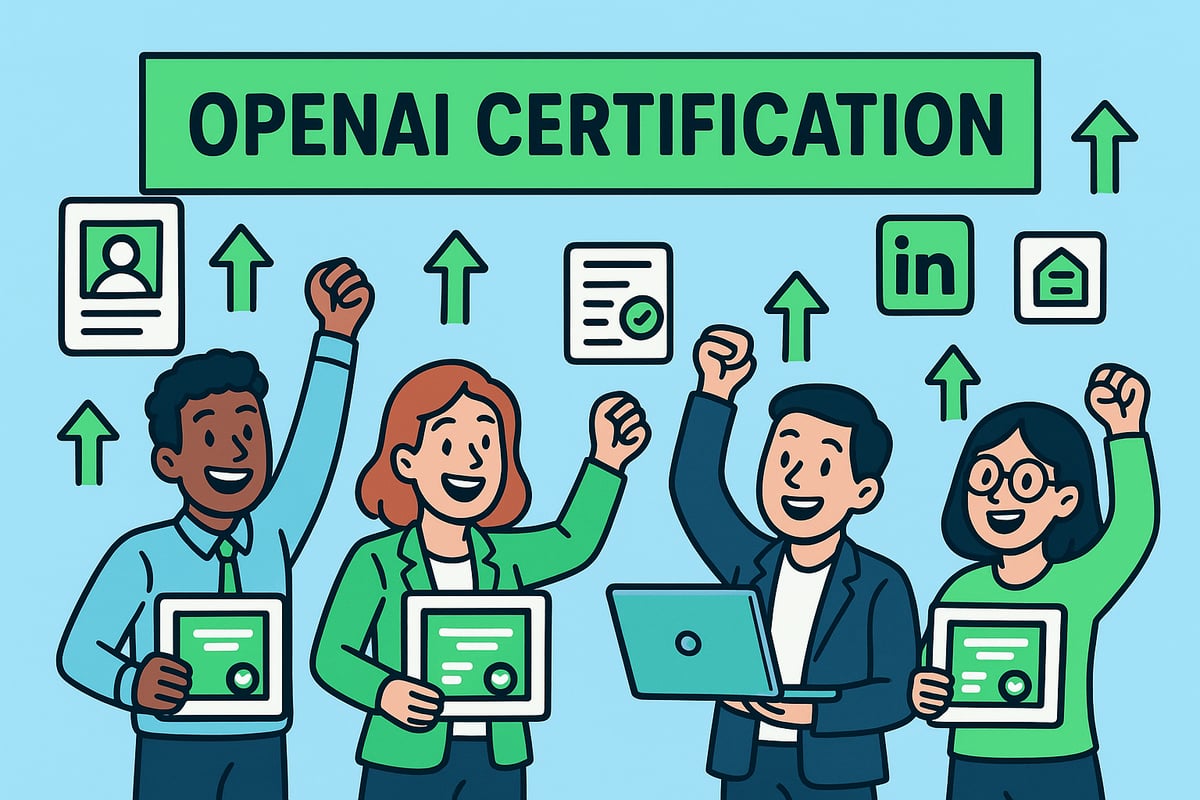
Earning an openai certification immediately gives your resume a competitive edge. Recruiters and hiring managers are on the lookout for candidates with proven AI skills, and this credential stands out as a mark of readiness for modern workplaces.
Adding openai certification to your LinkedIn profile not only increases your profile visibility but also unlocks access to exclusive job listings on the OpenAI Jobs Platform. Many certified professionals report landing new roles, promotions, or project responsibilities soon after earning their credentials.
Employers see openai certification as a reliable indicator of real-world AI competency. According to Pearson's 2025 IT Certification Report, certified individuals often receive higher consideration during hiring, as organizations recognize the value of validated skills in a competitive market.
Case studies demonstrate that openai certification is more than a badge, it is a catalyst for career advancement and professional credibility.
Integrating Certification into Ongoing Professional Development
Openai certification is not a one-time achievement. It provides a strong foundation for continuous learning in an era when AI evolves at breakneck speed. Professionals can use their certification as a springboard to pursue advanced credentials, such as those in generative AI or prompt engineering.
Stacking openai certification with other industry-recognized badges, like AWS or Azure, multiplies your value to employers. This approach demonstrates a commitment to multidisciplinary expertise and adaptability in complex tech environments.
Staying current is essential. OpenAI Academy regularly updates learning modules, ensuring that certified individuals keep pace with emerging AI tools and best practices. By revisiting academy resources, you maintain both your technical edge and your professional relevance.
Organizational Benefits: Upskilling Teams at Scale
Organizations are embracing openai certification to drive workforce transformation. By integrating certification into internal learning and development programs, companies ensure teams are equipped with up-to-date AI skills essential for digital transformation.
Walmart’s rollout of openai certification to thousands of associates exemplifies this shift. By providing structured pathways, businesses can close skills gaps, foster innovation, and respond quickly to market changes.
Openai certification also supports enterprise-wide consistency in AI adoption. Teams trained to a common standard are more efficient, collaborative, and capable of leveraging automation safely and ethically.
For businesses, investing in openai certification is not just a talent strategy, it is a competitive advantage in the race to harness AI’s full potential.
Future Trends: OpenAI Certifications and the Evolving AI Workforce
Artificial intelligence continues to redefine the workforce, and openai certification is quickly becoming a vital benchmark for professionals across industries. As organizations embrace automation and advanced AI tools, the demand for validated skills is accelerating. According to recent data from Stanford's 2025 AI Index Report, AI literacy is now seen as essential for both technical and non-technical roles. This shift is shaping how employers evaluate candidates and how employees future-proof their careers.
The Expanding Role of AI Certifications
By 2025, openai certification is anticipated to be a core workplace requirement. As AI-powered systems become integral to daily business operations, organizations are prioritizing employees who can demonstrate verified AI competencies. This trend extends beyond software engineers and data scientists to include project managers, marketers, HR professionals, and even frontline staff.
Key factors driving this expansion include:
The proliferation of AI-powered tools across all industries
The rise of multi-level, stackable digital credentials
The need for continuous learning as AI evolves rapidly
A recent study highlighted in the Stanford's 2025 AI Index Report shows a sharp increase in professionals obtaining AI credentials to stay competitive. Openai certification is seen as a reliable standard, making it a differentiator in hiring and promotion decisions.
Industry and Policy Developments Shaping AI Certification
Government and industry initiatives are playing a significant role in shaping the value of openai certification. The White House has launched a dedicated task force on AI education, encouraging public and private sector collaboration. Major employers are forming partnerships with OpenAI and educational institutions to align certification programs with real-world business needs.
Additionally, the competitive landscape is evolving. Platforms like LinkedIn and Microsoft are offering their own AI credentials, but openai certification stands out for its focus on practical, scenario-based skills. The growing skills gap is further amplified by rising salary expectations, as highlighted in this analysis on AI skills shortages and salary demands. For many organizations, investing in employee certification has become a strategic imperative to attract and retain talent.
Preparing for What’s Next in AI Careers
The future of work will be shaped by those who embrace continuous learning and adapt to emerging technologies. Openai certification validates not only current skills but also a commitment to staying at the forefront of AI advancements. New job roles are emerging, including AI ethicists, conversational designers, and automation strategists.
To stay ahead, professionals should:
Regularly update their openai certification as new tools and frameworks are released
Combine openai certification with other industry credentials for broader expertise
Engage with ongoing learning communities and resources
Lifelong learning is the key to success in an AI-driven economy. Openai certification provides a roadmap for individuals and organizations to navigate these changes with confidence.
Frequently Asked Questions about OpenAI Certification
Curious about openai certification? Here are answers to the most frequently asked questions, helping you make informed decisions as you pursue AI credentials.
Who is eligible for openai certification?
Anyone interested in AI can pursue openai certification, including professionals, students, and career changers. There are no strict prerequisites for foundational levels, while advanced tracks may recommend prior experience with AI tools or programming.
What is the cost and duration of each openai certification?
Costs vary by level. Foundational certifications are typically under $100, while advanced tracks may range from $150 to $300. Most exams take 60 to 120 minutes to complete, and preparation can be self-paced.
Are openai certifications recognized by employers globally?
Yes, openai certification is gaining worldwide recognition. Major employers, tech companies, and government agencies increasingly value these credentials, especially as AI adoption accelerates across industries.
Can organizations integrate openai certifications into their L&D programs?
Absolutely. Many companies now embed openai certification into their learning and development strategies to upskill teams at scale. For tailored business solutions, see Business AI Upskilling Solutions.
How does openai certification compare to other AI credentials?
Openai certification stands out for its practical focus and integration with widely used AI tools. If you are comparing platforms or seeking alternatives for exam prep, explore this Udemy Alternative for AI Courses for a detailed comparison.
What support is available for exam preparation?
Official resources include study guides, practice exams, and online workshops. Many learners also use third-party platforms for additional prep support.
How often should certifications be renewed or updated?
Most openai certifications remain valid for two years. Renewal is encouraged to ensure your skills reflect the latest AI advancements.
Still have questions about openai certification? Refer to official OpenAI resources or reach out to their support team for personalized guidance.
As you explore the impact OpenAI certifications can have on your career in 2025, it’s clear that building a strong foundation in AI is your first step toward unlocking new opportunities. Whether you’re looking to stand out in a competitive job market or future-proof your skills, starting with the right learning path makes all the difference. If you’re ready to take action and begin your journey, you can Become a certified AI Foundation Specilaist. Start for free. Let’s make your pathway to AI success both achievable and rewarding.