Artificial intelligence is transforming the world at an unprecedented pace in 2026, reshaping industries and creating new career paths. Organizations across technology, healthcare, finance, and logistics are racing to adopt AI-driven solutions.
Are you considering a future in this dynamic field? This guide will help you make an informed decision about the udacity artificial intelligence nanodegree. Discover everything you need to know, from program structure and curriculum to hands-on projects, instructor expertise, and career resources.
Unlock your potential in AI, and let this up-to-date guide be your roadmap to success.
Overview of Udacity’s Artificial Intelligence Nanodegree in 2026
The udacity artificial intelligence nanodegree stands out as a leading program for those seeking advanced AI skills in 2026. Designed with industry needs in mind, it offers a blend of theoretical foundations and hands-on projects. This section explores what makes the program unique, its structure, who should enroll, and the key benefits learners can expect.

What is the Udacity AI Nanodegree?
The udacity artificial intelligence nanodegree is an advanced, project-driven program designed for professionals and learners aiming to master AI. It covers the latest trends and technologies in artificial intelligence, ensuring all content is up-to-date for 2026. The curriculum is shaped by real-world applications, enabling students to build practical skills through hands-on projects.
Graduates can earn eligibility for Master’s degree credit, providing a path to academic advancement. The nanodegree is recognized by industry leaders, with partnerships such as Accenture enhancing its credibility. Compared to other online AI programs, it offers a comprehensive approach that blends depth, rigor, and real-world relevance. For a detailed look at the curriculum, visit the Udacity AI Nanodegree curriculum.
Program Structure and Duration
The udacity artificial intelligence nanodegree consists of 8 core courses, 39 lessons, and 4 capstone projects. Learners typically complete the program in 3 to 4 months, benefiting from a flexible, self-paced schedule. Subscription options include monthly payments, bundled offers, or a one-time fee, making the program accessible to various budgets.
Students have unlimited access to course materials and receive personalized project reviews. Each module features hands-on, project-based learning—examples include building a Sudoku solver or programming a Pac-Man AI. Upon completion, graduates receive a certificate and industry-recognized credential, validating their expertise in artificial intelligence.
Who Should Enroll? Target Audience and Prerequisites
The udacity artificial intelligence nanodegree is ideal for those with intermediate skills in Python, statistics, and data structures. It targets professionals transitioning into AI roles, students preparing for graduate-level education, and anyone seeking to upskill in artificial intelligence.
English language proficiency is required, and recommended prerequisites include courses in object-oriented programming, Python, and statistics. For example, a data analyst looking to move into AI engineering would find this program a strong fit. Competitor research highlights the importance of foundational readiness for success in advanced AI coursework.
Key Benefits and Unique Selling Points
The udacity artificial intelligence nanodegree delivers mastery of over 36 in-demand AI skills, including optimization, minimax search, and Bayesian networks. Learners gain access to expert instructors from Google, Georgia Tech, and Udacity, ensuring top-tier guidance throughout the journey.
Real-world projects help build a portfolio that stands out to employers. Personalized mentorship, career coaching, and a supportive community enhance the learning experience. The program offers strong salary potential, with AI engineer averages reaching $163,152 in 2026. Academic credit pathways and industry-recognized certification further distinguish this nanodegree from alternative platforms.
In-Depth Curriculum Breakdown: Courses and Projects
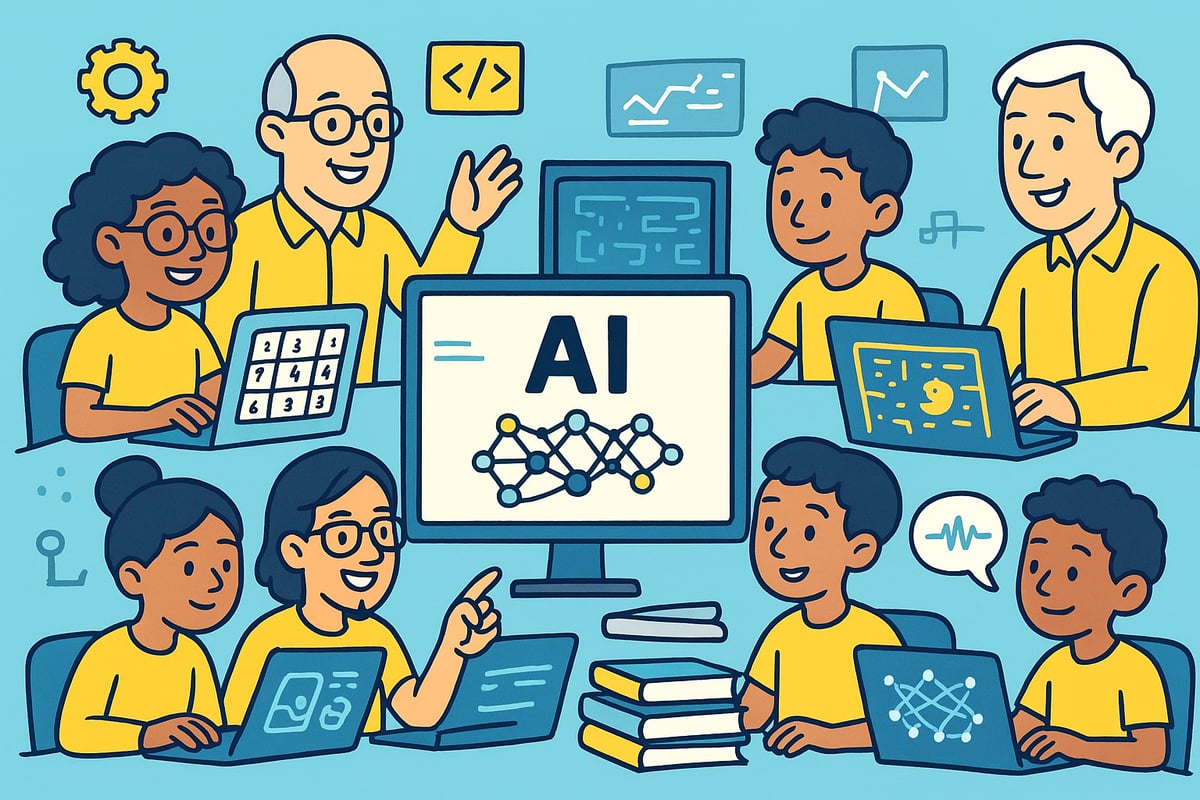
The udacity artificial intelligence nanodegree curriculum is built around a series of core courses and hands-on projects, offering a robust pathway for learners to master essential AI skills. Each module provides both theoretical foundations and real-world applications, ensuring students graduate with practical expertise and a portfolio to showcase their abilities.
Introduction to Artificial Intelligence
The opening course of the udacity artificial intelligence nanodegree introduces fundamental AI concepts from both theoretical and practical perspectives. Students learn about the definition of AI, classic problem-solving frameworks, and how to set up their development environment.
Key topics include:
- What is artificial intelligence?
- Problem representation and search spaces
- Real-world applications and ethics
A standout project challenges learners to build a Sudoku solver using constraint propagation. Through this exercise, students develop a deep understanding of logic and reasoning, laying the groundwork for more advanced modules. Mastery of these principles is crucial before progressing further in the program.
Classical Search and Constraint Satisfaction Problems
This module explores the backbone of many AI systems: search algorithms. The udacity artificial intelligence nanodegree covers both uninformed search (like breadth-first and depth-first search) and informed search strategies (such as A*).
Students apply these concepts in scenarios like:
- Navigating Pac-Man through a maze
- Solving map-coloring problems
- Designing heuristics for optimization
An interactive exercise allows learners to implement and compare search algorithms in various game environments. Understanding these foundations equips students to tackle complex AI challenges efficiently.
Automated Planning and Symbolic Logic
Automated planning and symbolic logic are critical for AI agents that need to reason and make decisions. In this part of the udacity artificial intelligence nanodegree, students delve into propositional and first-order logic, automated planning techniques, and the mechanics of progression and regression search.
The module includes:
- Hands-on project: Build a forward-planning agent for logistics or robotics
- Case studies: NASA Mars rover scheduling, Hubble telescope operations
- Advanced topics: Plan space search and situational calculus
By mastering these skills, learners gain the ability to create intelligent agents capable of long-term planning and complex reasoning.
Optimization Problems: Iterative Improvement and Algorithms
Optimization is at the heart of many AI solutions. The udacity artificial intelligence nanodegree provides a comprehensive look at iterative improvement methods, including hill climbing, simulated annealing, and genetic algorithms.
Key applications include:
- Operations research and logistics
- Solving the traveling salesman problem
- Comparing algorithmic efficiency
For example, students use simulated annealing to find near-optimal solutions to intractable problems. This section also links to advanced readings for those who wish to deepen their knowledge. For a broader perspective, see the Best Online AI Courses to compare curriculum depth across platforms.
Adversarial Search and Game Playing Agents
Adversarial search is essential for designing AI agents that operate in competitive environments. Within the udacity artificial intelligence nanodegree, learners study the minimax theorem, alpha-beta pruning, and Monte Carlo Tree Search.
Projects in this module include:
- Building a game-playing agent for Isolation or Pac-Man
- Exploring AlphaGo-inspired strategies
- Extending search to multi-player and uncertain environments
These skills are highly valued in domains like cybersecurity and finance, where anticipating opponent moves is crucial for success.
Probabilistic Graphical Models and Hidden Markov Models
The final major module focuses on uncertainty and probabilistic reasoning. Students in the udacity artificial intelligence nanodegree learn the fundamentals of Bayesian networks, Naive Bayes classifiers, and Hidden Markov Models (HMMs).
Applications explored:
- Pattern recognition and natural language processing
- Bioinformatics and gesture recognition
- Time-series analysis using dynamic time warping
A highlight is the construction of an HMM for part-of-speech tagging, demonstrating the power of probabilistic models in real-world AI tasks. By the end, students are equipped to tackle advanced challenges in speech, vision, and sequence modeling.
Learning Experience and Support Resources
The learning journey in the udacity artificial intelligence nanodegree is shaped by expert instruction, hands-on projects, robust mentorship, and flexible learning tools. Each feature is designed to help you master AI concepts and build real-world skills for career advancement.

Instructor Expertise and Teaching Approach
World-class instructors lead the udacity artificial intelligence nanodegree, bringing both industry and academic excellence to your screen. Sebastian Thrun, Peter Norvig, and Thad Starner headline the teaching team, each renowned for their contributions to AI at institutions like Google, Georgia Tech, and Udacity.
Their teaching approach blends theoretical foundations with practical, hands-on examples. You will find detailed walkthroughs, real project feedback, and insights from leaders who have shaped the field. This direct access to expertise ensures you not only learn AI principles but also understand their application in modern contexts.
Hands-On Projects and Portfolio Development
A highlight of the udacity artificial intelligence nanodegree is its project-based curriculum. Throughout your studies, you will complete at least four major projects, such as building a Sudoku solver, designing a Pac-Man AI agent, creating a planning agent, and developing a Hidden Markov Model for part-of-speech tagging.
Each project is crafted to reinforce algorithmic thinking and problem-solving skills. As you progress, these projects become a portfolio you can showcase to potential employers, demonstrating your ability to apply AI techniques to real-world challenges.
Mentorship, Career Services, and Community
Personalized mentorship is a cornerstone of the udacity artificial intelligence nanodegree. You receive project reviews, expert feedback, and one-on-one guidance to help you overcome challenges and build confidence in your AI skills.
Career services include resume reviews, interview preparation, and job placement support, making it easier to navigate the competitive AI job market. The active community, accessible via classroom chat and Slack, fosters collaboration and peer learning. For a broader perspective on preparing for AI careers, consider exploring this AI and Machine Learning Learning Path.
Flexibility, Accessibility, and Learning Tools
The udacity artificial intelligence nanodegree is designed for maximum flexibility. Its self-paced, online format allows working professionals to learn at their own speed, with unlimited access to updated course materials and content.
Advanced learning dashboards track your progress and help you set achievable goals. The program is accessible on both mobile and desktop platforms, enabling learning from anywhere. This flexibility ensures that you can balance your studies with work or personal commitments, making high-quality AI education accessible to everyone.
Career Outcomes and Industry Impact
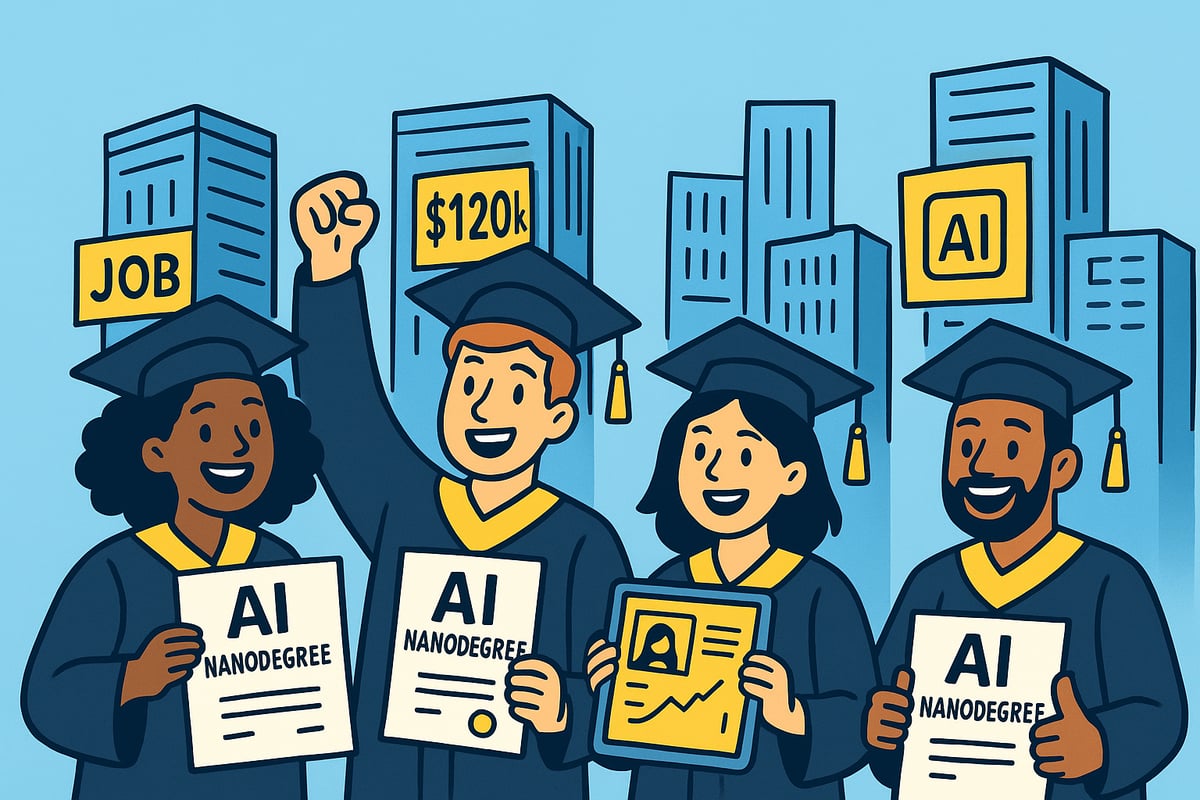
The udacity artificial intelligence nanodegree is designed to prepare graduates for a thriving AI job market. According to projections, AI roles are expected to grow by 21 percent, with average salaries reaching $163,152. Demand spans across industries such as technology, healthcare, finance, logistics, and autonomous systems. In fact, a recent report highlights that the AI job market growth in 2025 is accelerating, with median salaries climbing and opportunities expanding rapidly.
AI Job Market Trends and Salary Data
Graduates of the udacity artificial intelligence nanodegree are entering a robust career landscape. AI engineers, machine learning specialists, and data scientists are among the most sought-after professionals. Salary ranges typically fall between $134,180 and $208,800, with the average at $163,152.
Industries actively hiring include:
- Tech giants and startups
- Healthcare and pharmaceuticals
- Financial institutions
- Logistics and transportation
- Robotics and autonomous vehicle companies
Alumni frequently secure positions at Fortune 500 companies, reflecting the strong recognition of this credential.
Real-World Applications and Success Stories
The practical focus of the udacity artificial intelligence nanodegree equips graduates to make significant contributions in AI-driven projects. Alumni have developed logistics agents, natural language processing tools, and advanced game AIs.
Success stories include:
- A student building a logistics optimization tool for a shipping company
- Graduates launching careers in robotics and automation
- Professionals transitioning to AI engineer roles after showcasing their Nanodegree portfolio
Employers consistently note the value of project-based learning, and many have hired directly from the program’s talent pool.
Academic Pathways and Continuing Education
The udacity artificial intelligence nanodegree also supports academic advancement. Graduates may be eligible for Master’s degree credit through Udacity’s university partnerships. This opens pathways to further study in artificial intelligence, machine learning, and data science.
Typical next steps include:
- Transitioning to an MSc in Artificial Intelligence
- Earning advanced certifications in deep learning or NLP
- Participating in research or academic projects
Lifelong learning remains key in the fast-evolving AI sector, and this Nanodegree lays a strong foundation.
Comparing Udacity to Other AI Learning Platforms
When evaluating the udacity artificial intelligence nanodegree against other online AI programs, several advantages stand out. Project-based learning, expert instructors, and robust career services differentiate Udacity from platforms like Coursera and edX.
Here is a comparison summary:
| Feature | Udacity AI Nanodegree | Competitors (Coursera, edX) |
|---|---|---|
| Project-based learning | Yes | Varies |
| Personalized mentorship | Yes | Limited |
| Industry partnerships | Strong | Moderate |
| Student satisfaction | 4.5/5 | 4.1–4.4/5 |
With industry-recognized certification and a supportive alumni network, the Nanodegree offers lasting value for aspiring AI professionals.
Frequently Asked Questions About the Udacity AI Nanodegree
Admission, Pricing, and Enrollment Process
Enrolling in the udacity artificial intelligence nanodegree is straightforward. Start by visiting Udacity’s official website, creating an account, and selecting the AI Nanodegree program. Choose your preferred payment option: monthly subscription, discounted bundle, or a one-time payment.
Typical pricing options include $212 per month for a bundle, $249 per month individually, or $999 as a single payment. Prospective students can apply personalized discounts during enrollment periods. Refunds are available within a set window, usually seven days after purchase. Enrollment is open year-round, with flexible start dates to suit your schedule.
If you are comparing programs, consider exploring Udacity Alternatives for AI Learning to make an informed choice.
Program Difficulty and Time Commitment
The udacity artificial intelligence nanodegree is designed for learners with an intermediate background in Python, statistics, and data structures. The program typically requires 8 to 10 hours of study per week, allowing most students to finish within three to four months.
Preparation is key. Recommended prerequisite courses include object-oriented programming and introductory statistics. Udacity supports learners of different experience levels by offering preparatory content and flexible pacing.
To manage your workload, set weekly goals and utilize built-in progress tracking tools. This approach helps maintain momentum and ensures steady progress through the curriculum.
Certification, Accreditation, and Master’s Credit
Upon successful completion, students earn a certificate for the udacity artificial intelligence nanodegree, recognized by major employers and industry partners. The credential is valued for its project-based rigor and real-world relevance.
Graduates are eligible to receive academic credit toward select Master’s degree programs, thanks to partnerships with top universities. Employers increasingly view Udacity credentials as evidence of practical expertise, especially in AI roles.
To transfer credits, follow the guidelines of your target institution. For those focused on career advancement, note that AI skills boost salaries by 56%, making certification a valuable investment.
Support, Community, and Alumni Network
Support for students in the udacity artificial intelligence nanodegree is robust and ongoing. Every learner receives access to mentorship, personalized project reviews, and an active online community.
Alumni benefit from exclusive Slack channels, webinars, and job referral opportunities. Regular content updates and continued access to resources keep graduates connected and engaged.
The program’s community forums foster networking, collaboration, and peer learning. This strong support network helps learners succeed during the program and beyond.
Is the Udacity Artificial Intelligence Nanodegree Right for You?
Choosing the right AI program is a critical step toward your future in technology. The udacity artificial intelligence nanodegree offers a structured path, but is it truly the best fit for your skills, goals, and investment? Let us help you make an informed choice as you consider this next step in your career.
Assessing Your Career Goals and Readiness
Before enrolling in the udacity artificial intelligence nanodegree, evaluate your current experience in Python, statistics, and programming. This program is tailored for those with an intermediate background, so comfort with data structures and algorithms is essential.
Consider your professional objectives. Are you looking to transition into an AI-focused role, advance in data science, or automate business processes? Matching your ambitions with the nanodegree’s learning outcomes will help clarify if this is the right pathway.
For example, if you are a data analyst aiming to become an AI engineer, this program offers the targeted curriculum and projects to bridge the gap. Take time to review your readiness and set clear goals before you apply.
Weighing the Investment: Cost vs. Value
The financial commitment for the udacity artificial intelligence nanodegree can be significant, but the potential return on investment is compelling. Tuition options include monthly subscriptions or a one-time payment, making the program accessible for various budgets.
Compare this cost to the projected salary increases in AI roles. According to 2026 technology salary trends, technology professionals with AI skills can expect substantial compensation growth, with many roles surpassing $160,000 annually. Consider how the credential, hands-on projects, and career support could accelerate your career and justify the investment.
Reflect on your long-term earning potential and the value of recognized certification when making your decision.
Alternatives and Supplementary Learning Paths
While the udacity artificial intelligence nanodegree is robust, it is important to explore other learning options. Platforms like Coursera, edX, and specialized bootcamps offer a range of AI programs, each with unique features and pricing.
If you seek a different teaching style or a broader curriculum, reviewing comparisons such as this Coursera Artificial Intelligence Course Review can provide helpful insights. Many learners combine the nanodegree with supplementary courses in deep learning, natural language processing, or data engineering to deepen their expertise.
Consider your preferred learning format and whether a hybrid approach would maximize your skills and career prospects.
Final Checklist: Making Your Decision
Before enrolling in the udacity artificial intelligence nanodegree, ask yourself:
- Do you have the required Python and statistics background?
- Are your career goals aligned with AI or automation?
- Is the investment justified by anticipated salary and opportunities?
- Do you need additional support or alternative learning resources?
Take advantage of free previews and trial lessons to experience the course firsthand. Gather information from forums and alumni to understand the learning environment. With thorough preparation, you can confidently take the next step toward a rewarding AI career.
As you explore whether the Udacity Artificial Intelligence Nanodegree is the right fit for your goals, remember that building a solid AI foundation opens doors to endless possibilities—from advanced projects to high-impact roles across industries. If you’re ready to take the next step and want to start with the fundamentals, you don’t have to wait. You can begin your journey risk-free and see the difference interactive, expert-led learning makes. Take the first step toward mastering AI at your own pace—Become a certified AI Foundation Specilaist. Start for free.