The world is witnessing an unprecedented boom in artificial intelligence, and the value of mastering this technology has never been higher. As India’s top technology institutes, IITs stand out as the premier destination for ambitious learners seeking to build expertise in this field.
This guide is your one-stop resource for everything you need to know about pursuing an ai course in iit in 2025. You will discover details about course structures, eligibility requirements, the latest curriculum trends, career prospects, and more.
Ready to unlock your potential? Explore how IIT’s leadership in AI, world-class faculty, and strong industry ties can set you on a path to career growth. Read on to make informed decisions and shape your future in AI.
Why Choose an AI Course at IIT?
India’s IITs are celebrated worldwide as the gold standard for technology education. Consistently ranked among the top global universities, IITs are at the forefront of research and innovation. For students passionate about artificial intelligence, choosing an ai course in iit offers a unique opportunity to learn from the best and gain a credential recognized across the globe.
The demand for AI expertise is growing rapidly. According to recent AI job market statistics 2025, the global AI market is projected to reach $500 billion this year. Organizations in finance, healthcare, automotive, and IT are adopting AI solutions at a record pace, resulting in a surge of jobs requiring advanced skills. Enrolling in an ai course in iit positions you to take advantage of this booming landscape and prepares you for roles that are shaping the future.
What sets an ai course in iit apart from other options? IITs offer a blend of world-class faculty, cutting-edge research facilities, and extensive industry partnerships. Faculty members are leading experts in AI, machine learning, and data science, often collaborating with top global researchers. Students benefit from hands-on exposure to technologies like ChatGPT, Hugging Face, DALL E 2, and Gemini, ensuring they are ready for real-world challenges.
IIT alumni have a proven track record of success. Many graduates from ai course in iit programs have joined leading tech companies like Google, Microsoft, and Amazon, while others have launched innovative startups in India and abroad. Their stories highlight the value of an IIT education and the doors it can open in both established corporations and the entrepreneurial ecosystem.
An ai course in iit is widely recognized by employers. IIT certification signals rigorous training and advanced problem-solving skills, making graduates highly sought after. In comparison to other Indian and international AI programs, IITs consistently report higher placement rates, stronger industry connections, and better salary packages. For example, IIT Kanpur’s AI program boasts a 4.7 out of 5 rating from 2,900 learners, reflecting both satisfaction and outcomes.
Below is a quick comparison:
| Feature | IIT AI Programs | Other Indian Institutes | Global MOOCs |
|---|---|---|---|
| Faculty | Top researchers | Mixed | Varies |
| Industry Partnerships | Strong (Google, MS) | Limited | Few |
| Research Opportunities | Extensive | Moderate | Minimal |
| Placement Support | Comprehensive | Limited | None |
| Certification Value | Globally recognized | National | Varies |
Another advantage of pursuing an ai course in iit is the access to industry-driven projects and workshops. IITs regularly partner with leaders like Microsoft and Google to update their curriculum, ensuring that students work on current technologies and case studies. This exposure helps bridge the gap between classroom learning and practical application.
In summary, an ai course in iit provides a powerful combination of prestige, practical skills, and career acceleration. With its distinctive advantages, IIT remains the top choice for aspiring AI professionals in 2025.
Types of AI Courses Offered at IITs in 2025
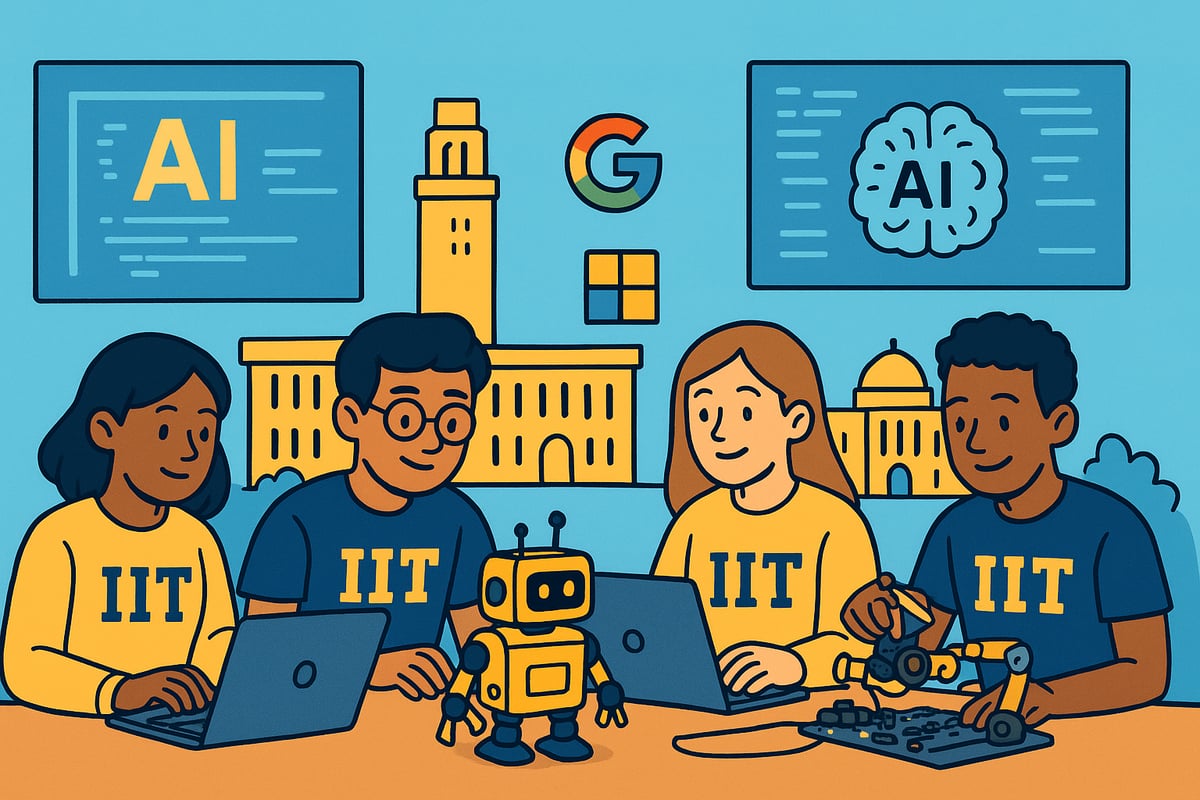
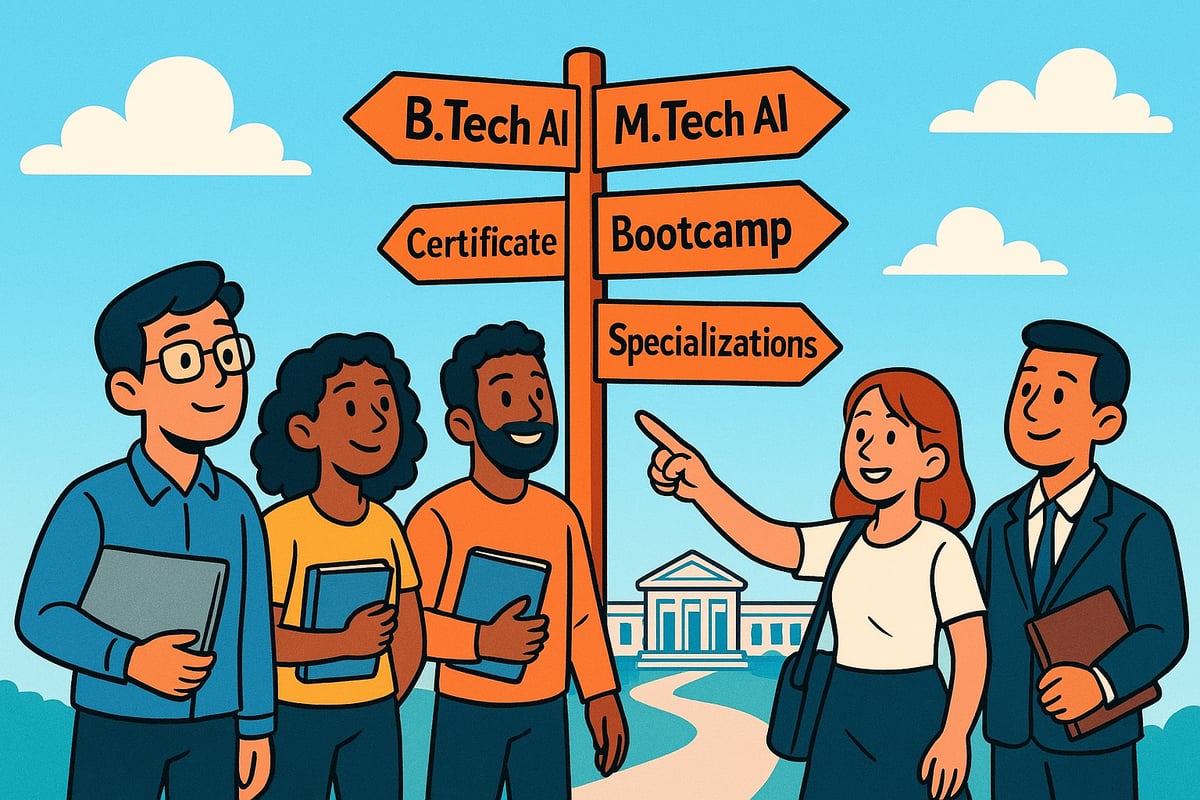
The landscape of AI education at IITs in 2025 is diverse and comprehensive. Whether you are a student, working professional, or researcher, there is an ai course in iit tailored to your goals. IITs offer a range of pathways, from foundational undergraduate programs to advanced research and specialized professional tracks.
Undergraduate AI Programs
For those beginning their journey, the undergraduate ai course in iit is a popular choice. IITs now offer dedicated B.Tech degrees in Artificial Intelligence, Data Science, and related fields.
Students engage with core subjects such as machine learning, data structures, and programming. Practical exposure is emphasized through labs, coding assignments, and project work. Admission is highly competitive, requiring top ranks in the JEE Advanced exam.
These undergraduate programs lay a solid foundation for careers in AI, equipping students with both theoretical knowledge and applied skills.
Postgraduate AI Programs
If you are aiming for advanced expertise, the postgraduate ai course in iit provides multiple options. IITs offer M.Tech, MS(R), and PhD programs in AI, Machine Learning, and Data Science.
These programs focus on research, innovation, and specialization. Students undertake coursework in advanced algorithms, deep learning, and mathematical foundations. Research projects and a thesis are integral components, fostering independent inquiry.
Eligibility typically includes a relevant undergraduate degree and a qualifying score in the GATE exam. These programs open doors to academic, research, and high-tech industry roles.
Professional Certificate & Online Programs
For working professionals or graduates looking to upskill, the professional certificate and online ai course in iit is an excellent route. These programs, such as those offered by the E&ICT Academy and IIT Kanpur’s Generative AI and Machine Learning course, are structured for flexibility.
Courses span about 11 months and use live online sessions, recorded lectures, and interactive assignments. The curriculum covers practical AI tools, industry use-cases, and hands-on projects. These programs are ideal for those balancing work and study.
To explore more about available options, refer to the AI course offerings at IITs.
Short-Term & Executive Programs
Mid-career professionals often seek focused skill development, making short-term and executive ai course in iit programs highly valuable. IITs conduct intensive bootcamps, workshops, and executive education modules in AI and related domains.
These offerings are designed with flexible schedules, allowing participants to learn without career disruption. Industry immersion, networking, and real-world problem-solving are key features.
Such programs rapidly build competencies in trending AI technologies, making them suitable for leaders and practitioners aiming to stay ahead.
Specialized Tracks and Electives
To cater to evolving interests, the specialized ai course in iit tracks cover areas such as AI in Robotics, Natural Language Processing, Computer Vision, and Reinforcement Learning.
Students can select electives aligned with their career aspirations. Many programs now integrate generative AI tools and real-world projects, ensuring practical relevance. Collaboration with industry partners brings exposure to platforms like ChatGPT, Hugging Face, and DALL-E 2.
This flexibility allows learners to tailor their experience, deepening expertise in specific AI domains.
Curriculum & Learning Experience
Enrolling in an ai course in iit is more than just attending lectures. The journey is meticulously designed to blend foundational principles, advanced specializations, and practical experiences. Students gain exposure to real-world challenges, guided by top faculty and industry leaders, ensuring their skills remain relevant and competitive.
Core Modules and Syllabus Overview
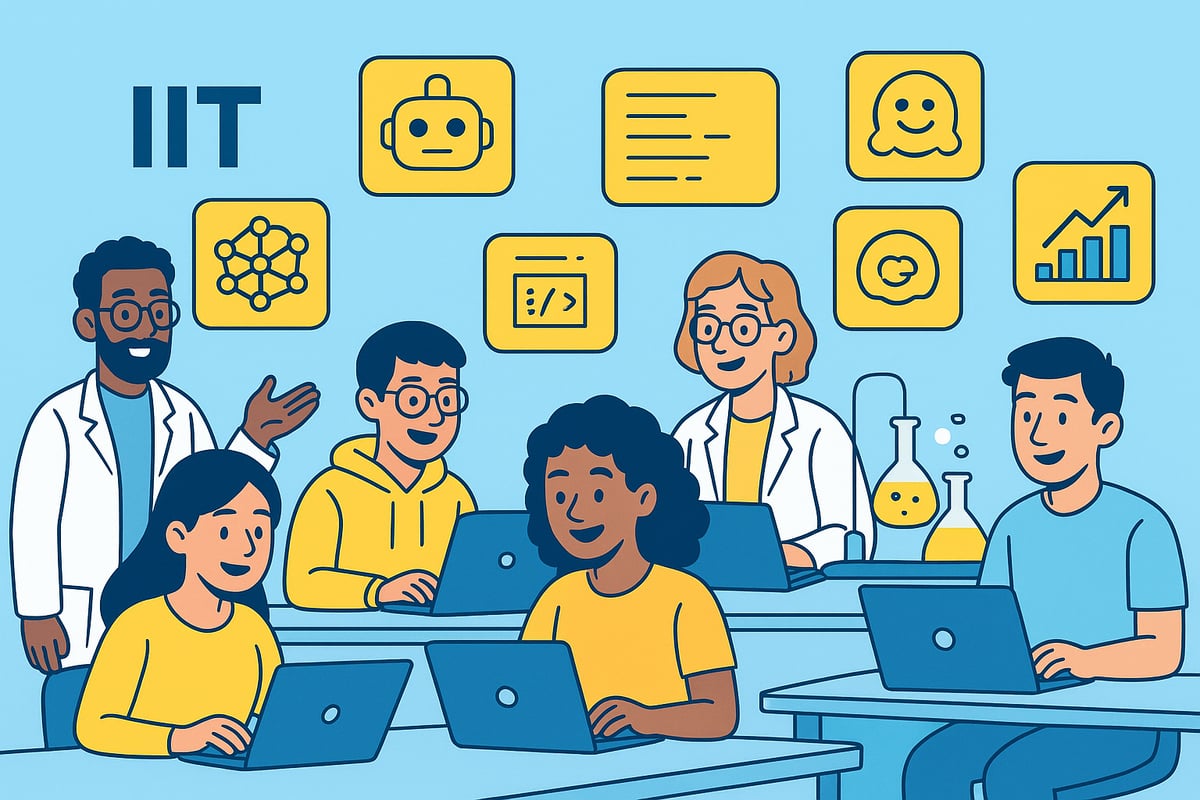
The core of every ai course in iit is its comprehensive syllabus, which balances theory with hands-on learning. Students dive into machine learning, deep learning, natural language processing, computer vision, and generative AI. Foundational courses set the stage, followed by electives in areas like robotics, reinforcement learning, and advanced data science.
Here’s a snapshot of typical modules:
| Core Subject | Focus Area |
|---|---|
| Machine Learning | Algorithms, supervised/unsupervised |
| Deep Learning | Neural networks, CNNs, RNNs |
| NLP | Language models, text analytics |
| Computer Vision | Image analysis, object detection |
| Generative AI | GANs, diffusion models |
Practical labs are integrated throughout, letting learners build, test, and deploy AI models. For those wanting an extra edge, the Data Engineering and Machine Learning Masterclass offers insights into topics paralleling the IIT AI curriculum.
Faculty and Industry Collaboration
An ai course in iit stands out for its expert faculty and deep industry engagement. Professors lead research projects and keep the curriculum up to date. Guest lectures from tech leaders, masterclasses, and mentorship programs bridge the gap between academia and industry.
Students regularly interact with professionals from companies like Microsoft and Google. This collaboration ensures the latest tools, like ChatGPT and Gemini, are embedded in coursework.
Hands-on Projects and Labs
Hands-on experience is at the heart of every ai course in iit. Learners complete over 15 applied projects, mirroring real-world scenarios. Integrated labs provide access to essential platforms such as Hugging Face and DALL-E 2.
Here’s a sample project list:
- Building a chatbot with NLP techniques
- Designing a computer vision system for healthcare
- Creating generative AI art with DALL-E 2
These projects sharpen both technical and problem-solving skills.
Research Opportunities and Innovation
Research is a key pillar of any ai course in iit. Students gain access to advanced research labs working on cutting-edge projects. They can publish papers, present at conferences, or join competitions like hackathons.
This focus on innovation encourages original thinking and positions graduates for roles in both academia and industry. Opportunities to collaborate on funded research or patent new solutions add further value.
Learning Formats: Online, Hybrid, Offline
Flexibility is central to the ai course in iit learning experience. Programs are offered in various formats:
- Live, interactive online classes
- Hybrid models combining campus sessions and online study
- Self-paced modules with recorded lectures
Many courses provide lifetime access to e-learning resources. Working professionals benefit from blended formats, allowing them to balance work and study efficiently.
Student Support and Community
Community and support are woven into every ai course in iit. Students collaborate in peer groups, join discussion forums, and connect with a strong alumni network.
24/7 support ensures guidance is always available, whether for coursework or career advice. This network fosters growth, lifelong learning, and professional connections.
Admission Process and Eligibility Criteria
Navigating the admission process for an ai course in iit requires a clear understanding of eligibility and selection stages. IITs maintain rigorous standards to ensure only the most driven candidates gain entry. Let us break down each step to help you prepare with confidence.
Entry Requirements for Different Programs
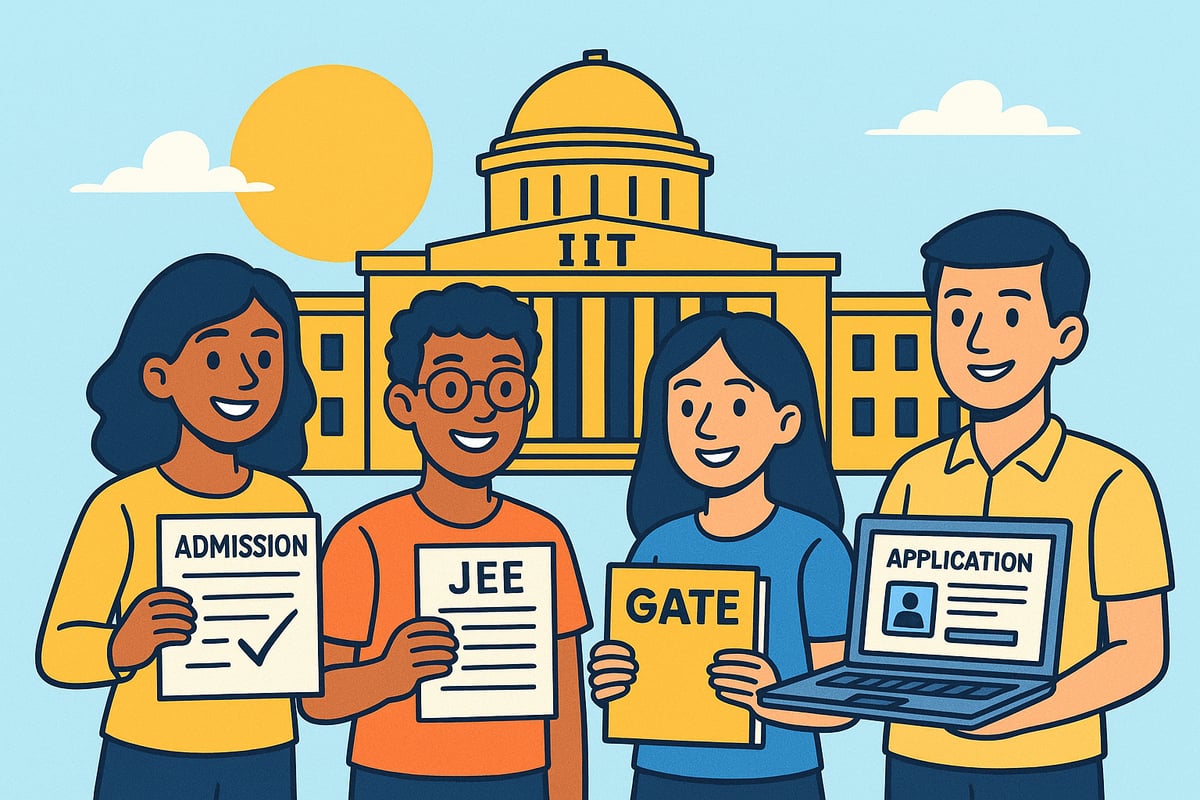
Eligibility for an ai course in iit varies by program level. For undergraduate programs like B.Tech in AI, candidates must qualify through JEE Advanced, a highly competitive national exam. For postgraduate routes such as M.Tech, MS(R), or PhD, a valid GATE score is essential, often alongside a relevant bachelor's degree.
Working professionals seeking executive or certificate programs must typically show industry experience and academic credentials. English language proficiency and a strong foundation in mathematics or computer science are also expected.
Before applying, prospective students can use the AI Fluency Assessment Guide to evaluate their readiness for the ai course in iit.
Application Timeline and Process
The application process for an ai course in iit usually begins several months before the academic session. Undergraduate admissions follow the JEE Advanced schedule, while postgraduate and certificate programs have their own cycles, typically opening in late fall or early winter.
Applicants must:
- Complete online registration on the IIT admissions portal
- Upload academic transcripts, test scores, and ID proof
- Submit any required statements of purpose or recommendation letters
Deadlines are strict, so mark important dates early. To strengthen your ai course in iit application, highlight academic achievements, relevant skills, and clear motivation for pursuing AI.
Selection Criteria and Interviews
Selection for an ai course in iit involves multiple stages. Top-performing candidates in entrance exams are shortlisted for further evaluation. Some programs require a written technical test or coding assessment.
Personal interviews assess a candidate’s problem-solving skills, research interests, and passion for AI. A strong statement of purpose and evidence of relevant projects or internships can make your application stand out.
Academic record, work experience, and extracurricular achievements are all considered in the holistic selection process for an ai course in iit.
Scholarships and Financial Aid
Pursuing an ai course in iit is an investment, but financial support is available. IITs offer a range of scholarships:
- Merit-based scholarships for top academic achievers
- Need-based aid for students from lower-income backgrounds
- Industry-sponsored fellowships and research stipends
To apply, submit the scholarship application along with your main admission form. Supporting documents, such as income certificates or recommendation letters, may be required. Securing financial aid can make your ai course in iit journey more accessible and affordable.
Career Prospects After IIT AI Courses
Completing an ai course in iit opens doors to a broad spectrum of high-demand roles and global opportunities. The job market for AI professionals continues to expand rapidly, and IIT graduates are uniquely positioned to make their mark. Let’s explore the career landscape awaiting you after your AI journey at IIT.
Job Roles and Industry Demand
Graduates of an ai course in iit find themselves highly sought after for roles such as AI Engineer, Data Scientist, Machine Learning Engineer, and Research Scientist. There is strong demand across sectors like IT, finance, healthcare, automotive, and retail.
AI is reshaping the workforce, with global reports showing significant job growth in this sector. According to AI job creation statistics, 2025 is projected to see millions of new AI-related jobs worldwide, reflecting the impact of advanced AI training.
Employers value the depth and rigor of an ai course in iit, which equips graduates with both technical expertise and practical problem-solving skills. This blend makes IIT alumni top contenders for cutting-edge roles in India and abroad.
Salary Trends and Placement Statistics
The salary prospects after completing an ai course in iit are among the highest in the technology sector. On average, IIT AI graduates receive starting packages ranging from INR 18 to 35 lakhs per annum, depending on specialization and experience.
Placement rates for ai course in iit programs consistently exceed 90 percent. Top recruiters include Google, Microsoft, Amazon, Goldman Sachs, and innovative startups. The rigorous curriculum and industry exposure give IIT graduates a competitive edge.
Here’s a quick comparison of average annual salaries:
| Program Type | Average Salary (INR) | Placement Rate |
|---|---|---|
| IIT AI Course | 18-35 lakhs | 90%+ |
| Non-IIT AI Program | 8-15 lakhs | 70-80% |
A degree from an ai course in iit clearly translates into substantial financial and professional rewards.
Alumni Success Stories and Startups
Alumni of the ai course in iit have made significant contributions to the tech industry. Many hold leadership roles at companies like Google, Meta, and NVIDIA, while others have launched successful startups in AI-driven healthcare, fintech, and robotics.
For example, IIT alumni have co-founded ventures focusing on AI-powered diagnostics and intelligent automation, attracting global funding and recognition. These stories inspire current students and highlight the transformative power of an ai course in iit.
Startups emerging from IITs often benefit from campus incubators and mentorship, helping translate innovative AI ideas into impactful businesses.
Global Opportunities and Further Education
An ai course in iit is globally recognized, opening pathways to international careers and research opportunities. Graduates often pursue roles in multinational corporations or continue their education with PhD and postdoctoral programs at leading universities abroad.
Participation in exchange programs and collaborations with global institutions is common for IIT students. This exposure helps graduates of an ai course in iit stay at the forefront of AI research and innovation.
Whether aiming for Silicon Valley, Europe, or Asia Pacific, IIT AI alumni possess credentials and networks that support global mobility and career advancement.
Lifelong Learning and Upskilling
AI is a rapidly evolving field, making continuous learning essential. IITs foster a culture of lifelong learning by providing alumni access to advanced certifications, workshops, and research seminars.
After completing an ai course in iit, graduates often pursue specialized courses such as the Machine Learning Fundamentals Course to deepen their expertise or branch into new AI domains.
Alumni networks, discussion forums, and mentorship programs further support ongoing professional growth. This commitment to upskilling ensures that IIT graduates remain leaders in the AI landscape throughout their careers.
FAQs About AI Courses in IIT (2025 Edition)
Are you considering enrolling in an ai course in iit? Here are answers to the most common questions students and professionals have when exploring IIT’s AI programs for 2025.
What are the prerequisites for enrolling in an IIT AI course?
For undergraduate programs, strong mathematics and science skills are essential. Admission typically requires qualifying JEE Advanced. Postgraduate and certificate programs may require a bachelor’s degree, relevant work experience, or coding proficiency. If you’re starting out, a foundational AI Foundations for Beginners Bootcamp can help bridge any gaps.
How is the curriculum updated to reflect the latest AI advancements?
Each ai course in iit is reviewed annually by faculty and industry partners. This ensures integration of new technologies like generative AI and tools such as ChatGPT, Hugging Face, and DALL E 2. Guest lectures and real-world projects keep the syllabus aligned with current industry needs.
Can working professionals enroll in IIT AI programs?
Yes, IITs offer flexible online and blended learning options, including executive and certificate courses. These are tailored for working professionals, with weekend or evening sessions and self-paced modules to fit your schedule.
What is the difference between a certificate and a degree program at IIT?
A degree program (B.Tech, M.Tech, PhD) involves a longer, in-depth academic commitment, while certificate courses are shorter and focused on specific AI skills. Degrees offer broader research opportunities, whereas certificates enable rapid upskilling for immediate industry needs.
Are there part-time or fully online options available?
Many IITs now provide part-time and fully online ai course in iit formats. These include live interactive classes, recorded lectures, and lifetime access to resources, making them accessible to learners across India and abroad.
How do IITs support placements for AI graduates?
IITs have dedicated placement cells that connect students with top recruiters in tech, finance, healthcare, and more. Placement rates are consistently high, and IIT alumni benefit from strong brand recognition. For insights on AI’s job market impact, read AI's impact on job market.
Is prior coding experience mandatory for all AI courses?
Not always. While some ai course in iit options require coding skills, beginner-friendly and foundational courses offer introductory programming modules. However, familiarity with Python and data structures is highly recommended.
What are the typical class sizes and student-faculty ratios?
Class sizes vary by program. Undergraduate and degree courses may have larger cohorts, while certificate and executive programs often feature smaller, interactive groups. IITs maintain a low student-faculty ratio to ensure personalized mentorship and guidance.
As you explore the possibilities of launching your AI journey with an IIT course in 2025, you’re already taking a smart step toward future-proofing your career. We’ve seen how IIT’s rigorous programs, innovative curriculum, and industry-backed credentials give professionals a true edge in the job market. If you’re ready to build a strong foundation in AI and want to experience world-class learning, why not take the next step? You can Become a certified AI Foundation Specilaist. Start for free and see firsthand how accessible, engaging, and impactful AI upskilling can be.