Imagine a future where artificial intelligence transforms healthcare by diagnosing diseases faster and tailoring treatments to each patient’s unique profile. That future is arriving soon, and mastering the right ai in medicine course will be essential for any forward-thinking medical professional. This handbook is designed to guide you through the rapidly evolving world of AI-driven healthcare education. Discover how to select the best programs, understand core topics, and unlock career opportunities as AI reshapes medicine. Prepare to gain future-ready skills and take confident steps toward success in this innovative field.
The Rise of AI in Medicine: Why 2026 Is a Pivotal Year
Artificial intelligence is transforming healthcare at a pace few could have imagined a decade ago. The growing adoption of AI is not just a trend but a paradigm shift, impacting how diseases are diagnosed, treatments are tailored, and patient outcomes are improved. For anyone considering an ai in medicine course, understanding this transformation is essential to making informed decisions about future skills.
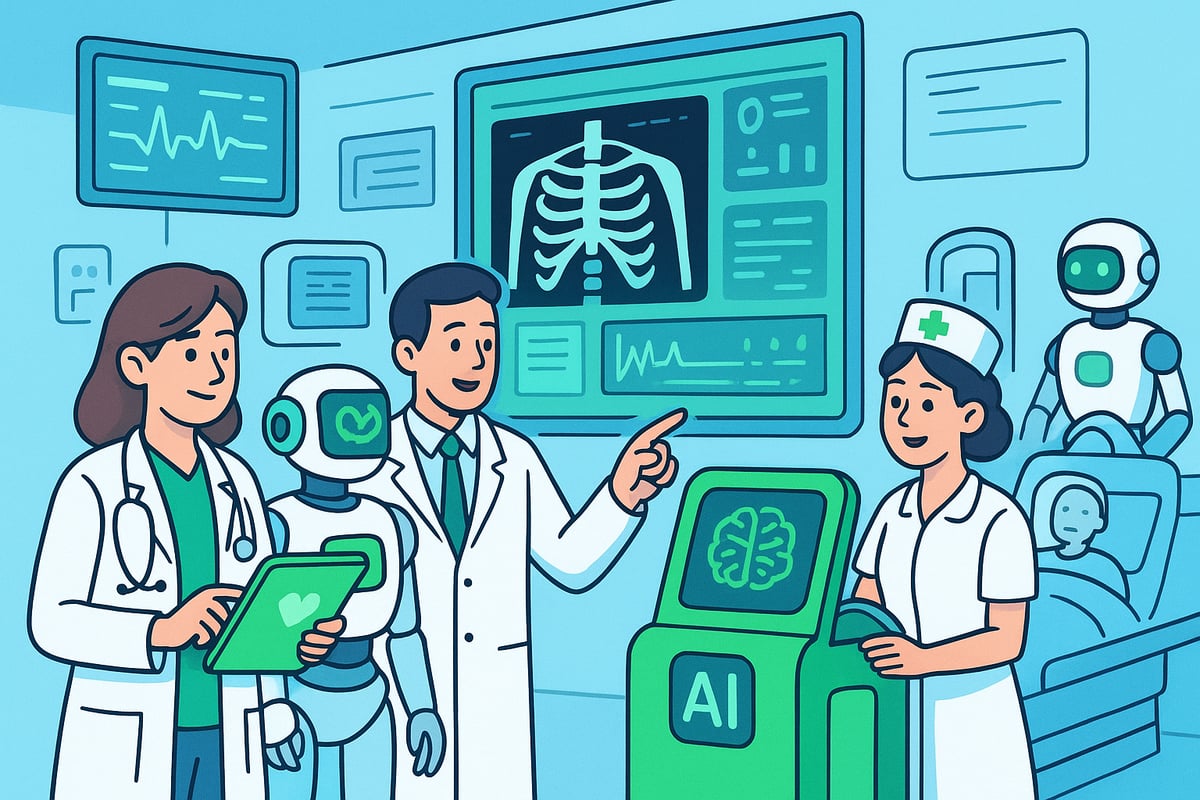
The healthcare AI market has seen exponential growth, with projections indicating it could reach $194.14 billion by 2030. This surge, as highlighted in AI in Healthcare Market projected to reach $194.14 billion by 2030, is driven by several factors. The explosion of medical data, significant improvements in machine learning algorithms, and robust regulatory support are enabling more advanced and reliable AI applications. These drivers make enrolling in an ai in medicine course increasingly relevant for medical professionals looking to stay ahead.
A major catalyst for this growth is the suite of breakthroughs in diagnostics, drug discovery, and personalized medicine. AI systems are now capable of detecting diabetic retinopathy in retinal scans with high accuracy, often outperforming human specialists. In oncology, AI has improved early cancer screening and patient risk stratification, making a tangible impact on patient survival rates. These advances highlight why an ai in medicine course is becoming a critical component of modern medical education.
Hospitals and clinics worldwide have begun integrating AI tools into daily workflows. Automated image analysis speeds up radiology and pathology reviews, while AI-driven decision support tools assist clinicians in making faster, evidence-based choices. Yet, this adoption also brings challenges. Data privacy concerns, algorithmic bias, and the need for professionals with cross-disciplinary skills remain pressing issues. Addressing these challenges is a key focus in every leading ai in medicine course.
Why is 2026 such a pivotal year? The answer lies in the convergence of technology, policy, and workforce demand. New medical AI regulations are rolling out, setting standards for ethical use and patient safety. At the same time, the demand for AI-literate healthcare professionals has never been higher. According to Deloitte, 60% of healthcare executives plan to upskill staff in AI by 2026. Top medical schools are now requiring students to complete at least one ai in medicine course as part of their curriculum. This signals a shift in what it means to be a future-ready clinician, researcher, or healthcare leader.
In summary, the rise of AI in medicine is reshaping the healthcare landscape. Choosing the right ai in medicine course in 2026 will empower you to contribute to this transformation, ensuring your skills remain relevant as the industry evolves.
Core Topics Covered in AI in Medicine Courses
Understanding the core topics in any ai in medicine course is essential for both aspiring and current healthcare professionals. These courses are designed to equip learners with a robust foundation in artificial intelligence, machine learning, and their practical applications in medicine. As the healthcare landscape evolves, mastering these subjects prepares you to lead and innovate in clinical and research settings.
Foundations of AI and Machine Learning in Healthcare
Every ai in medicine course begins with the fundamentals of artificial intelligence and machine learning. Learners explore key concepts such as supervised and unsupervised learning, neural networks, and deep learning. These principles are directly applied to medical datasets, including electronic health records, imaging archives, and genomic sequences.
A solid grasp of machine learning basics is crucial for clinicians who aim to interpret AI-driven tools confidently. For example, students might examine how predictive models estimate patient outcomes based on complex health data. The Stanford AI in Healthcare curriculum exemplifies this approach, dedicating modules to hands-on practice with real-world datasets.
In an ai in medicine course, understanding foundational AI empowers participants to evaluate new technologies critically. This knowledge also fosters collaboration between clinicians, data scientists, and IT professionals, ensuring that medical AI innovations are both effective and safe.
Medical Imaging and Diagnostics
Medical imaging is a cornerstone of modern healthcare, and any comprehensive ai in medicine course will emphasize AI’s transformative impact on diagnostic fields. AI systems are revolutionizing radiology, pathology, and dermatology by automating image analysis and anomaly detection. Notable tools, such as Google’s DeepMind for eye disease and IBM Watson Imaging, have demonstrated remarkable accuracy.
For instance, AI has outperformed radiologists in lung cancer detection through advanced algorithmic analysis. Integrating these systems with clinical workflows streamlines diagnosis and enhances patient care. Hospitals are increasingly adopting such technologies to reduce errors and improve efficiency.
If you are interested in exploring a program that covers these essential topics, the AI for Improved Patient Outcomes course at Johns Hopkins offers a practical curriculum focused on real-world diagnostic applications. By enrolling in an ai in medicine course like this, professionals gain hands-on experience and industry-relevant skills.
Natural Language Processing (NLP) and Clinical Data
Within an ai in medicine course, natural language processing (NLP) plays a vital role in extracting insights from unstructured clinical data. Medical texts, patient notes, and research articles are often filled with valuable information that traditional algorithms might overlook.
AI-powered NLP models help summarize electronic health records, match patients to clinical trials, and identify adverse drug events. For example, advanced NLP systems can quickly flag potential complications by analyzing physician notes, supporting timely intervention and improving outcomes.
This area of study ensures that an ai in medicine course prepares healthcare professionals to harness the full potential of clinical data.
Ethics, Bias, and Data Privacy in Medical AI
Ethical considerations are central to any ai in medicine course. Algorithmic bias, data privacy, and regulatory compliance are recurring topics. Students examine real-life scenarios where AI misdiagnosed patients due to unrepresentative training data, emphasizing the need for diverse datasets and transparent models.
Courses address key regulations such as HIPAA and GDPR, teaching learners how to protect patient information while leveraging AI. Understanding these ethical frameworks is critical for anyone working with sensitive medical data.
An ai in medicine course ensures that future healthcare leaders can identify and mitigate potential risks associated with AI-driven care.
AI-Powered Personalized Medicine and Treatment Planning
Personalized medicine is rapidly advancing, and an ai in medicine course introduces students to AI tools for individualized drug recommendations and treatment plans. Precision oncology, for example, leverages machine learning to match cancer patients with the most effective therapies based on their genetic makeup.
AI-driven approaches also facilitate the diagnosis of rare diseases by recognizing subtle patterns in patient data. These innovations are making medicine more precise, proactive, and patient-centered.
By mastering these core topics, graduates of an ai in medicine course are well-equipped to shape the next era of healthcare.
How to Choose the Right AI in Medicine Course
Choosing the right ai in medicine course is a crucial step in preparing for the future of healthcare. With so many options available, it is essential to align your selection with your career goals, learning preferences, and professional needs. The following guide breaks down the key factors to help you make an informed decision.
Assessing Your Background and Career Goals
Start by evaluating your current experience and professional aspirations. Are you a clinician seeking to integrate AI into patient care, a researcher looking to analyze complex datasets, or an IT professional planning to enter healthcare?
Understanding your background will help you choose an ai in medicine course that matches your skill level, whether beginner, intermediate, or advanced. For example, physicians may look for courses emphasizing clinical applications, while data scientists might prefer programs focused on medical datasets. Defining your career trajectory ensures you select a course that supports your long-term ambitions.
Evaluating Course Content and Learning Outcomes
Reviewing the curriculum is vital when selecting an ai in medicine course. Look for syllabi that feature hands-on projects, real-world case studies, and interdisciplinary modules combining medical and AI topics.
Consider the value of certifications and industry recognition. Certifications from reputable providers can boost your credibility and open doors to new roles. For a deeper understanding of credential value, consult resources like Best Certification for Artificial Intelligence to compare top options. This step helps ensure your chosen program aligns with current industry standards.
Comparing Top Institutions and Online Platforms
When exploring where to enroll, compare the reputation and offerings of leading universities and online platforms. Institutions such as Stanford, MIT, Johns Hopkins, and Harvard offer prestigious ai in medicine course programs.
Online platforms like Coursera, edX, and FutureLearn provide flexible formats, including self-paced and instructor-led options. Consider which environment suits your learning style best. Bootcamps may offer intensive, immersive experiences, while university-affiliated courses can provide deeper academic rigor.
Cost, Duration, and Flexibility Considerations
Budget and time constraints are important factors in choosing an ai in medicine course. Tuition fees can range from $500 for short online courses to over $5,000 for extended programs.
A quick comparison table:
| Course Type | Cost Range | Duration | Flexibility |
|---|---|---|---|
| Short Online | $500–$1,500 | 6–12 weeks | High |
| University Program | $2,000–$5,000+ | 1–2 years | Moderate to Flexible |
| Bootcamp | $1,000–$3,000 | 2–6 months | Intensive, Less Flexible |
For working professionals, flexible scheduling and part-time options can make a significant difference in successfully completing the course.
Mammoth Club: AI Upskilling for Medical Professionals
Mammoth Club offers a comprehensive ai in medicine course pathway tailored for clinicians and healthcare teams. With over 3,000 on-demand courses, their platform features adaptive AI-powered learning and practical projects designed for real-world application.
Participants can earn industry-recognized certifications, making it easier to demonstrate new competencies. The scalable solutions are ideal for both individuals and organizations looking to upskill efficiently. Exploring Mammoth Club’s offerings can provide a streamlined approach to mastering AI in healthcare.
Inside the 2026 AI in Medicine Curriculum: What to Expect
Curious about what you will actually learn in an ai in medicine course? The 2026 curriculum is designed to balance foundational knowledge with real-world application, ensuring graduates are ready for a rapidly changing healthcare landscape. Let us break down what you can expect, from course structure to hands-on experiences, assessment, and staying ahead of the curve.
Typical Course Structure and Modules
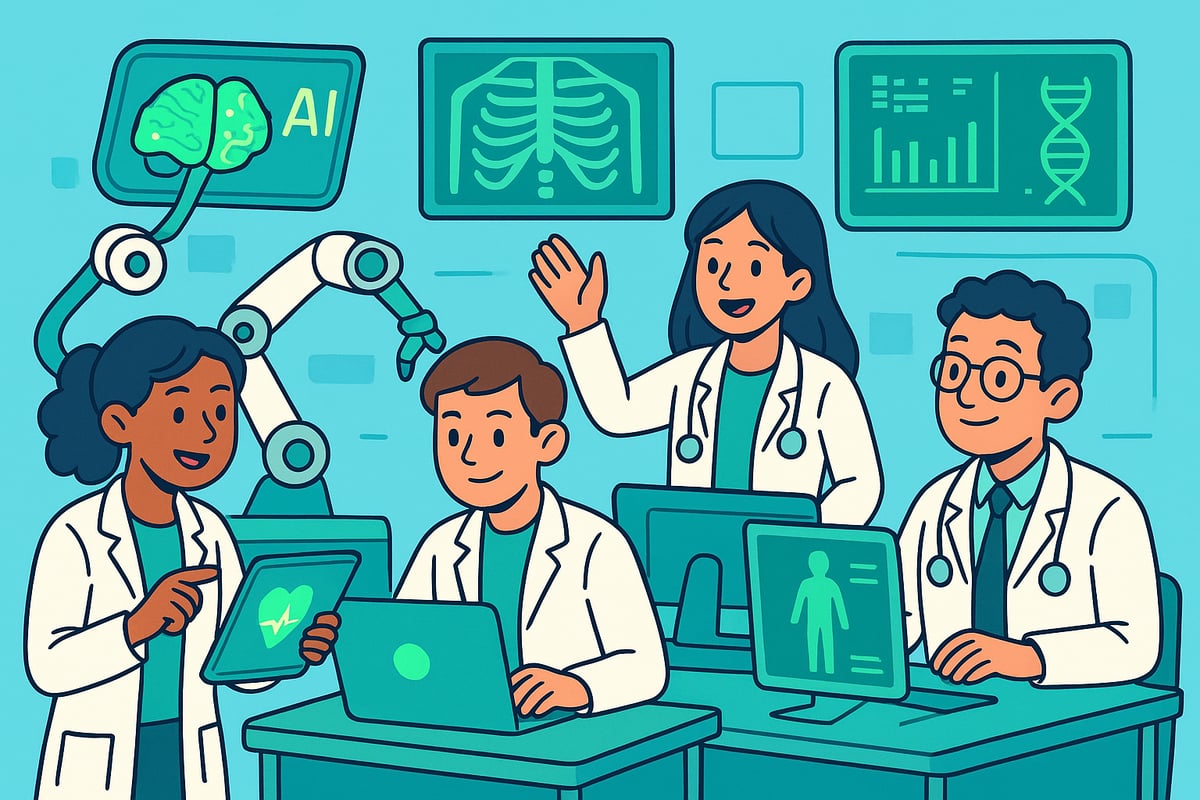
An ai in medicine course typically starts with a strong foundation in artificial intelligence and data science principles. Core modules include AI fundamentals, machine learning applications in healthcare, medical ethics, and clinical use cases. Electives may cover genomics, robotics, telemedicine, and digital health innovations.
Courses are structured to blend theoretical lectures with interactive learning. Many programs, such as the AI in Clinical Medicine course at Harvard Medical School, offer modules on real-world case studies and capstone projects. This approach ensures students can connect AI concepts directly to patient care and research.
Here is a sample module breakdown:
| Core Modules | Electives | Capstone/Project |
|---|---|---|
| AI Fundamentals | Genomics | Clinical Case Study |
| Data Science | Robotics | Research Project |
| Medical Ethics | Telemedicine | Innovation Challenge |
By the end of this phase, you will understand how an ai in medicine course prepares you for multidisciplinary collaboration and future clinical challenges.
Hands-On Learning: Labs, Simulations, and Projects
A modern ai in medicine course prioritizes experiential learning to bridge theory and practice. Expect to participate in virtual labs where you will analyze medical images or process clinical data using real AI tools. Simulations often place you in scenarios such as AI-assisted surgery or diagnostic decision-making, allowing you to see how AI can impact outcomes in real time.
Group projects are a core part of the curriculum. You may work with de-identified patient datasets to solve real healthcare problems. This hands-on component ensures you gain the technical and problem-solving skills critical for success in any ai in medicine course.
Labs and simulations are designed to be accessible for learners from various backgrounds, helping you build confidence as you apply AI to clinical scenarios.
Assessment Methods and Certification
Assessment in an ai in medicine course is both rigorous and practical. You will complete quizzes and assignments that test your understanding of AI concepts as applied to healthcare. Peer-reviewed projects encourage collaboration and critical thinking, while final exams or comprehensive capstone presentations test your ability to synthesize knowledge.
Certification is a key motivator. Upon successful completion, you may earn industry-recognized credentials or digital badges that highlight your new skills. These certifications can boost your professional profile, making your ai in medicine course experience visible to employers and peers.
Assessment is continuous, with feedback designed to help you refine your expertise throughout the course.
Collaboration and Networking Opportunities
Collaboration is central to the ai in medicine course experience. Courses foster teamwork through group assignments, discussion forums, and peer mentoring. Many institutions partner with hospitals, research centers, or healthcare startups, allowing students to work on projects with real-world impact.
Networking goes beyond the classroom. You will have opportunities to engage with guest lecturers, industry professionals, and alumni networks. These connections can lead to research collaborations, job opportunities, or mentorship, extending the value of your ai in medicine course well past graduation.
Building relationships during your studies can be as important as the curriculum itself.
Keeping Pace with Evolving AI Technologies
AI in healthcare evolves rapidly, and any ai in medicine course must adapt. Leading programs update their curriculum regularly, integrating the latest breakthroughs in algorithms, data science, and clinical practice. You may attend guest lectures from AI experts or gain access to cutting-edge research and new medical datasets.
Annual curriculum reviews ensure that content remains relevant. For example, some institutions introduce new modules on emerging topics like explainable AI or federated learning. This focus on continuous improvement guarantees that your ai in medicine course will keep you prepared for tomorrow’s challenges.
Staying current with technology ensures that your skills remain valuable in a dynamic healthcare environment.
Career Pathways and Opportunities After Completing an AI in Medicine Course
The landscape of healthcare is transforming, and completing an ai in medicine course opens doors to a spectrum of rewarding careers. Whether you are a clinician, researcher, educator, or entrepreneur, new opportunities are emerging across the globe.
Clinical Roles Enhanced by AI Skills
Graduates of an ai in medicine course find clinical roles evolving rapidly. Physicians, radiologists, and pathologists use AI tools daily for diagnostic imaging, risk prediction, and patient stratification.
For instance, AI-powered systems now support tumor board discussions, providing evidence-based treatment suggestions. Clinicians equipped with ai in medicine course skills can interpret AI outputs and integrate them into patient care, improving outcomes and streamlining workflows.
Specialized programs, such as the AI in Critical Care Medicine 2026 course by SCCM, demonstrate the practical impact of hands-on AI training within clinical settings.
Non-Clinical Roles: Research, Data Science, and Healthcare IT
Beyond the bedside, an ai in medicine course prepares professionals for roles in research, data science, and healthcare IT. Medical data analysts, AI researchers, and clinical informaticists are in high demand.
Pharmaceutical companies now form AI-driven drug discovery teams, where knowledge from an ai in medicine course is crucial for interpreting large-scale datasets and developing predictive models. Those with healthcare and technical expertise are uniquely positioned to bridge gaps between medicine and technology.
To chart your future in these fields, explore the AI and Machine Learning Learning Path, which provides structured guidance on building relevant skills and advancing your career.
Academic and Teaching Opportunities
Demand for educators with ai in medicine course expertise is surging. Medical schools and universities seek faculty to develop and teach curricula that combine clinical knowledge with AI.
Graduates can lead workshops, webinars, and continuous professional development sessions for peers and students. Some transition into curriculum development, ensuring that future healthcare professionals are well-versed in AI applications.
By leveraging your ai in medicine course background, you can contribute to shaping the next generation of medical education and innovation.
Entrepreneurship and Innovation in Medical AI
An ai in medicine course can be the launchpad for entrepreneurial ventures. Founders with this background are creating AI diagnostic platforms, digital health tools, and consulting practices.
Accelerators and funding opportunities are available for those aiming to innovate in healthcare technology. Real-world examples include startups that use AI to interpret medical images or streamline patient triage, directly impacting care delivery.
If you have a vision for healthcare transformation, the skills gained from an ai in medicine course provide a strong foundation to turn ideas into reality.
Global Demand and Salary Trends
The global demand for professionals with ai in medicine course credentials is surging. According to LinkedIn, AI-enabled healthcare roles rank among the top ten fastest-growing jobs in 2024.
Salaries reflect this growth, with typical ranges from $120,000 to $250,000 or more, depending on role and experience. Geographic hotspots include the US, UK, EU, and Asia-Pacific, where healthcare institutions and tech companies are investing heavily in AI talent.
For those seeking to identify the best pathway, resources like the AI and Machine Learning Learning Path can help you navigate evolving trends and maximize your career potential after completing an ai in medicine course.
Step-by-Step Guide: Getting Started with AI in Medicine Courses
Embarking on your ai in medicine course journey begins with a clear, actionable roadmap. This guide breaks down each critical step, providing structure and confidence as you move from exploration to certification. Whether you are a clinician, researcher, or technologist, following these steps will prepare you for success in the evolving field of medical AI.
Step 1: Identify Your Learning Objectives
Start by clarifying what you hope to achieve with an ai in medicine course. Are you aiming to enhance clinical practice, drive innovation in research, or transition into healthcare technology roles? Reflect on your current skills and professional interests.
Consider these questions:
- What specific problems do you want to solve with AI in medicine?
- Are you interested in clinical applications, data analysis, or management?
- Do you prefer hands-on technical work, or strategic oversight?
By defining your goals, you will be better positioned to select the most relevant ai in medicine course and maximize the benefits of your learning journey.
Step 2: Research and Shortlist Courses
Begin your search by exploring reputable sources, university websites, and course aggregators. Compare offerings based on content, faculty expertise, delivery format, and learner reviews.
To streamline your research, use resources like Best Courses in AI, which highlights top programs tailored for healthcare professionals. Create a shortlist that matches your objectives, considering both in-person and online options.
A comparison table can help you organize your findings:
| Institution/Platform | Format | Duration | Certification | Focus Areas |
|---|---|---|---|---|
| Stanford | Instructor-led | 10 weeks | Yes | Clinical AI |
| Coursera | Self-paced | 4–12 weeks | Yes | ML, Imaging |
| Mammoth Club | On-demand | Varies | Yes | Healthcare AI |
Selecting the right ai in medicine course is crucial for building future-ready skills.
Step 3: Prepare Prerequisites and Materials
Once you have a shortlist, review prerequisites for each ai in medicine course. Many programs recommend foundational knowledge in programming (typically Python), statistics, and basic medical terminology.
Prepare by:
- Completing introductory tutorials in Python and statistics
- Reviewing medical datasets or case studies
- Gathering recommended textbooks and online materials
Organize your study resources in advance to set yourself up for a smooth start. Being proactive with prerequisites ensures you are ready to engage fully with the ai in medicine course content.
Step 4: Enroll and Set a Learning Schedule
After selecting your ai in medicine course, register promptly to secure your spot. Next, establish a structured study plan. Break down the course syllabus into manageable weekly goals and set clear milestones.
Here is an example study schedule in code format:
| Week | Topics Covered         | Milestone                 |
|------|-----------------------|---------------------------|
| 1    | AI Fundamentals       | Complete Module 1 Quiz    |
| 2    | Medical Imaging       | Submit Case Study         |
| 3    | NLP in Healthcare     | Participate in Discussion |
| 4    | Ethics and Privacy    | Midterm Assessment        |
Consistent scheduling keeps your ai in medicine course progress on track and builds momentum.
Step 5: Engage in Active Learning and Networking
Maximize your ai in medicine course experience by actively participating in all interactive elements. Join discussion forums, contribute to group projects, and attend live sessions or webinars.
Expand your professional network by connecting with peers, instructors, and guest speakers. Seek mentorship opportunities to gain real-world insights and career advice.
Active engagement not only deepens your understanding of course material but also opens doors to future collaborations and advancement in the ai in medicine course field.
Step 6: Apply Skills and Earn Certification
As you complete each module of your ai in medicine course, focus on applying new skills through hands-on projects and real-world scenarios. Finish all assessments and capstone requirements to qualify for certification.
Showcase your credentials on professional platforms and resumes. For more options on recognized certifications and practical applications, you can review the Artificial Intelligence and ML Courses Overview for further guidance.
Consider seeking internships or project opportunities to reinforce your learning and demonstrate your expertise in ai in medicine course applications.
As you’ve seen throughout this guide, building AI expertise in medicine is no longer optional—it’s essential for future-ready healthcare professionals. Whether you’re aiming to enhance your clinical practice, dive into medical research, or support innovation in healthcare technology, the right foundation makes all the difference. If you’re ready to take the first step and gain practical, recognized skills, you can Become a certified AI Foundation Specilaist. Start for free. This is your moment to begin mastering AI and shape the future of medicine, one course at a time.