The explosive growth of artificial intelligence has created an unprecedented demand for professionals who understand machine learning, neural networks, and AI ethics. Organizations across every sector now recognize that staying competitive requires rapid upskilling in AI technologies. Artificial intelligence online training has emerged as the most accessible and effective pathway for professionals to build these critical capabilities. Unlike traditional classroom settings, online AI education offers flexibility, scalability, and immediate application of skills. The shift toward digital learning accelerated dramatically between 2023 and 2026, with AI-powered intelligent tutoring systems transforming how millions learn by delivering personalized instruction at scale.
The Evolution of AI Education Delivery
The landscape of artificial intelligence online training has fundamentally changed over the past three years. Early AI courses focused primarily on theoretical foundations, requiring extensive mathematical prerequisites that excluded many working professionals. Today's training programs balance conceptual understanding with practical implementation, offering multiple entry points for learners with diverse backgrounds.
Modern platforms now leverage artificial intelligence itself to optimize the learning experience. Adaptive learning algorithms assess individual knowledge gaps and adjust curriculum pacing accordingly. Real-time feedback mechanisms provide instant corrections and explanations, reducing the frustration that previously caused high dropout rates in technical courses.
Platform Types and Delivery Models
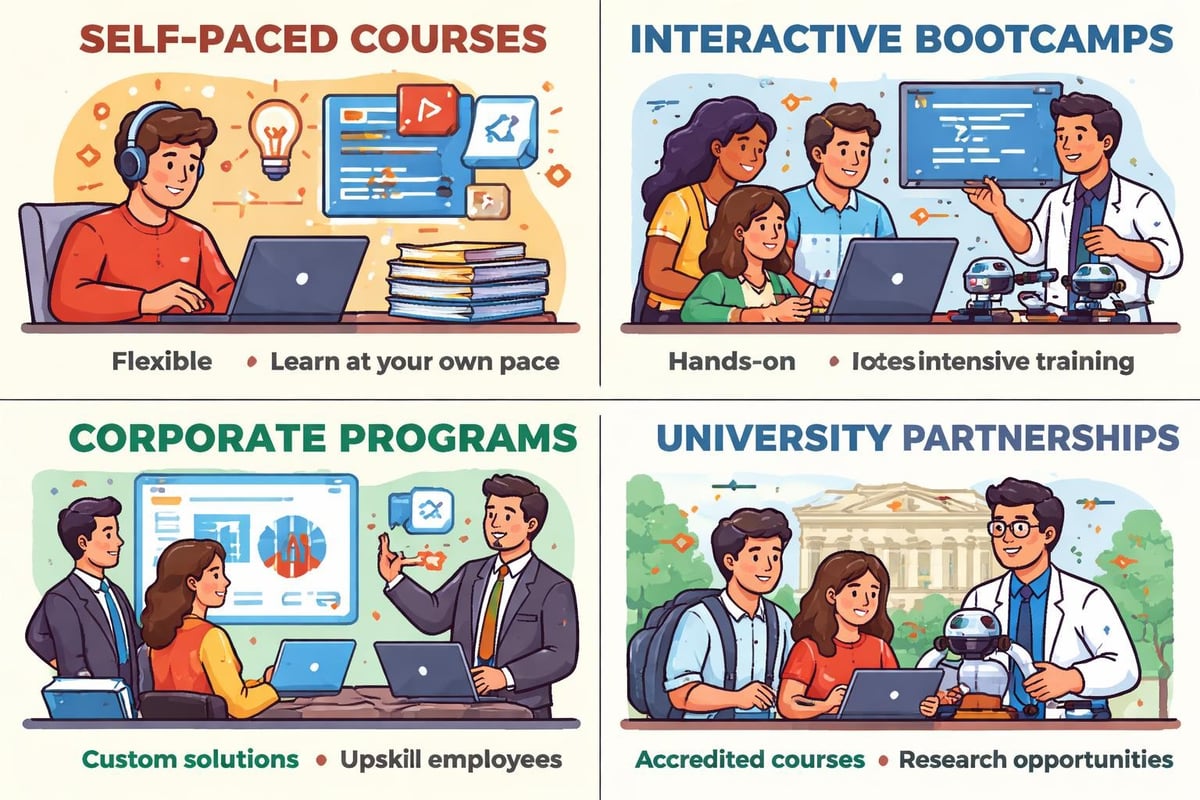
Different artificial intelligence online training platforms serve distinct audience needs and learning preferences. Understanding these variations helps organizations select the most appropriate solution for their teams.
Self-Paced On-Demand Courses provide maximum flexibility for busy professionals. Learners access video lectures, coding exercises, and assessments on their own schedule. This model works well for foundational knowledge acquisition and allows individuals to revisit complex topics multiple times. However, accountability can be challenging without external structure.
Interactive Bootcamps compress AI education into intensive formats ranging from two weeks to four months. These programs emphasize hands-on project work and often include mentorship components. The cohort-based approach creates peer accountability and networking opportunities that extend beyond the training period.
Corporate Certification Programs deliver customized curriculum aligned with specific organizational objectives. These initiatives often combine technical AI training with industry-specific applications, ensuring employees can immediately apply new skills to business challenges.
| Platform Type | Duration | Best For | Typical Cost Range |
|---|---|---|---|
| On-Demand Courses | 20-100 hours | Self-motivated learners | $50-$500 |
| Interactive Bootcamps | 2-16 weeks | Career transitions | $1,000-$15,000 |
| Corporate Programs | 3-12 months | Team upskilling | $500-$3,000 per seat |
| University Partnerships | 6-24 months | Advanced credentials | $10,000-$50,000 |
Core Competencies in Modern AI Curriculum
Effective artificial intelligence online training addresses both technical proficiency and conceptual understanding. The curriculum architecture has matured significantly, moving beyond simple tool instruction to comprehensive capability development.
Foundational Machine Learning Concepts
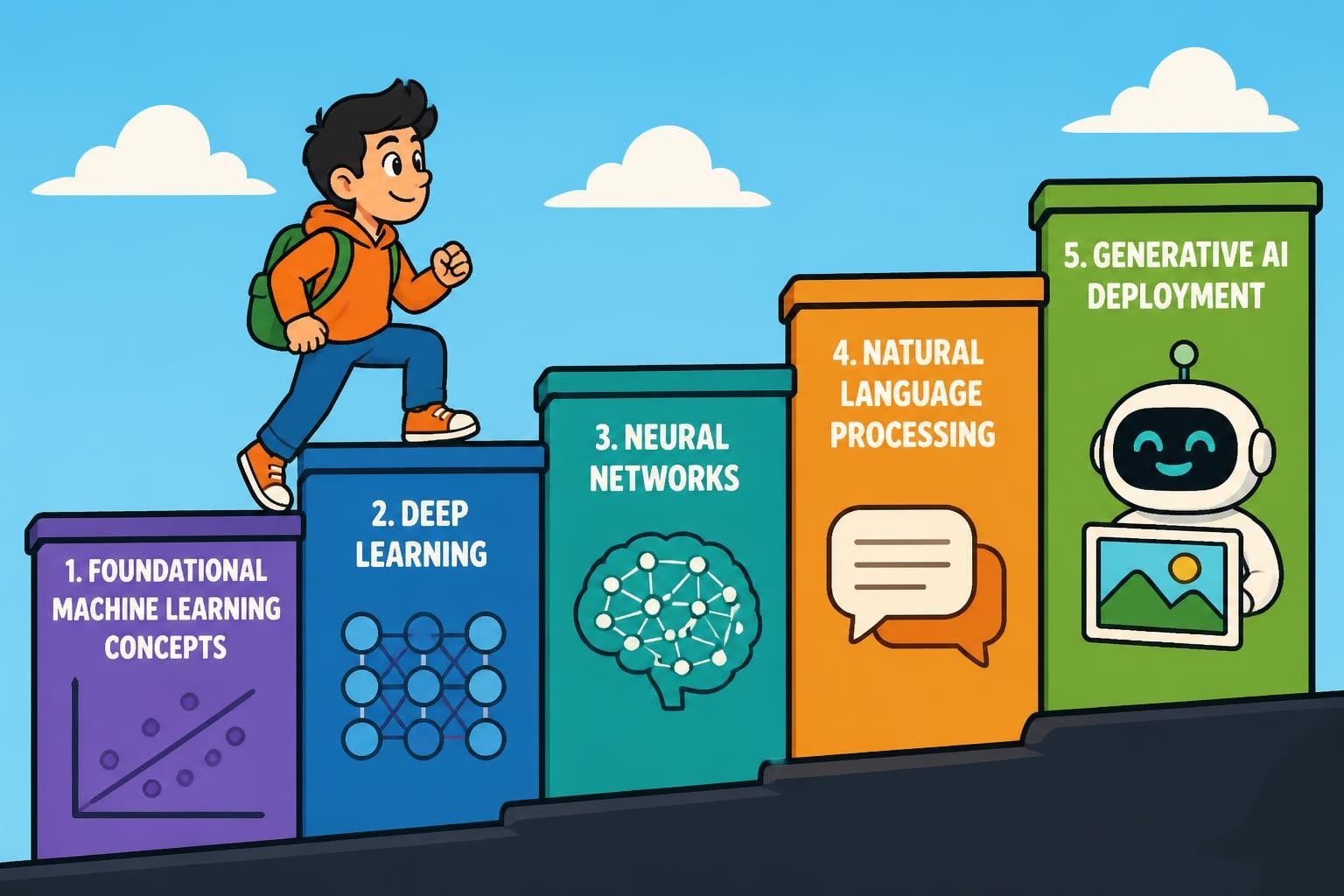
Every credible AI program begins with machine learning fundamentals. Learners explore supervised learning algorithms including linear regression, decision trees, and support vector machines. These topics establish the mathematical intuition necessary for understanding more complex neural network architectures.
Data preprocessing and feature engineering receive substantial attention in quality programs. Real-world datasets rarely arrive in analysis-ready formats, and professionals must understand data cleaning, normalization, and transformation techniques. This practical emphasis distinguishes career-ready training from purely academic approaches.
- Supervised learning algorithms and their applications in classification and regression tasks
- Unsupervised learning methods including clustering and dimensionality reduction
- Model evaluation metrics such as accuracy, precision, recall, and F1 scores
- Cross-validation techniques to prevent overfitting and ensure model generalization
- Hyperparameter tuning strategies for optimizing algorithm performance
Deep Learning and Neural Networks
Deep learning represents the frontier of AI capabilities, powering applications from computer vision to natural language processing. Artificial intelligence online training programs increasingly emphasize neural network architectures and their implementation using frameworks like TensorFlow and PyTorch.
Convolutional neural networks (CNNs) form the backbone of image recognition systems. Professionals learn how layers extract hierarchical features from raw pixel data, enabling applications in medical imaging, autonomous vehicles, and quality control systems. Recurrent neural networks (RNNs) and transformers address sequential data challenges in text analysis, speech recognition, and time series forecasting.
The comprehensive AI modules offered through programs like Elements of AI provide accessible entry points for understanding these complex architectures without requiring advanced mathematics prerequisites. This democratization of AI knowledge enables broader participation in the field.
Ethical AI and Responsible Development
The Institute for Trustworthy AI in Law & Society emphasizes guidelines and standards that modern professionals must understand. Artificial intelligence online training now incorporates modules on bias detection, fairness metrics, and accountability frameworks. These topics reflect growing regulatory requirements and societal expectations around AI deployment.
Learners examine case studies of AI failures, analyzing how inadequate training data or flawed assumptions led to discriminatory outcomes. Privacy-preserving techniques like differential privacy and federated learning receive increasing curriculum attention as organizations navigate data protection regulations.
Measuring Training Effectiveness and ROI
Organizations investing in artificial intelligence online training require evidence that programs deliver tangible business value. Measurement frameworks have evolved beyond simple completion rates to assess knowledge retention, skill application, and performance improvement.
Assessment Methodologies
Modern AI training platforms employ multiple assessment types to validate learning outcomes. Knowledge checks embedded within video content ensure continuous engagement and identify comprehension gaps in real-time. These micro-assessments adapt difficulty based on learner performance, maintaining appropriate challenge levels.
Project-based evaluations require learners to apply AI techniques to realistic business scenarios. These capstone assignments simulate workplace challenges, from building recommendation systems to developing predictive maintenance models. Peer review components add authentic feedback mechanisms that mirror collaborative work environments.
- Diagnostic pre-assessments establish baseline knowledge and identify personalized learning paths
- Formative quizzes throughout modules reinforce key concepts and prevent knowledge decay
- Hands-on coding exercises with automated grading provide immediate technical feedback
- Capstone projects demonstrating end-to-end solution development and documentation
- Certification exams validating mastery across comprehensive AI competency frameworks
Learning Analytics and Dashboard Features
AI-powered dashboards transform training administration from reactive to proactive management. These systems track engagement metrics, predict at-risk learners, and recommend interventions before individuals disengage. For corporate training managers, this visibility enables data-driven decisions about program adjustments and resource allocation.
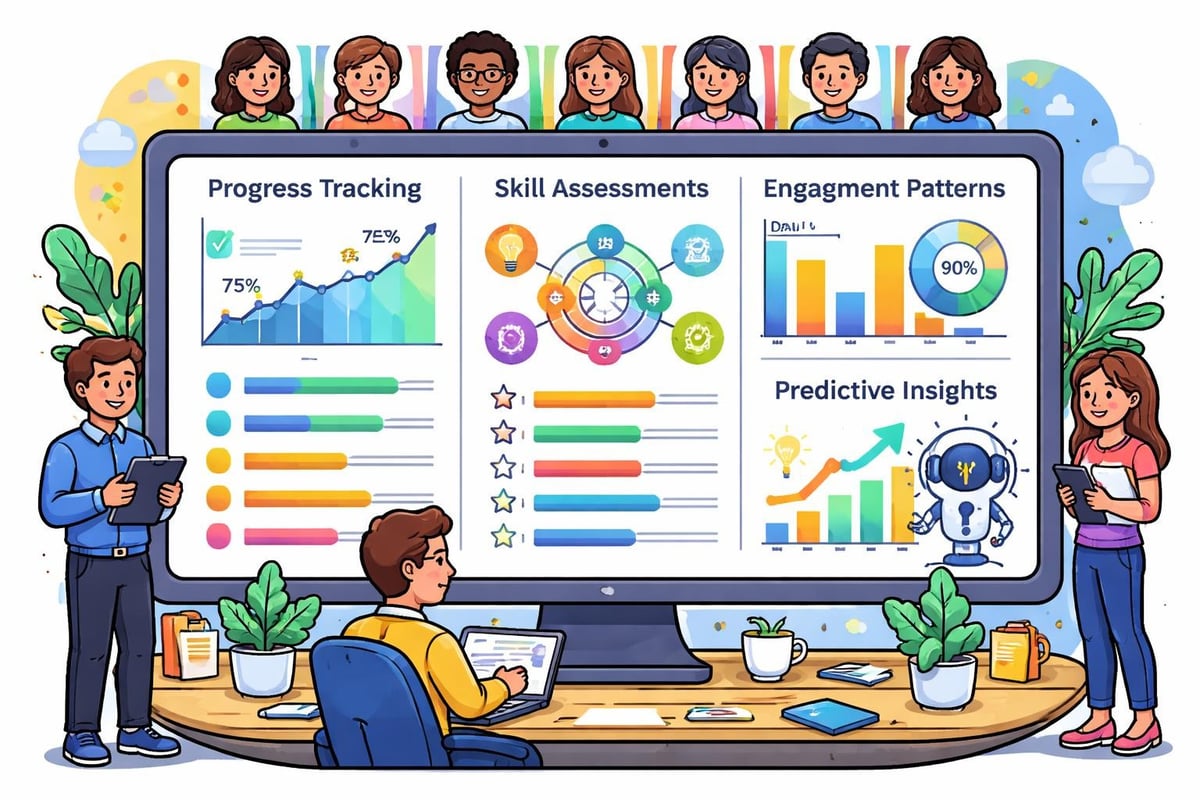
Skill mapping features align completed coursework with organizational competency frameworks. Managers visualize team capabilities across AI domains, identifying coverage gaps that inform future training investments. These insights also support succession planning and project team assembly based on verified technical proficiencies.
Certification Paths and Industry Recognition
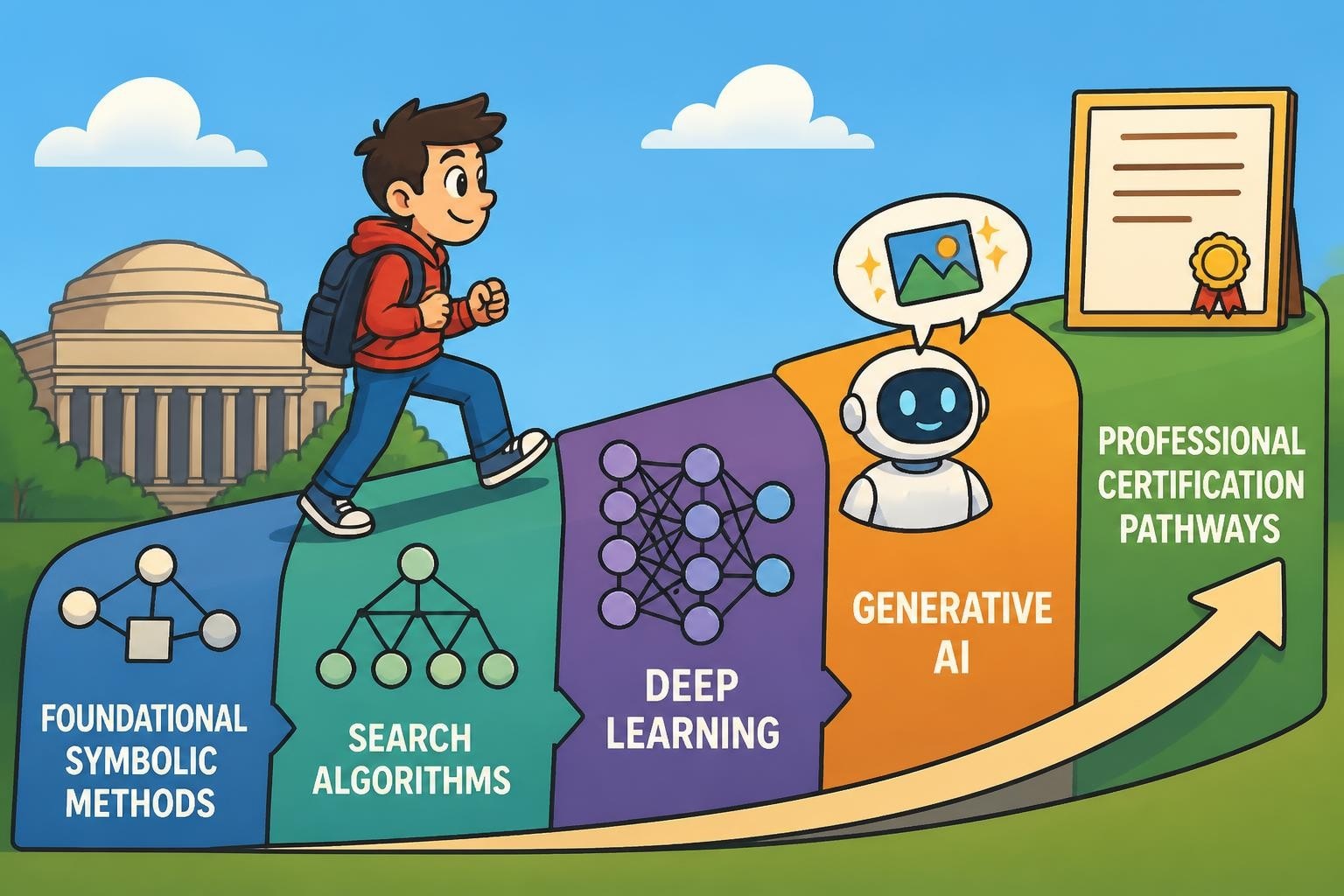
Artificial intelligence online training credentials vary significantly in market value and recognition. Professionals must navigate a complex landscape of vendor-specific certifications, university credentials, and industry-standard designations when selecting programs aligned with career objectives.
Vendor-Specific Certifications
Technology companies offer certifications tied to their AI platforms and tools. These credentials demonstrate proficiency with specific frameworks and often serve as prerequisites for implementation consulting roles. For example, IBM SkillsBuild provides industry-recognized credentials that validate practical skills in deploying AI solutions on IBM infrastructure.
The strategic value of vendor certifications depends on organizational technology stacks. Professionals working within AWS environments benefit from Amazon's machine learning specialty certification, while those in Azure ecosystems pursue Microsoft's AI engineer credentials. These focused certifications complement broader AI education rather than replacing comprehensive training.
Academic and Professional Credentials
University-affiliated programs provide academic rigor and broader industry recognition. Many institutions now offer online master's degrees in artificial intelligence and machine learning, combining theoretical depth with applied project work. These programs typically require 12-24 months and significant financial investment, positioning them for professionals seeking leadership roles.
Professional designations from organizations like the International Institute of Business Analysis (IIBA) or Data Science Council of America (DASCA) offer vendor-neutral validation. These credentials assess knowledge across multiple AI domains and often require documented professional experience alongside examination passage.
| Credential Type | Time Investment | Typical Cost | Market Recognition | Renewal Requirements |
|---|---|---|---|---|
| Platform Certifications | 40-120 hours | $200-$400 | Tool-specific | 1-2 years |
| Professional Designations | 100-300 hours | $500-$2,000 | Industry-wide | Annual PDUs |
| Graduate Certificates | 6-12 months | $5,000-$15,000 | Academic/Corporate | None |
| Master's Degrees | 12-24 months | $20,000-$50,000 | Universal | None |
For those exploring comprehensive certification options, evaluating the best certification paths for artificial intelligence requires considering career stage, current skills, and target roles within the AI ecosystem.
Building a Corporate AI Training Strategy
Organizations implementing artificial intelligence online training at scale face unique challenges beyond individual learner success. Strategic planning must address skill assessment, program sequencing, resource allocation, and change management to maximize training ROI.
Conducting Skills Gap Analysis
Effective AI upskilling begins with honest assessment of current organizational capabilities. Skills inventories identify which teams possess foundational data literacy versus advanced machine learning expertise. This baseline enables targeted training investments rather than one-size-fits-all approaches that waste resources on redundant content.
Many organizations discover that technical barriers represent only part of the challenge. Leadership understanding of AI capabilities and limitations often lags behind technical teams, creating misaligned expectations for project timelines and outcomes. Comprehensive training strategies address these knowledge gaps across organizational levels with appropriately scoped content.
Creating Learning Pathways
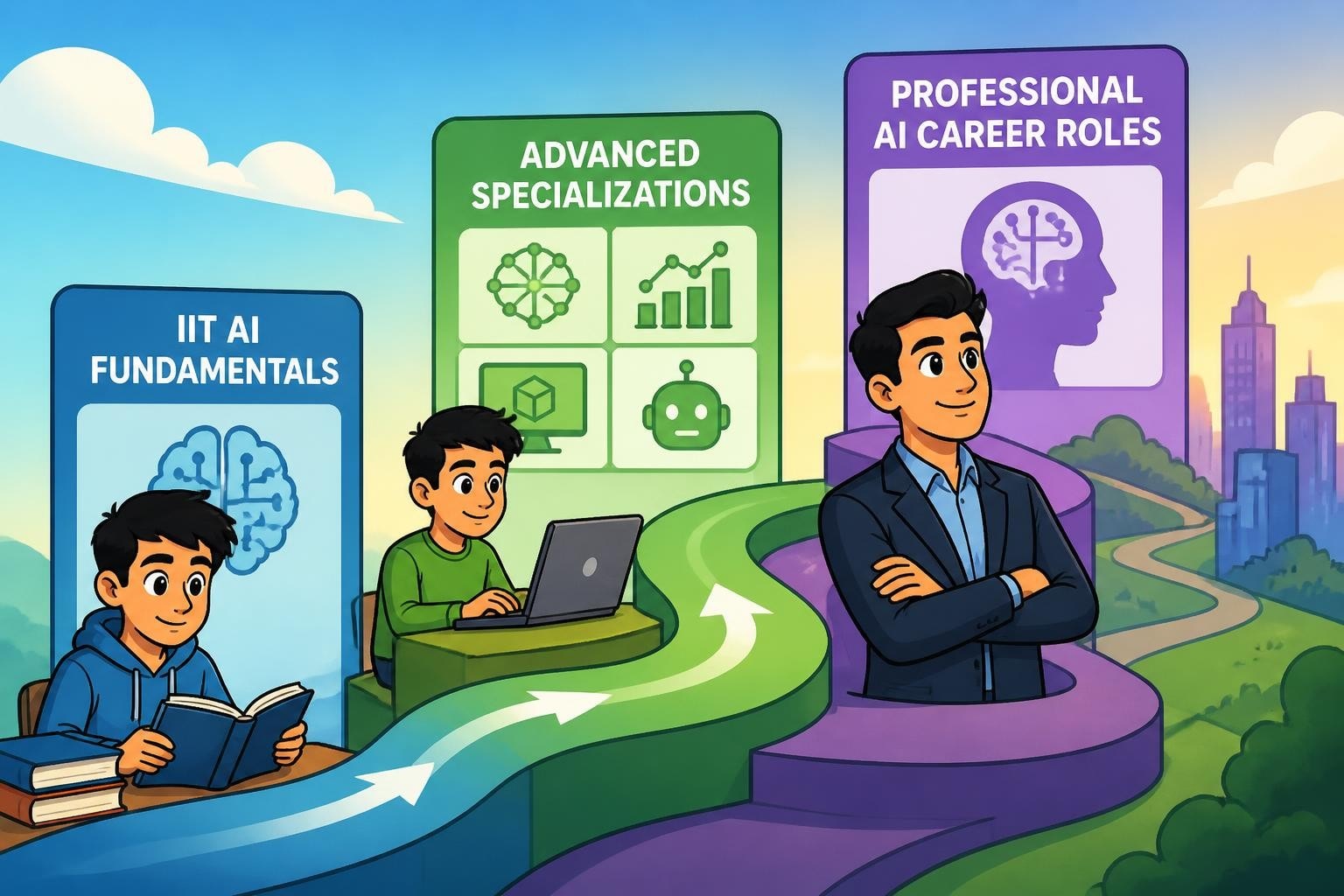
Artificial intelligence online training succeeds when structured as progressive learning journeys rather than isolated courses. Entry-level pathways establish data fundamentals and basic statistics before introducing machine learning concepts. Intermediate tracks explore specific AI domains like natural language processing or computer vision based on organizational priorities.
Advanced pathways prepare professionals for research and innovation roles, covering topics like reinforcement learning, generative adversarial networks, and AI system architecture design. Creating clear progression maps helps employees visualize career development opportunities while guiding managers in succession planning.
- Foundation Path: Data literacy, Python programming, statistics fundamentals, and basic ML algorithms
- Practitioner Path: Framework implementation, model deployment, MLOps practices, and project management
- Specialist Path: Domain expertise in NLP, computer vision, reinforcement learning, or AI ethics
- Leadership Path: AI strategy, vendor evaluation, team building, and organizational transformation
- Research Path: Advanced algorithms, paper implementation, experimental design, and innovation methodologies
Those building comprehensive training strategies will find value in exploring structured AI and ML learning paths that map competencies to specific courses and projects.
Platform Selection Criteria
Choosing the right artificial intelligence online training platform requires evaluation across multiple dimensions. Technical course quality represents only one consideration among factors including learning experience design, administrative capabilities, and integration with existing systems.
Content Quality and Currency
AI technologies evolve rapidly, making content freshness a critical selection criterion. Platforms that update courses quarterly or bi-annually ensure learners access current best practices rather than outdated techniques. According to the Artificial Intelligence Index Report 2024, technical capabilities in areas like multimodal AI and large language models advanced significantly over the past year, rendering some 2024 training content obsolete.
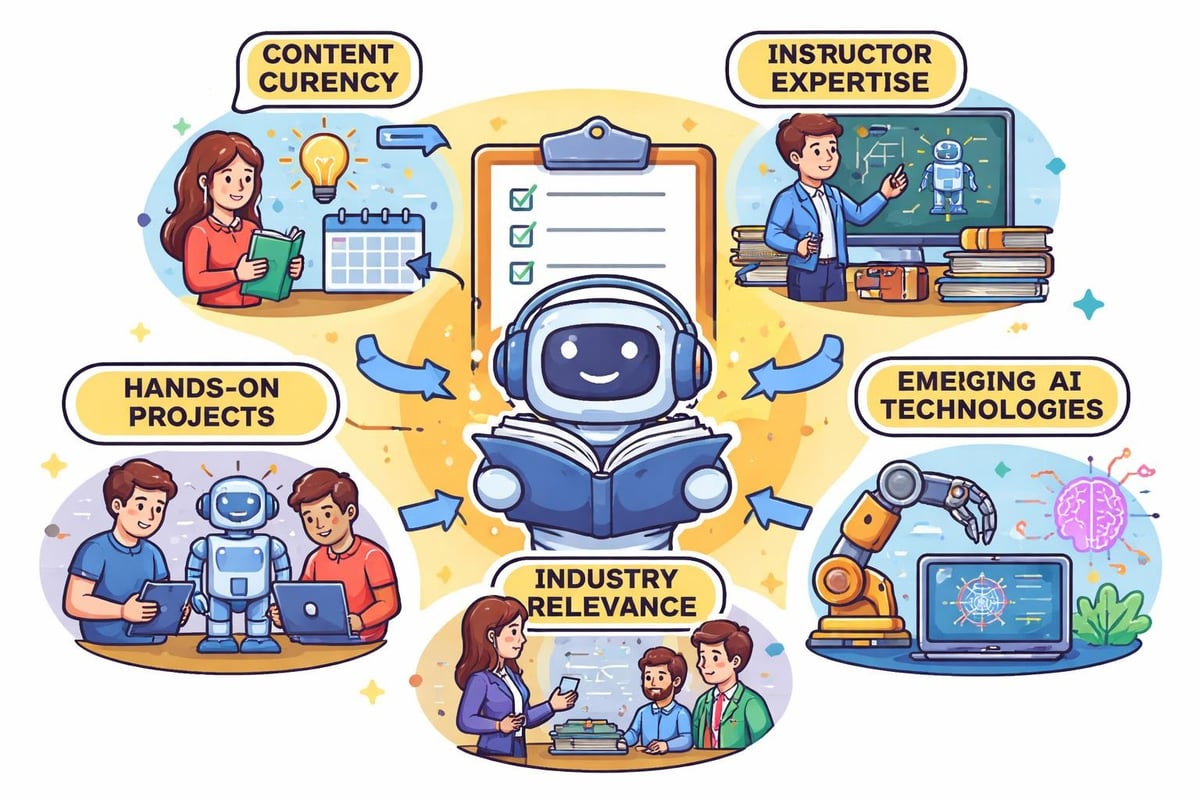
Instructor credentials matter significantly in technical domains. Platforms employing practicing AI engineers and researchers as course creators deliver insights beyond what scripted content provides. Real-world implementation challenges and workarounds only emerge through direct experience with production AI systems.
Learning Experience Features
Interactive coding environments eliminate setup friction that traditionally prevented beginners from completing technical courses. Browser-based Jupyter notebooks and coding sandboxes allow immediate experimentation without local software installation. These environments come pre-configured with necessary libraries and sample datasets, accelerating time-to-value.
Adaptive learning algorithms personalize the training experience based on demonstrated proficiency. Learners who quickly master foundational concepts automatically skip redundant material, while those struggling receive additional practice problems and alternative explanations. This personalization dramatically improves completion rates compared to static course structures.
Integration capabilities determine how seamlessly new training platforms fit within existing learning ecosystems. Single sign-on through organizational identity providers simplifies access management. SCORM or xAPI compliance enables tracking completion data in corporate learning management systems. API access allows custom dashboard creation and automated reporting workflows.
For organizations comparing multiple options, reviewing top AI courses available across platforms provides practical insights into content depth, teaching approaches, and learner outcomes across providers.
Emerging Trends in AI Education Technology
The field of artificial intelligence online training continues to evolve as new pedagogical approaches and technologies emerge. Understanding these trends helps organizations make forward-looking investments that remain relevant as educational best practices advance.
Microlearning and Just-in-Time Training
Traditional multi-week courses are increasingly supplemented by microlearning modules addressing specific AI topics in 5-15 minute segments. These bite-sized lessons support just-in-time learning when professionals encounter unfamiliar concepts during project work. The ability to quickly access targeted instruction on topics like gradient descent optimization or confusion matrix interpretation improves productivity without disrupting workflow.
Mobile-optimized content extends learning beyond desktop environments, enabling professionals to review concepts during commutes or between meetings. While hands-on coding exercises still require larger screens, conceptual refreshers and video explanations work effectively on mobile devices.
Immersive Learning Environments
Virtual reality and augmented reality applications remain experimental in AI training but show promise for visualizing complex concepts. Three-dimensional representations of neural network architectures help learners understand information flow through layers more intuitively than static diagrams. These immersive experiences are particularly effective for visual learners who struggle with abstract mathematical representations.
Simulation environments allow experimentation with AI systems in controlled settings before deploying to production. Learners train reinforcement learning agents or test computer vision models against synthetic data that mimics real-world conditions. This risk-free practice accelerates skill development and builds confidence before working with actual business systems.
Community-Based Learning Models
Peer learning components add social dimensions to artificial intelligence online training that improve engagement and knowledge retention. Discussion forums enable learners to compare problem-solving approaches and debug code collaboratively. Study groups organized around shared interests or geographic proximity create accountability structures that reduce course abandonment.
Many professionals exploring comprehensive AI and machine learning courses online find that community features significantly enhance their learning experience by providing networking opportunities and diverse perspectives on applying AI techniques across industries.
Overcoming Common Implementation Challenges
Organizations encounter predictable obstacles when deploying artificial intelligence online training programs at scale. Proactive planning around these challenges significantly improves program outcomes and learner satisfaction.
Time Allocation and Workload Balance
The primary barrier to training completion remains insufficient time allocation within existing workloads. Employees struggle to prioritize learning when operational demands consume available hours. Successful programs establish protected learning time as organizational policy, whether through dedicated training days or minimum weekly hour commitments.
Managers play crucial roles in reinforcing learning priorities through regular check-ins about training progress. Public recognition of skill development achievements creates cultural norms that value continuous learning. These soft interventions often prove more effective than mandatory completion deadlines that generate resentment.
- Set realistic completion timelines based on course requirements and available study time
- Block recurring calendar time specifically for training activities and protect it from meetings
- Create team learning cohorts that progress through programs together with shared accountability
- Recognize milestone achievements publicly to reinforce organizational learning culture
- Link training outcomes to performance reviews and career advancement opportunities
Technical Prerequisites and Onboarding
Many professionals interested in AI training lack programming experience or statistical foundations necessary for intermediate courses. Effective programs include diagnostic assessments that route learners to appropriate starting points based on current capabilities. Self-paced prerequisite modules allow skill leveling without delaying entire cohorts.
Dedicated onboarding sessions familiarize learners with platform navigation, resource locations, and support processes before technical content begins. These orientation activities reduce early dropout caused by administrative confusion rather than content difficulty.
Measuring Business Impact
Connecting training investments to measurable business outcomes remains challenging but essential for securing ongoing funding. Organizations should establish clear success metrics before program launch, whether measuring project delivery improvements, innovation pipeline growth, or talent retention rates.
Post-training project assignments that apply new AI skills to actual business problems create direct value while reinforcing learning. These applied projects also generate internal case studies demonstrating training ROI to stakeholders. Tracking which trained employees contribute to AI initiatives provides concrete evidence of capability development.
Global Access and Democratization
Artificial intelligence online training has dramatically expanded access to AI education beyond traditional academic institutions and geographic centers of technological innovation. This democratization creates opportunities for talent development in emerging markets and underrepresented communities.
Language and Localization
Leading platforms now offer courses in multiple languages with culturally appropriate examples and case studies. While English remains dominant in technical AI content, localized versions improve comprehension and completion rates among non-native speakers. Automatic transcription and translation technologies increasingly enable rapid content localization across dozens of languages.
Regional pricing models make artificial intelligence online training financially accessible in markets where global pricing would exclude most learners. Tiered subscription models and corporate volume discounts further expand access while maintaining platform sustainability.
Accessibility Features
Compliance with WCAG standards ensures learners with disabilities can fully participate in online AI training. Closed captions benefit both hearing-impaired learners and those studying in noisy environments. Screen reader compatibility enables visually impaired professionals to engage with course content, though interactive coding exercises remain challenging to make fully accessible.
Platforms can discover curated online artificial intelligence training options that meet specific accessibility requirements alongside technical content criteria.
Building Internal AI Expertise
Beyond external training providers, organizations increasingly develop proprietary artificial intelligence online training content addressing company-specific AI implementations and data environments. This internal knowledge capture preserves expertise and accelerates onboarding for new team members.
Creating Custom Learning Content
Subject matter experts within organizations possess contextual knowledge that generic courses cannot replicate. Internal training modules document institutional approaches to data governance, model deployment pipelines, and AI ethics frameworks specific to the business. Recording these practices preserves intellectual capital as team composition changes.
Tools for rapid course authoring enable technical experts to create learning content without instructional design expertise. Template-based approaches guide content structuring while learning experience platforms handle technical delivery infrastructure. This division of labor makes internal content creation feasible even for small teams.
Blended Learning Approaches
Combining external artificial intelligence online training for foundational knowledge with internal programs for company-specific applications creates efficient blended learning strategies. Employees complete vendor or platform courses to develop core AI competencies, then apply those skills through internal projects with guidance from experienced colleagues.
Mentorship programs pair recent training graduates with established AI practitioners for hands-on knowledge transfer. These relationships provide context that formal courses cannot deliver while building internal professional networks that enhance collaboration.
Artificial intelligence online training has matured into a comprehensive ecosystem offering pathways for every skill level and career objective. The convergence of high-quality content, personalized learning technologies, and flexible delivery models creates unprecedented opportunities for rapid capability development. Whether you're building foundational understanding or advancing to cutting-edge specializations, structured learning programs accelerate your progress while validating skills to employers and clients. MammothClub provides exactly this comprehensive approach with 3,000+ on-demand courses, interactive bootcamps, and AI-powered learning tools designed to help professionals and organizations master artificial intelligence efficiently and stay competitive in 2026's rapidly evolving landscape.