Imagine your devices making decisions in real time, right where the action happens. This is the power of Edge AI—a revolution transforming how technology interacts with the world.
This Edge AI Course Guide is your step-by-step pathway to mastering the skills smart devices will demand in 2026. Whether you are a learner or a professional, this guide will help you navigate the fast-changing Edge AI landscape, choose the right edge ai course, and accelerate your journey in smart device technology.
Discover what Edge AI is, why it matters, the essential skills you need, how to pick the perfect course, top certifications, and the latest career paths. The future of smart devices is happening at the edge. Are you ready to seize the opportunity?
Understanding Edge AI and Its Impact on Smart Devices
Edge AI is transforming how smart devices operate, offering new opportunities for those pursuing an edge ai course. At its core, Edge AI refers to artificial intelligence computation happening directly on devices, rather than relying on distant cloud servers. This shift brings intelligence closer to the data source, enabling faster and more private decision-making.
Defining Edge AI and Its Core Principles
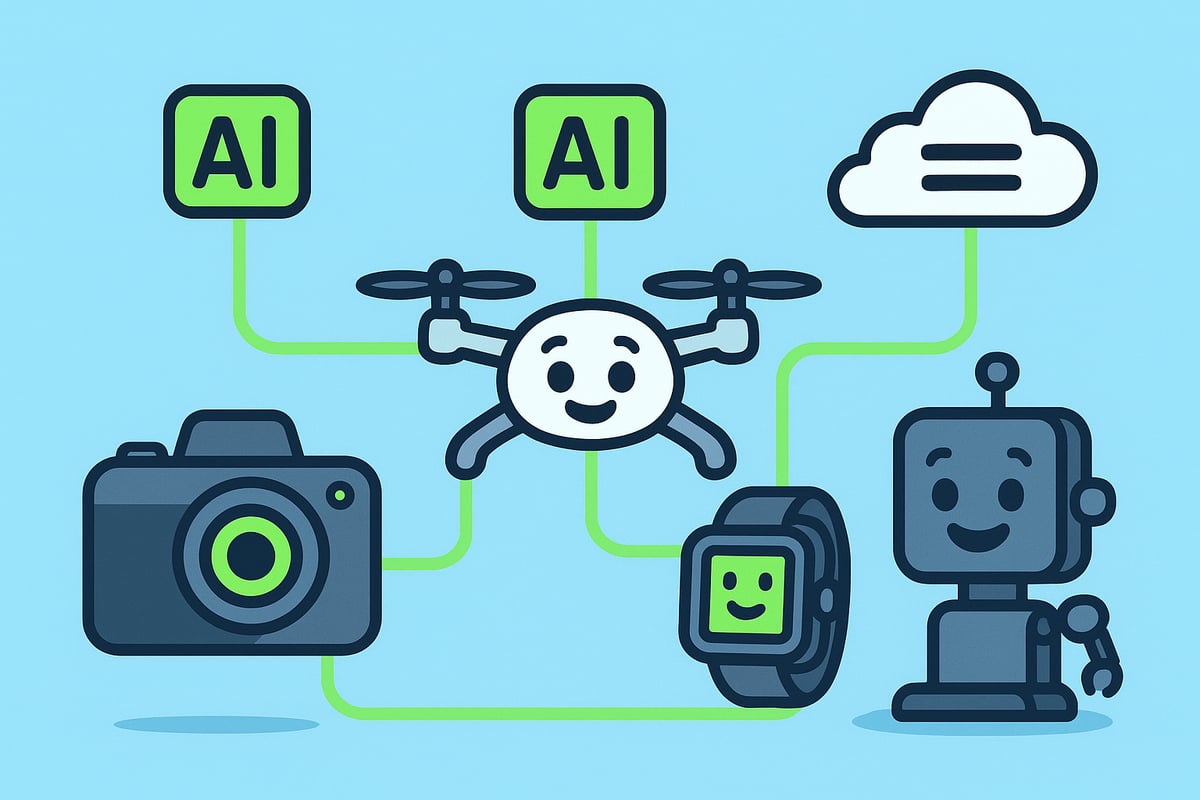
Edge AI is all about processing data where it is created. This means smart devices analyze information instantly, without sending it to the cloud. The core principles include low latency, real-time processing, enhanced privacy, and reduced bandwidth usage. Unlike traditional or cloud-based AI, Edge AI empowers devices to work independently, which is crucial for applications needing immediate responses.
A few examples illustrate this concept. Smart cameras can detect movement and trigger alerts in real time. Autonomous drones use Edge AI to navigate obstacles on the fly. Wearable health trackers analyze vital signs instantly, helping users respond to health changes without delay.
Industry statistics highlight the rapid adoption of Edge AI. According to Gartner predicts 75% of enterprise data to be processed at the edge by 2025, most enterprise-generated data will be handled by edge devices in the near future. This trend makes enrolling in an edge ai course even more relevant for professionals seeking future-ready skills.
The benefits for smart devices are significant. Users enjoy faster response times, improved privacy since data stays local, and the ability to function offline. However, there are challenges. Devices must work within hardware limitations, manage security risks, and optimize AI models to run efficiently on less powerful processors.
Industry Applications and Future Trends
Edge AI is driving innovation across many industries, making an edge ai course valuable for learners from diverse backgrounds. In healthcare, remote patient monitoring devices leverage Edge AI to detect anomalies in real time. Manufacturing plants use predictive maintenance powered by on-device AI to avoid costly downtime. The automotive industry deploys Edge AI in advanced driver-assistance systems, enabling vehicles to react instantly to road conditions. Smart homes benefit from AI-enabled appliances that learn user habits and optimize energy use.
Edge AI is also a cornerstone of the Internet of Things ecosystem. As billions of devices connect, Edge AI ensures quick, secure, and efficient data processing. The market for Edge AI is booming, projected to reach $61 billion by 2026. This explosive growth is fueled by emerging trends like federated learning, which allows devices to learn collectively without sharing raw data, and on-device natural language processing, making interactions more seamless. AI-powered sensors are becoming standard in everything from industrial machines to everyday gadgets.
The impact on user experience is profound. Devices become more responsive, reliable, and secure. For businesses, Edge AI streamlines operations and enables new services. Anyone interested in advancing their career can gain a competitive edge by mastering these technologies through a comprehensive edge ai course.
Essential Skills and Prerequisites for Edge AI Courses
Understanding the essential skills for an edge ai course is the first step toward success in this rapidly evolving field. With the demand for edge AI professionals on the rise, having a solid foundation ensures you can keep pace with both current and future technologies.
Technical Foundations Needed
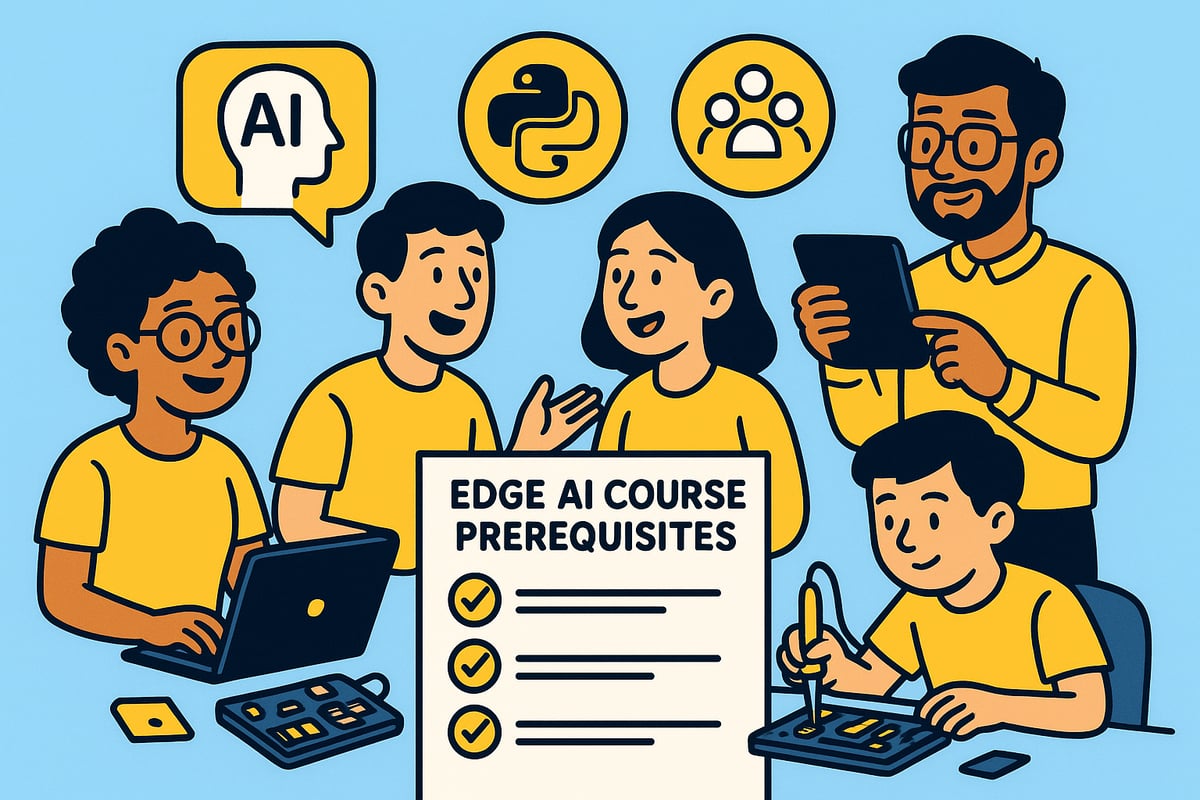
To excel in any edge ai course, you need a blend of technical expertise and practical know-how. The journey begins with a firm grasp of artificial intelligence and machine learning basics. This includes understanding supervised and unsupervised learning, neural networks, and model evaluation.
Proficiency in Python is essential, as most edge ai course projects and frameworks use this language. You should also be comfortable with embedded systems and IoT device fundamentals, including microcontrollers, sensors, and hardware integration. Familiarity with Linux and command-line tools is crucial, as these are standard environments for developing and deploying edge AI solutions.
Knowledge of real-time data processing and basic networking concepts will help you design systems that respond instantly and communicate efficiently. Hands-on experience is invaluable; platforms like igmGuru recommend practicing with hardware such as Raspberry Pi or NVIDIA Jetson. Before enrolling, consider using an AI fluency assessment guide to evaluate your readiness for an edge ai course.
Here’s a summary of must-have technical skills:
| Skill Area | Why It Matters for Edge AI |
|---|---|
| Python Programming | Core for AI model development |
| AI/ML Concepts | Foundation for model building |
| Embedded Systems | Enables on-device deployment |
| Linux/CLI | Standard dev and deployment |
| Real-time Data | Ensures instant device response |
| Networking Basics | Supports device connectivity |
Developing these skills will make your edge ai course experience more impactful and rewarding.
Soft Skills and Analytical Abilities
Technical knowledge alone is not enough for success in an edge ai course. Employers and educators are looking for well-rounded professionals who bring strong analytical and interpersonal abilities to the table.
Problem-solving and critical thinking are vital, as edge AI projects often involve troubleshooting unique challenges at the intersection of hardware and software. Adaptability is equally important, given how quickly the field evolves. The best candidates for an edge ai course demonstrate a willingness to learn new tools and frameworks as they emerge.
Collaboration is another key factor. Edge AI projects frequently require working in interdisciplinary teams, blending expertise from data science, engineering, and business. Clear communication skills help you explain complex ideas to both technical and non-technical stakeholders, ensuring smooth project execution.
A continuous learning mindset will keep you ahead of the curve, allowing you to update your skills as edge AI technology advances. Ultimately, combining these soft skills with your technical foundation will set you apart in any edge ai course and in your professional journey.
Step-by-Step Guide: How to Choose the Right Edge AI Course
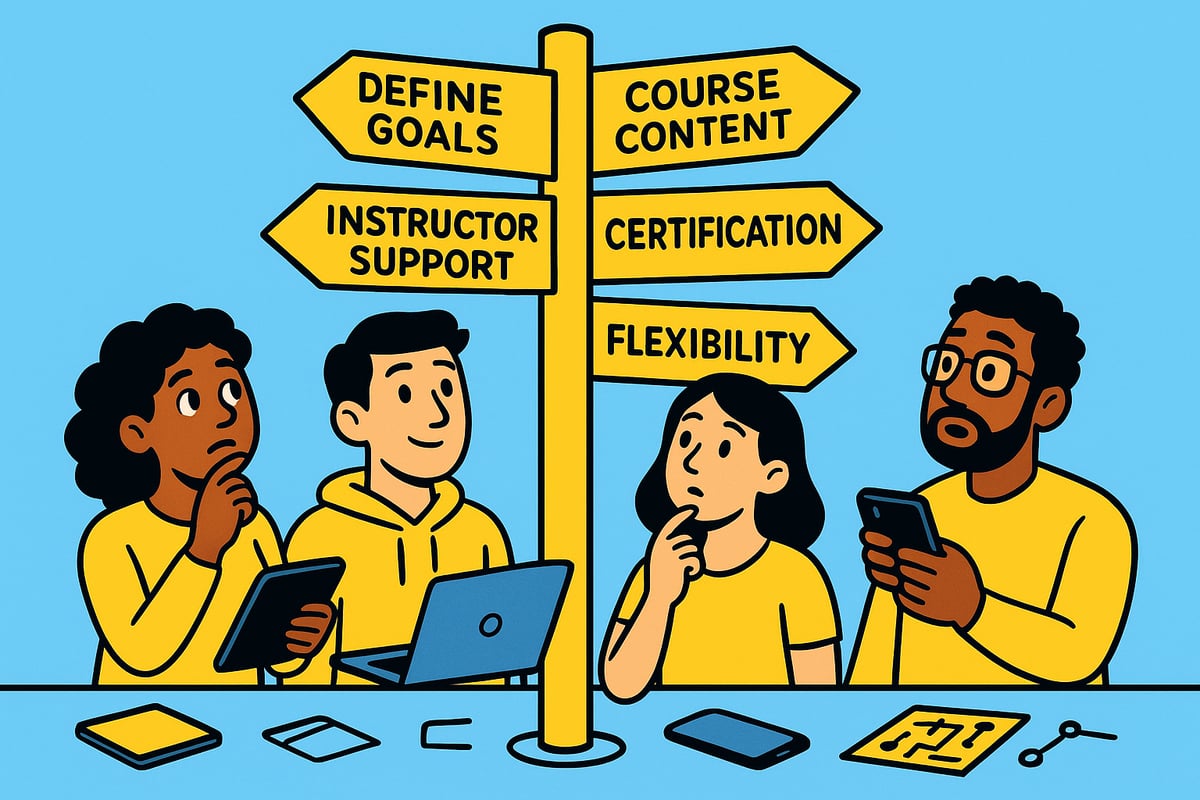
Choosing the right edge ai course is a pivotal step for anyone aiming to excel in the smart device landscape of 2026. With so many options available, it is crucial to follow a structured approach. This step-by-step guide will help you confidently navigate the process and ensure your learning investment delivers maximum value.
Step 1: Define Your Learning Goals and Career Path
Begin your journey by clarifying why you want to enroll in an edge ai course. Are you looking to shift careers, specialize in IoT, or advance in your current role? Pinpointing these objectives helps focus your search and prevents wasted time.
Consider these questions:
- What is your current skill level in AI, embedded systems, and programming?
- Do you want to work in IoT, automotive, healthcare, or another field?
- Are you aiming for a certification or practical project experience?
By understanding your aspirations, you can filter courses that align with your intended outcomes. This clarity ensures every learning hour moves you closer to your professional goals.
Step 2: Evaluate Course Content and Curriculum
The next step in selecting an edge ai course is to examine the curriculum closely. Look for programs covering edge device architecture, on-device machine learning, model optimization, and deployment strategies. Hands-on labs and real-world projects are essential for turning theory into tangible skills.
Compare syllabi from leading providers and check for modules on federated learning and security. A well-rounded course should blend foundational knowledge with advanced topics. To maximize your learning, choose courses that offer progress tracking features. Platforms like Mammoth Club provide progress tracking for AI learning, allowing you to monitor your development and stay motivated throughout the course.
Step 3: Check Instructor Expertise and Support
Instructor quality can make or break your edge ai course experience. Seek out courses led by professionals with extensive real-world experience in AI, IoT, or embedded systems. Instructors who have worked directly with edge technologies bring invaluable insights to the classroom.
Support structures are equally vital. Look for courses offering mentorship, active forums, and access to peer communities. Real-time feedback and troubleshooting assistance can greatly accelerate your understanding and problem-solving capabilities.
Step 4: Review Certification and Career Outcomes
A top-tier edge ai course should offer credentials that are recognized by industry leaders. Investigate whether the course is aligned with certifications such as Edge AI Specialist or IoT AI Engineer. Certificates, digital badges, or proof of completion can enhance your resume and validate your expertise.
Additionally, check for career support features like job placement assistance, career counseling, or networking opportunities. These elements can provide a significant advantage when transitioning into new roles or industries.
Step 5: Consider Flexibility, Format, and Cost
Finally, assess the practical elements of each edge ai course. Decide whether you prefer on-demand learning, live bootcamps, or a hybrid format. Multi-format content—videos, text, interactive labs—caters to different learning styles and schedules.
Evaluate course accessibility on both desktop and mobile devices. Consider your budget and compare pricing structures, looking for discounts or bundled offers. The right balance of flexibility and value ensures you can commit fully to your learning journey without unnecessary stress.
By following these five steps, you can confidently select an edge ai course that matches your ambitions and sets you up for long-term success in the rapidly evolving world of smart devices.
Top Edge AI Course Curriculum Components for 2026 Success
Staying ahead in smart device technology means choosing an edge ai course with a robust, future-focused curriculum. The right program covers both the theoretical foundations and the practical skills needed to thrive in the evolving edge AI landscape.
Core Modules to Look For
A comprehensive edge ai course starts with the essentials. Look for these core curriculum elements:
- Edge AI Fundamentals: Grasp the history, core concepts, and impact on the smart device ecosystem.
- Edge Device Architecture: Understand microcontrollers, hardware selection, and the integration of sensors.
- On-Device Machine Learning: Learn model deployment, inference techniques, and efficient optimization.
- Model Optimization Techniques: Master quantization, pruning, and knowledge distillation to enhance performance.
- Real-Time Inference and Data Processing: Focus on minimizing latency and maximizing throughput.
- Edge Deployment Strategies: Explore containerization, over-the-air updates, and scalable solutions.
- Federated Learning and Privacy: Study decentralized training methods and advanced data protection.
- Edge AI Security: Analyze threat models, encryption, and secure boot processes.
These modules ensure that an edge ai course addresses industry needs and prepares learners for the challenges of 2026. Integrating such a curriculum builds a solid foundation for both technical and practical expertise.
Hands-On Projects and Real-World Scenarios
An effective edge ai course should prioritize hands-on experience. Practical projects bridge the gap between theory and the real world, making graduates job-ready.
- Build a smart camera system that performs real-time object detection.
- Deploy AI models on platforms like Raspberry Pi or NVIDIA Jetson for edge processing.
- Conduct a case study on predictive maintenance for manufacturing equipment.
- Simulate federated learning with healthcare datasets to ensure privacy and compliance.
These projects help learners apply concepts to genuine industry challenges. The emphasis on real-world scenarios within an edge ai course not only enhances technical skills but also boosts confidence by solving tangible problems faced by businesses today.
Mammoth Club: AI-Powered Edge AI Learning Platform
Mammoth Club stands out as a premier destination for anyone pursuing an edge ai course. With over 3,000 tech and AI offerings, it provides adaptive learning paths tailored to individual goals.

Key features include:
- Interactive bootcamps and certification preparation.
- Real-world projects aligned with current edge AI trends.
- 24/7 community support for ongoing guidance.
- Flexible formats like video, podcasts, and text to match any learning preference.
For professionals and organizations, Mammoth Club delivers AI-powered learning platform benefits that accelerate upskilling and career advancement. Its recognized certifications and project-based approach make it a top choice for those targeting edge ai course mastery in IoT, automotive, or manufacturing sectors.
Certification Pathways and Career Opportunities in Edge AI
Choosing the right edge ai course is a pivotal step toward a future-proof career in smart device technology. As edge computing and AI converge, certifications validate your expertise and open doors to specialized roles. Let’s explore the top certifications, career pathways, and strategies to stay ahead in this rapidly evolving space.
Leading Edge AI Certifications
Industry-recognized certifications are a cornerstone of any serious edge ai course. They help you stand out in a competitive landscape by demonstrating practical skills and commitment to the field. Common certifications include Edge AI Specialist, IoT AI Engineer, and Embedded AI Professional.
Certification programs typically assess a mix of theoretical knowledge and hands-on ability. Prerequisites often include proficiency in Python, basic machine learning, and knowledge of embedded systems. Exam formats range from multiple-choice tests to project-based assessments and may require periodic renewal to ensure your skills remain current.
Here’s a quick comparison of some key certifications:
| Certification | Prerequisites | Exam Format | Renewal |
|---|---|---|---|
| Edge AI Specialist | Python, ML basics | MCQ + Project | 2 years |
| IoT AI Engineer | Embedded systems | Practical + MCQ | 3 years |
| Embedded AI Professional | Linux, coding | Project-based | 2 years |
Employers increasingly use these certificates as benchmarks for hiring and promotion. Completing an edge ai course aligned with such certifications ensures you meet industry standards and possess skills that are in high demand.
Career Pathways and Emerging Roles
An edge ai course is a gateway to a variety of high-impact roles. As more enterprises adopt edge AI, the demand for specialists is soaring. Popular job titles include Edge AI Developer, Embedded AI Engineer, Edge ML Architect, and IoT Solutions Architect.
According to industry data, Edge AI specialists can earn 20 to 30 percent more than general AI professionals. Roles in automotive (like ADAS systems), healthcare (remote diagnostics), and smart cities are especially lucrative. The market’s explosive trajectory, with the Edge AI market projected to reach $143.06 billion by 2034, highlights the growing need for experts trained through a dedicated edge ai course.
Real-world success stories abound. For instance, professionals with edge ai course credentials are leading projects in predictive maintenance for manufacturing, developing smart home hubs, and building AI-powered wearable devices. The job market is not only expanding but also diversifying, creating opportunities for both technical and non-technical talent.
Upskilling Strategies for Long-Term Success
Staying competitive requires a commitment to continuous learning beyond your initial edge ai course. The field evolves rapidly, with new frameworks, hardware platforms, and security practices emerging each year.
Effective upskilling strategies include participating in open-source edge AI initiatives, joining hackathons, and networking with industry experts. Engaging in professional communities, both online and at conferences, provides valuable insights and collaboration opportunities.
Leveraging AI-powered learning platforms and enrolling in advanced edge ai course modules ensures your skills remain relevant. Many professionals also contribute to research or volunteer for pilot projects to deepen their expertise. By adopting a proactive learning mindset, you can confidently navigate the future of edge AI and smart devices.
Future Outlook: Edge AI Trends Shaping Smart Devices by 2026
The future of smart devices is being shaped by a rapid evolution in Edge AI technologies. With hardware innovations, rising privacy standards, and expanding market adoption, the landscape is set for significant transformation by 2026. For those pursuing an edge ai course, understanding these trends is key to staying ahead.
Technological Innovations on the Horizon
Edge AI hardware is advancing quickly. New AI accelerators and neuromorphic chips are making it possible for devices to process complex data locally, reducing reliance on the cloud. These chips are designed for energy efficiency, allowing even battery-powered devices to run machine learning models in real time.
Breakthroughs in on-device natural language processing and computer vision are enabling smarter, more interactive user experiences. For example, voice assistants and smart cameras now deliver immediate responses without needing to send data to remote servers. The integration of 5G with edge computing is further transforming connectivity, making ultra-low latency applications like autonomous vehicles and remote surgery feasible.
Professionals taking an edge ai course will need to master these technologies. A solid understanding of hardware selection, AI model optimization, and the latest edge deployment strategies is becoming essential. These skills will help learners build robust solutions that keep pace with rapid innovation.
| Edge AI Innovation | Impact on Devices | Skills Needed |
|---|---|---|
| Neuromorphic Chips | Low-power AI processing | Hardware, ML |
| AI Accelerators | Real-time inference | Model optimization |
| 5G Integration | Ultra-low latency | Networking, security |
| On-device NLP/Computer Vision | Smarter UX | Data processing |
Evolving Standards, Privacy, and Security
As edge devices become more intelligent, new standards are emerging to ensure interoperability and security. The move toward privacy-preserving AI is gaining momentum. Federated learning allows devices to collaboratively train models without sharing raw data, protecting user privacy while improving AI performance.
Techniques like differential privacy and encrypted inference are being adopted to enhance data protection on the edge. Regulations such as GDPR and HIPAA are influencing how organizations manage data, making compliance a critical consideration for any edge ai course.
Security remains a top priority. Edge devices are often exposed to physical and network threats. Secure boot processes, hardware encryption, and regular firmware updates are essential safeguards. Learners must be prepared to implement these measures in real-world deployments.
Staying informed on evolving standards is crucial. Being able to navigate privacy and security requirements will set professionals apart and enable them to design trustworthy edge AI solutions.
Industry Adoption and Market Growth
Industry adoption of edge AI is accelerating across sectors such as manufacturing, automotive, healthcare, and smart cities. By 2026, forecasts suggest that 80% of new IoT projects will incorporate edge AI capabilities. This growth is driven by the need for faster data processing, enhanced privacy, and offline functionality.
The edge AI market is expected to reach $66.47 billion by 2030, according to Edge AI market expected to reach $66.47 billion by 2030. Such projections highlight the growing demand for skilled professionals who have completed an edge ai course and are ready to deploy solutions at scale.
Adoption is not without challenges. Organizations face a skills gap, integration complexities, and the need to measure return on investment. However, successful case studies in smart factories, autonomous vehicles, and wearable health devices demonstrate the real-world value of edge AI.
For those considering an edge ai course, understanding these industry trends is vital. Mastery of deployment strategies and the ability to adapt to rapidly evolving technologies will open up new career opportunities.
Preparing for the Edge AI Revolution
To thrive in the edge AI revolution, continuous upskilling is essential. Professionals should pursue certification, stay updated on new frameworks, and participate in open-source projects. Engaging with industry communities and leveraging AI-powered learning platforms can help bridge the skills gap.
Strategic preparation involves more than technical knowledge. Learners should adopt a mindset of adaptability and lifelong learning. An edge ai course should include practical projects, exposure to real-world scenarios, and guidance on current best practices.
The future belongs to those who are proactive. By staying informed and investing in the right training, professionals and organizations can lead the way in smart device innovation. The next wave of edge AI will reward those ready to meet its challenges and seize its opportunities.
As you look to master Edge AI and prepare for the next wave of smart device innovation, having access to the right resources is key. With so many new technologies and skills to learn, staying ahead can feel overwhelming. That’s why platforms like MammothClub are so valuable—they give you access to a huge library of AI courses, hands-on projects, and real-time support, all designed to help you upskill efficiently. If you’re ready to accelerate your learning journey and unlock the potential of Edge AI, you can get 3000 AI coures for just 50 cents a day!