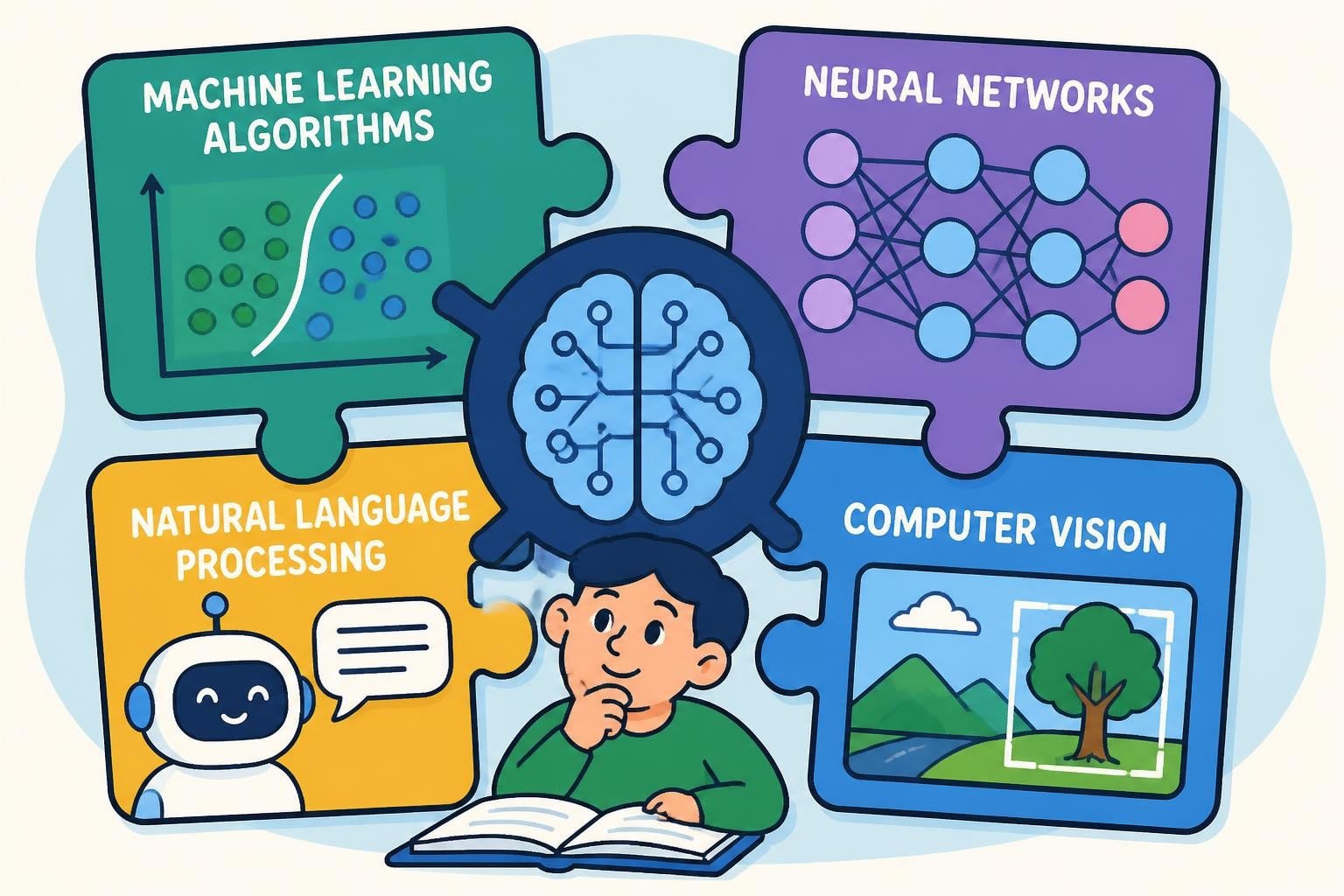
Are you ready to accelerate your career in artificial intelligence? The intel edge ai certification is quickly becoming one of the most sought-after credentials for 2025, opening doors to high-impact roles in tech-driven industries. In this comprehensive guide, you will discover a clear, step-by-step roadmap to mastering edge AI, from understanding its industry significance to navigating the certification process. Learn how to maximize your skills, boost your credibility, and stand out in a rapidly evolving AI landscape. Take the next step toward your future in edge AI—let’s begin your journey.
Understanding Edge AI and Its Industry Impact
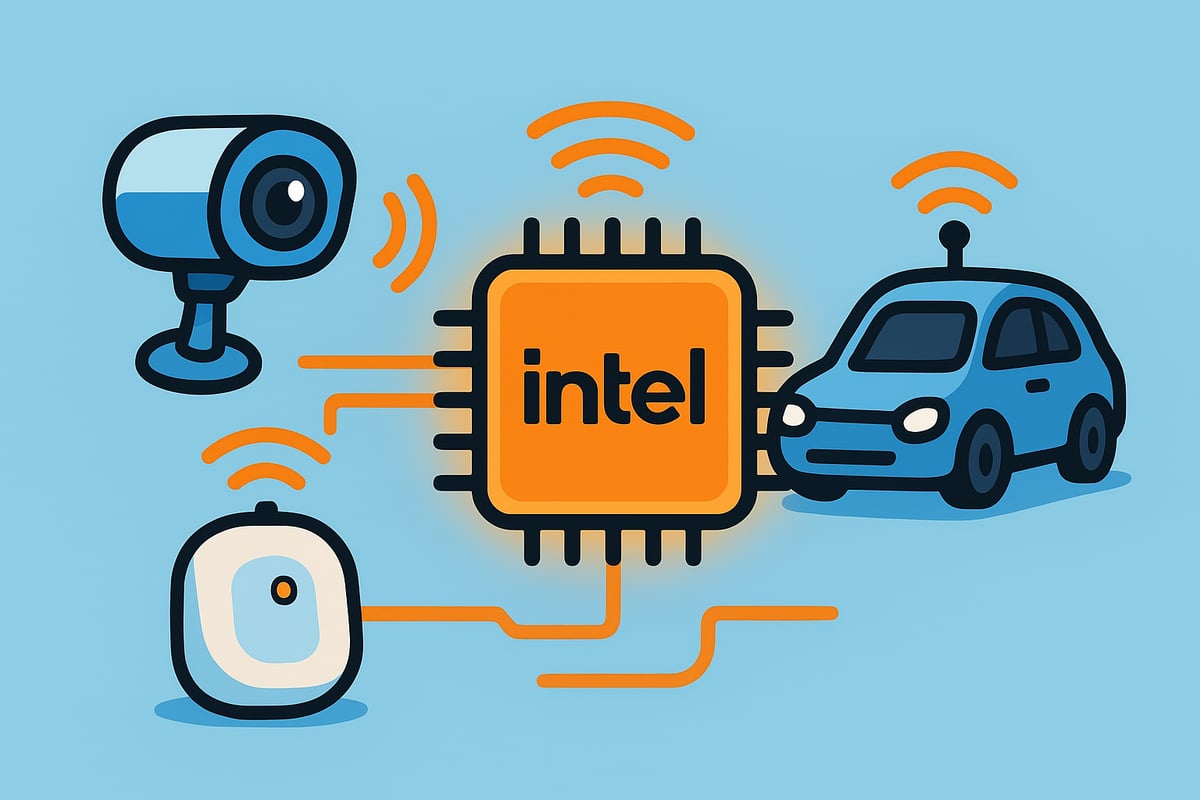
Edge AI is transforming how data is processed by bringing artificial intelligence directly to devices where data is generated. Unlike traditional or cloud-based AI, edge AI enables real-time analysis and decision-making at the source, reducing latency and bandwidth needs. This approach is essential for applications like smart cameras, IoT sensors, and autonomous vehicles, where immediate responses are critical. As industries shift toward smarter, faster solutions, understanding edge AI is a foundational step for anyone pursuing intel edge ai certification.
What is Edge AI?
Edge AI refers to deploying artificial intelligence algorithms directly on local hardware, such as embedded devices, rather than relying solely on centralized cloud servers. This setup allows for processing data right where it is created, making operations faster and more efficient. The main difference from cloud AI is that edge AI minimizes dependence on internet connectivity, enabling mission-critical use cases. For example, smart security cameras use edge AI to detect intrusions instantly, IoT devices monitor industrial equipment on-site, and autonomous vehicles make split-second navigation decisions. Mastering these core concepts is crucial for those aiming to earn the intel edge ai certification.
The Growing Demand for Edge AI Skills
The market for edge AI is rapidly expanding, with projections estimating it could surpass $143 billion by 2034. This explosive growth is driven by industries such as healthcare, manufacturing, automotive, and retail, all seeking faster, smarter solutions for data processing. Edge AI is now at the heart of real-world applications like remote patient monitoring, predictive maintenance, and personalized shopping experiences. As a result, professionals with the right skills and the intel edge ai certification are in high demand, as businesses strive to enhance efficiency and gain a competitive edge.
Why Intel Leads in Edge AI Innovation
Intel stands at the forefront of edge AI innovation thanks to its significant investments in both hardware and software. The company’s platforms, including OpenVINO, Intel Movidius, and the Neural Compute Stick, have become industry benchmarks for deploying AI at the edge. OpenVINO in particular empowers developers to optimize and accelerate AI models for a range of devices, from cameras to industrial controllers. By leveraging Intel's OpenVINO toolkit, professionals pursuing intel edge ai certification gain access to a robust ecosystem and a vibrant developer community that fosters learning and collaboration.
The Value of Intel Edge AI Certification
Earning the intel edge ai certification is a powerful way to validate your practical, job-ready skills in a competitive market. This credential is widely recognized by employers and demonstrates your ability to design, deploy, and troubleshoot edge AI solutions. According to industry research, 78% of hiring managers prefer certified AI professionals, which translates into greater job opportunities and higher salaries. Many certified individuals report career advancements, promotions, and increased earning potential, making this certification a valuable asset for anyone seeking to stand out in the fast-evolving AI landscape.
Intel Edge AI Certification: Structure, Prerequisites, and Exam Details
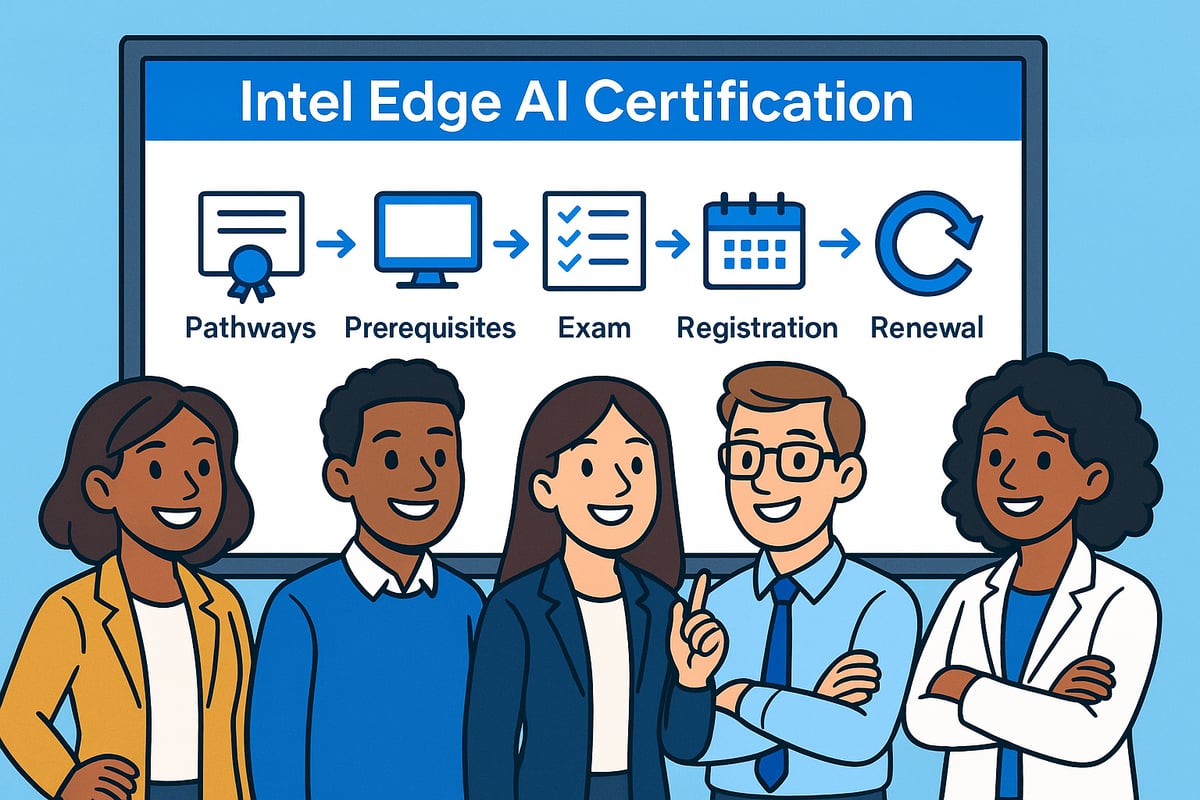
The intel edge ai certification is designed to validate your expertise in deploying artificial intelligence at the edge. Understanding its structure and requirements is crucial for planning your certification journey. Let’s break down the certification pathways, eligibility, exam format, registration, and renewal process to help you navigate each stage with confidence.
Certification Pathways and Levels
The intel edge ai certification offers multiple tracks tailored to various professional backgrounds and goals. Candidates can choose between entry-level and advanced pathways, each focusing on specific skill sets.
- Entry-level certifications focus on foundational edge AI concepts and practical skills for newcomers.
- Advanced certifications dive deeper into optimization, deployment, and troubleshooting for experienced professionals.
The curriculum and assessment methods differ by level. Entry-level tracks are ideal for those starting in AI, while advanced tracks suit developers and engineers seeking specialized expertise.
Choosing the right track ensures your learning aligns with your career aspirations and the evolving demands of the edge AI sector.
Eligibility and Prerequisites
Before you pursue the intel edge ai certification, assess your readiness based on Intel’s recommended prerequisites. Candidates should have a foundational understanding of programming, especially in Python, and basic knowledge of machine learning principles.
- Required skills: Programming experience, familiarity with Python, and understanding of AI concepts
- Recommended experience: Hands-on exposure to Intel tools and edge devices
- Ideal candidates: Developers, data scientists, and engineers interested in edge deployments
Meeting these prerequisites will help you maximize your learning and performance during the certification process, ensuring you are well-prepared for both theoretical and practical challenges.
Exam Format and Content Domains
The intel edge ai certification exam is structured to assess both theoretical knowledge and practical skills. The assessment includes multiple-choice questions, hands-on labs, and project-based evaluations.
Key domains covered in the exam:
- Edge AI fundamentals and architecture
- Model optimization and deployment
- Troubleshooting and real-world scenario analysis
For a detailed breakdown of the exam structure and sample domains, refer to the Intel Edge AI Certification exam structure and content domains. Understanding the format will help you tailor your preparation and build confidence for exam day.
Registration Process and Fees
Registering for the intel edge ai certification is a straightforward process. Begin by creating an account on Intel’s official certification portal and selecting your preferred certification track.
- Scheduling: Choose between online proctored exams or authorized test centers
- Fees: Expect to pay between $150 and $300, with discounts available for students and professionals
Follow the step-by-step instructions provided by Intel to ensure a smooth registration. Double-check your eligibility and preferred exam mode to avoid any last-minute issues.
Renewal and Continuing Education Requirements
The intel edge ai certification remains valid for two to three years, depending on the track. To maintain your credential, you must complete a renewal process that may include continuing education credits or a recertification exam.
Staying certified demonstrates your commitment to evolving alongside AI technologies. Regular renewal ensures your skills remain current and aligned with industry standards, helping you stay ahead in a competitive job market.
Step-by-Step Roadmap to Achieving Intel Edge AI Certification
Embarking on the journey toward the intel edge ai certification can transform your career in AI and edge computing. To help you succeed, here is a comprehensive, step-by-step roadmap that covers every essential milestone, from initial self-assessment to post-exam strategies.

Step 1: Assess Your Current Skills and Set Goals
Begin your intel edge ai certification roadmap by conducting a thorough self-evaluation. Identify your strengths in programming, AI fundamentals, and edge computing concepts. Pinpoint areas where you need improvement.
Set SMART (Specific, Measurable, Achievable, Relevant, Time-bound) goals for your certification journey. For example, you might aim to master OpenVINO within two months or complete a certain number of hands-on projects.
To accurately gauge your current readiness, consider using an AI Fluency Assessment Tool to benchmark your knowledge. This will help you identify precise skill gaps and tailor your study plan for the intel edge ai certification.
Step 2: Select the Right Certification Track
Choosing the most suitable intel edge ai certification track is crucial for your career goals. Intel offers multiple tracks, such as entry-level and advanced certifications, each designed for different experience levels and career aspirations.
Compare the available tracks by reviewing curriculum details, required skills, and industry relevance. For instance, if your focus is IoT, select a track that emphasizes embedded systems. For computer vision, prioritize tracks with strong emphasis on image processing.
Case studies show that aligning your certification track with your professional interests can enhance job satisfaction and open doors to specialized roles. Make sure your chosen path matches both your current abilities and future ambitions within the intel edge ai certification landscape.
Step 3: Build a Study Plan and Gather Resources
A well-structured study plan is essential for achieving intel edge ai certification success. Start by estimating the recommended study hours, which typically range from 80 to 120 hours, depending on your background.
Break down your timeline into manageable weekly goals. Use a mix of official Intel documentation, developer guides, and whitepapers. Supplement these with sample projects that mirror real-world scenarios.
Create a resource list, including online courses, textbooks, and hands-on labs. Organize your materials in a way that aligns with the exam domains. Regularly review your progress to ensure you stay on track for the intel edge ai certification.
Step 4: Engage in Hands-On Learning
Practical experience is a cornerstone of the intel edge ai certification process. Familiarize yourself with Intel’s edge AI hardware and software tools, such as the OpenVINO toolkit and Intel DevCloud.
Work on projects that require deploying AI models on edge devices. Experiment with sample datasets to gain confidence in model optimization and real-time inference.
Utilize code snippets, such as:
import openvino
# Load your optimized model and deploy on edge device
Hands-on practice will deepen your understanding and prepare you for the applied components of the intel edge ai certification exam.
Step 5: Join Edge AI Communities and Forums
Community engagement is vital for anyone pursuing the intel edge ai certification. Join Intel developer forums, GitHub repositories, and LinkedIn groups dedicated to edge AI.
Benefits include:
- Peer support and mentorship
- Networking opportunities with professionals and experts
- Access to shared resources and project feedback
By actively participating, you can exchange insights, stay updated on best practices, and even find study partners to enhance your preparation for the intel edge ai certification.
Step 6: Take Practice Exams and Assess Readiness
Before attempting the official intel edge ai certification exam, take multiple practice tests. These will familiarize you with the exam format and question types.
Analyze your results to identify weak areas. Focus your final study sessions on these topics to maximize your score.
Use strategies such as:
- Simulating exam conditions
- Reviewing incorrect answers in detail
- Practicing time management and stress reduction techniques
Consistent practice will boost your confidence and readiness for the intel edge ai certification assessment.
Step 7: Register, Take the Exam, and Plan Next Steps
Once you feel prepared, register for the intel edge ai certification exam through Intel’s official portal. Choose the most convenient exam format, whether online proctored or at a test center.
On exam day, follow your checklist: confirm your identification, review technical requirements, and set up a distraction-free environment.
After passing, claim your digital badge and update your LinkedIn profile. Leverage your intel edge ai certification to negotiate job offers, seek promotions, or transition into specialized AI roles. Plan for future learning to maintain your competitive edge in this rapidly evolving field.
Essential Preparation Resources & Study Strategies
Preparing for the intel edge ai certification requires a strategic approach and the right mix of resources. Leveraging official materials, interactive courses, practical projects, and community support can significantly boost your exam readiness. Explore the following key preparation pillars to maximize your success.
Official Intel Learning Portals and Documentation
Begin your journey with Intel’s official learning platforms. These provide comprehensive coverage of all topics needed for the intel edge ai certification. Browse the course catalog for structured modules on edge AI fundamentals, hardware deployment, and model optimization.
Key documents include developer guides, hardware manuals, and whitepapers. These materials offer in-depth explanations and real-world examples. Access both free and premium resources through Intel’s portal, ensuring your study plan is grounded in authoritative content.
Explore interactive labs and documentation to cement your understanding. Refer to the latest updates and best practices, as the intel edge ai certification exam often reflects current industry trends.
Top Online Courses and Bootcamps
Supplement your studies with high-quality online courses and bootcamps. These platforms offer hands-on labs, project-based learning, and instructor support, all tailored to the intel edge ai certification.
Platforms like Coursera, Udacity, and edX provide robust edge AI content. For foundational knowledge, the AI Foundations Bootcamp for Beginners delivers interactive modules and real-world use cases, making it ideal for those new to the field.
Compare course ratings and completion statistics to find the right fit for your learning style. Look for options with practical assignments, as these closely mirror the format of the intel edge ai certification exam.
Recommended Books, Tutorials, and Practice Projects
Books and tutorials deepen your theoretical understanding and supplement practical skills for the intel edge ai certification. Must-read texts cover machine learning basics, edge deployment, and OpenVINO toolkit applications.
Seek out comprehensive tutorials that guide you step-by-step through real-world projects. Open-source repositories often include sample code and datasets. For hands-on practice, try building a real-time object detection system using OpenVINO, which reflects common intel edge ai certification tasks.
Engage with practice projects frequently. This approach sharpens your troubleshooting abilities and prepares you for the practical assessment sections.
Study Groups, Mentorship, and Peer Support
Joining study groups and engaging with mentors can accelerate your preparation for the intel edge ai certification. Whether you participate locally or online, peer support fosters accountability and provides diverse perspectives.
Look for Intel developer forums, active GitHub repositories, and LinkedIn groups dedicated to edge AI. Sharing your projects and seeking feedback can clarify complex concepts and boost your confidence.
Mentorship from certified professionals adds immense value. Many candidates attribute their success to collaborative learning and regular knowledge exchanges within these communities.
Time Management and Exam Prep Tips
Effective time management is crucial when preparing for the intel edge ai certification. Develop a balanced study schedule that allocates regular time blocks for learning, practice, and revision.
Break study sessions into manageable chunks, focusing on one topic at a time. Use techniques like spaced repetition and active recall to retain technical concepts. As the exam date approaches, take full-length practice tests to build stamina and identify weak areas.
Revise key topics in the final days and review your mistakes carefully. This structured approach ensures you are fully prepared for the intel edge ai certification exam.
Career Opportunities and Industry Recognition After Certification
The intel edge ai certification opens the door to a wealth of career opportunities, industry recognition, and future-proof skills. As edge AI continues to reshape industries, certified professionals are positioned as leaders in this dynamic field.
High-Demand Job Roles and Salary Insights
With the intel edge ai certification, professionals can access some of the most sought-after roles in technology. Typical positions include:
- Edge AI developer
- Solutions architect
- Machine learning engineer
Employers in the US, Europe, and APAC are actively seeking talent with these skills. Certified individuals report earning 20 to 30 percent more than their non-certified peers, according to recent Glassdoor data. The growing importance of edge AI in healthcare, automotive, and manufacturing further drives demand for these roles. A focus on practical, job-ready skills ensures that holders of the intel edge ai certification stand out in competitive job markets.
Employer Perspectives and Hiring Trends
Employers increasingly value the intel edge ai certification as a mark of expertise and commitment. Many organizations now prioritize certified candidates when hiring for AI and edge technology roles. According to the CompTIA survey: 78% of hiring managers prefer certified AI professionals, demonstrating proficiency through certification can significantly boost your chances of landing a top job. As companies expand their AI initiatives, over 65 percent of tech firms plan to increase AI hiring in 2025. The intel edge ai certification demonstrates both technical capability and a proactive approach to learning.
Real-World Success Stories and Case Studies
Professionals who complete the intel edge ai certification often experience rapid career advancement. For example, a healthcare data scientist used their certification to lead a smart diagnostics project, resulting in a promotion and increased responsibilities. In manufacturing, certified engineers have been entrusted with managing AI-driven automation systems, leading to measurable gains in efficiency. Smart city initiatives also showcase the value of certification, as project leaders with the intel edge ai certification drive innovation and secure higher salaries. These stories highlight the real impact of certified skills in today's workforce.
Upskilling for the Future: Lifelong Learning in Edge AI
Continuous learning is essential for anyone holding the intel edge ai certification. The edge AI market is expected to grow exponentially, with Edge AI market projected to reach $143.06 billion by 2034. Emerging trends like federated learning and edge-cloud synergy make ongoing education vital. Certified professionals can leverage online courses, workshops, and developer communities to stay ahead. The intel edge ai certification not only validates your current skills but also serves as a foundation for future growth, ensuring you remain relevant as the field evolves.
Intel Edge AI Certification vs. Other AI Credentials
Navigating the world of AI certifications can be overwhelming, especially as new roles emerge and industry standards evolve. Understanding how the intel edge ai certification compares to other leading credentials is essential for making the right career move.
Comparing Intel Edge AI Certification to Popular Alternatives
The intel edge ai certification stands out among AI credentials, but how does it compare to well-known alternatives like Nvidia’s Deep Learning Institute or Google’s Professional Machine Learning Engineer? Each program offers a unique focus and curriculum.
Below is a comparison table to help clarify the differences:
| Feature | Intel Edge AI Certification | Nvidia Deep Learning Institute | Google Professional ML Engineer |
|---|---|---|---|
| Focus | Edge deployment, optimization | GPU deep learning | Cloud-based ML |
| Hands-on Labs | Yes | Yes | Yes |
| Industry Recognition | High | High | High |
| Tools Covered | OpenVINO, Movidius | CUDA, TensorRT | Google Cloud AI tools |
If you are exploring cloud-focused AI credentials, the Google Cloud Machine Learning Certification Guide offers a detailed look at another top-tier option.
Unique Advantages of Intel’s Certification
The intel edge ai certification provides unique benefits for professionals aiming to master edge AI. Intel’s program emphasizes real-world deployment and optimization on edge hardware, setting it apart from certifications that focus solely on cloud or data center AI.
Another advantage is direct access to Intel’s ecosystem, including the OpenVINO toolkit and dedicated edge AI hardware. These resources enable candidates to develop, optimize, and deploy models efficiently on a range of devices.
Intel’s partnerships with industry leaders and an active developer community further enhance the program’s value, offering networking and mentorship opportunities that can accelerate your career.
When to Choose Intel Edge AI Certification
Choosing the intel edge ai certification is ideal for those targeting roles in IoT, robotics, or embedded systems, where low-latency and on-device intelligence are critical. If your career goals include deploying AI models on smart cameras, industrial sensors, or autonomous vehicles, this certification aligns perfectly with industry needs.
Professionals with experience in Python, machine learning, or edge hardware will benefit most. It is also a strong fit for developers and engineers seeking to differentiate themselves in a rapidly expanding job market.
How to Stack Credentials for Maximum Impact
To maximize your marketability, consider stacking the intel edge ai certification with other relevant credentials. Combining edge expertise with cloud or data engineering certifications can build a robust, future-proof skillset.
For example, pairing Intel’s certification with a cloud-focused credential or enrolling in an advanced course like the Data Engineering and Machine Learning Masterclass can open doors to high-impact roles across industries.
By strategically selecting and combining certifications, you position yourself as a versatile AI professional ready to tackle complex, real-world challenges.
As you map out your journey toward Intel Edge AI Certification, remember that building a strong AI foundation is essential for long-term success. You’ve seen how edge AI is transforming industries and creating new career opportunities—now it’s your turn to gain practical skills and stand out in this fast-evolving field. If you’re ready to take the first step and experience hands-on learning, you can start right now at your own pace. Begin your path with confidence and explore valuable resources with Become a certified AI Foundation Specilaist. Start for free.