Unlock the future of artificial intelligence with the definitive guide to mastering open ai train in 2025. In today's world, AI is transforming business, education, and everyday life at a remarkable pace.
Staying ahead means having access to structured, up-to-date training. This is where open ai train becomes your competitive edge, offering practical frameworks and expert insights.
Inside this handbook, you will find actionable strategies, best practices, and the newest tools. Use this guide as your essential roadmap to develop AI skills and stay ready for the opportunities of tomorrow.
Get started with a step-by-step approach covering fundamentals, advanced techniques, and future trends.
Understanding Open AI Train: Foundations and Key Concepts
Navigating the world of open ai train requires a strong grasp of its origins, mission, technical language, and impact on the global AI landscape. This section breaks down the essentials, guiding you through the foundational elements that set open ai train apart.
The Evolution of Open AI Train
Open ai train emerged from the need to democratize access to advanced artificial intelligence training. Its journey began as a response to the rapid advancements in machine learning, quickly establishing itself as a key player in the AI ecosystem.
Milestones include:
- Launch of the initial open-source platform
- Integration with popular AI frameworks
- Introduction of collaborative cloud-based training
Compared to other AI training platforms, open ai train stands out for its flexibility and scalability. Its evolution mirrors the broader shift toward accessible and community-driven AI innovation.
Core Principles and Objectives
The core mission of open ai train is to empower professionals and organizations with accessible, ethical, and scalable AI tools. Central principles include:
- Accessibility: Lowering barriers for individuals and teams.
- Scalability: Adapting to projects of all sizes, from startups to enterprises.
- Ethical AI: Promoting responsible development and deployment.
Open-source collaboration is deeply embedded in open ai train, encouraging shared learning and rapid innovation. By focusing on these objectives, the platform ensures users can build robust, future-ready AI solutions.
Essential Terminology and Frameworks
Understanding open ai train means getting familiar with key technical terms:
- Models: Algorithms that learn from data to make predictions.
- Datasets: Structured collections of data used for training.
- Fine-tuning: Adjusting pre-trained models for specific tasks.
- Reinforcement learning: Training models through reward-based feedback.
The platform supports major frameworks like PyTorch and TensorFlow. Knowing this terminology is crucial, as it shapes how teams structure projects and workflows within open ai train, making training more efficient and reproducible.
Current Usage Statistics and Adoption Rates
Adoption of open ai train has surged in recent years, reflecting the growing demand for AI expertise. In 2024 and early 2025, usage statistics show significant uptake across industries such as technology, healthcare, finance, and education.
A recent report highlighted that OpenAI's weekly active users surpass 400 million, demonstrating widespread trust and integration. Leading organizations cite improved productivity and faster innovation cycles as key benefits of implementing open ai train in their workflows.
Open AI Train vs. Traditional AI Training Methods
Traditional AI training often required significant on-premise resources and manual processes. Open ai train introduces:
| Feature | Traditional Training | Open AI Train |
|---|---|---|
| Deployment | Local/On-premise | Cloud-based |
| Collaboration | Limited | Real-time, multi-user |
| Scalability | Fixed | Dynamic |
| Speed | Slower | Accelerated |
Organizations transitioning to open ai train report faster project turnaround and more effective team collaboration. The shift to cloud and collaborative environments has redefined how businesses and researchers approach AI training.
Setting Up Open AI Train: Step-by-Step Guide
Embarking on your open ai train journey begins with a well-structured setup. A smooth installation and configuration process will set the stage for effective AI training, collaboration, and scalable results. Below, you will find a step-by-step guide to ensure your environment is optimized for success.
Step 1: Prerequisites and System Requirements
Before you install open ai train, assess your hardware and software prerequisites. For individuals, a modern CPU, 16GB RAM, and a recent GPU (NVIDIA RTX series recommended) offer a smooth experience. Organizations should consider multi-GPU servers or cloud-based GPU instances for scalable workloads.
Supported operating systems include Windows, macOS, and Linux distributions. Popular cloud platforms such as AWS, Google Cloud, and Azure are fully compatible, enabling flexible deployment.
| Configuration | Minimum | Recommended |
|---|---|---|
| RAM | 8GB | 32GB+ |
| GPU | GTX 1060 | RTX 3080 or higher |
| Storage | 100GB SSD | 1TB NVMe SSD |
If you are new to AI concepts or want to build foundational knowledge before setup, the AI foundations for beginners bootcamp provides essential resources tailored for open ai train users.
Step 2: Installation and Initial Configuration
Download open ai train from the official repository or your organization’s internal portal. Select the correct version for your system and check compatibility with existing frameworks.
For local installations, use the following command:
pip install openai-train
In cloud environments, follow platform-specific setup guides. After installation, configure environment variables and dependencies as documented. Common variables include OPENAI_TRAIN_HOME and DATASET_PATH.
Ensure all required Python packages are installed. Use pip freeze to verify dependencies. For enterprise setups, containerization with Docker or orchestration via Kubernetes helps streamline deployment and scaling of open ai train.
Step 3: Connecting to Data Sources
Open ai train supports a range of data formats including CSV, JSON, Parquet, and image folders. Integration with cloud storage is seamless, allowing easy access to datasets stored on AWS S3, Google Cloud Storage, or Azure Blob.
Best practices for secure data handling include:
- Encrypting sensitive datasets during transfer and at rest
- Implementing access controls and audit logging
- Regularly updating credentials and API keys
To connect your data source, use configuration files or environment variables. For example:
import openai_train
openai_train.connect_data_source("s3://your-bucket/dataset")
This flexibility ensures open ai train adapts to diverse data pipelines and organizational security policies.
Step 4: Setting Up User Roles and Permissions
Collaborative AI development is a core strength of open ai train. Assigning user roles and permissions helps manage access to projects, datasets, and models.
Role-based controls include:
- Admin: Full control over settings and resources
- Contributor: Can modify projects, train models, upload data
- Viewer: Read-only access to results and dashboards
To ensure compliance with data privacy regulations such as GDPR or HIPAA, configure access policies within the platform. For example, restrict access to sensitive datasets or enable audit trails for user actions.
Setting up a collaborative workspace enables teams to work efficiently, share models, and maintain data integrity throughout the open ai train process.
Step 5: Initializing Your First Training Project
Begin your first open ai train project by creating a structured directory for code, data, and outputs. Import datasets and pre-trained models using platform commands or drag-and-drop interfaces.
A typical project structure:
/project-root
  /data
  /models
  /scripts
  /outputs
Start by launching a sample project, such as image classification. Follow the guided workflow to select a dataset, choose a model architecture, and configure training parameters.
Hands-on practice is vital. Open ai train offers templates and wizards to accelerate project setup, making your first experiment both educational and productive.
Troubleshooting Common Setup Issues
Despite its streamlined design, users may encounter setup challenges with open ai train. Common issues include missing dependencies, version conflicts, and permission errors.
Quick troubleshooting steps:
- Verify Python version compatibility
- Use virtual environments to isolate dependencies
- Check cloud credentials and storage permissions
For persistent problems, consult official documentation, join community forums, or access enterprise support channels. Regularly update both open ai train and supporting libraries to minimize compatibility issues.
By addressing setup hurdles early, you ensure a reliable foundation for ongoing AI development and collaboration using open ai train.
Designing an Effective Open AI Train Curriculum
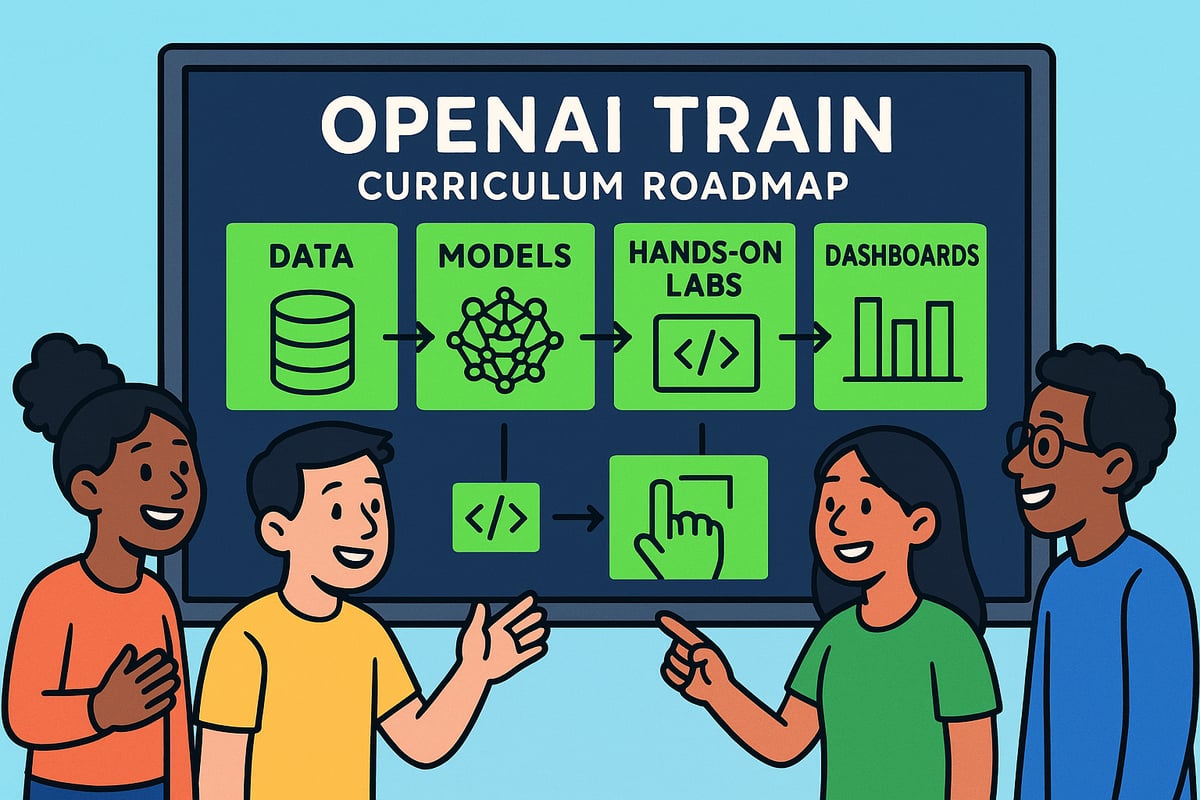
Building a comprehensive open ai train curriculum is essential for driving impactful learning outcomes. By structuring your approach around clear objectives, high-quality data, and hands-on experiences, you can empower learners to master both foundational and advanced AI skills. In this section, we break down the curriculum design process into practical steps, ensuring your open ai train program delivers measurable results.
Defining Learning Objectives and Outcomes
Start by identifying what you want learners to achieve through your open ai train curriculum. Clear learning objectives ensure that every module aligns with your organization's goals, whether upskilling employees, advancing research, or driving innovation.
Break down objectives into measurable outcomes. For example, aim for participants to demonstrate proficiency in model selection, data preprocessing, or performance evaluation. Use pre- and post-training assessments to track progress, and adjust objectives as needed based on feedback.
A well-defined open ai train curriculum creates a focused learning path, enabling learners to build confidence and expertise as they progress.
Selecting and Preparing Datasets
High-quality datasets are the backbone of any open ai train program. When choosing data, prioritize relevance, diversity, and accuracy to reflect real-world challenges. Consider the specific tasks your curriculum will address, such as image classification, NLP, or time series analysis.
Effective data preparation is critical. Implement data cleaning, normalization, and augmentation techniques to ensure reliable training results. For instance, preparing a multilingual text dataset for NLP training involves tokenization, language detection, and balancing class distributions.
Well-prepared datasets allow open ai train exercises to mirror industry scenarios, enhancing both engagement and learning retention.
Choosing the Right Training Models and Algorithms
Selecting appropriate models and algorithms is central to the open ai train process. Evaluate the strengths and trade-offs of different architectures, such as transformers for language tasks or CNNs for image analysis.
Consider resource consumption, accuracy, and speed when making your choices. For those new to AI, the Machine learning fundamentals guide provides a solid foundation for understanding the principles behind various models used in open ai train workflows.
Comparing model types and algorithmic approaches helps learners understand why certain tools are preferable for specific tasks, fostering critical thinking in real-world applications.
Structuring Training Modules and Milestones
An effective open ai train curriculum is modular and progressive. Divide content into focused modules that build upon each other, allowing learners to master concepts step by step.
Set clear milestones and checkpoints to evaluate progress. For example, implement weekly project-based learning sprints, where participants apply concepts to real datasets and receive feedback. Use rubrics and self-assessments to reinforce accountability.
A structured approach keeps learners motivated, ensures coverage of essential skills, and makes it easier to adapt the open ai train curriculum as technology evolves.
Incorporating Hands-On Labs and Simulations
Experiential learning is vital in the open ai train journey. Design hands-on labs that reinforce theoretical concepts with practical exercises. For instance, guide learners through real-time data annotation or model tuning exercises using interactive tools.
Simulations help bridge the gap between classroom learning and real-world problem-solving. Encourage experimentation, iteration, and reflection after each lab to deepen understanding.
Hands-on experiences make open ai train more engaging and memorable, helping learners gain practical skills they can apply immediately.
Leveraging Interactive Tools and Dashboards
Modern open ai train platforms offer robust visualization and analytics features. Use interactive dashboards to track learner engagement, monitor model performance, and visualize training metrics such as accuracy and loss over time.
These tools empower both trainers and learners to identify strengths, address weaknesses, and celebrate achievements. Incorporate dashboards into regular check-ins to maintain transparency and foster a culture of continuous improvement.
By leveraging these features, your open ai train curriculum becomes more adaptive, data-driven, and aligned with individual learner needs.
Hands-On Training: Best Practices and Real-World Exercises
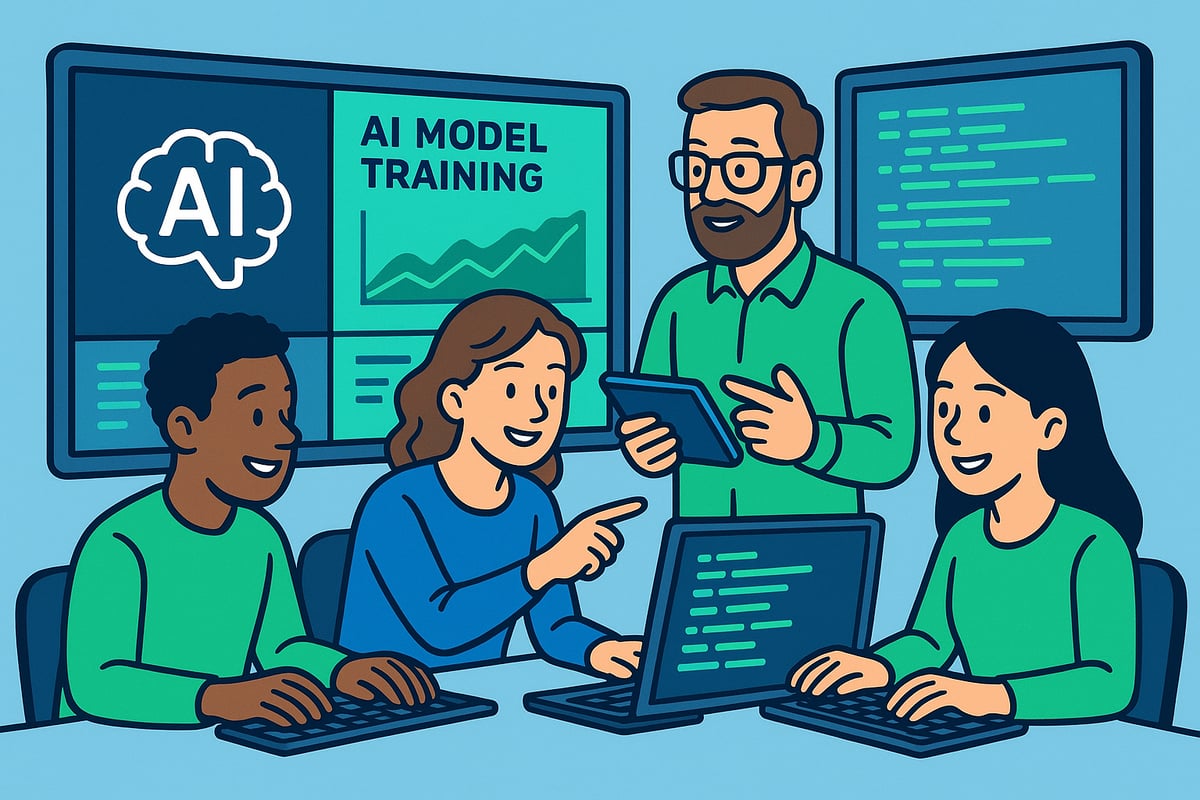
Hands-on learning is at the heart of mastering open ai train. By moving beyond theory, you gain practical skills, deepen your understanding, and prepare to solve real-world AI problems. This section outlines essential strategies, exercises, and collaborative practices to help you get the most out of open ai train.
Preparing the Training Environment
A robust environment lays the foundation for effective open ai train sessions. Begin by setting up reproducible environments using Docker or virtual machines. This approach ensures consistency across team members and project iterations.
Version control is critical. Use platforms like Git to track changes in code and datasets. This practice helps maintain project integrity, especially in collaborative settings.
For those new to these concepts, the Data engineering and machine learning masterclass offers essential insights into environment setup and data workflows within open ai train. Taking these steps ensures your training process is both scalable and secure.
Running Your First Model Training Session
Launching your first open ai train job marks a significant milestone. Start by selecting a sample dataset and defining your model architecture. Use the platform's interface or CLI to initiate the training process.
As the session runs, monitor resource usage and logs. Open ai train provides real-time feedback, allowing you to catch issues early and adjust parameters as needed.
For example, you might train a sentiment analysis model on social media data. By examining outputs and adjusting inputs, you gain immediate feedback that drives learning and improvement.
Evaluating Model Performance and Accuracy
Effective evaluation is central to open ai train success. Key metrics include accuracy, precision, recall, and F1 score. These metrics help you understand how well your model performs and where improvements are needed.
Use built-in visualization tools to interpret results. For instance, a confusion matrix offers valuable insights into classification accuracy across classes.
| Metric | Description |
|---|---|
| Accuracy | Overall correctness of predictions |
| Precision | Correct positive predictions |
| Recall | Ability to find all positives |
| F1 Score | Balance of precision and recall |
Consistent evaluation ensures your open ai train projects meet defined objectives.
Iterative Improvement and Hyperparameter Tuning
Optimization is an ongoing process with open ai train. Begin by adjusting key hyperparameters such as learning rate, batch size, and optimizer choice.
Automated tools like grid search and Bayesian optimization simplify tuning. For example, you can use a configuration file to run multiple experiments simultaneously, comparing outcomes.
# Example: Hyperparameter grid search setup
param_grid = {
    'learning_rate': [0.001, 0.01, 0.1],
    'batch_size': [32, 64, 128]
}
Iterative refinement is key to extracting maximum performance from every open ai train workflow.
Collaborative Training and Knowledge Sharing
Open ai train thrives in collaborative settings. Set up group projects where team members can contribute code, review results, and share insights.
Peer review sessions foster knowledge exchange and improve solution quality. Use shared dashboards to display model performance and encourage discussion.
Open-source contributions are encouraged within the open ai train community. Sharing models or participating in leaderboards accelerates both individual and organizational growth.
Addressing Common Training Challenges
AI training presents unique hurdles. Overfitting, underfitting, and data imbalance are frequent issues in open ai train projects.
Tackle overfitting by applying regularization techniques or using data augmentation. Underfitting may require more complex models or additional data features.
Data imbalance can be addressed by resampling or weighting classes. By proactively managing these challenges, you ensure open ai train projects deliver reliable, real-world results.
Measuring Success: Evaluation, Certification, and Continuous Improvement
Measuring success in open ai train is essential for both individuals and organizations aiming to maximize their return on investment. By using robust evaluation, certification, and continuous improvement processes, you can ensure that your AI training initiatives remain effective, relevant, and aligned with industry standards.
Establishing Clear Evaluation Metrics
Setting well-defined evaluation metrics is vital for tracking progress within open ai train. Begin by aligning these metrics with your initial learning objectives, ensuring that each stage of the training journey is measurable.
Quantitative methods, such as pre- and post-training assessments, help gauge knowledge acquisition. Qualitative feedback, including peer reviews and project outcomes, adds depth to the evaluation process. For a comprehensive approach, consider using tools like the AI fluency assessment resource to benchmark skills and identify improvement areas.
A sample table for assessment methods:
| Method | Purpose | Frequency |
|---|---|---|
| Pre-training quiz | Baseline knowledge | Onboarding |
| Project-based evaluation | Applied skills | Bi-weekly |
| Peer review | Collaborative improvement | Monthly |
| AI fluency assessment | Industry alignment | Quarterly |
By regularly leveraging open ai train evaluation metrics, teams and individuals can pinpoint strengths and address gaps efficiently.
Certification and Credentialing Options
Earning certification through open ai train provides tangible proof of expertise and enhances career prospects. Recognized credentials validate your skills to employers and peers, boosting your professional profile.
There is growing industry demand for certified AI professionals, making certification an important milestone. Popular paths include foundational certificates, advanced specializations, and role-based credentials. A notable example is a professional who, after completing open ai train certification, secured a promotion to lead an AI-driven project in healthcare.
Benefits of open ai train certifications include:
- Demonstrable skill validation
- Competitive advantage in the job market
- Access to advanced training resources
Choosing the right certification path ensures your learning remains relevant and supports your long-term goals.
Feedback Loops and Continuous Curriculum Updates
Continuous improvement is central to the open ai train philosophy. Effective feedback loops, which involve gathering input from learners and stakeholders, drive iterative curriculum enhancements.
Implement regular review cycles to assess training effectiveness. Collect both quantitative data (like assessment scores) and qualitative feedback (such as learner satisfaction surveys). These insights guide updates, ensuring the curriculum adapts to evolving industry needs.
An example process for curriculum improvement:
- Gather feedback post-training.
- Analyze results and identify trends.
- Update modules and resources.
- Communicate changes to all users.
This approach helps open ai train remain agile, relevant, and impactful for all participants.
Benchmarking Against Industry Standards
Benchmarking open ai train outcomes against industry standards is crucial for maintaining competitiveness. Compare your learners' results with recognized benchmarks, such as global assessment scores or performance in AI competitions.
Participation in external challenges, like Kaggle, provides valuable insights into skill levels and highlights areas for growth. For broader context, reviewing The State of Generative AI Adoption in 2025 reveals how AI training outcomes are evolving across sectors.
A comparison table might include:
| Standard | Open AI Train Average | Industry Benchmark |
|---|---|---|
| Certification pass % | 85% | 80% |
| Project completion | 90% | 88% |
| Competition ranking | Top 10% | Top 15% |
Regular benchmarking ensures your open ai train initiatives are aligned with best practices and market expectations.
Supporting Lifelong Learning and Upskilling
Sustaining growth in open ai train requires ongoing commitment to lifelong learning. Integrate continuous education pathways, allowing professionals to move from beginner to expert-level modules seamlessly.
Offer resources such as advanced courses, mentorship programs, and access to industry events. Encourage participation in forums, webinars, and research communities to keep skills sharp.
A typical progression path in open ai train may look like this:
- Complete foundational modules
- Earn certification
- Engage in advanced specialization
- Participate in collaborative projects
- Mentor new learners
By fostering a culture of continuous upskilling, organizations and individuals ensure lasting success in the evolving world of open ai train.
Future-Proofing Your AI Skills: Trends and Predictions for 2025 and Beyond
The landscape of artificial intelligence is evolving rapidly as we approach 2025. To stay competitive, professionals must continuously adapt their open ai train strategies. This section examines the latest trends, emerging methodologies, and future predictions that will shape how individuals and organizations approach open ai train in the coming years.
Emerging Technologies and Methodologies
The next wave of open ai train will be defined by integration with generative AI, federated learning, and edge computing. These advancements enable faster, more secure, and highly personalized training experiences. For example, federated learning allows organizations to train models across decentralized data sources, enhancing privacy and compliance.
Reinforcement learning is another breakthrough, empowering AI agents to learn complex tasks through trial and error. The Agent Lightning: Train ANY AI Agents with Reinforcement Learning framework is a notable development, offering flexibility for advanced open ai train workflows. As these technologies mature, expect to see more adaptive and autonomous training environments.
The Role of Ethics and Responsible AI
Ethical considerations are now central to open ai train. As AI systems impact more aspects of life, transparency, fairness, and accountability must be prioritized. In 2025, organizations are expected to implement robust frameworks for detecting and mitigating bias in model development.
Explainable AI is becoming a standard, allowing stakeholders to understand model decisions. Regulations like GDPR and emerging AI-specific standards require open ai train programs to document data sources, training processes, and outcomes. Responsible AI practices will not only build trust but also ensure compliance in a changing regulatory landscape.
Global AI Talent Landscape and Opportunities
The demand for skilled professionals with open ai train expertise is projected to surge through 2030. Remote work, cross-border collaboration, and the rise of regional AI hubs are creating diverse opportunities. Asia, Europe, and North America are investing heavily in AI education, leading to the emergence of new centers of excellence.
For individuals, this means more career pathways and the chance to participate in global projects. Organizations that foster continuous learning and international partnerships will maintain a competitive edge. Open ai train skills are now seen as essential for roles in tech, healthcare, finance, and beyond.
Building a Sustainable AI Learning Ecosystem
A robust ecosystem is critical for the long-term success of open ai train. Collaboration among academia, industry, and open-source communities drives innovation and accessibility. Funding from public and private sectors supports research, curriculum development, and workforce upskilling.
The rapid growth of the AI Training Dataset Market Size, Statistics highlights the importance of high-quality data in training. Sustainable practices include open data sharing, ethical sourcing, and ongoing evaluation of educational outcomes. Initiatives like public-private partnerships are paving the way for inclusive and scalable AI learning environments.
Staying Ahead: Recommended Resources and Communities
To thrive in the era of open ai train, engaging with top forums, conferences, and online communities is essential. Platforms such as AI Stack Exchange, specialized Slack groups, and annual summits provide access to the latest research and peer support.
Consider following influential thought leaders through curated blogs, newsletters, and podcasts. Participating in competitions and collaborative projects accelerates skill development. By leveraging these resources, you can ensure your open ai train knowledge remains current and future-proof.
As you’ve seen in this guide, mastering Open AI Train means more than just learning new tools—it’s about future proofing your career and staying ahead in a rapidly evolving AI landscape. Whether you’re aiming to design effective curricula or implement real world AI solutions, building a strong foundation is essential. If you’re ready to take the next step and gain recognition for your skills, why not start your journey today Become a certified AI Foundation Specilaist. Start for free Become a certified AI Foundation Specilaist. Start for free