Microsoft has positioned itself as a leader in AI credentialing, offering structured certification paths that validate skills across multiple AI competencies. As organizations accelerate their digital transformation initiatives, the demand for professionals with verified AI expertise continues to surge. Understanding the ai certification microsoft ecosystem is essential for IT professionals, business leaders, and anyone looking to establish credibility in artificial intelligence implementation and strategy. These certifications provide not just theoretical knowledge, but practical, hands-on experience with Azure AI services, machine learning operations, and responsible AI principles that directly translate to workplace value.
Understanding the Microsoft AI Certification Landscape
Microsoft's approach to AI certification reflects the multifaceted nature of artificial intelligence in enterprise environments. Rather than offering a single credential, Microsoft's professional credentials span multiple competency levels and job roles, from foundational understanding to expert-level implementation.
The Three-Tier Certification Framework
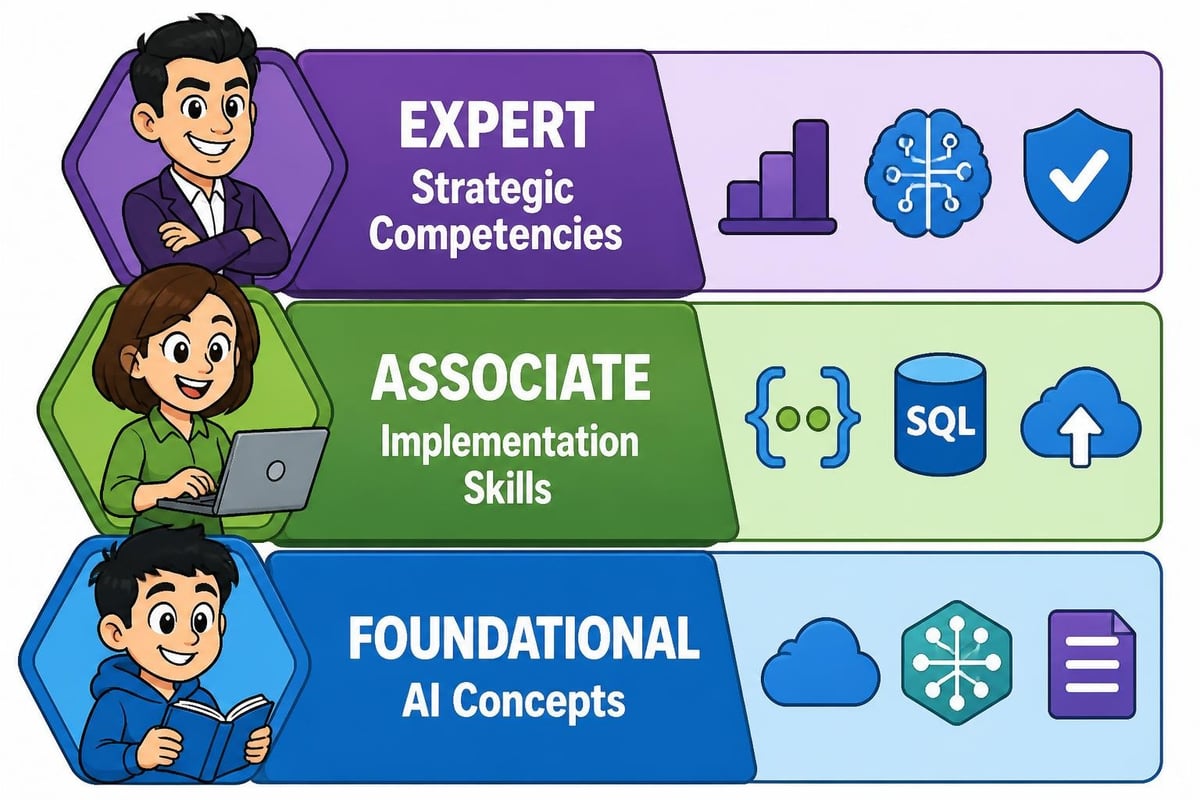
Microsoft organizes its ai certification microsoft offerings into three progressive tiers that align with career stages and technical depth.
Foundational certifications establish baseline knowledge of AI concepts, ethical considerations, and Azure AI capabilities. These entry-level credentials require no prerequisites and typically demand 40-60 hours of preparation. They're designed for professionals transitioning into AI roles or business stakeholders who need to understand AI capabilities without deep technical implementation.
Associate-level certifications target practitioners who design, build, and deploy AI solutions. These credentials validate hands-on experience with Azure Machine Learning, Cognitive Services, and AI development frameworks. Candidates typically need 6-12 months of practical experience and must demonstrate proficiency in programming, data management, and model deployment.
Expert and specialty certifications address advanced scenarios including AI strategy, governance, and complex solution architecture. These credentials assume extensive field experience and often require holding prerequisite certifications.
| Certification Level | Target Audience | Typical Preparation Time | Prerequisites |
|---|---|---|---|
| Fundamentals | Business users, beginners | 40-60 hours | None |
| Associate | AI engineers, developers | 3-6 months | Technical background recommended |
| Expert | Solution architects, leaders | 6-12 months | Associate certification often required |
Key Microsoft AI Certifications for 2026
The ai certification microsoft portfolio has evolved significantly to address emerging AI technologies and organizational needs. Several certifications stand out as particularly valuable for professionals building AI careers.
Azure AI Fundamentals (AI-900)
The Azure AI Fundamentals certification serves as the entry point into Microsoft's AI credentialing system. This certification covers machine learning fundamentals, computer vision workloads, natural language processing, and conversational AI principles.
Candidates learn to identify appropriate Azure services for different AI scenarios without needing deep programming expertise. The exam emphasizes understanding AI terminology, ethical considerations, and basic model evaluation metrics. This certification pairs well with broader artificial intelligence AI courses that provide context beyond Microsoft's ecosystem.
Azure AI Engineer Associate (AI-102)
For technical professionals ready to implement AI solutions, the Azure AI Engineer Associate certification validates comprehensive skills in designing and deploying AI applications. This credential requires proficiency in Python or C#, experience with REST APIs, and understanding of Azure services including Cognitive Services, Azure OpenAI Service, and Azure Cognitive Search.
The exam assesses candidates on:
- Implementing computer vision solutions using Azure Computer Vision and Custom Vision
- Building natural language processing applications with Language Understanding and Text Analytics
- Deploying conversational AI using Azure Bot Service
- Implementing knowledge mining with Azure Cognitive Search
- Securing and monitoring AI solutions
Professionals pursuing this path benefit from exploring the AI-102 learning path which provides structured preparation aligned with exam objectives.
AI Transformation Leader
The Microsoft Certified: AI Transformation Leader represents Microsoft's newest addition, specifically designed for business decision-makers rather than technical implementers. This certification validates the ability to guide organizational AI adoption, build AI governance frameworks, and align AI initiatives with business objectives.
Unlike technical certifications, this credential emphasizes change management, ethical AI deployment, stakeholder communication, and ROI measurement. It's ideal for executives, product managers, and business strategists who shape AI strategy without writing code themselves. The certification reflects growing recognition that successful AI implementation requires leadership competencies alongside technical skills.
Preparing for Microsoft AI Certification Exams
Effective preparation for ai certification microsoft exams requires structured study, hands-on practice, and strategic resource selection. Microsoft has made significant investments in learning materials, but candidates must navigate multiple options to create an optimal study plan.
Official Microsoft Learning Paths
Microsoft Learn provides free, self-paced learning paths aligned with each certification. These modules combine conceptual explanations, video demonstrations, and interactive sandboxes where learners experiment with Azure services without cost. The learning paths typically require 15-30 hours to complete and cover all exam objectives.
Key preparation strategies include:
- Completing all Microsoft Learn modules specific to your target certification
- Building hands-on projects using Azure free tier resources
- Joining study groups through Microsoft Tech Community forums
- Taking official practice exams to identify knowledge gaps
- Reviewing Azure documentation for services covered in the exam
Supplementing with Comprehensive Training Platforms
While Microsoft's official materials are valuable, many professionals benefit from instructor-led courses and structured bootcamps. Platforms like MammothClub offer comprehensive AI training programs that contextualize Microsoft certifications within broader AI competencies, helping learners understand how Azure AI fits into the larger machine learning landscape.
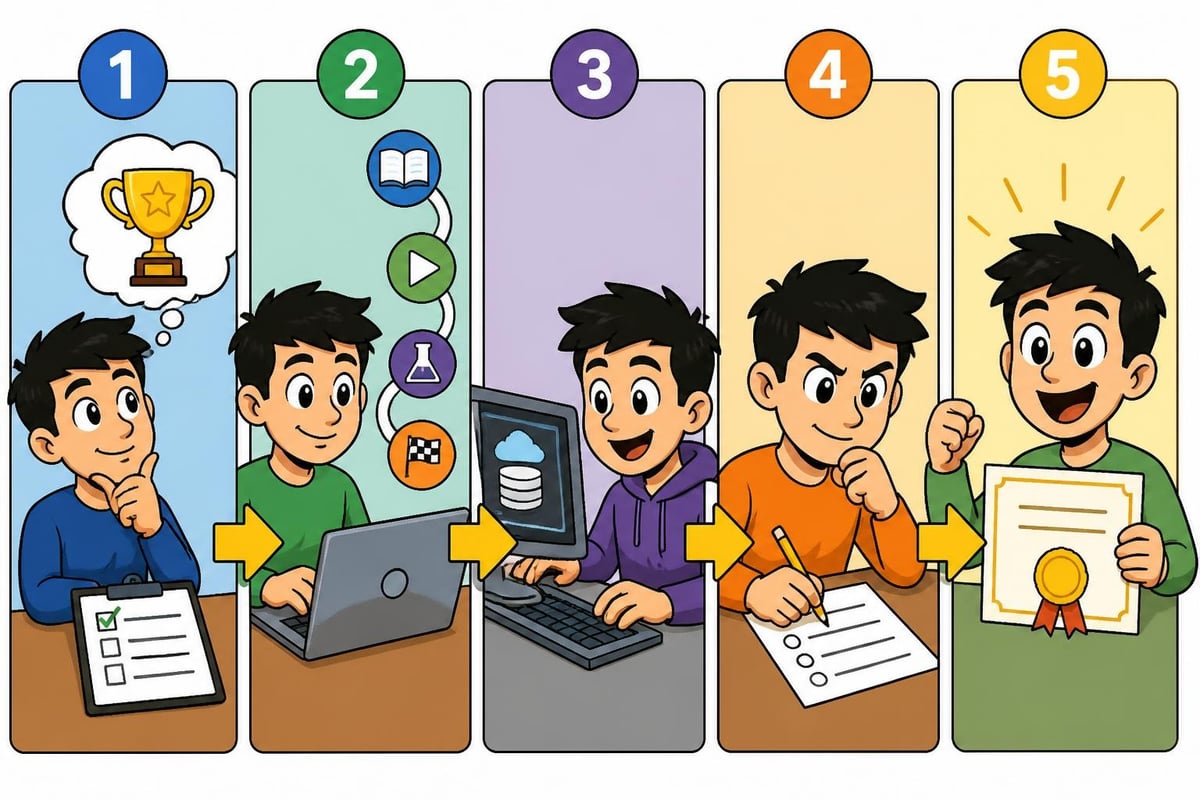
Interactive learning approaches significantly improve retention and practical skill development. Look for programs that provide:
- Real-world project scenarios mirroring workplace challenges
- Personalized learning dashboards tracking progress across competencies
- Access to instructors with current Azure AI implementation experience
- Corporate training options for teams pursuing certification together
Time Investment and Study Plans
Realistic time expectations prevent frustration and improve success rates. Most candidates underestimate preparation requirements, particularly for associate and expert certifications.
| Certification | Recommended Study Hours | Hands-On Lab Time | Typical Success Rate (First Attempt) |
|---|---|---|---|
| AI-900 | 40-60 hours | 10-15 hours | 75-80% |
| AI-102 | 80-120 hours | 40-60 hours | 60-65% |
| AI Transformation Leader | 60-80 hours | 15-20 hours (case studies) | 70-75% |
Career Benefits and ROI of Microsoft AI Certifications
Earning ai certification microsoft credentials delivers measurable career advantages, but the value varies significantly based on role, industry, and how certifications integrate with broader skill development.
Salary Impact and Job Market Positioning
Certified professionals command premium compensation, particularly when certifications complement relevant experience. Data from 2026 technology salary surveys indicates Azure AI certified engineers earn 15-25% more than non-certified peers in comparable roles.
The certification advantage extends beyond base salary to include:
- Increased interview callback rates (45-60% higher for certified candidates)
- Faster promotion timelines within technical career tracks
- Enhanced credibility when consulting or contracting independently
- Stronger positioning for roles involving AI strategy and implementation
However, certifications alone don't guarantee career advancement. Employers value certifications most when candidates demonstrate practical application through portfolio projects, GitHub contributions, or documented business impact from AI initiatives.
Industry-Specific Certification Value
Certain industries place higher value on Microsoft AI certifications due to existing Azure infrastructure investments or regulatory requirements. Healthcare organizations, financial services firms, and government agencies frequently standardize on Azure, making Microsoft credentials particularly relevant.
Healthcare and Life Sciences: Organizations leveraging Azure for HIPAA-compliant AI solutions prioritize candidates certified in Azure AI services, particularly those understanding healthcare-specific AI applications like medical imaging analysis and clinical decision support.
Financial Services: Banks and insurance companies implementing fraud detection, risk modeling, and algorithmic trading systems value professionals who can navigate Azure's security and compliance frameworks alongside AI implementation.
Manufacturing and Supply Chain: Companies pursuing predictive maintenance and quality control AI applications seek certified professionals who understand Azure IoT integration with AI services.
For professionals in these sectors, pairing Microsoft AI certifications with AI management courses creates a powerful combination of technical and strategic competencies.
Comparing Microsoft AI Certifications to Alternatives
The ai certification microsoft ecosystem exists within a broader landscape of AI credentials from AWS, Google Cloud, and vendor-neutral organizations. Understanding comparative advantages helps professionals make strategic certification decisions.
Microsoft vs. AWS AI Certifications
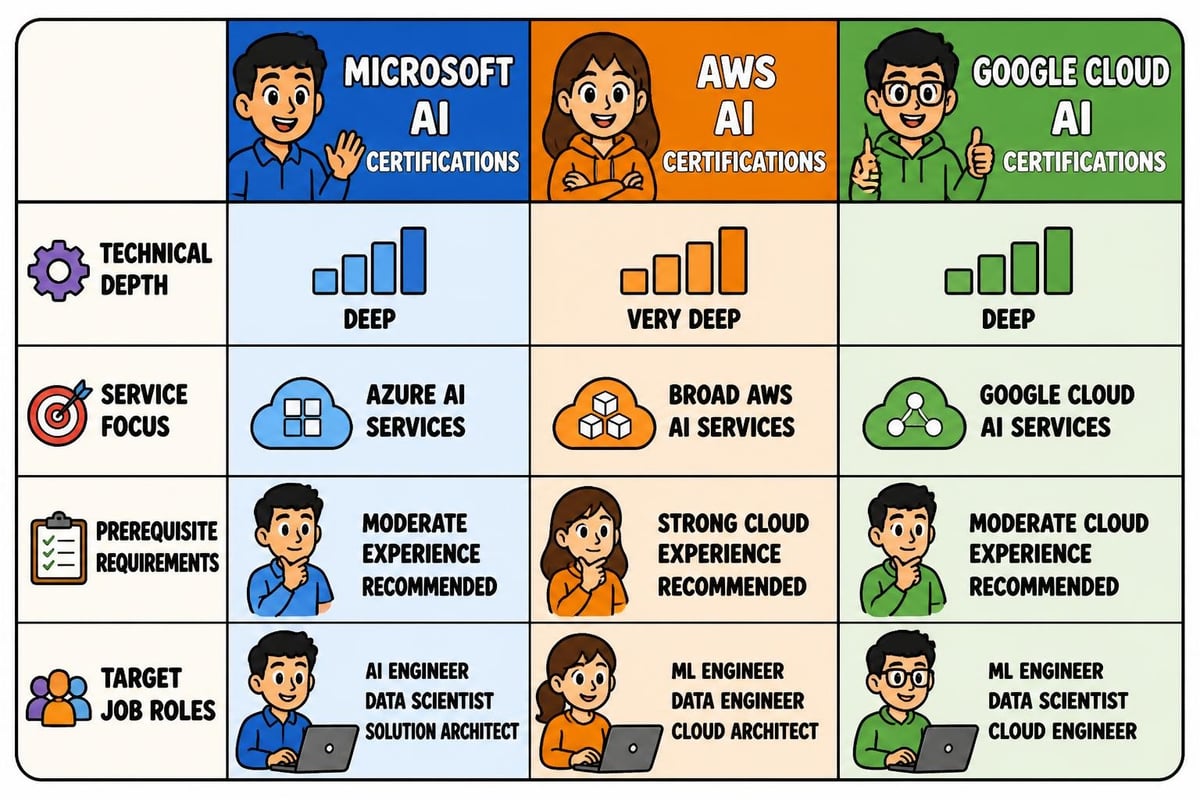
AWS offers the Machine Learning Specialty certification, which provides deeper coverage of ML engineering practices but less emphasis on pre-built AI services. Microsoft's approach focuses more heavily on Cognitive Services and accessible AI tools that accelerate development.
Choose Microsoft certifications when:
- Your organization has existing Azure infrastructure
- You prioritize rapid AI application development using managed services
- You work in enterprises with Microsoft 365 and Dynamics ecosystems
- You need certifications covering business AI strategy (AI Transformation Leader)
Consider AWS certifications when:
- Your environment is AWS-native
- You focus on custom ML model development and SageMaker expertise
- You need deeper coverage of ML operations and model deployment pipelines
Microsoft vs. Google Cloud AI Certifications
Google's Professional Machine Learning Engineer certification emphasizes TensorFlow, AutoML, and Vertex AI. It targets data scientists and ML engineers comfortable with deep learning frameworks and mathematical foundations.
Microsoft certifications are generally more accessible to professionals without strong data science backgrounds, emphasizing practical implementation over theoretical ML knowledge. This makes them ideal for software developers, IT professionals, and business analysts transitioning into AI roles.
Vendor-Neutral AI Certifications
Organizations like CompTIA and ISACA offer vendor-neutral AI certifications focusing on AI governance, ethics, and general principles. These complement platform-specific certifications like Microsoft's but don't validate hands-on implementation skills.
The optimal strategy often involves combining Microsoft technical certifications with vendor-neutral credentials addressing AI strategy and governance. This creates a comprehensive skill profile appealing to employers seeking both implementation capability and strategic oversight.
Maintaining and Renewing Microsoft AI Certifications
Microsoft transitioned to a renewal-based certification model in 2021, fundamentally changing how professionals maintain credentials. Understanding renewal requirements prevents certifications from lapsing and ensures skills remain current as Azure AI services evolve.
The Continuous Learning Requirement
Role-based certifications (including all AI credentials) now expire 12 months after earning them. Rather than retaking full exams, certified professionals complete free online renewal assessments covering updated content and new Azure features.
Renewal assessments typically include:
- 40-60 questions covering service updates and new capabilities
- Multiple attempts allowed without penalty
- No time limit, enabling research during the assessment
- Required completion within 6 months before expiration
This model ensures certified professionals stay current with rapid AI technology evolution. Azure AI services receive significant updates quarterly, meaning certifications earned even 18 months ago may not reflect current best practices without renewal.
Strategic Certification Stacking
Many professionals pursue multiple Microsoft certifications to broaden expertise and create credential pathways. Common stacking strategies include:
- Foundational to specialist progression: Start with AI-900, advance to AI-102, then pursue specialized credentials in specific domains
- Cross-functional combination: Pair AI certifications with Azure Administrator or Developer Associate for comprehensive cloud competency
- Business and technical dual track: Combine AI Transformation Leader with technical AI certifications for leadership roles
Exploring resources like the Microsoft AI certification course can help professionals plan efficient certification pathways aligned with career goals.
Real-World Application Scenarios for Certified Professionals
Understanding how ai certification microsoft knowledge applies in workplace contexts helps professionals translate credentials into business value. These scenarios illustrate practical applications across industries.
Building Intelligent Document Processing Systems
A certified Azure AI Engineer might implement an invoice processing system using Form Recognizer and Cognitive Services. The solution extracts data from diverse invoice formats, validates information against business rules, and routes approvals automatically. This application directly leverages skills validated in the AI-102 certification including custom model training, confidence score interpretation, and integration with business applications.
Implementing Conversational AI for Customer Service
Organizations deploying chatbots for customer support benefit from professionals certified in Azure AI services. A typical implementation involves:
- Designing conversation flows using Azure Bot Framework
- Integrating Language Understanding (LUIS) for intent recognition
- Implementing QnA Maker for knowledge base queries
- Connecting to backend CRM systems for personalized responses
- Monitoring conversation analytics and continuously improving bot performance
These projects demonstrate certification value while building portfolio evidence for career advancement.
Developing Computer Vision Quality Control Systems
Manufacturing companies implement AI-powered quality inspection using Azure Custom Vision. Certified professionals train models to identify product defects, integrate cameras with edge devices running Azure IoT Edge, and create dashboards visualizing defect trends over time. This application showcases practical skills in model training, deployment optimization, and business integration.
Integration with Broader AI Learning Strategies
Microsoft AI certifications should function as components within comprehensive professional development plans rather than isolated credentials. The most successful professionals combine certifications with diverse learning experiences.
Complementary Technical Skills
Azure AI certifications assume and build upon foundational technical competencies including:
- Programming proficiency: Python remains the primary language for AI development, with C# also supported
- Data management: Understanding SQL, NoSQL databases, and data pipeline concepts
- Cloud fundamentals: Basic Azure networking, storage, and security concepts
- API development: REST API design and integration patterns
Professionals lacking these foundations benefit from comprehensive AI ML learning paths that build supporting technical skills alongside certification preparation.
Business and Strategic Context
Technical certification without business context limits career potential. High-value AI professionals understand:
- How to identify business problems suitable for AI solutions
- ROI calculation for AI projects including development costs and expected benefits
- Change management strategies for AI adoption across organizations
- Ethical AI principles and bias mitigation techniques
Resources addressing these dimensions complement technical certifications and position professionals for leadership roles. Research on certification labels for trustworthy AI provides valuable context on how certifications enhance organizational confidence in AI deployments.
Staying Current Beyond Certification
The AI field evolves rapidly, with new techniques, services, and best practices emerging monthly. Certified professionals maintain relevance through:
- Following Azure AI service release notes and feature announcements
- Participating in AI community events and conferences
- Contributing to open-source AI projects
- Experimenting with emerging AI capabilities during preview phases
- Reading current AI research and understanding how breakthroughs might affect Azure services
Video resources like guides to new Microsoft AI certifications for 2026 help professionals track certification program evolution and plan recertification strategies.
Microsoft Partner Ecosystem and Certification Advantages
Organizations participating in Microsoft's partner program benefit significantly from employee certifications. Understanding these dynamics helps professionals negotiate training investments and career development support.
Partner Competency Requirements
Microsoft Solutions Partner designations require specific numbers of certified employees across competency areas. Organizations pursuing AI and data analytics partner status must maintain teams with current Azure AI certifications, creating strong employer incentives to support certification efforts.
Professionals can leverage this by:
- Proposing certification plans aligned with employer partner status goals
- Negotiating exam fee reimbursement and study time as professional development
- Highlighting how certifications contribute to organizational partner benefits
- Requesting access to Microsoft partner training resources and early access programs
Corporate Training Programs
Enterprises increasingly implement structured AI certification programs for technology teams. These initiatives typically include:
- Dedicated learning time during work hours
- Access to premium training platforms and instructor-led courses
- Internal mentorship pairing certified employees with those preparing
- Certification bonuses or salary adjustments upon successful completion
- Team-based learning cohorts improving success rates through peer support
Professionals working for organizations without formal programs can propose pilot initiatives demonstrating ROI through improved project outcomes and employee retention.
Addressing Common Certification Challenges
Many professionals encounter predictable obstacles when pursuing ai certification microsoft credentials. Anticipating these challenges and implementing mitigation strategies improves success rates.
Time Management During Preparation
Balancing certification preparation with full-time work and personal commitments creates the most common barrier. Successful candidates typically:
- Establish consistent daily study blocks (even 30-45 minutes) rather than sporadic long sessions
- Use commute time for video lectures or review of conceptual material
- Leverage weekends for hands-on lab work requiring longer focus periods
- Set intermediate milestone deadlines creating accountability
- Communicate preparation timelines with family members securing support
Hands-On Lab Access and Azure Costs
Practical experience with Azure AI services is essential but can incur costs if not managed carefully. Cost-effective strategies include:
- Maximizing Azure free tier offerings providing limited free service usage monthly
- Utilizing Microsoft Learn sandbox environments for guided exercises
- Implementing shutdown scripts automatically stopping resources after practice sessions
- Using Azure budgets and spending alerts preventing unexpected charges
- Joining Azure for Students or similar programs providing free credits
Exam Anxiety and Test-Taking Strategies
Certification exams assess both knowledge and test-taking ability. Effective exam strategies include:
- Reading questions completely before reviewing answers
- Eliminating obviously incorrect options first
- Managing time to allow question review before submission
- Marking uncertain questions for review rather than excessive deliberation
- Focusing on Microsoft's recommended approaches rather than alternative implementations
Practice exams significantly reduce anxiety by familiarizing candidates with question formats and pacing requirements. Most candidates benefit from taking at least two complete practice exams before scheduling the real assessment.
Building AI Portfolios Demonstrating Certification Value
Certifications signal capability, but portfolios provide evidence. The most effective career advancement strategies combine credentials with documented project experience.
Project Ideas Showcasing Azure AI Skills
Certified professionals differentiate themselves by building public projects demonstrating practical skills:
Sentiment Analysis Dashboard: Create an application analyzing social media sentiment using Text Analytics API, visualizing trends over time, and identifying emerging topics. Deploy using Azure App Service and document architecture decisions.
Custom Object Detection System: Train Custom Vision models recognizing specific objects relevant to an industry, create a mobile app interface for image capture and classification, and document model performance metrics and improvement iterations.
Conversational AI Assistant: Build a multi-turn bot handling complex scenarios using Bot Framework and Language Understanding, integrate with external APIs for dynamic data retrieval, and implement conversation analytics tracking user satisfaction.
Documentation and Presentation Best Practices
Portfolio projects gain maximum impact through effective documentation including:
- Architecture diagrams showing Azure service integration
- Performance metrics demonstrating solution effectiveness
- Cost analysis breaking down Azure service expenses
- Challenges encountered and problem-solving approaches
- Code samples with clear commenting and organization
Publishing projects on GitHub with comprehensive README files, hosting demos on personal websites, and creating video walkthroughs significantly increase visibility to potential employers.
Microsoft AI certifications provide structured pathways for professionals building expertise in artificial intelligence implementation, strategy, and governance. By combining technical credentials with hands-on project experience and broader business understanding, professionals position themselves for high-impact roles in the AI-driven economy. Whether you're starting with foundational concepts or advancing toward expert-level competencies, MammothClub offers comprehensive training programs, interactive bootcamps, and corporate certification support designed to accelerate your AI learning journey. Our AI-powered learning platform helps you master Microsoft AI technologies while building practical skills that drive measurable business results.