Artificial intelligence is transforming the design world at an unprecedented pace. In 2026, creative professionals face a critical moment—adapt to the AI revolution or risk being left behind.
This guide is your essential resource for mastering creative innovation through an ai design course. Whether you are new to design or a seasoned expert, you will discover how to harness AI for future-proof skills.
Explore why AI design matters, how to choose the right course, and step-by-step strategies to excel. Prepare to unlock new tools, techniques, and career opportunities as you shape the future of design.
Why AI Design Skills Are Essential for Creative Innovation in 2026
The design industry is experiencing a seismic shift as artificial intelligence becomes deeply embedded in every creative workflow. This evolution is not just a passing trend; it is fundamentally changing how professionals approach design challenges, collaborate, and deliver value. If you are considering an ai design course, understanding this transformation is your first step to staying relevant.
The Accelerating Impact of AI on Design
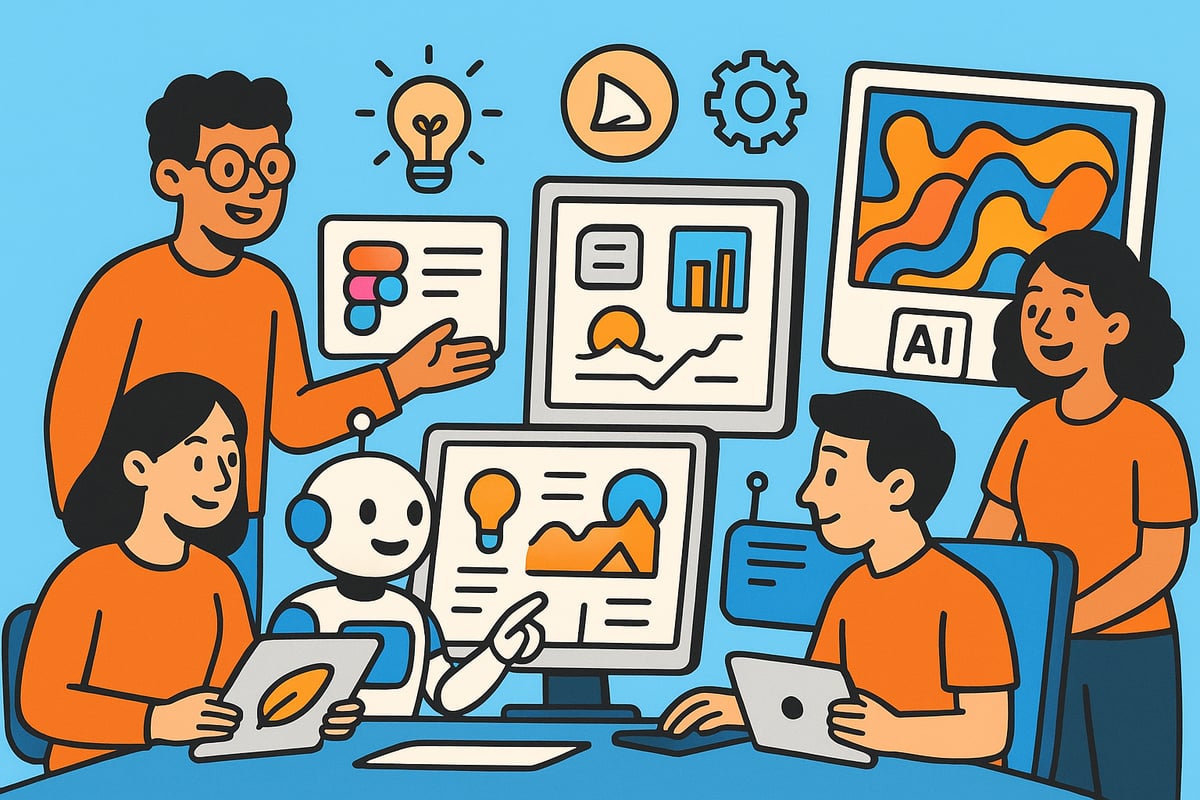
AI is rapidly boosting productivity across the design sector. Tasks that once required months of work can now be completed in weeks, thanks to AI-driven automation and data analysis. According to recent reports, companies investing in AI design outperform the S&P 500 by over 200 percent. This momentum is expected to intensify, making an ai design course essential for anyone seeking to innovate and lead in 2026. For a deeper look at this transformation, see AI's Impact on Design Industry.
Human and AI: A Creative Collaboration
Rather than replacing designers, AI acts as a powerful creative partner. Human strengths—empathy, intuition, and ethical reasoning—blend with AI’s ability to process vast information and generate fresh ideas. An ai design course teaches you how to harness this synergy, using AI as a co-pilot to accomplish breakthrough results that neither humans nor machines could achieve alone.
Career Security and Soaring Demand
The demand for AI-literate designers is skyrocketing. Surveys reveal that 98 percent of industry leaders would not hire a creative professional lacking AI skills. Salaries for roles requiring AI expertise are climbing, with many positions in major cities now surpassing $200,000 annually. Completing an ai design course signals to employers that you possess the future-proof skills needed in a fiercely competitive job market.
AI-Driven Tools Reshaping the Design Process
From research and ideation to prototyping and user testing, AI-powered tools are transforming every stage of the creative workflow. Platforms like Figma, Midjourney, and DALL-E allow designers to accelerate tasks, iterate rapidly, and experiment with new concepts. An ai design course introduces you to these technologies, ensuring you can leverage their capabilities for faster, smarter design solutions.
Future-Proofing Your Career with Human-Centered Skills
While AI continues to advance, human-centered design skills remain irreplaceable. Emotional intelligence, critical thinking, and ethical judgment are essential for creating meaningful, responsible products. UX design job growth is projected at 13 percent globally, and AI-driven roles are among the fastest-growing in tech. By enrolling in an ai design course, you strengthen both your technical and human skills, positioning yourself at the forefront of creative innovation in 2026.
How to Choose the Right AI Design Course in 2026
Selecting the right ai design course can be the difference between simply keeping up and truly excelling in tomorrow's creative landscape. With AI rapidly transforming the field, making an informed choice is crucial for both newcomers and seasoned designers looking to future-proof their careers.
Accreditation and Curriculum Depth
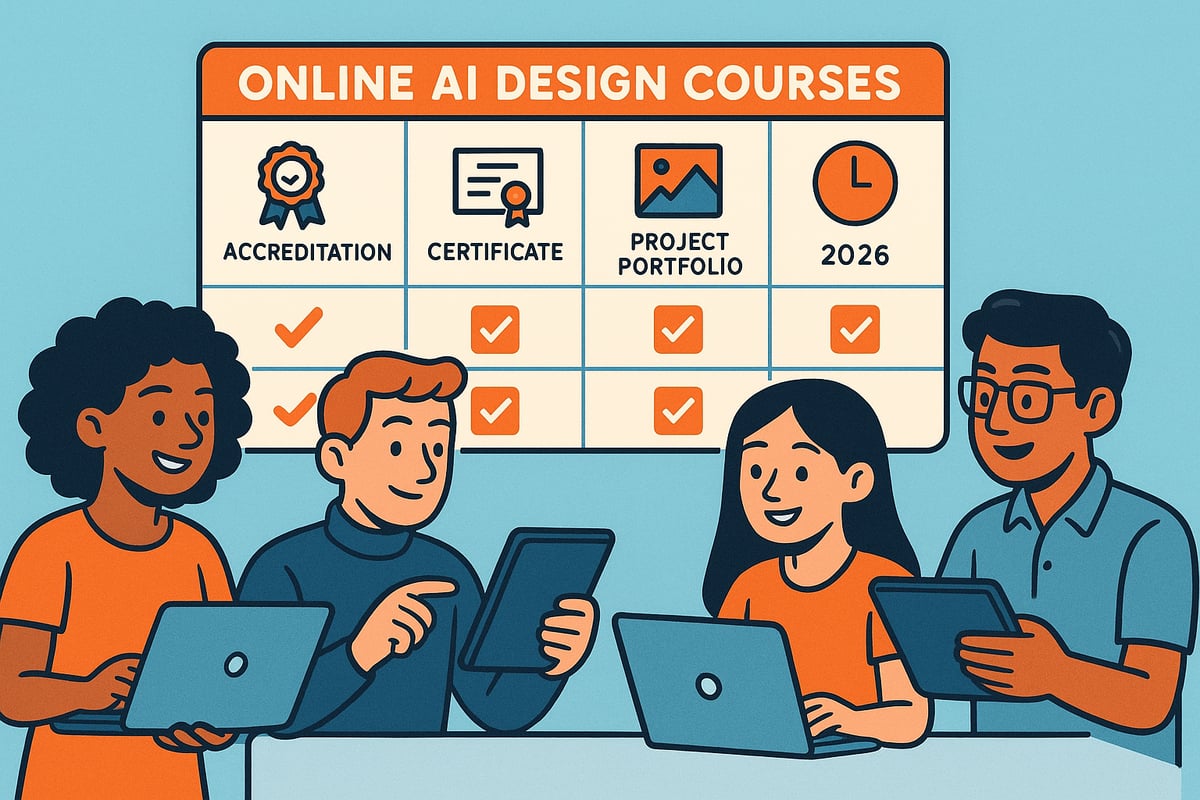
The foundation of a reputable ai design course is its accreditation and curriculum structure. Look for courses that are recognized by established industry bodies or educational institutions. Accreditation signals that the curriculum meets rigorous standards and is respected by employers.
Dig deeper into the course syllabus. Does it cover the latest AI advancements, creative tools, and hands-on applications? A robust ai design course should include modules on generative AI, prompt engineering, and human-centered design. Instructor expertise is equally important: check if your mentors have real-world AI design experience to share.
Online, In-Person, or Hybrid: Comparing Learning Models
Choosing between online, in-person, or hybrid formats will shape your learning experience. Online ai design course options offer flexibility and global access, ideal if you have a busy schedule or prefer self-paced study. In-person classes provide direct networking and collaborative opportunities, which can be valuable if you thrive in interactive environments.
Hybrid models combine the best of both worlds, blending live sessions with remote coursework. Consider how each format aligns with your personal learning style, location, and need for networking. Many leading platforms now offer virtual peer groups and live mentorship, bridging the gap between digital and face-to-face interaction.
Evaluating Course Content and Essential Modules
A top-tier ai design course should balance foundational theory with practical, future-ready skills. Look for these core modules:
- AI basics and terminology
- Prompt engineering for visual and UX tasks
- Generative tools (e.g., Midjourney, DALL-E)
- Ethical and human-centered design
- Real-world case studies and applications
Review sample syllabi or reach out to alumni for insights. Courses that emphasize hands-on projects and regular feedback will help you build confidence and a strong skillset. Make sure the program stays current with AI trends and updates content regularly.
Portfolio-Building and Certification Value
A standout portfolio is your passport to high-impact design roles. The best ai design course experiences integrate real-world projects, allowing you to showcase AI-powered solutions and creative problem-solving. Document your process, display your outcomes, and highlight your ability to use AI tools for research, prototyping, and testing.
Certification adds credibility to your skills. Industry-recognized certificates signal to employers that you have completed rigorous training and are ready to contribute from day one. Display these credentials on your resume, LinkedIn, and personal website to boost your employability.
Cost, Time Commitment, and Platform Comparison
Understanding the financial and time investment of your ai design course is essential. Some programs offer membership models with ongoing access to resources, while others charge a one-time fee for a set curriculum. Consider which structure fits your budget and learning goals.
Course duration varies widely. Self-paced options let you move at your own speed, while cohort-based courses follow a fixed schedule with group deadlines. For a detailed breakdown of typical course lengths and structures, see this comprehensive AI course duration and structure guide.
Below is a quick comparison of two popular platforms:
| Platform | Format | Certification | Portfolio Projects | Cost Structure |
|---|---|---|---|---|
| IxDF | Online/Self | Yes | Yes | Membership |
| Designlab | Hybrid/Cohort | Yes | Yes | Flat Fee |
When choosing your ai design course, weigh factors such as accreditation, learning model, curriculum, hands-on projects, certification, and cost. Take time to research, compare, and reach out to former students if possible. This thoughtful approach will help you find the perfect fit for your creative journey.
Step-by-Step Guide: Mastering AI Design for Creative Innovation
Embarking on your ai design course journey requires a structured approach. This step-by-step guide breaks down the essential phases, skills, and mindsets you need to develop creative innovation and stay ahead in the evolving design world. Let’s explore each stage and uncover actionable strategies for mastery.
Step 1: Build Your Foundation—Understanding AI in Design
Every successful ai design course begins with a strong grasp of the fundamentals. Understanding what AI is, how generative AI works, and the ways it intersects with design is crucial. AI can process vast datasets, generate new ideas, and even mimic artistic styles, but it thrives when paired with human creativity.
Prompt engineering is an essential concept you’ll encounter early on. It involves crafting clear and effective instructions for AI tools, ensuring your creative vision is realized. Tools like Midjourney and DALL-E allow designers to turn simple prompts into stunning visuals, making experimentation accessible.
Ethics should be part of your foundation. Issues like data privacy, bias, and responsible AI use are integral to any ai design course curriculum. Remember, AI is a creative co-pilot, not a replacement for your unique perspective.
If you’re new to these concepts, consider exploring the AI foundations for beginners bootcamp, which covers essential topics for designers starting their ai design course journey.
Step 2: Research & Ideation with AI Tools
Research and ideation are the engines of any design process. In a modern ai design course, you’ll learn how AI accelerates market research, uncovers trends, and synthesizes user data in ways that were unimaginable just a few years ago.
AI-generated personas and simulated interviews help you dive deeper into user needs. By leveraging these insights, you can craft solutions that truly resonate with your audience. Tools like ChatGPT and Leonardo AI assist in brainstorming, producing a wealth of ideas in minutes.
Documenting your exploration is vital. Keep a record of how AI helped you define and refine problems—this demonstrates your process and creative thinking in your portfolio. For example, using AI to analyze user feedback and cluster pain points can reveal patterns you might otherwise miss.
With an ai design course, you’ll gain experience using AI to develop concepts rapidly, making your ideation process more data-driven and efficient.
- Use AI for competitive analysis and trend spotting
- Generate and test multiple user personas instantly
- Synthesize complex data for actionable insights
The result is faster, more informed concept development that sets you apart.
Step 3: Prototyping & Visual Creation with AI
Prototyping is where ideas take shape. In an ai design course, you’ll discover how AI tools can transform your workflow. Platforms like Figma, Runway, and Midjourney enable you to create wireframes, visuals, and UX copy at unprecedented speed.
Automating repetitive tasks frees you to focus on innovation. For example, AI can generate dozens of logo variations or adapt color schemes with a few simple prompts. Crafting effective prompts is an art—clear instructions yield more targeted, creative results.
Dynamic imagery and animation are now accessible thanks to AI’s capabilities. Integrating these features enhances user engagement and elevates your projects. Showcasing AI-assisted prototypes in your portfolio highlights your adaptability and technical skills.
- Generate visual assets with DALL-E for branding
- Use AI to create interactive prototypes quickly
- Integrate AI into animation workflows for lively presentations
Each ai design course emphasizes practical, hands-on projects, ensuring you’re ready to tackle real-world challenges.
Step 4: Testing, Feedback, and Iteration
Testing and iteration are critical in any ai design course. AI streamlines user testing by aggregating feedback and analyzing usability data efficiently. Automated A/B testing allows you to compare design variations and optimize your product based on real user responses.
Peer group sessions and mentor feedback are common features in leading courses. These collaborative elements help you refine your designs through multiple iterations, ensuring your solutions are both innovative and user-centered.
For instance, using AI to evaluate and optimize a product launch provides immediate insights for improvement. Document your iterative process in your portfolio to showcase your commitment to growth and excellence.
The iterative nature of AI-driven design means you can experiment rapidly, learning and improving with every cycle.
Step 5: Ethical, Human-Centered, and Future-Ready Design
The final step in any ai design course is developing a mindset rooted in ethics and human-centered values. As AI becomes more integrated into design, addressing bias and building trust are non-negotiable. Practical strategies for responsible AI use are a core part of your training.
Ensuring accessibility and inclusivity is essential. Design with empathy so your products serve diverse users and meet global standards. Human-centered design principles must guide your decisions, keeping the user’s needs at the forefront.
Continuous learning is vital for future readiness. AI evolves rapidly, and staying informed about advancements ensures your skills remain relevant. Many courses feature case studies of AI design for social good, highlighting the importance of balancing innovation with responsibility.
- Address AI bias with transparent design practices
- Prioritize accessibility for all users
- Commit to ongoing education and ethical standards
By following these steps, your ai design course experience will empower you to create meaningful, innovative, and responsible design solutions for years to come.
Essential AI Tools, Platforms, and Skills for Designers
Are you ready to excel in the next wave of design innovation? Mastering essential AI tools and platforms is now a non-negotiable part of any ai design course. Before you dive in, consider taking an AI fluency assessment for designers to evaluate your current skills and identify growth areas.
Overview of Leading AI Tools
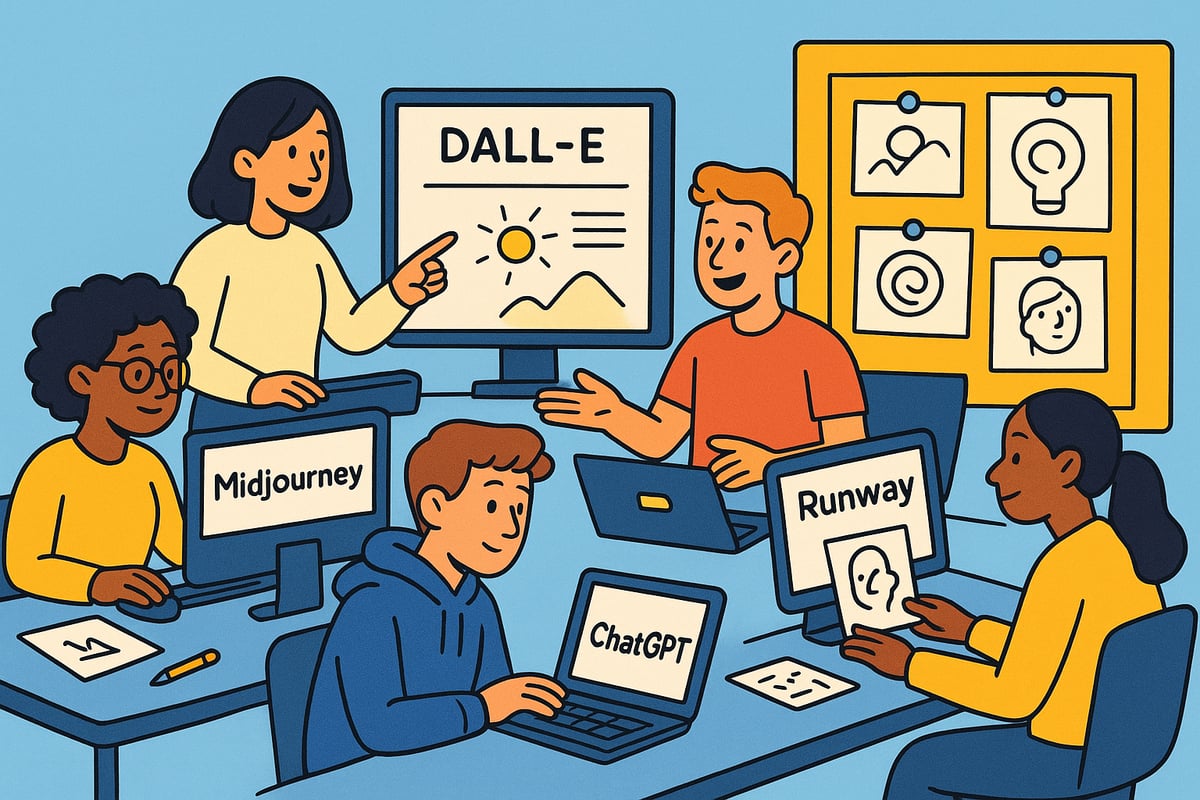
The backbone of any successful ai design course is hands-on experience with industry-leading tools. Here’s a quick comparison:
| Tool | Specialty | Key Use Cases |
|---|---|---|
| Midjourney | Generative visuals | Concept art, mood boards |
| DALL-E | AI image creation | Brand assets, illustrations |
| ChatGPT | Conversational AI, text | UX writing, research |
| Runway | Video, animation AI | Dynamic imagery, editing |
| Figma | Design collaboration | Wireframing, prototyping |
| Leonardo AI | Visual ideation | Rapid concept generation |
Each platform brings unique strengths to the ai design course experience, allowing you to experiment across multiple formats and workflows.
Mastering Prompt Crafting
Prompt engineering is the new art form for digital designers. In an ai design course, you’ll learn how to craft clear, targeted prompts that direct AI tools to produce exactly the visuals, text, or interactions you need.
- Practice with both visual and text-based prompts.
- Iterate quickly: change a few words and see how outputs shift.
- Document successful prompt structures for future projects.
Effective prompt crafting is essential for maximizing the creative potential of AI.
Animation and Dynamic Imagery Workflows
AI has transformed animation and motion graphics. Tools like Runway and DALL-E now enable designers to create dynamic content faster than ever.
- Automate repetitive animation sequences.
- Generate multiple visual variations for A/B testing.
- Integrate AI-generated assets into Figma for interactive prototypes.
An ai design course will show you how to blend these workflows seamlessly, unlocking new creative directions.
Data-Driven Design and Collaboration Platforms
Modern design is driven by data and collaboration. AI-infused analytics platforms help you analyze user behavior, test design hypotheses, and refine your approach.
- Use ChatGPT to synthesize user feedback.
- Integrate Figma with analytics tools for real-time insights.
- Join peer groups and mentorship networks to exchange ideas and receive expert feedback.
Global collaboration is a cornerstone of every ai design course, preparing you for a connected, remote-first industry.
Building a Future-Proof Portfolio and Certification Value
A standout portfolio is your passport to career growth. Showcase AI-enhanced case studies, from branding projects using Midjourney to product prototypes built in Figma.
Certification from a recognized ai design course signals your expertise to employers. Document your process, highlight your mastery of top tools, and demonstrate real-world impact through finished projects.
Stay curious, keep experimenting, and your AI design skills will remain in demand as the industry evolves.
Career Opportunities and Future Trends in AI Design
The rapid adoption of AI is transforming the design landscape, unlocking a wealth of exciting career opportunities for those who complete an ai design course. Organizations are actively seeking professionals who can blend creative vision with technical expertise. As AI continues to evolve, its influence across design disciplines is only expected to grow.
High-Demand Roles in AI Design
Completing an ai design course opens doors to high-demand positions such as AI product designer, UX designer with AI expertise, AI prompt engineer, and creative technologist. These roles require a unique mix of human-centered thinking and mastery of AI-driven tools. According to industry leaders, designers who can collaborate with AI are shaping the future of creativity, as highlighted by Ross Lovegrove’s insights on working with AI.
- AI Product Designer
- UX Designer with AI specialization
- AI Prompt Engineer
- Creative Technologist
Demand for these positions is projected to rise sharply through 2026.
Salary Trends and Geographic Hotspots
The value of AI design expertise is reflected in compensation, especially in major innovation hubs. In San Francisco, AI design roles often command salaries above $200,000, while New York, London, and Berlin also offer highly competitive rates. The table below summarizes key salary data:
| City | Typical Salary Range (USD) |
|---|---|
| San Francisco | $180,000 – $220,000 |
| New York | $160,000 – $200,000 |
| London | $140,000 – $180,000 |
| Berlin | $120,000 – $160,000 |
Impact on Freelance, Agency, and In-House Careers
An ai design course prepares you for flexibility across freelance, agency, and in-house roles. Freelancers are leveraging AI to deliver faster results and expand their client base globally. Agencies are adopting AI to streamline workflows and increase project value. In-house teams benefit from AI-driven collaboration, boosting innovation and efficiency.
AI is also enabling remote work and cross-border collaboration, which expands opportunities for designers everywhere.
Emerging Sectors and Global Collaboration
AI design skills are now in demand in sectors beyond tech, including healthcare, finance, education, and entertainment. Companies in these fields are turning to AI-powered design solutions for everything from patient experiences to personalized learning platforms. According to Axios’s report on AI transforming design and manufacturing, organizations embracing AI design are outperforming traditional competitors.
Remote work is now more accessible, with global teams collaborating on projects regardless of location.
Upskilling, Success Stories, and Future Trends
Continuous upskilling is essential to stay ahead in this fast-moving field. Alumni from leading ai design course programs consistently report rapid career advancement and expanded opportunities. Many have transitioned into leadership roles or launched their own consultancies.
The demand for AI-driven design expertise is expected to grow by 13% globally into 2026, with AI design roles among the fastest-growing in tech. By investing in your skills today, you set yourself up for a future-proof, rewarding career.
Success Strategies: How to Thrive in AI Design Courses
Success in any ai design course depends not just on what you learn, but also on how you learn. With the design industry evolving rapidly, adopting the right strategies will help you maximize every opportunity and truly stand out.
Time Management and Learning Strategies
Balancing your schedule is crucial for thriving in an ai design course. Start by setting clear weekly goals, whether your class is self-paced or cohort-based. Break coursework into manageable tasks and allocate specific times for lectures, projects, and revision.
Engage actively in hands-on projects. Real-world application is where you solidify your knowledge. Prioritize assignments that mirror industry challenges, and do not hesitate to seek feedback from mentors. Many top programs offer peer group sessions—use these to exchange ideas and sharpen your approach.
Remember, consistency is key. Even dedicating short daily sessions can lead to meaningful progress. Tracking your milestones helps you stay motivated and ensures steady advancement in your ai design course journey.
Building Your AI-Powered Portfolio and Networking
A standout portfolio is your gateway to career success. Document your process for every project in your ai design course, highlighting how you use tools like Midjourney or Figma. Include before-and-after visuals, AI-generated assets, and reflections on your creative decisions.
Networking is equally important. Join online communities, attend virtual meetups, and participate in group critiques. These connections can lead to collaborations, job leads, and ongoing support. For those seeking flexible learning environments, exploring a Udemy alternative for AI design courses can expand your network and expose you to diverse global perspectives.
Showcasing your work on platforms like Behance or LinkedIn, along with testimonials from peers or instructors, will further boost your visibility to potential employers.
Leveraging Certification and Continuous Growth
Industry-recognized certificates from your ai design course can be a powerful addition to your resume and LinkedIn profile. Clearly display your credentials and describe the specific skills and tools you mastered. This demonstrates both expertise and commitment to professional growth.
Stay current by subscribing to newsletters, following AI design thought leaders, and enrolling in advanced modules as new tools emerge. Continuous learning is essential—AI evolves rapidly and so should your skill set.
Finally, reflect on feedback from course graduates. Many note that combining structured learning with networking and proactive portfolio development delivers the best results. By integrating these strategies, you will be prepared to thrive in any ai design course and advance confidently in your creative career.
Now that you’ve explored how AI is reshaping creative innovation and what it takes to stand out as a designer in 2026, it’s time to turn knowledge into action. If you’re ready to future proof your skills and unlock new opportunities, why not start your journey with a solid foundation in AI? You don’t have to make a big commitment right away—you can explore the essentials at your own pace. Take the first step toward becoming a leader in the evolving design landscape: Become a certified AI Foundation Specilaist. Start for free.