Nvidia training is a set of official courses, hands-on workshops and proctored certifications that teach accelerated computing, generative AI, AI infrastructure and robotics. The right choice depends on your role: developers should start with the generative AI and LLM learning paths, administrators with infrastructure tracks, and career switchers with a foundational course followed by an associate-level exam. This guide explains what exists, what it costs, how the certifications compare and how to build a study plan you can finish.
What Does Nvidia Training Include?
NVIDIA offers training through three main channels: instructor-led and self-paced courses from its Deep Learning Institute, role-based learning paths, and proctored certification exams. The NVIDIA certification program is organized into four areas: AI Infrastructure, Data Science, Generative AI, and Simulation and Physical AI.
Each channel serves a different purpose:
- Courses and workshops teach a specific skill, such as building retrieval-augmented generation (RAG) applications or deploying models for inference.
- Learning paths sequence several courses so that a role-specific skill set builds in a logical order.
- Certifications validate that skill set through a timed exam, which is the credential most recruiters recognize.
The NVIDIA Deep Learning Institute catalog spans AI, data science, accelerated computing and related technical topics. NVIDIA also publishes open source courses on subjects such as deep learning fundamentals and OpenUSD, which are useful for testing your interest before you pay for anything.
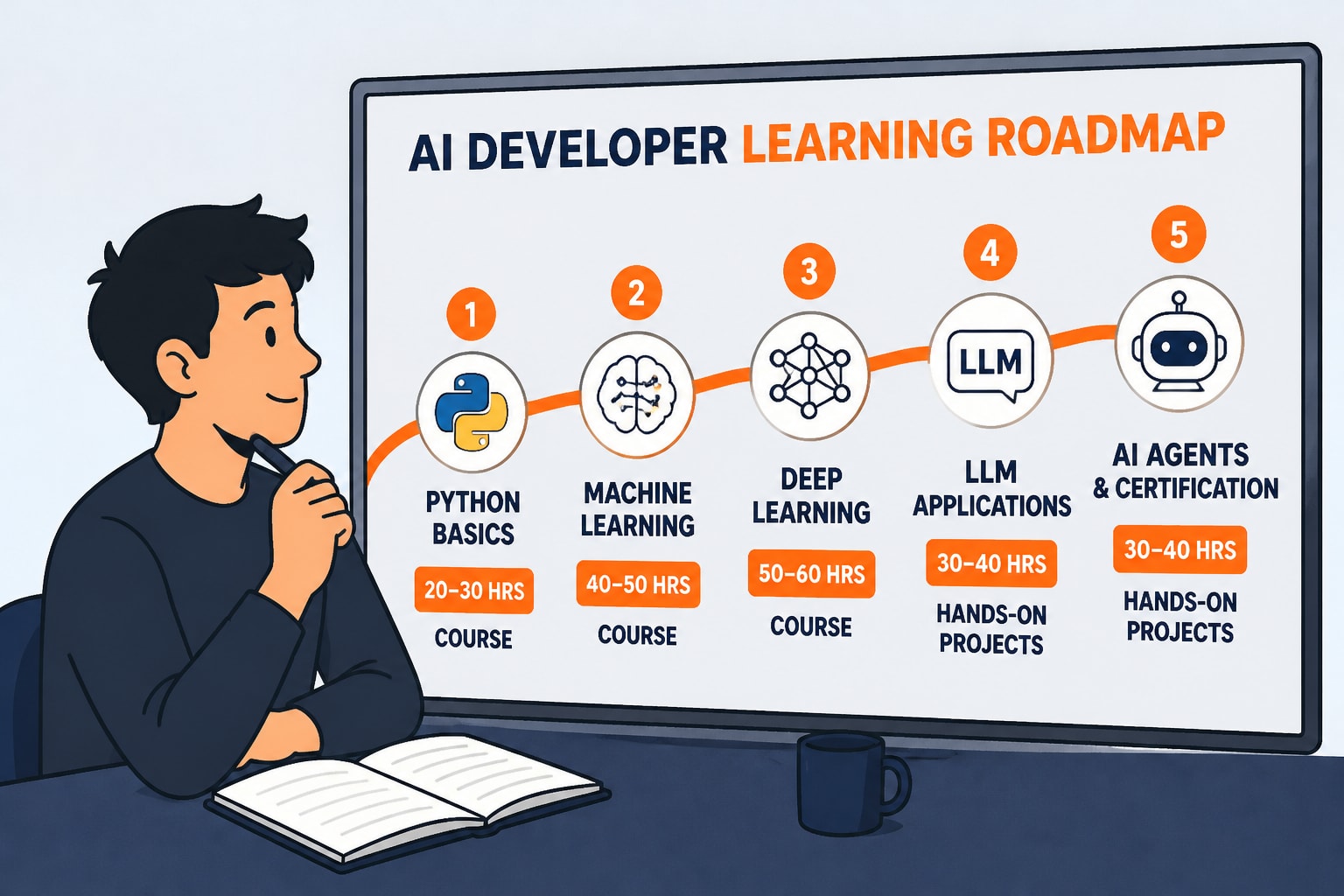
A practical point for career switchers: the official catalog assumes you already know Python and basic machine learning. If you do not, close those gaps first. Otherwise the hands-on labs become an exercise in debugging syntax rather than learning GPU concepts.
Who Should Take Nvidia Training?
NVIDIA training suits professionals who build, deploy or operate AI systems, and career switchers who want a recognized credential tied to the hardware and software stack most AI workloads run on. It is less suited to people who want a general introduction to AI with no technical depth.
Match your background to a starting point:
- Software developers and data scientists should begin with the Generative AI and LLM developer path or the Accelerated Data Science track.
- IT administrators, DevOps and systems engineers fit the AI infrastructure and operations track.
- Network engineers can specialize in AI networking.
- Engineers in manufacturing, simulation or robotics should look at OpenUSD, digital twin and robotics content.
- Career switchers with no technical background should complete a Python and machine learning foundation first, then return to the associate-level exams.
If your goal is a promotion rather than a new job, choose the track closest to your current responsibilities. A cloud engineer moving toward AI operations gains more from an infrastructure credential than from a generative AI one, because the first extends work they already do.
How Are the Official Learning Paths Structured?
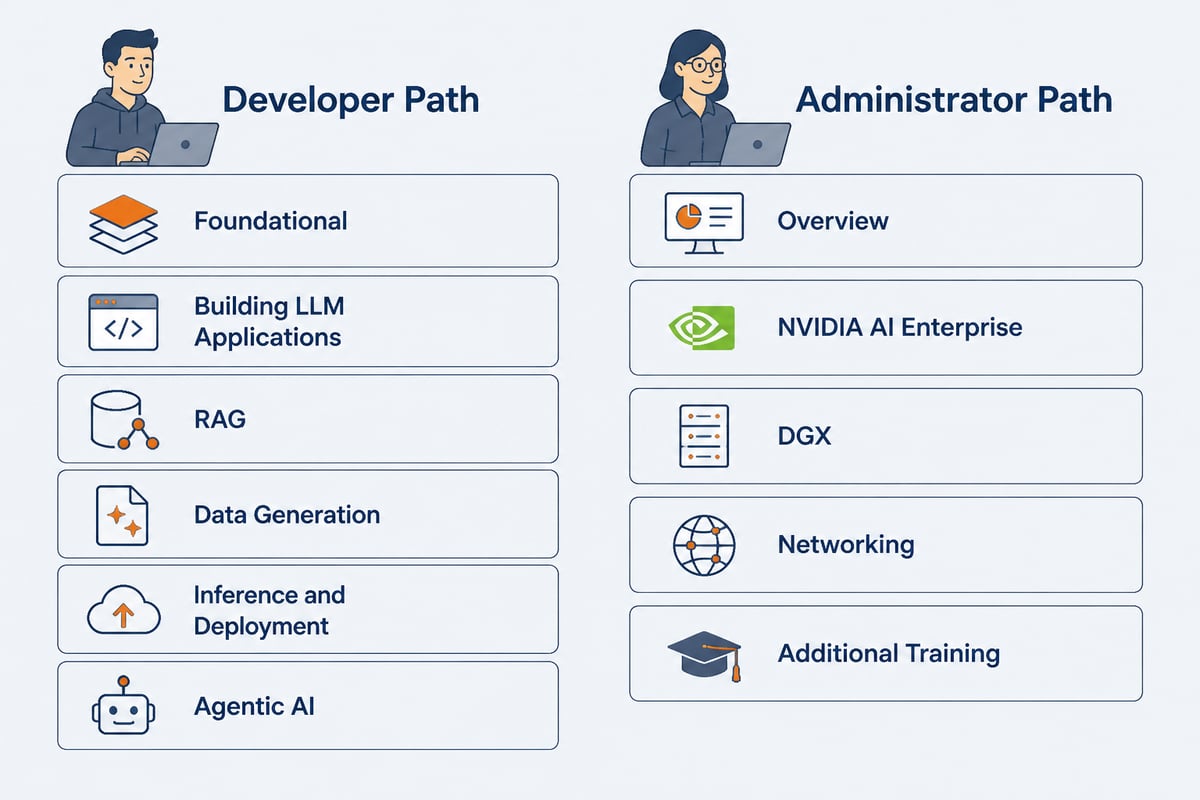
NVIDIA separates its learning paths by job function, so a developer and an administrator follow different sequences. The Generative AI and LLM learning paths split developer training from administrator training, and the administrator track focuses on configuring and supporting AI infrastructure.
For developers, the path moves through these stages:
- Foundational: core concepts and terminology.
- Building applications with LLMs: prompting, fine-tuning and application design.
- Retrieval-augmented generation: connecting models to your own data.
- Data generation: producing synthetic data for training and evaluation.
- Inference and deployment: serving models efficiently in production.
- Agentic AI: building systems that plan and act across multiple steps.
For administrators, the sequence covers infrastructure overviews, NVIDIA AI Enterprise, DGX systems and introductory networking.
Pricing varies by course. The learning-path page lists Building RAG Agents With LLMs as a self-paced, eight-hour course priced at $90, with a certificate available. That figure is a useful benchmark when you budget, but confirm current prices on NVIDIA's site before purchasing, since catalog pricing changes.
Which Nvidia Certification Should You Pursue?
Choose the certification that matches the work you want to do, and start at the associate level unless you already have production experience. NVIDIA offers associate and professional exams across its certification areas.
Published exam details help you plan. The NVIDIA-Certified Associate AI Infrastructure and Operations exam is listed at $125 and takes one hour. The NVIDIA-Certified Professional Generative AI LLMs exam is listed at $200 and takes two hours.
| Credential | Level | Listed price | Duration | Best fit |
|---|---|---|---|---|
| AI Infrastructure and Operations | Associate | $125 | 1 hour | Admins, DevOps, career switchers into AI ops |
| Generative AI LLMs | Professional | $200 | 2 hours | Developers with hands-on LLM experience |
The professional exams are longer and assume applied experience, so treat them as a second step. A sensible sequence for most career switchers is one associate exam in the area closest to their background, followed by a professional exam after six to twelve months of applied work.
One honest caution: a certificate shows you passed an exam, not that you can ship a system. Hiring managers respond best to a credential paired with a project you can describe in detail.
What Does Nvidia Training Cost and How Long Does It Take?
Expect to spend roughly $125 to $200 per certification exam, plus course fees that vary by format, and several weeks of study per credential. The exam prices above come from NVIDIA's own listing. Course costs sit on top of that, and the self-paced RAG course at $90 shows the order of magnitude for a single paid course.
Time depends on your starting point:
- Strong Python and machine learning background: two to four weeks of focused study for an associate exam.
- Some technical background, new to GPUs: six to eight weeks, including lab time.
- Career switcher building fundamentals first: three to six months before attempting any certification.
These ranges are planning estimates, not NVIDIA figures. Budget extra time for hands-on practice, because the exams reward applied familiarity over memorized definitions.
NVIDIA also publishes open source courses, which make a low-risk way to confirm a topic suits you. Note, though, that free material does not replace proctored exam practice.

Do You Need a GPU to Learn?
You do not need to own a GPU to start nvidia training, because most courses provide cloud-hosted lab environments and many concepts can be learned conceptually first. Owning hardware becomes useful only when you move into custom CUDA development or local model experimentation.
If you want to go deeper into GPU programming, NVIDIA's CUDA Programming Guide describes itself as a resource for learning the CUDA programming model and writing code that executes on GPUs. The wider CUDA Toolkit documentation covers installation, APIs, libraries, profiling tools and release notes.
A reasonable approach for most learners:
- Use hosted labs while you learn concepts.
- Read the programming guide alongside any course that touches GPU code.
- Rent cloud GPU time for personal projects instead of buying hardware.
- Consider a local GPU only if your work demands constant experimentation.
How Do You Build a Study Plan That Gets You Certified?
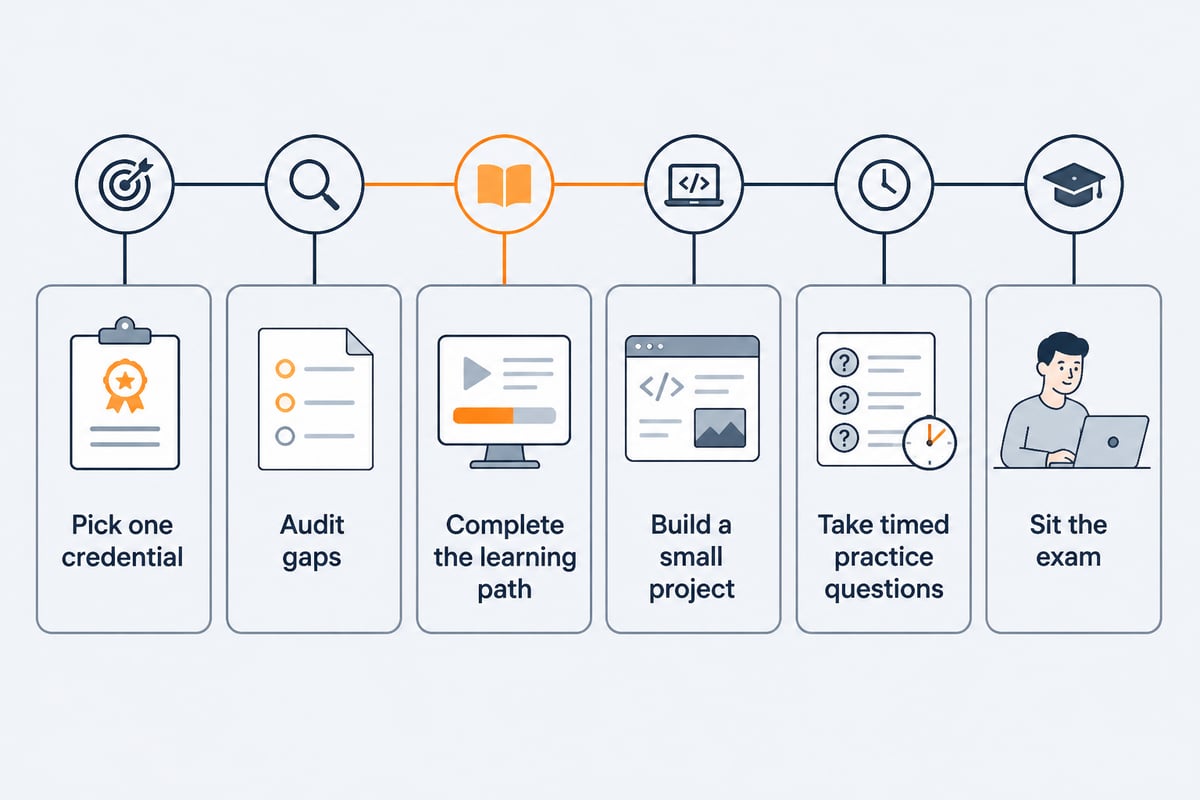
Build the plan backward from the exam: pick the certification, read its published objectives, schedule lab time, and finish with timed practice. Aim to spend more time doing than watching.
A workable sequence:
- Pick one credential and write down your target exam date.
- Audit your gaps against the exam topics, then fill foundational gaps first (Python, linear algebra basics, Linux command line).
- Complete the matching official learning path or the relevant courses within it.
- Build one small project that uses the same tools, such as a RAG application over a document set you know well.
- Take timed practice questions and review every wrong answer.
- Sit the exam only after you score consistently above your target on practice sets.
Supplementary structured programs can help here. For career switchers who want guided paths, MammothClub Unlimited Membership bundles courses, practice labs and certification paths, with built-in assessments, project portfolios and proctored final exams, alongside practice exam questions. That combination is useful for the foundation and practice stages that sit around the official NVIDIA exams. If you want to compare other options, MammothClub's overview of NVIDIA courses and its guide to AI certification online cover adjacent routes.
How Do You Turn Certification Into a Job or Promotion?
Present the credential alongside evidence of applied work, and tie it to the problems the employer actually has. A certificate opens the conversation, and a described project carries it.
Practical steps that work for professionals:
- Add the credential to your resume and professional profile with the exact certification name, so applicant tracking systems match it.
- Publish a short write-up of a project: the problem, the architecture, what you measured and what you would change.
- Align your language to the job description. If the role mentions inference optimization or cluster operations, say which part of your study covered it.
- Ask for a stretch assignment at your current employer that uses the skill, which converts the credential into internal credibility before you ask for a promotion.
Freelancers and agency owners can apply the same logic. Verified skills support higher-value proposals, and for Upwork lead generation, Getmany offers AI-assisted proposal tools aimed at agencies. For visibility, Best SEO Tools provides an AI-driven SEO engine that can help a portfolio site or personal brand get found.
If your employer is funding training, MammothClub's business page outlines options for teams, and you can review its AI engineer certification guide to compare credential routes.
What Are Common Mistakes to Avoid?
The most common mistakes are starting with the wrong track, skipping prerequisites and relying on video alone. Each one wastes weeks.
- Choosing by buzzword. Generative AI attracts attention, but an infrastructure credential can fit your existing career better.
- Skipping prerequisites. Weak Python or Linux skills slow every lab.
- Passive learning. Watching lessons without running code leaves gaps that the exam exposes.
- Collecting certificates without projects. A stack of badges with nothing to discuss in an interview carries little weight.
- Ignoring currency. AI tooling changes quickly, so verify exam objectives and pricing on NVIDIA's pages shortly before you register.
Pros and cons of the official route, summarized:
| Advantage | Limitation |
|---|---|
| Direct from the platform vendor, so content matches the tools | Prices add up across multiple courses |
| Role-based paths reduce guesswork | Assumes prior programming and ML knowledge |
| Proctored exams carry recognition | Credential alone does not prove delivery skill |
FAQ
Is nvidia training worth it for a career switcher?
Yes, if you pair it with foundational skills and a project. The credential signals vendor-aligned knowledge, and an associate exam is a realistic first target.
Which certification should I take first?
Start with an associate exam in the area closest to your current work. The AI Infrastructure and Operations associate exam is listed at $125 and takes one hour, which makes it an accessible entry point.
Can I prepare without paying for courses?
Partly. NVIDIA's open source courses and public documentation cover a great deal, but structured practice and exam-style questions usually require paid resources.
How long does preparation take?
Roughly two to four weeks for someone with a strong technical background, and three to six months for a career switcher building fundamentals first. These are planning estimates, not official figures.
Do I need a GPU at home?
No. Hosted lab environments and rented cloud GPUs cover most learning needs.
How do I choose between developer and administrator paths?
Choose developer if you write and deploy model-based applications. Choose administrator if you configure, monitor and support the infrastructure those applications run on.
Your next step is to pick one NVIDIA certification, download its published objectives and list the three topics where you feel least prepared. From there, a structured program can keep your preparation on schedule, and Mammoth Club Unlimited Membership combines certification paths, practice labs and exam-style questions in one place. Start unlimited with MammothClub to build the foundation and practice routine that make your exam attempt count.