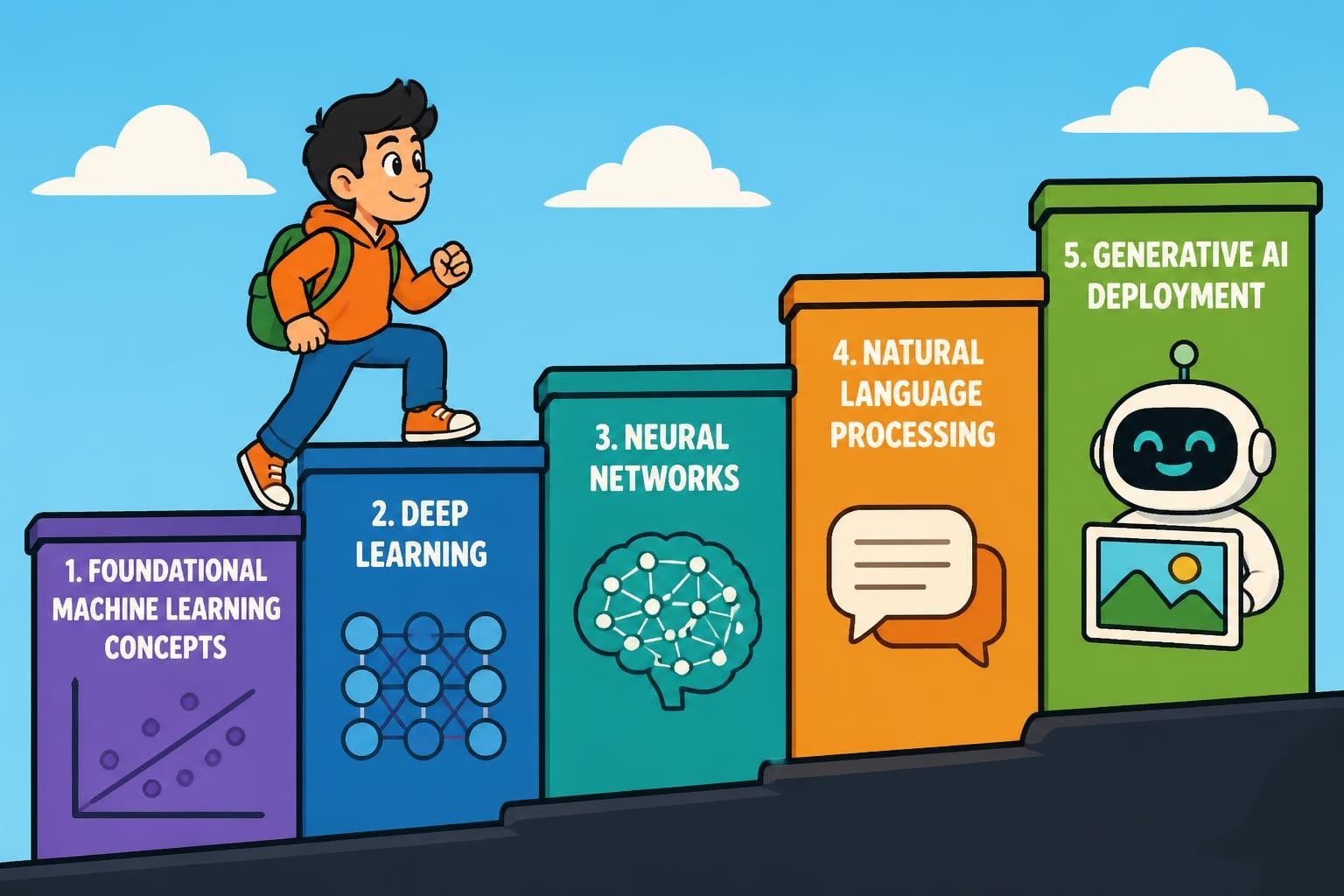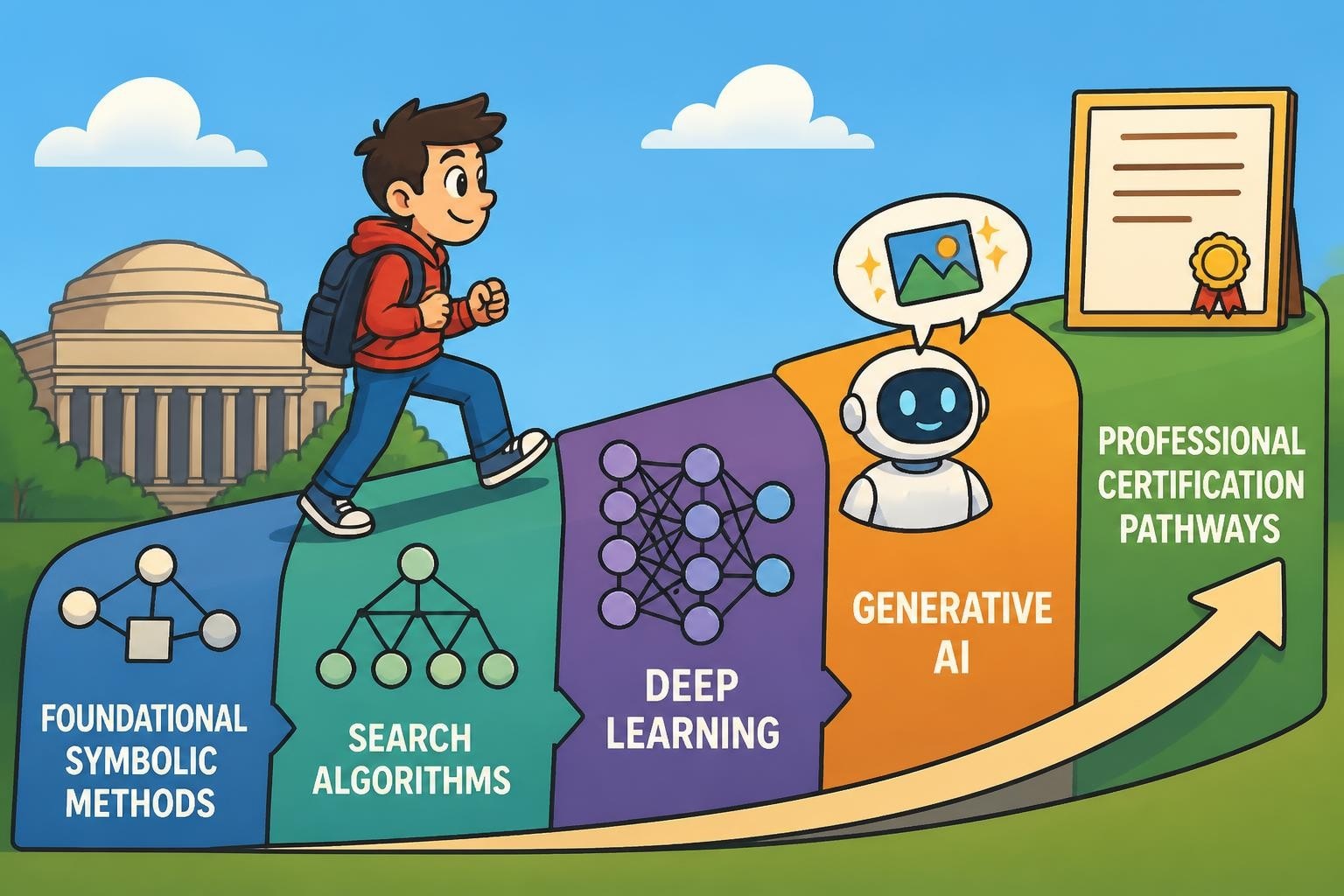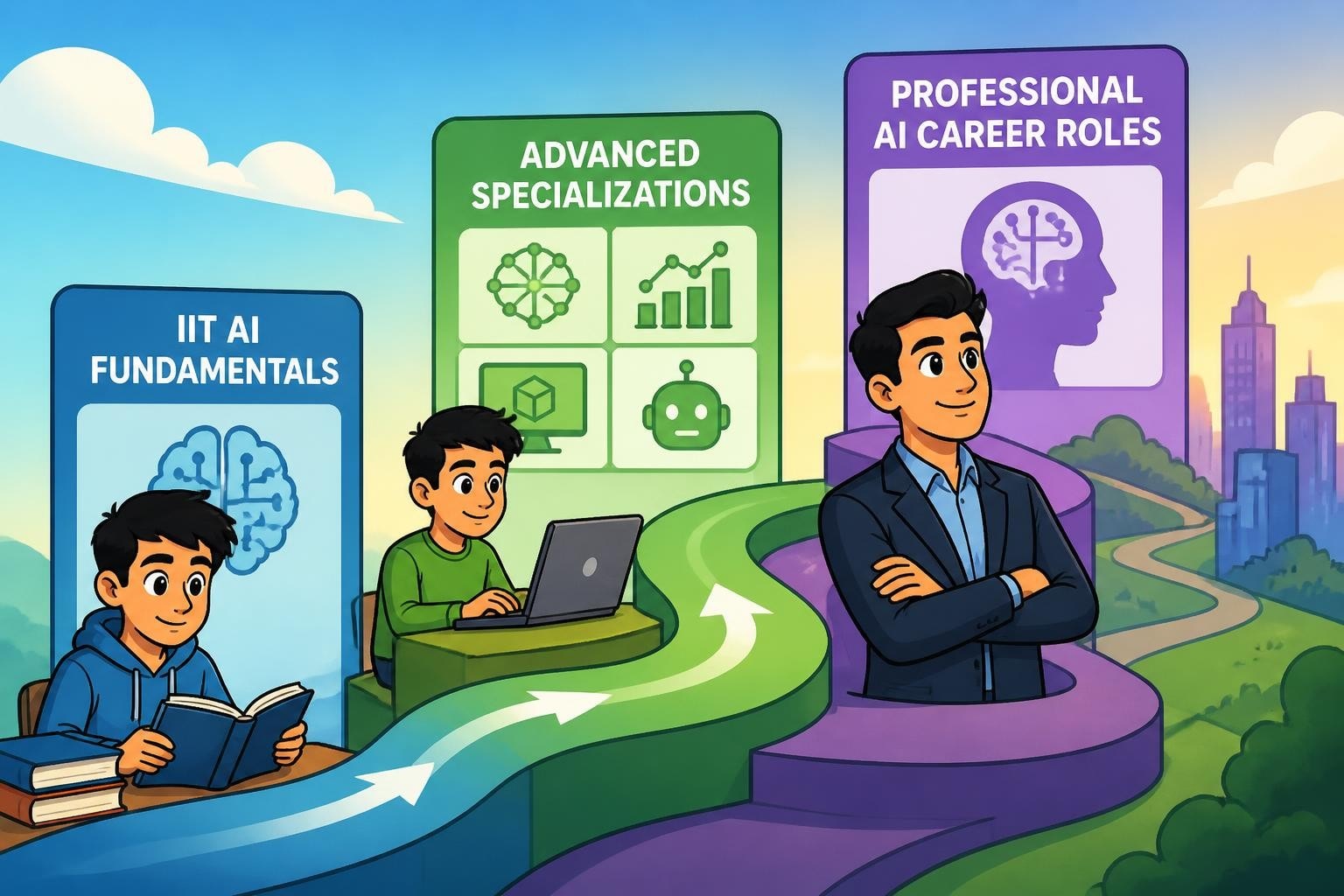
The rapid evolution of artificial intelligence and machine learning technologies has created an unprecedented demand for skilled professionals who can design, develop, and deploy intelligent systems. Organizations across industries recognize that ai ml training represents not just an educational investment but a strategic imperative for maintaining competitive advantage in 2026. As businesses integrate AI capabilities into their core operations, the need for structured learning pathways that combine theoretical knowledge with practical application has never been more critical. This comprehensive approach to skill development ensures that teams can navigate complex algorithms, understand data pipelines, and implement solutions that drive measurable business outcomes.
Understanding the Fundamentals of AI ML Training
Effective ai ml training begins with establishing a solid foundation in core concepts that underpin all intelligent systems. Machine learning algorithms operate on mathematical principles including linear algebra, calculus, and probability theory, which form the bedrock of model development.
Essential Concepts Every Learner Needs
Modern training programs must cover several critical areas to prepare professionals for real-world challenges:
- Supervised learning methodologies including classification and regression techniques
- Unsupervised learning approaches such as clustering and dimensionality reduction
- Neural network architectures from basic perceptrons to complex deep learning frameworks
- Model evaluation metrics that measure accuracy, precision, recall, and F1 scores
- Feature engineering principles that transform raw data into valuable model inputs
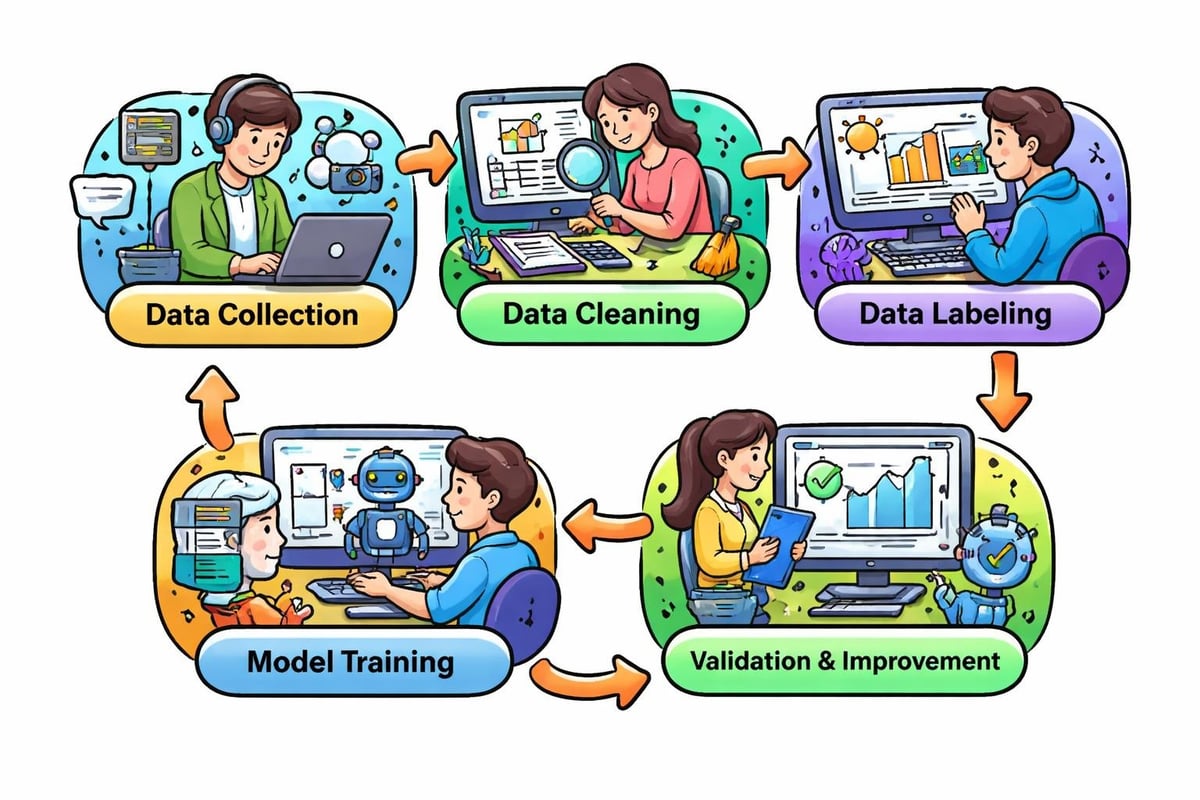
The data-centric approach to machine learning development emphasizes that quality training data often matters more than algorithmic sophistication. Organizations investing in ai ml training should prioritize teaching teams how to identify, clean, and prepare datasets that reflect real-world conditions and business requirements.
Balancing Theory with Practical Application
While theoretical understanding provides essential context, professionals need hands-on experience with industry-standard tools and frameworks. Python remains the dominant language for AI development, with libraries like TensorFlow, PyTorch, and scikit-learn serving as primary vehicles for implementation.
Training programs should incorporate project-based learning where participants build actual models, debug errors, and optimize performance. This experiential approach accelerates skill acquisition compared to passive learning methods. Many successful learners start with a structured AI ML learning path that guides them through progressively complex challenges.
| Learning Method | Time to Competency | Retention Rate | Business Readiness |
|---|---|---|---|
| Video lectures only | 6-8 months | 35% | Low |
| Hands-on projects | 3-4 months | 72% | Medium |
| Bootcamp intensive | 2-3 months | 68% | High |
| Hybrid approach | 3-5 months | 81% | Very High |
Designing Effective Training Programs for Organizations
Corporate ai ml training initiatives require careful planning to align learning outcomes with business objectives. Organizations must assess current skill levels, identify capability gaps, and create curricula that address specific use cases relevant to their industry.
Building a Competency Framework
A structured competency framework helps organizations map learning objectives to job roles and responsibilities. Entry-level data scientists need different skills than ML engineers or AI architects. Defining these distinctions ensures training resources target the right competencies.
Consider these role-based training tracks:
- Data Scientists: Focus on statistical analysis, exploratory data analysis, and model selection
- ML Engineers: Emphasize model deployment, pipeline automation, and production monitoring
- AI Architects: Concentrate on system design, scalability considerations, and infrastructure planning
- Business Analysts: Learn model interpretation, stakeholder communication, and ROI measurement
The Artificial Intelligence Index Report 2024 highlights significant workforce trends, showing that companies with comprehensive training programs experience 43% faster AI adoption rates compared to those without structured learning initiatives.
Measuring Training Effectiveness
Organizations investing in ai ml training need metrics that demonstrate return on investment and skill acquisition. Traditional completion rates provide limited insight into actual capability development.
Effective measurement approaches include:
- Pre and post-training skill assessments with standardized benchmarks
- Capstone project evaluations that simulate real business challenges
- Time-to-deployment metrics for AI solutions in production environments
- Employee satisfaction scores and engagement with ongoing learning resources
- Business impact measurements tied to AI-driven initiatives
Leading platforms incorporate AI-powered dashboards that track individual progress, identify struggling learners, and recommend personalized content paths. These adaptive systems ensure that training remains relevant and challenging without overwhelming participants.
Technical Infrastructure for AI ML Training
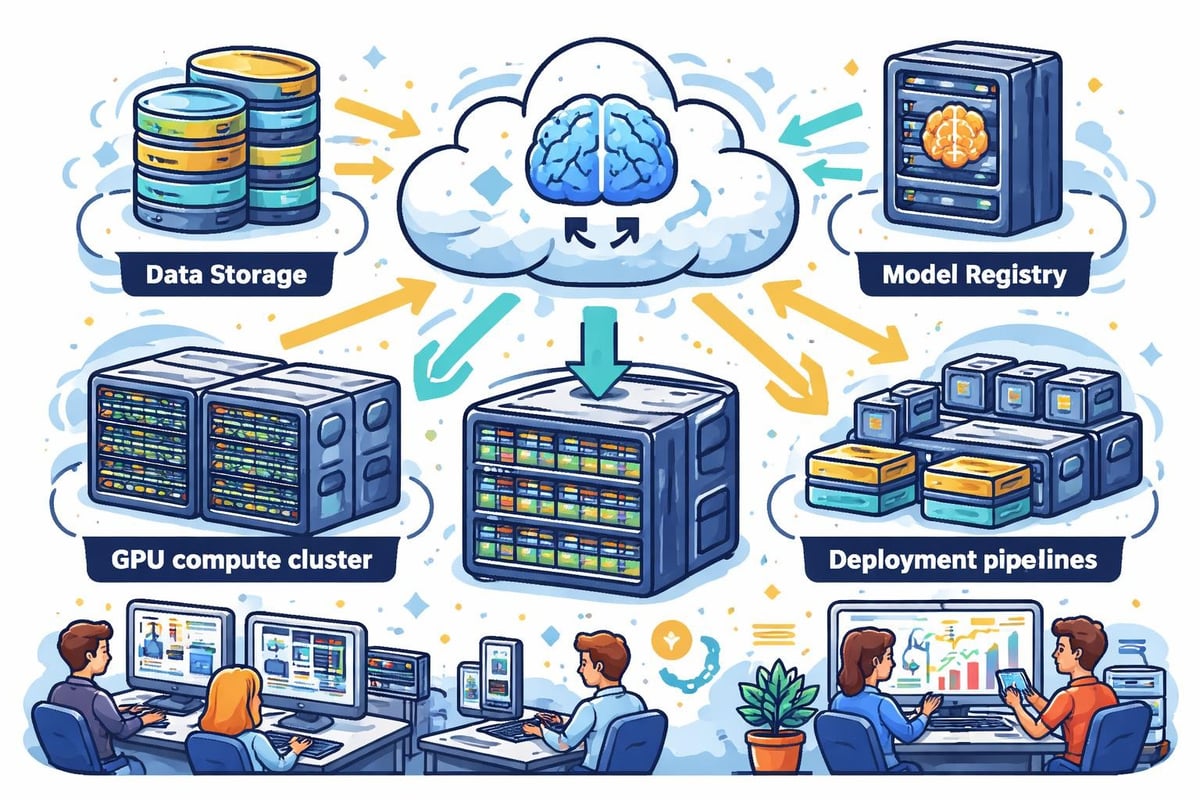
The computational requirements for ai ml training extend beyond theoretical knowledge to include hands-on work with powerful hardware and cloud platforms. Understanding these infrastructure components helps organizations budget appropriately and provide learners with necessary resources.
Hardware Considerations and GPU Resources
Training complex neural networks demands substantial computational power, particularly for deep learning applications. Graphics Processing Units (GPUs) accelerate training times from weeks to hours for large datasets and intricate architectures.
Organizations can choose between several infrastructure models:
- Cloud-based GPU instances from AWS, Google Cloud, or Azure that scale on demand
- On-premises GPU servers for sensitive data that cannot leave corporate networks
- Hybrid approaches combining local development with cloud-based training for large models
- GPU-sharing platforms that provide cost-effective access for smaller teams
For professionals exploring hardware options, understanding the relationship between GPU capabilities and AI training performance helps optimize both learning outcomes and budget allocation. Entry-level training can proceed on CPU-based systems, but advanced deep learning requires dedicated GPU resources.
| Infrastructure Option | Initial Cost | Monthly Operating Cost | Scalability | Best For |
|---|---|---|---|---|
| Cloud GPU instances | $0 | $300-2000 | Excellent | Growing teams |
| Local GPU workstation | $3000-8000 | $50-100 | Limited | Individual learners |
| Enterprise GPU cluster | $50000+ | $500-3000 | High | Large organizations |
| Shared GPU platforms | $0-500 | $100-500 | Good | Small teams |
Development Environments and Tools
Standardized development environments ensure consistent learning experiences across distributed teams. Jupyter notebooks have emerged as the preferred interface for ai ml training, combining executable code, visualization, and documentation in unified workflows.
Modern training programs leverage containerization technologies like Docker to package dependencies and ensure reproducibility. This approach eliminates "works on my machine" problems that plague collaborative development efforts.
Ethical Considerations and Responsible AI Development
As AI systems influence critical decisions across healthcare, finance, and public services, ai ml training must incorporate ethical frameworks and responsible development practices. The consequences of biased models or opaque decision-making processes can be severe.
Building Fairness and Transparency
Training programs should address bias detection and mitigation strategies throughout the machine learning lifecycle. Models inherit biases from training data, algorithmic design choices, and deployment contexts. Professionals need skills to identify these issues before systems reach production.
Key ethical competencies include:
- Fairness metrics evaluation across demographic groups and protected characteristics
- Model interpretability techniques that explain predictions to non-technical stakeholders
- Privacy-preserving methods including differential privacy and federated learning
- Data governance principles ensuring compliance with regulations like GDPR
- Accountability frameworks that assign responsibility for AI system outcomes
The considerations around openly licensed material in AI training raise important questions about intellectual property, attribution, and creator rights. Organizations must teach teams to respect licensing terms and understand the legal implications of training data sources.
Implementing Governance Frameworks
Responsible ai ml training extends beyond individual ethics to organizational governance structures. Companies need policies, review processes, and oversight mechanisms that ensure AI development aligns with corporate values and regulatory requirements.
The architectural framework for machine learning in future networks provides standardized approaches for integrating AI capabilities while maintaining security, reliability, and accountability. These frameworks help organizations structure their training programs around industry best practices.
Advanced Topics and Specialization Paths
After mastering fundamentals, professionals can pursue specialized domains within ai ml training that align with career goals and industry needs. These advanced topics require deeper technical expertise and domain-specific knowledge.
Deep Learning and Neural Network Architectures
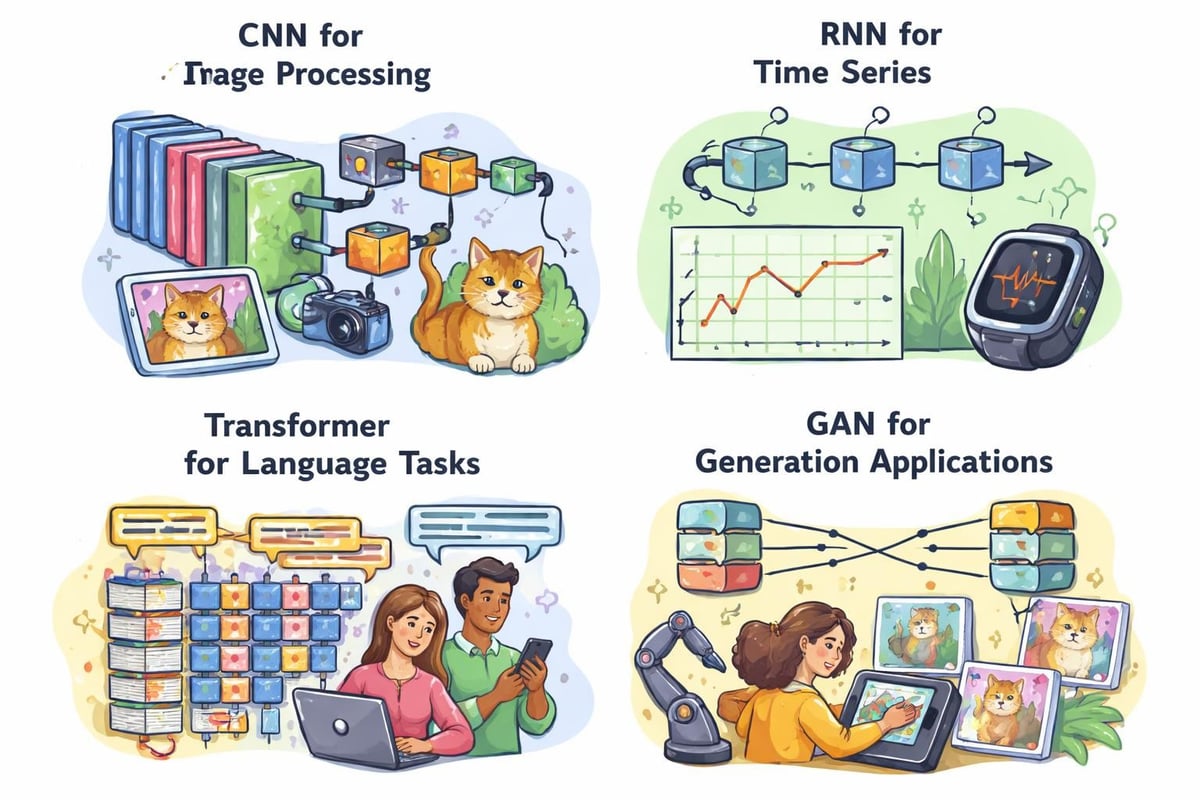
Deep learning represents the cutting edge of AI capabilities, powering breakthroughs in computer vision, natural language processing, and generative AI. Training in this area covers:
- Convolutional Neural Networks (CNNs) for image recognition and computer vision tasks
- Recurrent Neural Networks (RNNs) and transformers for sequential data and language models
- Generative Adversarial Networks (GANs) for synthetic data creation
- Attention mechanisms and self-supervised learning approaches
- Transfer learning techniques that leverage pre-trained models
These architectures demand strong mathematical foundations and significant computational resources. Learners benefit from starting with simpler models before progressing to complex multi-layer networks with millions of parameters.
Natural Language Processing and Computer Vision
Domain specialization allows professionals to develop deep expertise in specific application areas. Natural Language Processing (NLP) focuses on teaching machines to understand, interpret, and generate human language. Computer vision enables systems to extract meaning from visual information.
Both fields have unique challenges and methodologies. NLP practitioners work with tokenization, embeddings, and language models, while computer vision specialists focus on image preprocessing, object detection, and segmentation techniques. Organizations often need both capabilities as AI systems become multimodal, processing text, images, and audio simultaneously.
For professionals seeking comprehensive training options, exploring best certification programs for artificial intelligence helps identify curricula that match specific career objectives and learning styles.
Enterprise Implementation and Production Deployment
Academic ai ml training often focuses on model development while overlooking the operational challenges of deploying AI systems in production environments. Real-world implementation requires additional skills in software engineering, DevOps, and system architecture.
MLOps and Production Pipelines
Machine Learning Operations (MLOps) applies DevOps principles to AI development, creating automated workflows that streamline model training, testing, and deployment. These practices reduce time-to-production and minimize errors in live systems.
Critical MLOps components include:
- Version control for datasets, code, and trained models
- Automated testing frameworks that validate model performance
- Continuous integration and deployment pipelines
- Model monitoring systems that detect performance degradation
- Rollback mechanisms for failed deployments
The transparency and provenance framework for machine learning addresses supply chain security and data integrity concerns that become critical in enterprise deployments. Organizations must train teams to implement these safeguards from project inception.
Scaling AI Across the Organization
Successful ai ml training programs don't just build technical skills. They cultivate cultural change that embraces data-driven decision-making and continuous experimentation. This transformation requires executive sponsorship, cross-functional collaboration, and investment in enabling infrastructure.
Organizations see maximum value when AI capabilities distribute across departments rather than concentrating in isolated data science teams. Business analysts who understand model outputs can better translate insights into strategic actions. Product managers with AI literacy make more informed technology decisions. Executives familiar with AI capabilities identify valuable use cases aligned with corporate strategy.
Continuous Learning and Skill Maintenance
The rapid pace of AI innovation means that ai ml training never truly ends. New architectures, frameworks, and best practices emerge constantly, requiring professionals to maintain current knowledge through ongoing education.
Staying Current with Industry Developments
Successful AI practitioners dedicate time to continuous learning through multiple channels:
- Academic publications tracking breakthrough research and novel techniques
- Industry conferences showcasing real-world applications and case studies
- Open-source contributions that provide hands-on experience with cutting-edge tools
- Online communities where practitioners share challenges and solutions
- Formal courses and certifications that validate updated competencies
Platforms offering on-demand AI and ML courses enable professionals to learn at their own pace while balancing work responsibilities. This flexibility proves essential for working professionals who cannot commit to full-time educational programs.
Building a Learning Culture
Organizations benefit when they institutionalize continuous learning as part of their operational rhythm. Regular lunch-and-learn sessions, internal knowledge-sharing platforms, and dedicated education budgets signal that skill development remains a priority.
| Learning Investment | Annual Cost per Employee | Skill Retention | Innovation Output | Competitive Advantage |
|---|---|---|---|---|
| Minimal (<$500) | $500 | 40% | Low | Declining |
| Moderate ($500-2000) | $1500 | 65% | Medium | Stable |
| Substantial ($2000-5000) | $3500 | 82% | High | Growing |
| Comprehensive ($5000+) | $7000 | 91% | Very High | Leading |
Creating mentorship programs where experienced practitioners guide newer team members accelerates knowledge transfer and builds institutional expertise. These relationships provide context and nuance that formal training sometimes misses.
Effective ai ml training combines theoretical foundations with practical application, ethical considerations with technical excellence, and individual skill development with organizational transformation. As AI continues reshaping industries and creating new possibilities, the ability to rapidly acquire and apply machine learning capabilities determines which organizations thrive in this new landscape. MammothClub provides the comprehensive learning resources, interactive bootcamps, and corporate certification programs that help professionals and teams master AI technologies faster, with AI-powered tools that make training engaging, measurable, and directly applicable to business challenges in 2026 and beyond.