The artificial intelligence revolution has transformed how businesses operate, and cloud providers are racing to validate professional expertise in this rapidly evolving field. Amazon Web Services (AWS) has established itself as a leader in cloud-based AI services, and earning an amazon ai certification has become one of the most valuable credentials for professionals seeking to demonstrate their competency in building, deploying, and managing AI solutions. Whether you're a developer transitioning into machine learning, a data scientist expanding into cloud infrastructure, or a business professional aiming to understand AI implementation, AWS offers multiple certification paths designed to validate your skills and accelerate your career in 2026.
Understanding the Amazon AI Certification Landscape
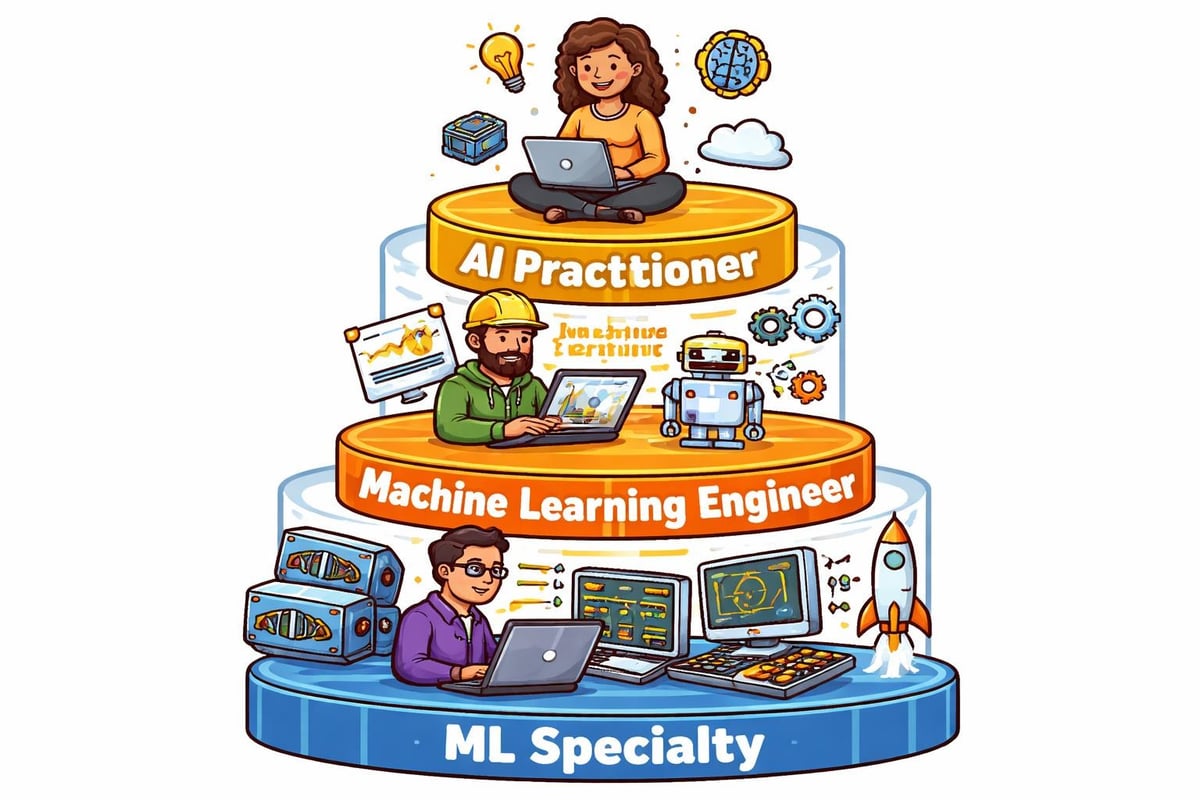
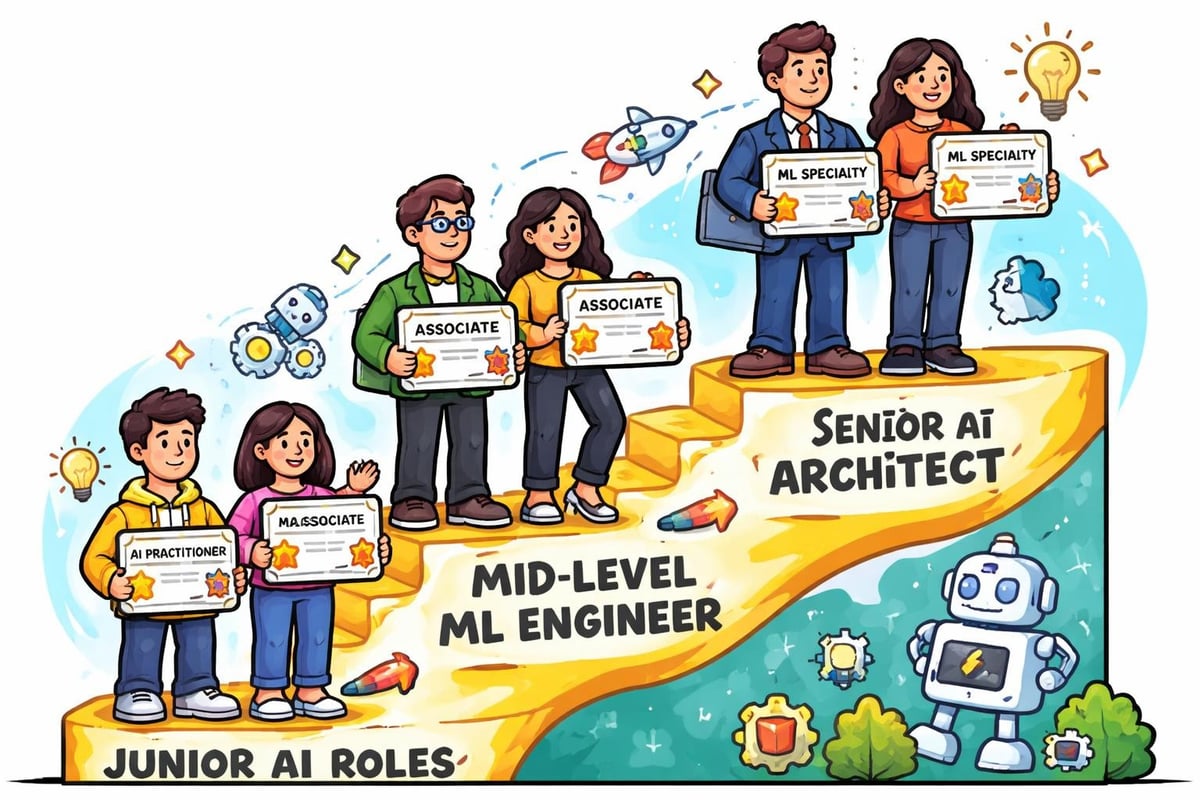
AWS has strategically expanded its certification portfolio to address the growing demand for validated AI expertise across different skill levels and job roles. The amazon ai certification ecosystem now includes three primary credentials that form a comprehensive learning pathway.
The newest addition, the AWS Certified AI Practitioner, targets professionals who need foundational knowledge of AI, machine learning, and generative AI concepts within the AWS ecosystem. This entry-level certification validates understanding of AI terminology, use cases, and basic implementation strategies without requiring deep technical programming skills.
For professionals with hands-on experience, AWS offers two advanced credentials:
- AWS Certified Machine Learning Engineer – Associate: Focuses on implementing, deploying, and operationalizing machine learning workloads in production environments
- AWS Certified Machine Learning – Specialty: Validates expertise in designing, implementing, deploying, and maintaining ML solutions for complex business problems
Each certification serves distinct career objectives and requires different preparation strategies based on your current experience level and professional goals.
AWS Certified AI Practitioner: The Foundation
The AI Practitioner certification represents AWS's response to the explosive growth of generative AI and the need for professionals who can bridge business requirements with technical implementation. According to AWS's announcement about their AI certifications, this credential addresses the skills gap in organizations adopting AI technologies.
Exam Structure and Domains
The AIF-C01 exam guide outlines four primary knowledge domains that candidates must master:
| Domain | Weight | Focus Areas |
|---|---|---|
| AI/ML Fundamentals | 20% | Core concepts, terminology, algorithms |
| Generative AI | 24% | Foundation models, prompt engineering, RAG |
| Applications of Foundation Models | 28% | Use case identification, implementation strategies |
| Guidelines for Responsible AI | 14% | Ethics, bias mitigation, security |
| Security and Compliance | 14% | Data protection, access control, monitoring |
This amazon ai certification validates your ability to identify appropriate AI services for specific business problems, understand the capabilities and limitations of different AI approaches, and implement solutions following responsible AI principles.
Key AWS Services Covered
Candidates should develop practical familiarity with several core AWS AI services:
- Amazon Bedrock: A fully managed service for building generative AI applications using foundation models from leading providers
- Amazon SageMaker: Comprehensive ML platform for data preparation, model training, and deployment
- Amazon Rekognition: Computer vision service for image and video analysis
- Amazon Comprehend: Natural language processing service for text analysis
- Amazon Lex: Conversational AI service for building chatbots
Understanding when and how to apply these services demonstrates the practical knowledge that separates certified professionals from those with purely theoretical understanding.
Machine Learning Engineer Associate Certification
The AWS Certified Machine Learning Engineer – Associate credential targets professionals who work directly with ML pipelines and production systems. This amazon ai certification assumes you already possess foundational knowledge and can demonstrate hands-on experience implementing ML solutions.
Target Audience and Prerequisites
This certification suits professionals with:
- At least one year of experience implementing ML workloads on AWS
- Proficiency in Python or another programming language commonly used in ML
- Understanding of data engineering concepts and ETL processes
- Familiarity with MLOps practices and deployment strategies
- Experience with model monitoring and performance optimization
The exam emphasizes practical scenarios rather than theoretical knowledge, testing your ability to make architectural decisions and troubleshoot real-world implementation challenges.
Critical Skills Assessed
The certification validates competency across the complete ML lifecycle:
Data Preparation and Feature Engineering: Candidates must demonstrate ability to work with Amazon SageMaker for data processing, handle missing values, perform feature scaling and encoding, and create robust data pipelines that support model training.
Model Development and Training: Understanding algorithm selection, hyperparameter tuning, distributed training strategies, and cost optimization during the training phase separates qualified engineers from novices.
Deployment and Inference: Real-time endpoints, batch transform jobs, edge deployment with SageMaker Edge Manager, and A/B testing strategies all fall within this amazon ai certification's scope.
Monitoring and Maintenance: Production ML systems require continuous monitoring for data drift, model performance degradation, and infrastructure health. Certified engineers understand how to implement automated retraining pipelines and maintain model accuracy over time.
Machine Learning Specialty: Advanced Expertise
The AWS Certified Machine Learning – Specialty certification represents the pinnacle of AWS ML credentials, designed for professionals with deep expertise in designing and implementing sophisticated ML solutions. This advanced amazon ai certification requires comprehensive knowledge spanning data engineering, exploratory data analysis, modeling, and ML implementation best practices.
Advanced Topics and Complexity
Unlike the associate-level certification, the specialty credential dives deep into:
- Algorithm Selection and Customization: Understanding nuances between different algorithm families and when to build custom algorithms
- Distributed Training Architectures: Implementing training across multiple instances and GPUs for large-scale models
- Advanced SageMaker Features: Leveraging SageMaker Autopilot, Model Monitor, Clarify for explainability, and Feature Store
- Cost Optimization Strategies: Architecting solutions that balance performance requirements with budget constraints
- Security and Compliance: Implementing encryption, access controls, and audit trails for regulated industries
Professionals holding this certification typically work as ML architects, senior data scientists, or AI consultants who design enterprise-scale solutions.
Preparation Strategies for Amazon AI Certification Success
Successfully earning an amazon ai certification requires strategic preparation that combines theoretical study with hands-on practice. Based on exam performance data and candidate feedback throughout 2026, several approaches consistently produce better outcomes.
Structured Learning Paths
Building a comprehensive study plan ensures coverage of all exam domains without knowledge gaps:
- Foundation Building: Start with AWS documentation and whitepapers to understand service architectures
- Hands-On Practice: Create AWS accounts and implement sample projects using the services covered
- Video Training: Supplement reading with structured courses that explain complex concepts visually
- Practice Exams: Identify weak areas through timed practice tests that simulate exam conditions
- Community Engagement: Join study groups and forums to discuss challenging topics and share resources
Those pursuing the AI Practitioner certification should allocate 40-60 hours of study time, while the specialty certification typically requires 80-120 hours depending on prior experience. Similar to how professionals approach AI beginner courses, starting with foundational concepts before advancing to complex topics produces better retention and understanding.
Recommended Study Resources
| Resource Type | Examples | Best For |
|---|---|---|
| Official Documentation | AWS service guides, API references | Understanding technical details |
| Video Courses | Structured learning platforms, YouTube tutorials | Visual learners, concept explanation |
| Practice Labs | AWS Free Tier, SageMaker Studio Lab | Hands-on skill development |
| Practice Exams | Official AWS practice tests, third-party providers | Exam readiness assessment |
| Study Groups | Online forums, local meetups | Collaborative learning, motivation |
Many professionals find that combining resources from multiple categories creates the most effective preparation strategy. Just as with Google AI certification programs, AWS certifications benefit from diverse learning approaches that reinforce concepts through different modalities.
Career Impact and ROI of Amazon AI Certification
The professional value of earning an amazon ai certification extends beyond the credential itself, creating tangible career advancement opportunities and increased earning potential throughout 2026 and beyond.
Salary Implications
Industry surveys indicate that AWS-certified ML professionals command salary premiums:
- AI Practitioners: $95,000-$130,000 average salary for roles requiring this certification
- ML Engineers (Associate): $120,000-$165,000 for mid-level positions
- ML Specialists: $145,000-$210,000 for senior architects and specialists
These figures vary by geographic location, industry sector, and years of experience, but certified professionals consistently earn 15-25% more than non-certified peers with equivalent experience.
Job Market Demand
According to recent analysis of AWS certifications and cloud jobs, positions requiring AWS ML expertise have grown 340% since 2024. Organizations across healthcare, financial services, retail, and technology sectors actively seek professionals who can implement AI solutions on AWS infrastructure.
The certification also opens doors to consulting opportunities, where hourly rates for certified AWS ML consultants range from $150-$400 depending on expertise level and project complexity.
Integrating Amazon AI Services in Real-World Projects
Earning an amazon ai certification provides knowledge, but applying that knowledge to solve business problems creates lasting value. Understanding common implementation patterns helps candidates prepare more effectively and professionals deliver better solutions.
Generative AI Applications with Amazon Bedrock
Amazon Bedrock has emerged as a cornerstone service for organizations building generative AI applications. Certified professionals understand how to:
- Select appropriate foundation models based on use case requirements and cost considerations
- Implement retrieval-augmented generation (RAG) to ground responses in organizational knowledge bases
- Fine-tune models using domain-specific data while maintaining security and compliance
- Design prompt templates that produce consistent, high-quality outputs
- Monitor token usage and optimize costs for production applications
Real-world applications include customer service chatbots, content generation systems, code assistants, and document analysis tools that transform unstructured data into actionable insights.
End-to-End ML Pipelines
Production ML systems require more than just trained models. Certified professionals architect complete solutions that include:
- Data Ingestion: Automated pipelines that collect data from multiple sources, validate quality, and prepare datasets
- Feature Engineering: Reusable feature stores that maintain consistency between training and inference
- Model Training: Automated experimentation frameworks that track metrics and select optimal configurations
- Deployment Strategies: Blue/green deployments, canary releases, and shadow mode testing that minimize risk
- Monitoring and Alerting: Real-time dashboards that track model performance and trigger remediation workflows
Organizations implementing these comprehensive solutions report 60-80% reduction in time-to-production for new ML models compared to ad-hoc approaches.
Maintaining and Expanding Your Amazon AI Certification
AWS certifications remain valid for three years, after which professionals must recertify to demonstrate current knowledge. The rapid evolution of AI technologies makes continuous learning essential even within the certification validity period.
Recertification Options
AWS offers two pathways for maintaining your amazon ai certification:
- Retake the current exam: Demonstrate mastery of updated content and new services added since initial certification
- Take a higher-level exam: Earning a more advanced certification in the same track automatically renews lower-level credentials
Most professionals choose to advance to the next certification level rather than simply recertifying, creating a natural progression from AI Practitioner through Associate to Specialty credentials.
Staying Current with AWS AI Services
AWS releases new features and services monthly, making continuous education critical:
- Subscribe to AWS ML blog and attend virtual events like re:Invent and AWS Innovate
- Participate in hands-on workshops and immersion days offered by AWS
- Join AWS User Groups and community forums to learn from peer experiences
- Experiment with new services using AWS Free Tier and promotional credits
- Contribute to open-source projects that integrate AWS AI services
Professionals who maintain active engagement with the AWS ecosystem find recertification significantly easier than those who only study when approaching expiration dates. This mirrors the continuous learning mindset required for success with top machine learning courses that extend beyond certification preparation.
Choosing Your Amazon AI Certification Path
Selecting the right amazon ai certification depends on your current role, career goals, and technical background. A strategic approach considers both immediate needs and long-term professional development.
Decision Framework
For Business Professionals and Project Managers: The AI Practitioner certification provides essential knowledge for making informed decisions about AI implementations without requiring deep technical expertise. This credential helps you communicate effectively with technical teams and evaluate vendor proposals.
For Developers and Engineers: Starting with the AI Practitioner builds foundational knowledge, but most developers should target the Machine Learning Engineer Associate as their primary goal. This certification validates the practical skills needed for day-to-day ML engineering work.
For Data Scientists and ML Specialists: The ML Specialty certification should be your target, though earning the Associate credential first provides structured learning if you're new to AWS services. The specialty credential demonstrates the advanced expertise that commands premium compensation.
Timing and Sequencing
Rather than attempting multiple certifications simultaneously, focus on one credential at a time:
- Allow 2-3 months for AI Practitioner preparation with consistent study
- Plan 3-4 months for Associate-level certification including hands-on practice
- Allocate 4-6 months for Specialty certification with deep technical preparation
This pacing prevents burnout and ensures thorough mastery of each certification's content before advancing. Similar to structured programs offered through platforms like MammothClub's AI courses, progressive learning with adequate practice time produces better long-term retention.
Corporate Training and Team Certification Programs
Organizations increasingly recognize that team-wide amazon ai certification drives faster AI adoption and better project outcomes. Enterprise training programs that prepare entire teams simultaneously create shared knowledge and accelerate implementation timelines.
Benefits of Team Certification
Companies implementing structured certification programs report several advantages:
- Reduced Knowledge Silos: Shared certification goals create common vocabulary and understanding across teams
- Faster Project Delivery: Certified teams require less external consulting and troubleshoot issues more effectively
- Improved Hiring: Organizations with certified teams attract higher-quality candidates seeking learning opportunities
- Cost Efficiency: Bulk training and exam vouchers reduce per-person certification costs by 30-40%
Implementing Corporate Programs
Successful enterprise certification initiatives follow these patterns:
- Assess current team skills and identify certification targets for each role
- Provide dedicated study time and learning resources rather than expecting after-hours preparation
- Create internal study groups and mentorship pairings between experienced and newer team members
- Celebrate certification achievements publicly to reinforce learning culture
- Tie certification to career advancement and compensation frameworks
Organizations partnering with comprehensive platforms gain access to diverse learning resources that support team members at different skill levels, ensuring everyone progresses effectively toward their certification goals.
Beyond Certification: Building Real-World AI Expertise
While earning an amazon ai certification validates knowledge, transforming that knowledge into career-advancing expertise requires practical application and continuous skill development.
Portfolio Projects
Create demonstration projects that showcase your capabilities:
- Generative AI Applications: Build a RAG-based chatbot using Bedrock that answers questions from your domain expertise
- Computer Vision Solutions: Implement custom image classification using SageMaker with transfer learning
- NLP Systems: Create sentiment analysis pipelines that process customer feedback at scale
- MLOps Implementations: Design complete CI/CD pipelines for model training and deployment
Document these projects thoroughly on GitHub or personal websites, explaining architectural decisions and lessons learned. These portfolios often prove more valuable than certifications alone during technical interviews.
Contributing to Open Source
Active participation in AWS-related open-source projects demonstrates practical expertise and builds professional networks. Consider contributing to:
- SageMaker examples and tutorials that help other professionals learn
- AWS CDK constructs that simplify common ML infrastructure patterns
- Documentation improvements for AWS services you use regularly
- Blog posts and tutorials explaining complex concepts or implementation patterns
These contributions establish your reputation as a subject matter expert and often lead to speaking opportunities, consulting engagements, and career advancement.
Earning an amazon ai certification in 2026 positions you at the forefront of the most transformative technology trend of our generation, validating skills that organizations desperately need as they compete in the AI era. The combination of structured knowledge, hands-on practice, and ongoing learning creates sustainable career advantages that extend far beyond the certification itself. Whether you're just beginning your AI journey or advancing to specialty-level expertise, MammothClub provides the comprehensive learning resources, interactive bootcamps, and certification preparation programs that help professionals master AWS AI services efficiently and achieve their career goals faster in today's competitive technology landscape.