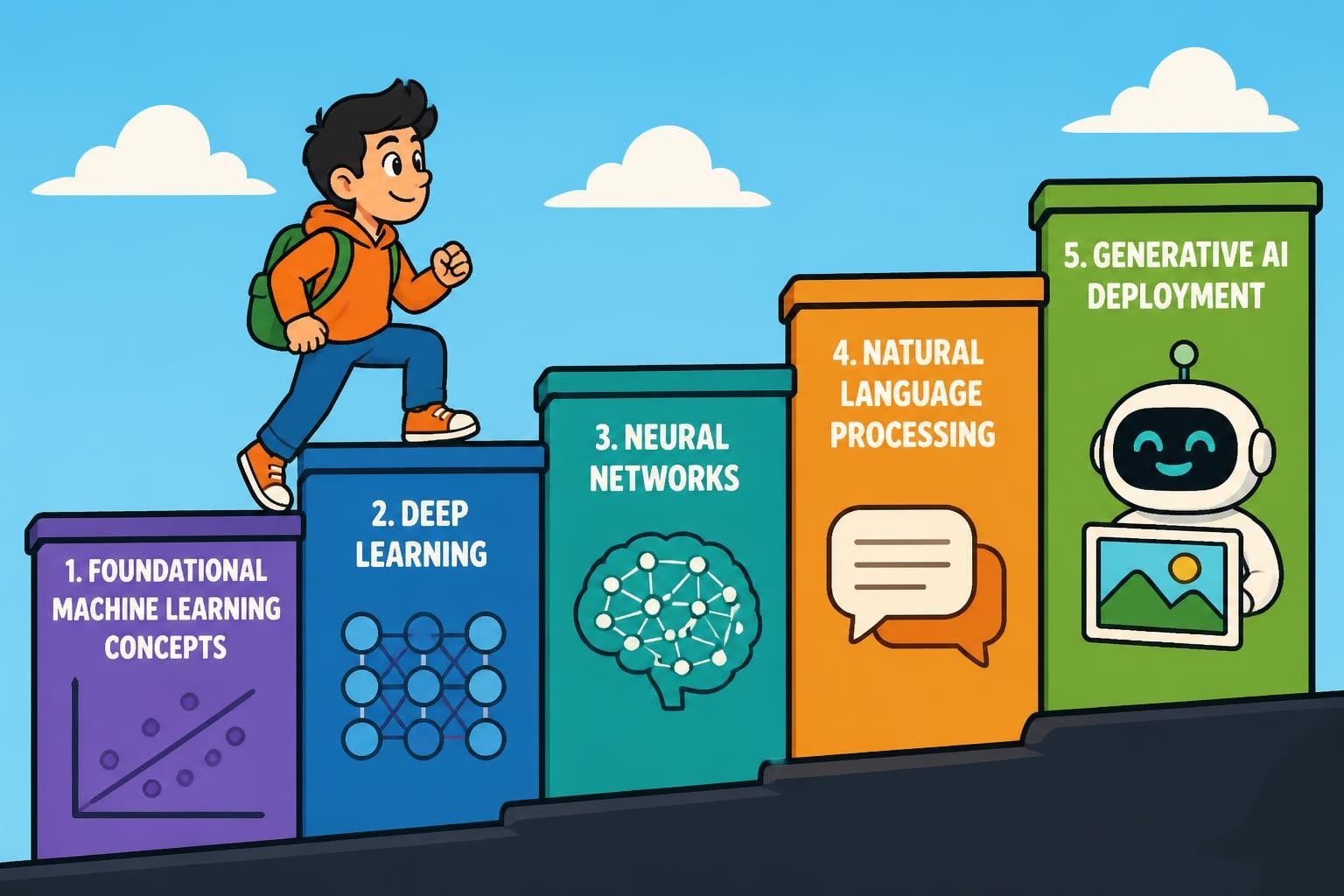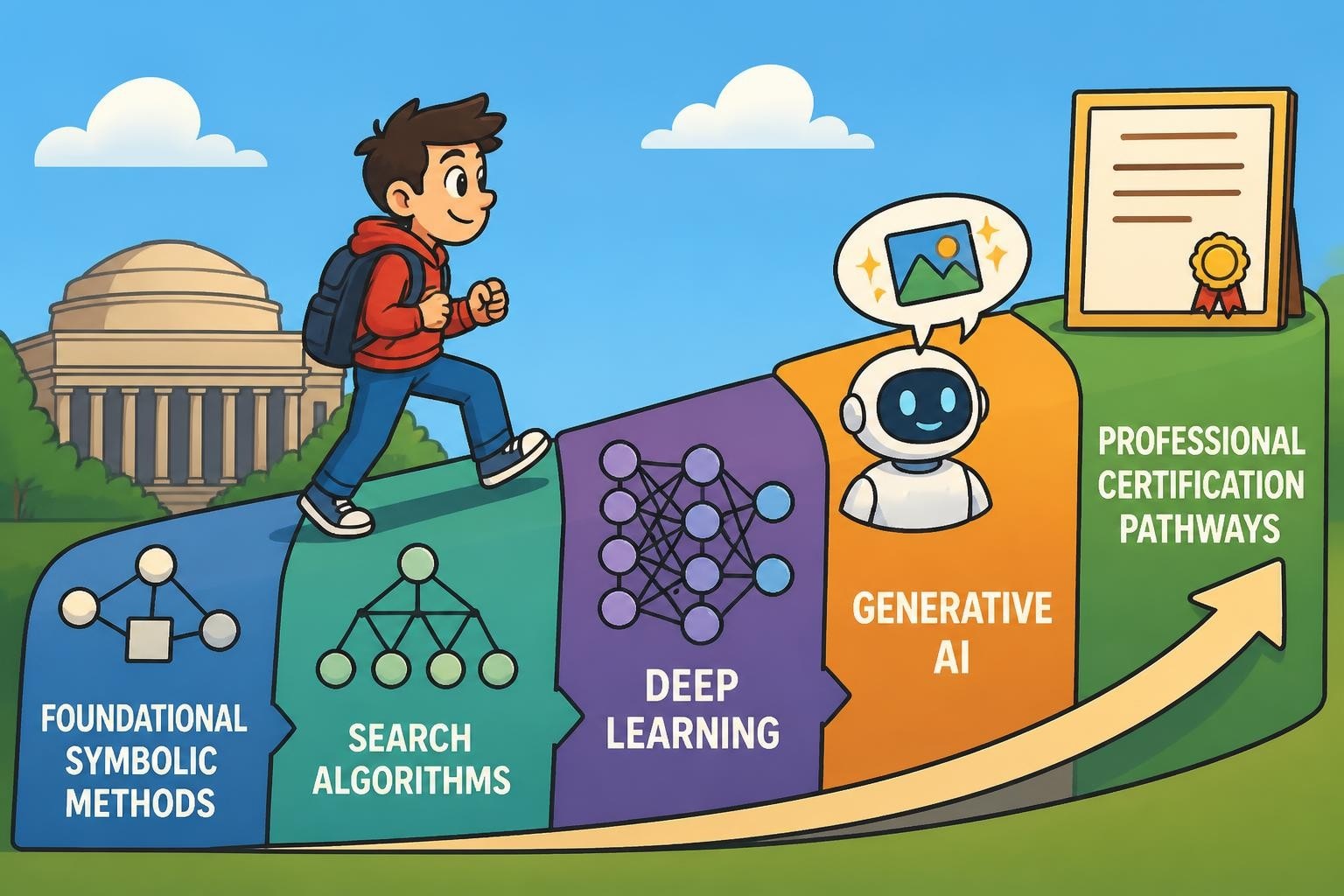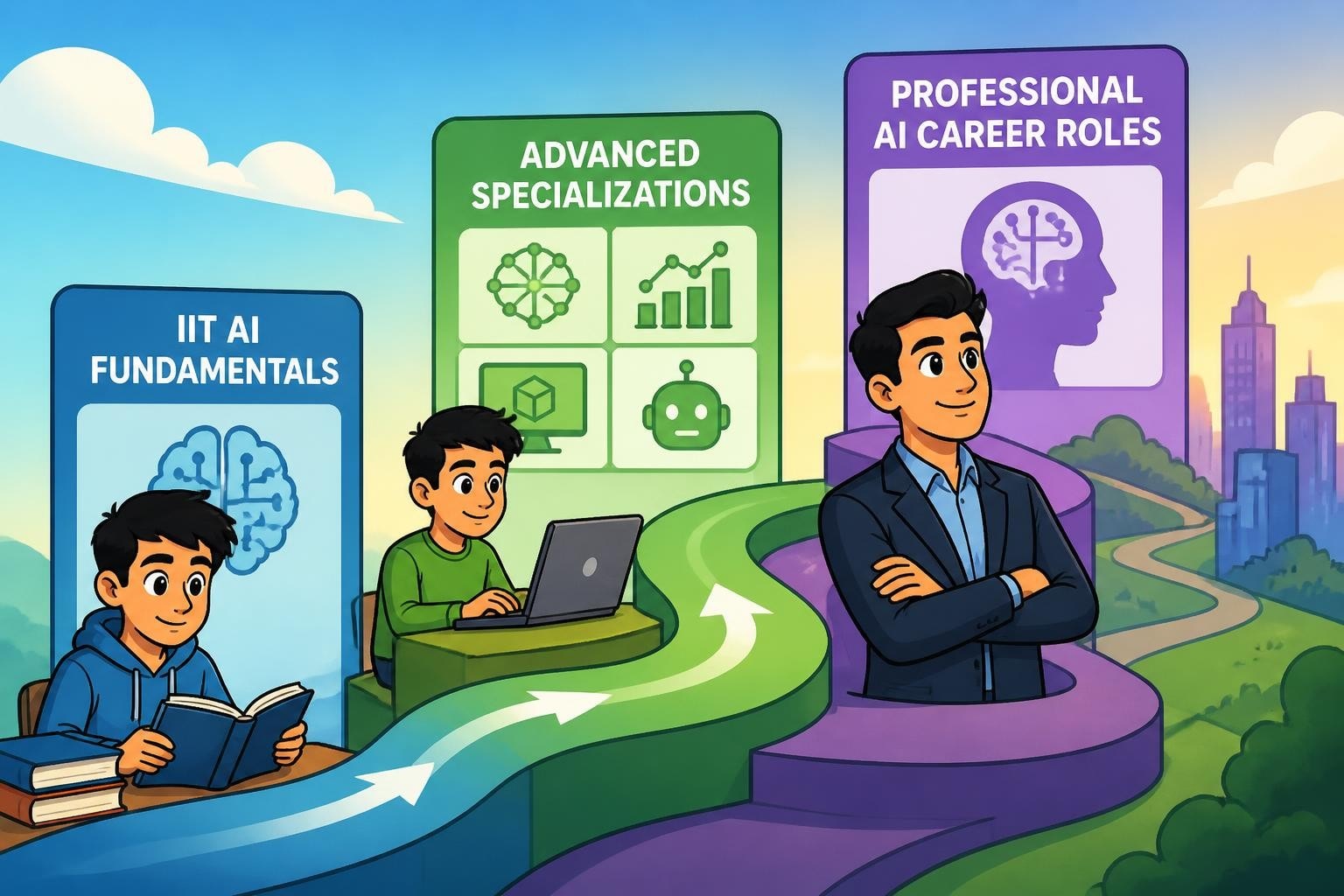
The artificial intelligence revolution has created an unprecedented demand for validated expertise. As organizations race to integrate AI solutions into their operations, the need for professionals with verified machine learning and AI certification has become critical. These credentials serve as tangible proof of technical competency, separating qualified practitioners from those merely familiar with buzzwords. For businesses seeking to build competitive AI teams and individuals aiming to advance their careers, understanding the certification landscape represents a strategic imperative in 2026.
Why Machine Learning and AI Certification Matters in Today's Market
Professional credentials in artificial intelligence have evolved beyond simple resume enhancements. They now represent standardized benchmarks that employers, clients, and stakeholders use to evaluate technical capability and commitment to ongoing learning.
The business case for certification extends across multiple dimensions:
- Reduced hiring risk through validated competency verification
- Faster onboarding as certified professionals arrive with standardized knowledge
- Enhanced team credibility when pitching AI solutions to clients
- Compliance with emerging regulatory frameworks requiring certified AI practitioners
- Competitive advantage in markets where AI expertise differentiates service offerings
Organizations investing in AI and ML courses increasingly require certification as proof of completion. This shift reflects growing recognition that course enrollment alone doesn't guarantee skill mastery. The Care Label Framework introduced approaches for certifying machine learning methods themselves, emphasizing trustworthiness in AI systems.
The Trust Factor in AI Development
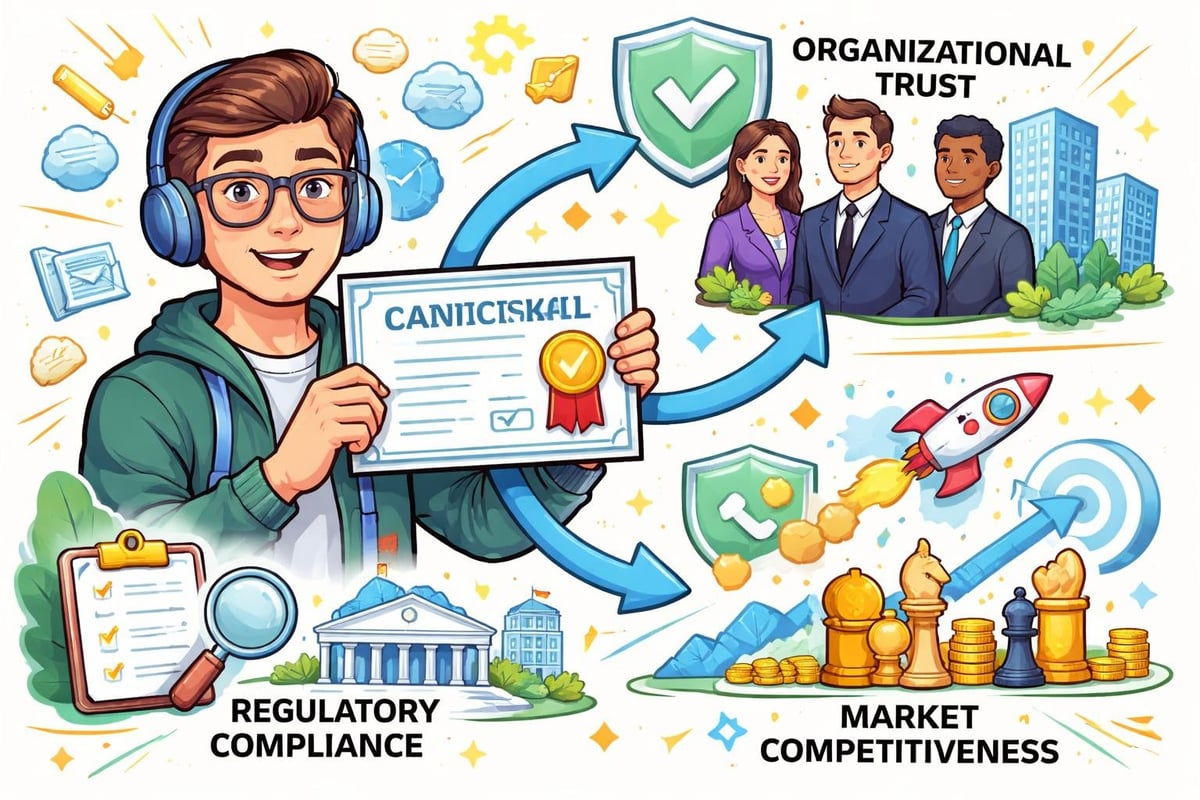
Trust represents the foundation of successful AI deployment. When organizations implement systems that make autonomous decisions, stakeholders need assurance that developers possess verified expertise. Machine learning and AI certification programs address this trust gap by establishing measurable standards.
The certification process and audit catalog developed for machine learning applications demonstrates how structured evaluation enhances confidence in AI systems. This approach extends beyond individual credentials to encompass entire development methodologies.
For professionals working in regulated industries, certification often becomes mandatory rather than optional. Financial services, healthcare, and autonomous vehicle development increasingly require documented proof of AI competency. This trend aligns with broader movements toward ethical and regulatory certification frameworks that integrate compliance and transparency throughout AI development lifecycles.
Types of Machine Learning and AI Certification Programs
The certification ecosystem has matured significantly, offering pathways for practitioners at every skill level and specialization area. Understanding these categories helps professionals select programs aligned with career objectives and organizational needs.
| Certification Type | Target Audience | Duration | Primary Focus |
|---|---|---|---|
| Foundational | Career changers, beginners | 3-6 months | AI concepts, basic ML algorithms |
| Intermediate | Software developers, data analysts | 6-12 months | Applied ML, model development |
| Advanced | ML engineers, data scientists | 12-18 months | Deep learning, specialized applications |
| Domain-Specific | Industry practitioners | 6-9 months | Healthcare AI, financial ML, computer vision |
| Leadership | Technical managers, executives | 3-6 months | AI strategy, team management, ethics |
Foundational programs like the Elements of AI provide accessible entry points for those new to the field. These courses establish essential vocabulary and conceptual understanding without requiring extensive mathematical backgrounds.
Intermediate certifications target professionals transitioning from adjacent technical roles. These programs assume programming competency and focus on practical implementation of machine learning algorithms, model evaluation, and deployment considerations.
Advanced certifications distinguish true specialists:
- Expertise in neural network architectures and optimization
- Proficiency with cutting-edge research implementations
- Capability to design custom solutions for novel problems
- Understanding of computational efficiency and scaling challenges
Domain-specific credentials address sector requirements where generic AI knowledge proves insufficient. Medical imaging AI requires different expertise than natural language processing for legal document analysis. Organizations in specialized industries increasingly value these targeted certifications over general credentials.
Leading Machine Learning and AI Certification Providers
Multiple institutions now offer recognized machine learning and AI certification programs, each with distinct strengths, pedagogical approaches, and industry recognition levels.
Technology Giants and Their Credentials
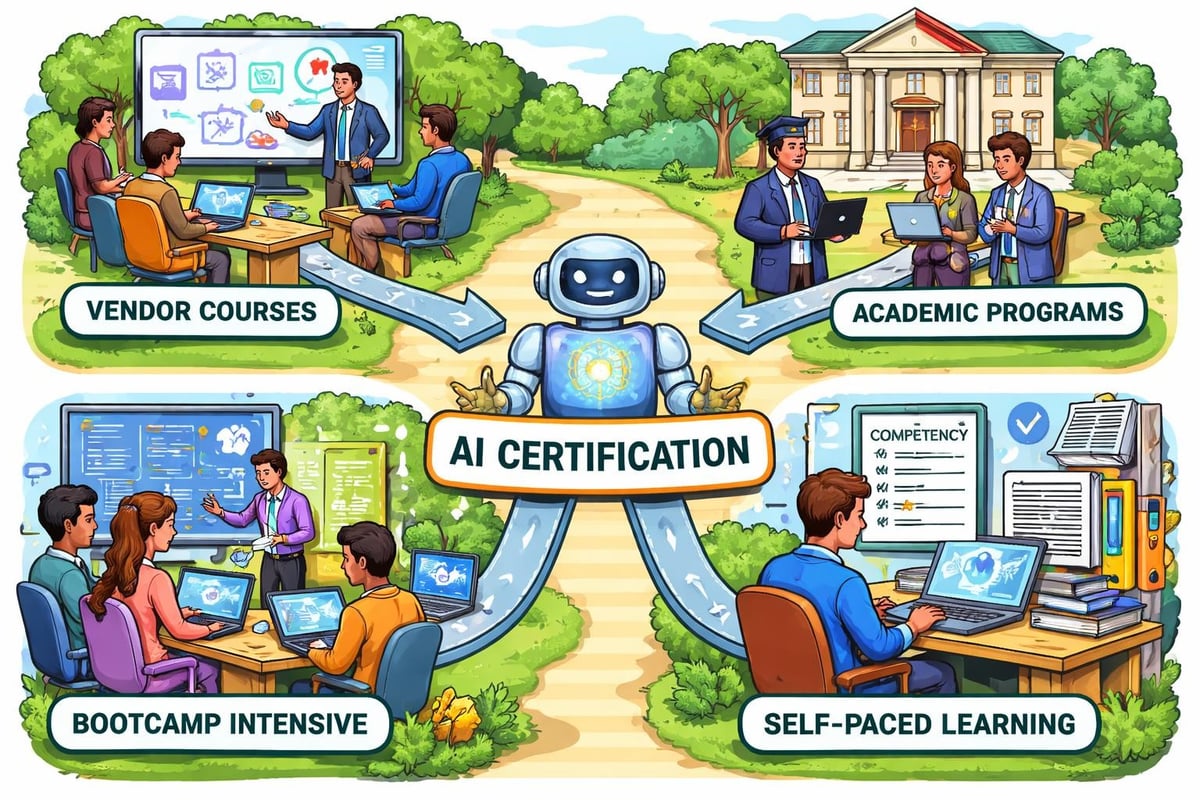
Major technology companies have developed certification tracks that validate proficiency with their specific AI platforms while teaching broadly applicable concepts. Google, Microsoft, Amazon, and IBM all offer structured programs combining theoretical knowledge with hands-on platform experience.
These vendor-specific certifications provide immediate practical value for organizations already invested in particular cloud ecosystems. Professionals pursuing AI certification through Google gain expertise directly applicable to Google Cloud AI services while learning transferable machine learning principles.
The advantage of vendor certifications lies in their practical orientation. Students work with production-grade tools and real-world datasets, not academic abstractions. This approach accelerates the transition from learning to implementation.
Academic Institutions and Professional Bodies
Universities and professional organizations offer certifications emphasizing theoretical foundations and research-backed methodologies. The Australian Institute for Machine Learning represents institutions advancing AI research while developing educational programs.
Academic credentials typically require deeper mathematical understanding and longer completion timelines. They excel at preparing professionals for research roles or positions requiring novel algorithm development rather than implementation of existing solutions.
Professional bodies like the National Commission for Certifying Agencies provide guidance on integrating artificial intelligence into certification programs while maintaining established quality standards. Their frameworks ensure certifications remain rigorous and meaningful as AI capabilities evolve.
Specialized Learning Platforms
Platforms dedicated to technical education have emerged as significant certification providers, offering flexibility and breadth that traditional institutions struggle to match. Organizations like MammothClub deliver comprehensive AI and machine learning learning paths that guide professionals from foundational concepts through advanced specializations.
These platforms typically combine multiple pedagogical approaches:
- On-demand video instruction for concept introduction
- Interactive coding environments for hands-on practice
- Project-based assessments requiring portfolio-worthy deliverables
- Peer review and community support for collaborative learning
- Adaptive learning paths that adjust to individual progress
The certification from specialized platforms often includes practical project portfolios demonstrating applied skills. Employers increasingly value these tangible demonstrations of capability alongside formal credentials.
Skills Validated Through Machine Learning and AI Certification
Comprehensive machine learning and AI certification programs assess competencies across technical, theoretical, and practical domains. Understanding these skill categories helps professionals identify knowledge gaps and select appropriate certification tracks.
Core Technical Competencies
Programming proficiency forms the foundation of any serious machine learning credential. Python dominates the field, with certifications typically requiring demonstrated ability to implement algorithms, manipulate data structures, and utilize essential libraries like NumPy, Pandas, and Scikit-learn.
Mathematical foundations verified through certification include:
- Linear algebra for understanding data transformations and dimensionality reduction
- Calculus for optimization algorithms and gradient-based learning
- Probability and statistics for model evaluation and uncertainty quantification
- Information theory for understanding model capacity and generalization
Machine learning algorithms themselves represent significant certification content. Programs assess understanding of supervised learning methods (regression, classification), unsupervised techniques (clustering, dimensionality reduction), and reinforcement learning fundamentals.
Model Development and Deployment
Modern machine learning and AI certification extends beyond algorithm selection to encompass the entire model lifecycle. This includes data preprocessing, feature engineering, model training, hyperparameter optimization, evaluation metrics, and deployment strategies.
| Lifecycle Stage | Key Skills Assessed | Industry Relevance |
|---|---|---|
| Data Preparation | Cleaning, normalization, augmentation | Critical for real-world data quality |
| Feature Engineering | Selection, transformation, creation | Differentiates expert practitioners |
| Model Training | Algorithm selection, optimization | Core competency for all ML roles |
| Evaluation | Metrics selection, validation strategies | Prevents overfitting and ensures generalization |
| Deployment | Containerization, API development, monitoring | Bridges development and production |
Understanding deep learning architectures has become essential for many certification programs. This includes convolutional networks for image processing, recurrent and transformer architectures for sequential data, and generative models for synthesis tasks.
Ethics, Governance, and Responsible AI
Progressive certification programs now incorporate ethical considerations and governance frameworks. The Care Label Concept for trustworthy and resource-aware machine learning applications reflects growing emphasis on responsible AI development.
Professionals must demonstrate understanding of bias detection and mitigation, privacy-preserving machine learning techniques, model interpretability methods, and compliance with emerging regulatory frameworks. These competencies increasingly distinguish qualified practitioners in sectors where AI decisions impact individuals' lives and opportunities.
Organizations developing AI solutions benefit significantly when team members understand operational considerations like AI automation in business processes. For instance, automated systems such as Boekie AI B.V. demonstrate how AI handles complex workflows like automated accounting, freeing professionals to focus on strategic work rather than repetitive tasks.
Choosing the Right Machine Learning and AI Certification Path
Selecting appropriate credentials requires careful evaluation of career objectives, existing skills, industry requirements, and learning preferences. The certification landscape offers numerous options, making strategic selection essential for maximizing return on educational investment.
Assessing Your Current Position
Begin by honestly evaluating existing technical capabilities. Professionals with strong programming backgrounds but limited statistical knowledge require different pathways than those with quantitative training seeking to learn implementation skills.
Consider these questions when evaluating starting points:
- Do you understand basic programming concepts and have Python experience?
- Can you explain fundamental statistical concepts like distributions and hypothesis testing?
- Have you worked with datasets and performed exploratory data analysis?
- Do you understand how neural networks function at a conceptual level?
Beginners often benefit from comprehensive programs like those found in AI beginner courses that assume no prior knowledge. Intermediate learners should seek certifications that build on existing foundations rather than retreading familiar ground.
Aligning Certification With Career Goals
Career objectives should drive certification selection. Professionals aiming for specialized roles like computer vision engineers need different credentials than those pursuing data science generalist positions.
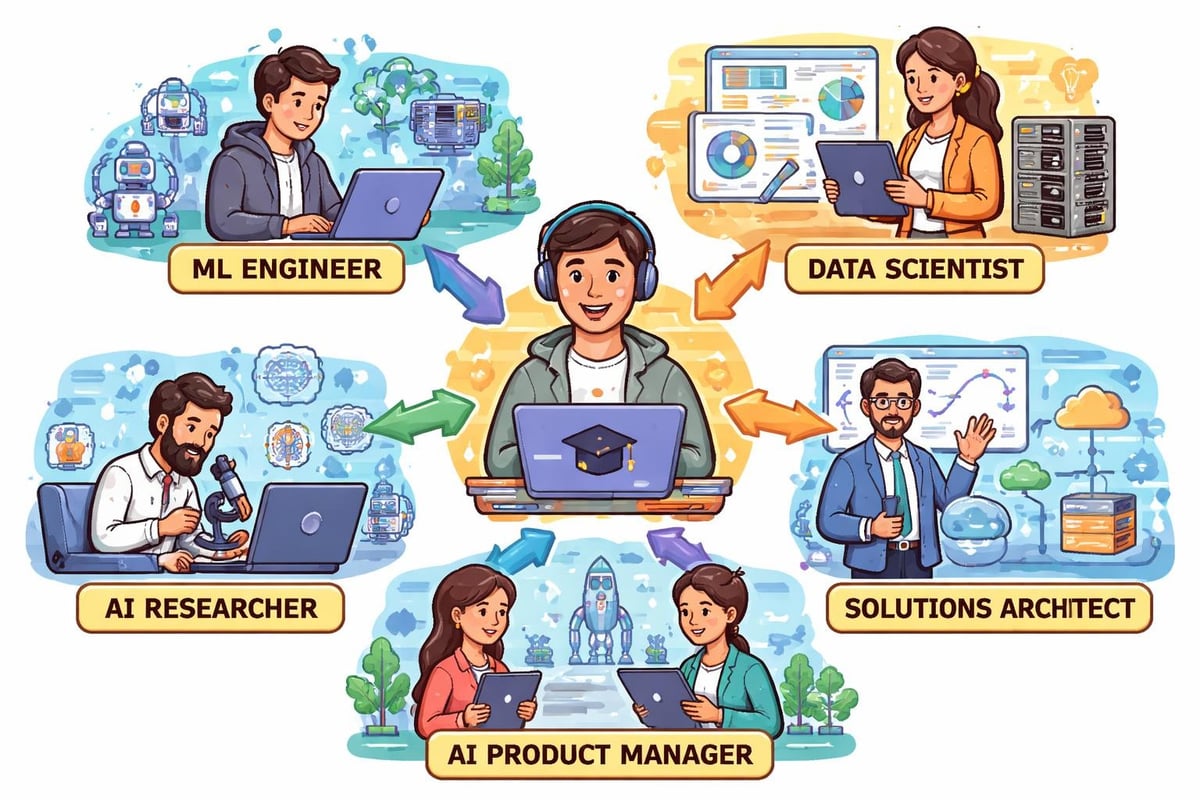
Technical individual contributors typically prioritize certifications demonstrating hands-on implementation skills. Leaders and managers benefit more from programs covering AI strategy, team building, and ethical governance. Understanding these distinctions prevents investing time in credentials that don't advance specific objectives.
Industry context matters significantly. Financial services professionals often need certifications covering regulatory compliance and risk management specific to algorithmic decision-making. Healthcare practitioners require understanding of medical data privacy and clinical validation standards.
Evaluating Program Quality and Recognition
Not all machine learning and AI certification programs offer equal value. Employer recognition, curriculum rigor, assessment quality, and ongoing support vary dramatically across providers.
Research employer preferences in target industries. Some sectors heavily weight vendor certifications from major technology companies, while others prefer academic credentials or specialized professional body certifications. International standards organizations like ISO/IEC JTC 1/SC 42 work to establish unified frameworks for artificial intelligence standards, including education and certification.
Examine curriculum depth and breadth. Quality programs balance theoretical understanding with practical application. They include hands-on projects requiring synthesis of multiple concepts rather than simple multiple-choice assessments.
Building a Certification Strategy for Organizations
Forward-thinking companies develop comprehensive approaches to machine learning and AI certification that extend beyond individual credentials to create organizational capabilities. Strategic certification programs align workforce development with business objectives while establishing competitive advantages.
Identifying Critical Skill Gaps
Organizations should begin by mapping existing AI capabilities against strategic requirements. This assessment reveals gaps where certification programs can deliver maximum value.
Systematic gap analysis includes:
- Current team composition and skill distribution
- Planned AI initiatives and required competencies
- Competitive landscape and industry benchmarks
- Regulatory requirements and compliance needs
Many organizations discover that broad foundational knowledge matters more than deep specialization during early AI adoption phases. Team members across functions benefit from understanding AI capabilities and limitations, even if they won't develop models themselves.
Implementing Team Certification Programs
Structured team-based certification initiatives create shared vocabulary, consistent methodologies, and collaborative learning cultures. Organizations partnering with comprehensive platforms gain access to diverse content supporting varied learning needs.
Programs like those offered through top machine learning courses enable organizations to provide consistent training at scale. Cohort-based approaches where teams progress together foster peer support and knowledge sharing.
| Program Structure | Benefits | Considerations |
|---|---|---|
| Individual self-paced | Flexibility, personalized progress | Requires high self-motivation |
| Cohort-based | Peer support, accountability | Scheduling complexity |
| Blended (self-paced + workshops) | Flexibility with structured interaction | Resource intensive coordination |
| Bootcamp intensive | Rapid skill development, deep immersion | Requires dedicated time commitment |
Certification tracking and progress monitoring help organizations measure ROI and identify struggling participants early. Modern learning platforms provide dashboards showing completion rates, assessment scores, and time investments across teams.
Creating Pathways From Certification to Application
The gap between certification completion and productive application often exceeds expectations. Organizations maximize certification value by creating deliberate pathways connecting learning to real projects.
Assign recently certified professionals to projects utilizing new skills within weeks of program completion. This reinforces learning while delivering business value. Pair certified team members with experienced practitioners who can mentor practical application.
Establish communities of practice where certified professionals share challenges, solutions, and emerging techniques. These forums accelerate collective learning and prevent knowledge silos. Regular knowledge-sharing sessions where team members present learnings from certification programs benefit the entire organization.
Future Trends in Machine Learning and AI Certification
The certification landscape continues evolving as AI capabilities expand and industry needs shift. Understanding emerging trends helps professionals and organizations make forward-looking investment decisions.
Specialization and Micro-Credentials
Broad generalist certifications are giving way to specialized credentials targeting specific applications, industries, or techniques. Micro-credentials validating narrow competencies allow professionals to build customized skill portfolios addressing unique career paths.
This trend reflects AI's expanding scope. The skills required for natural language processing differ substantially from those needed for reinforcement learning in robotics. Professionals increasingly pursue collections of specialized certifications rather than single comprehensive credentials.
Organizations benefit from this granularity by precisely targeting training investments toward business-critical capabilities. Teams can develop deep expertise in relevant areas without investing time in broadly applicable but locally unnecessary skills.
Continuous Recertification and Skill Refresh
AI's rapid evolution creates knowledge depreciation challenges. Techniques considered cutting-edge become outdated within months as research advances. Forward-thinking certification programs now incorporate continuous learning requirements and periodic recertification.
Modern certification maintenance typically includes:
- Annual continuing education requirements
- Periodic reassessment of core competencies
- Engagement with emerging research and techniques
- Contribution to professional communities through teaching or mentoring
This shift recognizes that machine learning and AI certification represents ongoing commitment rather than one-time achievement. Professionals must continuously update knowledge to maintain credential value and practical relevance.
Integration With Academic Research
The gap between academic research and practitioner education continues narrowing. Certification programs increasingly incorporate recent findings from venues like Machine Learning and Knowledge Extraction, ensuring professionals learn current best practices rather than outdated approaches.
This integration benefits both researchers and practitioners. Academics gain clearer understanding of real-world application challenges, while practitioners access cutting-edge techniques before they become widely adopted. Organizations employing certified professionals with research awareness gain competitive advantages through early adoption of effective new approaches.
Thought leaders like Matthew Sag who specialize in AI, machine learning, and data science contribute to bridging academic rigor with practical application needs. Their work informs certification standards that balance theoretical soundness with implementation feasibility.
Machine learning and AI certification programs provide essential pathways for professionals and organizations navigating the AI revolution. These credentials validate expertise, build trust, and create competitive advantages in markets where artificial intelligence increasingly drives differentiation. Whether you're an individual seeking career advancement or an organization building AI capabilities, strategic certification investments deliver measurable returns. MammothClub offers comprehensive certification programs combining 3,000+ AI courses, interactive bootcamps, and corporate training solutions designed to transform learning into tangible business results.