The financial services industry is experiencing a fundamental transformation as artificial intelligence reshapes how professionals analyze markets, assess risk, and make investment decisions. For finance professionals looking to stay competitive in 2026, mastering AI technologies is no longer optional. The demand for professionals who understand both financial principles and AI applications has created a thriving ecosystem of specialized training programs designed to bridge this critical skills gap.
Understanding the Intersection of AI and Finance
Artificial intelligence has fundamentally altered the financial landscape across multiple domains. From algorithmic trading systems that execute millions of transactions per second to machine learning models that detect fraudulent patterns in real-time, AI applications have become integral to modern financial operations.
Financial institutions now rely on AI for credit scoring, portfolio optimization, customer service automation, regulatory compliance, and market prediction. This transformation requires professionals who understand both the technical capabilities of AI systems and the nuanced requirements of financial decision-making.
Why Finance Professionals Need AI Skills Today
The integration of AI into finance creates three distinct opportunities for career advancement:
- Enhanced analytical capabilities: AI tools process vast datasets faster than traditional methods, enabling more sophisticated financial modeling
- Competitive differentiation: Professionals with AI expertise command higher salaries and access more senior positions
- Future-proofing careers: As automation increases, understanding AI systems becomes essential for strategic roles
Research indicates that financial institutions are investing billions in AI infrastructure, creating sustained demand for professionals who can implement, manage, and optimize these systems. The gap between available talent and market demand continues to widen, making specialized training increasingly valuable.
Core Components of Effective AI Finance Training
Quality ai in finance courses share several essential characteristics that distinguish them from generic AI or finance programs. These courses integrate domain-specific knowledge with technical skills, creating a practical foundation for real-world application.
Curriculum Structure and Learning Pathways
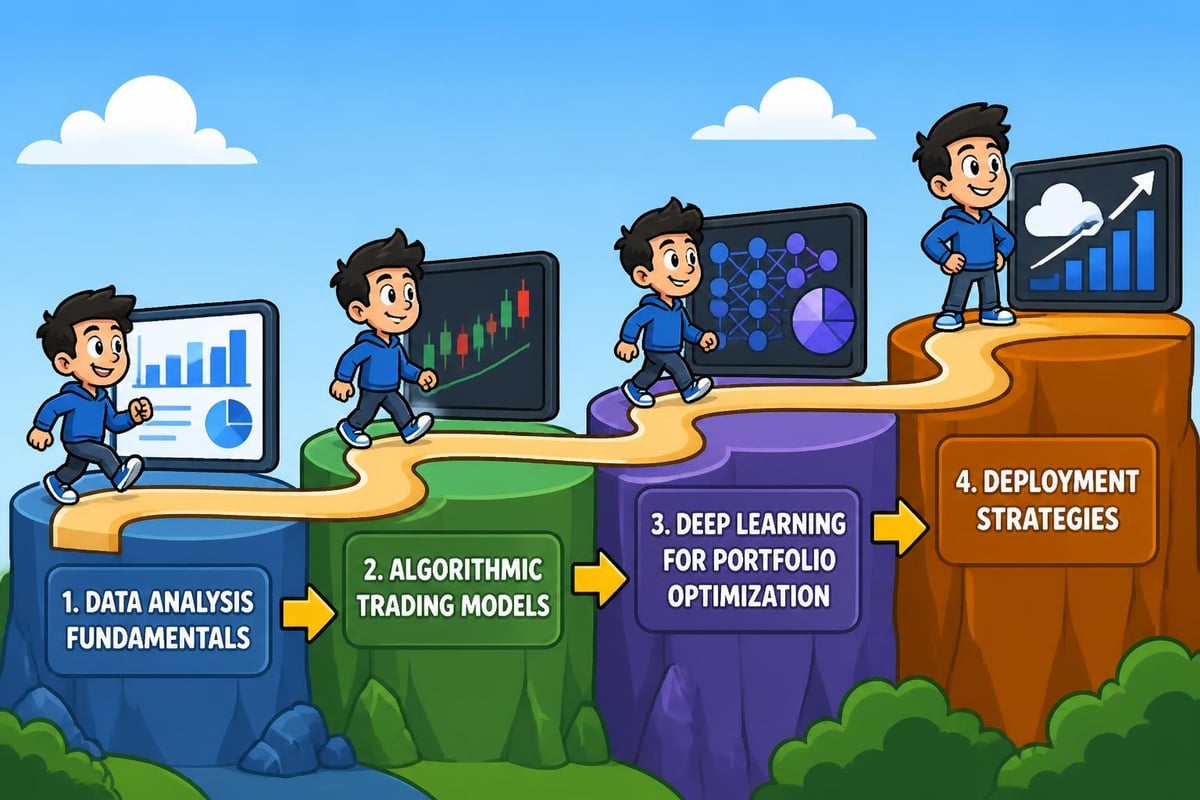
The most effective programs organize content into progressive learning modules:
- Foundation building: Introduction to AI concepts, machine learning fundamentals, and financial data analysis
- Practical applications: Hands-on experience with algorithmic trading, risk modeling, and fraud detection
- Advanced techniques: Deep learning, natural language processing for financial documents, and reinforcement learning
- Implementation strategies: Model deployment, regulatory compliance, and ethical AI considerations
Programs like Coursera's AI for Finance Specialization emphasize hands-on learning without requiring extensive technical backgrounds, making them accessible to finance professionals transitioning into AI-enhanced roles.
Leading AI in Finance Course Providers
Several institutions have established themselves as premier providers of ai in finance courses, each offering distinct advantages depending on your learning objectives and career stage.
University-Based Programs
Academic institutions bring research-backed curricula and recognized credentials to AI finance education. Cornell University's AI in Finance Certificate provides structured, faculty-led instruction that combines theoretical foundations with practical applications. These programs typically offer:
| Program Feature | University Courses | Online Platforms | Corporate Training |
|---|---|---|---|
| Credential Recognition | High | Medium | High (industry-specific) |
| Time Commitment | 3-6 months | 4-12 weeks | 1-3 months |
| Cost Range | $2,000-$8,000 | $40-$500 | Varies by organization |
| Flexibility | Moderate | High | Customized |
UC San Diego's Artificial Intelligence for Finance course focuses on practical skills in algorithmic trading and risk management, delivering targeted expertise for professionals seeking immediate application.
Professional Learning Platforms
Online learning platforms have democratized access to specialized AI training. At MammothClub, we've curated thousands of on-demand courses that allow finance professionals to learn at their own pace while maintaining career momentum. These platforms excel in providing current, industry-relevant content that evolves with technological advances.
MIT's AI and Finance course demonstrates how prestigious institutions are adapting to online delivery models, offering insights into reinforcement learning and large language models applied to investment strategies.
Technical Skills Developed Through AI Finance Training
Understanding what you'll actually learn in ai in finance courses helps set realistic expectations and career planning goals. These programs develop both technical capabilities and financial domain expertise.
Machine Learning for Financial Applications
Most comprehensive programs cover supervised learning algorithms for price prediction, unsupervised learning for market segmentation, and reinforcement learning for portfolio optimization. You'll work with Python libraries like scikit-learn, TensorFlow, and PyTorch, applying them to financial datasets.
Key technical competencies include:
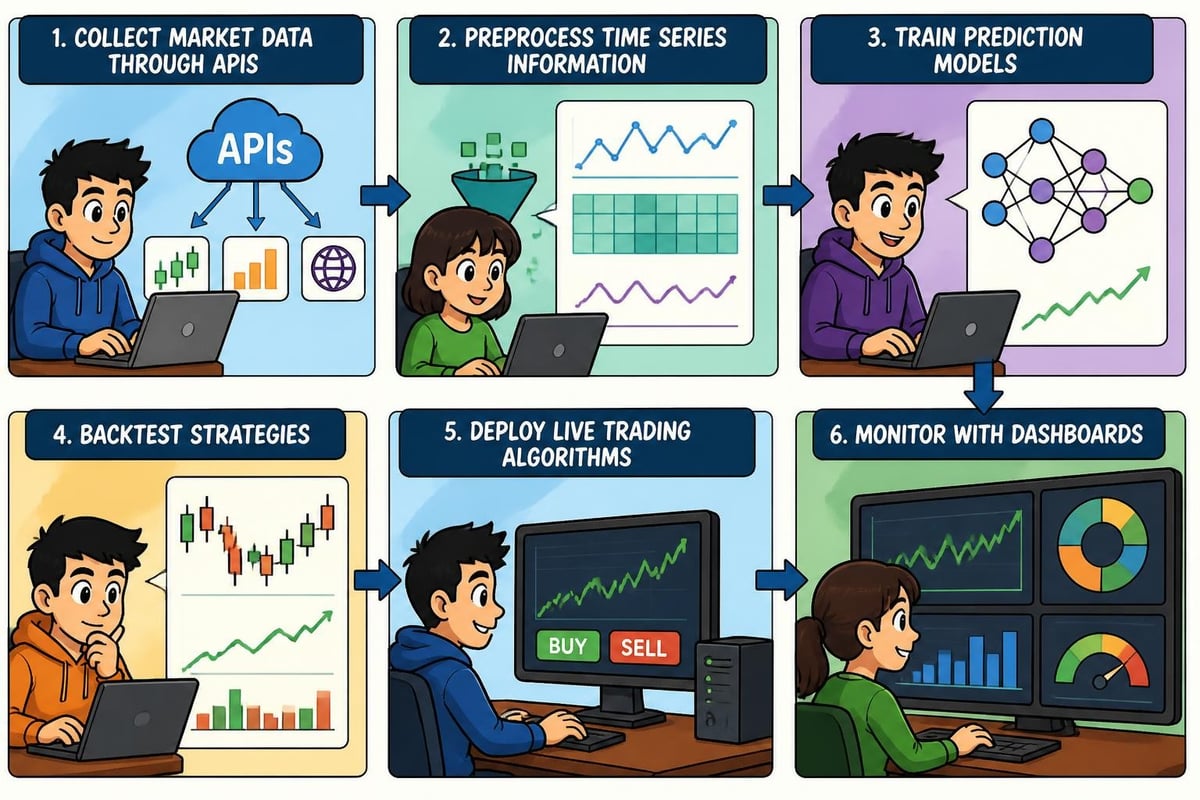
- Data preprocessing and feature engineering for financial time series
- Model evaluation using backtesting and cross-validation techniques
- Hyperparameter tuning for improved prediction accuracy
- Integration with trading platforms and financial APIs
For those interested in practical implementation, exploring best AI courses provides broader context on complementary skills that enhance finance-specific training.
Natural Language Processing in Finance
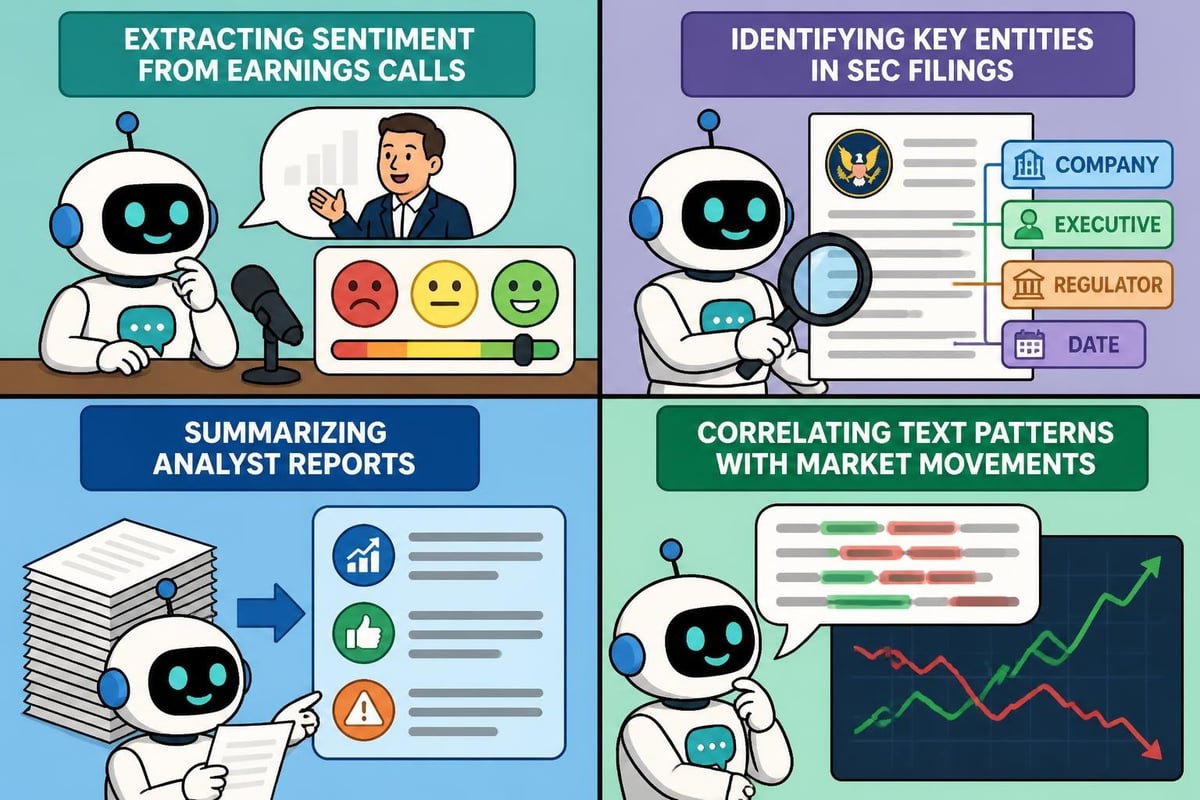
NLP applications have become critical for analyzing earnings reports, news sentiment, regulatory filings, and social media trends. Advanced ai in finance courses teach techniques for extracting actionable insights from unstructured text data.
This includes sentiment analysis for market prediction, named entity recognition for identifying key financial actors, and document summarization for research efficiency. Research on Large Language Models in finance demonstrates the evolving capabilities of these technologies in transforming how financial professionals process information.
Specialized Applications and Advanced Topics
Beyond foundational skills, advanced ai in finance courses explore sophisticated applications that address specific industry challenges and opportunities.
Algorithmic Trading and Quantitative Finance
Algorithmic trading represents one of the most technically demanding applications of AI in finance. These specialized programs teach strategy development, backtesting frameworks, risk management protocols, and execution optimization. Udacity's AI for Finance & Trading courses provide hands-on experience building and deploying trading algorithms.
Students learn to design strategies based on statistical arbitrage, momentum indicators, and mean reversion patterns. The curriculum typically includes position sizing, transaction cost analysis, and slippage management-practical considerations that separate successful implementations from theoretical exercises.
Those specifically interested in this application should also review dedicated AI trading courses for focused learning paths.
Risk Management and Fraud Detection
Financial institutions lose billions annually to fraud, making detection systems critical infrastructure. AI-powered fraud detection combines anomaly detection algorithms, network analysis, and behavioral profiling to identify suspicious patterns in real-time.
Risk management applications include credit scoring models, market risk assessment, operational risk quantification, and stress testing. These systems must balance sensitivity (catching genuine threats) with specificity (avoiding false positives that disrupt legitimate transactions).
Ethical Considerations and Responsible AI Implementation
As AI systems make increasingly consequential financial decisions, understanding ethical implications becomes essential. Quality ai in finance courses address bias in credit algorithms, transparency requirements, and regulatory compliance frameworks.
Explainable AI in Financial Decision-Making
Research on Explainable AI in finance emphasizes the importance of model interpretability in building trust and meeting regulatory requirements. Financial professionals need to explain AI-driven decisions to stakeholders, regulators, and affected customers.
This includes understanding LIME (Local Interpretable Model-agnostic Explanations), SHAP (SHapley Additive exPlanations) values, and attention mechanisms in neural networks. For professionals concerned with ethical implementation, exploring responsible AI courses provides complementary perspectives.
Regulatory Compliance and Model Validation
Financial AI systems operate under strict regulatory oversight. Training programs increasingly cover model governance frameworks, validation procedures, and documentation requirements mandated by regulatory bodies. Understanding these requirements prevents costly compliance failures and reputational damage.
Choosing the Right AI Finance Training Program
With numerous options available, selecting the most appropriate ai in finance courses requires evaluating several factors aligned with your career objectives and current skill level.
Assessment Criteria for Program Selection
Consider these dimensions when evaluating programs:
- Prerequisites and entry requirements: Some programs assume programming experience while others start from fundamentals
- Time investment and schedule flexibility: Bootcamp-style intensive programs versus self-paced learning
- Hands-on project components: Access to real financial datasets and practical implementation experience
- Career support services: Job placement assistance, networking opportunities, and industry connections
- Cost versus value proposition: ROI based on credential recognition and skill development
Coursera's AI in Finance course offers accessible entry points for professionals without technical backgrounds, focusing on practical applications in forecasting, risk analysis, and fraud detection.
Matching Training to Career Goals
Different career trajectories benefit from different training approaches:
| Career Path | Recommended Focus | Suggested Duration | Priority Skills |
|---|---|---|---|
| Investment Analyst | Portfolio optimization, market prediction | 3-4 months | Python, ML algorithms, financial modeling |
| Risk Manager | Credit scoring, fraud detection, stress testing | 2-3 months | Statistical analysis, anomaly detection, compliance |
| Quantitative Trader | Algorithmic trading, backtesting, execution | 4-6 months | Advanced ML, time series, trading platforms |
| Financial Advisor | Client analytics, recommendation systems | 2-3 months | Basic ML, data visualization, CRM integration |
Those seeking comprehensive foundational knowledge should explore artificial intelligence classes before specializing in finance applications.
Hands-On Learning and Practical Implementation
Theoretical knowledge means little without practical application skills. The most effective ai in finance courses emphasize project-based learning using real financial datasets and industry-standard tools.
Essential Tools and Technologies
Professional AI finance training covers the complete technology stack:
- Programming languages: Python (primary), R (statistical analysis), SQL (data management)
- ML frameworks: scikit-learn, TensorFlow, PyTorch, XGBoost
- Financial libraries: pandas, NumPy, QuantLib, Zipline
- Visualization tools: Matplotlib, Seaborn, Plotly, Tableau
- Cloud platforms: AWS, Google Cloud, Azure for model deployment
Students work with platforms like Bloomberg Terminal, Reuters Eikon, and specialized AI finance APIs. Understanding GPU requirements for AI training becomes relevant when building computationally intensive models.
Building a Portfolio of Finance AI Projects
Demonstrating competency requires tangible project work. Strong portfolios typically include:
- Price prediction model: Time series forecasting for stocks or cryptocurrencies
- Sentiment analysis system: NLP application analyzing news impact on markets
- Portfolio optimizer: Reinforcement learning approach to asset allocation
- Fraud detection algorithm: Anomaly detection for transaction monitoring
These projects showcase both technical skills and financial domain knowledge, making candidates more attractive to employers seeking AI-literate finance professionals.
Emerging Trends in AI Finance Education
The field evolves rapidly, with ai in finance courses continuously adapting to incorporate new technologies and applications. Understanding these trends helps professionals invest in future-relevant skills.
Large Language Models and Generative AI
The emergence of GPT-4 and similar models has created new applications in financial analysis, research automation, and client communication. Training programs increasingly cover prompt engineering for financial applications, fine-tuning language models on financial data, and integrating LLMs into existing workflows.
Research evaluating AI model credibility in investment risk assessment highlights the need for standardized evaluation frameworks as these tools become more prevalent in financial decision-making.
Quantum Computing and Advanced Optimization
While still emerging, quantum computing promises to revolutionize portfolio optimization and risk modeling. Forward-looking ai in finance courses introduce quantum concepts and their potential applications, preparing professionals for the next technological shift.
Sustainable Finance and ESG Integration
AI tools increasingly analyze environmental, social, and governance factors in investment decisions. Training programs address how machine learning identifies ESG risks, measures sustainability impact, and integrates non-financial data into traditional analysis frameworks.
Corporate Training and Team Development
Organizations investing in AI capabilities require coordinated team training rather than individual upskilling. Corporate ai in finance courses address this need through customized curricula aligned with specific business objectives.
Designing Organizational Learning Programs
Effective corporate training programs follow a structured approach:
- Skills gap analysis: Assessing current team capabilities against strategic AI goals
- Customized curriculum development: Tailoring content to organizational use cases and data
- Phased implementation: Rolling out training aligned with project timelines
- Measurement and iteration: Tracking skill development and adjusting programs based on outcomes
Organizations benefit from platforms offering both individual learning paths and team-based projects. At MammothClub, our corporate certification programs provide measurable results through AI-powered dashboards that track progress and demonstrate ROI.
Change Management and AI Adoption
Technical training alone doesn't guarantee successful AI implementation. Comprehensive programs address organizational change management, helping teams navigate resistance, communicate value, and build cross-functional collaboration between finance professionals and data scientists.
Continuous Learning and Skill Maintenance
AI technology evolves so rapidly that initial training represents only the beginning of an ongoing learning journey. Successful finance professionals develop habits for continuous skill development.
Staying Current with Research and Best Practices
Comprehensive overviews of AI applications in finance provide valuable context for understanding how techniques have evolved and where the field is heading. Regular engagement with research literature, industry conferences, and professional communities keeps skills current.
Professionals should allocate time for:
- Weekly learning: Dedicating 3-5 hours to new tools, techniques, or applications
- Quarterly skill assessment: Evaluating emerging capabilities and gaps
- Annual recertification: Updating credentials and validating current knowledge
Many ai in finance courses offer alumni communities and continuous learning resources that support ongoing development beyond initial certification.
Certification Value and Career Impact
Understanding how AI finance credentials affect career progression helps professionals make informed training investments. Different certifications carry varying weight depending on employer type and role requirements.
Industry Recognition and Hiring Preferences
Employers increasingly value demonstrated AI competency alongside traditional finance credentials like CFA or FRM. A combination of recognized certifications and practical project experience creates the strongest candidacy profile.
Hiring managers prioritize:
- Hands-on project experience over theoretical knowledge
- Familiarity with production deployment, not just model development
- Understanding of financial regulations and compliance requirements
- Ability to communicate technical concepts to non-technical stakeholders
Those pursuing comprehensive AI education should also consider broader AI and ML courses that provide foundational knowledge applicable across industries.
Salary Impact and ROI Analysis
Investment in ai in finance courses typically yields measurable career returns. Professionals with AI skills command salary premiums ranging from 15-30% compared to peers with equivalent experience but traditional-only skillsets.
The ROI calculation should consider direct costs (tuition, materials), indirect costs (time investment), and expected benefits (salary increase, promotion opportunities, job security). Most professionals recoup training investments within 12-18 months through enhanced compensation or new opportunities.
Mastering AI applications in finance has transitioned from competitive advantage to career necessity as the industry rapidly evolves. The right training program accelerates your journey by providing structured learning, hands-on experience, and recognized credentials that validate your expertise. Whether you're a finance professional adding technical skills or a data scientist specializing in financial applications, investing in targeted education delivers measurable career returns. MammothClub offers over 3,000 AI and tech courses, interactive bootcamps, and corporate certification programs designed to help professionals and organizations master AI-driven finance skills efficiently. Our AI-powered learning dashboards track progress and deliver personalized recommendations, ensuring your training investment translates into real-world results that keep you competitive in the rapidly evolving financial landscape.