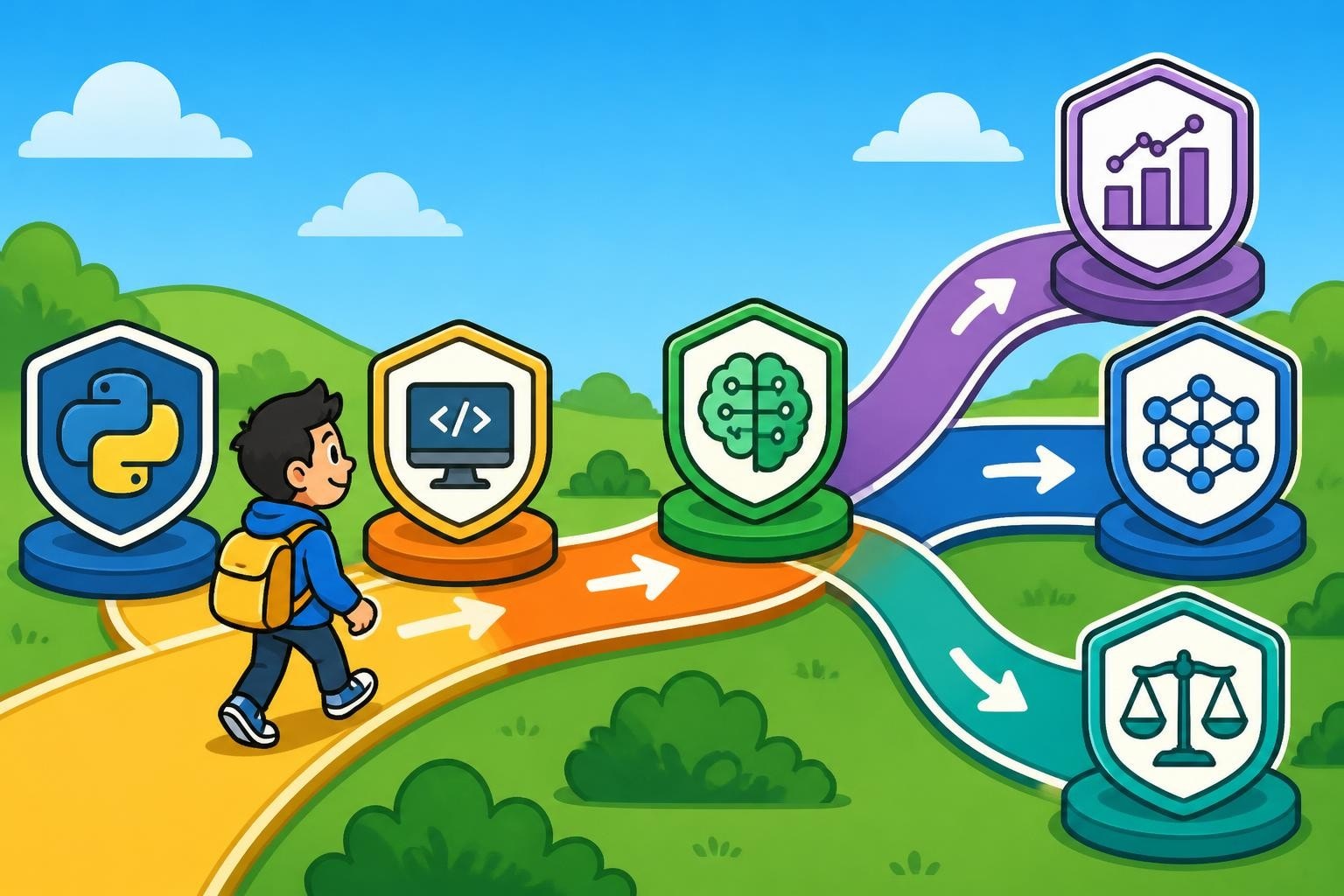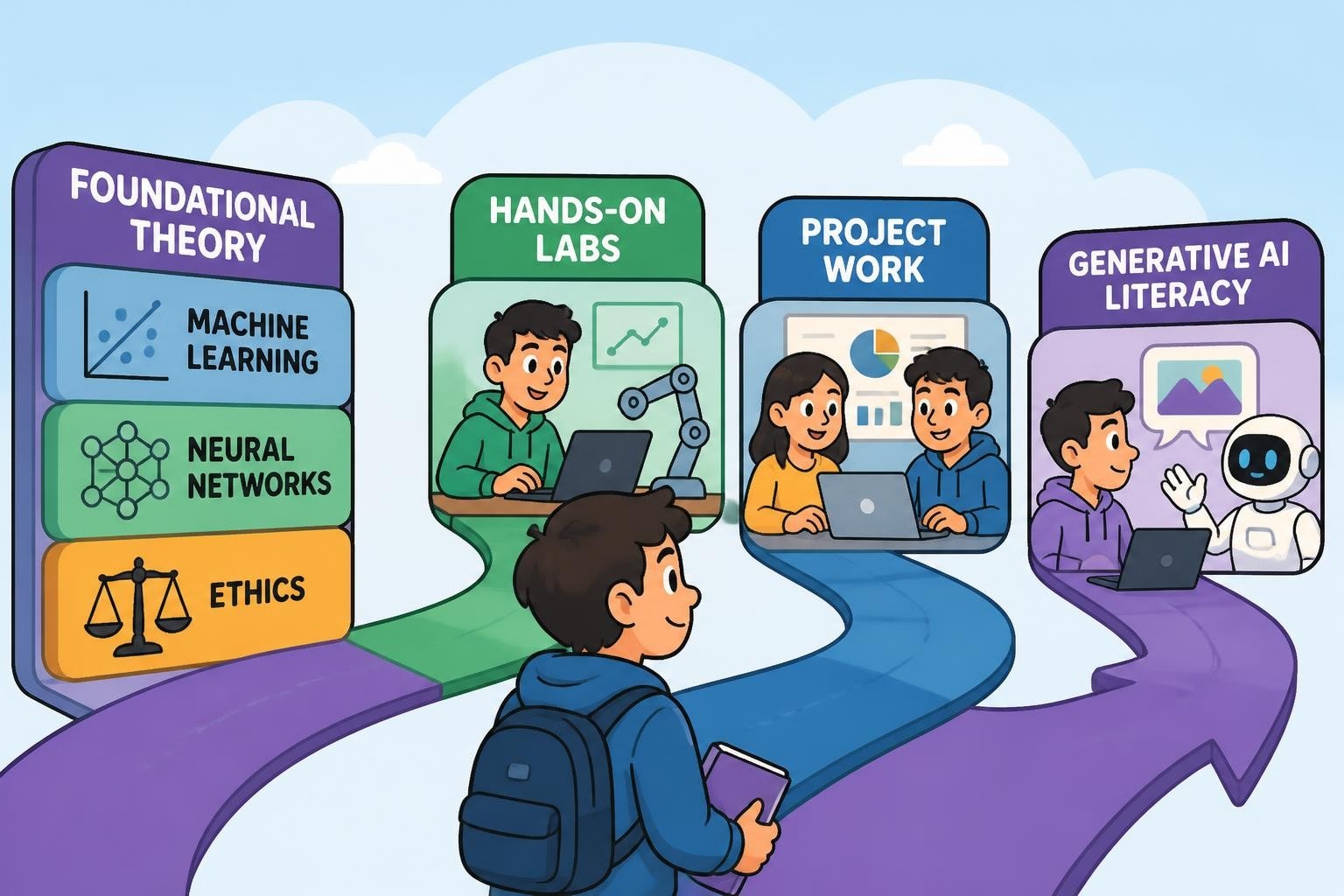
The artificial intelligence revolution is reshaping every industry, and organizations are scrambling to build teams with verified AI competencies. Microsoft AI Azure certification has emerged as one of the most valuable credentials for professionals who want to demonstrate practical cloud AI skills. Unlike theoretical certificates, Azure AI certifications validate your ability to design, build, and deploy real-world AI solutions using Microsoft's comprehensive cloud platform. Whether you're an aspiring AI engineer, a data scientist pivoting to production systems, or a technical manager who needs to understand modern AI infrastructure, these certifications provide a structured path to mastery while significantly boosting your market value.
Understanding the Microsoft AI Azure Certification Landscape
Microsoft offers a tiered certification system specifically designed for AI practitioners working with Azure services. The architecture is deliberately role-based, recognizing that AI professionals need different skills depending on whether they're building models, deploying solutions, or architecting enterprise systems.
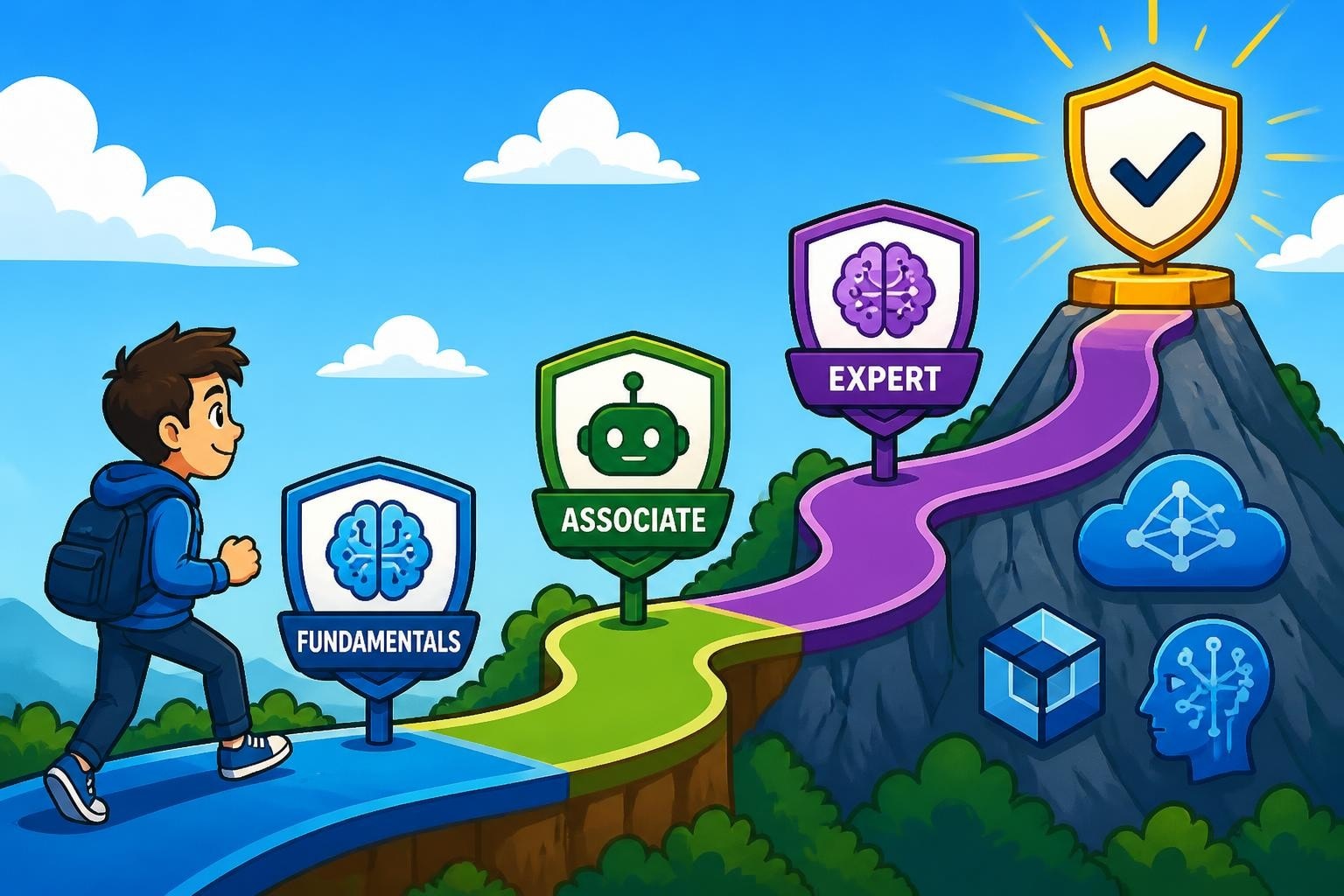
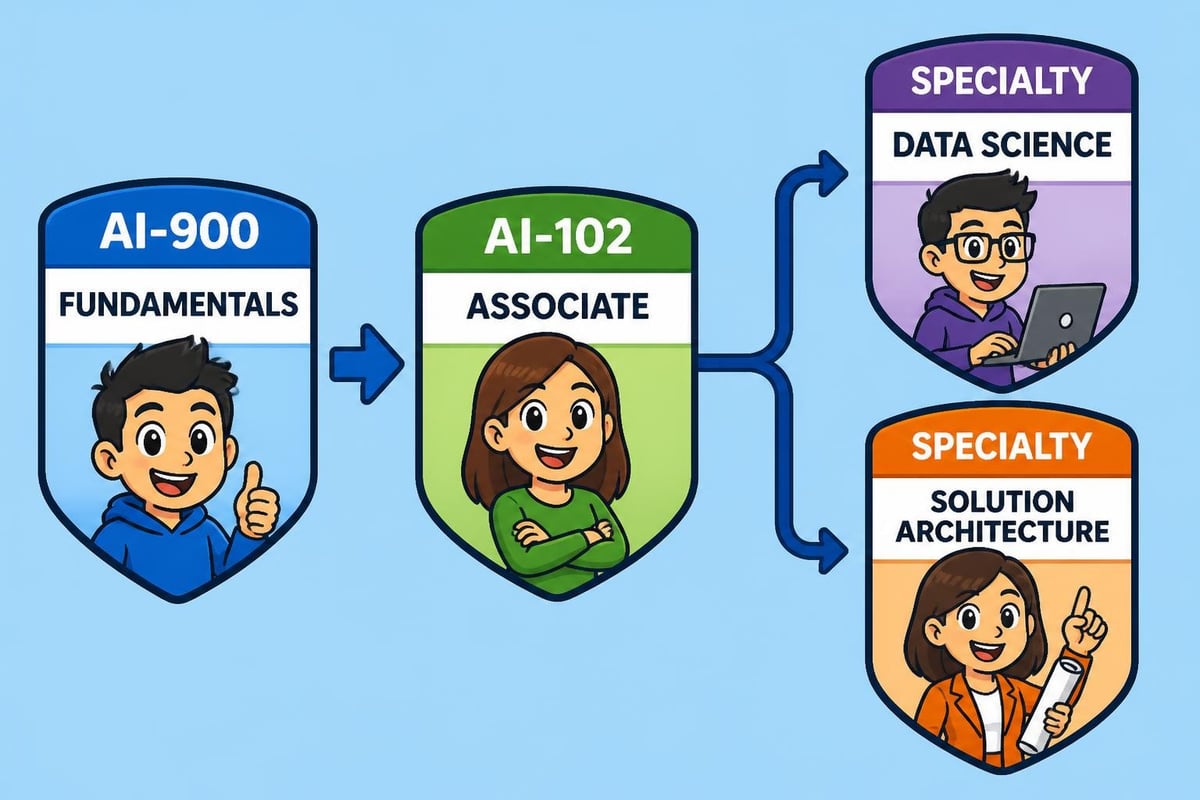
The official Azure AI credentials divide into three main tiers: Fundamentals, Associate, and Expert. Each tier builds upon the previous one, creating a clear progression path.
The Foundation: Azure AI Fundamentals (AI-900)
The entry point for microsoft ai azure certification is the AI-900 exam, which targets anyone who wants to understand AI concepts and Azure's AI capabilities without necessarily building solutions themselves. This certification is ideal for:
- Business analysts evaluating AI investments
- Project managers overseeing AI initiatives
- Developers new to AI who need foundational knowledge
- Technical sales professionals selling Azure AI solutions
The AI-901 exam covers machine learning workloads, computer vision, natural language processing, conversational AI, and responsible AI principles. Unlike advanced certifications, AI-900 doesn't require hands-on coding experience, though familiarity with cloud concepts accelerates your preparation.
Associate Level: Azure AI Engineer
After establishing fundamentals, most professionals pursue the AI-102 certification (Azure AI Engineer Associate). This credential validates your ability to build, manage, and deploy AI solutions using Azure Cognitive Services, Azure Machine Learning, and Azure Applied AI Services.
The AI-102 exam requires hands-on experience with:
- Azure OpenAI Service integration and deployment
- Custom vision and form recognizer implementations
- Language understanding and speech services
- Knowledge mining with Azure Cognitive Search
- Responsible AI practices and monitoring
This is where microsoft ai azure certification demonstrates real practical value. You'll work with production-grade services that organizations actually deploy, making your skills immediately applicable. Many learners complement their study with AI and ML courses that provide hands-on project experience before attempting certification.
Specialty and Expert Paths
Beyond associate level, Microsoft offers specialty certifications that align with specific AI roles:
| Certification | Target Role | Key Focus Areas |
|---|---|---|
| Azure Data Scientist Associate (DP-100) | ML Engineers, Data Scientists | Model training, MLOps, Azure ML workspace |
| Azure Solutions Architect Expert | Enterprise Architects | End-to-end AI solution design, governance |
| Azure DevOps Engineer Expert | MLOps Engineers | CI/CD for AI, deployment automation |
These advanced credentials often require combining multiple exams and demonstrating broader Azure expertise beyond just AI services.
Why Microsoft AI Azure Certification Matters in 2026
The market demand for verified AI skills has never been higher. According to the World Economic Forum's Future of Jobs Report 2025, AI and machine learning specialists rank among the fastest-growing jobs globally, with organizations prioritizing candidates who can demonstrate practical implementation experience.
Quantifiable Career Impact
Microsoft certifications provide measurable career benefits that extend beyond resume padding. Certified professionals typically see:
- Salary premiums of 15-25% compared to non-certified peers in similar roles
- Faster promotion cycles due to validated competencies
- Increased interview callbacks from recruiters searching for verified skills
- Cross-functional mobility enabling transitions between data science, engineering, and architecture roles
The InfoWorld analysis of AI certification ROI confirms that vendor-specific credentials like microsoft ai azure certification deliver stronger employment outcomes than generic certificates because they align with actual enterprise technology stacks.
Enterprise Adoption and Partner Requirements
Microsoft requires partner organizations to maintain certified staff to achieve and retain competency designations. This creates structural demand for Azure AI certifications regardless of economic cycles. Companies building on Azure need certified professionals to:
- Access Microsoft partner benefits and co-sell opportunities
- Demonstrate technical capability to enterprise clients
- Reduce solution delivery risk through validated expertise
- Qualify for specialized support and early access programs
If you're in an organization deploying AI at scale, certification becomes a strategic career move that aligns your skills with your employer's partnership requirements.
Preparing for Microsoft AI Azure Certification Exams
Success requires more than memorizing service names and features. Microsoft's role-based exams emphasize scenario-based questions that test your ability to make architectural decisions and troubleshoot production issues.
Building a Structured Study Plan
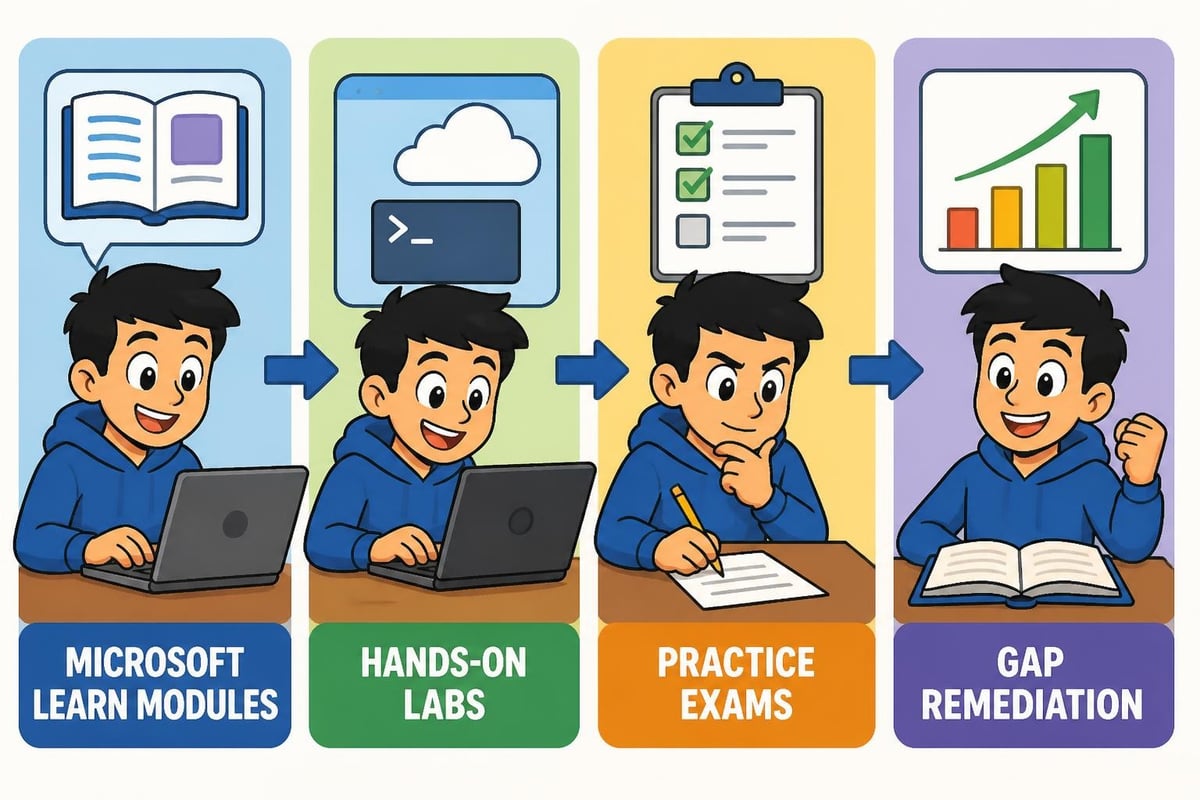
Effective preparation combines multiple learning modalities to build both theoretical knowledge and practical skills. A comprehensive study plan should include:
- Official Microsoft Learn paths that align exactly with exam objectives
- Hands-on lab work using Azure free tier or sandbox environments
- Practice exams to identify knowledge gaps and build test-taking stamina
- Community resources including study groups and certification forums
- Real-world projects that apply concepts to solve actual problems
Plan for 60-80 hours of focused study for associate-level exams if you're already working with Azure, or 100-120 hours if you're completely new to the platform. For professionals looking for comprehensive preparation, platforms like MammothClub offer structured paths that combine video instruction, hands-on labs, and practice assessments in a single integrated experience.
Hands-On Lab Practice
The most common failure pattern for microsoft ai azure certification exams is attempting them with only theoretical knowledge. Microsoft explicitly tests your ability to navigate the Azure portal, configure services correctly, and troubleshoot deployment issues.
Create a free Azure account and systematically work through:
- Deploying Azure Cognitive Services resources
- Implementing Azure OpenAI endpoints and testing completions
- Building custom vision models with your own dataset
- Creating conversational AI with Language Understanding
- Integrating AI services into sample applications
The Azure AI Foundry samples repository provides excellent starting points for hands-on labs. These official Microsoft samples include working code that demonstrates best practices and common integration patterns. Similarly, the Azure OpenAI Python SDK samples offer concrete examples for developers who prefer code-first learning.
Understanding Exam Logistics and Policies
Microsoft delivers exams through Pearson VUE testing centers and online proctoring. Before scheduling, review the official allowed items and proctoring policies to avoid test day surprises.
Key logistics to plan for:
- Exams are 100-120 minutes with 40-60 questions
- Passing scores are typically 700/1000 (not a percentage)
- Questions include multiple choice, case studies, and drag-and-drop scenarios
- You can't return to previous questions in case study sections
- Results are available immediately after completing the exam
Online proctored exams offer scheduling flexibility but require a quiet space, stable internet, and a clean desk with no reference materials visible.
Integrating Microsoft AI Azure Certification with Career Development
Certification alone doesn't guarantee career advancement. The most successful professionals use credentials as part of a broader skill development strategy that includes continuous learning and practical application.
Aligning Certifications with Career Goals
Different microsoft ai azure certification paths serve different career trajectories:
For Individual Contributors (Engineers, Scientists):
- Start with AI-102 to establish technical credibility
- Add DP-100 if focused on model development and MLOps
- Pursue specialty certifications that align with your team's technology stack
For Technical Leaders (Managers, Architects):
- Begin with AI-900 for overview understanding
- Progress to Solutions Architect certifications for design authority
- Consider complementary certifications in security and governance
For Career Transitioners:
- AI-900 provides low-risk entry to validate interest
- Supplement with focused online AI training before attempting associate exams
- Build a portfolio of small projects that demonstrate applied skills
Your certification path should align with where you want to be in 24-36 months, not just your current role.
Building on Certification with Continuous Learning
Technology certifications have shelf lives. Azure services evolve rapidly, with new capabilities added quarterly and deprecated features removed. Successful professionals treat certification as a starting point rather than a destination.
Develop a continuous learning habit that includes:
- Monthly reviews of Azure AI service updates and release notes
- Quarterly projects implementing new features or techniques
- Annual recertification or additional credential pursuit
- Community engagement through meetups, conferences, or online forums
The NIST AI Resource Center provides excellent supplementary material on responsible AI practices that complement Microsoft's certification content, particularly as organizations face increasing regulatory scrutiny around AI deployment.
Responsible AI and Ethical Considerations
Every microsoft ai azure certification exam includes questions about responsible AI principles because Microsoft recognizes that technical capability without ethical grounding creates risk. Understanding these principles isn't just exam preparation-it's professional responsibility.
Core Responsible AI Principles
Microsoft's framework centers on six principles that should guide every AI implementation:
- Fairness: Systems should treat all people equitably without bias
- Reliability & Safety: Systems should perform consistently and fail safely
- Privacy & Security: Systems should protect data and respect user privacy
- Inclusiveness: Systems should empower and engage everyone
- Transparency: People should understand how systems make decisions
- Accountability: Organizations should be answerable for their AI systems
Azure provides tools like Fairness Dashboard and InterpretML specifically to operationalize these principles during model development and deployment.
Practical Implementation
Certification exams test your ability to apply responsible AI principles to realistic scenarios. For example:
Scenario: You're deploying a resume screening AI that will filter job applications. How do you ensure fairness?
Application:
- Audit training data for historical bias in hiring decisions
- Use demographic parity testing during model validation
- Implement human review for borderline decisions
- Provide explanations for rejected applications
- Monitor deployed model for disparate impact across demographic groups
Understanding both the conceptual framework and Azure's implementation tools is essential for microsoft ai azure certification success and ethical professional practice.
Comparing Microsoft AI Certifications to Alternative Credentials
The certification landscape includes numerous AI credentials from cloud providers, academic institutions, and professional organizations. Understanding how Microsoft's offerings compare helps you make informed investment decisions.
Cloud Provider Comparison
| Provider | Entry Cert | Associate Cert | Unique Advantages |
|---|---|---|---|
| Microsoft Azure | AI-900 | AI-102 | Enterprise integration, OpenAI partnership |
| AWS | ML Foundations | ML Engineer | Broadest market share, SageMaker ecosystem |
| Google Cloud | ML Fundamentals | ML Engineer | TPU access, Vertex AI platform |
Microsoft's distinctive advantage lies in its Azure OpenAI Service integration, providing production access to GPT-4 and other frontier models with enterprise SLAs and data governance. If your organization uses Microsoft 365 or has existing Azure infrastructure, Azure AI certifications deliver the highest practical value.
Academic vs. Vendor Certifications
University programs and platforms like Coursera offer AI certificates that emphasize theory and algorithm fundamentals. Vendor certifications like microsoft ai azure certification focus on practical implementation with specific tools.
Choose academic credentials when:
- You need foundational mathematical and statistical knowledge
- You're pursuing research or algorithm development roles
- You want vendor-neutral theoretical grounding
Choose vendor certifications when:
- You're implementing AI solutions in production environments
- Your organization uses specific cloud platforms
- You need to demonstrate practical tool proficiency to employers
Most successful AI professionals eventually combine both approaches, using academic study for conceptual depth and vendor certifications for practical application skills.
Advanced Certification Strategies for 2026
As microsoft ai azure certification programs mature, strategic professionals look beyond individual credentials to build comprehensive skill profiles that demonstrate broad capability.
Certification Stacking
Rather than pursuing certifications sequentially, consider strategic combinations that position you for specific opportunities:
AI Engineering Stack:
- AI-102 (Core AI services)
- AZ-204 (Azure development)
- AZ-400 (DevOps for MLOps)
Data Science Stack:
- DP-100 (Azure ML)
- DP-203 (Data engineering)
- DP-420 (Cosmos DB for feature stores)
Architecture Stack:
- AI-900 (AI overview)
- AZ-305 (Solutions architecture)
- SC-100 (Security architecture)
Stacked certifications signal versatility and comprehensive understanding beyond narrow specialization.
Staying Current with Rapid Azure Evolution
Microsoft updates exam content quarterly to reflect new services and best practices. The Azure AI whitepaper provides architectural context for how services fit together, helping you understand not just what changed but why.
Best practices for maintaining current knowledge:
- Subscribe to Azure Updates RSS feed filtered for AI services
- Join the Azure AI Community Discord or Teams channels
- Follow Microsoft MVPs and Azure PMs on social platforms
- Participate in monthly Azure AI office hours sessions
- Budget 3-5 hours monthly for reviewing new capabilities
Certification renewal requirements ensure you can't coast on outdated knowledge, but proactive learning is more effective than cramming during renewal periods.
Cost-Benefit Analysis of Microsoft AI Azure Certification
Professional development requires investment of time, money, and opportunity cost. Understanding the full economics helps you make smart decisions about when and how to pursue certifications.
Direct and Indirect Costs
Examination fees:
- Fundamentals (AI-900): $99 USD
- Associate (AI-102): $165 USD
- Expert level: $165-$330 USD depending on path
Preparation investments:
- Study materials and practice exams: $100-300
- Azure sandbox/lab environments: $50-200
- Training courses or bootcamps: $300-2,000
- Opportunity cost of study time: Varies significantly
Total investment for associate-level microsoft ai azure certification typically ranges from $500-3,000 depending on your preparation approach and prior experience.
Return on Investment Calculation
Calculate your personal ROI based on:
Immediate returns:
- Salary increases from promotions or job changes
- Retention bonuses for achieving certifications
- Project assignments requiring certified personnel
Medium-term returns:
- Expanded job market access
- Consulting or freelance opportunities
- Speaking and content creation possibilities
Long-term returns:
- Career trajectory shifts into leadership
- Entrepreneurial opportunities in AI consulting
- Professional network expansion
For most professionals, the salary premium from certification pays back the initial investment within 6-12 months. The longer-term career optionality is often more valuable than immediate compensation changes.
Common Preparation Mistakes and How to Avoid Them
After observing thousands of certification candidates, clear patterns emerge in both successful and unsuccessful preparation approaches.
The Cramming Trap
Many candidates schedule exams before adequately preparing, assuming they can cram in the final weeks. Microsoft's scenario-based questions require deep understanding that cramming can't build.
Instead: Schedule your exam 8-12 weeks out and create a weekly study schedule with specific topics and hands-on labs. Track your progress and adjust your exam date if needed.
Theory Without Practice
Reading documentation without building actual solutions is the second most common failure pattern. You might understand concepts intellectually but struggle when the exam presents a portal screenshot asking you to complete a configuration.
Instead: Spend at least 40% of your study time in hands-on environments. Deploy every service covered in the exam objectives at least once. Break things intentionally to understand error messages and troubleshooting.
Ignoring Official Resources
Third-party courses and study guides can be excellent supplements, but they sometimes lag behind exam updates or misinterpret objectives. Candidates who rely exclusively on unofficial materials often encounter surprises on test day.
Instead: Start with official Microsoft Learn paths, then supplement with additional resources that reinforce weak areas. Cross-reference all third-party content against official documentation.
Neglecting Soft Skills
Technical knowledge alone doesn't maximize certification value. Communication, project management, and business acumen determine whether you can apply your certified skills effectively.
Instead: Complement microsoft ai azure certification with skills in stakeholder communication, requirements gathering, and project estimation. Join cross-functional projects where you can practice translating technical capabilities into business value.
Microsoft AI Azure certification provides a proven pathway to validated cloud AI expertise that employers actively seek and organizations strategically value. By understanding the certification landscape, preparing systematically with both theoretical study and hands-on practice, and integrating credentials into a broader career development strategy, you position yourself for sustained success in the rapidly evolving AI industry. Whether you're taking your first steps with AI-900 or pursuing advanced specialty certifications, the skills you build translate directly into production capabilities that drive real business outcomes. Ready to accelerate your AI certification journey? MammothClub offers comprehensive certification prep with 3,000+ courses, hands-on labs, and AI-powered learning tools designed to help professionals master Azure AI faster and achieve measurable career results.