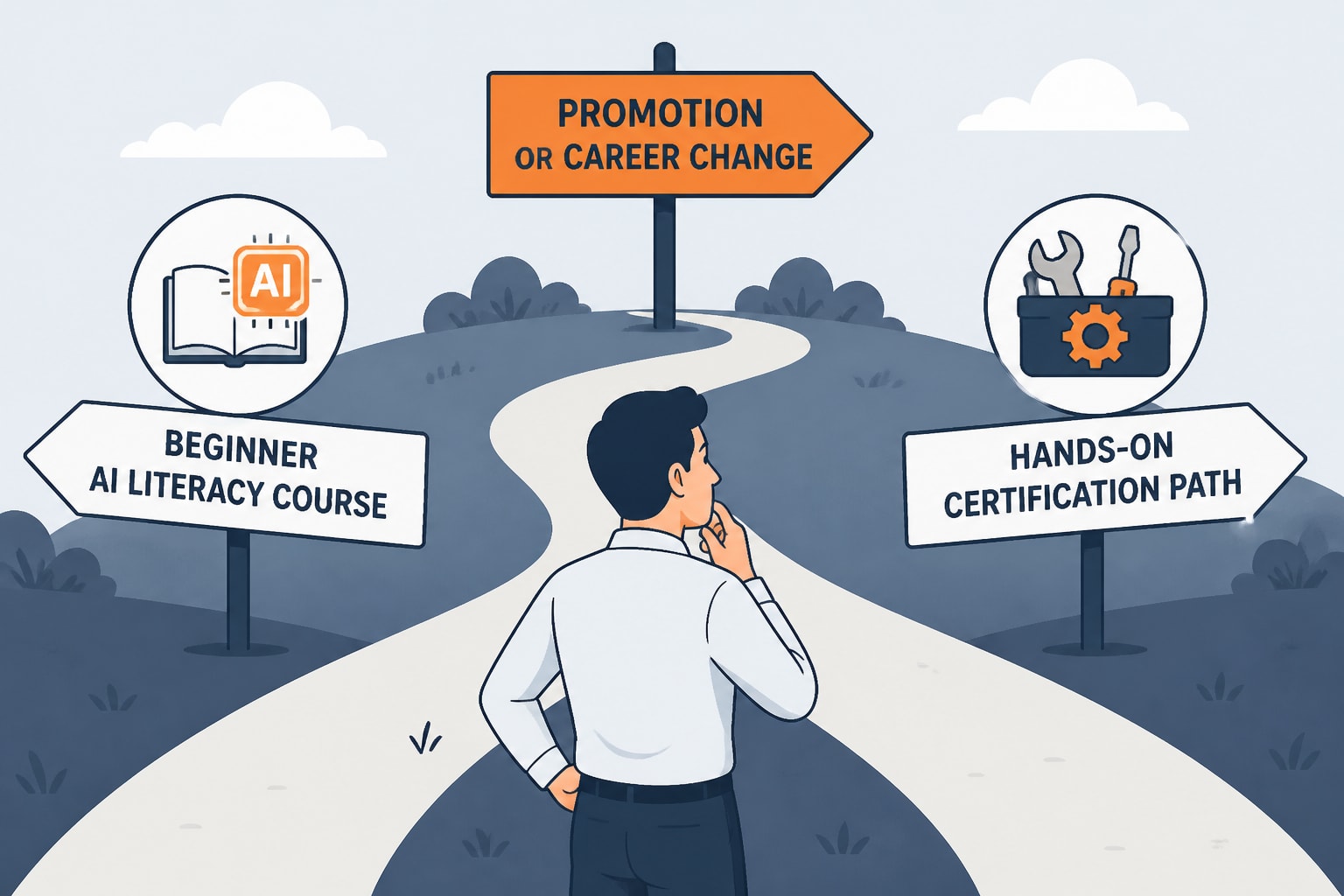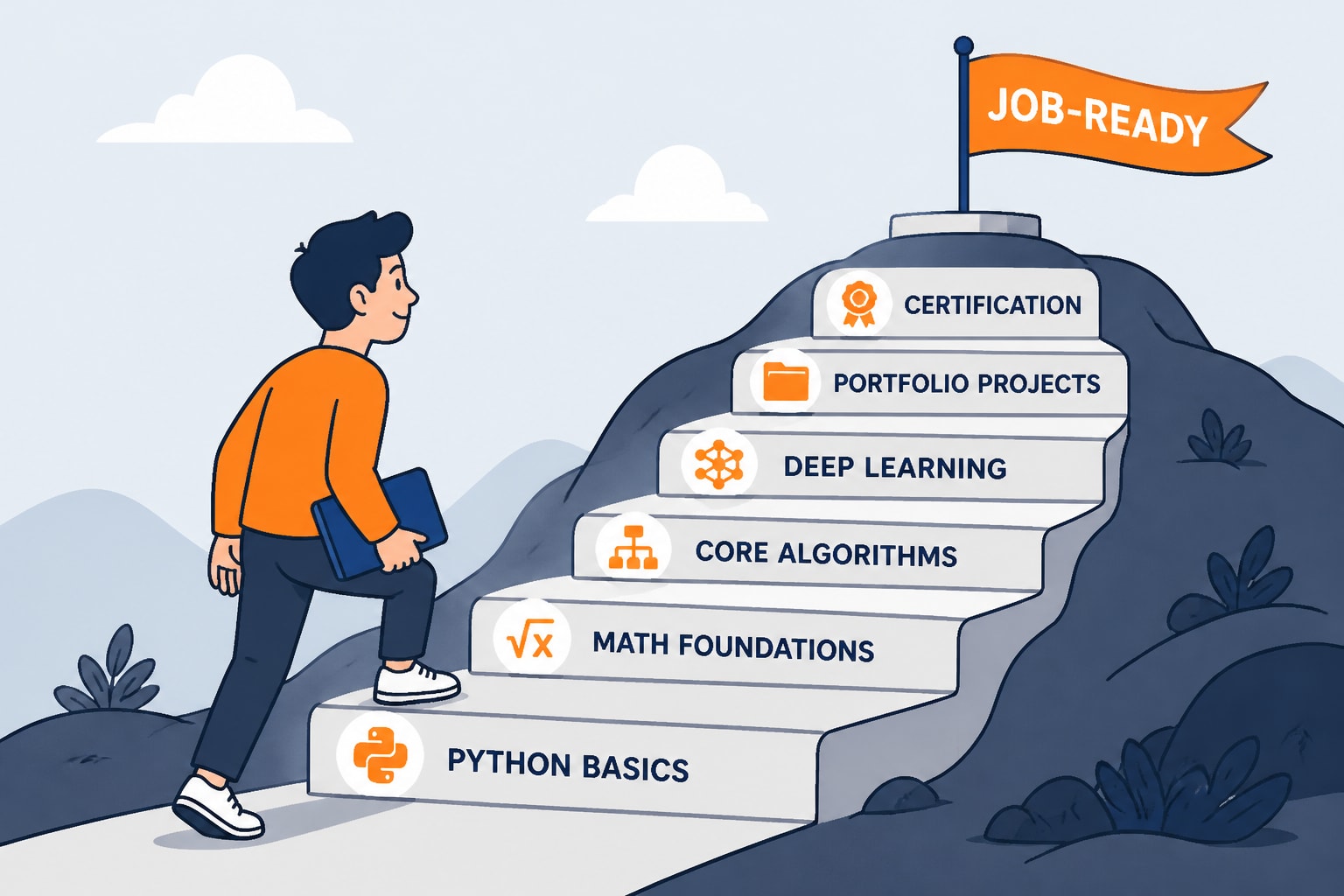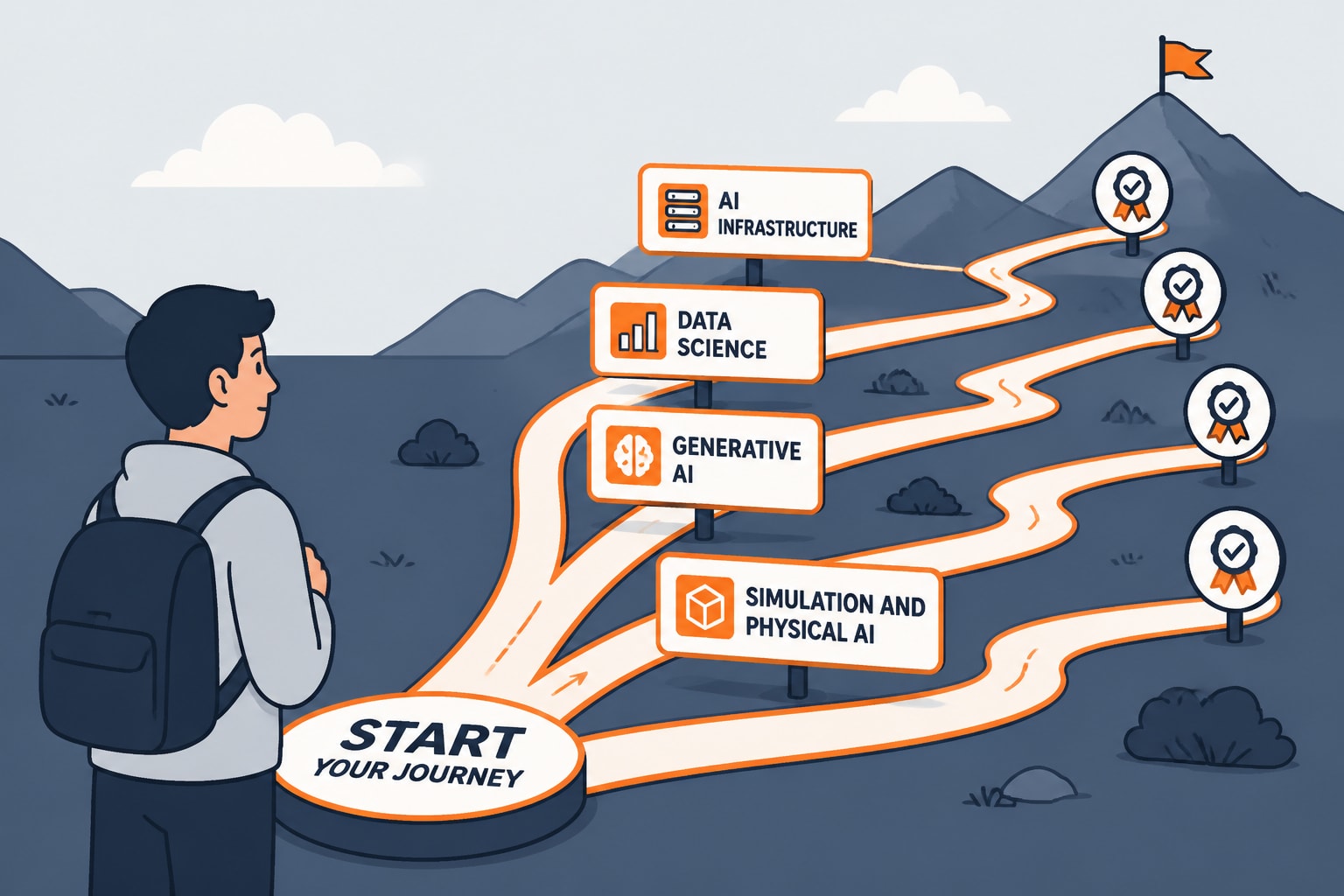
The Microsoft Azure AI Fundamentals certification is an entry-level credential that proves you understand core artificial intelligence concepts and how Azure services apply them, and it is now earned through the AI-901 exam. The earlier AI-900 exam retired on June 30, 2026, and Microsoft identifies AI-901 as its replacement. If you are a professional or career switcher choosing a first AI credential in 2026, this guide explains what the certification covers, how the exam changed, who benefits, and how to prepare.
What Is the Microsoft Azure AI Fundamentals Certification?
The Microsoft Azure AI Fundamentals certification is a foundation-level credential that verifies you can describe common AI workloads and identify which Azure AI services fit them. It does not require a data science background or prior cloud experience, which makes it a practical first step for analysts, project managers, consultants, and people moving into technology from other fields.
The credential sits at the base of Microsoft's role-based certification structure. It signals vocabulary and judgment rather than engineering depth: you can tell a classification problem from a regression problem, recognize when a vision or language service is the right tool, and discuss responsible AI with technical colleagues.
Employers use it mainly as a screening signal. For a hiring manager reviewing résumés from candidates who list "AI interest" without evidence, a Microsoft-issued credential is a verifiable, standardized proof point.
AI-900 Has Retired: What Replaced It?
AI-900 retired on June 30, 2026, and AI-901 is the exam that now leads to Azure AI Fundamentals. Anyone searching for AI-900 study material in 2026 should confirm the current exam before booking. Microsoft maintains a list of retired certification exams that can be checked for current status.
The practical consequences are straightforward:
- Old practice tests are partly outdated. AI-900 materials still teach valid concepts, but the exam emphasis has shifted.
- Hands-on work is now weighted more heavily. AI-901 puts the larger share of its score on implementing solutions, not just recognizing terms.
- Python appears in the prerequisites. Candidates are expected to read basic code, which AI-900 did not demand in the same way.
If you already hold the AI-900 credential, it remains on your transcript as earned. If you were midway through AI-900 preparation, redirect your remaining study time toward the AI-901 skills outline.
What Does the AI-901 Exam Measure?
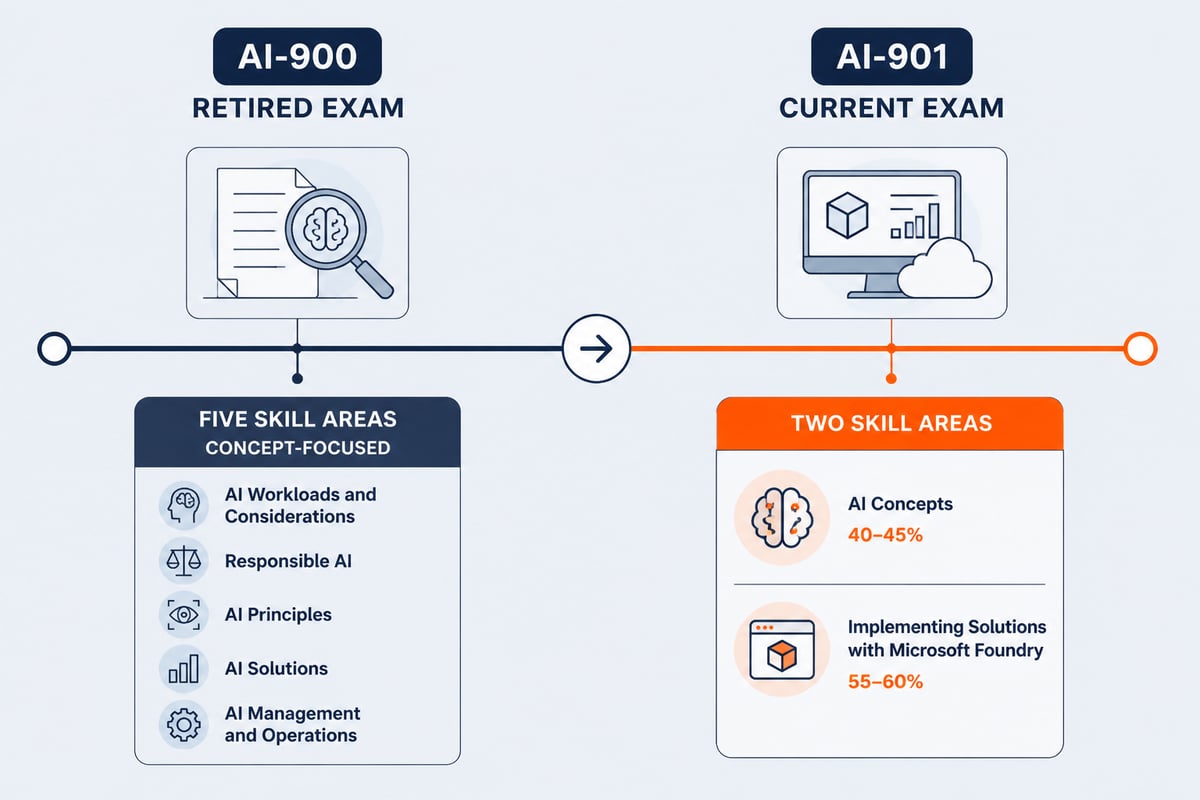
AI-901 measures two skill areas: identifying AI concepts and capabilities, and implementing AI solutions using Microsoft Foundry. According to the AI-901 study guide, skills measured as of April 15, 2026, divide as follows:
| Skill area | Weight |
|---|---|
| Identify AI concepts and capabilities | 40–45% |
| Implement AI solutions using Microsoft Foundry | 55–60% |
The first area tests whether you understand what AI can and cannot do: machine learning basics, computer vision, language processing, generative AI, and responsible AI principles. The second tests whether you can apply Azure tooling to build simple solutions.
For comparison, the retired AI-900 split its score across five areas: AI workloads and considerations, machine learning, computer vision, natural language processing, and generative AI. Microsoft's AI-900 study guide gave generative AI 20–25% and each of the other four areas 15–20%. The redesign groups those topics into fewer, more applied categories.
Who Should Earn the Azure AI Fundamentals Certification?
This certification suits professionals who need credible AI literacy without committing to an engineering track. It fits several profiles well:
- Career switchers from operations, finance, marketing, or teaching who want a recognized first credential for AI-adjacent roles.
- Business and data analysts who collaborate with machine learning teams and need shared vocabulary.
- Project and product managers scoping AI features who must judge feasibility and risk.
- Cloud and IT professionals adding an AI layer to existing Azure or infrastructure knowledge.
It is a weaker fit for people aiming directly at machine learning engineering. Those candidates gain more from role-based credentials and project work, and a fundamentals badge alone will not carry an engineering interview.
What Roles Can It Support?
Fundamentals certifications open conversations rather than guarantee offers, and the roles below are typical places where the credential adds weight to an application:
- AI solutions coordinator or specialist. Translating business needs into AI service choices.
- Data or business analyst. Working alongside model builders and interpreting AI outputs.
- Technical support or customer success for AI products. Explaining what services do and where they fail.
- Product or project manager on AI initiatives. Setting scope and managing responsible AI requirements.
Salary outcomes vary by region, experience, and employer, and no certification guarantees a pay increase. Treat it as one piece of evidence alongside a portfolio of work and relevant experience.
What Do You Need Before You Start?
You need conceptual knowledge, foundational technical skills, and some familiarity with Python and Azure resources. Microsoft's AI-901 guide states that candidates need conceptual knowledge of Azure AI solutions, foundational technical skills, Python coding syntax and programming techniques, and familiarity with Azure resources.
You do not need to be a developer. Reading a short Python script, understanding variables, functions, and API calls, and recognizing what an Azure resource is will cover the baseline. If Python is new to you, spend two to three weeks on basics before starting exam content, because the implementation questions assume you can follow code without stumbling on syntax.
How Should You Study for It?
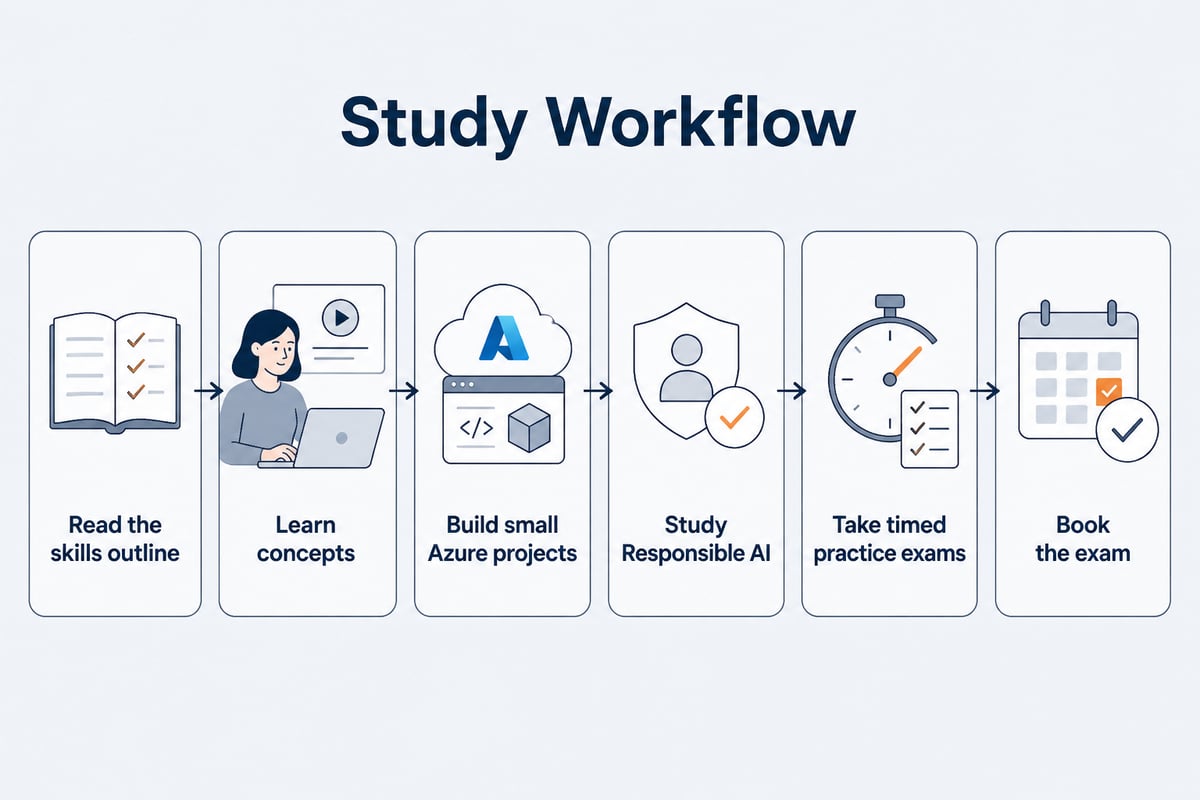
A four-to-six-week plan with structured sequencing works well for working professionals studying around a full-time job. The approach below moves from concepts to hands-on work to assessment.
- Read the official skills outline first. Print the AI-901 study guide and mark each line item as strong, shaky, or unknown. This becomes your study map.
- Learn the concepts in plain language. Understand supervised versus unsupervised learning, what a model is, how computer vision and language tasks differ, and what generative AI does. A course such as Machine Learning Fundamentals builds this base before you touch Azure tooling.
- Build small things in Azure. Because the larger share of the score covers implementation, create a resource, call a service, and run a short Python script that returns a result. Repetition beats reading here.
- Study responsible AI as its own topic. Fairness, reliability, privacy, transparency, inclusiveness, and accountability appear in scenario questions. Learn each principle with one concrete example.
- Take timed practice exams. Use them diagnostically: every wrong answer points to a line in the skills outline to revisit.
- Book the exam once you score consistently well. Aim for a comfortable margin above the passing threshold rather than a borderline result.
Where Does Hands-On Practice Fit In?
Hands-on practice carries more weight now than it did under AI-900, because 55–60% of the AI-901 score concerns implementing solutions with Microsoft Foundry. Reading about a service and using it are different skills, and exam scenarios reward the second.
A useful routine is to pair every concept with a tiny build. When you study computer vision, run an image through a vision service and read the response. When you study language tasks, send text to a language endpoint and inspect the output fields. When you study generative AI, write a prompt, adjust parameters, and observe how output changes.
Keep a short log of what each service accepts as input and returns as output. Scenario questions often hinge on exactly that distinction, such as whether a task needs extraction, classification, or generation.
Which Common Mistakes Cost Candidates Points?
Most failed attempts trace back to preparing for the wrong exam version or skipping the implementation material. Watch for these patterns:
- Studying retired AI-900 dumps. The topic emphasis has moved, and question styles differ.
- Memorizing service names without use cases. The exam asks which service solves a described problem, not what a service is called.
- Ignoring Python. Candidates who skip basic code reading lose points on implementation scenarios.
- Treating responsible AI as filler. It is tested through realistic scenarios and rewards precise reasoning.
- Skipping the passing-score reality. The retired AI-900 required a score of 700 to pass, and you should confirm the current passing requirement for AI-901 on the exam page before test day.
How Do Different Preparation Options Compare?
Each option suits a different learner, and combining two usually works better than relying on one. The table compares them on the attributes that matter most for a working professional.
| Option | Structure | Hands-on practice | Best use |
|---|---|---|---|
| Official Microsoft documentation and learning paths | Moderate | Strong | Authoritative baseline and skills outline |
| Structured course with assessments | High | Varies by course | Guided pacing and accountability |
| Practice exams | Low | None | Diagnosing weak areas |
| Self-built mini projects | None | Very strong | Implementation confidence and portfolio evidence |
A sensible pairing is a structured course for pacing plus self-built projects for implementation fluency, with practice exams in the final week. Our guide to AI certification online compares credential routes if you are weighing several options.
How Does MammothClub Support AI Certification Study?
MammothClub offers structured certification paths with built-in assessments, project portfolios, and proctored final exams, plus text-first lessons built to be applied the same day. Courses, labs, and assessments are updated monthly as tools change, which matters when an exam has just been replaced. The platform lists over 500,000 practice exam questions, and one membership, Mammoth Club Unlimited Membership, covers courses, practice labs, templates, and digital assets. For readers who want to continue beyond fundamentals, the Azure AI Associate guide outlines the next level of Microsoft AI credentials.
What Does the Exam Day Experience Look Like?
Exam logistics such as price, duration, question count, and delivery options can change, so confirm them on Microsoft's AI-901 exam page when you schedule. Plan around a few reliable habits regardless of the format.
Test your equipment and room setup a day early if you take the exam online. Read each scenario fully before looking at answer choices, and flag any question that needs a second look rather than spending several minutes on it. Because the exam leans on implementation, expect scenario-based items that describe a business need and ask which approach or service fits.
If you do not pass, review the score report by skill area, return to the study guide lines tied to your weakest sections, and rebook after targeted practice.
Is the Microsoft Azure AI Fundamentals Certification Worth It?
Yes, for professionals who need a recognized, low-barrier proof of AI literacy and who will back it up with practical work. It is a foundation-level credential issued by a vendor employers recognize, and its content transfers to everyday conversations about AI projects.
It is worth less as a standalone differentiator. Pair it with a small portfolio, such as a documented Azure service demo or a short write-up of an AI use case in your current job. Hypothetical example: an operations analyst who earns the credential and also builds a simple text-classification demo for support tickets presents a far stronger story than someone listing the badge alone.
Frequently Asked Questions
Is the AI-900 exam still available?
No. AI-900 retired on June 30, 2026, and Microsoft names AI-901 as the replacement for Azure AI Fundamentals. Verify current status on the official exam page before booking.
Do I need to know how to code?
You need basic Python reading skills. Microsoft's AI-901 guide lists Python syntax and programming techniques among the expected skills, though you are not expected to be a professional developer.
How long does preparation take?
Many working professionals plan four to six weeks of part-time study. Candidates with Azure or Python experience may need less, while complete beginners should add time for programming basics.
Does the certification expire?
Check Microsoft's certification pages for the current renewal policy, since it can change.
Will it get me a job on its own?
No credential guarantees employment. It strengthens an application when combined with relevant experience, a portfolio, and the ability to explain AI concepts clearly in interviews.
Can I use old AI-900 study materials?
Use them only as supplementary concept review. The skills outline, weighting, and emphasis on implementation differ, so build your plan from the AI-901 study guide.
Your next step is to open the AI-901 study guide, mark every skill line as strong, shaky, or unknown, and use that map to set a four-to-six-week schedule. If you want structure, practice labs, and assessments in one place, Mammoth Club Unlimited Membership gives you courses, certification paths, and practice questions under a single plan. MammothClub is a global AI learning platform that helps professionals and organizations upskill fast, with 3,000+ on-demand tech and AI courses, interactive bootcamps, and corporate certification programs, so you can start unlimited and build toward your first Azure AI credential at your own pace.