The demand for artificial intelligence expertise continues to surge across industries, but not everyone has the time or resources for a traditional four-year degree. A short course artificial intelligence program offers a practical alternative, delivering focused, career-ready skills in weeks or months rather than years. These intensive learning experiences have become essential tools for professionals looking to stay relevant in an AI-driven economy, providing targeted knowledge that directly translates to workplace applications. Whether you're a business analyst seeking to understand machine learning fundamentals or a developer aiming to implement AI solutions, short-form training has evolved into a powerful pathway for rapid upskilling.
Understanding Short Course Artificial Intelligence Programs
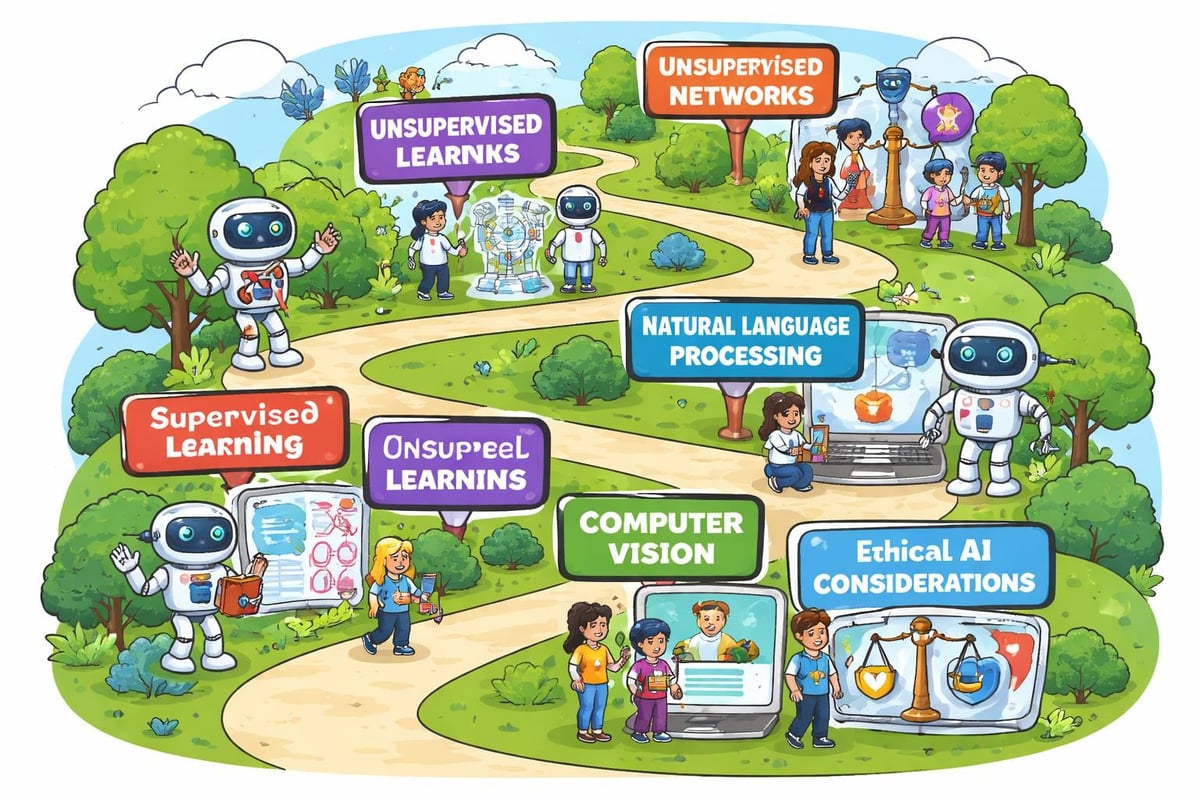
Short course artificial intelligence programs represent a fundamental shift in how professionals acquire technical skills. Unlike traditional degree programs that span multiple years, these courses compress essential AI knowledge into digestible formats ranging from a few days to several months.
The typical structure includes:
- Intensive bootcamps (1-4 weeks) with full-time engagement
- Part-time evening or weekend programs (6-12 weeks) for working professionals
- Self-paced online modules (4-16 weeks) with flexible scheduling
- Hybrid formats combining live instruction with asynchronous learning
These programs prioritize practical application over theoretical depth. Students work with real datasets, build functional models, and solve industry-relevant problems rather than spending semesters on mathematical proofs. This approach makes AI accessible to career changers and professionals who need immediate, applicable knowledge.
Who Benefits Most From Short AI Courses
Career professionals at inflection points gain the most value. Mid-level managers transitioning into AI leadership roles use these courses to build technical fluency without abandoning their careers. Software developers expanding into machine learning find focused training more efficient than self-study.
Organizations also invest heavily in short course artificial intelligence training for teams. Corporate cohorts complete programs together, creating shared vocabulary and capabilities across departments. This synchronized learning accelerates AI adoption at the organizational level.
What You'll Actually Learn in a Quality AI Short Course
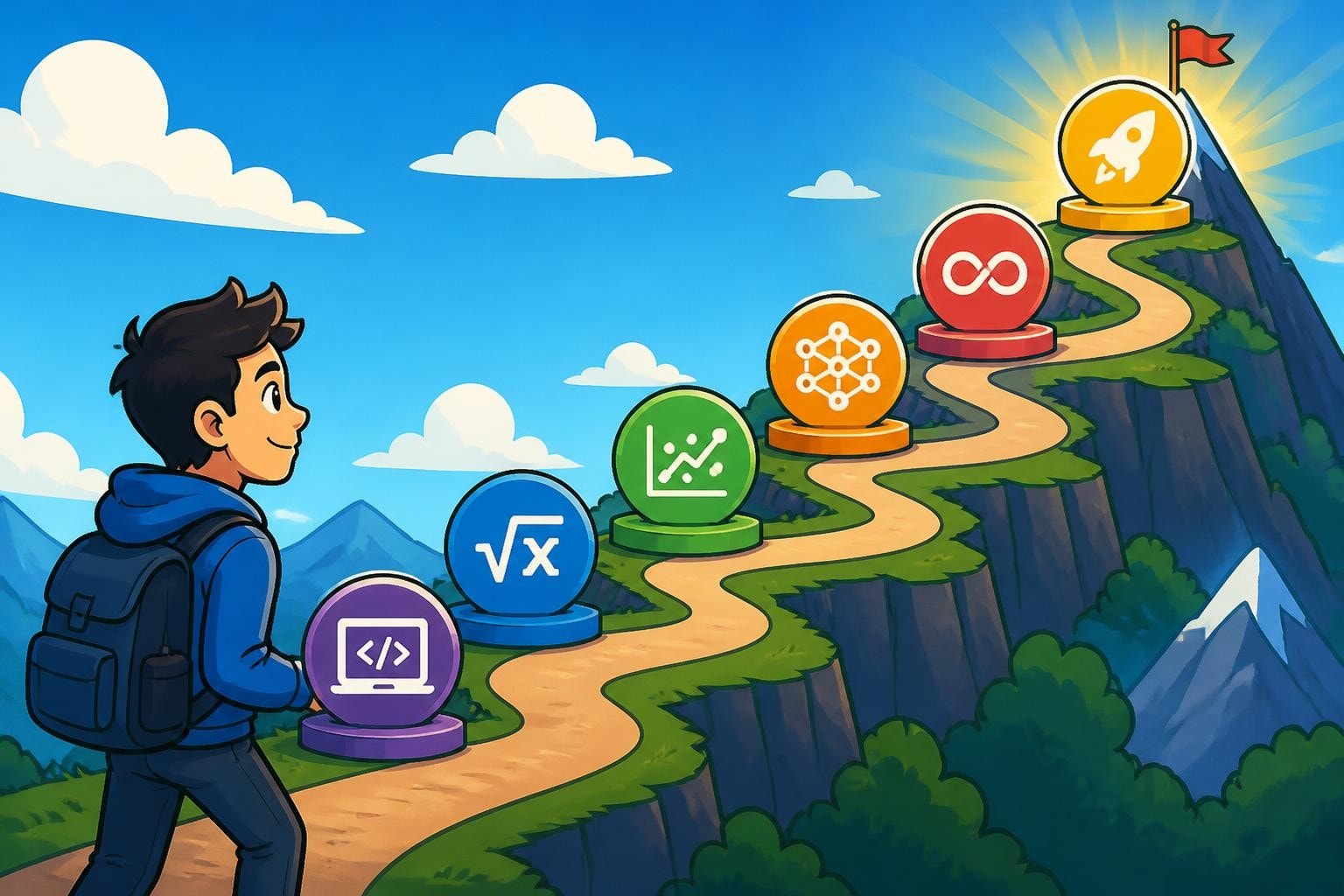
The curriculum in reputable programs balances foundational concepts with hands-on practice. Most courses begin with essential mathematics-linear algebra, probability, and statistics-presented through the lens of practical application rather than pure theory.
| Core Topic | Skills Developed | Time Investment |
|---|---|---|
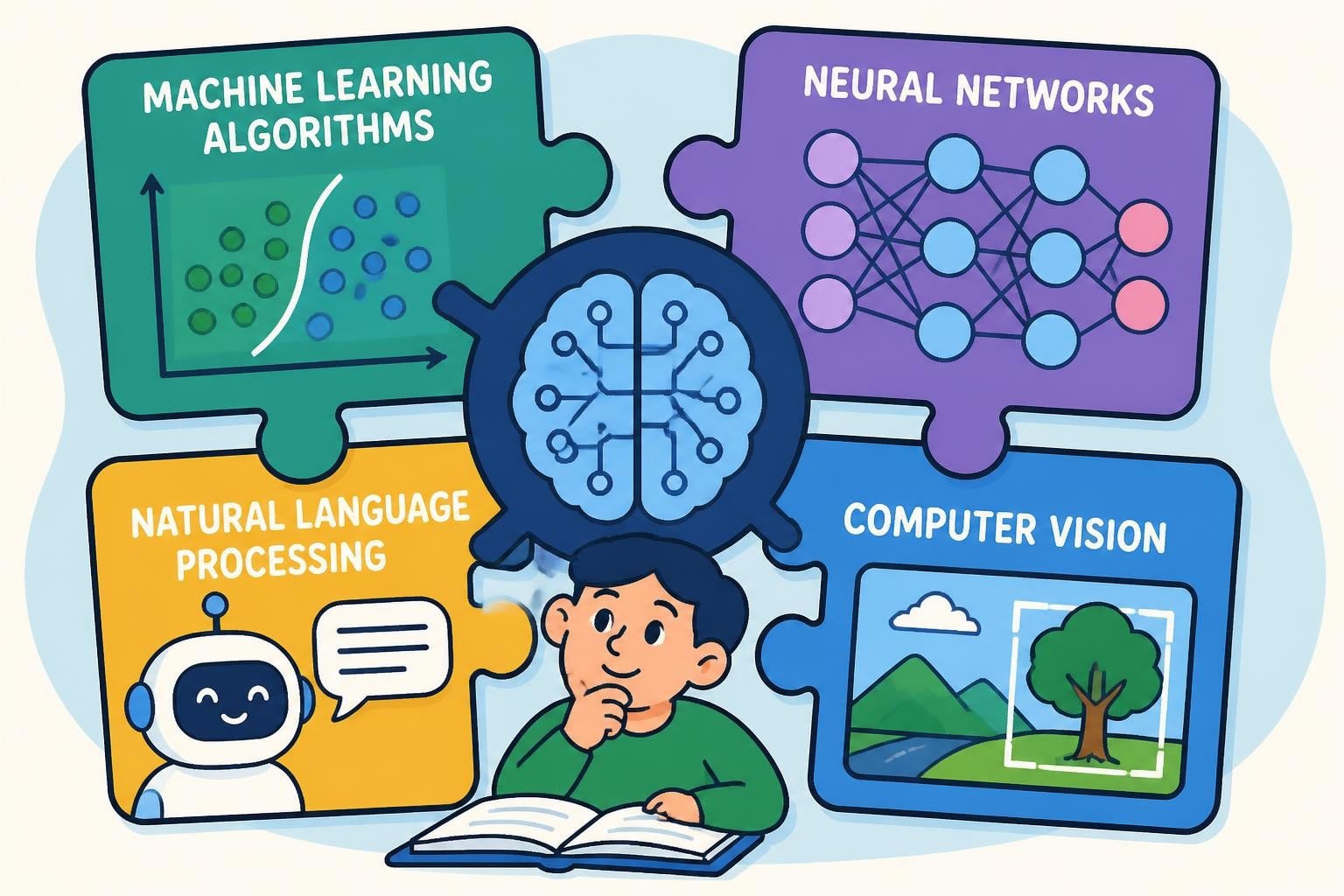
| Machine Learning Fundamentals | Supervised/unsupervised learning, model evaluation | 25-30% |
| Neural Networks & Deep Learning | Architecture design, training optimization | 25-30% |
| Practical Tools & Frameworks | TensorFlow, PyTorch, scikit-learn | 20-25% |
| Domain Applications | NLP, computer vision, or industry-specific uses | 15-20% |
| Ethics & Deployment | Bias mitigation, model monitoring, governance | 5-10% |
Programs like Oxford University's professional AI courses emphasize real-world problem-solving, teaching students to identify where AI adds value and where traditional approaches work better. This critical thinking component separates effective programs from simple skills training.
Technical Prerequisites and Preparation
Most short course artificial intelligence programs require basic programming knowledge, typically in Python. Students should understand variables, loops, functions, and basic data structures before enrollment. Mathematical comfort with high school algebra and basic statistics helps, though many courses provide refresher modules.
For professionals starting from scratch, completing an AI beginner course first establishes the necessary foundation. This staged approach prevents frustration and ensures students can keep pace with accelerated curricula.
Some specialized programs target specific audiences. Harvard's Business of AI Short Intensive Course focuses on strategic implications rather than technical implementation, requiring business experience instead of coding skills. Meanwhile, NCC Education's AI short course assumes IT professional backgrounds and dives directly into technical concepts.
Comparing Leading Short Course Artificial Intelligence Providers
The market offers diverse options, each with distinct strengths. Academic institutions bring research credibility and comprehensive curricula, while specialized platforms deliver industry-focused, rapidly updated content.
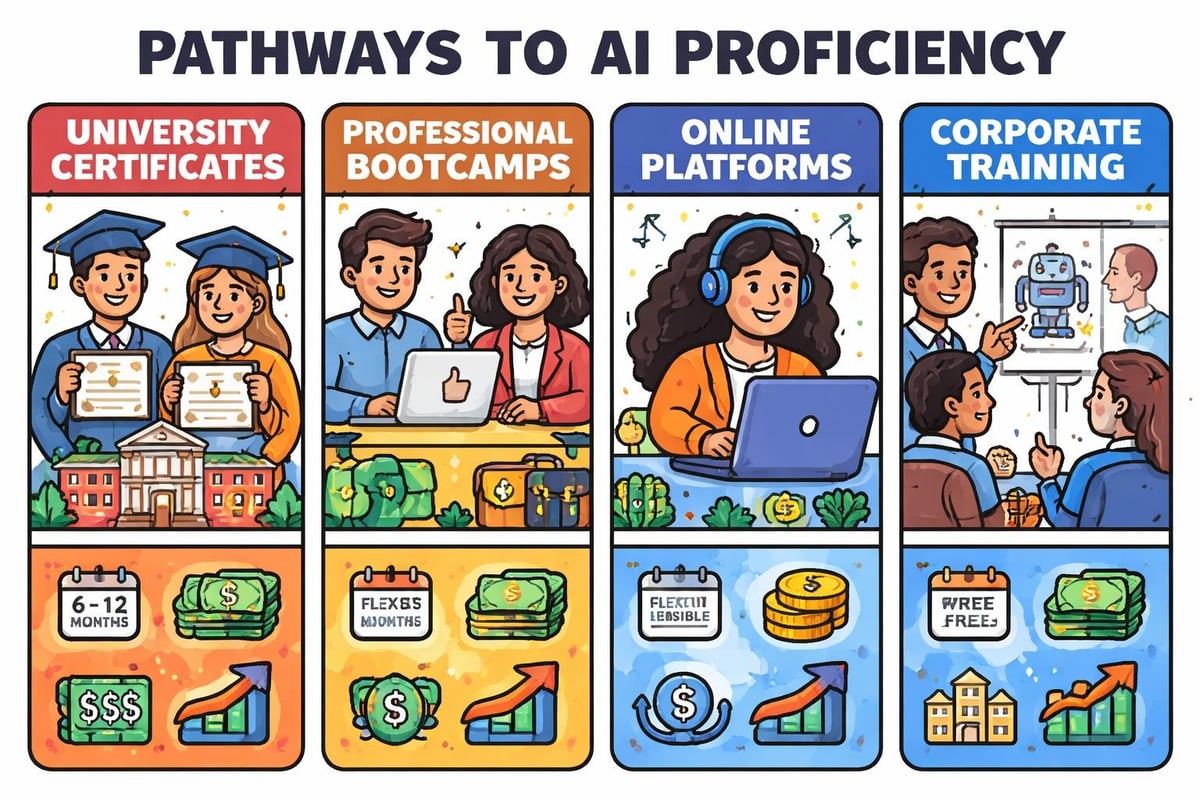
University-based programs provide prestige and depth. These courses typically cost $2,000-$8,000 and include networking opportunities with faculty and fellow professionals. The Naval Postgraduate School's AI course offers defense and security applications, demonstrating how specialized institutions target specific industries.
Platform-based learning offers flexibility and affordability. Programs on platforms like MammothClub combine structured curricula with self-paced progression, allowing professionals to balance learning with work obligations. Access to thousands of AI and tech courses enables learners to customize their education path based on evolving interests and career needs.
Professional bootcamps maximize intensity and job placement support. These programs often guarantee employment outcomes, though at premium pricing ($10,000-$20,000). The trade-off between cost and career services depends on individual circumstances and existing professional networks.
Evaluating Curriculum Quality and Relevance
Strong programs update content quarterly to reflect AI's rapid evolution. Curriculum designers should include practicing AI professionals, not just academics. Look for courses that teach current industry tools rather than deprecated frameworks.
The MERIT project's AI fundamentals course demonstrates effective structure by progressing from historical context through theoretical foundations to practical model building. This scaffolding approach builds confidence while developing competence.
Career Impact and Return on Investment
Professionals completing short course artificial intelligence programs report measurable career advancement. Salary increases average 15-25% within one year for those transitioning into AI-focused roles. Even professionals remaining in current positions often secure promotions based on expanded capabilities.
Immediate workplace applications include:
- Automating repetitive analysis tasks using machine learning
- Building predictive models for business forecasting
- Implementing chatbots and natural language interfaces
- Creating recommendation systems for customers or internal tools
- Conducting data-driven experiments with statistical rigor
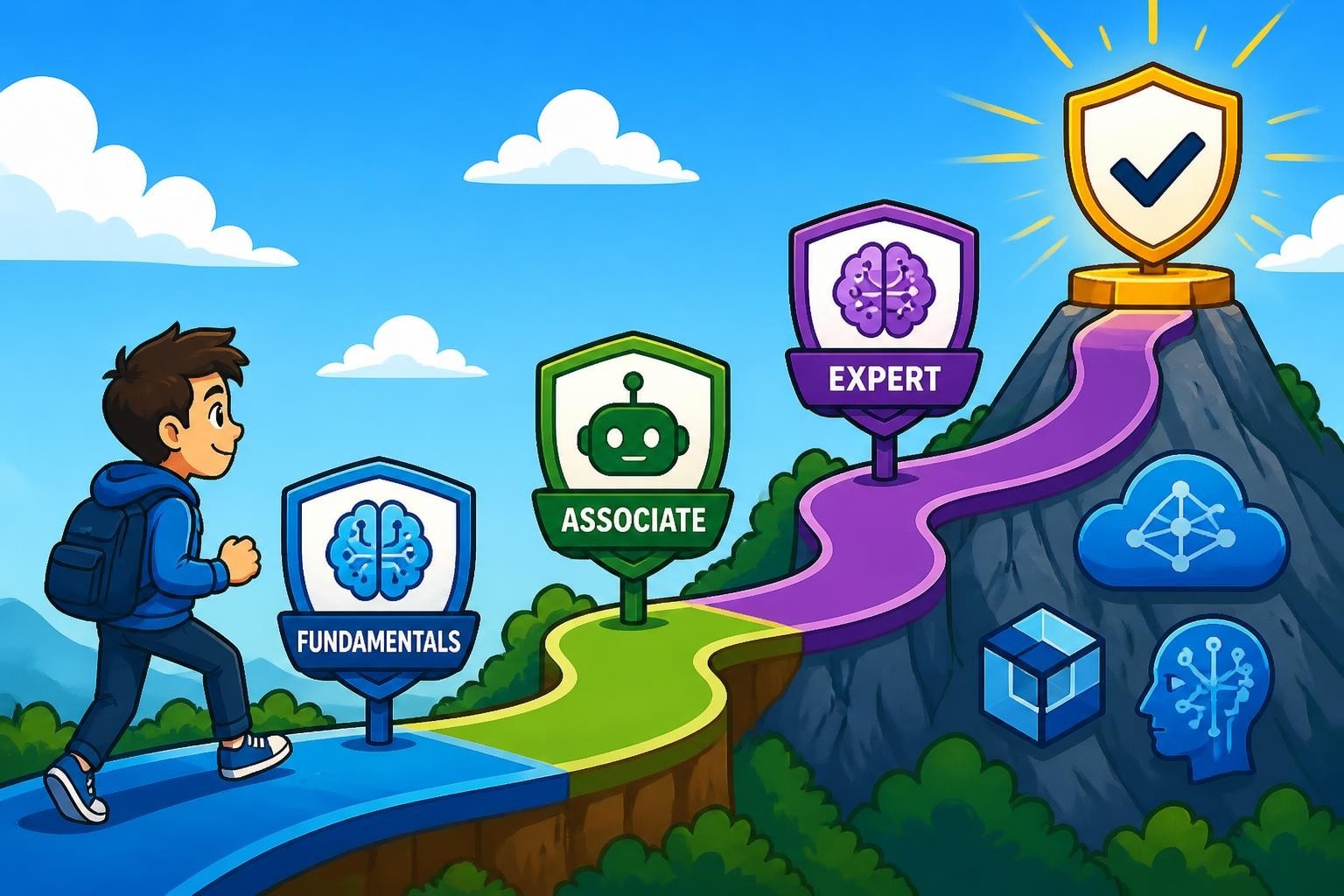
The best AI certification programs combine technical training with recognized credentials. Certifications from Microsoft, Google, or AWS add resume value, particularly when paired with demonstrated project work.
Building a Portfolio During Training
Successful students treat course projects as portfolio pieces. Rather than completing minimum requirements, they extend projects to address real problems from their workplaces or industries. This approach creates tangible proof of capabilities for employers or clients.
Contributing to open-source AI projects during training further demonstrates commitment and collaboration skills. Many short course artificial intelligence programs include capstone projects specifically designed for portfolio inclusion, with instructors providing feedback to ensure professional presentation quality.
Specialized AI Short Courses by Domain
General AI courses provide broad foundations, but domain-specific programs offer deeper value for professionals in particular fields. Healthcare AI courses cover regulatory compliance, patient privacy, and clinical validation requirements alongside technical skills. Financial services programs emphasize fraud detection, algorithmic trading, and risk modeling.
| Industry | Specialized Topics | Typical Duration |
|---|---|---|
| Healthcare | Medical imaging, clinical NLP, drug discovery | 8-12 weeks |
| Finance | Fraud detection, credit risk, algorithmic trading | 6-10 weeks |
| Manufacturing | Predictive maintenance, quality control, supply chain | 6-8 weeks |
| Legal | Contract analysis, case prediction, compliance monitoring | 4-8 weeks |
| Marketing | Customer segmentation, recommendation engines, attribution | 4-6 weeks |
The British Institute's course on AI, Law, and Ethics addresses critical governance questions that legal professionals face when deploying AI systems. This specialized focus delivers more value than generic technical training for attorneys and compliance officers.
For those exploring various options, reviewing the best courses in AI helps identify programs aligned with specific career goals and industry requirements.
Integrating AI Learning With Existing Responsibilities
Working professionals face the challenge of balancing intensive learning with job performance. Successful students treat course completion as a project, scheduling specific blocks for study and protecting that time from interruptions.
Effective time management strategies:
- Block scheduling: Dedicate specific days/times exclusively to coursework
- Communicate boundaries: Inform managers and family about learning commitments
- Leverage commute time: Review lecture notes or watch videos during travel
- Apply immediately: Use work projects as practice opportunities for new skills
- Study groups: Join or form cohorts for accountability and knowledge sharing
Many employers support AI upskilling through tuition reimbursement or dedicated professional development time. Framing your short course artificial intelligence enrollment as organizational capability building often secures management support and resource allocation.
Supplementing Short Courses With Continuous Learning
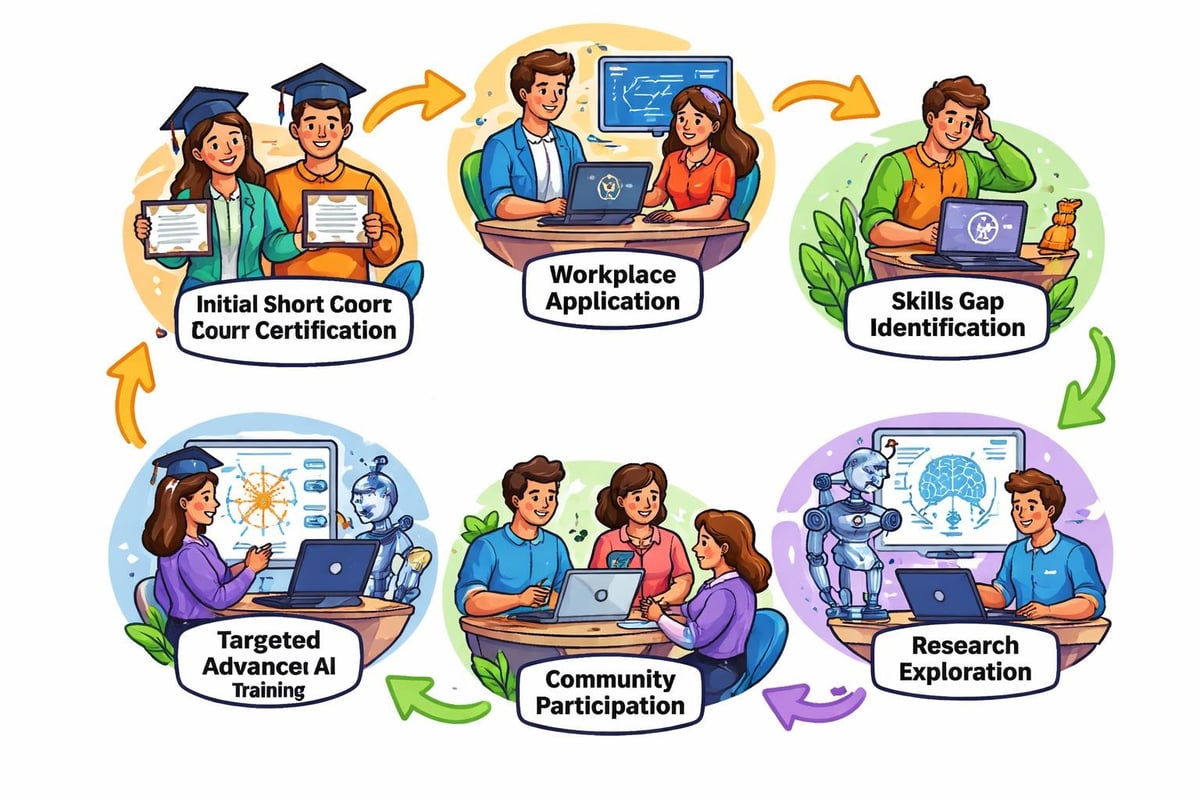
AI expertise requires ongoing learning beyond initial certification. Successful professionals supplement formal training with technical blogs, research papers, and community engagement. Following AI researchers on social media, attending virtual conferences, and participating in Kaggle competitions maintains skill currency.
Platforms offering comprehensive AI and ML courses enable continued education without repeated enrollment fees. Subscription models provide access to emerging topics like transformer architectures, reinforcement learning, and generative AI as these fields evolve.
Measuring Learning Outcomes and Skill Validation
Completion certificates alone don't validate competency. Strong programs include assessments that measure practical ability rather than memorization. Look for courses requiring students to build functional models, debug broken code, and explain model decisions in business terms.
Effective skill validation methods include:
- Capstone projects demonstrating end-to-end AI solution development
- Peer code reviews building collaborative and quality assurance skills
- Technical presentations proving ability to communicate complex concepts
- Timed practical exams testing problem-solving under pressure
- Portfolio evaluations by industry practitioners providing external validation
Some programs partner with platforms like G3MS to provide AI-powered personalized feedback throughout the learning journey, helping students identify knowledge gaps and adjust study focus before final assessments.
Connecting Course Completion to Career Opportunities
The transition from student to practitioner requires intentional effort. Update your LinkedIn profile with new skills and certifications immediately upon completion. Share course projects publicly on GitHub with thorough documentation explaining your approach and results.
Networking during short course artificial intelligence programs often matters as much as content. Classmates become professional contacts, instructors provide industry insights and references, and teaching assistants frequently work at companies hiring AI talent.
For professionals pursuing AI specialist roles, combining multiple short courses creates comprehensive expertise. A foundational AI course followed by specialized training in computer vision or NLP demonstrates both breadth and depth to potential employers.
Corporate Training Programs and Team Upskilling
Organizations increasingly deploy short course artificial intelligence training at scale. Corporate programs differ from individual learning through customized content addressing company-specific use cases, internal tools, and data environments.
Benefits of team-based AI training:
- Shared vocabulary accelerating cross-functional collaboration
- Critical mass of AI-capable employees enabling project launches
- Cultural transformation toward data-driven decision making
- Talent retention through visible investment in employee development
- Competitive advantage from faster AI adoption than competitors
Companies often partner with learning platforms to create custom learning paths combining standardized courses with proprietary content. This hybrid approach balances cost efficiency with organizational specificity.
Leadership buy-in determines corporate training success. When executives participate in abbreviated versions of technical courses, they gain realistic expectations about AI capabilities and limitations, leading to better project prioritization and resource allocation.
Selecting the Right Short Course Artificial Intelligence Program
Decision criteria should balance personal learning preferences, career goals, budget constraints, and time availability. Auditing sample content before enrollment reveals teaching quality and curriculum relevance.
Key evaluation questions:
- Does the curriculum cover tools currently used in your target industry?
- Are instructors practicing AI professionals with recent industry experience?
- Does the course include hands-on projects with real datasets?
- Will you receive individual feedback on your work or only automated grading?
- Does completion provide recognized certification or just a participation badge?
- Can you access course materials after completion for reference?
- Does the provider offer career support or job placement assistance?
Reading alumni reviews on independent platforms provides unfiltered perspectives on program quality. Look for specific feedback about skill acquisition and career impact rather than general satisfaction ratings.
For those exploring multiple options simultaneously, comparing AI courses on Coursera with university programs and specialized bootcamps reveals trade-offs between flexibility, rigor, and cost.
The Future of Short-Form AI Education
AI education itself increasingly incorporates AI technology. Adaptive learning platforms adjust difficulty based on performance, personalized recommendation engines suggest supplementary resources, and automated code review tools provide instant feedback on programming assignments.
Virtual reality and immersive simulations will likely enhance hands-on learning for complex topics like neural network architecture or reinforcement learning. These technologies allow students to visualize abstract concepts and experiment with parameters in controlled environments.
The distinction between short courses and traditional degrees continues blurring. Stackable credentials allow professionals to complete multiple short programs that collectively equal a full degree, providing flexibility while maintaining academic rigor. Universities increasingly recognize prior learning from professional courses, reducing duplication and accelerating completion.
As AI becomes foundational rather than specialized knowledge, short course artificial intelligence programs will evolve from career differentiators to baseline professional development. The professionals thriving in coming years will be those who embrace continuous learning, viewing each course as one step in an ongoing education journey rather than a destination.
Short course artificial intelligence programs provide an efficient pathway to career-relevant skills in an era where AI expertise drives competitive advantage across industries. By selecting programs aligned with your goals and committing to hands-on application, you can develop practical capabilities that translate directly to workplace value. MammothClub offers over 3,000 AI and tech courses designed for rapid skill development, with AI-powered learning tools that personalize your education journey and corporate programs that scale training across entire organizations, ensuring you stay competitive in the AI era.