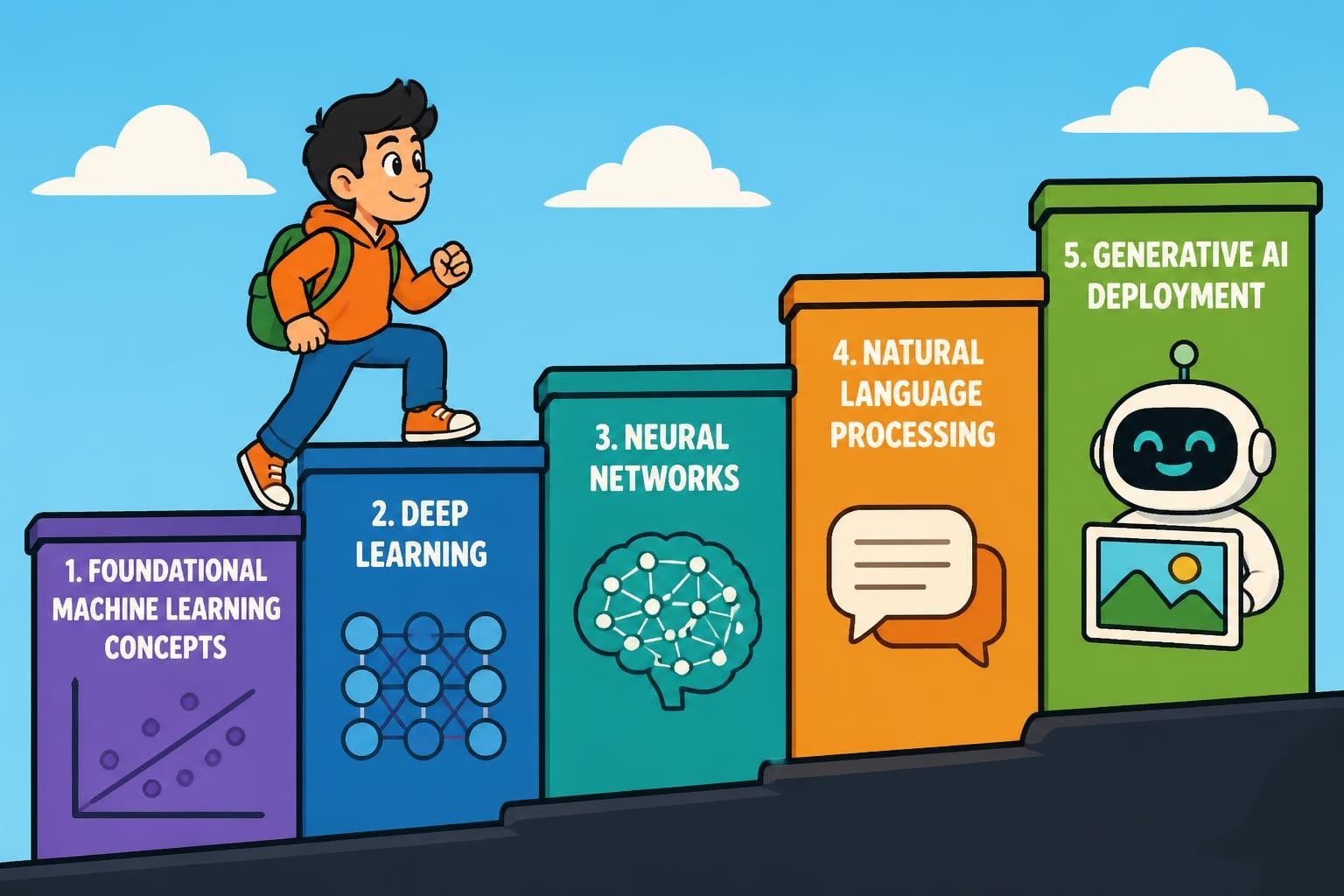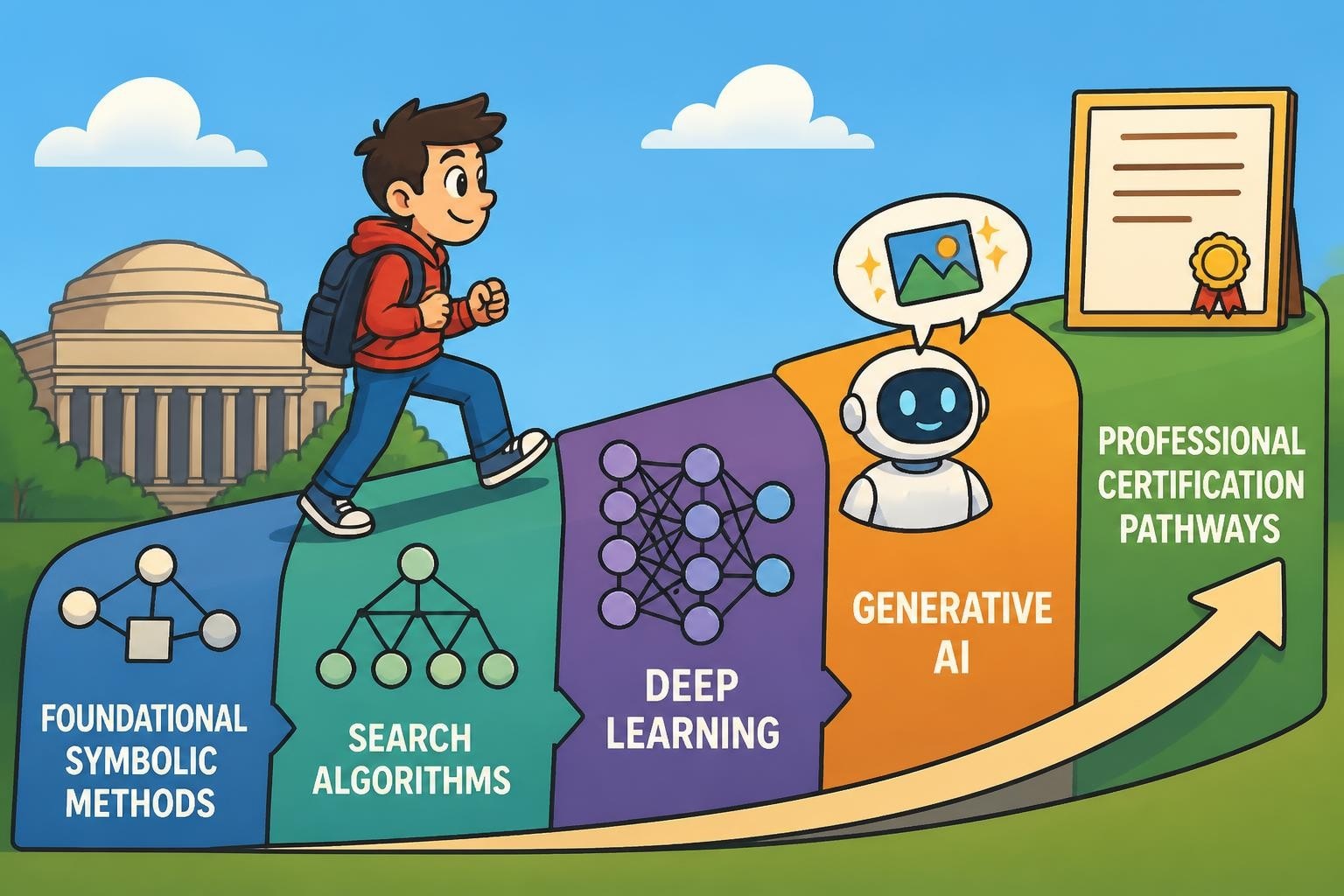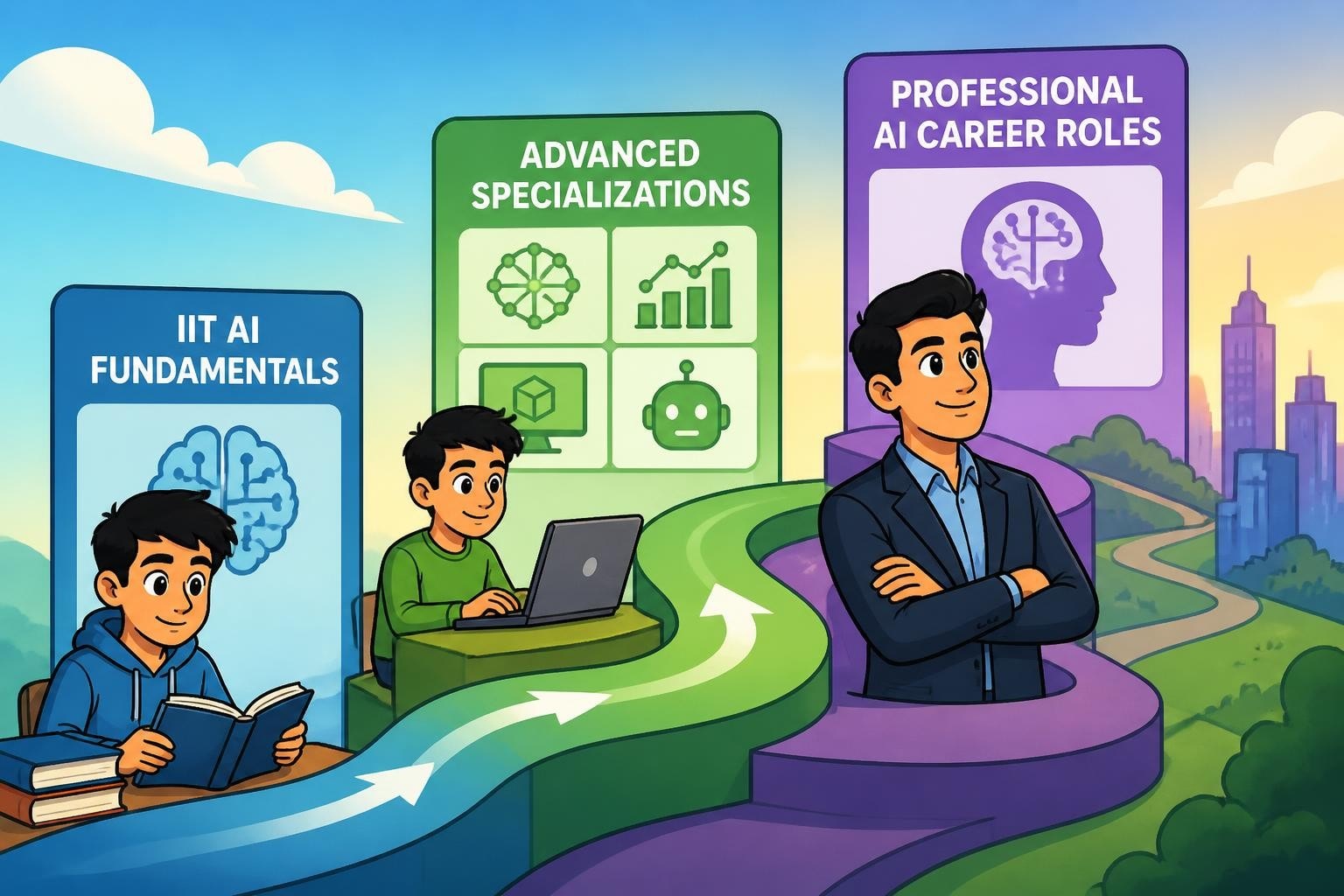
The rapid advancement of artificial intelligence has created an urgent need for business professionals to understand how AI technologies can drive competitive advantage, operational efficiency, and strategic innovation. An ai business course provides the structured knowledge framework that leaders, managers, and teams need to navigate this transformative landscape. Whether you're a C-suite executive making technology investment decisions or a mid-level manager implementing AI solutions within your department, understanding the fundamentals of artificial intelligence, machine learning applications, and data-driven decision-making has become essential for career advancement and organizational success. The right training program bridges the gap between technical concepts and practical business applications, empowering professionals to lead confidently in an AI-driven economy.
Why Business Professionals Need AI Training Now
The business landscape in 2026 has fundamentally shifted. Organizations that successfully integrate artificial intelligence into their operations consistently outperform competitors across virtually every industry sector. AI adoption is no longer optional-it's a critical survival mechanism for companies seeking to maintain market relevance.
The Competitive Imperative
Business leaders face mounting pressure to demonstrate AI competency and implementation capabilities. According to the Artificial Intelligence Index Report 2024, AI's influence continues to expand across industries, with companies reporting significant productivity gains and cost reductions. Those without structured AI knowledge risk making costly strategic errors or missing transformative opportunities.
An ai business course addresses several critical organizational needs:
- Strategic Decision-Making: Understanding AI capabilities and limitations enables better technology investment choices
- Operational Efficiency: Identifying automation opportunities and implementing AI-driven processes
- Competitive Analysis: Recognizing how competitors leverage AI and developing counter-strategies
- Risk Management: Evaluating ethical considerations, bias issues, and regulatory compliance
- Team Leadership: Communicating AI initiatives effectively across technical and non-technical stakeholders
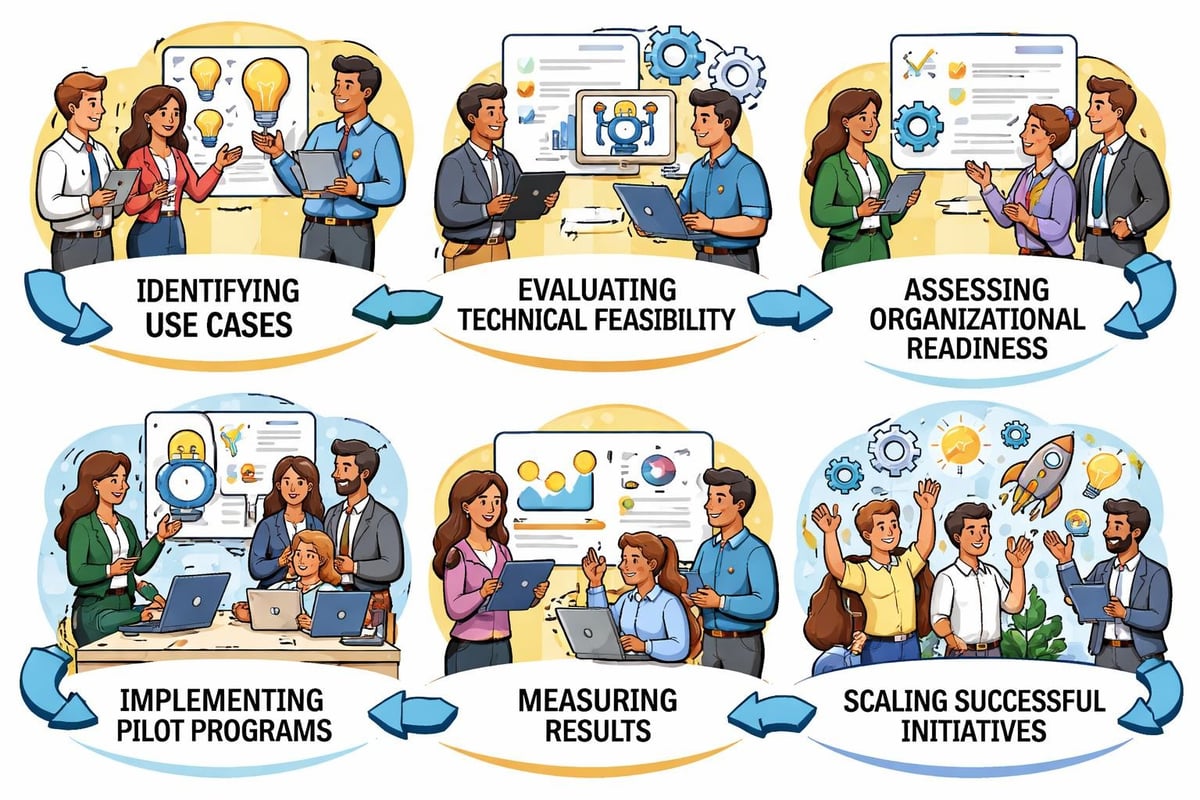
Bridging the Knowledge Gap
Most business professionals possess deep domain expertise but lack technical AI knowledge. Conversely, data scientists and AI engineers often struggle to translate technical capabilities into business value. This gap creates communication breakdowns, misaligned expectations, and failed AI projects.
Quality training programs designed specifically for business audiences solve this problem by focusing on practical applications rather than mathematical complexity. Professionals learn to ask the right questions, evaluate vendor claims, assess project feasibility, and set realistic expectations without becoming technical experts themselves.
Core Components of an Effective AI Business Course
Not all training programs deliver equal value. The most effective ai business course offerings share several distinguishing characteristics that separate transformative learning experiences from superficial overviews.
Curriculum Essentials
A comprehensive business-focused AI curriculum should cover both foundational concepts and advanced strategic applications. The following table outlines critical topic areas:
| Topic Category | Key Learning Outcomes | Business Application |
|---|---|---|
| AI Fundamentals | Understanding machine learning, neural networks, NLP, computer vision | Identifying appropriate AI solutions for specific business challenges |
| Predictive Analytics | Leveraging data for forecasting, pattern recognition, anomaly detection | Improving demand planning, risk assessment, customer behavior prediction |
| Generative AI | Applications of GPT, DALL-E, and similar technologies | Content creation, customer service automation, product design |
| Implementation Strategy | Project planning, stakeholder management, change management | Successfully deploying AI initiatives with organizational buy-in |
| Ethics & Governance | Bias mitigation, transparency, accountability, regulatory compliance | Building trustworthy AI systems that protect brand reputation |
Harvard's Division of Continuing Education offers intensive AI courses that exemplify this comprehensive approach, combining technical understanding with strategic business applications tailored for executive audiences.
Hands-On Learning Components
Theoretical knowledge alone proves insufficient. Effective programs incorporate practical exercises, case studies, and simulation environments where learners apply concepts to realistic business scenarios. This experiential approach accelerates skill development and builds confidence in real-world application.
Interactive components should include:
- Industry-Specific Case Studies: Examining successful and failed AI implementations within your sector
- Decision Simulation Exercises: Evaluating AI vendor proposals, prioritizing use cases, allocating budgets
- Team Collaboration Projects: Working across functions to design AI solutions for complex business problems
- Tool Demonstrations: Hands-on experience with business intelligence platforms, AutoML tools, and analytics dashboards
- Expert Q&A Sessions: Direct access to practitioners who have led successful AI transformations
The University of Maryland's AI for Business Leaders course demonstrates this balanced approach, offering domain-specific applications across supply chain, healthcare, finance, and marketing contexts.
Choosing the Right Training Format
Organizations and individuals face numerous options when selecting an ai business course, from self-paced online programs to intensive bootcamps and university certifications. Understanding the strengths and limitations of each format helps match learning approaches to specific needs and constraints.
Learning Delivery Models
Different professionals require different learning structures based on time availability, budget constraints, learning preferences, and career objectives. Consider these factors when evaluating program options:
Self-Paced Online Courses provide maximum flexibility for busy professionals managing demanding schedules. These programs allow learners to progress through materials at their own speed, typically offering lifetime access to content updates. However, they require significant self-discipline and may lack the networking opportunities of cohort-based programs.
Instructor-Led Virtual Classes combine flexibility with structured schedules and real-time interaction. These sessions facilitate immediate question resolution, peer discussion, and accountability mechanisms that improve completion rates. The synchronous format works well for distributed teams training together.
In-Person Bootcamps deliver intensive, immersive experiences that compress months of learning into weeks. The focused environment minimizes distractions and maximizes engagement, while face-to-face networking builds lasting professional relationships. However, they require significant time away from work and typically command premium pricing.
Corporate Training Programs customize curriculum to organizational needs, industry context, and existing technology infrastructure. These initiatives ensure consistent knowledge across teams and can integrate directly with strategic implementation plans. Organizations like MammothClub specialize in these tailored corporate certification programs that align learning outcomes with business objectives.
Certification and Credentials
Professional credentials signal competency to employers, clients, and colleagues. When evaluating an ai business course, consider whether certification adds value to your career trajectory and whether the issuing institution commands industry respect.
Reputable certification programs include rigorous assessment mechanisms, maintain current curriculum reflecting latest AI developments, and require periodic renewal to ensure ongoing relevance. Some employers specifically seek candidates with recognized AI credentials when filling leadership positions or forming AI strategy teams.
For those seeking foundational knowledge before pursuing business-specific training, starting with an AI beginner course builds the technical literacy needed to maximize value from advanced business programs.
Strategic Applications Across Business Functions
AI technologies create transformation opportunities across every organizational department. A quality ai business course explores function-specific applications, helping professionals identify high-impact use cases within their areas of responsibility.
Marketing and Customer Experience
Marketing departments have rapidly adopted AI for personalization, campaign optimization, and customer journey mapping. Machine learning algorithms analyze behavioral patterns to predict purchase intent, recommend products, segment audiences with unprecedented precision, and optimize ad spending across channels.
Content creation has been revolutionized by generative AI tools that produce copy variations, generate visual assets, and personalize messaging at scale. However, successful implementation requires understanding model limitations, maintaining brand voice consistency, and implementing quality control processes.
Customer service transformation through conversational AI, chatbots, and intelligent routing systems reduces costs while improving response times and satisfaction scores. Leaders must balance automation efficiency with maintaining authentic customer relationships and handling complex scenarios requiring human empathy.
Operations and Supply Chain
Operational leaders leverage predictive analytics for demand forecasting, inventory optimization, predictive maintenance, and quality control. AI systems identify patterns invisible to human analysts, enabling proactive interventions that prevent disruptions and reduce waste.
Supply chain applications include:
- Route optimization algorithms that reduce transportation costs and delivery times
- Supplier risk assessment models that identify potential disruptions before they occur
- Automated procurement systems that negotiate contracts and optimize purchasing decisions
- Warehouse robotics coordinated through AI planning systems
- Dynamic pricing strategies that respond to market conditions in real-time
Understanding these capabilities allows operations managers to evaluate vendor solutions critically and design implementation strategies that deliver measurable ROI. The Enterprise AI Canvas framework provides structured guidance for integrating AI into operational workflows while addressing organizational transformation challenges.
Finance and Risk Management
Financial services organizations pioneered many AI applications now spreading across industries. Fraud detection, credit scoring, algorithmic trading, and regulatory compliance all benefit from machine learning capabilities that process vast data volumes and identify subtle anomalies.
Risk management functions use AI for scenario modeling, stress testing, and early warning systems that flag potential issues before they escalate. These tools enhance decision quality but require human oversight to avoid over-reliance on historical patterns that may not predict future conditions.
Finance leaders pursuing an ai business course gain frameworks for evaluating AI investments, understanding model validation requirements, and ensuring appropriate governance structures that satisfy regulatory expectations while capturing innovation benefits.
Human Resources and Talent Management
HR departments apply AI to recruitment screening, employee retention prediction, learning path recommendations, and performance analytics. These applications raise important ethical considerations around bias, privacy, and fairness that require careful attention.
Responsible AI implementation in HR demands transparency about how algorithms make decisions, regular bias audits, and human oversight of high-stakes determinations. Training programs should address these ethical dimensions alongside technical capabilities, preparing leaders to build trustworthy systems that respect employee dignity while improving organizational effectiveness.
Measuring ROI from AI Training Investments
Organizations investing in employee development rightfully expect measurable returns. An ai business course should equip participants not only with knowledge but also with frameworks for demonstrating training impact through quantifiable business outcomes.
Key Performance Indicators
Effective measurement requires establishing baseline metrics before training begins, then tracking changes across relevant dimensions. Consider both immediate knowledge gains and longer-term behavioral changes that drive business results.
| Metric Category | Example Indicators | Measurement Timeline |
|---|---|---|
| Knowledge Acquisition | Assessment scores, certification completion rates | Immediate (0-3 months) |
| Behavioral Change | AI project proposals submitted, tool adoption rates | Short-term (3-6 months) |
| Operational Impact | Process efficiency gains, cost reductions, time savings | Medium-term (6-12 months) |
| Strategic Outcomes | Revenue growth, market share gains, innovation metrics | Long-term (12+ months) |
Building Business Cases for AI Initiatives
Training participants should leave programs capable of constructing compelling business cases for AI investments. This skill requires understanding how to identify high-value use cases, estimate implementation costs and timelines, project realistic benefits, and communicate proposals effectively to decision-makers.
Strong business cases include:
- Clear Problem Definition: Articulating the specific business challenge AI will address
- Solution Architecture: Describing the proposed AI approach without excessive technical jargon
- Cost-Benefit Analysis: Quantifying expected costs, benefits, and payback periods
- Risk Assessment: Identifying potential obstacles and mitigation strategies
- Success Metrics: Defining how results will be measured and validated
Organizations that systematically track AI training outcomes typically find that participants apply learning within weeks of program completion, generating value that far exceeds education costs. For comprehensive training options that emphasize practical application, explore MammothClub's AI and ML courses designed specifically for business professionals.
Industry-Specific AI Business Training
While core AI concepts apply universally, the most valuable training programs tailor examples, case studies, and applications to specific industry contexts. Professionals learn faster and retain more when they see direct relevance to their daily challenges.
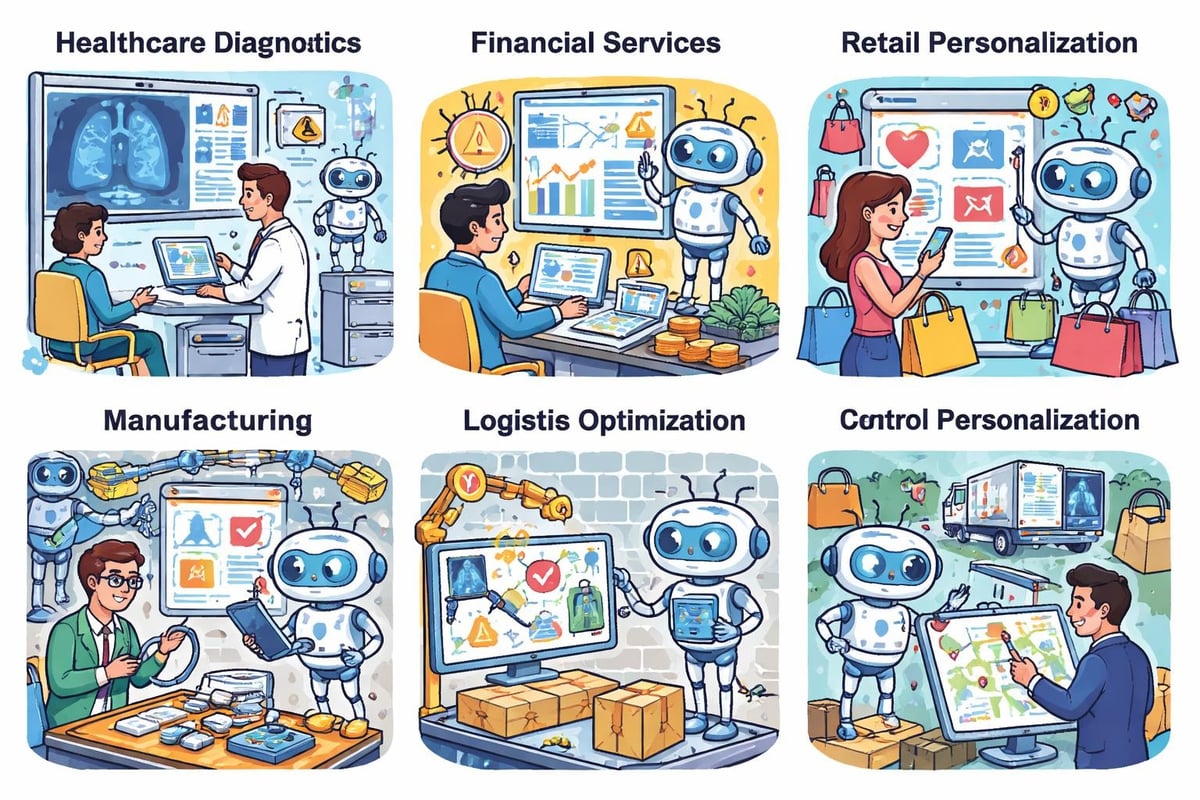
Healthcare and Life Sciences
Healthcare organizations face unique AI opportunities and constraints shaped by regulatory requirements, patient privacy concerns, and clinical validation standards. An ai business course for healthcare leaders should address:
- Diagnostic support systems that augment physician capabilities
- Drug discovery acceleration through computational modeling
- Patient risk stratification and preventive care protocols
- Operational efficiency in hospital resource allocation
- Regulatory compliance for AI medical devices
- Ethical considerations in AI-assisted clinical decisions
Medical professionals without technical backgrounds benefit particularly from training that translates AI capabilities into clinical outcomes and patient care improvements without requiring deep technical expertise.
Financial Services and Banking
Banking, insurance, and investment management have aggressively adopted AI across customer-facing and back-office functions. Industry-specific training covers regulatory expectations, risk management frameworks, and customer trust considerations unique to financial services.
Applications emphasized include fraud detection and prevention, credit risk assessment, algorithmic trading strategies, personalized financial advice, and anti-money laundering compliance. Leaders learn to balance innovation with regulatory obligations and maintain customer confidence in automated systems.
Retail and E-Commerce
Retail executives leverage AI for demand forecasting, dynamic pricing, personalized recommendations, inventory optimization, and customer service automation. Training programs demonstrate how these capabilities integrate across omnichannel experiences.
Consumer-facing AI applications require particular attention to user experience design, ensuring recommendations feel helpful rather than intrusive and automation enhances rather than diminishes the shopping experience. Business leaders must understand both technical capabilities and consumer psychology to deploy AI successfully.
Manufacturing and Industrial Operations
Manufacturing environments apply AI to predictive maintenance, quality control, production planning, energy optimization, and safety monitoring. Industrial leaders need training that addresses integration with existing operational technology, IoT sensors, and legacy systems.
Industry 4.0 initiatives combining AI, robotics, and connected devices require understanding how these technologies work together to create intelligent factories. An ai business course for manufacturing audiences should emphasize practical implementation challenges in production environments rather than purely theoretical concepts.
Building an AI-Ready Organizational Culture
Technical training alone proves insufficient for successful AI transformation. Organizations must cultivate cultures that embrace experimentation, accept intelligent failure, and continuously adapt to technological change.
Leadership's Role in AI Adoption
Executives set the tone for organizational attitudes toward AI. When leaders demonstrate genuine curiosity, invest in education, participate in training alongside teams, and celebrate learning from failed experiments, they signal that AI exploration is valued and supported.
Effective AI leaders communicate clear vision about why AI matters to organizational strategy, allocate resources for experimentation and learning, remove obstacles that prevent teams from testing new approaches, and recognize both successful implementations and valuable lessons from unsuccessful attempts.
Leadership development programs should incorporate AI components that prepare executives to guide organizational transformation, make informed technology investments, and build teams capable of delivering AI-driven results.
Cross-Functional Collaboration
Successful AI initiatives require collaboration between business domain experts, data scientists, IT professionals, and end users. An ai business course should teach participants how to facilitate these cross-functional conversations, translating between technical and business languages.
Organizations can accelerate AI adoption by:
- Creating shared vocabulary that bridges technical and business perspectives
- Establishing cross-functional AI steering committees or centers of excellence
- Implementing pilot programs that bring diverse perspectives together
- Celebrating collaborative successes and learning from failures as teams
- Providing training opportunities for both technical and non-technical staff
American University's Kogod School of Business explores how managers leverage IT and data-driven insights to drive innovation, emphasizing the collaborative nature of successful technology implementation.
Continuous Learning and Adaptation
AI technologies evolve rapidly, making continuous learning essential for sustained competence. Organizations should view training not as one-time events but as ongoing processes that keep pace with technological advancement.
Establishing learning cultures requires providing regular access to updated training materials, encouraging conference attendance and industry engagement, allocating time for skill development within work schedules, and recognizing learning achievements through formal and informal mechanisms.
Platforms offering extensive course libraries enable this continuous learning approach. MammothClub's 3,000+ on-demand tech and AI courses provide the breadth needed for teams to explore emerging technologies as they become relevant to organizational needs.
Ethical Considerations and Responsible AI
Every business leader implementing AI faces ethical questions about fairness, transparency, privacy, and accountability. Quality training programs dedicate substantial attention to these considerations, preparing participants to build AI systems that create value while respecting human dignity and societal values.
Understanding AI Bias and Fairness
Machine learning models learn from historical data, which often contains embedded biases reflecting past discrimination or unequal treatment. Without careful attention, AI systems perpetuate and sometimes amplify these biases, creating legal liability and reputational damage.
An ai business course should teach leaders to:
- Recognize potential bias sources in training data and model design
- Implement bias detection and mitigation strategies
- Establish diverse review teams that identify blind spots
- Create accountability structures for AI system outcomes
- Communicate honestly about model limitations and uncertainties
The responsible AI framework emphasizes building trustworthy systems through attention to ethical implications, transparency, and fairness throughout the development lifecycle.
Privacy and Data Governance
AI systems require data, but data use raises privacy concerns and regulatory obligations. Business leaders must understand data governance frameworks, consent requirements, and security measures that protect sensitive information while enabling analytics.
Regulatory compliance has become increasingly complex as jurisdictions worldwide implement AI-specific regulations. Training should cover emerging requirements, helping leaders anticipate obligations and design compliant systems from inception rather than retrofitting controls after deployment.
Transparency and Explainability
Black-box AI models that provide accurate predictions without explaining their reasoning create challenges in contexts requiring justification for decisions. Business leaders need frameworks for determining when explainability matters and how to balance accuracy with interpretability.
High-stakes decisions affecting individuals-employment, credit, healthcare, criminal justice-generally demand explainable models that can justify outcomes. Training programs should help participants evaluate these tradeoffs and select appropriate tools for specific contexts.
Selecting the Right AI Business Course Provider
The proliferation of AI training options creates selection challenges. Organizations and individuals should evaluate providers against clear criteria ensuring programs deliver genuine value rather than superficial overviews that fail to enable practical application.
Evaluation Criteria
When comparing ai business course options, consider these dimensions:
Instructor Expertise: Do facilitators have real-world AI implementation experience, or purely academic backgrounds? Practitioners who have led successful business transformations provide insights unavailable from theoretical experts.
Curriculum Currency: Does the program reflect 2026 AI capabilities, or outdated examples from earlier eras? Rapid technological change makes curriculum freshness critical for relevance.
Learning Support: What resources support learners beyond core content? Quality programs provide supplementary materials, ongoing access to updates, community forums, and post-training support.
Business Focus: Does the program emphasize business applications and strategic thinking, or get lost in technical minutiae? Training for business professionals should maintain appropriate abstraction levels.
Customization Options: Can programs adapt to industry-specific needs and organizational contexts? Generic training often misses opportunities to maximize relevance and accelerate application.
Platform Capabilities and Learning Technology
Modern learning platforms leverage AI themselves to enhance educational experiences. Adaptive learning systems adjust content difficulty based on demonstrated mastery, intelligent recommendation engines suggest relevant follow-up courses, and learning analytics provide visibility into progress and engagement.
Organizations benefit from platforms offering:
- Integrated assessment and certification systems
- Progress dashboards for managers overseeing team development
- Content libraries spanning foundational through advanced topics
- Mobile accessibility enabling learning anywhere, anytime
- Integration capabilities connecting with corporate learning management systems
For those exploring various certification pathways, comparing options like the best certification for artificial intelligence helps identify programs aligned with career goals and industry recognition requirements.
Emerging Trends in AI Business Education
The AI education landscape continues evolving as quickly as the technologies it teaches. Understanding emerging trends helps professionals select programs that prepare them for future rather than past business environments.
Generative AI and Large Language Models
The explosion of generative AI capabilities throughout 2023-2026 has fundamentally changed what business professionals need to understand about AI. Modern ai business course offerings must address how organizations leverage tools like ChatGPT, Claude, and industry-specific generative models.
Applications include content creation, code generation, data analysis, research synthesis, customer interaction, and creative problem-solving. Business leaders need frameworks for evaluating these capabilities, implementing appropriate governance, and integrating generative AI into workflows without compromising quality or creating liability.
AI-Augmented Decision Making
Rather than full automation, many AI applications augment human decision-making by providing insights, recommendations, and analysis that inform choices while preserving human judgment. Training increasingly emphasizes this collaborative model.
Hybrid intelligence approaches recognize that humans and AI possess complementary strengths. Effective leaders understand when to rely on algorithmic recommendations, when to override them based on context machines cannot perceive, and how to structure decision processes that optimize this collaboration.
Vertical AI Solutions
While general AI platforms offer broad capabilities, industry-specific vertical solutions emerge that deeply understand domain requirements, regulatory constraints, and specialized workflows. Business training increasingly covers evaluation frameworks for comparing horizontal platforms against purpose-built vertical solutions.
Healthcare AI, legal AI, financial services AI, and manufacturing AI each have distinct requirements and maturity levels. An effective ai business course helps leaders assess which approach best serves their organizational needs given current capabilities and future roadmaps.
For professionals seeking to understand foundational concepts before diving into business applications, exploring a computer science AI course provides technical context that enhances business-focused training.
Building Your AI Learning Roadmap
Professional development in AI should follow structured progressions that build capability systematically rather than jumping randomly between topics. Creating personal learning roadmaps ensures efficient skill development aligned with career objectives.
Beginner to Advanced Progression
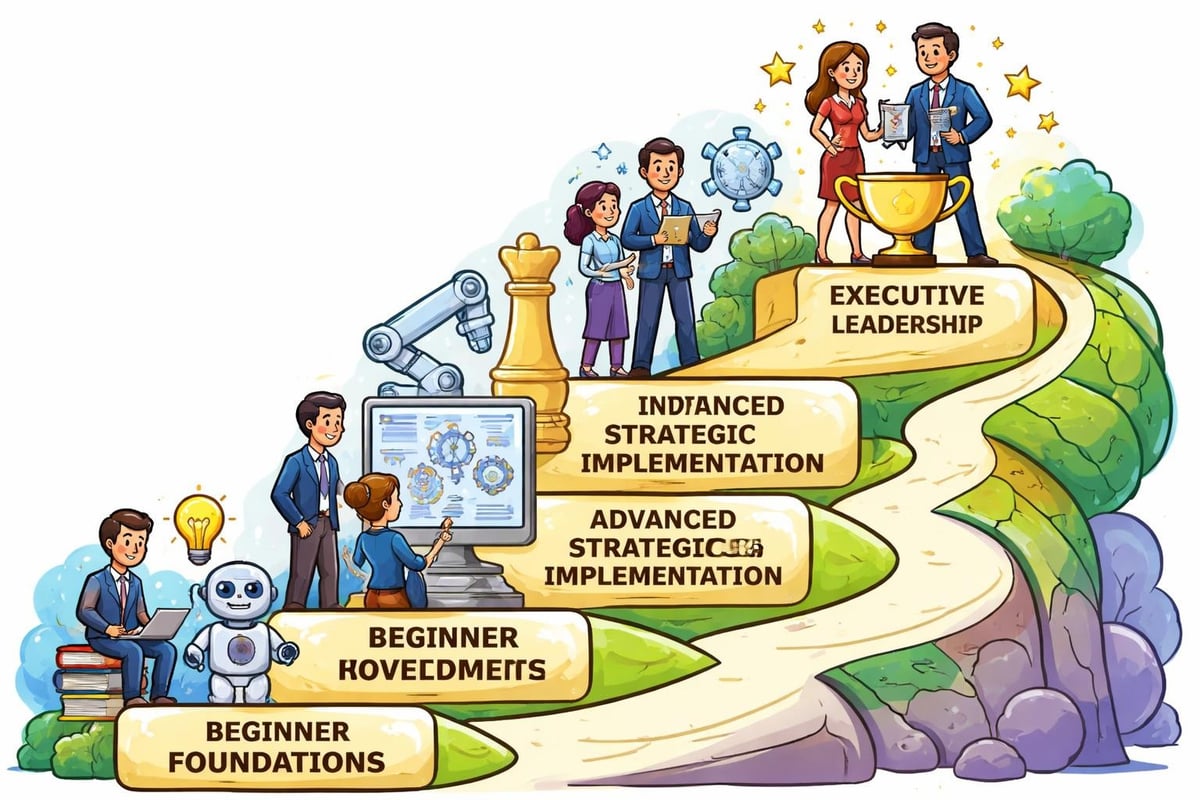
Start with foundational concepts before advancing to specialized business applications. A typical progression might include:
- AI Fundamentals: Core concepts, terminology, capabilities, and limitations
- Data Literacy: Understanding data types, quality, analytics, and visualization
- Business Applications: Function-specific AI use cases and implementation patterns
- Strategic Planning: Developing organizational AI strategies and transformation roadmaps
- Advanced Topics: Specialized areas like AI ethics, governance, or specific technical domains
This scaffolded approach ensures each learning stage builds on previous knowledge, maximizing retention and application capability.
Combining Formal and Informal Learning
Structured courses provide foundational knowledge, but professionals should supplement formal training with industry publications, conference attendance, peer networks, and hands-on experimentation. This blended approach keeps skills current between formal training updates.
Informal learning opportunities include following AI research developments, participating in industry forums, joining professional associations, attending webinars and workshops, and testing new tools as they emerge. The most effective professionals combine structured education with continuous informal exploration.
Team vs. Individual Development
Organizations must decide whether to train individuals who champion AI adoption or develop broad competency across teams. Most successful transformations combine both approaches-cultivating expert champions while raising baseline AI literacy across the organization.
Team-based learning creates shared vocabulary, facilitates collaboration, and builds momentum for implementation. However, individual specialists develop deep expertise needed for complex projects. Balancing these approaches requires understanding organizational culture, existing capabilities, and strategic objectives.
Platforms like MammothClub support both models through individual subscription access and corporate programs that enable organization-wide skill development at scale.
Building AI competency has become essential for business professionals across all industries and functions, with structured training providing the fastest path from theoretical understanding to practical application. Whether you're an executive shaping organizational strategy or a manager implementing AI solutions within your department, the right ai business course accelerates your journey while avoiding costly mistakes and false starts. MammothClub offers the comprehensive learning platform businesses need to develop AI capabilities systematically, with 3,000+ courses, interactive bootcamps, and corporate certification programs designed specifically for professionals driving AI transformation in their organizations. Start building your competitive advantage today by exploring MammothClub's AI training solutions and join thousands of professionals already accelerating their AI journey.