The artificial intelligence field has evolved from a niche academic pursuit into one of the most sought-after career paths in technology. As organizations across industries rush to implement AI solutions, the demand for formally trained AI professionals has created unprecedented opportunities for students and career changers alike. AI degree courses now represent a strategic investment in your professional future, offering structured pathways to master machine learning, deep learning, natural language processing, and computer vision. Whether you're a high school graduate planning your undergraduate journey or a working professional considering a master's program, understanding the landscape of formal AI education will help you make informed decisions about your career trajectory.
Understanding the Scope of AI Degree Programs
AI degree courses encompass a broad spectrum of academic programs designed to build comprehensive expertise in artificial intelligence and its related disciplines. Universities worldwide have responded to industry demand by developing dedicated AI curricula that go beyond traditional computer science programs.
Bachelor's Degree Programs in AI
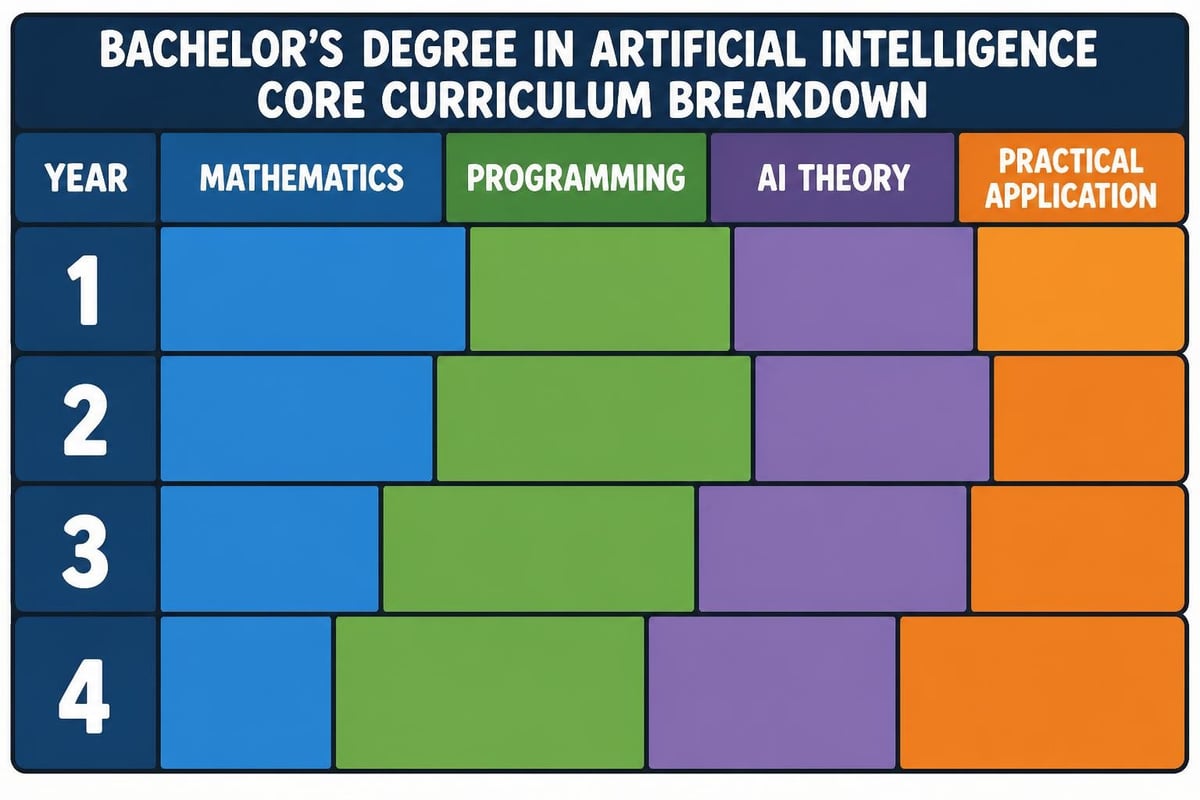
Undergraduate ai degree courses typically span four years and provide foundational knowledge across mathematics, statistics, programming, and core AI concepts. These programs blend theoretical understanding with practical application, preparing students for entry-level positions or further graduate study.
Purdue University's Bachelor of Science in Artificial Intelligence exemplifies the comprehensive approach modern universities take toward undergraduate AI education. Students engage with courses in data structures, algorithms, linear algebra, probability theory, and specialized AI topics.
Key components of bachelor's programs include:
- Core mathematics: Calculus, linear algebra, discrete mathematics, and statistics
- Programming foundations: Python, Java, C++, and software engineering principles
- AI fundamentals: Machine learning algorithms, neural networks, and intelligent systems
- Electives: Computer vision, robotics, natural language processing, or AI ethics
- Capstone projects: Real-world problem-solving experiences that demonstrate competency
Most programs require between 120-130 credit hours, with approximately 40-50% dedicated specifically to AI and computer science coursework. The remaining credits fulfill general education requirements and provide opportunities for interdisciplinary exploration.
Master's Degree Specializations
Graduate ai degree courses offer advanced specialization for professionals seeking leadership roles in AI development and research. These programs typically require 30-36 credit hours and can be completed in 12-24 months depending on enrollment status.
The University of Colorado Boulder's Master of Science in Artificial Intelligence program demonstrates the depth available at the graduate level, covering advanced machine learning, data mining, AI ethics, and domain-specific applications.
Master's programs generally fall into three categories:
- Research-focused programs: Emphasize original research, thesis development, and preparation for doctoral study
- Professional programs: Concentrate on applied skills, industry projects, and immediate career advancement
- Hybrid programs: Balance academic research with practical application for versatile career options
The curriculum intensity differs significantly from undergraduate work. Graduate students dive deeper into specialized topics like reinforcement learning, transformer architectures, generative AI, and ethical AI development while contributing to cutting-edge research projects.
Career Outcomes and Professional Trajectories
Graduates of ai degree courses enter a job market characterized by high demand and competitive compensation. The economic impact of AI continues expanding, with organizations investing billions in AI infrastructure and talent acquisition.
Entry-Level Opportunities
Bachelor's degree holders typically begin careers as:
- Machine learning engineers developing and deploying AI models
- Data scientists analyzing complex datasets and building predictive systems
- AI software developers creating intelligent applications
- Research assistants supporting advanced AI projects
- Business intelligence analysts applying AI to organizational challenges
According to comprehensive AI career research, entry-level AI professionals command starting salaries significantly above general technology positions, reflecting the specialized expertise required.
Advanced Career Paths
Master's degree graduates access senior positions including:
| Role | Responsibilities | Typical Experience Required |
|---|---|---|
| Senior Machine Learning Engineer | Architecture design, model optimization, team leadership | 3-5 years |
| AI Research Scientist | Novel algorithm development, publication, innovation | 2-4 years |
| AI Product Manager | Strategy, roadmap development, cross-functional leadership | 4-6 years |
| Computer Vision Engineer | Image processing, object detection, visual recognition systems | 3-5 years |
| NLP Specialist | Language models, text analysis, conversational AI | 2-4 years |
These advanced roles often require demonstrated expertise through published research, significant project portfolios, or industry-recognized contributions to open-source AI projects.
Curriculum Deep Dive: What You'll Actually Learn
Understanding the specific coursework within ai degree courses helps set realistic expectations and allows prospective students to prepare effectively.
Foundational Mathematical Concepts
Mathematics forms the bedrock of AI understanding. Successful students develop strong competency in:
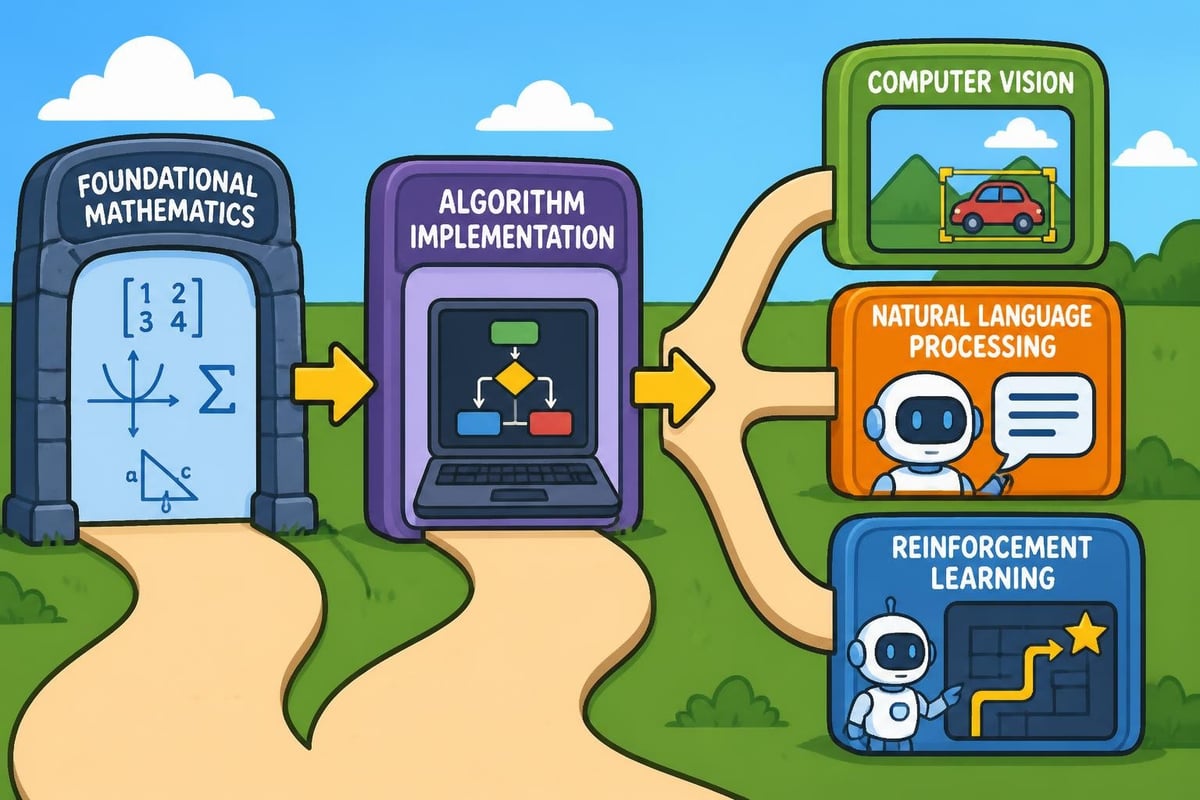
- Linear algebra: Matrix operations, eigenvalues, vector spaces for neural network understanding
- Calculus: Derivatives, gradients, optimization techniques for training algorithms
- Probability and statistics: Bayesian inference, hypothesis testing, statistical modeling
- Discrete mathematics: Graph theory, combinatorics, logic for algorithm design
These subjects aren't merely theoretical exercises. They directly enable understanding of how neural networks learn, why certain algorithms outperform others, and how to debug model performance issues.
Core AI Technologies
The technical heart of ai degree courses covers the algorithms and systems that power modern AI applications:
Supervised Learning
- Linear regression and classification
- Decision trees and ensemble methods
- Support vector machines
- Neural networks and deep learning architectures
Unsupervised Learning
- Clustering algorithms (k-means, hierarchical, DBSCAN)
- Dimensionality reduction (PCA, t-SNE, UMAP)
- Anomaly detection techniques
- Association rule learning
Reinforcement Learning
- Markov decision processes
- Q-learning and policy gradients
- Multi-armed bandits
- Deep reinforcement learning applications
Students implement these algorithms from scratch before utilizing frameworks like TensorFlow, PyTorch, or scikit-learn, ensuring deep conceptual understanding rather than surface-level tool familiarity.
Choosing Between Traditional Degrees and Alternative Paths
While ai degree courses offer comprehensive, structured education, prospective students should understand how formal degrees compare to alternative learning approaches.
Advantages of Formal Degree Programs
University-based programs provide several distinct benefits:
- Structured curriculum: Carefully sequenced coursework building from fundamentals to advanced topics
- Credential recognition: Widely accepted qualifications that satisfy employer requirements
- Research opportunities: Access to faculty expertise, laboratories, and cutting-edge projects
- Networking: Connections with peers, professors, and alumni in AI fields
- Comprehensive coverage: Exposure to breadth of AI topics, not just current trends
Traditional degrees also offer time for intellectual exploration without immediate pressure to monetize skills, allowing students to develop deeper theoretical understanding.
Complementary Learning Approaches
Many successful AI professionals combine formal education with supplementary training. Platforms like MammothClub offer flexible options for professionals who need to upskill rapidly while working full-time or who want to explore specific AI applications before committing to degree programs.
The most effective strategy often involves:
- Building foundational knowledge through structured courses
- Pursuing formal education for credential recognition and depth
- Maintaining continuous learning through specialized programs and certifications
- Engaging in practical projects that apply theoretical knowledge
For those exploring their options, reviewing specialized AI certification programs can provide insights into industry-valued skills that complement academic learning.
Geographic and Institutional Considerations
The location and type of institution significantly impact the ai degree courses experience and outcomes.
Research Universities vs. Teaching Colleges
Research-intensive universities typically offer:
- Greater faculty expertise in specialized AI domains
- More extensive research facilities and computational resources
- Opportunities to contribute to published research
- Stronger connections to industry research labs
- Potential funding through research assistantships
Teaching-focused institutions emphasize:
- Smaller class sizes with more personalized instruction
- Faculty dedicated primarily to teaching rather than research
- Strong industry partnerships for internships and job placement
- Practical, application-oriented curriculum
- More affordable tuition in many cases
Neither approach is inherently superior. The best choice depends on career goals, learning preferences, and whether you prioritize research contributions or applied skills development.
Program Accreditation and Recognition
MastersInAI.org's comprehensive directory catalogs over 900 accredited AI degree programs across 400 U.S. schools, highlighting the importance of proper accreditation when evaluating programs.
Key accreditation considerations include:
- Regional accreditation ensuring educational quality standards
- ABET accreditation for engineering-focused AI programs
- Program-specific recognition from professional organizations
- International recognition for cross-border career mobility
Students should verify that degree-granting institutions maintain appropriate accreditations, as employers and graduate programs may reject credentials from unaccredited sources.
Specialized AI Degree Tracks
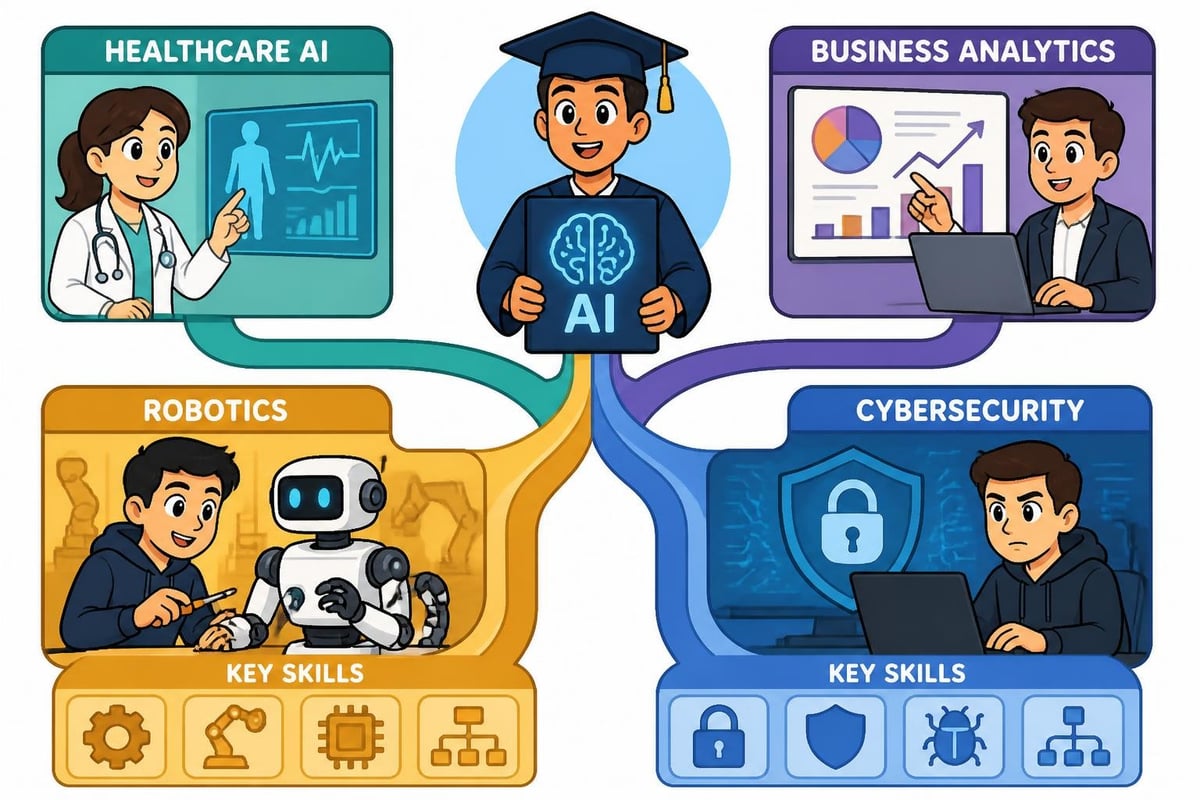
Many universities now offer ai degree courses with concentrations allowing students to develop domain expertise alongside core AI competencies.
Healthcare and Biomedical AI
Programs focusing on medical applications prepare students to work on:
- Medical imaging analysis and computer-aided diagnosis
- Drug discovery and molecular modeling
- Personalized medicine and genomics
- Healthcare operations optimization
- Clinical decision support systems
Harvard University's AI programs include options in Biomedical Informatics, demonstrating how leading institutions integrate AI with domain-specific knowledge.
Business and Enterprise AI
Business-focused tracks emphasize:
- Predictive analytics for decision-making
- Customer behavior modeling and personalization
- Supply chain optimization
- Financial forecasting and risk assessment
- Marketing automation and recommendation systems
These programs often include coursework in business strategy, organizational behavior, and change management alongside technical AI training. Professionals interested in this intersection might also explore AI in business courses to supplement formal education.
Robotics and Autonomous Systems
Robotics concentrations cover:
- Robot perception and sensor fusion
- Motion planning and control
- Human-robot interaction
- Swarm intelligence and multi-agent systems
- Autonomous vehicle technologies
Students in these tracks typically engage with physical robotic systems, not just software simulations, gaining hands-on experience with hardware-software integration challenges.
Admission Requirements and Preparation
Successfully gaining admission to competitive ai degree courses requires strategic preparation and understanding of program expectations.
Undergraduate Admission Criteria
Bachelor's programs typically evaluate:
- Academic performance: Strong mathematics and science grades, typically 3.5+ GPA
- Standardized tests: SAT/ACT scores, though many schools are test-optional
- Demonstrated interest: Programming projects, math competitions, relevant coursework
- Essays and recommendations: Evidence of problem-solving ability and intellectual curiosity
- Extracurricular activities: Robotics clubs, coding competitions, research experience
High school students should prioritize advanced mathematics (calculus, statistics) and computer science courses while developing programming skills independently if formal coursework isn't available.
Graduate Admission Standards
Master's programs have more rigorous requirements:
| Requirement | Typical Standard | Notes |
|---|---|---|
| Undergraduate GPA | 3.0-3.5 minimum | Higher GPAs strengthen applications |
| GRE Scores | 160+ Quantitative | Many programs now waive this requirement |
| Programming Experience | 1-2 years demonstrated | Portfolio projects carry significant weight |
| Mathematics Background | Calculus, Linear Algebra, Statistics | May require prerequisite coursework |
| Letters of Recommendation | 2-3 academic or professional | Should address technical capabilities |
| Statement of Purpose | 500-1000 words | Must articulate clear research or career goals |
Working professionals without traditional computer science backgrounds can strengthen applications through prerequisite coursework, professional AI projects, and relevant certifications demonstrating commitment to the field.
Financial Considerations and ROI
The investment in ai degree courses varies significantly based on institutional type, program length, and enrollment status.
Tuition and Cost Factors
Typical annual costs for AI programs:
- Public universities (in-state): $10,000-$15,000 for undergrad; $15,000-$25,000 for graduate
- Public universities (out-of-state): $25,000-$40,000 for undergrad; $30,000-$50,000 for graduate
- Private universities: $40,000-$60,000 for undergrad; $35,000-$70,000 for graduate
- Online programs: Often 20-40% less expensive than on-campus equivalents
Additional costs include housing, textbooks, technology requirements, and potential income loss for full-time students leaving the workforce.
Financial Aid and Funding Options
Students can reduce costs through:
- Merit scholarships based on academic achievement
- Need-based grants and aid
- Research or teaching assistantships (graduate students)
- Employer tuition reimbursement programs
- Federal student loans with favorable terms
- Private scholarships from technology companies and foundations
Graduate students in research-focused programs often receive full tuition waivers plus stipends in exchange for research or teaching responsibilities.
Return on Investment Analysis
Despite significant costs, AI degrees typically offer strong ROI. Entry-level AI engineers earn median salaries of $90,000-$120,000, with experienced professionals earning $150,000-$250,000 or more. Most graduates recover their educational investment within 3-5 years of graduation.
Beyond immediate salary, degree holders access:
- Faster career advancement into leadership roles
- Greater job security and market mobility
- Opportunities to work on cutting-edge technology
- Potential for equity compensation at high-growth companies
- Foundation for entrepreneurial ventures
Emerging Trends in AI Education
AI degree courses continue evolving to address rapid technological advancement and changing industry needs.
Integration of Ethics and Responsible AI
Modern programs increasingly emphasize:
- Algorithmic bias detection and mitigation
- Privacy-preserving machine learning techniques
- Transparency and explainability in AI systems
- Social impact assessment of AI deployment
- Regulatory compliance and governance frameworks
The University of Houston's AI education programs exemplify this trend, incorporating ethics throughout the curriculum rather than isolating it in single courses. Students exploring these topics might also benefit from dedicated AI ethics courses that complement degree programs.
Interdisciplinary Collaboration
Universities are breaking down traditional departmental barriers, encouraging AI students to collaborate with:
- Social scientists studying AI's societal impact
- Artists exploring creative AI applications
- Business students developing AI commercialization strategies
- Legal scholars addressing AI regulatory challenges
- Domain experts in healthcare, agriculture, energy, and other sectors
This interdisciplinary approach produces graduates who understand AI not just as technology but as a transformative force requiring diverse perspectives.
Practical Industry Integration
Programs increasingly feature:
- Semester-long industry internships integrated into curriculum
- Capstone projects sponsored by technology companies
- Guest lectures and mentorship from AI practitioners
- Access to industry-standard tools and cloud computing platforms
- Job placement services with technology sector connections
Arizona State University's AI programs demonstrate this industry integration, balancing technological advancement with ethical leadership and practical application.
Evaluating Program Quality and Fit
Selecting among ai degree courses requires careful evaluation of multiple factors beyond rankings and prestige.
Faculty Expertise and Research Activity
Investigate:
- Faculty publication records in top AI conferences (NeurIPS, ICML, CVPR)
- Active research grants from NSF, DARPA, or industry sponsors
- Faculty involvement in open-source AI projects
- Industry experience and consulting relationships
- Awards and recognition within the AI community
Programs with active researchers offer students exposure to cutting-edge developments and potential research collaboration opportunities.
Curriculum Currency and Flexibility
Examine:
- When core courses were last updated
- Coverage of recent developments (large language models, diffusion models, etc.)
- Elective options for specialized interests
- Flexibility to customize your educational path
- Balance between theoretical foundations and practical implementation
AI evolves rapidly. Programs that haven't updated curricula in several years may teach outdated techniques while neglecting current best practices.
Career Support and Alumni Outcomes
Research:
- Job placement rates and typical employer destinations
- Average starting salaries by role and location
- Alumni network size and engagement
- Career services resources (resume review, interview prep, job fairs)
- Internship placement support and company relationships
Programs should transparently share employment outcomes data, allowing prospective students to assess realistic career trajectories.
Online vs. On-Campus Learning Formats
The rise of online education has expanded access to ai degree courses while creating new considerations for prospective students.
Benefits of On-Campus Programs
Traditional residential programs offer:
- Immediate access to faculty during office hours
- Spontaneous collaboration with classmates on projects
- Hands-on laboratory experiences with specialized equipment
- Immersive focus without competing work responsibilities
- Campus resources including libraries, study spaces, and computing facilities
- Networking at department events, conferences, and social gatherings
The on-campus experience particularly benefits students early in their careers who can dedicate full attention to study and skill development.
Advantages of Online Programs
Remote learning provides:
- Continued employment while earning your degree
- Location flexibility for students unable to relocate
- Often lower overall costs without housing and relocation expenses
- Self-paced learning accommodating different schedules
- Access to programs at geographically distant universities
Working professionals often find online formats more practical, allowing them to immediately apply classroom learning to workplace challenges.
Hybrid Models
Many institutions now offer hybrid ai degree courses combining online coursework with periodic on-campus intensives. These programs attempt to balance flexibility with community building and hands-on learning experiences.
Students should honestly assess their learning styles, career situations, and personal circumstances when choosing formats rather than assuming one approach is universally superior.
Building on Your AI Degree
Completing ai degree courses represents the beginning of your AI career journey, not its conclusion.
Continuous Learning Requirements
AI professionals must commit to lifelong learning because:
- New architectures and techniques emerge constantly
- Industry best practices evolve with experience
- Tools and frameworks undergo rapid development
- Adjacent technologies (cloud computing, edge AI, quantum computing) expand AI capabilities
- Regulatory frameworks and ethical standards continue developing
Successful professionals dedicate 5-10 hours weekly to learning through reading research papers, experimenting with new tools, attending conferences, and completing advanced courses.
Professional Development Pathways
Post-degree development options include:
- Industry certifications validating specific platform expertise
- Specialized bootcamps addressing emerging technologies
- Conference attendance and paper presentation
- Open-source project contribution
- Teaching and mentoring to reinforce knowledge
- Advanced degrees (Ph.D.) for research-focused careers
For professionals seeking targeted skill development beyond their degrees, platforms offering AI specialization courses provide focused training on specific technologies and applications.
Portfolio Development
Technical degrees provide credentials, but portfolios demonstrate capability. Successful AI professionals build portfolios showcasing:
- GitHub repositories with clean, documented code
- Published research papers or blog posts explaining technical concepts
- Kaggle competition performance or contributions
- Open-source library contributions
- Personal projects solving real problems
- Technical talks or workshops delivered
Employers increasingly value demonstrated ability over credentials alone, making portfolio development essential throughout and after formal education.
AI degree courses offer structured pathways to expertise in one of technology's most transformative fields, providing both theoretical foundations and practical skills that position graduates for rewarding careers. Whether you pursue undergraduate education, specialized master's programs, or combine formal degrees with continuous professional development, investing in comprehensive AI education prepares you for the challenges and opportunities ahead. MammothClub supports your AI learning journey with 3,000+ on-demand courses, interactive bootcamps, and certification programs that complement formal education or provide focused upskilling as technology evolves. Our AI-powered learning platform helps professionals stay competitive by making training engaging, measurable, and aligned with industry demands.