
The AI revolution is accelerating across every industry, creating new opportunities for those ready to lead. Are you prepared to shape the future as an AI engineer in 2026?
This ai engineer training guide offers a clear, step-by-step roadmap for mastering essential skills, evaluating training options, and positioning yourself for long-term success in the evolving AI landscape.
You will discover the core responsibilities of AI engineers, the technical and soft skills that matter most, and the latest pathways for professional development. Whether you are just starting or looking to advance, this guide delivers actionable strategies and resources to help you become a high-impact AI engineer.
Explosive job growth and rising demand make now the ideal time to map your personalized learning journey. Let’s get started.
Understanding the Role of an AI Engineer
The AI revolution is fueling rapid changes in how organizations operate and innovate. Understanding the responsibilities and opportunities within this field is critical for anyone considering ai engineer training. This section will break down what AI engineers do, where they work, career pathways, and the evolving job outlook.
What Does an AI Engineer Do?
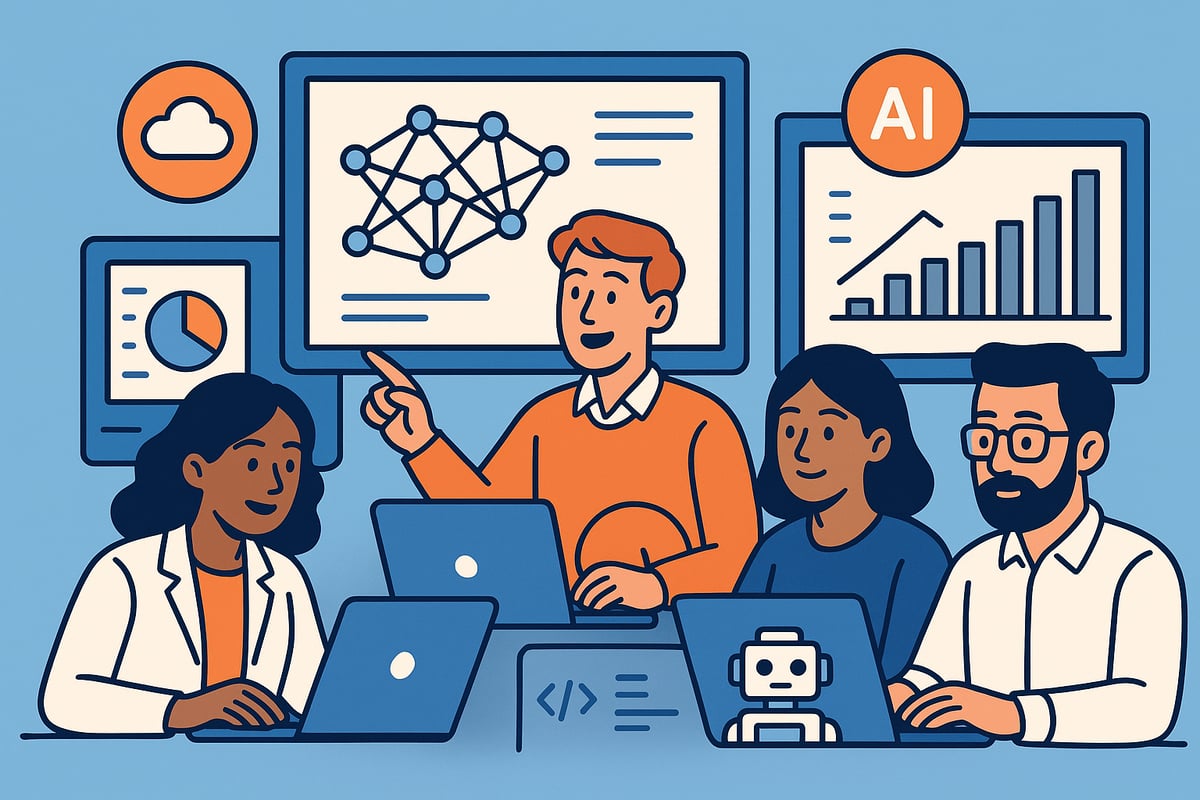
AI engineers are at the heart of digital transformation. They develop, program, and train AI models and systems that solve real-world problems. Through ai engineer training, professionals learn to bridge the worlds of data science, software development, and machine learning.
Core responsibilities include building, testing, and deploying machine learning algorithms. AI engineers work with APIs and embedded code to deliver intelligent solutions. They often collaborate with data engineers, scientists, and product teams to ensure AI projects align with business goals.
For example, ai engineer training prepares individuals to build natural language processing (NLP) chatbots for tech firms or design computer vision systems for manufacturing. Unlike data engineers, AI engineers focus more on model creation and integration than on managing data pipelines.
This role requires both technical expertise and the ability to translate business needs into practical AI solutions. The demand for professionals with comprehensive ai engineer training continues to grow as organizations seek to harness the power of artificial intelligence.
Key Industries and Applications
AI engineers are in demand across a wide spectrum of industries. Healthcare is leveraging ai engineer training for diagnostic imaging, predictive analytics, and personalized medicine. In finance, AI powers fraud detection, algorithmic trading, and risk assessment.
The automotive sector employs AI engineers to advance autonomous vehicles and computer vision systems. Retail and supply chain industries use AI-driven automation for inventory management, demand forecasting, and customer personalization.
Manufacturing companies rely on AI for quality control, predictive maintenance, and process optimization. No matter the sector, organizations need experts with ai engineer training wherever data-driven insights and automation are mission critical.
Industries continue to expand their use of AI, making this a versatile and future-proof field for those who invest in the right training and skills.
Typical Career Pathways and Job Titles
A career in AI engineering offers multiple entry points and growth opportunities. With foundational ai engineer training, individuals may start as AI developers, machine learning engineers, or junior AI engineers.
As experience grows, professionals can advance to senior AI engineer, AI solutions architect, or AI research engineer roles. Specialized paths include computer vision engineer, NLP engineer, and AI product manager positions.
Leading employers such as Microsoft, Google, and innovative startups are consistently hiring for these roles. Whether you aim for a technical or strategic position, ai engineer training equips you for a wide variety of job titles in the market.
Salary Trends and Job Outlook for 2026
AI engineering remains one of the highest-paying careers in technology. As of 2023, the U.S. median salary for AI engineers ranges from $120,000 to $160,000 and is expected to rise. Job growth is projected to exceed 22 percent through 2026, according to AI Engineer job growth statistics.
This rapid expansion means demand for professionals with ai engineer training continues to outpace supply. For those entering or advancing in this field, strong prospects and competitive compensation make AI engineering a smart, future-focused career choice.
Core Skills and Competencies for AI Engineers
To excel in ai engineer training, mastering a blend of technical, analytical, and interpersonal abilities is essential. The evolving landscape of artificial intelligence demands expertise that spans coding, math, communication, and the latest technologies. Here’s a breakdown of the core skills every aspiring AI engineer needs to develop.

Essential Technical Skills
Technical proficiency forms the foundation of ai engineer training. Aspiring professionals should focus on:
- Programming languages: Python, Java, C++, R
- Machine learning frameworks: TensorFlow, PyTorch, Scikit-learn
- Data manipulation libraries: SQL, Pandas, NumPy
- Cloud platforms: Azure, AWS, Google Cloud
Understanding how to deploy models and integrate APIs is equally crucial. For those beginning their journey, exploring the best machine learning courses can accelerate skill acquisition and practical experience. Industry leaders like Microsoft Learn recommend hands-on practice with cloud AI services to reinforce these capabilities.
Mathematics, Statistics, and Data Science Foundations
A solid grasp of mathematics and statistics is indispensable for ai engineer training. Core concepts include:
- Linear algebra for matrix operations
- Probability and statistics to interpret data and assess model performance
- Calculus for optimizing algorithms
These foundations enable AI engineers to preprocess data, engineer features, and select appropriate models. For instance, applying statistical models can significantly enhance prediction accuracy. Regularly revisiting these areas ensures your skills keep pace with advanced AI techniques.
Soft Skills and Interdisciplinary Abilities
Technical know-how alone is not enough in ai engineer training. Professionals must also cultivate:
- Problem-solving: Tackling complex, open-ended challenges
- Critical thinking: Evaluating models and results objectively
- Communication: Translating intricate AI concepts for non-technical audiences
- Collaboration: Working seamlessly in cross-functional teams
- Adaptability: Responding to rapid technological shifts
These soft skills empower AI engineers to bridge departments, advocate for ethical AI use, and deliver impactful solutions across industries.
Tools, Platforms, and Emerging Technologies
Familiarity with current tools and a readiness to adopt emerging technologies are critical to ai engineer training. Commonly used platforms include:
| Category | Examples |
|---|---|
| AI/ML Platforms | Azure AI, Google AI Platform, SageMaker |
| Version Control | Git, GitHub |
| Experiment Tracking | MLflow, Weights & Biases |
| Emerging Technologies | Generative AI, LLMs, MLOps |
Staying proficient with these resources ensures you can efficiently manage, deploy, and monitor AI projects in real-world environments.
Real-World Skill Application: Case Studies
The most effective ai engineer training is rooted in practical application. Consider these real-world examples:
- Deploying computer vision models for automated quality control in manufacturing
- Implementing NLP-driven virtual assistants for customer service
These case studies highlight how AI engineers leverage technical, analytical, and soft skills to deliver value. Building a portfolio of such projects not only demonstrates capability but also propels career growth.
Step-by-Step AI Engineer Training Roadmap for 2026
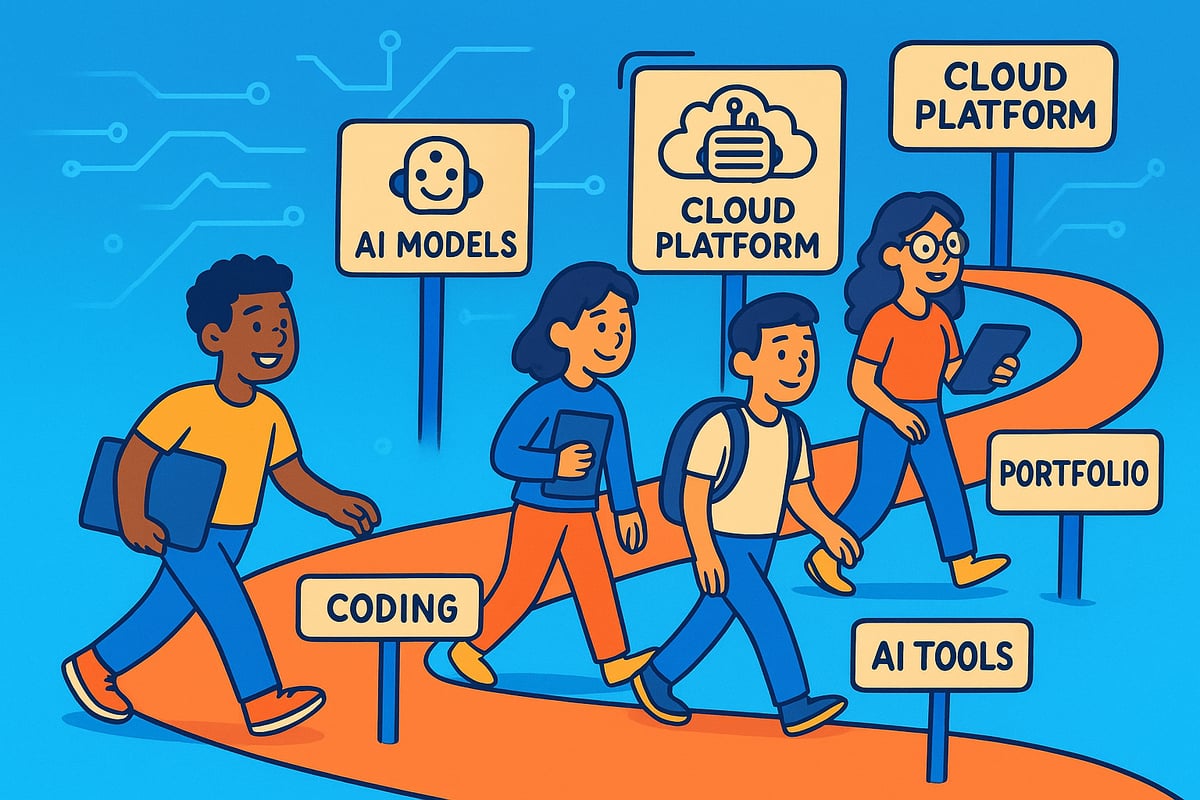
Embarking on the ai engineer training journey in 2026 requires careful planning and a clear, actionable roadmap. The rapidly evolving AI landscape demands a blend of technical mastery, hands-on experience, and continuous learning. Whether you are starting from scratch or transitioning from another tech field, this step-by-step guide will help you map out your personalized path to success.
Step 1: Assess Your Background and Set Goals
Begin your ai engineer training by evaluating your current skills and experience. Are you proficient in programming languages like Python or familiar with data analysis? Identify any gaps in your math, statistics, or data science knowledge.
Next, determine which industry excites you most. Do you see yourself working in healthcare, finance, or robotics? Pinpointing a target sector will help focus your efforts.
Set clear, measurable objectives for your ai engineer training. For example, you might aim to build a machine learning project within six months or earn a certification by the end of the year. Regularly review your goals to ensure they align with the evolving AI landscape.
Step 2: Build Strong Programming and Math Foundations
A solid foundation in programming and mathematics is essential for effective ai engineer training. Begin by mastering Python, as it is the most widely used language in AI. Supplement your learning with Java or C++ if your chosen field requires them.
Focus on statistics, linear algebra, and calculus. These math skills underpin most machine learning algorithms. Use interactive platforms, textbooks, and coding challenges to reinforce your understanding.
Consider enrolling in a structured program, such as the AI foundation course overview, which covers essential concepts for aspiring AI engineers. This step will set the stage for more advanced topics in your ai engineer training journey.
Step 3: Master Core AI and Machine Learning Concepts
With strong fundamentals, move on to the heart of ai engineer training: machine learning and AI concepts. Study supervised and unsupervised learning, as well as reinforcement learning. Delve into deep learning, exploring neural networks, convolutional neural networks (CNNs), and recurrent neural networks (RNNs).
Apply your knowledge through hands-on projects. Try building an image classifier, sentiment analysis tool, or a recommendation system. These projects will deepen your understanding and provide tangible proof of your skills.
Use online tutorials, open-source datasets, and collaborative platforms to practice and refine your abilities. Each project you complete will strengthen your ai engineer training and enhance your portfolio.
Step 4: Gain Experience with AI Tools and Cloud Platforms
Modern ai engineer training involves mastering industry-standard tools and platforms. Get comfortable with frameworks like TensorFlow, PyTorch, and Scikit-learn. These are crucial for building, training, and evaluating machine learning models.
Explore cloud-based platforms such as Azure AI, AWS SageMaker, and Google Cloud AI. These services allow you to train and deploy models at scale, a skill highly valued by employers.
Practice deploying models using cloud tools, and experiment with features like automated machine learning and model monitoring. This step in ai engineer training ensures you can deliver real-world solutions efficiently and effectively.
Step 5: Specialize in High-Demand AI Domains
As you progress, focus your ai engineer training on a specialization that matches both your interests and market demand. Popular areas include computer vision, natural language processing (NLP), generative AI, robotics, and edge AI.
Research industry trends and job postings to identify which domains are most sought after. For example, computer vision is critical in autonomous vehicles, while NLP powers chatbots and virtual assistants.
Choose a specialization, then dive deep into domain-specific frameworks and datasets. This targeted approach will make your ai engineer training more relevant and increase your career prospects.
Step 6: Build a Portfolio and Real-World Experience
A well-rounded portfolio is a cornerstone of ai engineer training. Contribute to open-source AI projects or participate in Kaggle competitions to gain practical experience. Internships and hackathons offer valuable opportunities to apply your skills in real scenarios.
Showcase your work on platforms like GitHub and your personal website. Include diverse projects, such as NLP applications, computer vision models, and generative AI tools.
Document your process and results clearly, making it easy for employers to assess your capabilities. Consistent portfolio development is key to advancing your ai engineer training and standing out in the job market.
Step 7: Stay Current with Industry Trends and Research
AI is evolving rapidly, so ongoing learning is essential for effective ai engineer training. Follow major AI conferences, read peer-reviewed journals, and subscribe to industry newsletters. Engage in online communities to discuss the latest breakthroughs and best practices.
Dedicate time each week to explore new tools, frameworks, and research papers. This commitment will keep your skills sharp and ensure your ai engineer training remains relevant as technology advances.
Staying up to date not only enhances your expertise but also demonstrates your dedication to employers and peers.
Training Pathways: Self-Paced, Bootcamps, and Certifications
Choosing the right ai engineer training pathway is a pivotal step for your career. With diverse options available, understanding the unique benefits of each approach will help you tailor your learning journey for maximum impact in the AI field.

Self-Paced Online Learning
Self-paced online learning is a flexible cornerstone of ai engineer training. Major platforms like Coursera, edX, Udacity, and Microsoft Learn offer a wide range of courses in artificial intelligence, machine learning, and data science.
This pathway is ideal for working professionals or those balancing other commitments, as you can study at your own pace. Many programs provide hands-on labs, coding exercises, and real-world projects. For example, Microsoft Learn’s guided modules focus on Azure AI services and practical implementation.
When choosing self-paced ai engineer training, look for courses with strong industry recognition and opportunities for project-based work. This approach empowers you to build foundational skills and progress toward more advanced topics as your confidence grows.
Intensive Bootcamps and Immersive Programs
Intensive bootcamps have become a popular route in ai engineer training for those seeking rapid, hands-on experience. These programs are often full-time and cohort-based, immersing you in an environment focused on practical skills and collaboration.
Bootcamps typically compress months of learning into weeks, featuring project-based curricula, mentorship, and direct career support. Many highlight real-world challenges such as building AI models, optimizing algorithms, and deploying solutions to the cloud.
If you thrive in structured, fast-paced settings, bootcamps can accelerate your entry into the AI workforce. They also provide valuable networking opportunities and often culminate in a capstone project to showcase your new ai engineer training skills to employers.
University Degrees and Formal Education
For those seeking comprehensive depth, university degrees remain a cornerstone of ai engineer training. Bachelor’s and Master’s programs in AI, machine learning, or computer science provide a rigorous academic foundation in mathematics, algorithms, and theoretical concepts.
Formal education offers structured progression, access to faculty expertise, and potential research opportunities. However, university programs require a significant investment of time and resources, and may not always keep pace with the latest industry trends.
When evaluating this pathway, consider the trade-offs: depth versus speed, networking versus independence, and cost versus flexibility. For some, combining formal education with other ai engineer training approaches can provide the best of both worlds.
Industry Certifications: Why and Which Ones Matter
Industry certifications have become a vital part of ai engineer training, signaling verified skills and specialization to employers. Leading credentials include the Microsoft Certified: Azure AI Engineer Associate, Google Cloud Certified: Professional Machine Learning Engineer, and AWS Certified Machine Learning – Specialty.
Certifications validate your practical knowledge, boost your resume, and can help you stand out in a competitive market. For a comprehensive overview of the most relevant credentials, explore this AI certifications for 2026 resource, which details top options and their career impact.
Pursuing industry-recognized certifications ensures your ai engineer training aligns with employer expectations and evolving technology standards.
Choosing the Right Path for You
Selecting your ideal ai engineer training pathway depends on your career goals, learning style, schedule, and budget. Some professionals combine self-paced courses with certifications, while others opt for bootcamps or formal degrees.
Consider building a hybrid approach to maximize flexibility and depth. For instance, you might start with online modules, then pursue a certification or join a bootcamp for hands-on experience. Reflect on your strengths and needs to map a tailored path toward AI engineering success.
No matter which route you choose, staying committed to ongoing ai engineer training will position you for long-term growth in this dynamic industry.
Practical Strategies for Launching and Advancing Your AI Engineering Career
Launching and advancing your AI engineering career in 2026 requires a thoughtful, strategic approach. Success is built on more than technical skills alone. You need a compelling portfolio, strong professional connections, and a plan for continuous growth. The following strategies, grounded in ai engineer training best practices, will help you stand out and move forward confidently.
Building a Standout AI Engineer Portfolio
A strong portfolio is your gateway to top opportunities. Focus on projects that showcase the breadth and depth of your ai engineer training. Highlight work in areas like natural language processing, computer vision, and generative AI.
- Include end-to-end projects, from data preprocessing to model deployment.
- Use GitHub to display clean, well-documented code and version control.
- Share demo videos and case studies on a personal website.
Employers seek proof of hands-on ability, not just credentials. A diverse portfolio demonstrates initiative and real-world problem-solving skills.
Networking, Mentorship, and Community Involvement
Effective networking can accelerate your ai engineer training journey and open doors to mentorship. Join AI meetups, online forums, and professional groups on LinkedIn.
- Attend conferences to meet industry leaders.
- Engage in open-source projects and collaborative hackathons.
- Seek out mentors with experience in your target domain.
Building relationships with peers and experts fosters knowledge exchange. Community involvement keeps you informed about trends and opportunities, strengthening your professional presence.
Navigating the AI Job Market
The AI job market is growing rapidly, but competition is fierce. Tailor your ai engineer training to match the skills employers demand. Optimize your resume and LinkedIn profile with clear, quantifiable achievements.
- Prepare for interviews by practicing coding, algorithms, and system design.
- Research companies leading AI innovation.
- Stay updated on job trends using resources like the AI job market analysis 2025.
Target high-growth sectors where AI is reshaping business. Adaptability and an up-to-date skillset will keep you ahead of the curve.
Upskilling for Continuous Growth
Continuous learning is essential for sustained success in ai engineer training. Enroll in advanced courses to master new tools and concepts, such as MLOps, generative AI, and AI ethics.
- Take MOOCs and specialized classes to deepen expertise.
- Leverage platforms that offer guided learning paths and real-world projects.
- Explore options through resources like AI and data science course details.
Block time regularly for learning. Staying current ensures you remain competitive and adaptable in a fast-paced field.
Overcoming Common Challenges and Pitfalls
The path to AI engineering is not without obstacles. During ai engineer training, it is normal to face imposter syndrome or hit learning plateaus. Address these challenges with resilience and strategy.
- Set realistic goals and celebrate small wins.
- Balance depth and breadth by focusing on core competencies first.
- Seek support from peers, mentors, and professional communities.
Transitioning from a non-traditional background is possible with persistence and the right resources. Embrace setbacks as learning opportunities to fuel your growth.
The Future of AI Engineering: Trends and Predictions for 2026
The future of ai engineer training is rapidly taking shape as technology evolves at an unprecedented pace. As we look toward 2026, new trends and specializations are emerging that will redefine the skills and knowledge required for success. To stay ahead, understanding these developments is crucial for anyone considering or advancing in an ai engineer training journey.
Evolving AI Technologies and Specializations
By 2026, the ai engineer training landscape will be shaped by breakthroughs in generative AI, large language models, and edge AI. Engineers will find greater demand for expertise in building and maintaining advanced neural networks and deploying AI solutions on resource-constrained devices.
Emerging specializations will include AI ethics, responsible AI, and AI for IoT. As organizations seek to harness the power of intelligent systems, ai engineer training will need to emphasize not only technical mastery but also understanding of ethical frameworks and regulatory standards.
Staying current with these evolving technologies is essential for a competitive edge in ai engineer training.
The Impact of AI on Industries and Society
The influence of ai engineer training extends across every major industry. Healthcare is leveraging AI for diagnostic imaging and personalized treatment recommendations. In finance, AI-driven analytics are transforming risk assessment and fraud detection.
Manufacturing and retail are seeing AI streamline supply chains, automate quality control, and enhance customer experiences. However, with these advancements come societal considerations, such as job displacement, data privacy, and the need for ethical oversight.
As ai engineer training adapts, professionals will play a vital role in driving innovation while addressing these broader impacts on society.
The Expanding Role of AI Engineers
AI engineers are evolving from technical specialists to strategic partners within organizations. Their responsibilities now include collaborating with business leaders, domain experts, and cross-functional teams to design solutions that align with organizational goals.
In 2026, ai engineer training will prioritize interdisciplinary skills, such as communication, project management, and innovation leadership. Engineers will be expected to lead digital transformation projects, translating AI capabilities into measurable business value.
This shift highlights the need for ai engineer training programs that foster both technical depth and business acumen.
Lifelong Learning and Adaptability as Success Factors
Continuous learning is at the heart of successful ai engineer training. The pace of AI research and tool development demands that engineers regularly update their skills. Platforms like Microsoft Learn and professional communities provide valuable resources for ongoing development.
Certifications, such as those covered in the AI engineering certifications guide, are increasingly important for validating expertise and staying competitive. Embracing adaptability ensures that AI engineers can pivot as new technologies and standards emerge.
By prioritizing lifelong learning, professionals can future-proof their ai engineer training and career success.
Predictions for the AI Engineer Job Market in 2026
The job market for AI engineers is set for robust growth, with demand projected to outpace supply. New roles will emerge in areas like generative AI, AI operations (MLOps), and AI governance. Salaries are expected to climb as organizations compete for top talent.
Global opportunities will expand, enabling remote and cross-border collaboration. For a detailed analysis of these trends, refer to the AI job market trends 2025 report.
As ai engineer training evolves, those who anticipate market needs and adapt accordingly will be best positioned for leadership in the years ahead.
As you look ahead to 2026 and map out your journey to becoming a high-impact AI engineer, remember that the right training can make all the difference. With so many pathways and evolving technologies, it’s essential to build a strong foundation and keep your skills sharp. That’s why I recommend taking the next step with a globally recognized certification. Start developing your core competencies and gain practical experience at your own pace—this is your chance to stand out in a competitive field. Ready to get started? Become a certified AI Foundation Specilaist. Start for free