Cybersecurity threats are evolving at a rapid pace, and artificial intelligence is becoming an essential defense tool for organizations worldwide. As attacks grow more complex, there is a critical demand for professionals who can connect the dots between AI innovation and robust security practices.
Mastering skills through an ai for cybersecurity course opens doors to high-impact careers and helps organizations stay resilient in the digital age. This guide is your trusted roadmap—covering AI basics, emerging cyber risks, course content, learning pathways, and the trends shaping cybersecurity by 2026.
Prepare to discover how the right expertise can set you apart and future-proof your career.
Understanding AI in Cybersecurity: Foundations and Impact
The cybersecurity landscape has shifted dramatically in recent years. Traditional defenses are no longer enough as both attackers and defenders adopt artificial intelligence. If you are considering an ai for cybersecurity course, understanding this evolving foundation is essential. This section explores how AI is reshaping cyber threats, the core technologies driving change, benefits and challenges, and the skills you need to succeed.
The Evolution of Cyber Threats and AI’s Role
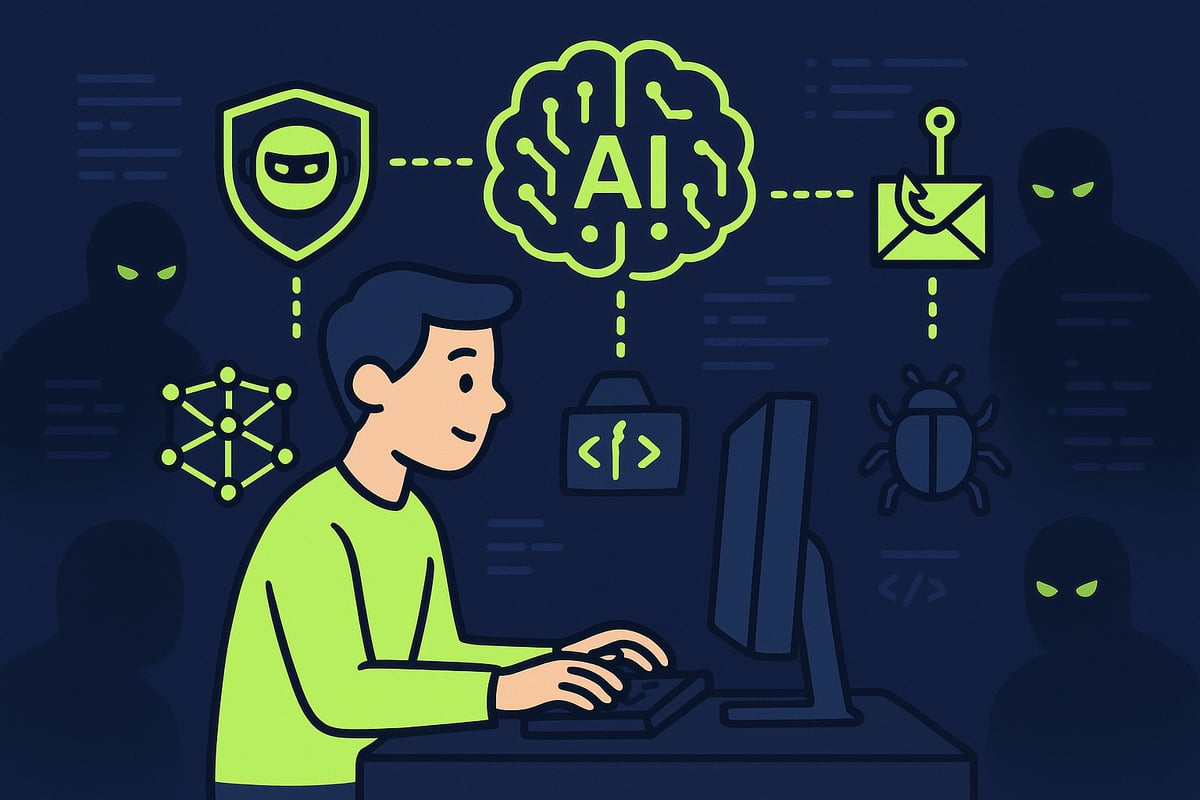
Cyber threats have evolved from basic viruses and worms into highly sophisticated attacks powered by AI. In the early days, attackers relied on rudimentary malware. Now, they use AI to automate and adapt their methods, creating threats like deepfakes and AI-generated ransomware.
Defenders are also turning to AI. Traditional rule-based systems often fail to detect novel or rapidly changing threats. AI, with its ability to learn and adapt, helps organizations identify suspicious activity in real time. For example, AI-powered phishing detection systems can analyze thousands of emails per second, flagging malicious content with far greater accuracy than manual review.
According to Gartner, 76% of enterprises reported an uptick in AI-based cyberattacks in 2023. Real-world incidents show how AI can both power attacks and defend against them. If you want to dive deeper into how AI is transforming cybercrime and what it means for cybersecurity professionals, this article on AI's impact on cybercrime provides valuable insights.
The dual nature of AI means that anyone enrolling in an ai for cybersecurity course must understand both the risks and the tools available to counter them.
Core AI Technologies Used in Cybersecurity
Modern cybersecurity now relies on a range of advanced AI technologies. If you are exploring an ai for cybersecurity course, you will encounter these core tools:
Key Technologies:
| Technology | Cybersecurity Application | Example Use Case |
|---|---|---|
| Machine Learning | Anomaly detection, threat prediction | Detecting unusual network traffic |
| Natural Language Processing (NLP) | Phishing and social engineering detection | Analyzing email content |
| Deep Learning | Malware analysis, behavior analytics | Identifying hidden malware |
| Automation & Orchestration | Incident response | Automated threat containment |
For instance, Google’s Chronicle platform uses AI for enterprise threat hunting, rapidly scanning vast amounts of data for signs of compromise. In an ai for cybersecurity course, you will learn to apply these technologies in real-world scenarios.
Benefits and Limitations of AI in Cyber Defense
AI brings significant benefits to cybersecurity, such as speed and scalability. Automated monitoring enables organizations to track millions of events in real time, quickly identifying and responding to threats. AI also helps reduce false positives and negatives, making alerts more accurate.
However, AI is not a silver bullet. Challenges include data bias, which can skew detection, and the limited explainability of some AI models. Adversarial AI, where attackers manipulate input data to fool systems, is another growing concern. Even the best ai for cybersecurity course will stress that human expertise is still required to interpret results and make critical decisions.
Essential Skills for AI-Powered Cybersecurity Roles
To thrive in AI-driven security roles, professionals need a mix of technical and analytical skills. Core competencies taught in an ai for cybersecurity course include:
- Data science and analytics fundamentals
- Familiarity with cybersecurity frameworks and protocols
- Programming in languages like
PythonandR - Experience with AI tools such as TensorFlow and PyTorch
- Analytical thinking and ethical AI practices
Building these skills ensures graduates can design, deploy, and evaluate AI-based security solutions. As the field advances, these competencies will remain central to any ai for cybersecurity course curriculum.
What to Expect from an AI for Cybersecurity Course in 2026
Are you considering an ai for cybersecurity course to future-proof your career? Understanding what lies ahead in these programs is essential for making the right choice. The landscape in 2026 is rapidly evolving, and courses are adapting to keep pace with the latest threats and technologies.
You will find a blend of technical depth, hands-on experience, and industry alignment. Let us explore what you can expect from the next generation of ai for cybersecurity course offerings.
Curriculum Overview and Learning Objectives
The core of any ai for cybersecurity course in 2026 is a robust curriculum designed to bridge theory and practice. Expect to cover foundational AI concepts, such as supervised and unsupervised learning, as well as specialized modules on machine learning for security, ethical hacking with AI, and automated threat detection.
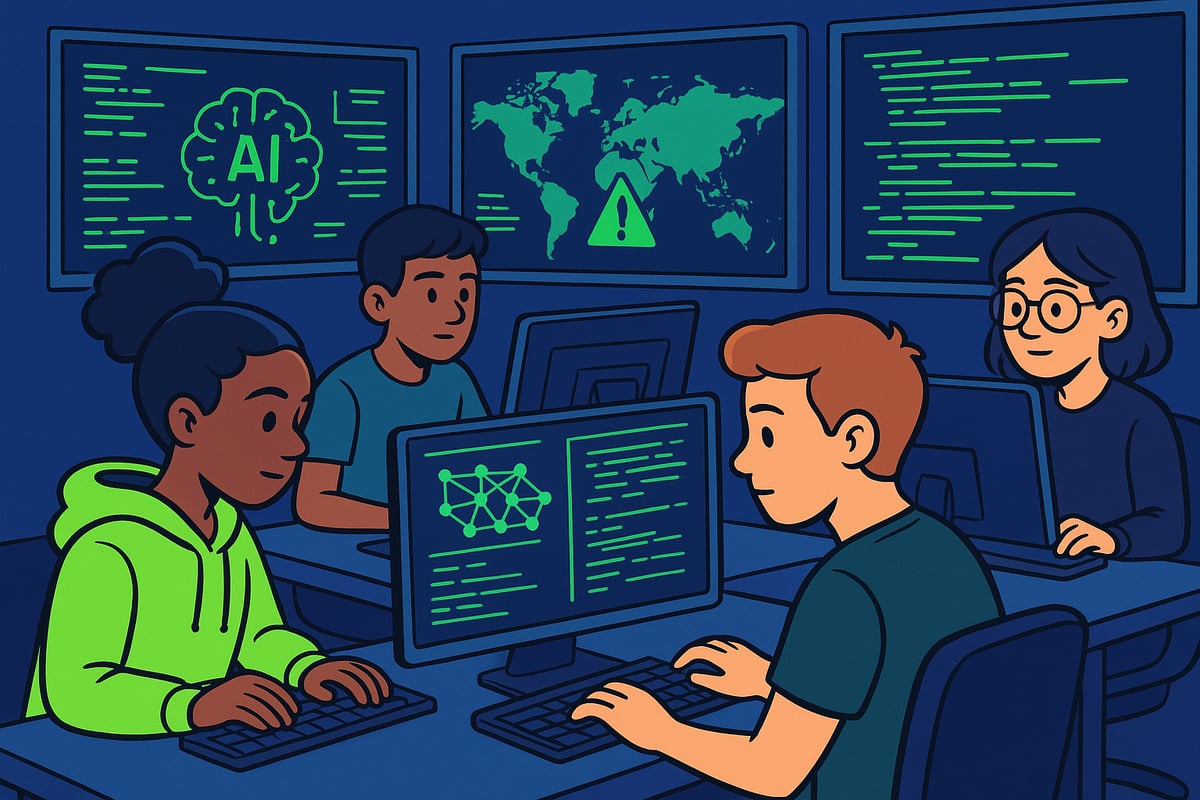
Courses increasingly focus on experiential learning. You will engage in hands-on labs that simulate real-world cyberattacks, using AI tools to detect and neutralize threats. Capstone projects will challenge you to design and deploy AI-powered defense systems, often using data sets from actual industry incidents.
Learning objectives are clear: by the end of your ai for cybersecurity course, you should be able to architect, implement, and assess AI-based solutions for complex security scenarios. For a detailed example of what you might study, review the AI for cybersecurity course offered by MIT xPRO, which outlines modules, labs, and case studies relevant for professionals seeking advanced skills.
Expect a mix of theory, application, and critical analysis as you master the intersection of AI and cybersecurity.
Delivery Formats and Learning Models
In 2026, flexibility is a hallmark of the ai for cybersecurity course experience. Programs are delivered through self-paced online modules, interactive bootcamps, and hybrid formats that blend live instruction with digital resources.
You will likely use virtual labs and simulators, allowing you to practice defending against simulated attacks. Some platforms feature AI-powered adaptive learning, tailoring content to your progress and strengths. Immersive platforms also provide real-time threat simulations, ensuring practical, job-ready skills.
Here is a comparison of common delivery models:
| Format | Features |
|---|---|
| Self-Paced | Flexible, on-demand, video lectures |
| Bootcamp | Intensive, live sessions, peer learning |
| Hybrid | Combines online and in-person elements |
No matter the format, expect your ai for cybersecurity course to emphasize hands-on experience and active problem-solving.
Prerequisites and Target Audience
Before enrolling in an ai for cybersecurity course, you should assess your background. Most programs require foundational knowledge in computer science, cybersecurity, or data science. Familiarity with programming languages like Python or R, and basic understanding of AI concepts, is often expected.
These courses target a broad audience, including IT professionals, security analysts, and recent graduates seeking to upskill. If you are transitioning from a traditional security role, or reskilling from another tech domain, structured pathways help bridge any gaps.
Many providers offer preparatory modules or assessments to help you gauge readiness. This ensures that your ai for cybersecurity course experience is both challenging and achievable, regardless of your starting point.
Certification and Career Advancement Opportunities
Completing an ai for cybersecurity course in 2026 opens doors to globally recognized certifications. Look for credentials from organizations such as CompTIA, ISC2, or Google, which validate your expertise and enhance your professional profile.
Career prospects are strong. Roles like AI security analyst, threat intelligence specialist, and security automation engineer are in high demand. According to CyberSeek, ai-cybersecurity roles are projected to grow by 40 percent by 2026, reflecting the urgent industry need.
Most courses provide job placement support, access to alumni networks, and guidance on leveraging your new skills. By choosing the right ai for cybersecurity course, you position yourself at the forefront of a rapidly expanding field.
MammothClub: Upskill with Industry-Leading AI for Cybersecurity Courses
MammothClub offers over 3,000 technology and AI courses, including specialized ai for cybersecurity course tracks. Their adaptive AI-powered learning, hands-on labs, and recognized certifications help individuals and organizations stay ahead in the evolving security landscape.
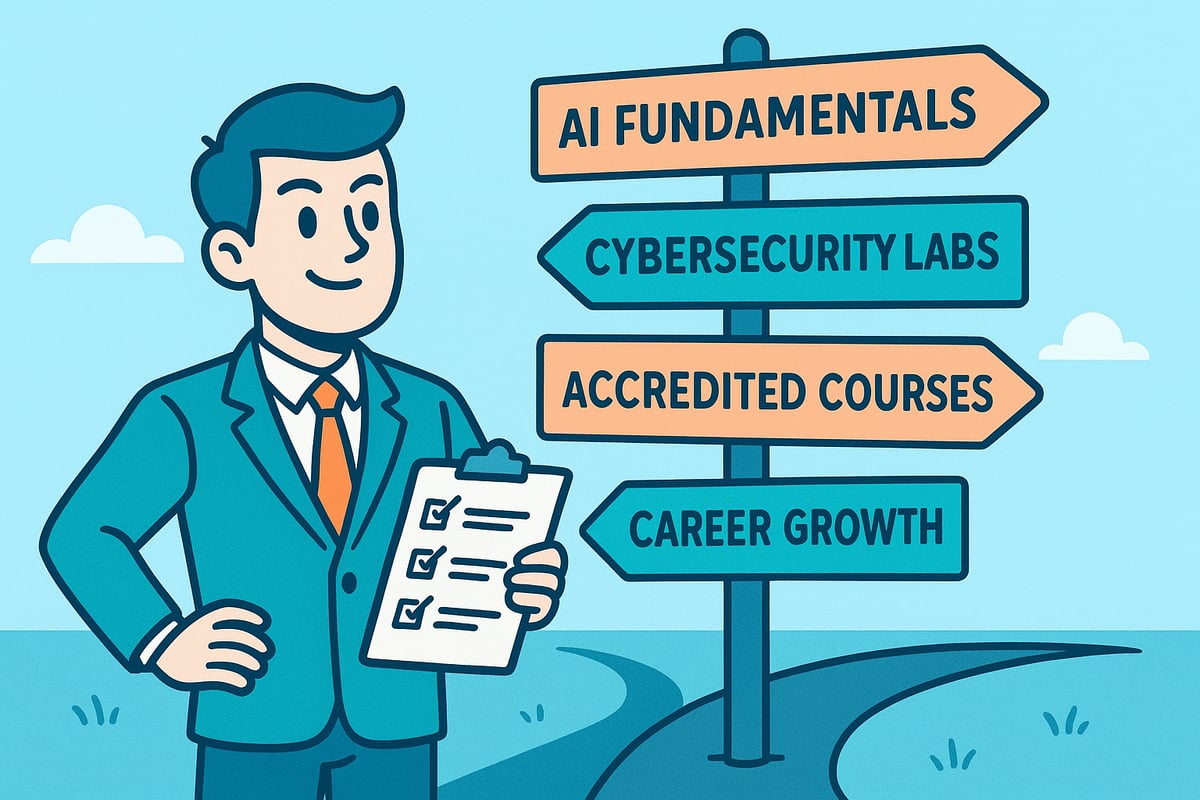
Step-by-Step Guide: How to Choose the Best AI for Cybersecurity Course
Selecting the right ai for cybersecurity course is essential for building a strong foundation in both artificial intelligence and security. With numerous options available, a systematic approach will help you make an informed decision that aligns with your goals and career ambitions.
Step 1: Define Your Learning Goals and Career Path
Start by identifying your current skills and where you want to go in the cybersecurity field. Consider your professional background, technical strengths, and interests within AI-driven security. Are you aiming for a specialized role or looking to expand your expertise?
Use self-assessment tools to measure your readiness for an ai for cybersecurity course. For example, taking an AI fluency self-assessment can clarify your baseline knowledge and highlight areas for growth. This helps you set clear, actionable objectives before enrolling.
Ask yourself:
- Do you want to focus on threat detection, automation, or ethical hacking?
- Are you transitioning from IT, or upskilling in cybersecurity?
- What level of AI experience do you already possess?
Defining these factors will guide your course selection and ensure you choose an ai for cybersecurity course that matches your aspirations.
Step 2: Evaluate Course Content and Accreditation
Next, examine the curriculum of each ai for cybersecurity course you consider. Ensure it covers up-to-date topics such as machine learning for security, adversarial AI, and automated threat detection. The best courses align with current frameworks, like NIST or ISO 27001.
Check for industry-recognized accreditation. Credentials from organizations such as CompTIA or ISC2 validate the course’s quality and relevance. Industry partnerships and curriculum updates are also important indicators that the ai for cybersecurity course keeps pace with evolving threats.
Look for modules on ethical AI, hands-on labs, and real-world case studies. An accredited ai for cybersecurity course will provide both theoretical knowledge and practical skills, preparing you for the demands of the field.
Step 3: Assess Learning Formats and Support
Consider how the ai for cybersecurity course is delivered. Self-paced online courses offer flexibility, while instructor-led or hybrid formats provide structured guidance. Think about your preferred learning style and schedule.
Interactive labs, peer forums, and mentorship opportunities enhance the learning experience. Bootcamp models often include real-time incident response simulations, which are valuable for skill development. Evaluate the level of support available throughout the ai for cybersecurity course, including access to instructors and community resources.
A well-supported ai for cybersecurity course ensures you can overcome challenges and stay engaged, regardless of your background or learning environment.
Step 4: Check Faculty Expertise and Industry Partnerships
Investigate the qualifications of instructors teaching the ai for cybersecurity course. Faculty with real-world experience in both AI and cybersecurity offer practical insights and up-to-date knowledge. Look for guest lectures from industry experts and opportunities for project collaboration.
Partnerships with cybersecurity firms or AI research organizations indicate a strong connection to the professional world. These relationships can lead to internships, networking, and exposure to the latest industry trends. An ai for cybersecurity course with experienced faculty and solid partnerships ensures your learning is grounded in real applications.
Choosing a course with strong industry links can also enhance your employability and keep you informed about emerging technologies.
Step 5: Analyze Outcomes, Reviews, and ROI
Finally, review the outcomes and return on investment for each ai for cybersecurity course. Research graduate employment rates, salary growth, and success stories from alumni. Access to job placement support and a robust alumni network can be a significant advantage.
Read independent reviews to gauge student satisfaction and identify potential challenges. Compare tuition costs with potential salary increases or career advancement opportunities. A comprehensive ai for cybersecurity course should deliver measurable benefits that justify your investment.
By following these steps, you can confidently select an ai for cybersecurity course that matches your personal and professional goals.
Core Modules and Skills Covered in Leading AI for Cybersecurity Courses
Understanding the core modules of any ai for cybersecurity course is essential for learners aiming to master both AI and security domains. Courses in 2026 are designed to build foundational knowledge, hands-on skills, and industry-relevant expertise. Let us break down the key modules you can expect and the skills you will develop along the way.

AI Fundamentals for Security Professionals
Every ai for cybersecurity course starts with the basics of artificial intelligence. Students learn core concepts such as supervised and unsupervised learning, neural networks, and data science principles. This foundation is crucial for understanding how AI models process and interpret security data.
A strong grasp of AI fundamentals allows professionals to apply machine learning techniques to real-world security challenges like threat modeling and risk assessment. For those new to AI, the Complete AI foundations bootcamp is an excellent resource to build confidence before advancing to cybersecurity-specific applications.
Courses often include practical exercises, such as using supervised learning to identify network intrusions. By mastering these fundamentals, learners can bridge the gap between AI technology and its application in security.
Threat Detection and Response Automation
In 2026, ai for cybersecurity course modules place a heavy emphasis on automated threat detection. Learners develop and deploy AI models capable of analyzing vast security logs in real time. This enables rapid identification of anomalies and suspicious activities that would otherwise go unnoticed.
Hands-on labs guide students through building automation workflows for incident response. For example, AI-driven Security Operations Center (SOC) automation tools can orchestrate alerts, initiate containment measures, and even remediate threats with minimal human intervention.
By the end of this module, learners are equipped to implement AI-powered monitoring systems, significantly reducing manual workload and response times. These skills are crucial for organizations facing an ever-increasing volume of alerts and complex threats.
Adversarial AI and Ethical Hacking
A modern ai for cybersecurity course now includes training on adversarial machine learning and ethical hacking. Students explore how attackers manipulate AI models using adversarial inputs, and they learn to defend against such tactics.
Courses feature labs where participants simulate attacks on machine learning models, revealing vulnerabilities and testing their defenses. Ethical considerations are also a core part of these modules, ensuring that future professionals understand responsible AI use in security contexts.
By understanding both offensive and defensive aspects of adversarial AI, learners gain a holistic view of the evolving threat landscape. They also develop the skills needed to secure AI systems from sophisticated attacks.
Security Data Analytics and Visualization
Data analytics is a cornerstone of any ai for cybersecurity course. This module teaches students to collect, preprocess, and analyze security data using AI techniques. Emphasis is placed on feature engineering and model evaluation to improve detection accuracy.
Visualization tools, such as SIEM platforms with embedded AI analytics, help translate complex data into actionable insights. Learners practice building dashboards and reports that support rapid decision-making by security teams.
Developing these analytical and visualization skills enables professionals to communicate findings clearly and respond effectively to emerging threats. It also prepares them to work with big data environments common in enterprise security operations.
Capstone Projects and Industry Case Studies
The final module of an ai for cybersecurity course typically centers around capstone projects and real-world case studies. Students apply their learning to solve complex security problems, such as AI-driven malware analysis or phishing detection.
Collaboration with industry partners is often encouraged, giving learners exposure to real challenges faced by organizations. Projects are designed to be portfolio-ready, allowing students to showcase their expertise to potential employers.
These practical experiences are invaluable for bridging theory and practice. By the end of the course, learners are well-prepared to contribute to the AI-driven security landscape and pursue advanced roles in the field.
Future Trends: AI and the Evolving Cybersecurity Landscape by 2026
The world of cybersecurity is experiencing seismic change. By 2026, organizations will rely more than ever on AI-powered solutions to defend against increasingly complex threats. If you are considering enrolling in an ai for cybersecurity course, understanding these future trends is essential for staying ahead.
The Rise of Autonomous Security Systems
Autonomous security systems are set to transform digital defense by 2026. These AI-driven platforms will continuously monitor networks, detect threats, and respond in real time without human intervention. For those in an ai for cybersecurity course, learning how to design and manage such systems will be crucial.
Consider self-healing networks, which can identify vulnerabilities and patch themselves instantly. Autonomous endpoint protection platforms will become standard, reducing response times and limiting the impact of attacks. Mastery of these technologies can set you apart in the job market.
AI-Powered Threat Intelligence and Prediction
AI is revolutionizing threat intelligence by analyzing vast data sets to anticipate cybercriminal tactics before they strike. Predictive analytics allows security teams to proactively defend against emerging risks. In an ai for cybersecurity course, you will explore tools that leverage big data and machine learning to enhance threat hunting.
According to AI in cybersecurity market growth, global investment in AI-driven cybersecurity solutions is projected to soar, reflecting the vital role of advanced analytics and automation. By 2026, 65% of organizations plan to implement AI-based threat intelligence, making these skills highly sought after.
The Growing Challenge of Adversarial AI
As AI defenses improve, cybercriminals are also leveraging advanced AI techniques. Adversarial attacks, such as deepfakes and AI-generated malware, are rapidly evolving. In your ai for cybersecurity course, you will learn to defend against these sophisticated threats using robust model training and red teaming exercises.
Explainable AI will play a pivotal role, helping security professionals understand how AI models make decisions. This transparency is critical for identifying and mitigating adversarial risks. Developing expertise in adversarial AI defense will be a key differentiator for future cybersecurity leaders.
Regulatory and Ethical Considerations
The regulatory landscape for AI in cybersecurity is evolving quickly. By 2026, global standards like the EU AI Act and US NIST guidelines will shape how organizations deploy AI-driven security systems. An ai for cybersecurity course will address these frameworks, focusing on privacy, bias mitigation, and transparency.
Compliance is not just a legal requirement but also a competitive advantage. Organizations that prioritize ethical AI practices can build greater trust with clients and partners. Staying informed about new regulations and best practices will be vital for anyone entering the field.
Lifelong Learning and Continuous Upskilling
AI and cybersecurity are fields marked by constant innovation. Lifelong learning is no longer optional for professionals who want to remain relevant. An ai for cybersecurity course is just the beginning—continuous upskilling through micro-credentials and modular learning platforms is essential.
Many platforms now offer ongoing updates, labs, and real-world scenarios tailored to the latest threats and technologies. Engaging with these resources helps you adapt to changes and maintain a competitive edge. The commitment to ongoing education will define the most successful cybersecurity professionals in 2026.
Maximizing Success: Tips for Excelling in Your AI for Cybersecurity Course
Excelling in your ai for cybersecurity course requires a focused approach, strong organization, and active engagement with the learning community. By applying smart strategies, you can maximize both your learning and your future career opportunities.
Mastering Time Management and Course Structure
Balancing work, study, and hands-on labs is essential for success in any ai for cybersecurity course. Begin by mapping out your weekly schedule, allocating dedicated blocks for lectures, labs, and review sessions.
Leverage digital calendars and reminder apps to stay organized. Set measurable goals for each week, such as completing a module or submitting a lab assignment. If you are wondering about the typical duration of AI programs, check out this helpful resource on AI course duration and timeline to better plan your commitments.
Break large tasks into smaller, manageable pieces. This approach keeps you motivated and reduces burnout, making your ai for cybersecurity course more manageable and enjoyable.
Engage with the Community and Find Mentors
Connecting with peers and industry experts is a powerful way to deepen your understanding of key concepts in your ai for cybersecurity course. Join online forums, study groups, and professional networks.
Participate actively in class discussions and seek out mentorship from instructors or advanced students. Many platforms offer peer-to-peer support channels, where you can share insights, ask questions, and exchange feedback on labs and projects.
Mentorship can accelerate your progress by providing guidance on complex topics and career advice. Remember, learning is not just about absorbing content, but also about building relationships that support your journey in the ai for cybersecurity course.
Build a Portfolio and Showcase Your Skills
A strong portfolio is vital for making the most of your ai for cybersecurity course. Document your hands-on projects, capstone work, and any real-world case studies you complete during the program.
Highlight projects that demonstrate your ability to design, deploy, and evaluate AI-driven security solutions. This portfolio can set you apart in job applications and interviews. For those considering career advancement after course completion, explore resources such as the Azure AI Engineer career roadmap to understand potential growth paths.
Regularly update your portfolio and seek feedback from instructors and industry professionals. This ensures your skills remain relevant and visible to potential employers in the dynamic field of cybersecurity.
Stay Updated and Continue Networking
The cybersecurity landscape shifts rapidly, and staying informed is crucial throughout and after your ai for cybersecurity course. Subscribe to industry newsletters, follow thought leaders on professional platforms, and participate in webinars or online conferences.
Engage with the latest research, threat intelligence reports, and case studies to keep your knowledge current. Join professional associations and attend virtual or in-person meetups to expand your network. These activities not only enhance your learning experience but also open doors to new opportunities.
Continuous learning and active networking will help you maintain an edge as AI and cybersecurity evolve, ensuring long-term success after completing your ai for cybersecurity course.
If you’re ready to take your skills to the next level and stay ahead in the fast-evolving world of AI-powered cybersecurity, there’s never been a better time to invest in yourself. We’ve covered the core technologies, industry trends, and the essential skills needed to thrive by 2026. Why not start building that foundation today? You can get unlimited access to over 3,000 AI courses—including specialized tracks in cybersecurity—for less than the price of a daily coffee. Let’s future-proof your career and keep your expertise razor-sharp: Get 3000 AI coures for just 50 cents a day!