The artificial intelligence revolution is transforming every industry, and professionals who don't keep pace with AI advancements risk being left behind. Finding the best AI learning course isn't just about selecting the highest-rated program; it requires understanding your specific goals, current skill level, and how the training will translate into measurable career outcomes. With thousands of AI courses flooding the market in 2026, from free introductory modules to comprehensive certification programs, making the right choice demands a strategic approach that balances curriculum quality, practical application, and industry recognition.
Understanding What Makes an AI Course Exceptional
The best AI learning course delivers far more than theoretical knowledge. It combines rigorous technical training with hands-on implementation experience, ensuring learners can immediately apply concepts to real-world business challenges.
Core Components of High-Quality AI Training
Exceptional AI courses share several critical characteristics that separate them from mediocre alternatives:
- Project-based learning that mirrors actual industry scenarios
- Up-to-date curriculum reflecting 2026's latest AI developments
- Expert instructors with active industry experience
- Interactive labs providing hands-on practice with AI tools
- Career support including mentorship and job placement assistance
- Recognized certifications that employers actively seek
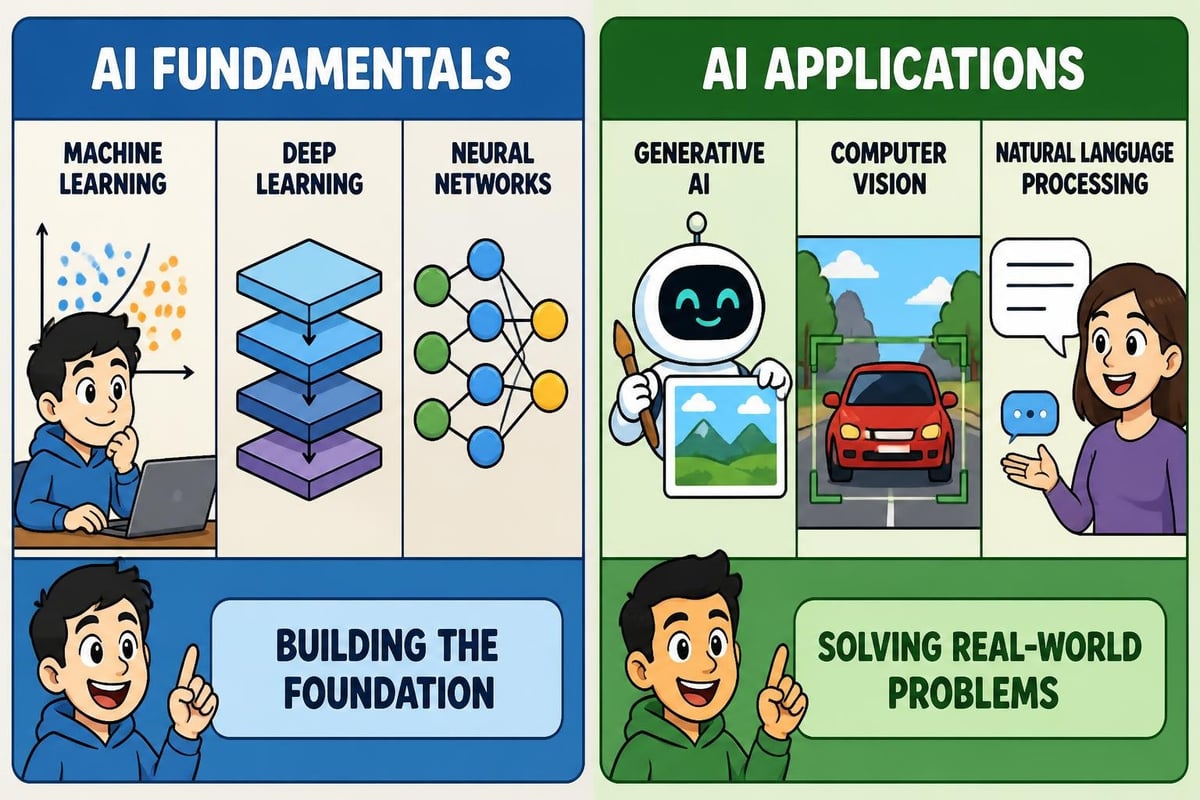
When evaluating programs, consider whether the course teaches foundational machine learning principles or focuses on specific applications like generative AI, computer vision, or natural language processing. The diverse range of AI courses available demonstrates how specialized the field has become, requiring learners to match their educational path with career objectives.
Certification Value and Industry Recognition
Not all AI certifications carry equal weight in the job market. Employers in 2026 increasingly look for credentials that demonstrate practical competency rather than just course completion.
| Certification Type | Industry Recognition | Time Investment | Career Impact |
|---|---|---|---|
| University-backed programs | Very High | 6-12 months | Significant salary increase |
| Vendor certifications (Microsoft, Google, AWS) | High | 3-6 months | Role-specific advancement |
| Platform certificates | Moderate | 1-3 months | Skill validation |
| Bootcamp credentials | High (with portfolio) | 2-4 months | Career transition support |
Understanding artificial intelligence certification options helps professionals choose programs aligned with their industry sector and career stage.
Evaluating Course Formats and Learning Styles
The delivery method significantly impacts learning outcomes. Some professionals thrive in self-paced environments, while others need structured bootcamp intensity.
Self-Paced Versus Instructor-Led Programs
Self-paced courses offer flexibility but require exceptional self-discipline. Platforms offering thousands of on-demand lessons allow learners to progress according to their schedule, making them ideal for working professionals balancing training with full-time responsibilities.
Instructor-led programs provide accountability, real-time feedback, and collaborative learning opportunities. Live sessions enable immediate clarification of complex concepts, which proves particularly valuable when tackling advanced topics like transformer architectures or reinforcement learning algorithms.
Hybrid models combining on-demand content with scheduled live sessions represent the best AI learning course format for many professionals. This approach delivers flexibility without sacrificing the benefits of expert guidance and peer interaction.
Bootcamp Intensity Versus Extended Programs
Intensive bootcamps compress comprehensive AI training into 8-12 weeks, demanding 40-60 hours of weekly commitment. These programs suit career changers ready to fully immerse themselves in AI education.
Extended programs spreading content across 6-12 months accommodate professionals who cannot pause their careers. These formats typically require 10-15 hours weekly, allowing gradual skill development without overwhelming time commitments.
For those exploring beginner-focused AI training, starting with shorter programs helps validate interest before committing to extensive certification tracks.
Curriculum Depth and Practical Application
The best AI learning course balances theoretical understanding with implementable skills. Curriculum quality determines whether learners can transform knowledge into business value.
Essential Technical Topics
Comprehensive AI training must cover:
- Python programming fundamentals for AI development
- Statistical foundations including probability and linear algebra
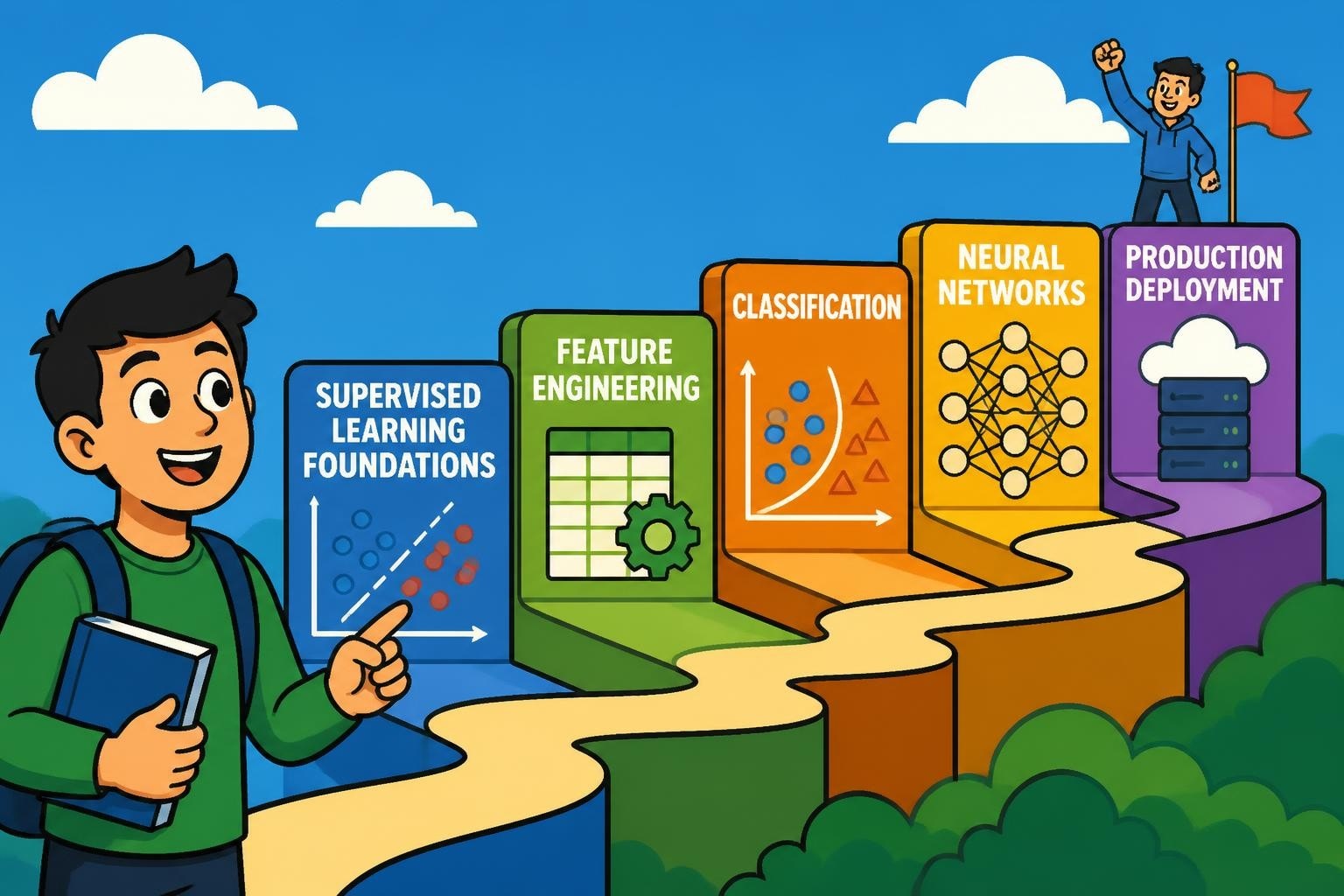
- Machine learning algorithms from regression to ensemble methods
- Deep learning architectures including CNNs, RNNs, and transformers
- AI frameworks and tools such as TensorFlow, PyTorch, and scikit-learn
- Data preprocessing and feature engineering techniques
- Model evaluation and optimization strategies
- Deployment and production considerations for AI systems
Programs that rush through foundational topics or skip mathematical principles leave learners unable to troubleshoot models or adapt algorithms to novel problems.
Real-World Project Requirements
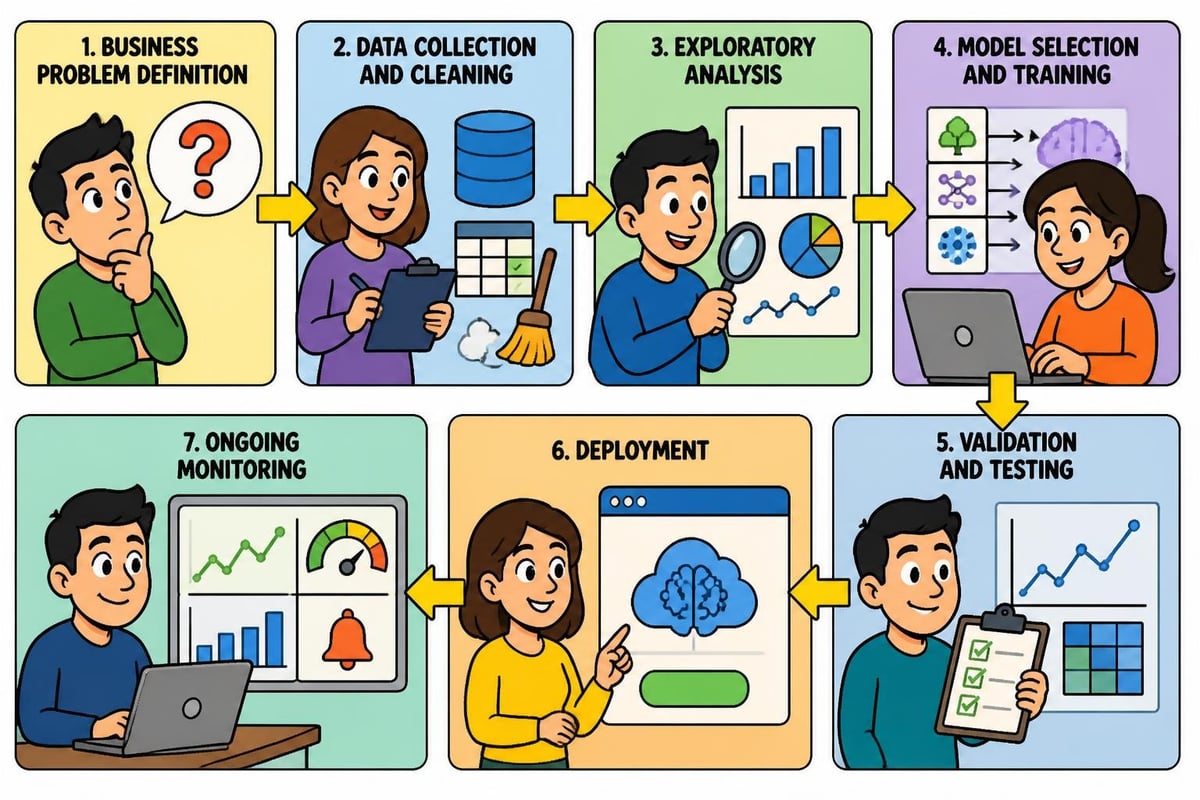
Theoretical knowledge without application remains hollow. The best AI learning course includes multiple substantial projects requiring learners to:
- Solve authentic business problems using AI techniques
- Work with messy, real-world datasets requiring extensive preprocessing
- Make architectural decisions about model selection and design
- Optimize models for performance, accuracy, and computational efficiency
- Present findings and recommendations to non-technical stakeholders
According to comprehensive AI course comparisons, programs emphasizing portfolio development significantly improve job placement outcomes.
Platform Selection and Resource Quality
Where you learn matters as much as what you learn. Platform infrastructure, resource quality, and support systems dramatically affect educational outcomes.
Comparing Major Learning Platforms
Different platforms serve distinct learner needs:
University-affiliated platforms like those discussed in academic AI program analyses offer rigorous academic frameworks and prestigious credentials but may lack cutting-edge industry applications.
Specialized AI platforms provide focused curricula designed specifically for artificial intelligence education, with instructors actively working in AI research or industry roles.
Corporate training platforms deliver enterprise-focused content aligned with business applications, often including case studies from Fortune 500 implementations.
General education marketplaces offer variety and affordability but inconsistent quality across instructors and courses.
Interactive Learning Tools and AI Assistants
Modern AI education increasingly leverages AI itself to enhance learning. Platforms incorporating AI-powered features provide:
- Personalized learning paths adapting to individual progress
- Intelligent code review offering instant feedback on programming exercises
- Chatbot assistants answering questions 24/7
- Adaptive assessments adjusting difficulty based on performance
Recent developments like Google's AI learning tools and personalized AI course platforms demonstrate how technology enhances educational experiences.
Cost Considerations and Return on Investment
AI training represents a significant investment of time and money. Understanding the financial landscape helps professionals make cost-effective decisions.
Price Ranges Across Course Types
| Course Category | Typical Cost Range | Additional Expenses | Total Investment |
|---|---|---|---|
| Free introductory courses | $0 | Optional certification: $50-200 | $0-200 |
| Platform subscriptions | $30-100/month | None | $300-1,200 annually |
| Professional certificates | $300-2,000 | None | $300-2,000 |
| University programs | $5,000-25,000 | Materials, software | $5,500-27,000 |
| Bootcamps | $8,000-20,000 | Living expenses if full-time | $8,000-30,000 |
Resources like free AI course collections provide starting points for budget-conscious learners testing their interest before committing to paid programs.
Calculating Career ROI
The best AI learning course justifies its cost through measurable career advancement. Consider these factors:
Salary increases: AI professionals command premium salaries, with machine learning engineers averaging $130,000-180,000 in 2026. A $10,000 course investment generating a $30,000 salary increase pays for itself in four months.
Career acceleration: Quality training can compress years of self-study into months of structured learning, accelerating promotion timelines and role transitions.
Organizational value: For corporate teams, business-focused AI training delivers ROI through improved decision-making, process automation, and competitive advantages worth far more than training costs.
Specialized AI Learning Paths
As AI diversifies, specialized training paths serve specific career objectives better than general courses.
Generative AI and Large Language Models
Generative AI exploded in prominence following ChatGPT's release, creating massive demand for specialized training. The best AI learning course in this domain covers:
- Transformer architecture and attention mechanisms
- Fine-tuning large language models for specific applications
- Prompt engineering techniques for optimal results
- Ethical considerations and bias mitigation
- Integration strategies for enterprise applications
Generative AI course selections help professionals navigate this rapidly evolving subfield.
Industry-Specific Applications
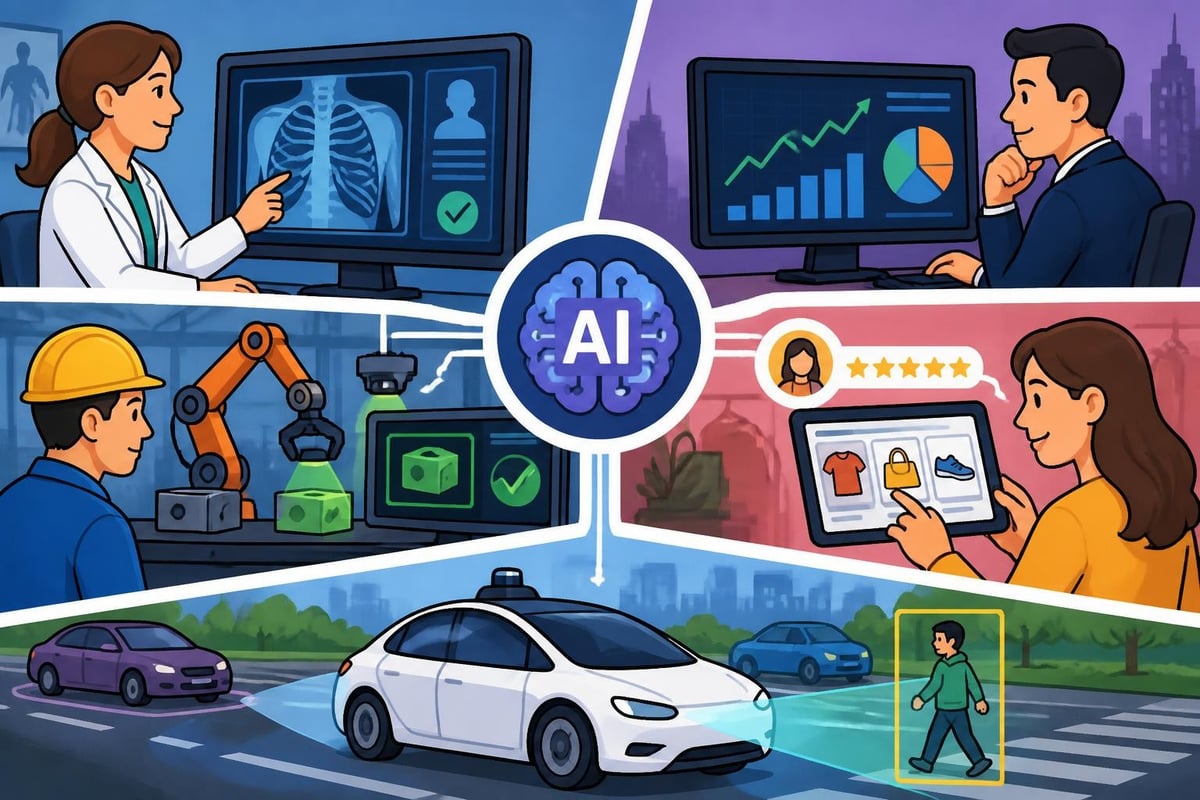
AI implementation varies dramatically across sectors. Specialized courses targeting specific industries provide contextually relevant training:
- Healthcare AI: Medical imaging, diagnosis assistance, patient outcome prediction
- Financial AI: Algorithmic trading, fraud detection, risk assessment
- Manufacturing AI: Predictive maintenance, quality control, supply chain optimization
- Retail AI: Recommendation systems, demand forecasting, customer segmentation
Professionals pursuing Azure AI certification often seek cloud-specific implementations relevant to enterprise environments.
Corporate Training Programs and Team Development
Organizations increasingly invest in collective AI upskilling rather than individual certifications.
Enterprise Learning Platforms
The best AI learning course for corporate teams differs from individual programs. Enterprise platforms provide:
- Customizable curricula aligned with organizational objectives
- Progress dashboards tracking team-wide skill development
- Cohort-based learning fostering collaboration among colleagues
- Integration capabilities connecting with existing learning management systems
- Reporting tools demonstrating training ROI to leadership
Companies exploring AI specialization programs should evaluate whether vendors offer corporate licensing and team management features.
Building Internal AI Capabilities
Forward-thinking organizations don't just train individuals but develop comprehensive AI competency across functions:
Cross-functional training: Marketing, finance, operations, and HR teams all benefit from AI literacy, even without becoming technical practitioners.
Tiered learning paths: Organizations succeed by offering beginner awareness training for most employees, intermediate application training for power users, and advanced development training for technical teams.
Continuous learning culture: AI evolves rapidly, making one-time training insufficient. The best programs include ongoing updates and refresher courses.
Evaluating Course Reviews and Success Metrics
Not all positive reviews reflect genuine quality. Discerning learners look beyond star ratings.
Credible Review Sources
When researching the best AI learning course, prioritize:
- Detailed outcome reports showing actual career transitions and salary changes
- Project portfolios from graduates demonstrating practical skill application
- Employer feedback about which programs produce job-ready candidates
- Technical depth assessments from industry practitioners
- Completion rates indicating whether students finish programs
Resources providing comprehensive AI course evaluations offer more nuanced insights than simple ratings.
Warning Signs of Low-Quality Programs
Avoid courses exhibiting these red flags:
- Outdated curriculum referencing deprecated tools or frameworks
- Instructors lacking current industry experience
- Minimal or superficial project requirements
- Overpromising job placement guarantees
- Excessive marketing hype without substance
- Poor student support and unresponsive teaching assistants
- Vague learning objectives and outcomes
Learning Support and Community Resources
Technical roadblocks inevitably arise during AI education. Support quality separates frustrating experiences from successful ones.
Mentorship and Office Hours
The best AI learning course provides multiple support channels:
Live office hours with instructors allow real-time problem-solving. Scheduled sessions where learners can ask questions, review challenging concepts, or get project feedback prove invaluable for complex topics.
Mentorship programs connecting students with industry professionals offer career guidance beyond technical content. Mentors help with resume optimization, portfolio development, and interview preparation.
Peer learning communities enable knowledge sharing among students. Collaborative problem-solving often clarifies concepts more effectively than solo study.
Career Services and Job Placement
Top-tier programs extend support beyond course completion:
- Resume and portfolio reviews tailored to AI roles
- Mock interviews simulating technical assessments
- Networking events connecting learners with hiring companies
- Job boards featuring AI-specific opportunities
- Alumni networks providing ongoing professional connections
Making Your Final Decision
Choosing the best AI learning course requires balancing multiple factors against your specific situation.
Decision Framework
Use this systematic approach:
- Define objectives: Career change, skill update, promotion pursuit, or organizational capability building?
- Assess prerequisites: Do you meet technical requirements, or need foundational preparation?
- Determine time availability: Full-time immersion, part-time study, or flexible self-pacing?
- Set budget parameters: Consider total cost including opportunity cost of time
- Research specific programs: Compare curriculum, instructors, and outcomes
- Validate with trial content: Many platforms offer free introductory modules
- Check alumni outcomes: Contact graduates about their experiences
- Evaluate ongoing support: Consider post-completion resources and community access
Starting Your AI Learning Journey
For professionals ready to begin, comprehensive AI training platforms provide filtered options by experience level, budget, and learning objectives.
Whether pursuing AI engineer certification or exploring foundational concepts, the key is starting with clear goals and selecting programs aligned with those objectives.
The technology landscape will continue evolving, making adaptability and continuous learning essential. The best AI learning course isn't necessarily the most prestigious or expensive but rather the one matching your current situation, learning style, and career aspirations while delivering practical, implementable skills that create measurable professional value.
Selecting the right AI training program represents a pivotal career investment that can accelerate professional growth and open entirely new opportunities in our AI-driven economy. The best approach combines careful evaluation of curriculum quality, instructor expertise, and practical application opportunities with honest assessment of your own goals and constraints. MammothClub provides exactly this combination through our comprehensive library of 3,000+ AI and tech courses, interactive bootcamps, and certification programs designed for both individual professionals and enterprise teams. Our AI-powered learning dashboards and personalized training paths ensure you develop skills that directly translate into business results, helping you stay competitive in the rapidly evolving AI landscape.