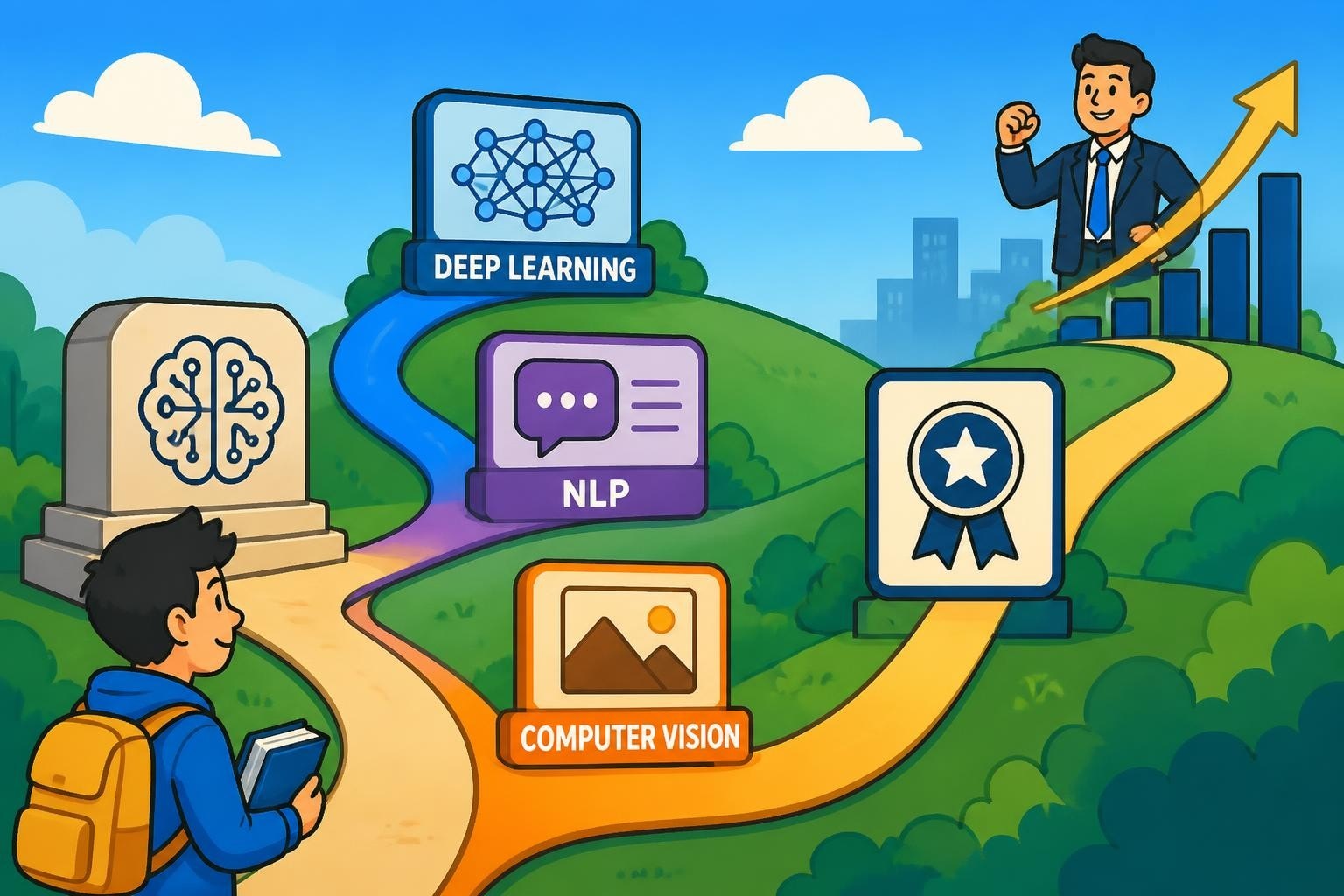
Artificial Intelligence is rapidly transforming every industry, creating unprecedented opportunities and a growing need for professionals with specialized knowledge. As organizations race to adopt AI-driven solutions, the value of formal education in this field has never been higher.
This guide is designed to provide you with everything you need to know about pursuing a diploma course in artificial intelligence in 2026. Whether you are just starting out or looking to advance your career, understanding your options is crucial.
Explore what a diploma in AI covers, from curriculum essentials and admission requirements to learning formats and future career prospects. Ready to unlock high-demand roles and future-proof your skills? Dive into each section to make informed decisions about your AI education journey.
What is a Diploma Course in Artificial Intelligence?
A diploma course in artificial intelligence is a structured academic program focused on teaching both the theory and practical skills needed to work with AI technologies. Unlike short certificates or informal bootcamps, a diploma course in artificial intelligence blends foundational knowledge with hands-on projects, preparing students for real-world roles in this rapidly evolving field.
| Program Type | Duration | Focus | Outcome |
|---|---|---|---|
| Diploma | 1 week – 12 months | Foundational to advanced, practical skills | Industry-ready, formal qualification |
| Certificate | 1 week – 6 months | Basic concepts, introductory | Skill upgrade, not always formal |
| Degree | 2 – 4 years | Comprehensive, research-oriented | Bachelor's or master's degree |
| Bootcamp | Few days – 3 months | Intensive, project-based | Portfolio, rapid upskilling |
The main goal of a diploma course in artificial intelligence is to bridge the gap between theory and practice. These programs are designed to help learners build a strong foundation in AI concepts, algorithms, and programming, while also gaining real-world experience through applied projects.
Key objectives of a diploma course in artificial intelligence include:
- Covering AI foundations, such as history, evolution, and core principles.
- Teaching critical algorithms and machine learning techniques.
- Focusing on practical skills, including coding and data handling.
- Preparing students for industry-recognized roles and certifications.
- Developing problem-solving abilities and ethical awareness.
Program durations vary widely. Short options like UniAthena’s self-paced course can be completed in just 1–2 weeks, while comprehensive diplomas such as the University of Winnipeg’s hybrid program last up to 12 months. For a deeper dive into how program lengths compare, see this AI course duration explained resource.
Delivery modes for a diploma course in artificial intelligence are flexible. Many institutions offer self-paced online learning, allowing students to balance studies with work. Others provide in-class instruction, live online sessions, or hybrid formats that blend virtual and face-to-face learning. This variety ensures that both local and international students can access quality training.
A diploma course in artificial intelligence is now offered by a range of institutions. Universities like the University of Winnipeg deliver structured, accredited programs with expert faculty and in-person components. Online platforms such as UniAthena focus on accessibility and global reach, providing free or low-cost diplomas that emphasize hands-on skills. Specialized tech academies also contribute, offering targeted curricula for working professionals.
The popularity of these programs is growing rapidly. For example, UniAthena’s free AI diploma has already attracted over 1,000 students worldwide, reflecting the increasing demand for AI upskilling. Across industries, organizations are seeking professionals with formal qualifications to lead digital transformation efforts.
Whether you are a recent graduate, a seasoned IT professional, or someone looking to pivot into tech, a diploma course in artificial intelligence offers a clear, practical pathway to acquiring in-demand AI expertise. These programs are tailored for both beginners and those seeking to deepen their skills, making them a smart choice for anyone ready to invest in their future.
Core Curriculum and Learning Outcomes
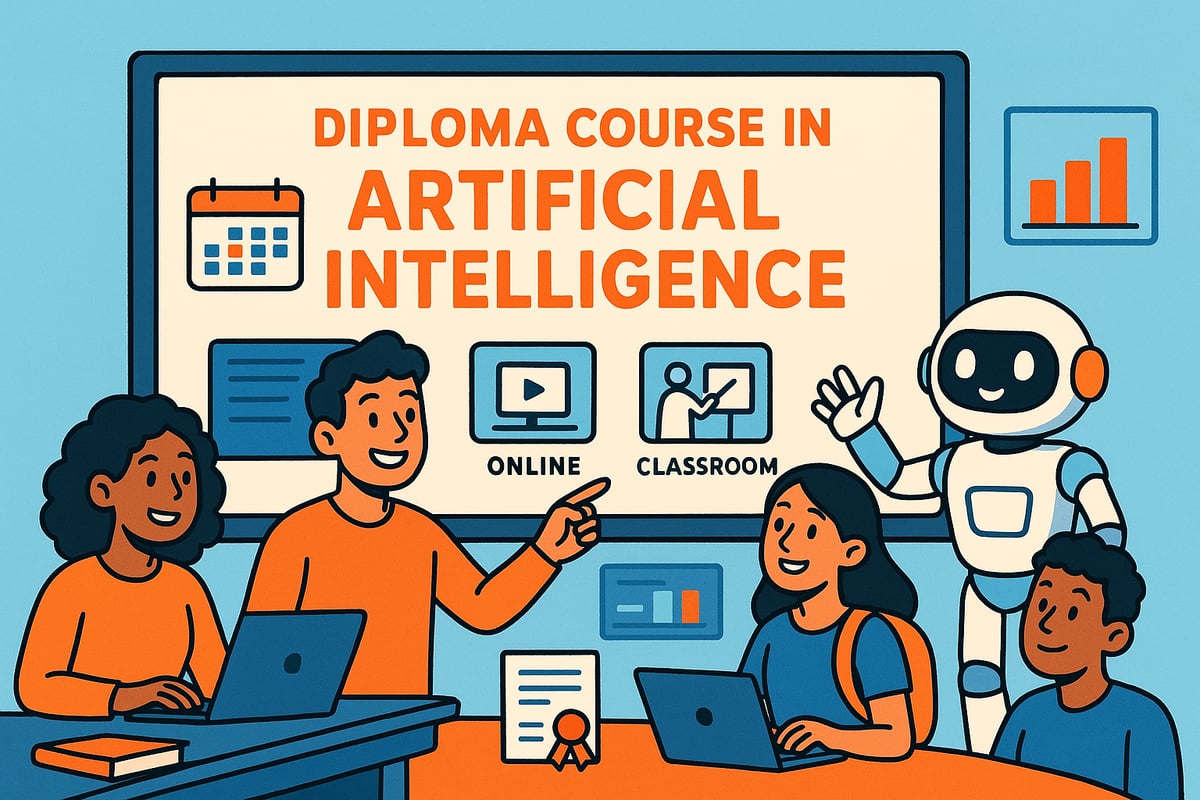
A diploma course in artificial intelligence offers a structured pathway to master both the theory and practical skills needed in the AI field. The curriculum is carefully designed to move learners from foundational understanding to advanced applications, while also integrating essential business, ethical, and communication skills. Whether you are new to AI or looking to formalize your expertise, the curriculum ensures you are industry-ready and prepared for the evolving demands of the workforce.

Fundamental Topics Covered
The foundation of any diploma course in artificial intelligence starts with a deep dive into the basic building blocks of AI. Students are introduced to the history and evolution of artificial intelligence, understanding how the field has grown from simple rule-based systems to today’s sophisticated machine learning models.
Key elements include:
- AI foundations: Explore the origins, types, and growth of artificial intelligence.
- Algorithms: Study search, optimization, and problem-solving algorithms central to intelligent systems.
- Machine learning basics: Learn the differences between supervised, unsupervised, and reinforcement learning.
- Knowledge representation: Understand logic, reasoning, and how machines process information.
For example, the University of Winnipeg’s curriculum features courses such as AI & Machine Learning Theory and Introduction to Machine Learning, ensuring a thorough grasp of these core areas.
If you are starting out, resources like the AI foundations for beginners bootcamp can complement your studies and reinforce your understanding of fundamental topics.
Here is a summary of typical core subjects:
| Core Topic | Description |
|---|---|
| AI History & Evolution | Traces AI’s development and key milestones |
| Search & Optimization | Examines core problem-solving algorithms |
| Machine Learning | Covers learning paradigms and techniques |
| Knowledge Representation | Focuses on logic and data representation |
A diploma course in artificial intelligence ensures these foundational concepts are mastered before progressing to more complex material.
Advanced Modules and Practical Applications
Once foundational principles are established, the diploma course in artificial intelligence shifts toward advanced modules and real-world application. Students build expertise in applied statistics, data management, and solution architecture, all of which are essential for deploying AI systems in professional settings.
Advanced topics may include:
- Applied statistics for data science: Learn statistical methods that support large-scale data analysis.
- Big data platforms: Gain experience with tools for handling and processing massive datasets.
- Data acquisition and cleaning: Master techniques for sourcing, managing, and preparing data for analysis.
- AI solution architecture: Design and implement end-to-end AI solutions.
Practical learning is a hallmark of these programs. For instance, University of Winnipeg students complete a capstone project in AI & Machine Learning, while UniAthena’s course features hands-on assignments that simulate real industry challenges.
A typical advanced module sequence in a diploma course in artificial intelligence might look like this:
- Data preparation and management
- Designing AI-driven solutions
- Implementing machine learning models
- Evaluating and optimizing system performance
Through these modules, learners gain the confidence to apply their knowledge directly to workplace scenarios.
Soft Skills and Business Integration
Technical mastery alone is not enough in today’s AI-driven landscape. A diploma course in artificial intelligence also emphasizes soft skills and business acumen, preparing graduates to communicate ideas, manage projects, and navigate ethical considerations.
Key areas of focus include:
- Communication skills: Develop the ability to explain complex AI concepts to technical and non-technical audiences.
- Project management: Learn to plan, execute, and oversee AI projects from inception to completion.
- Business fundamentals: Understand how AI impacts business strategies and decision-making.
- Ethics in AI: Address legal, social, and ethical challenges related to AI deployment.
For example, the University of Winnipeg’s curriculum features modules on business fundamentals and project management, ensuring students are equipped to lead teams and projects effectively.
A diploma course in artificial intelligence provides these skills to help graduates excel in collaborative, interdisciplinary environments.
Learning Outcomes and Competencies
Graduates of a diploma course in artificial intelligence emerge with a robust set of competencies that position them for success in a rapidly evolving field. These learning outcomes reflect both technical proficiency and professional readiness.
Typical outcomes include:
- Designing AI systems: The ability to conceptualize, prototype, and implement AI solutions to real-world problems.
- Testing and evaluation: Skills to assess the effectiveness and performance of AI models.
- Ethical and legal awareness: Understanding of the implications and responsibilities of AI in society.
- Industry readiness: Preparation for roles such as AI Engineer, Data Scientist, or Machine Learning Specialist.
Many programs also prepare students for external certifications, such as ARTiBA’s AI Engineer credential, enhancing their appeal to employers.
Below is a summary of core competencies:
- Apply AI and ML algorithms to practical challenges
- Communicate technical findings clearly and effectively
- Navigate ethical and societal issues in AI
- Demonstrate readiness for industry certifications and advanced roles
A diploma course in artificial intelligence is structured to ensure these outcomes, setting graduates on a clear path to career advancement and lifelong learning.
Admission Requirements and Application Process
Pursuing a diploma course in artificial intelligence requires careful preparation and a clear understanding of what institutions expect from applicants. Whether you are a recent graduate or a working professional, knowing the prerequisites and the application process can streamline your journey toward AI expertise.
Academic Prerequisites
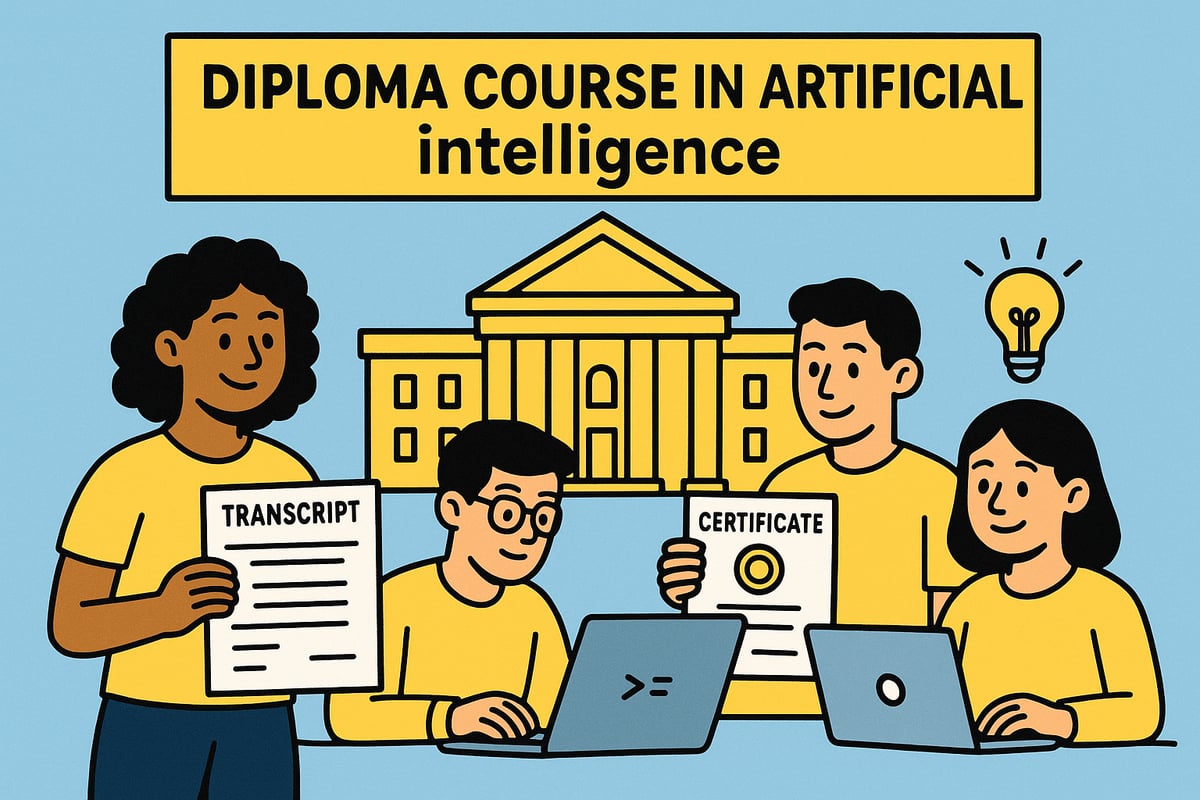
Most institutions offering a diploma course in artificial intelligence require applicants to have an undergraduate degree or a college diploma in related fields such as computer science, engineering, mathematics, or statistics. This ensures that students possess a solid academic foundation for the technical material covered in the program.
However, some programs are flexible. If you do not have a formal academic background but have significant work experience in data analysis, research, or a related technical field, you may still be eligible. For example, the University of Winnipeg considers applicants with professional experience in lieu of specific degrees, allowing a broader range of candidates to enroll in their diploma course in artificial intelligence.
Applicants should review each institution’s criteria carefully, as requirements may differ. Being proactive in understanding these prerequisites enhances your chances of a successful application.
Technical Skills and Language Proficiency
A diploma course in artificial intelligence typically expects incoming students to have fundamental programming skills. Proficiency in languages such as Python, SQL, and JSON is often required, while some institutions may also expect familiarity with Java or XML. These technical skills form the backbone of most AI coursework, enabling students to participate fully in practical assignments and projects.
For international students, proof of English proficiency is essential. Accepted tests include IELTS, TOEFL, or other recognized assessments, with minimum score requirements set by each institution. If you are unsure about your readiness, consider using an AI fluency assessment tool to evaluate your current skills before applying to a diploma course in artificial intelligence.
It is important to check the specific technical and language requirements for each program, as meeting these standards is crucial for admission.
Application Steps: Chronological Guide
Applying to a diploma course in artificial intelligence involves several key steps. Organizing your materials and following the process methodically can make your application smoother.
| Step | Action Required |
|---|---|
| Research programs | Identify suitable diploma offerings |
| Prepare academic transcripts | Gather official records |
| Demonstrate programming skills | Provide certificates or portfolio |
| Submit language test scores | Attach results if required |
| Complete online applications | Fill out forms and upload documents |
| Attend interviews/assessments | Participate if invited |
| Await decision and enroll | Respond to acceptance and enroll |
Double-check all deadlines and requirements for each institution. A thorough approach increases your chances of admission to your desired diploma course in artificial intelligence.
Tuition, Fees, and Financial Aid
The cost of enrolling in a diploma course in artificial intelligence varies widely. Short, self-paced online courses may be free, as seen with UniAthena’s offerings, while full-time university programs like the University of Winnipeg’s can reach up to $13,100. Additional expenses may include textbooks, certification exam fees, and technology upgrades.
Financial aid options are often available. Scholarships, grants, or employer sponsorships can help offset tuition and related costs. Investigate these opportunities early, as application deadlines for funding may differ from program deadlines.
Understanding the full financial commitment ensures you can make informed decisions about your investment in a diploma course in artificial intelligence.
Modes of Study: Online, In-Class, and Hybrid Formats
The evolving landscape of learning offers multiple ways to pursue a diploma course in artificial intelligence. Whether you are a working professional seeking flexibility or a student who thrives on structured engagement, there is a study format designed to meet your needs.
Self-Paced Online Learning
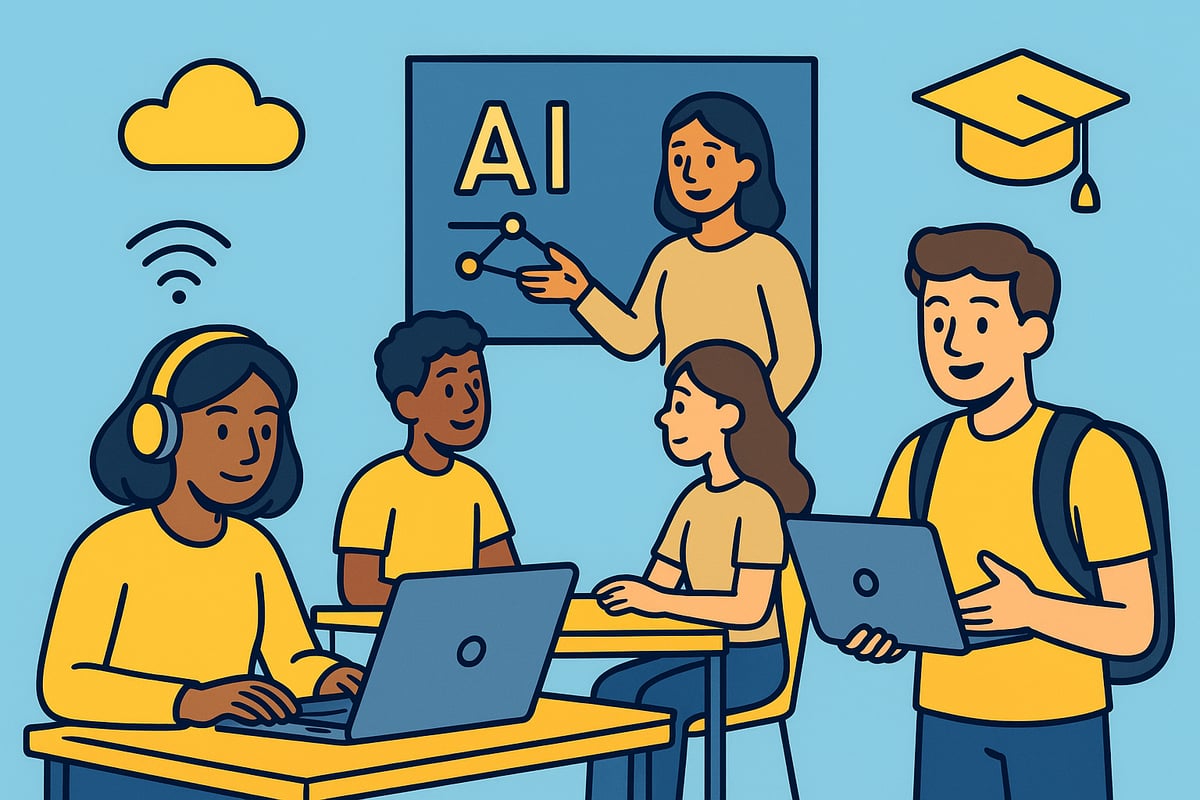
Self-paced online learning has become a cornerstone for those interested in a diploma course in artificial intelligence. This mode allows students to access content anytime, anywhere, making it ideal for individuals balancing work or personal commitments.
Key features include:
- On-demand video lectures, which can be paused and revisited as needed
- Interactive assignments and quizzes for immediate feedback
- Online forums and peer collaboration tools
For example, UniAthena offers a flexible, self-paced diploma course in artificial intelligence that can be completed in as little as one to two weeks. Students benefit from the ability to progress at their own speed, accessing all resources digitally.
Many programs include optional live webinars or mentorship sessions, enriching the online experience. The self-paced model is particularly attractive to global learners seeking to upskill without relocating or adjusting their schedules.
Online platforms often provide lifetime access to course materials, allowing for continual reference as you advance in your career. This approach to a diploma course in artificial intelligence is especially effective for self-motivated learners.
In-Class and Hybrid Programs
In-class and hybrid formats offer a more structured approach to earning a diploma course in artificial intelligence. These programs appeal to students who value face-to-face interaction and a set schedule.
In-class learning provides:
- Real-time engagement with instructors and classmates
- Immediate feedback during discussions and labs
- Opportunities for group projects and networking
Hybrid programs blend in-person sessions with online components. For instance, the University of Winnipeg’s 12-month diploma course in artificial intelligence combines classroom teaching, live online instruction, and scheduled coursework. This format supports both flexibility and structure.
Students benefit from hands-on activities, collaborative projects, and the chance to form professional connections. Hybrid models are especially suitable for those who want the best of both worlds, balancing flexibility with accountability.
Choosing an in-class or hybrid diploma course in artificial intelligence helps prepare students for real-world teamwork and project management scenarios commonly found in the AI industry.
Technology and Equipment Requirements
To succeed in a diploma course in artificial intelligence, students must meet specific technology requirements. The right equipment ensures a smooth learning experience, whether online or in a hybrid setting.
Minimum recommendations include:
| Requirement | Specification |
|---|---|
| Operating System | Windows 11 |
| Processor | Intel i5 or higher |
| RAM | At least 8GB |
| Graphics Card | Dedicated GPU preferred |
| Internet Connection | Reliable, high-speed |
| Device | Laptop (tablets not advised) |
Some diploma course in artificial intelligence programs may require additional software, such as Python environments or data analysis tools. Reliable internet access is crucial for downloading course materials and participating in live sessions.
Always review the institution’s specific technology guidelines before enrollment to avoid disruptions during the learning process.
Pros and Cons of Each Mode
Each study mode for a diploma course in artificial intelligence comes with unique advantages and challenges.
Online:
- Maximum flexibility and accessibility
- Requires strong self-discipline
In-Class/Hybrid:
- Enhanced networking and support
- Less flexibility in scheduling
Carefully assess your learning style and commitments to choose the format that will help you excel in your diploma course in artificial intelligence.
Career Opportunities and Industry Recognition
Artificial intelligence is transforming the global workforce, opening up a world of possibilities for those with the right expertise. Completing a diploma course in artificial intelligence is a strategic move for anyone aiming to enter or advance in this high-growth field.
AI Roles and Job Prospects
A diploma course in artificial intelligence can open doors to some of the most in-demand careers today. Graduates are well prepared for roles such as:
- Data Scientist
- AI Engineer
- Machine Learning Engineer
- AI/ML Developer
- Deep Learning Engineer
These positions span diverse sectors, including finance, healthcare, manufacturing, retail, and technology. The job market continues to expand as organizations seek professionals who can design, implement, and maintain AI-driven solutions.
For those interested in a step-by-step guide to pursuing a specialized AI engineering role, the Azure AI Engineer career roadmap provides valuable insights into the progression and skills required in this field.
Universities and tech academies, such as the University of Winnipeg and UniAthena, report that their graduates frequently secure positions at leading companies. Completing a diploma course in artificial intelligence not only boosts your credibility but also equips you with practical skills that employers value.
Certification and Professional Credentials
Earning a diploma course in artificial intelligence is often the first step toward industry-recognized certifications. Many programs are structured to prepare students for credentials like the ARTiBA AI Engineer certification, which is increasingly valued by employers.
Professional certifications enhance your résumé, signaling to recruiters that you possess both theoretical knowledge and hands-on abilities. They can also serve as prerequisites for more advanced roles or specialized positions, particularly in organizations with rigorous hiring standards.
A diploma course in artificial intelligence gives you a competitive edge and demonstrates your commitment to continuous professional growth.
Industry Demand and Salary Trends
Global demand for AI skills is on a sharp upward trajectory. Over 1,000 enrollments in UniAthena’s free AI diploma illustrate the appetite for upskilling in artificial intelligence. Job postings for AI roles are increasing year-over-year, highlighting the critical need for qualified professionals.
Salaries in this field are highly competitive. AI and machine learning roles consistently rank among the top-paying jobs in technology. Employers are willing to offer attractive compensation packages to candidates with a diploma course in artificial intelligence and relevant experience.
Gaining these credentials can significantly improve your earning potential and job security in a rapidly evolving economy.
Alumni Success Stories and Testimonials
The impact of a diploma course in artificial intelligence is best illustrated by alumni achievements. Graduates frequently cite increased confidence, career progression, and immediate application of new skills in real-world scenarios.
Many students have transitioned to advanced degree programs, such as bachelor’s or master’s in AI or related fields. Others have leveraged their diploma to secure promotions, switch industries, or take on leadership roles in AI projects.
Testimonials from UniAthena and the University of Winnipeg highlight how structured AI education fosters both personal and professional transformation.
Continuing Education and Pathways
A diploma course in artificial intelligence often acts as a springboard for further education. Many programs offer credit transfers toward advanced degrees or specialized certifications. This pathway supports lifelong learning and helps professionals stay current as AI technologies and methodologies evolve.
How to Choose the Right Diploma Course in Artificial Intelligence
Selecting the right diploma course in artificial intelligence is a crucial step toward launching or advancing your career in this booming field. With a growing array of programs available, it is important to assess each option carefully to ensure it aligns with your professional goals and learning preferences.
Factors to Consider When Selecting a Program
When evaluating a diploma course in artificial intelligence, start with the reputation and accreditation of the institution. Accredited programs ensure your credentials are widely recognized by employers and academic institutions. Review the curriculum for both foundational and advanced AI topics, as well as the integration of ethical and governance modules. For example, interdisciplinary approaches, as discussed in AI Governance in Higher Education Course Design, are increasingly valued by employers.
Assess the flexibility of delivery modes, including online, in-class, or hybrid formats, to match your schedule and learning style. Consider the support services available, such as career counseling and mentorship. Lastly, investigate industry partnerships and opportunities for internships, which can enhance hands-on experience and employability.
Admission requirements and the application process vary by institution. Reviewing programs like Purdue University's AI Graduate Certificate Admissions can help you understand typical prerequisites and deadlines, even if you are considering a diploma course in artificial intelligence rather than a graduate certificate.
Comparing Top Programs: Key Features and Differences
Comparing diploma course in artificial intelligence programs side by side helps clarify which best fits your needs. Use the following table to summarize key differences:
| Feature | Short Course (e.g., UniAthena) | Full-Time Diploma (e.g., UWinnipeg) |
|---|---|---|
| Duration | 1–2 weeks | 12 months |
| Cost | Free or low-cost | Up to $13,100 |
| Format | Self-paced online | Hybrid (in-class & online) |
| Certification | Optional, may transfer credits | Prepares for industry credentials |
| Internship | Rare | Often included |
Short courses offer quick upskilling, ideal for those seeking foundational knowledge or flexible learning. Full-time programs provide deeper immersion, structured support, and stronger industry recognition. Always verify if credits from your chosen diploma course in artificial intelligence can be applied toward advanced degrees or certifications.
Tips for Maximizing Your Learning Experience
To get the most from your diploma course in artificial intelligence, actively participate in hands-on projects and real-world case studies. Engage with online forums and webinars to connect with peers and industry experts. Seek mentorship from faculty or professionals to gain insights and career guidance.
Take advantage of collaborative opportunities, whether through group assignments or networking events. Consistent engagement and curiosity will help you build both technical and soft skills, positioning you for long-term success.
Frequently Asked Questions (FAQs)
Who should enroll in a diploma course in artificial intelligence? Anyone seeking formal AI training, from beginners to working professionals.
What are the prerequisites for beginners? Basic programming and math skills are usually required.
Can credits be transferred to higher degree programs? Some programs allow credit transfer, so check with your institution.
Is a diploma enough to start a career in AI? Yes, a diploma course in artificial intelligence can open doors to entry-level roles and further study.
Future Trends in AI Education and Skills for 2026 and Beyond
Artificial intelligence is evolving rapidly, shaping how education adapts to new industry needs. Anyone considering a diploma course in artificial intelligence should understand the future trends that will influence curriculum, technology, and the essential skills for tomorrow’s workforce.
Evolution of AI Curriculum
By 2026, the curriculum for a diploma course in artificial intelligence will be more dynamic, integrating cutting-edge topics. Generative AI, deep learning, and ethical AI modules will become core components. Students can expect to see a stronger focus on interdisciplinary skills, merging AI with business, healthcare, and engineering applications.
This shift reflects the broader movement in academia, with institutions like the University of Iowa's AI Certificate Announcement highlighting the integration of AI education across multiple fields. As a result, diploma programs will offer a balanced mix of theory, practical projects, and industry-relevant case studies.
Emerging Technologies and Tools
The technology landscape is transforming how learners engage with a diploma course in artificial intelligence. AI-powered learning platforms will deliver personalized content, while virtual labs offer hands-on experience with real-time data and collaborative tools.
Cloud computing will allow students to access powerful resources from anywhere, supporting group projects and experimentation. These trends mirror the expansion of AI education into flexible, tech-driven environments, preparing students for the demands of modern workplaces. Expect interactive simulations, peer collaboration, and industry partnerships to become standard in future diploma courses.
Skills in Demand: What Employers Will Look For
Employers in 2026 will seek graduates of a diploma course in artificial intelligence who possess a blend of technical and soft skills. Critical thinking, adaptability, and strong problem-solving abilities will be essential. Advanced programming expertise, data science proficiency, and effective communication will set candidates apart.
Awareness of legal and ethical issues in AI will also be a key differentiator. Reviewing advanced programs like the Pace University's MS in Artificial Intelligence Curriculum can provide insight into the competencies employers value, such as teamwork and project leadership in AI-driven environments.
Preparing for Lifelong Learning in AI
Lifelong learning will be vital for anyone pursuing a diploma course in artificial intelligence. The pace of innovation means continuous upskilling is necessary through micro-credentials, short courses, and professional certifications.
Alumni networks and professional communities will offer support and opportunities for knowledge sharing. Staying informed about industry trends, academic research, and new AI innovations will help graduates remain competitive and resilient as technology evolves. Proactive learning habits will ensure long-term career growth in the ever-changing AI landscape.
As you explore the steps to launching your AI career, remember that building a strong foundation is key to unlocking future opportunities. A diploma gives you the structure, skills, and confidence to stand out in a competitive field and adapt as AI evolves. If you’re ready to take the first step and want a hands-on, accessible introduction, you can Become a certified AI Foundation Specilaist. Start for free. This is a practical way to apply what you’ve learned and set yourself apart as you continue your journey into AI.