In 2026, machine learning and testing are at the heart of critical systems, from diagnosing diseases to powering global finance. When these models fail, the consequences are serious—lost revenue, damaged reputations, and even regulatory penalties.
As organizations increasingly rely on machine learning and testing to drive innovation, ensuring reliability and compliance has never been more important. Yet, many teams still struggle to navigate the unique challenges these systems present.
This guide will demystify the best practices for machine learning and testing, offering clear steps to validate, automate, and future-proof your ML workflows. Whether you are building models or overseeing deployments, you will find actionable strategies for dependable results.
The Evolving Landscape of Machine Learning Testing in 2026
In 2026, the relationship between machine learning and testing has transformed dramatically. As organizations increasingly rely on ML systems for critical operations, the stakes for robust validation have never been higher. Enterprises face both technical and regulatory challenges, making advanced machine learning and testing practices essential for reliability and trust.
The Shift from Traditional to ML-Specific Testing
Traditional software testing relies on deterministic logic, where the same input always produces the same output. In contrast, machine learning and testing must account for probabilistic outcomes, driven by ever-changing data and models. This shift introduces significant complexity, since ML systems can behave unpredictably as data evolves.
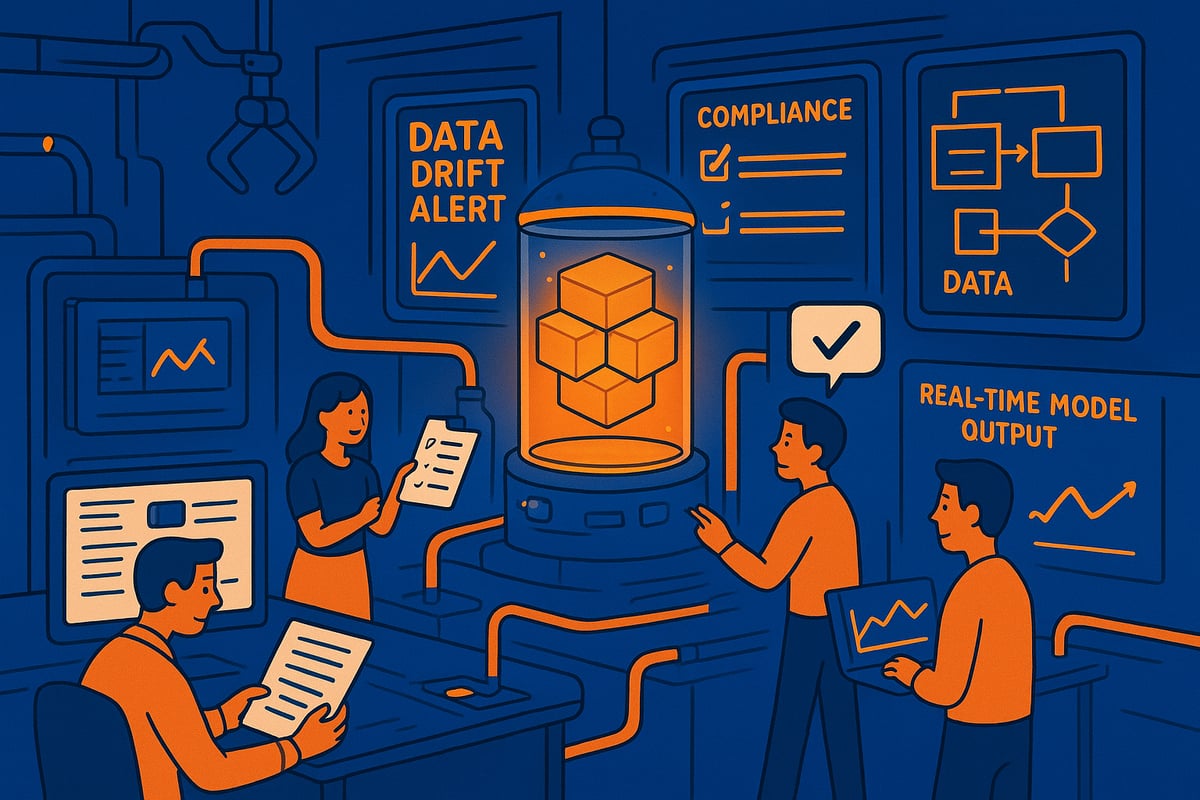
A prime example is a healthcare ML model that performs well initially, but suffers a sudden drop in accuracy when patient demographics shift—a phenomenon known as data drift. Unlike classic applications, machine learning and testing must continuously monitor for such changes to ensure safety and effectiveness.
This complexity is amplified by the massive adoption of ML across industries. According to Gartner (2025), 90% of enterprises now deploy machine learning in mission-critical workflows. The regulatory environment, such as the EU AI Act, demands explainability and rigorous validation, making compliance a core concern for machine learning and testing teams.
The rise of MLOps has further integrated DevOps principles with the ML lifecycle. Testing is now a continuous, automated process embedded within development pipelines. For a comprehensive overview of these evolving practices, the Ultimate Guide to MLOps: Process, Maturity & Best Practices offers valuable insights into how organizations are maturing their machine learning and testing workflows.
Yet, unique challenges persist:
- Ensuring high data quality amid diverse sources
- Detecting and addressing model drift
- Achieving reproducibility of results
These issues highlight why machine learning and testing require specialized strategies beyond what traditional software QA can provide.
Core Objectives of ML Testing in 2026
With the growing complexity of machine learning and testing, clear objectives are essential. Early detection of errors is critical to reduce downstream costs and prevent rework. Robust testing helps ensure models generalize well, maintain fairness, and adhere to ethical standards.
Reliability is another key objective, especially as code, data, and models change frequently in production environments. Machine learning and testing must support rapid iteration and innovation, but without compromising safety or compliance.
Consider a real-world scenario: An online retailer’s recommender system suffers a regression bug after a routine update. Sales drop, and customer trust erodes. Through comprehensive machine learning and testing practices, such as regression and behavioral tests, these issues can be detected and resolved before they impact the business.
Core objectives for 2026 include:
- Early error detection and prevention
- Generalization across diverse data distributions
- Fairness and ethical compliance
- Reliability during frequent updates
- Enabling rapid innovation while minimizing risk
Ultimately, organizations that prioritize advanced machine learning and testing practices position themselves for long-term success. As the landscape continues to evolve, investing in robust validation, continuous monitoring, and adaptive testing frameworks will be critical for dependable, scalable ML systems.
Types of Tests for Machine Learning Systems
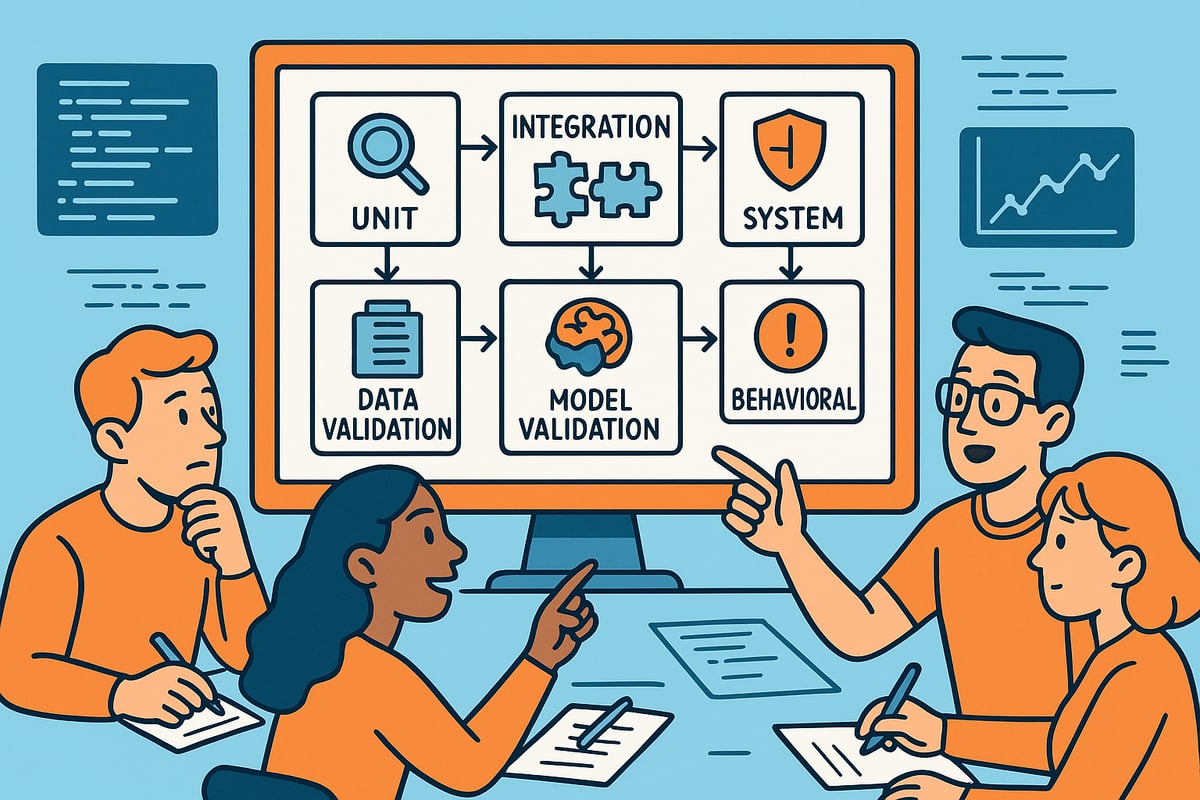
Understanding the spectrum of tests is crucial for effective machine learning and testing. As ML systems grow in complexity, teams must adopt a blend of traditional software tests and ML-specific approaches. This ensures every component, from code to data to models, is robust and reliable.
Unit, Integration, System, and Acceptance Tests
The foundation of machine learning and testing begins with classic software test types. Unit tests check individual code functions or components, like a feature scaling method or a data cleaning function. These tests help catch bugs early and build confidence in isolated logic.
Integration tests ensure that multiple parts of the ML pipeline—such as data preprocessing, feature engineering, and model inference—work together smoothly. For example, an integration test might catch a mismatch in data schema that would otherwise break the pipeline at runtime.
System tests assess the end-to-end workflow, from raw data ingestion to model serving. They confirm the entire machine learning and testing process delivers the expected results in a production-like environment.
Acceptance tests (or user tests) validate that the system meets business requirements and regulatory standards. These tests might check if a fraud detection model meets compliance thresholds or if an AI chatbot responds accurately to user queries.
Regression tests play a vital role in machine learning and testing by ensuring that new changes do not reintroduce previously fixed bugs. For example, after updating a recommendation algorithm, regression tests confirm that past issues—such as duplicate suggestions—do not return.
Here’s a table summarizing how each test type fits into machine learning and testing:
| Test Type | Focus Area | Typical Example |
|---|---|---|
| Unit | Code functions | Test feature normalization |
| Integration | Pipeline components | Data preprocessing + model inference |
| System | End-to-end workflow | From raw data to prediction serving |
| Acceptance | Business/regulatory | Meets GDPR compliance |
| Regression | Bug prevention | Prevents known issues from recurring |
A simple unit test for a scaling function might look like:
def test_scaling_negative():
    assert scale(-5) == expected_output
Machine learning and testing benefit from this foundation by providing early error detection and supporting rapid iteration. For a deeper dive into these principles, visit this Software and system testing overview.
Specialized ML Testing Approaches
Beyond classic software tests, machine learning and testing requires specialized approaches to address data-driven challenges. Data validation tests are critical; they check that input data matches expected types, ranges, and distributions. For instance, a test might flag if a sudden increase in missing values threatens model reliability.
Model validation tests evaluate the model’s accuracy, precision, recall, and fairness. These tests help teams confirm that the trained model generalizes well and does not introduce bias. For example, a model validation test could reveal if a new model version performs worse for a specific user group.
Behavioral tests simulate real-world scenarios to ensure models behave as expected under diverse conditions. For example, these tests might introduce rare or adversarial examples to probe model stability.
Statistical tests are essential for detecting overfitting, underfitting, or data leakage. They help maintain model integrity over time, especially as new data is introduced.
Here are some specialized test types used in machine learning and testing:
- Data validation: Schema checks, missing value detection, distribution analysis
- Model validation: Performance metrics, fairness, robustness checks
- Behavioral: Edge-case simulation, adversarial input scenarios
- Statistical: Drift detection, leakage identification
Machine learning and testing is most effective when these specialized tests are automated and integrated into pipelines. This approach ensures consistent quality, prevents silent failures, and supports compliance with evolving industry standards.
Step-by-Step Guide to Implementing ML Testing Best Practices
Machine learning and testing have become inseparable for building reliable AI systems in 2026. Following a clear, structured approach helps ensure that models deliver trustworthy results, adapt to change, and comply with regulations. Let’s break down the process step by step.

Step 1: Establish Testing Frameworks and Tools
A solid foundation is crucial for effective machine learning and testing. Begin by selecting testing frameworks that suit your stack. Popular choices include pytest, unittest, and ML-specific tools such as Great Expectations. Organize your project with dedicated directories for tests covering code, data, and models.
Integrate your testing suite with CI/CD pipelines to automate discovery and execution. For example, a pytest configuration can leverage fixtures and parameterized tests to streamline setup:
import pytest

@pytest.fixture
def sample_data():
    return [1, 2, 3]

def test_sum(sample_data):
    assert sum(sample_data) == 6
For a comprehensive overview of foundational principles, consider reviewing MLOps Principles, which covers essential strategies for robust machine learning and testing.
Step 2: Test Code Artifacts
The next focus is on code quality. Write atomic, single-responsibility functions and classes to facilitate precise unit testing. Ensure all input and output types are validated, handle exceptions, and cover edge cases.
Maintain a central repository for reusable test modules. This approach accelerates development and increases consistency across projects. For instance, a unit test for a feature scaling function can catch unexpected negative values, preventing downstream issues.
- Validate function outputs for expected ranges.
- Test for exceptions with invalid inputs.
- Reuse common test utilities across the team.
Every machine learning and testing initiative benefits from rigorous, reusable code tests.
Step 3: Validate Data Quality and Integrity
Data is at the heart of machine learning and testing. Implement schema checks to ensure data types and structures are as expected. Use value range checks and null detection to flag anomalies before they reach the model.
Statistical tests can monitor for data drift or sudden anomalies. Automate these checks in your data ingestion pipelines so issues are caught early. For example, a spike in missing values can trigger alerts and prevent model degradation.
- Define clear data expectations.
- Set up automated checks for common data issues.
- Integrate validation into data processing workflows.
Continuous data validation ensures your machine learning and testing processes remain robust.
Step 4: Test Model Artifacts
Model testing is essential for maintaining performance, fairness, and reliability. Evaluate model outputs using metrics like accuracy, precision, recall, and fairness indicators. Regression tests are vital to ensure updates do not reintroduce old bugs or biases.
Behavioral tests simulate real-world and adversarial scenarios, pushing models to their limits. For instance, running a regression test on a loan approval model can confirm that updates do not inadvertently reintroduce bias.
- Track model performance over time.
- Simulate edge cases and adversarial inputs.
- Maintain a history of model evaluation results.
Thorough model artifact testing is a core part of machine learning and testing success.
Step 5: Automate and Integrate Testing in ML Workflows
Automation is the backbone of efficient machine learning and testing. Set up automated test execution for every code commit, data change, or model update. Use tools like pre-commit hooks and GitHub Actions to ensure continuous validation.
Monitor test coverage and proactively address any gaps. Automated pipelines can catch integration bugs before deployment, reducing the risk of costly issues reaching production.
- Automate tests at every stage of the ML lifecycle.
- Use dashboards to monitor coverage and results.
- Trigger alerts for failed tests or anomalies.
Automation ensures your machine learning and testing workflows remain agile and reliable.
Step 6: Document and Maintain Test Suites
Documentation underpins the sustainability of machine learning and testing practices. Clearly document each test case, including its purpose and expected outcomes. Regularly update tests as data and model logic evolve.
Track test results, failures, and changes over time. Well-maintained documentation accelerates onboarding and continuous improvement. For example, when new team members join, clear test docs help them understand the testing rationale quickly.
- Maintain up-to-date test case documentation.
- Review and revise tests with each major change.
- Use version control for both code and test artifacts.
Consistent documentation is the final step in making machine learning and testing practices scalable and future-proof.
Best Practices for Reliable and Scalable ML Testing
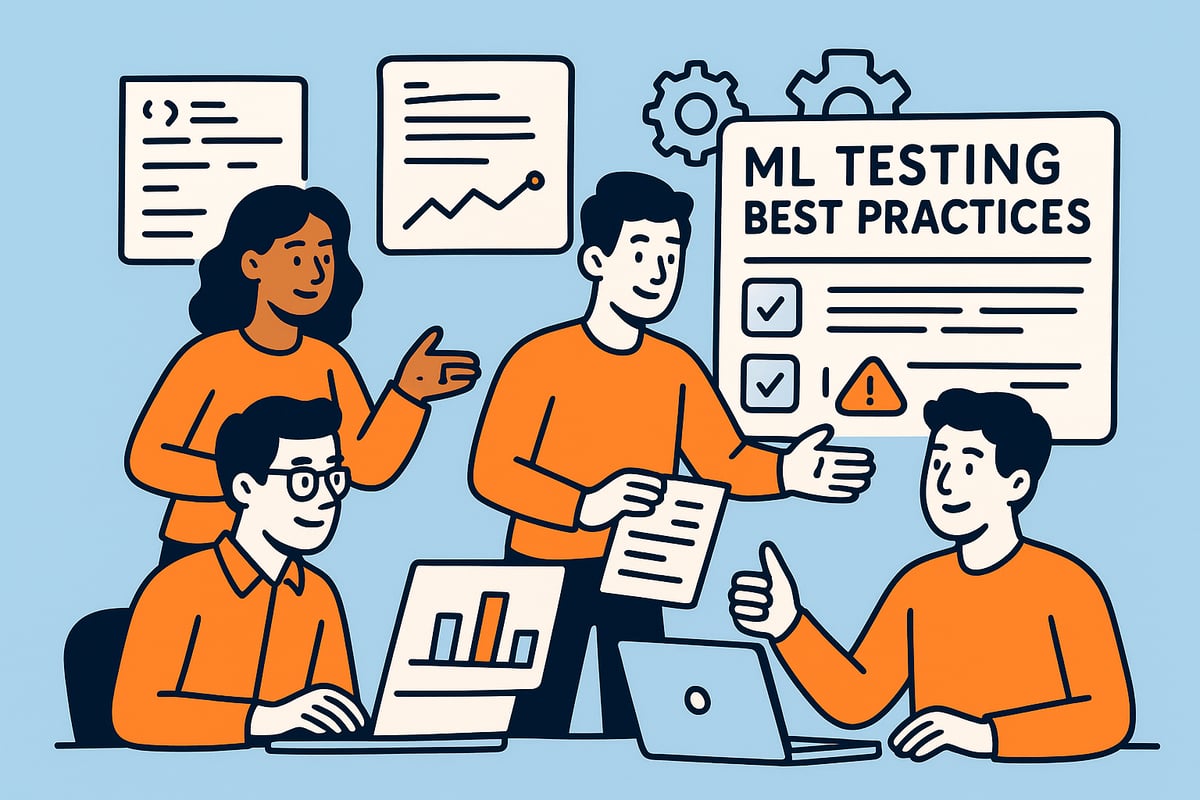
Building reliable and scalable systems is a cornerstone of successful machine learning and testing initiatives. As models and data pipelines become more complex, following proven best practices ensures your ML solutions remain robust, maintainable, and ready for enterprise demands.
Principles of Effective ML Testing
Adhering to sound principles is essential for effective machine learning and testing. The following table summarizes core practices that every ML team should embrace:
| Principle | Description |
|---|---|
| Atomic Design | Functions and classes should address one responsibility for simpler tests. |
| Test Composition | Write new tests alongside new components for seamless integration. |
| Reusability | Centralize test logic to ensure consistency and efficiency. |
| Regression Management | Add targeted tests for every discovered bug to prevent recurrences. |
| Coverage Metrics | Track coverage, but avoid overfitting tests to the codebase. |
| Automation | Integrate tests into CI/CD for reliable enforcement. |
A practical approach to machine learning and testing starts with writing atomic, easily testable code. For example, a simple unit test for a normalization function in Python might look like this:
def test_normalize_min_max():
    data = [0, 50, 100]
    result = normalize_min_max(data)
    assert result == [0.0, 0.5, 1.0]
Automation is a game-changer for machine learning and testing. By embedding test execution in your CI/CD workflows, you catch issues early and maintain consistent quality. For a deeper dive into automation trends and advanced MLOps strategies, see 5 Cutting-Edge MLOps Techniques to Watch in 2026.
Remember, robust machine learning and testing practices can dramatically reduce onboarding time for new projects and team members.
Common Pitfalls and How to Avoid Them
Despite best efforts, teams often encounter pitfalls that undermine machine learning and testing efforts. Awareness and proactive action are key to prevention:
- Skipping data validation can result in silent, costly model failures.
- Neglecting behavioral tests may leave edge cases unaddressed.
- Relying on manual testing slows releases and increases the risk of oversight.
- Outdated test suites fail to reflect evolving data or model logic, causing false alerts.
- Omission of regression tests lets old bugs resurface after updates.
To avoid these pitfalls, automate validation at every stage, from data pipelines to model deployment. Regularly update your test suite alongside model or data changes. Behavioral and regression tests should be a priority, not an afterthought.
A disciplined approach to machine learning and testing, focused on continuous improvement, ensures your ML systems deliver consistent, reliable results, even as requirements shift.
Advanced Techniques and Emerging Trends in ML Testing
Advanced machine learning and testing strategies are crucial as organizations push the boundaries of AI adoption in 2026. As models impact more critical business decisions, advanced testing techniques ensure fairness, transparency, and resilience. Let us break down three emerging pillars shaping the future of machine learning and testing.
Testing for Fairness, Bias, and Explainability
Ensuring fairness and transparency is now a top priority for machine learning and testing professionals. Modern frameworks regularly embed fairness metrics such as demographic parity and equal opportunity to track performance across sensitive groups. Automated bias detection tools scan data and model outputs for hidden prejudices, helping teams address regulatory and ethical requirements.
Explainability is equally essential. Tools like SHAP and LIME provide clear, interpretable breakdowns of how models make decisions, supporting both compliance and stakeholder trust. For example, a fairness audit might reveal that a hiring model favors one demographic over another, prompting immediate corrective action.
If you want to strengthen your foundation in these concepts, the Machine learning fundamentals course offers practical insights into fairness and explainability in modern ML pipelines. Embedding these practices in machine learning and testing workflows helps organizations protect against bias and maintain transparency.
Monitoring and Testing in Production
Production environments present unique challenges for machine learning and testing. While pre-deployment tests catch many issues, real-world data can still introduce unforeseen problems. Teams now distinguish between offline validation and active post-deployment monitoring to ensure continuous model reliability.
Sophisticated monitoring systems track for data drift, model drift, and unexpected performance drops. Automated triggers can roll back deployments or launch retraining when metrics fall outside safe ranges. For instance, when a production model detects a shift in customer behavior, automated alerts prompt the team to investigate and retrain as needed.
This proactive approach to machine learning and testing ensures that models remain robust, accurate, and aligned with business objectives. Consistent monitoring and rapid response are now standard for high-stakes, real-world ML systems.
Future Trends: AI-Augmented Testing and Self-Healing Systems
The future of machine learning and testing is rapidly evolving. AI-powered tools can now generate test cases, uncovering edge scenarios that manual testers might miss. These systems use anomaly detection to flag subtle issues in massive datasets, supporting more exhaustive validation.
Self-healing ML systems are emerging, capable of automatically correcting or alerting teams when test failures occur in production. This shift is driving the integration of testing with model governance and compliance workflows, ensuring traceability and auditability at scale.
For engineering leaders, understanding these trends is critical. The Top 10 MLOps Best Practices for Engineering Leaders in 2025 provides actionable strategies to implement robust machine learning and testing processes. Embracing AI-augmented testing and self-healing capabilities positions organizations to excel in reliability and innovation.
Case Studies and Real-World Examples
Across industries, machine learning and testing are proving to be essential for business resilience and innovation. Real-world stories reveal how organizations transform their results by investing in comprehensive testing frameworks.
Lessons from Industry Leaders
Industry leaders demonstrate that robust machine learning and testing practices can directly improve performance, reliability, and compliance. For example, a major e-commerce platform implemented a layered ML testing strategy, which led to a 60% reduction in system downtime. Their team focused on automating regression and integration tests, ensuring that code, data, and model changes were validated before every release.
A leading financial institution faced costly prediction errors caused by undetected data drift. By adopting automated regression tests and integrating continuous data validation checks, they not only prevented revenue loss but also enhanced trust in their AI-driven services. In this context, investing in comprehensive data pipelines, as taught in the Data engineering and ML masterclass, can significantly strengthen testing and integration processes.
A healthcare AI startup needed to comply with strict regulatory audits. They used behavioral testing to simulate real-world patient scenarios, ensuring their diagnostic models remained reliable under diverse conditions. These case studies illustrate how machine learning and testing can help organizations avoid costly failures and meet high standards.
Quantitative Outcomes
The results of mature machine learning and testing adoption are measurable. According to Forrester (2025), companies with automated ML testing report 30% faster deployment cycles. Additionally, organizations leveraging data validation and monitoring tools have seen a 70% drop in post-deployment model failures.
| Metric | Impact |
|---|---|
| Deployment Speed | 30% faster with automation |
| Post-Deployment Model Failures | 70% reduction |
| Customer Complaints (AI-powered services) | 40% fewer after robust testing |
For instance, integrating behavioral and regression testing led to 40% fewer customer complaints in AI-powered services. These quantitative outcomes confirm that machine learning and testing are not just best practices but critical drivers of business success and reliability.
As you’ve seen, mastering machine learning testing is essential for building reliable, ethical, and scalable AI systems in 2026. Whether you’re aiming to improve your organization’s workflows or grow your own skills, the right foundation makes all the difference. If you’re ready to turn best practices into real results and stand out in the fast-moving AI field, why not take the next step? You can start your journey today and Become a certified AI Foundation Specilaist. Start for free.