The demand for machine learning expertise has reached unprecedented levels in 2026, with organizations across every sector racing to integrate AI capabilities into their operations. A machine learning online degree offers working professionals and career changers the flexibility to acquire advanced skills without pausing their careers. These programs combine rigorous technical training with practical applications, preparing graduates for roles that command six-figure salaries and shape the future of technology. Whether you're looking to transition into data science, enhance your current technical role, or lead AI initiatives within your organization, understanding the landscape of online machine learning education is your first step toward success.
Understanding Machine Learning Online Degree Programs
A machine learning online degree typically encompasses graduate-level programs focusing on algorithms, statistical modeling, neural networks, and computational theory. These degrees differ from general computer science programs by emphasizing the mathematical foundations and practical applications specific to training systems that learn from data.
Most programs fall into three categories: Master's degrees in Machine Learning, Master's in Artificial Intelligence with ML concentrations, and specialized graduate certificates. Full master's programs generally require 30-36 credit hours completed over 18-24 months, while certificate programs offer focused training in 12-18 credits.
Core Curriculum Components
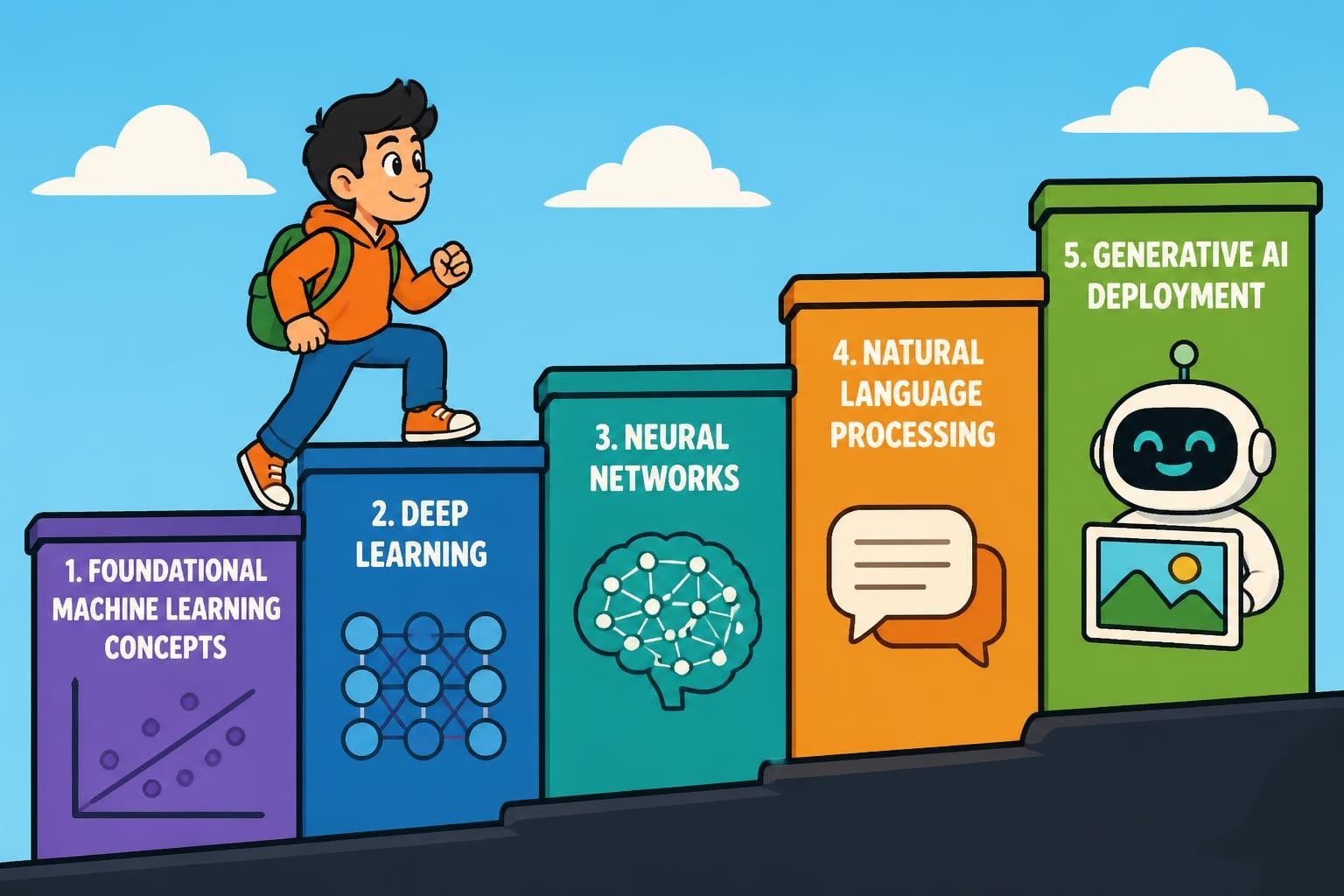
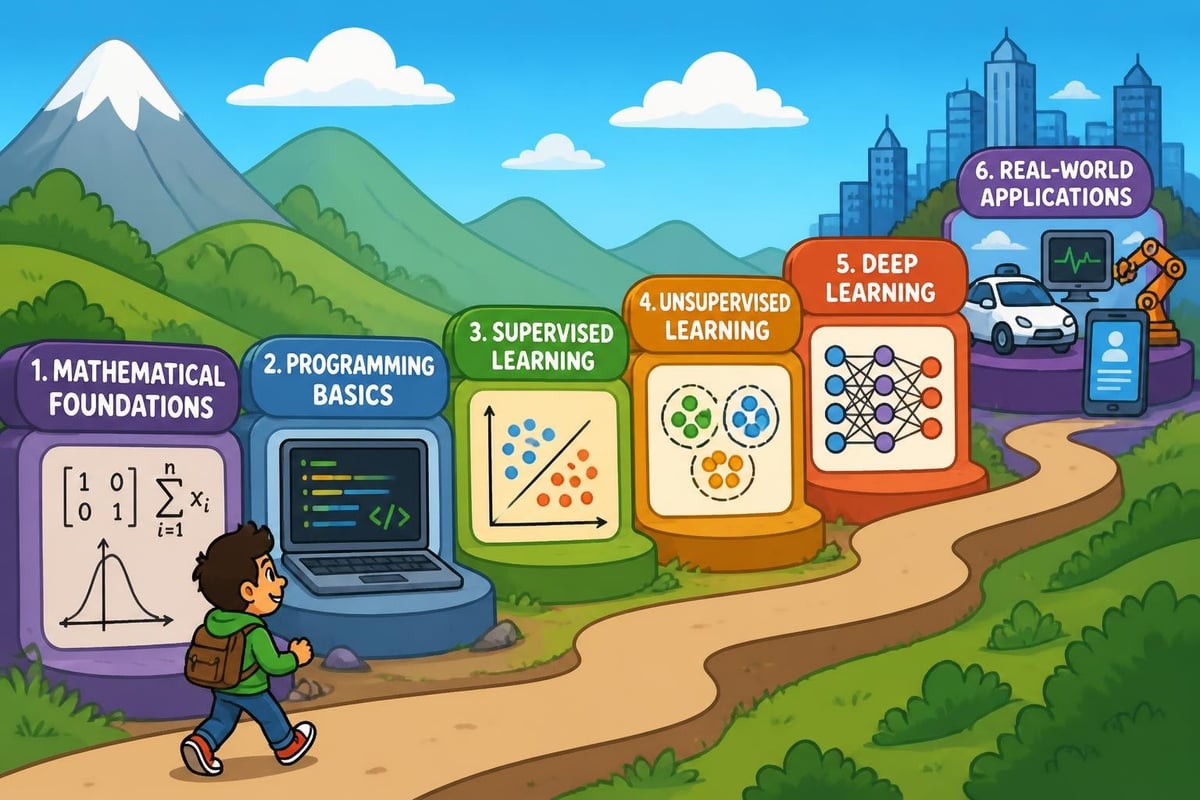
The foundational coursework in a machine learning online degree builds progressively from mathematical principles to advanced applications:
- Mathematical Foundations: Linear algebra, calculus, probability theory, and statistical inference
- Programming Proficiency: Python, R, C++, and frameworks like TensorFlow and PyTorch
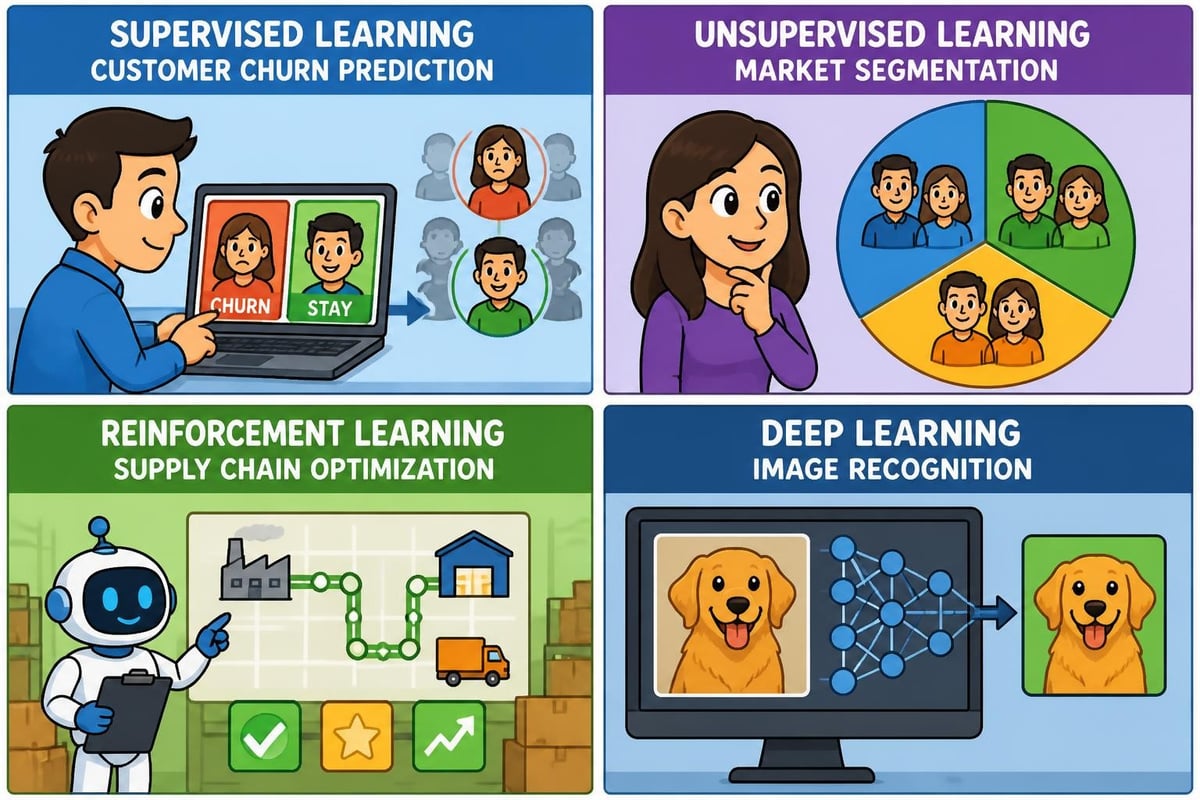
- Core ML Algorithms: Supervised learning, unsupervised learning, reinforcement learning, and deep learning
- Data Engineering: Data preprocessing, feature engineering, and pipeline architecture
- Applied Projects: Capstone experiences solving real-world business problems
Carnegie Mellon University's online Graduate Certificate in Machine Learning & Data Science Foundations exemplifies comprehensive curriculum design, covering programming fundamentals alongside machine learning theory and data science applications.
Top-Ranked Machine Learning Online Degree Options
Selecting the right program requires evaluating reputation, curriculum depth, faculty expertise, and career outcomes. The following comparison highlights leading programs available in 2026:
| University | Degree Type | Duration | Key Strengths |
|---|---|---|---|
| Purdue University | MS in AI (ML Major) | 24 months | Advanced programming focus, industry partnerships |
| Stevens Institute | MS in Machine Learning | 18-24 months | Deep learning theory, flexible format |
| Maryville University | MS in AI | 24 months | Ethics integration, practical tool training |
| Southern Methodist University | MS in Data Science (ML Spec) | 20 months | Live classes, in-person immersion |
| University of New Hampshire | BS in CIT (AI/ML Option) | 48 months | Undergraduate pathway, IT systems focus |
Purdue University's online Master of Science in Artificial Intelligence stands out for its emphasis on advanced programming skills and computer science fundamentals, preparing graduates for leadership positions in AI-driven industries.
Program Format Variations
Machine learning online degree programs employ different delivery methods to accommodate diverse learning preferences. Synchronous programs feature live virtual classes at scheduled times, fostering real-time interaction with professors and peers. Asynchronous formats allow students to access lectures and complete assignments on their own schedule, ideal for working professionals across time zones.
Stevens Institute of Technology offers a Master's Degree in Machine Learning with both online and on-campus options, providing flexibility while maintaining rigorous academic standards focused on deep learning theory.
Hybrid models combine elements of both approaches. Southern Methodist University's online Master of Science in Data Science program blends live online classes with self-paced coursework and includes an in-person immersion experience, creating a balanced learning environment.
Career Outcomes and Salary Expectations
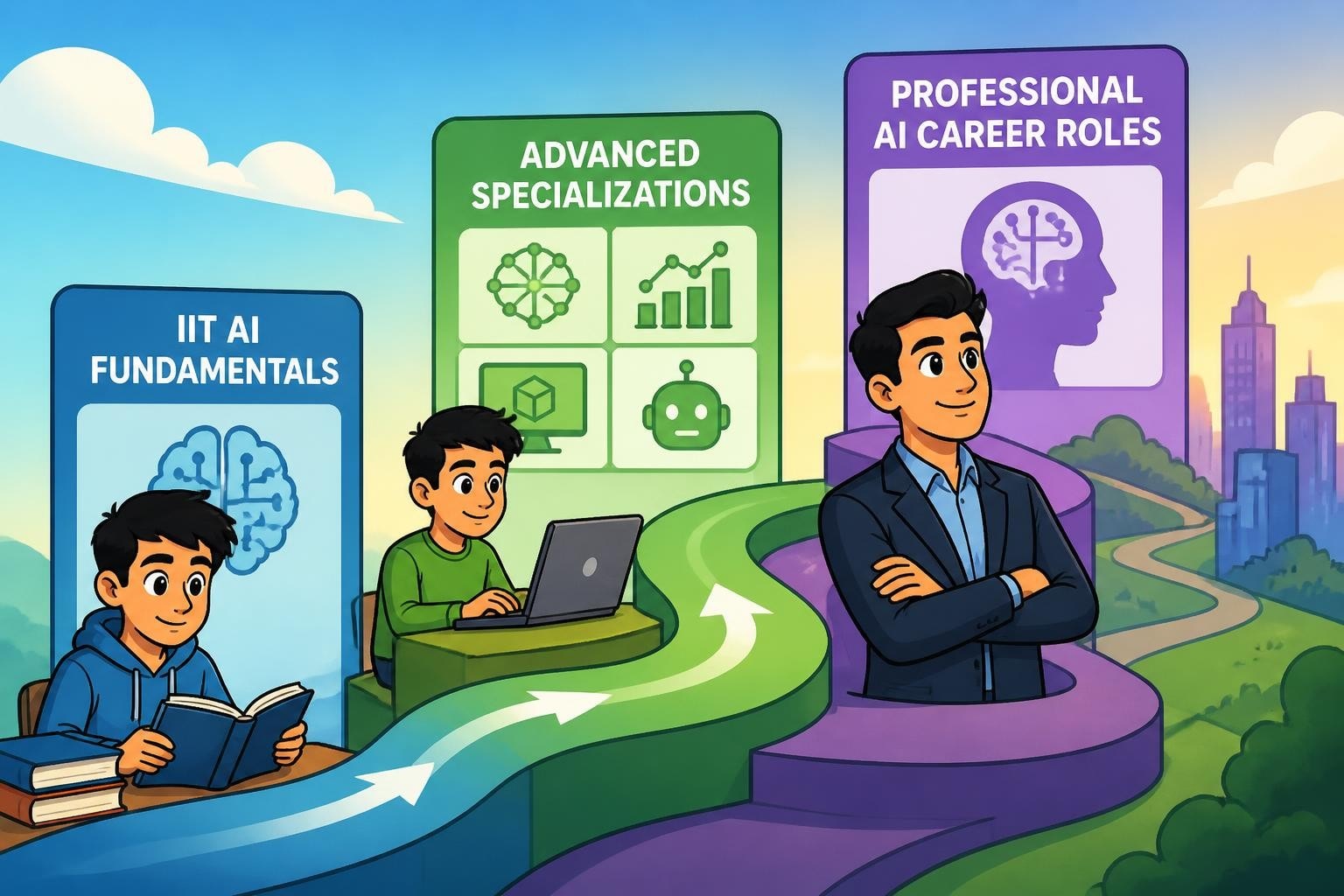
Graduates with a machine learning online degree enter a job market characterized by strong demand and competitive compensation. According to 2026 industry data, machine learning engineers command median salaries ranging from $125,000 to $175,000 annually, with senior positions and specialized roles exceeding $200,000.
High-Demand Career Paths
Machine Learning Engineer roles focus on designing, building, and deploying ML models at scale. These professionals work closely with data scientists and software engineers to implement algorithms that power recommendation systems, fraud detection, autonomous vehicles, and predictive analytics.
AI Research Scientists advance the theoretical foundations of machine learning, developing novel algorithms and architectures. These positions typically require strong mathematical backgrounds and often involve publishing research while working at tech companies or research institutions.
Data Scientists with ML Specialization bridge business strategy and technical implementation, using machine learning to extract insights from complex datasets. They communicate findings to stakeholders and design experiments to test hypotheses.
- Computer Vision Engineer
- Natural Language Processing Specialist
- Robotics ML Engineer
- MLOps Engineer
- AI Product Manager
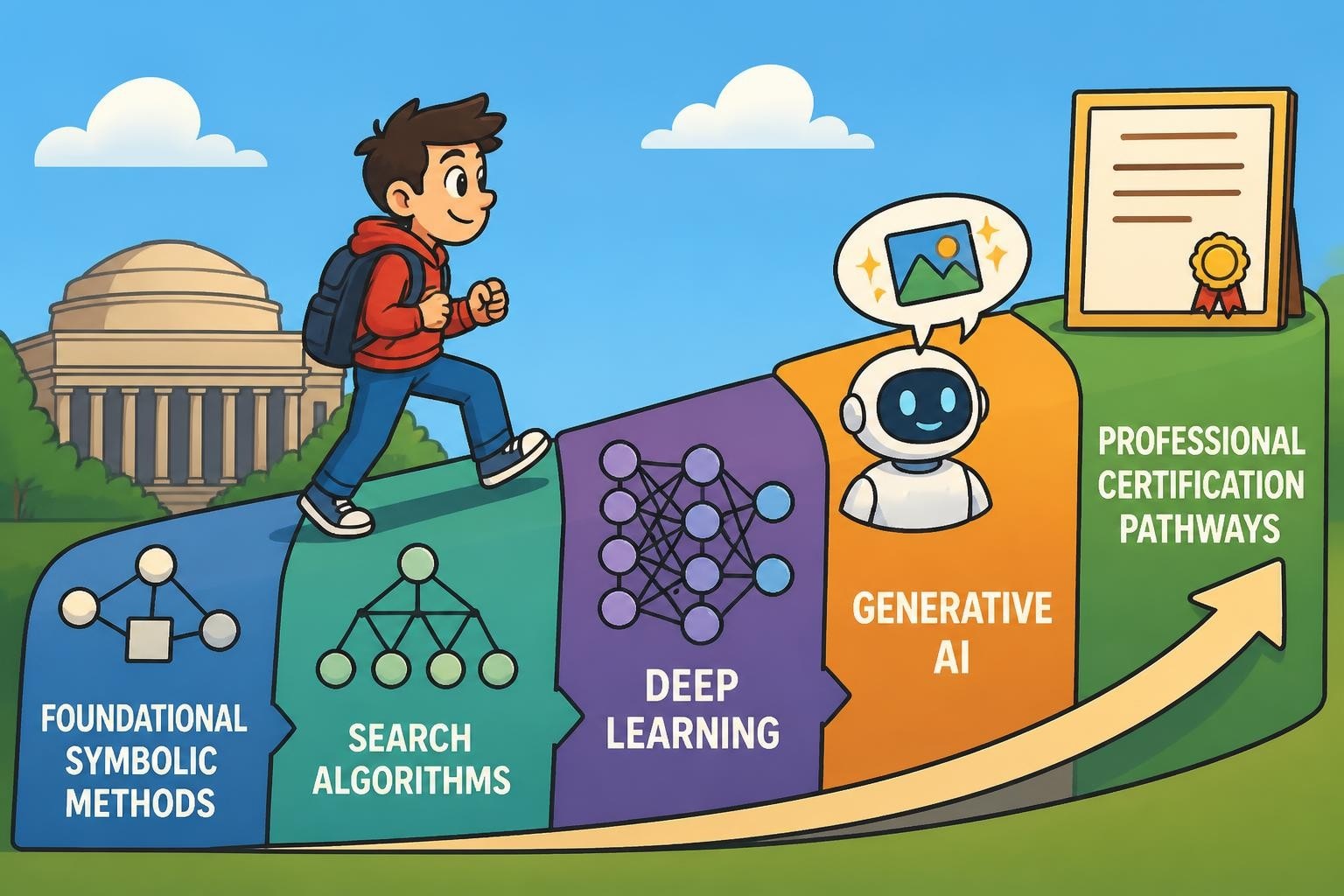
For professionals interested in exploring AI certification options, understanding how formal degrees complement shorter certification programs can optimize career development strategies.
Technical Skills Development
The technical competencies acquired through a machine learning online degree extend far beyond theoretical knowledge. Students gain hands-on experience with industry-standard tools and frameworks that directly translate to workplace applications.
Programming Languages and Frameworks
Python dominates machine learning development due to its extensive libraries and readability. Students master NumPy for numerical computing, Pandas for data manipulation, Scikit-learn for classical ML algorithms, and TensorFlow or PyTorch for deep learning implementations.
Maryville University's online Master of Science in Artificial Intelligence program emphasizes practical tool development, teaching R, Python, and C++ within an ethical framework focused on solving real-world problems.
R remains valuable for statistical analysis and visualization, particularly in research and academic contexts. C++ offers performance advantages for production systems requiring low-latency inference.
Algorithm Mastery
| Algorithm Category | Applications | Key Techniques |
|---|---|---|
| Supervised Learning | Classification, regression, forecasting | Decision trees, SVM, neural networks |
| Unsupervised Learning | Clustering, dimensionality reduction | K-means, PCA, autoencoders |
| Reinforcement Learning | Robotics, game AI, optimization | Q-learning, policy gradients, actor-critic |
| Deep Learning | Computer vision, NLP, generation | CNNs, RNNs, transformers, GANs |
Understanding online learning algorithms requires familiarity with how models adapt to streaming data and changing distributions, a critical skill for production ML systems.
Balancing Work, Study, and Professional Growth
Pursuing a machine learning online degree while maintaining professional responsibilities demands strategic time management and clear goal-setting. Successful students typically invest 15-20 hours weekly in coursework, projects, and study groups.
Creating an Effective Study Schedule
Time blocking proves most effective for online learners. Dedicate specific days and hours exclusively to coursework, treating these commitments as non-negotiable appointments. Morning hours often provide optimal cognitive performance for tackling complex mathematical concepts and coding challenges.
Break larger projects into incremental milestones. Rather than attempting to complete a neural network implementation in one session, distribute tasks across multiple study periods: data preprocessing on Monday, model architecture on Wednesday, training and evaluation on Saturday.
Leveraging Employer Support
Many organizations offer tuition reimbursement programs, particularly for degrees aligned with business objectives. Present a clear case to your employer demonstrating how your machine learning online degree will deliver measurable value through improved analytics capabilities, process automation, or product innovation.
Some companies allow flexible scheduling or dedicated learning time during work hours. Negotiate arrangements that acknowledge your commitment to professional development while ensuring job responsibilities remain fulfilled.
For those starting their AI journey, exploring beginner AI courses can help assess readiness for graduate-level study while building foundational knowledge.
Admission Requirements and Application Strategy
Competitive machine learning online degree programs typically require strong quantitative backgrounds and programming experience. Understanding admission criteria helps candidates prepare compelling applications that highlight relevant qualifications.
Academic Prerequisites
Most programs expect applicants to hold bachelor's degrees in computer science, mathematics, statistics, engineering, or related quantitative fields. Minimum GPA requirements generally range from 3.0 to 3.5 on a 4.0 scale, though exceptional work experience or research contributions can offset lower academic performance.
Prerequisite coursework commonly includes:
- Calculus I, II, and III (multivariable calculus)
- Linear Algebra
- Probability and Statistics
- Data Structures and Algorithms
- Programming (Python, Java, or C++)
Applicants lacking specific prerequisites may complete preparatory courses before matriculation or during their first semester with program approval.
Building a Strong Application
Statement of Purpose: Articulate clear career goals and explain how the specific program aligns with your professional trajectory. Discuss previous projects, research experiences, or professional accomplishments demonstrating aptitude for machine learning.
Letters of Recommendation: Secure recommendations from professors, research advisors, or managers who can speak to your technical abilities, problem-solving skills, and capacity for graduate-level work.
Portfolio Development: Create a GitHub repository showcasing machine learning projects, even if self-taught. Implementations of classic algorithms, Kaggle competition entries, or contributions to open-source ML projects strengthen applications significantly.
Research Frontiers and Academic Contributions
Graduate machine learning education increasingly emphasizes research literacy and the ability to engage with cutting-edge developments. Understanding current research directions helps students identify specialization areas and potential thesis topics.
Adaptive Learning Systems
Adaptive AutoML frameworks for online learning address challenges posed by data drift and evolving distributions in production environments. These systems automatically adjust model architectures and hyperparameters as incoming data characteristics change, maintaining performance without manual intervention.
This research area connects directly to MLOps roles, where professionals deploy and maintain machine learning systems that must adapt to real-world dynamics.
Systems-Theoretic Approaches
Systems theoretic approaches to online machine learning provide frameworks for modeling learning systems and addressing concept drift, the phenomenon where the statistical properties of target variables change over time, degrading model performance.
Understanding these theoretical foundations enables machine learning practitioners to design robust systems that anticipate and respond to distributional shifts rather than failing silently when encountering unexpected data patterns.
Specialized Concentrations and Emerging Fields
While core machine learning programs provide broad technical foundations, specialized concentrations allow students to develop deep expertise in specific application domains or methodologies.
Human-Centered AI
Lindenwood University's online Master's in Human-Centered Artificial Intelligence focuses on the intersection of technology, ethics, and human behavior. This concentration prepares graduates to design responsible AI systems that prioritize user experience, fairness, transparency, and accountability.
Human-centered AI specialists work across industries developing algorithms that augment rather than replace human decision-making, creating interfaces that make ML systems interpretable to non-technical stakeholders.
Industry-Specific Applications
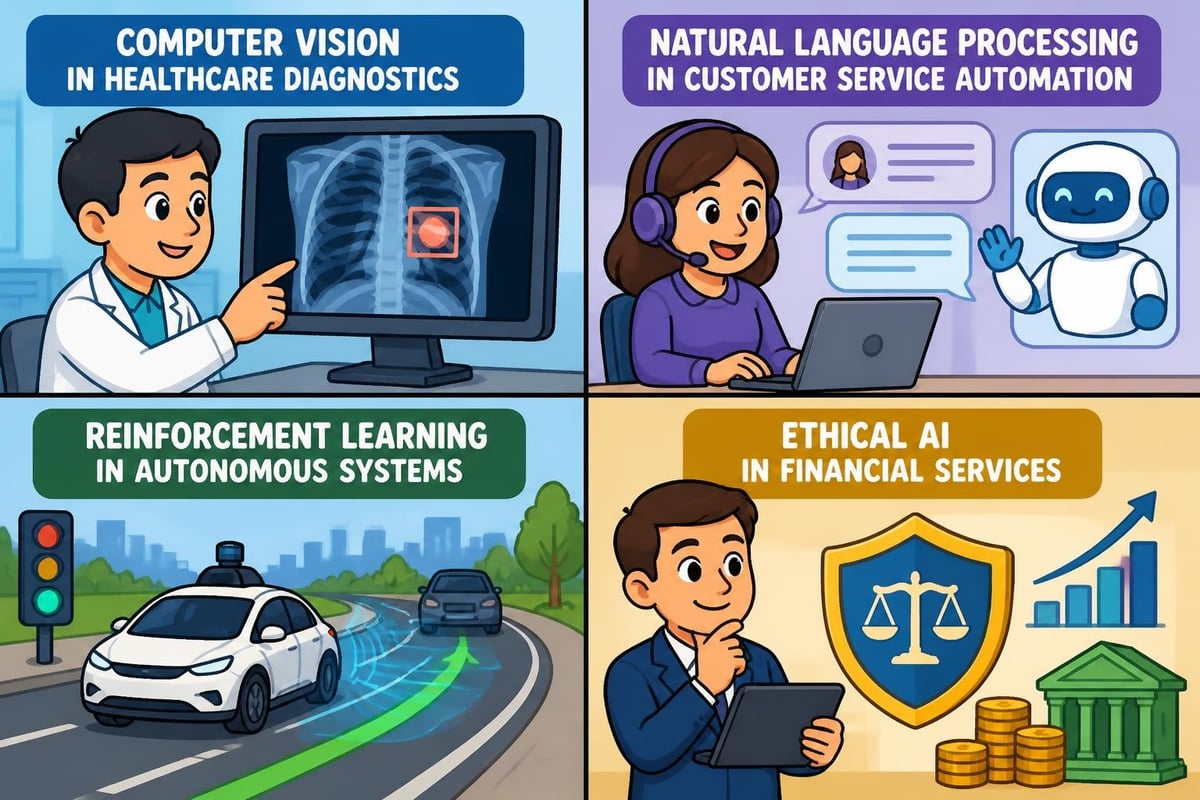
Healthcare AI requires understanding regulatory compliance, patient privacy, and clinical workflows. Machine learning practitioners in this field develop diagnostic tools, treatment recommendation systems, and drug discovery platforms.
Financial ML focuses on algorithmic trading, risk modeling, fraud detection, and credit scoring. These applications demand real-time processing capabilities and robust handling of adversarial inputs.
Autonomous Systems combine computer vision, sensor fusion, and reinforcement learning to enable self-driving vehicles, delivery robots, and industrial automation.
Professionals seeking specialized AI courses can supplement degree programs with targeted training in these application areas.
Cost Analysis and Financial Planning
Understanding the total investment required for a machine learning online degree enables informed decision-making and effective financial planning. Tuition varies significantly across institutions, ranging from $15,000 to $70,000 for complete programs.
Tuition and Fee Structures
| Cost Category | Range | Considerations |
|---|---|---|
| Per-Credit Tuition | $500 - $1,800 | Public vs. private institution |
| Program Fees | $1,000 - $3,000 | Technology, library, student services |
| Course Materials | $500 - $2,000 | Textbooks, software subscriptions |
| Total Program Cost | $18,000 - $65,000 | Varies by institution and duration |
Public universities typically offer lower tuition rates, especially for in-state residents, though online programs increasingly charge flat rates regardless of residency. Private institutions command premium pricing but often provide smaller cohorts and more personalized attention.
Funding Sources
Federal Financial Aid: Complete the FAFSA to determine eligibility for loans, grants, and work-study programs. Graduate students can borrow up to $20,500 annually through Direct Unsubsidized Loans.
Employer Tuition Assistance: Many organizations provide $5,000-$10,000 annually for job-related education. Some companies offer unlimited tuition reimbursement for approved programs.
Scholarships and Fellowships: Professional organizations like the Association for Computing Machinery, Women in Machine Learning, and diversity-focused foundations offer competitive funding for qualified candidates.
Military Benefits: Veterans can use GI Bill benefits for online degree programs, covering tuition and providing housing allowances during enrollment.
Comparing Degrees to Alternative Learning Paths
A machine learning online degree represents one option among multiple pathways to ML expertise. Understanding alternatives helps candidates select approaches aligned with their career stages, financial situations, and learning preferences.
Bootcamps and Intensive Programs
Duration: 12-24 weeks Cost: $8,000-$20,000 Depth: Focused practical skills
Bootcamps prioritize rapid skill acquisition for career transitions, emphasizing hands-on projects over theoretical foundations. They suit professionals seeking immediate employment in ML engineering roles but may lack the mathematical rigor and research training of degree programs.
Self-Directed Learning and MOOCs
Duration: Flexible, self-paced Cost: $0-$5,000 Depth: Variable based on commitment
Platforms offering top AI courses provide accessible introductions to machine learning concepts. While cost-effective, self-study requires exceptional discipline and doesn't confer the credential recognition of accredited degrees.
Professional Certifications
Duration: 3-6 months per certification Cost: $300-$3,000 Depth: Vendor-specific or technology-focused
Azure AI certifications and similar credentials demonstrate proficiency with specific platforms. They complement but don't replace comprehensive degree programs, serving best as supplements to formal education.
Building Your Professional Network
Graduate education provides structured networking opportunities that extend far beyond course completion. The relationships formed during a machine learning online degree often prove as valuable as the technical knowledge acquired.
Virtual Collaboration Strategies
Online students must intentionally create connection points that on-campus students encounter naturally. Study groups organized through Slack, Discord, or Microsoft Teams enable collaborative problem-solving and peer learning. Schedule regular video sessions to work through challenging problem sets or discuss research papers.
Virtual office hours with professors offer direct access to experts in the field. Prepare specific questions about course material, career advice, or research opportunities to maximize these interactions.
Industry Engagement
Many programs facilitate industry partnerships through guest lectures, sponsored capstone projects, or internship placements. These connections provide insights into real-world ML applications while building professional relationships with potential employers.
Conference participation in events like NeurIPS, ICML, or specialized domain conferences exposes students to cutting-edge research and networking opportunities. Many conferences offer student discounts and virtual attendance options.
Professional communities focused on AI in business applications help bridge academic learning with practical implementation challenges.
Future Trends Shaping Machine Learning Education
The field of machine learning evolves rapidly, and educational programs must adapt to prepare students for emerging technologies and methodologies. Understanding these trends helps prospective students evaluate program currency and relevance.
Federated Learning and Privacy-Preserving ML
Distributed training across decentralized data sources without centralizing sensitive information addresses growing privacy concerns. Machine learning curricula increasingly incorporate differential privacy, secure multi-party computation, and federated optimization techniques.
AutoML and Neural Architecture Search
Automated approaches to model selection, hyperparameter tuning, and architecture design democratize ML while raising the skill ceiling for specialists who develop these automation tools. Future practitioners need understanding of both manual optimization and automated pipeline construction.
Edge AI and Model Compression
Deploying sophisticated models on resource-constrained devices requires knowledge quantization, pruning, and knowledge distillation. Mobile, IoT, and embedded applications drive demand for engineers skilled in efficient model design.
Explainable AI and Model Interpretability
Regulatory requirements and ethical considerations increasingly mandate transparent ML systems. Techniques like SHAP values, attention visualization, and counterfactual explanations become core competencies rather than specialized topics.
A machine learning online degree provides rigorous technical training, recognized credentials, and structured pathways into high-demand careers shaping technology's future. Whether you choose a comprehensive master's program, specialized certificate, or complementary certifications depends on your background, goals, and circumstances. The investment in formal education pays dividends through enhanced career opportunities, deeper technical understanding, and professional networks that support long-term growth. MammothClub offers 3,000+ on-demand AI and tech courses, interactive bootcamps, and corporate certification programs that help you build foundational skills before pursuing advanced degrees or supplement formal education with practical, results-driven training that keeps you competitive in the rapidly evolving AI landscape.