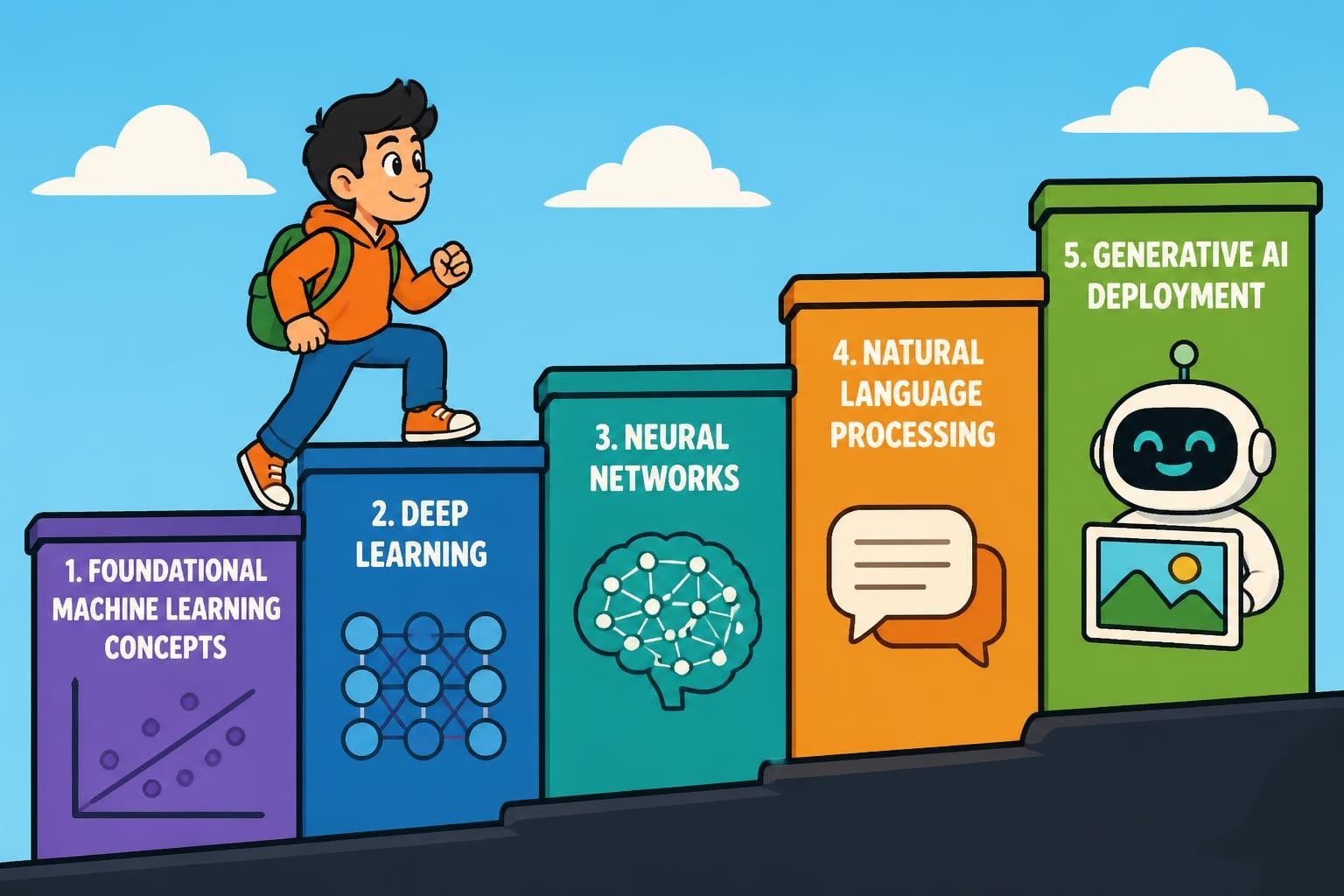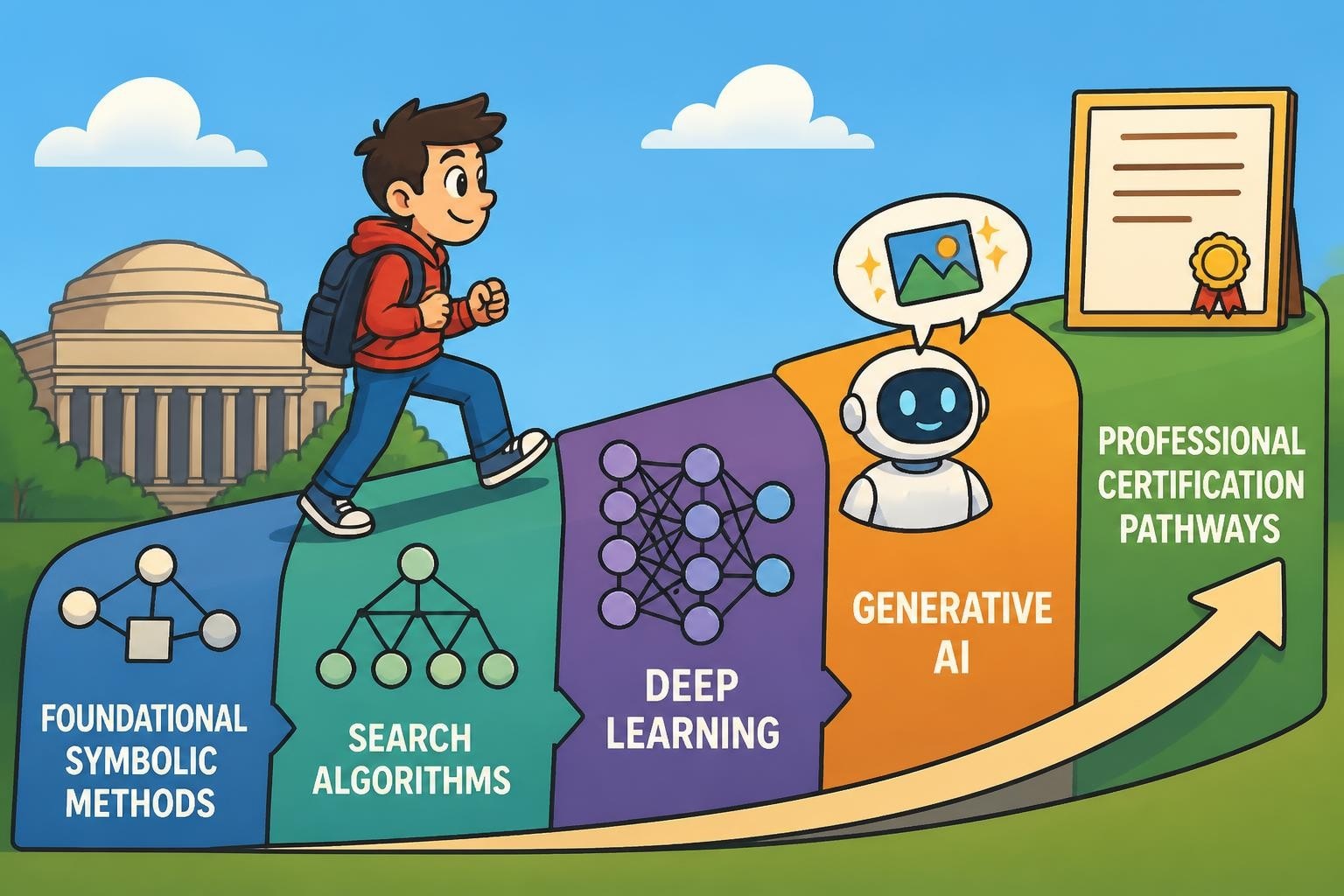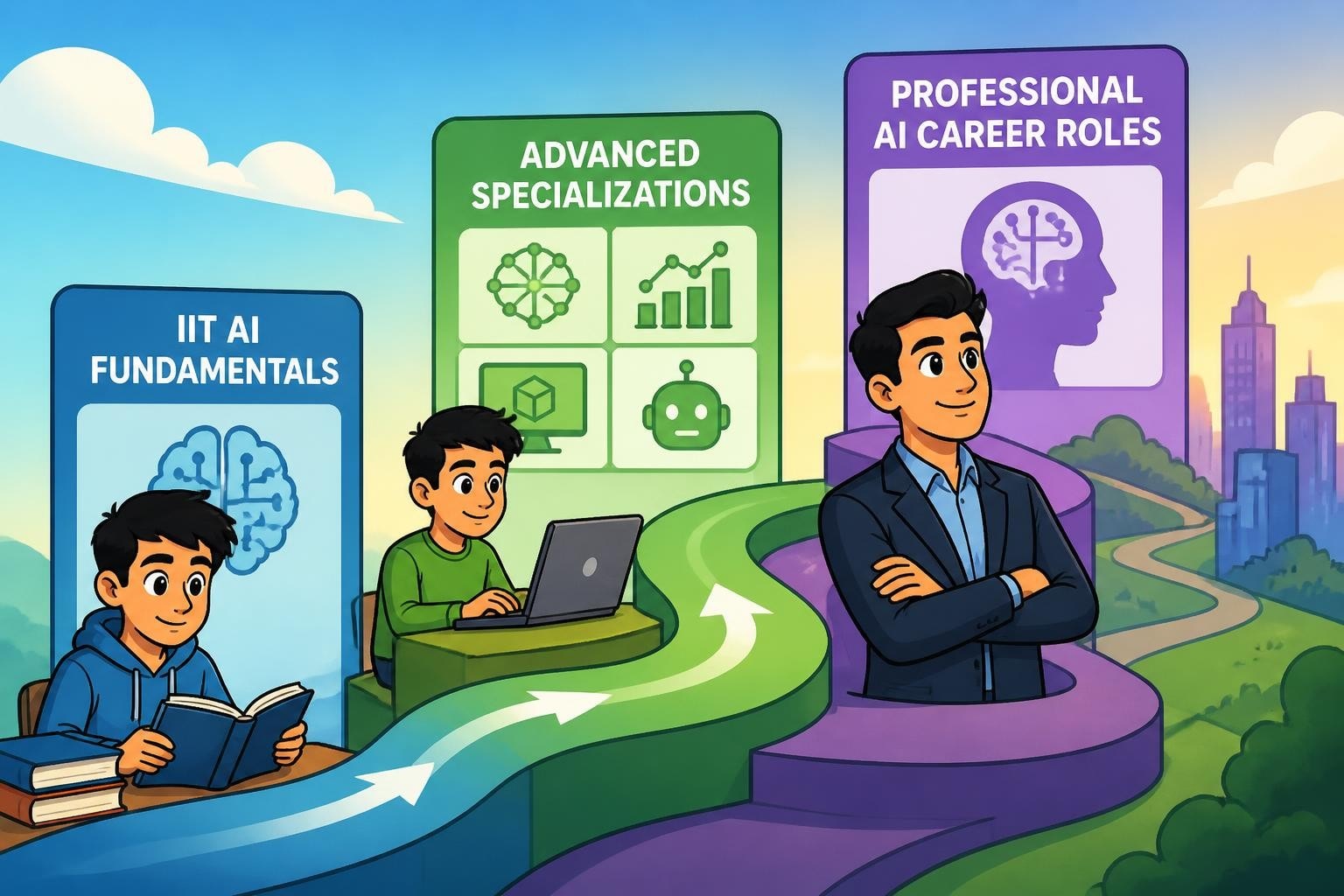
The Microsoft Azure AI Fundamentals certification has become a cornerstone credential for professionals entering the artificial intelligence field. Whether you're a business analyst, project manager, or technical professional looking to validate your AI knowledge, the ai 900 learning path provides a structured approach to understanding cloud-based AI services and fundamental machine learning concepts. This certification demonstrates your ability to describe AI workloads, understand machine learning principles on Azure, and implement responsible AI practices. As organizations accelerate their digital transformation initiatives in 2026, having verified AI fundamentals knowledge positions you as a valuable asset capable of bridging the gap between business objectives and technical implementation.
Understanding the AI-900 Certification Value
The AI-900 certification serves as your entry point into Microsoft's comprehensive AI certification framework. Unlike more advanced certifications that require extensive programming knowledge, this foundational credential focuses on conceptual understanding and practical application of AI services within the Azure ecosystem.
Professional benefits of AI-900 certification include:
- Demonstrated competency in AI and machine learning fundamentals
- Enhanced credibility when discussing AI initiatives with stakeholders
- Foundation for advanced Azure AI certifications like AI-102
- Improved career mobility across technical and business roles
- Recognition of commitment to continuous learning in emerging technologies
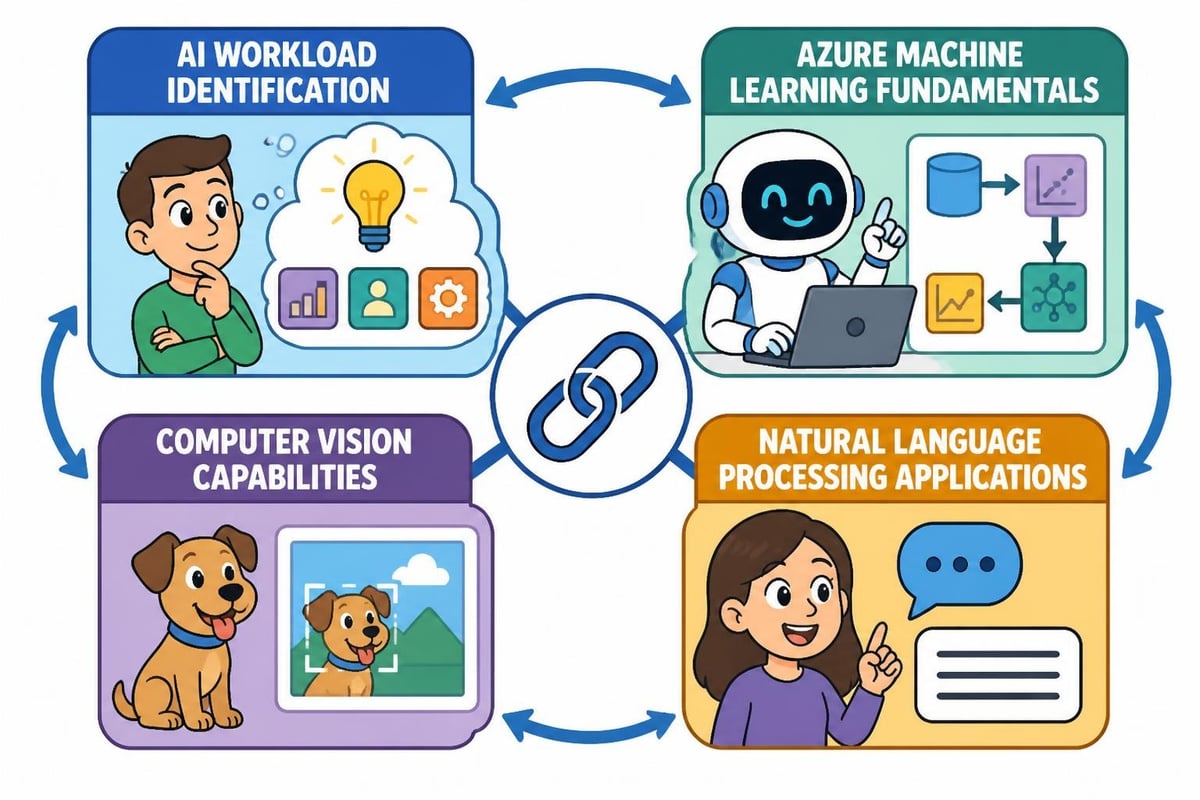
The official AI-900 exam tests your knowledge across four primary domains: describing AI workloads and considerations, fundamental principles of machine learning on Azure, features of computer vision workloads, and features of Natural Language Processing and conversational AI workloads. Each domain carries specific weight in the examination, making strategic preparation essential for success.
Building Your AI-900 Study Foundation
Creating an effective ai 900 learning path begins with understanding your current knowledge level and available study time. Most professionals allocate between three to six weeks for comprehensive preparation, depending on their prior exposure to cloud computing and AI concepts.
Structured Learning Resources
The Microsoft Learn study guide provides official learning modules designed specifically for exam preparation. These self-paced resources cover all exam objectives with interactive content, knowledge checks, and hands-on exercises.
| Resource Type | Time Investment | Best For |
|---|---|---|
| Official Microsoft Learn Modules | 15-20 hours | Comprehensive coverage |
| Video Tutorials | 10-15 hours | Visual learners |
| Practice Labs | 8-12 hours | Hands-on experience |
| Practice Exams | 4-6 hours | Exam readiness assessment |
Alternative platforms offer complementary perspectives on the same material. Codecademy's AI-900 path provides interactive coding exercises that reinforce theoretical concepts through practical application. This approach particularly benefits learners who prefer active engagement over passive reading.
For those seeking comprehensive AI for beginners course options, MammothClub's platform integrates AI-900 preparation materials with broader artificial intelligence fundamentals, allowing you to build contextual understanding beyond exam requirements.
Machine Learning Fundamentals in Azure
Understanding machine learning principles forms the backbone of your ai 900 learning path. You'll need to differentiate between supervised, unsupervised, and reinforcement learning while recognizing appropriate use cases for each approach.
Supervised Learning Concepts
Supervised learning involves training models with labeled data where the desired output is known. Key applications include:
- Regression models for predicting continuous values like sales forecasts or property prices
- Classification models for categorizing data into discrete groups such as spam detection or sentiment analysis
- Time series forecasting for identifying patterns in sequential data
Azure Machine Learning provides automated ML capabilities that democratize model creation. Even without deep statistical knowledge, professionals can leverage AutoML to test multiple algorithms, perform feature engineering, and identify optimal hyperparameters automatically.
Unsupervised learning operates on unlabeled data to discover hidden patterns and groupings. Clustering algorithms like K-means partition data into natural segments, while anomaly detection identifies outliers that deviate from expected patterns. These techniques prove invaluable for customer segmentation, fraud detection, and quality control applications.
Computer Vision Capabilities on Azure
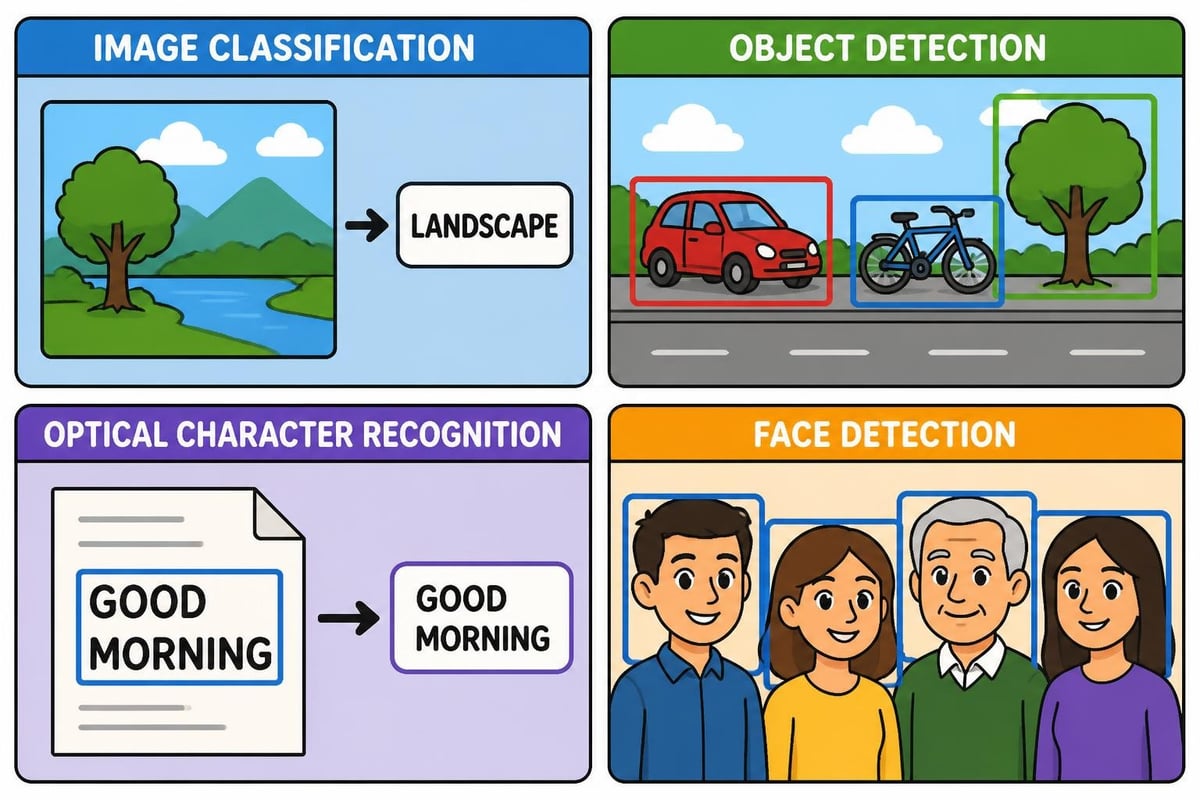
Computer vision workloads enable machines to interpret and analyze visual information from images and videos. The ai 900 learning path covers Azure's Computer Vision service, Custom Vision service, and Face API capabilities.
Image classification tasks assign labels to entire images based on their dominant content. A retail application might classify product photos into categories like "electronics," "clothing," or "home goods" to improve catalog organization and searchability.
Object detection goes beyond classification by identifying multiple objects within a single image and determining their precise locations through bounding boxes. Manufacturing quality control systems use object detection to identify defects on production lines, while inventory management solutions count items in warehouse settings.
Face Detection and Recognition
The Face API detects human faces in images and extracts attributes like age estimation, emotional state, facial hair presence, and glasses detection. While face recognition capabilities exist for identifying specific individuals, responsible AI practices require careful consideration of privacy implications, regulatory compliance, and potential bias in facial recognition systems.
| Computer Vision Service | Primary Function | Common Use Cases |
|---|---|---|
| Computer Vision API | General image analysis | Content moderation, image tagging |
| Custom Vision | Domain-specific models | Brand detection, specialized classification |
| Form Recognizer | Document understanding | Invoice processing, receipt extraction |
| Face API | Facial analysis | Access control, emotion detection |
Natural Language Processing and Conversational AI
Natural language processing enables machines to understand, interpret, and generate human language. Your ai 900 learning path must cover Azure's Language service, which provides pre-built capabilities for sentiment analysis, key phrase extraction, entity recognition, and language detection.
Sentiment analysis determines the emotional tone of text content, classifying it as positive, negative, or neutral. Marketing teams use sentiment analysis to gauge customer reactions to product launches, while customer service departments monitor support ticket sentiment to identify escalation patterns.
Named entity recognition identifies and categorizes important elements within text such as people, organizations, locations, dates, and quantities. Legal document review systems extract party names and contract dates, while healthcare applications identify medications, symptoms, and treatment protocols from clinical notes.
Building Conversational AI Solutions
The Azure Bot Service and QnA Maker enable creation of conversational AI solutions without extensive programming knowledge. QnA Maker transforms FAQ documents and knowledge bases into intelligent question-answering systems that understand natural language queries and provide relevant responses.
Conversational AI applications built on Azure can integrate with multiple channels including websites, mobile apps, Microsoft Teams, Slack, and Facebook Messenger. This omnichannel approach ensures consistent user experiences regardless of communication platform preference.
For professionals interested in expanding their conversational AI expertise, understanding bot development fundamentals opens opportunities in customer service automation, internal helpdesk systems, and e-commerce assistance applications.
Responsible AI Principles and Governance
Microsoft's responsible AI framework emphasizes six key principles that guide ethical AI development and deployment. The ai 900 learning path requires demonstrating understanding of how these principles translate into practical implementation decisions.
- Fairness: AI systems should treat all people equitably without perpetuating or amplifying bias
- Reliability and Safety: AI solutions must perform consistently and respond safely to unexpected situations
- Privacy and Security: AI systems must protect sensitive data and maintain user privacy
- Inclusiveness: AI should be designed to benefit everyone, considering diverse human needs
- Transparency: Users should understand how AI systems make decisions and what their limitations are
- Accountability: Organizations must establish governance frameworks with human oversight
Implementing Responsible AI Practices
Technical implementation of responsible AI principles involves concrete actions during model development and deployment. Fairness evaluation requires testing models across different demographic groups to identify performance disparities. If a loan approval model shows significantly different approval rates for similar applicants from different backgrounds, it demonstrates problematic bias requiring remediation.
Model interpretability tools like SHAP (SHapley Additive exPlanations) and LIME (Local Interpretable Model-agnostic Explanations) help explain individual predictions by identifying which features most influenced specific decisions. This transparency enables stakeholders to understand and validate AI reasoning.
Effective Study Strategies for AI-900 Success
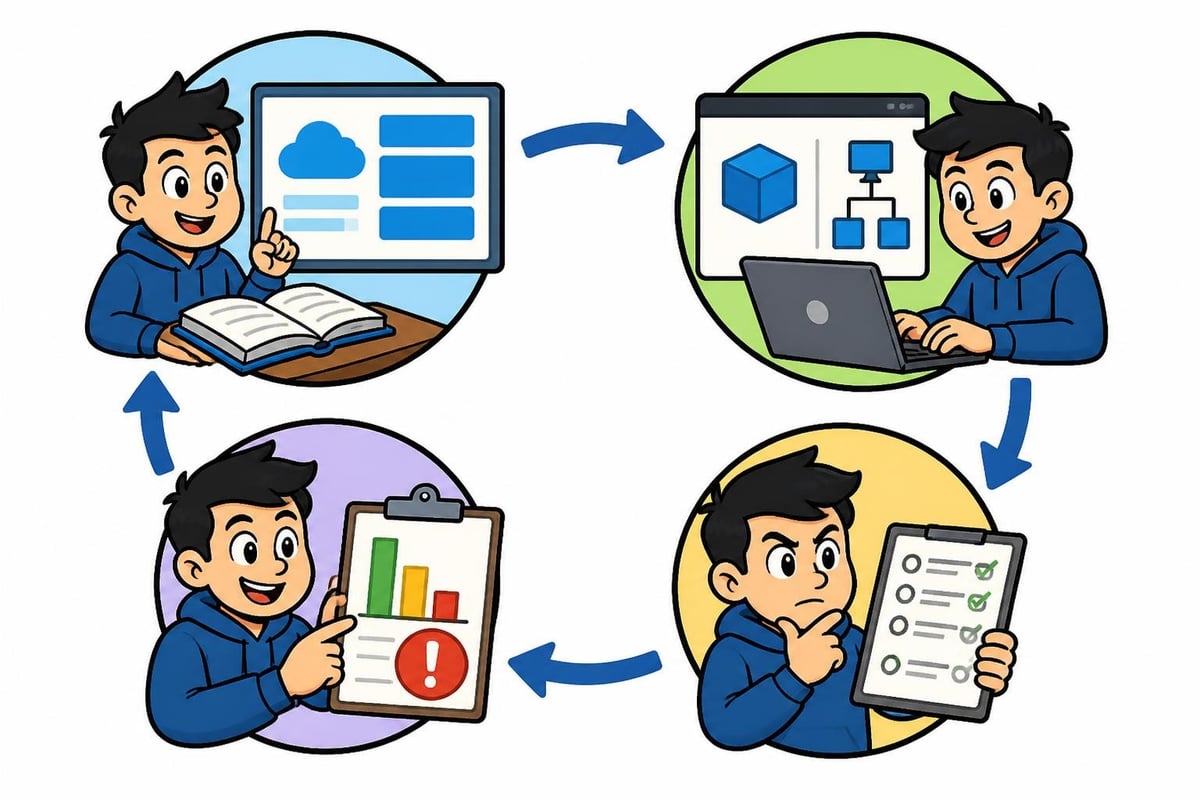
Optimizing your ai 900 learning path requires more than consuming content. Active learning techniques significantly improve knowledge retention and application capability.
Hands-On Practice Methodology
Azure provides free trial accounts with credits sufficient for exam preparation. Creating actual machine learning experiments, deploying computer vision models, and building language understanding applications transforms theoretical knowledge into practical experience.
Recommended hands-on exercises include:
- Building a classification model using AutoML to predict customer churn
- Creating a Custom Vision model that identifies your organization's products
- Deploying a QnA Maker knowledge base from your company's documentation
- Implementing sentiment analysis on customer review data
- Testing face detection capabilities with diverse image datasets
The comprehensive preparation strategies outlined by certification experts emphasize spaced repetition and active recall. Rather than passive re-reading, test yourself regularly on key concepts, explain topics to colleagues, and create practical examples that connect Azure services to your work context.
Exam Day Preparation and Format
The AI-900 examination consists of approximately 40-60 questions delivered in various formats including multiple choice, multiple answer, drag-and-drop, and scenario-based questions. You'll have 60 minutes to complete the exam, with a passing score of 700 out of 1000 points.
Question Format Analysis
Single-answer multiple choice questions test direct knowledge recall. Example: "Which Azure service provides pre-built models for extracting text from images?" These questions assess your familiarity with Azure AI service names and primary functions.
Multiple-answer questions require selecting all correct options from a list. These evaluate deeper understanding of concepts with multiple valid applications or characteristics. Example: "Which statements accurately describe supervised learning? (Select all that apply)"
Scenario-based questions present business situations requiring you to recommend appropriate Azure services or AI approaches. These questions test applied knowledge and decision-making capability rather than mere memorization.
Time Management Tactics
With 60 minutes for approximately 50 questions, you have slightly over one minute per question. Effective time management includes:
- Answering questions you know confidently first
- Marking uncertain questions for later review
- Allocating remaining time proportionally to marked questions
- Leaving no questions unanswered since there's no penalty for incorrect answers
The detailed study guide from MSCertQuiz recommends completing a full practice exam under timed conditions at least three days before your scheduled examination. This identifies remaining knowledge gaps while building confidence in your time management approach.
Leveraging AI-900 for Career Advancement
Earning the AI-900 certification opens pathways to various roles that bridge technical and business domains. Organizations increasingly seek professionals who understand AI capabilities well enough to identify automation opportunities, evaluate vendor solutions, and communicate effectively with both technical teams and business stakeholders.
Career trajectories leveraging AI-900 include:
- AI Project Manager coordinating cross-functional AI implementation teams
- Business Analyst specializing in AI-driven process optimization
- Data Analyst incorporating ML predictions into reporting frameworks
- Customer Success Manager for AI product companies
- Technical Pre-Sales Consultant demonstrating AI solutions
For professionals in AI training and placement programs, the AI-900 serves as foundational validation before pursuing role-specific certifications. Azure AI Engineer (AI-102) and Azure Data Scientist (DP-100) certifications build upon AI-900 fundamentals with deeper technical requirements.
Maintaining Certification Relevance
Microsoft continuously updates Azure AI services to reflect the latest technological advances. While AI-900 currently does not require renewal, staying current with Azure AI developments maintains your credential's practical value.
Strategies for ongoing relevance include:
- Following the Azure AI blog for service announcements and feature updates
- Participating in Microsoft AI Community events and webinars
- Experimenting with new Azure AI capabilities as they release
- Pursuing advanced certifications that build on foundational knowledge
- Applying AI concepts to real projects in your current role
The rapid evolution of AI technologies, particularly in areas like generative AI and large language models, means your ai 900 learning path shouldn't end with certification. Platforms like MammothClub's AI specialization courses help certified professionals deepen expertise in specific AI domains aligned with career goals.
Comparing Study Resources and Platforms
Not all AI-900 preparation resources offer equivalent value. Evaluating options based on learning style, budget, and time constraints optimizes your study efficiency.
| Platform | Cost | Interactive Labs | Practice Exams | Best Advantage |
|---|---|---|---|---|
| Microsoft Learn | Free | Yes | Limited | Official content, always current |
| Codecademy | Subscription | Yes | No | Interactive coding exercises |
| QA Learning Platform | Paid course | Yes | Yes | Structured curriculum with instructor support |
| YouTube Resources | Free | No | No | Visual explanations, flexible pace |
| Practice Test Sites | Varied | No | Yes | Exam simulation and readiness assessment |
The QA Learning Platform's AI-900 course provides beginner-friendly structured content with progress tracking and performance analytics. This approach suits learners who prefer guided instruction over self-directed exploration.
Free resources like the comprehensive guide from A Guide to Cloud aggregate official learning paths, community-created content, and study tips into centralized repositories. These compilations save time identifying high-quality materials but require more self-discipline to follow through completion.
Integration with Broader AI Education
The ai 900 learning path represents one component of comprehensive AI literacy. Organizations implementing AI initiatives benefit when multiple team members possess foundational understanding, creating shared vocabulary and realistic expectations around AI capabilities and limitations.
Organizational AI education strategies include:
- Requiring AI-900 certification for project managers leading AI initiatives
- Encouraging business analysts to complete foundational AI training
- Providing study resources and exam vouchers as professional development benefits
- Recognizing certified employees through internal communications and advancement opportunities
- Building communities of practice where certified professionals share knowledge
For teams exploring Azure AI fundamentals collectively, group study approaches improve engagement and knowledge retention. Regular discussion sessions where team members explain concepts to each other strengthen understanding while building collaborative problem-solving skills.
Mastering the ai 900 learning path equips you with essential AI knowledge that translates directly into professional capability and organizational value. The certification validates your understanding of cloud-based AI services, machine learning principles, and responsible AI practices that define effective AI implementation in 2026. Whether you're advancing your career, supporting your organization's digital transformation, or building foundation for advanced AI certifications, this credential provides credible verification of your competency. MammothClub accelerates your AI-900 preparation and ongoing AI education through our comprehensive certification programs, hands-on labs, and expert-led training designed to help professionals and organizations stay competitive in the rapidly evolving AI landscape.