The AI revolution is transforming how businesses operate and lead. Are you prepared to step up and guide your organization through this change?
This guide breaks down what an ai strategy course offers and why mastering AI leadership is now a must for future-ready professionals.
You will discover how AI is reshaping leadership roles, what top courses include, and how to choose and excel in the right program.
Ready to future-proof your skills? Let’s explore how you can drive meaningful change in 2026.
The Rise of AI Leadership: Why Strategy Skills Matter in 2026
Artificial intelligence is now woven into the fabric of modern business. As organizations race to implement AI, the ability to lead with vision and strategy becomes a defining trait for successful executives. More professionals are turning to an ai strategy course to bridge the gap between technical innovation and business transformation.
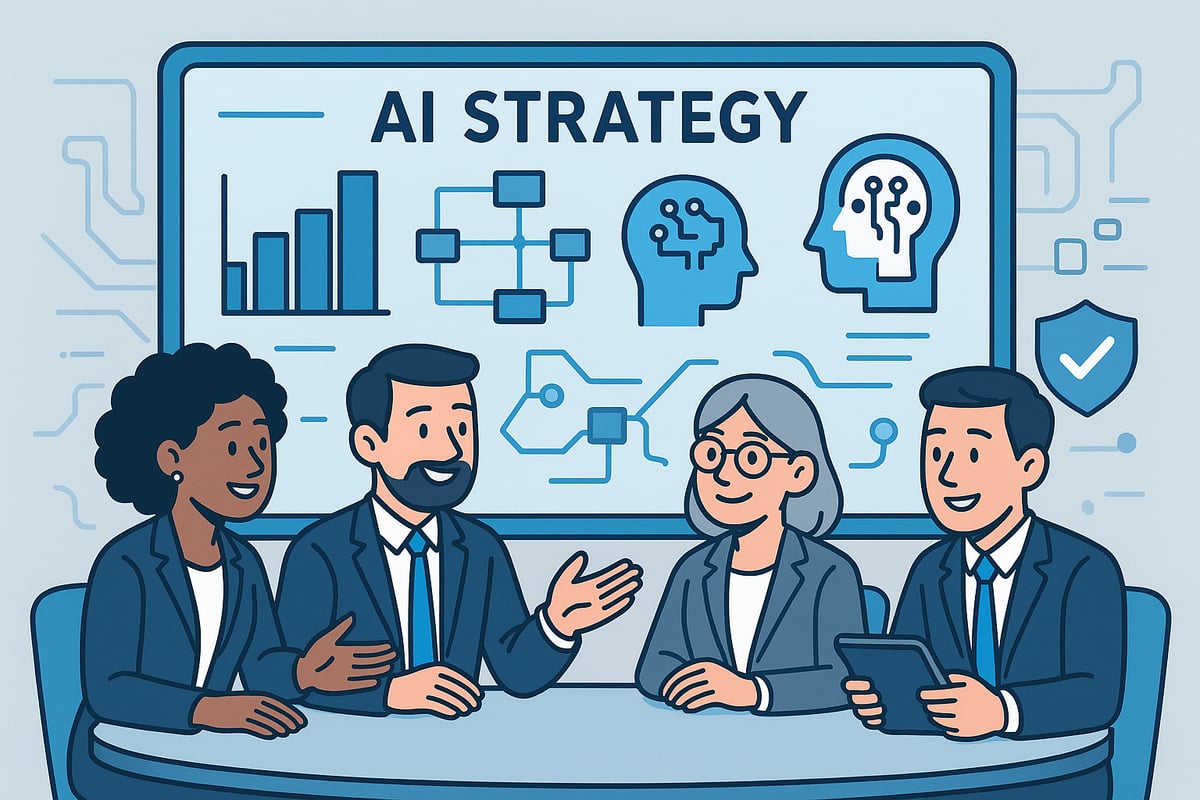
The adoption of AI is accelerating across every industry. From healthcare to finance, companies are reimagining products, services, and operations. Gartner reports that by 2026, 80% of executives consider AI critical to their business strategy. This surge in demand has made the ai strategy course an essential investment for leaders aiming to future-proof their skills.
Organizational structures are evolving as AI becomes central to decision-making. Stanford’s research highlights the emergence of new team configurations, where cross-functional roles blend data science, product management, and executive leadership. This shift requires a different approach to workflow, collaboration, and accountability. An ai strategy course helps leaders understand how to redesign teams and processes for maximum impact.
Despite the technical progress, many organizations face a significant gap. While technical AI expertise is important, it does not guarantee strategic success. Leaders must learn to connect AI initiatives with overarching business goals, manage ethical considerations, and drive adoption across diverse teams. This is where an ai strategy course delivers real value, equipping decision-makers with both the knowledge and the confidence to lead change.
Stanford case studies reveal a clear pattern: companies that prioritize AI leadership thrive, while those lacking strategic direction struggle. For example, organizations with dedicated AI leaders have launched innovative products, improved efficiency, and set new industry standards. Others, without clear AI vision, have faced stalled projects, ethical missteps, and competitive decline.
| Company Outcome | Leadership Approach | Result |
|---|---|---|
| Thrived | Invested in AI strategy | Launched new products, gained market |
| Struggled | Lacked AI leadership | Missed opportunities, slow adoption |
Aligning AI initiatives with business goals is the key to unlocking competitive advantage. Without strategic leadership, companies risk missed opportunities and ethical pitfalls. An ai strategy course provides frameworks for responsible implementation, risk management, and building trust. Leaders can deepen their skills through comprehensive programs like the AI Leadership & Strategic Implementation Specialization, which blend technical insight with executive strategy.
Organizations without AI-savvy leaders face several challenges:
- Inconsistent adoption of AI solutions
- Increased ethical and regulatory risks
- Difficulty measuring impact and ROI
Looking ahead, AI leadership is becoming a core executive competency. As AI continues to redefine industries, professionals with skills gained from an ai strategy course will be best positioned to lead, innovate, and drive sustainable growth.
What to Expect from an AI Strategy Course: Core Components and Outcomes
Understanding what an ai strategy course delivers is essential for professionals and organizations aiming to lead in 2026. The best programs blend business vision, technology, ethics, and practical leadership. Let us break down the core components and learning outcomes you can expect.

Key Curriculum Areas
An ai strategy course covers a blend of strategic, technical, and ethical topics. At the core is strategic AI alignment, connecting organizational vision to AI capabilities. Participants learn to map business objectives to AI-driven solutions, ensuring every initiative drives value.
Human-centered AI design is another pillar, emphasizing user experience and ethical considerations. Courses like Stanford’s UI/UX for AI Products focus on creating interfaces that inspire confidence and trust. Applied AI tools and data readiness are also central, equipping leaders to evaluate, select, and implement AI solutions in real business contexts.
Workflow innovation is critical as well. Students explore how to redesign processes for maximum efficiency and impact, drawing on case studies from leading institutions. Responsible AI implementation rounds out the curriculum, teaching leaders to manage risk and build trust with transparent, ethical practices.
For example, the AI Strategy for Business Leaders: From Hype to Impact program at Harvard blends these core areas, preparing graduates to identify high-impact opportunities and lead successful AI transformations. Outcomes include the ability to unify teams, drive innovation, and ensure responsible, sustainable adoption.
Learning Formats and Delivery
The ai strategy course is designed for flexibility to fit demanding professional schedules. Leading programs offer online, on-demand, and live hybrid models. Stanford’s 100% online delivery and other similar models allow learners to progress at their own pace or join live sessions for deeper engagement.
Experiential learning is at the forefront. Group projects, live coaching, and integrated reflection activities help participants apply theory to practice. Whether enrolling as an individual or as part of a team, collaborative learning environments foster shared insights and organizational alignment.
Assessment in an ai strategy course typically includes practical assignments, real-world case studies, and certification exams. Earning an industry-recognized credential, such as a certificate of achievement, signals mastery to employers and opens new career opportunities.
A summary of delivery features:
| Format | Key Features | Benefits |
|---|---|---|
| Online | Self-paced modules | Flexibility, access anywhere |
| Live Hybrid | Scheduled sessions, group projects | Networking, real-time feedback |
| Team Enroll | Organization-wide participation | Consistency, culture building |
Credentials gained from an ai strategy course are widely respected in the job market, boosting your professional profile.
Who Should Enroll: Ideal Candidates and Prerequisites
An ai strategy course is tailored for mid-level managers, executives, product leaders, and aspiring AI strategists. The typical participant has a foundational understanding of business strategy, though a technical background is helpful but not mandatory.
This course fits those aiming for roles such as AI product manager, AI transformation lead, or digital strategy executive. By bridging business and technology, the ai strategy course supports both individual upskilling and broader organizational transformation.
Organizations often enroll teams to foster a shared AI vision and accelerate innovation. Alumni from top programs regularly share stories of career advancement, successful AI deployments, and measurable business impact.
Whether you want to drive innovation, improve operational efficiency, or champion ethical leadership, enrolling in an ai strategy course is a strategic investment for the future.
Step-by-Step Guide: How to Choose the Best AI Strategy Course in 2026
Selecting the right ai strategy course is a pivotal decision for leaders seeking to drive innovation and transformation in 2026. With the market expanding rapidly, the choices can feel overwhelming. By following a structured approach, you can identify the program that aligns best with your career ambitions and organizational objectives.

Define Your Goals and Organizational Needs
Begin your ai strategy course journey by clarifying both personal and business objectives. Ask yourself: What do you hope to achieve with advanced AI leadership skills? Are you aiming to spark innovation, streamline operations, or ensure ethical AI integration?
Identify current skill gaps within your team or organization. Consider the strategic priorities driving your need for an ai strategy course, such as digital transformation, new product development, or risk management.
Align your course search with these objectives. For example, if ethical leadership is a priority, seek programs with robust modules on responsible AI. If operational efficiency tops your list, focus on courses emphasizing workflow redesign and data-driven decision-making.
A clear set of goals will help you filter options and select an ai strategy course that delivers measurable results for your unique context.
Evaluate Course Content and Teaching Team
Next, scrutinize the curriculum depth and the expertise of the faculty delivering the ai strategy course. Look for programs that provide a balanced mix of leadership, technical, design, and ethical modules.
Examine whether the course includes real-world case studies, hands-on projects, or interactive simulations. These components are essential for translating theory into practical leadership skills.
Faculty credentials matter. Programs taught by recognized experts, such as Stanford’s Professors Bernstein and Valentine, offer valuable insights from leaders shaping the AI landscape. Check faculty backgrounds for experience in both academic research and industry application.
Review course outlines and sample syllabi. Seek courses that foster critical thinking and encourage you to solve real business challenges with AI. For a broader comparison of available options, you may find this overview of artificial intelligence course options helpful as you evaluate which program best fits your needs.
Consider Format, Flexibility, and Support
The best ai strategy course should fit your schedule and preferred learning style. Decide between online, in-person, or blended formats. Many top programs, including Stanford’s, offer flexible online modules, live sessions, and on-demand resources.
Assess opportunities for peer networking and collaboration. Does the course support team enrollment or offer group projects? Collaborative learning can be particularly valuable for organizations seeking to upskill multiple leaders simultaneously.
Support resources are another key consideration. Look for mentorship opportunities, community forums, and regular feedback systems. Access to live coaching and interactive workshops can significantly enhance your learning experience.
Consider the time commitment required and ensure the course structure aligns with your professional responsibilities. Flexibility and support can make the difference between simply completing a course and truly mastering AI strategy leadership.
Assess Credentials, Recognition, and ROI
Finally, evaluate the credentials and recognition associated with each ai strategy course. Certificates from prestigious institutions such as Stanford or Cornell can enhance your credibility and signal expertise to employers.
Compare the following features when assessing potential courses:
| Feature | Consideration |
|---|---|
| Certificate Recognition | Is it valued by employers? |
| Alumni Network | Does it offer strong connections? |
| Tuition & Time | Is the investment justified? |
| Career Impact | Will it advance your goals? |
Investigate how alumni have leveraged their credentials for career growth. Ask about employer partnerships or job placement support offered by the institution.
Weigh tuition costs and time investment against the potential return on investment, including promotions, salary increases, or expanded leadership responsibilities. The right ai strategy course will pay dividends long after completion, positioning you at the forefront of AI-driven business leadership.
Essential Skills and Competencies for AI Leaders
Leaders navigating today’s AI-driven landscape require a specialized set of skills. An ai strategy course is designed to equip professionals with these essential competencies, ensuring they can confidently guide organizations through digital transformation. Let’s explore the core areas every future-ready AI leader must master.
Strategic AI Alignment and Change Management
Translating AI trends into actionable business strategies is a cornerstone of effective leadership. Through an ai strategy course, leaders learn to align AI initiatives with broader organizational goals, ensuring every project delivers measurable value.
Change management is equally vital. AI often disrupts established workflows and job roles. Successful leaders anticipate resistance and proactively guide teams through transition. Stanford’s programs, for example, emphasize the integration of business readiness with AI adoption, teaching participants to map current capabilities, identify gaps, and set a vision for transformation.
Key skills developed in an ai strategy course include:
- Strategic goal setting for AI projects
- Communicating AI’s value to stakeholders
- Managing resistance and fostering buy-in
These competencies help leaders create a roadmap for sustainable AI integration, building confidence across teams and maximizing impact.
Human-Centered AI and Ethical Leadership
Designing AI solutions that prioritize user experience and trust is central to modern leadership. An ai strategy course provides a framework for developing human-centered products, focusing on empathy, usability, and transparency.
Ethical leadership goes beyond compliance. It means addressing algorithmic bias, ensuring explainability, and deploying AI responsibly. According to Stanford UI/UX research, 70 percent of users are more likely to adopt AI-powered products with transparent design. This underscores the importance of ethical considerations in every stage of development.
For professionals seeking deeper insights into responsible AI practices, the Responsible AI course insights article offers valuable perspectives on building trust and mitigating risk.
Key takeaways from an ai strategy course in this area:
- Understanding user needs and behavioral impact
- Implementing ethical guidelines and governance
- Communicating AI decisions clearly to users and stakeholders
By mastering these skills, leaders drive adoption while safeguarding organizational reputation.
Applied AI Tools, Data Readiness, and Workflow Innovation
Proficiency with applied AI tools and data readiness is essential for leaders overseeing digital transformation. An ai strategy course equips participants to evaluate technology platforms, assess data quality, and redesign workflows for maximum efficiency.
Real-world case studies, such as retail technology transformations highlighted in Stanford research, demonstrate how process innovation can unlock new value streams. Leaders learn to measure and optimize AI solution performance, ensuring initiatives are scalable and sustainable.
Core competencies developed include:
- Selecting and integrating AI platforms
- Assessing and preparing organizational data
- Leading workflow redesign for agility
By focusing on these areas, graduates of an ai strategy course are prepared to lead end-to-end AI initiatives that deliver long-term business success.
Maximizing Impact: Applying AI Strategy Course Insights to Real-World Leadership
Completing an ai strategy course is only the beginning. The real value comes from translating those insights into concrete actions that drive business transformation. By leveraging your new skills, you can champion innovative projects, foster collaborative teams, and set a clear vision for AI integration within your organization.
Translating Course Learning into Business Transformation
After completing an ai strategy course, it's essential to bridge the gap between theory and practice. Start by mapping your organization's strategic objectives to specific AI initiatives. Identify high-impact areas where AI can improve operations, customer experience, or decision-making.
Form cross-functional teams that blend technical talent with business leaders. This ensures that your ai strategy course insights are implemented holistically, fostering innovation across departments. Encourage open communication and experimentation. Establish regular check-ins to track progress and adjust the strategy as needed.
Many organizations have achieved measurable results by following this approach. For example, companies featured in the AI & Data Leadership Report 2025-2026 highlight how structured AI leadership programs have led to revenue growth, improved efficiency, and competitive differentiation. By taking these steps, you turn course concepts into meaningful transformation.
Overcoming Common Challenges and Pitfalls
Implementing learnings from an ai strategy course is not without obstacles. Leaders often face ethical dilemmas, data privacy concerns, and resistance from stakeholders. Address these challenges by prioritizing transparency and open dialogue.
Anticipate skepticism by sharing clear success stories and data-driven results. Regularly update your team on progress and encourage feedback. Continuous learning is vital. Stay up to date with evolving AI trends and best practices, and leverage resources like the AI foundation course overview for ongoing upskilling.
By proactively addressing these challenges, you build trust and resilience within your organization, increasing the likelihood of successful AI adoption.
Measuring Success and Demonstrating ROI
To justify investment in an ai strategy course, leaders must demonstrate tangible business outcomes. Establish clear key performance indicators (KPIs) aligned with your AI initiatives. Common metrics include efficiency gains, revenue growth, and employee adoption rates.
| KPI | Description | Example Outcome |
|---|---|---|
| Efficiency Gains | Time or cost savings from AI adoption | 20% faster processes |
| Revenue Growth | Increased sales or new business lines | 15% annual increase |
| Employee Adoption | Percentage of workforce using AI tools | 80% adoption rate |
Regularly review and communicate results to stakeholders. Frameworks such as those discussed in the AI & Data Leadership Report 2025-2026 can guide your measurement approach. By consistently demonstrating ROI, you reinforce the value of ongoing AI leadership development and ensure organizational commitment to future initiatives.
How Mammoth Club Empowers AI Leaders and Organizations
Mammoth Club stands out as a global platform designed to empower professionals and organizations in mastering AI leadership. For anyone pursuing an ai strategy course, Mammoth Club provides an unparalleled resource for continuous learning and upskilling.
The platform features over 3,000 on-demand AI and technology courses, interactive bootcamps, and industry-recognized certification programs. Whether you are an executive seeking to scale your organization's capabilities or an individual aiming to stay ahead, Mammoth Club delivers flexible learning tailored to every career path.
Mammoth Club leverages AI-powered learning tools to personalize content, ensuring engaging and measurable skill development. Professionals can access adaptive materials, robust practice resources, and live coaching. Team licenses make it easy for organizations to upskill entire departments, driving transformation at scale.
Unique benefits include unlimited access to all content, adaptive training paths, and certifications recognized by leading employers worldwide. These features make Mammoth Club a strategic asset for anyone enrolled in an ai strategy course or looking to expand their expertise.
Curious about the specific program options? Explore detailed offerings in their AI and data science course details to see how Mammoth Club supports real-world impact. By complementing formal courses with ongoing, practical learning, Mammoth Club helps both businesses and individuals stay competitive in a rapidly changing landscape.
As you explore how AI strategy courses can elevate your leadership skills and future proof your career, remember that building a solid foundation is the first step. Whether you are a manager aiming to bridge the gap between business and technology or an executive ready to lead transformative change, starting with the essentials is key. MammothClub’s platform empowers you with engaging, measurable training designed for real world impact—so you can confidently take action in the evolving AI landscape. Ready to take the next step? Become a certified AI Foundation Specilaist. Start for free