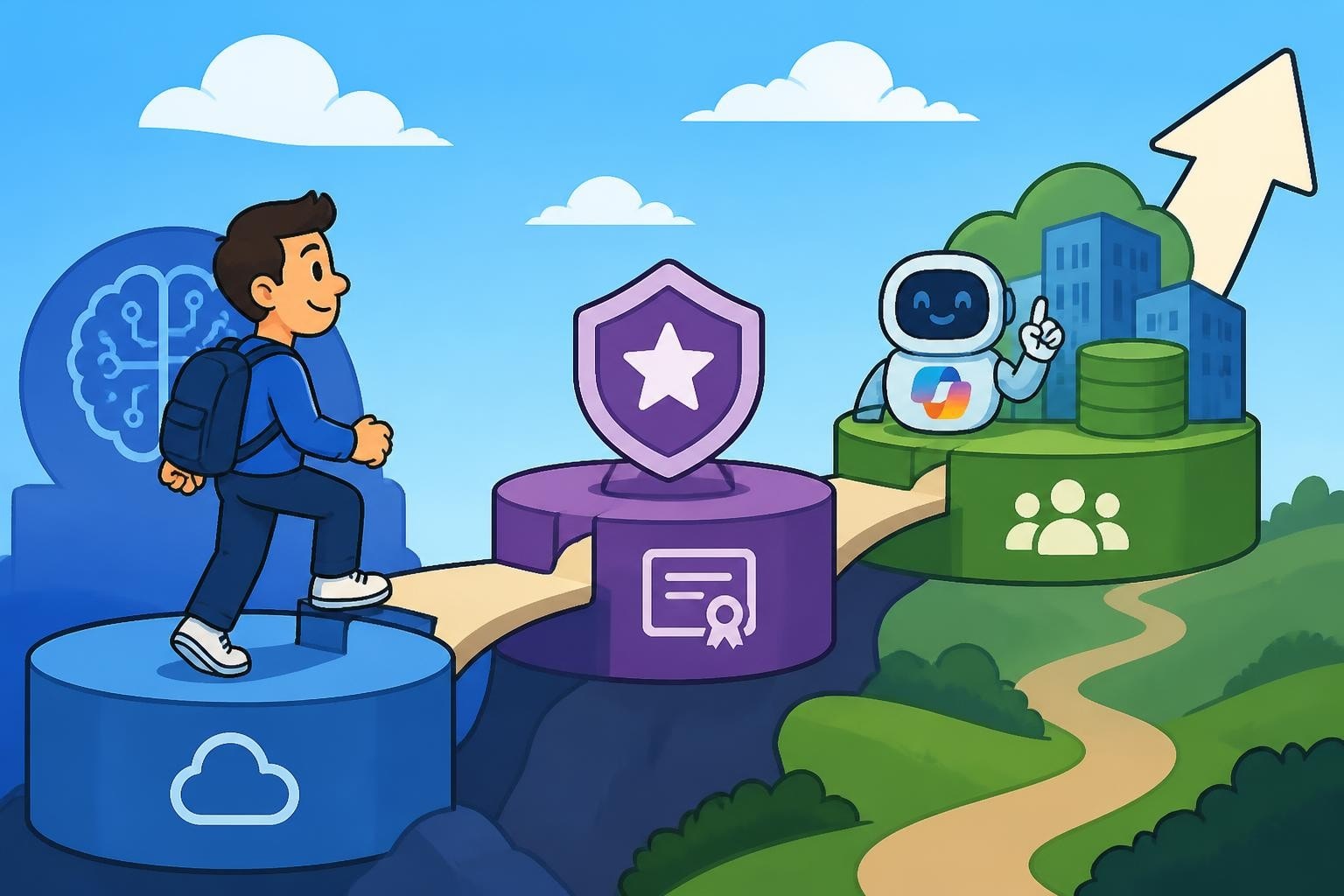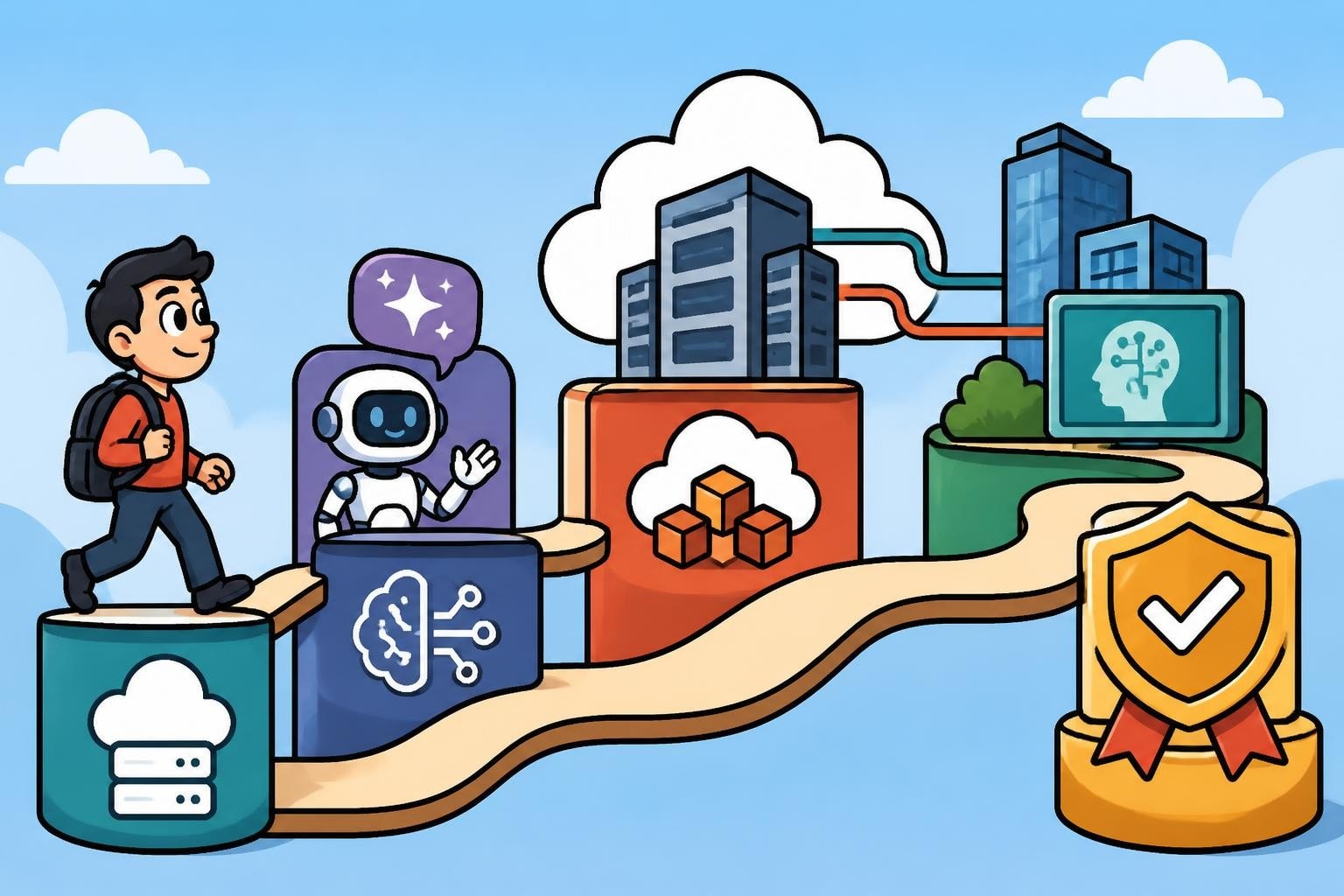
Marketing professionals face an urgent imperative: master artificial intelligence or risk obsolescence. The landscape has shifted dramatically since 2024, with generative AI tools, predictive analytics, and autonomous campaign systems becoming standard rather than experimental. An artificial intelligence in marketing course provides the structured pathway to transform from AI-curious to AI-proficient, equipping marketers with the technical literacy, strategic frameworks, and ethical guardrails needed to leverage these powerful technologies effectively.
What an Artificial Intelligence in Marketing Course Should Cover
Modern marketing AI curricula must balance technical depth with practical application. The most effective programs structure learning around real marketing workflows rather than abstract computer science concepts.
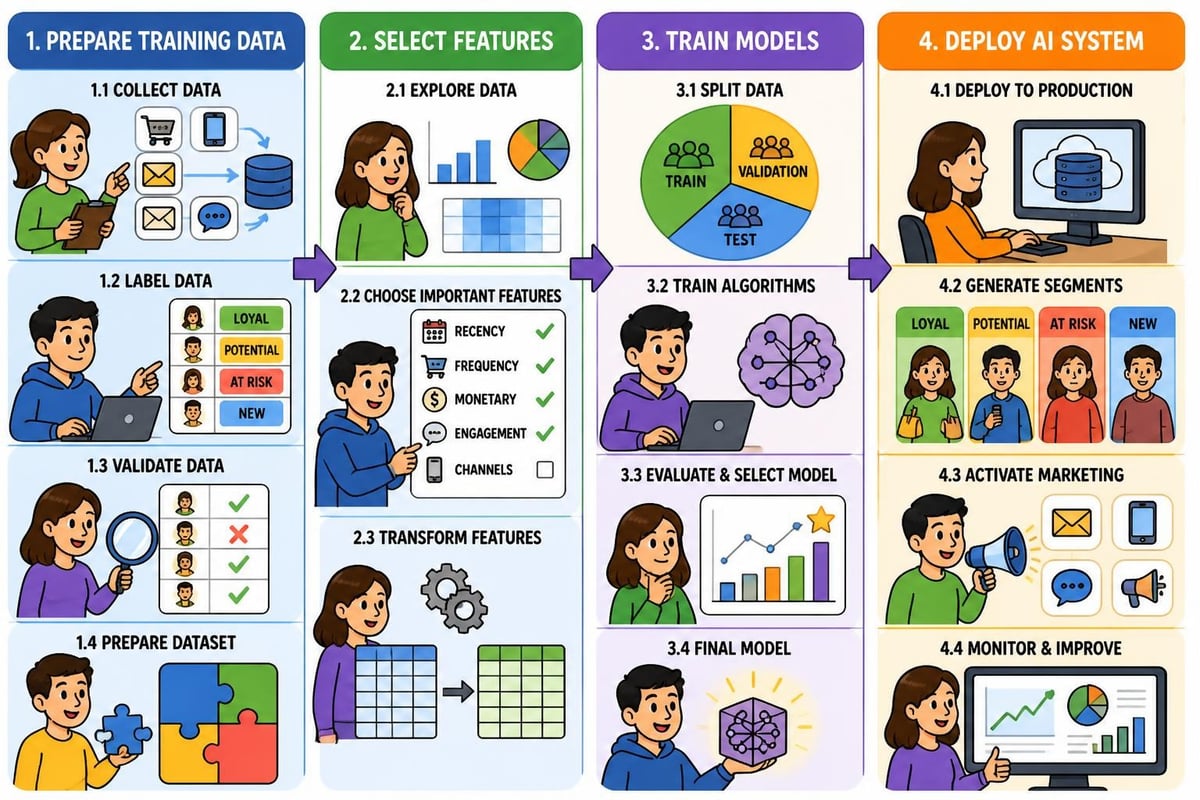
Core Machine Learning Foundations for Marketers
Marketing professionals don't need to build neural networks from scratch, but they absolutely need to understand how these systems make decisions. A quality artificial intelligence in marketing course introduces supervised learning, unsupervised clustering, and recommendation algorithms through marketing-specific examples.
Essential technical concepts include:
- Classification models for customer segmentation and lead scoring
- Regression analysis for price optimization and demand forecasting
- Natural language processing for sentiment analysis and content generation
- Computer vision applications in creative testing and brand monitoring
According to HubSpot's State of AI research, 64% of marketers already use generative AI tools, but fewer than 30% understand the underlying mechanisms. This knowledge gap creates significant risk in deployment, measurement, and optimization.
The curriculum should also address training data requirements, model accuracy metrics, and the difference between predictive and generative AI applications. Marketing teams that understand these fundamentals make better vendor selections, ask better questions of data science partners, and identify appropriate use cases faster than those treating AI as a black box.
Generative AI Tools and Practical Applications
The explosive growth of large language models has created entirely new marketing capabilities. An artificial intelligence in marketing course must provide hands-on experience with the tools reshaping content creation, customer service, and creative production.
Practical modules should cover:
- Prompt engineering for marketing copy, email campaigns, and social content
- Image generation tools for rapid creative concepting and A/B testing
- Video synthesis platforms for personalized messaging at scale
- Voice AI for conversational marketing and customer support automation
- Multi-modal systems that combine text, image, and data inputs
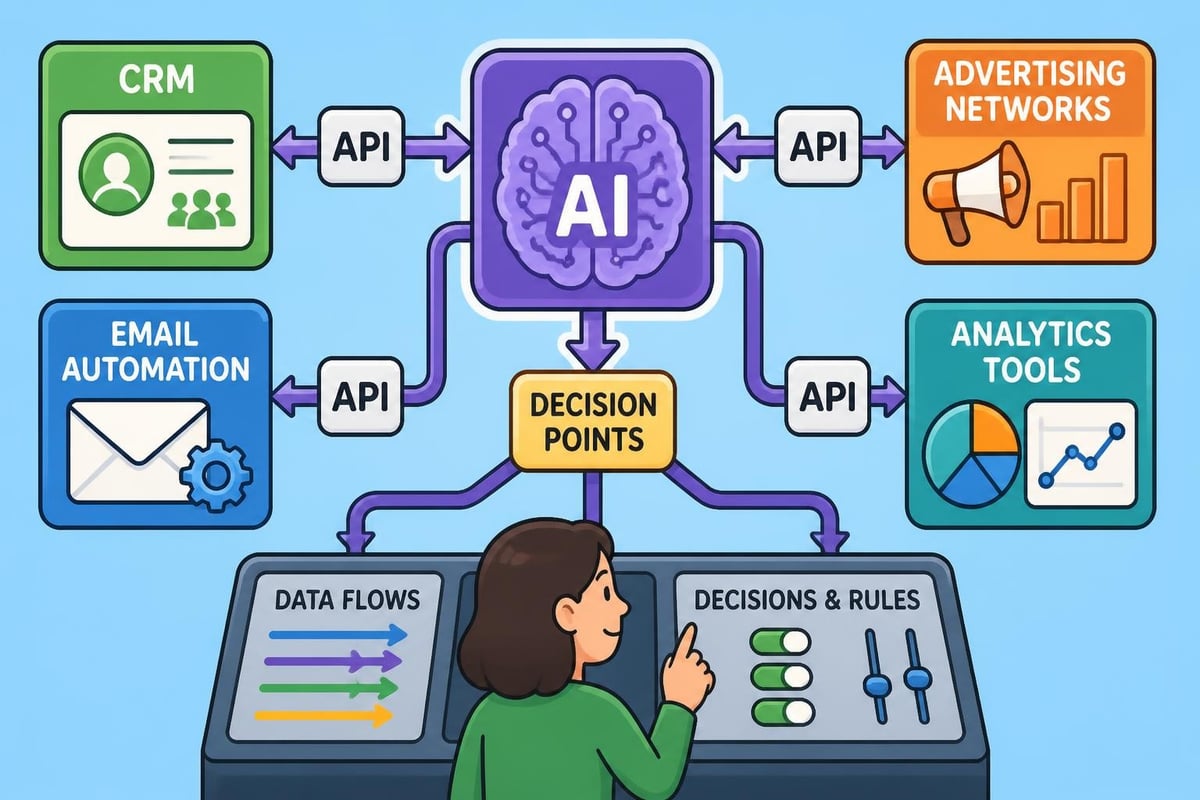
Google Cloud's architecture guide for generative AI campaigns provides excellent implementation patterns for enterprise deployment. These technical blueprints demonstrate how marketing teams orchestrate multiple AI services, manage content moderation, and ensure brand consistency across generated assets.
The best courses include project-based learning where participants build actual campaign components: generate 20 ad variations for A/B testing, create personalized email sequences for different customer segments, or develop chatbot conversation flows for product recommendations. Theory without implementation leaves marketers unprepared for real-world deployment challenges.
Strategic AI Adoption for Marketing Organizations
Technology skills alone don't guarantee successful AI integration. Marketing leaders need frameworks for organizational change, process redesign, and capability building across their teams.
Building AI-Literate Marketing Teams
The Marketing AI Institute's 2025 report identifies skills gaps as the primary barrier to AI adoption, with 72% of marketing organizations lacking sufficient AI literacy across their teams. An artificial intelligence in marketing course should address both individual upskilling and team-wide capability development.
| Skill Level | Required Capabilities | Training Focus |
|---|---|---|
| AI-Aware | Understand possibilities and limitations | High-level overview, use case exploration |
| AI-Applied | Use tools effectively in daily work | Tool-specific training, prompt engineering |
| AI-Strategic | Design AI-enabled processes and workflows | Architecture, integration, measurement frameworks |
| AI-Proficient | Evaluate vendors, manage implementations | Technical assessment, procurement, governance |
Organizations should map their team members to these levels and create learning pathways that move people progressively through stages. Marketing managers may need AI-Strategic skills while content creators focus on AI-Applied capabilities. For professionals exploring broader AI applications, examining related AI courses can provide context for how marketing AI fits within the larger artificial intelligence landscape.
Measurement, Attribution, and ROI Frameworks
AI implementations fail most often due to unclear success metrics, not technical problems. Marketing organizations struggle to measure AI impact because traditional attribution models don't capture the full value created by intelligent systems.
A comprehensive artificial intelligence in marketing course teaches measurement frameworks specifically designed for AI applications. These include incremental lift testing for AI-generated content, holdout groups for personalization algorithms, and multi-touch attribution models that account for AI-assisted touchpoints.
Key measurement considerations:
- Baseline establishment before AI deployment
- Controlled testing methodologies for attribution
- Cost accounting that includes data preparation and maintenance
- Long-term learning curves as models improve with more data
- Qualitative assessment of creative quality and brand alignment
The Nielsen CMO Outlook research reveals that 81% of marketing leaders plan to increase AI investment in 2026, but only 43% have established clear measurement frameworks. This disconnect leads to over-investment in low-value applications and under-investment in high-impact use cases.
Ethics, Governance, and Responsible AI in Marketing
The most sophisticated artificial intelligence in marketing course addresses not just what AI can do, but what it should do. Ethical considerations have moved from theoretical concerns to practical necessities following high-profile failures in bias, privacy, and misinformation.
Privacy, Consent, and Data Governance
AI systems are data-hungry, but privacy regulations continue tightening globally. Marketing teams must navigate GDPR, CCPA, and emerging AI-specific regulations while building effective personalization engines.
Critical governance topics include:
- First-party data strategies and consent management
- Synthetic data generation for model training
- Differential privacy techniques for audience insights
- Data retention policies and right-to-deletion compliance
- Cross-border data transfer restrictions for global campaigns
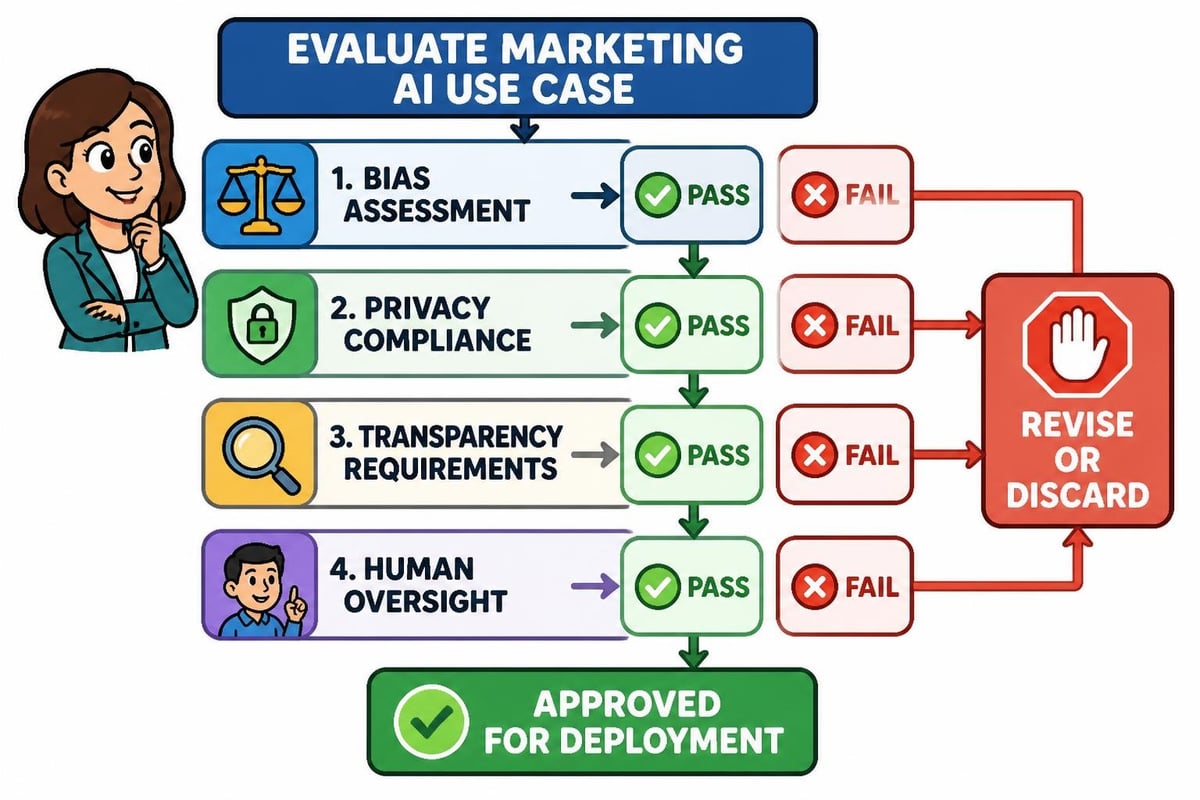
The curriculum should provide practical frameworks for privacy-by-design in AI implementations, including data minimization principles, purpose limitation, and transparency requirements. Marketing teams that build privacy-respecting AI systems avoid regulatory penalties and build stronger customer trust.
Those pursuing comprehensive AI education should also consider responsible AI courses that dive deeper into ethical frameworks, bias detection, and fairness metrics across all AI applications, not just marketing.
Brand Safety and Creative Control
Generative AI introduces new risks in brand representation. Models can produce outputs that are technically accurate but tonally inappropriate, culturally insensitive, or misaligned with brand values. Harvard Business Review's analysis of AI in brand management emphasizes the critical importance of human-in-the-loop workflows and clear guardrails.
An artificial intelligence in marketing course should teach:
- Content moderation systems for AI-generated assets
- Brand voice customization through fine-tuning and prompt libraries
- Human review workflows that balance speed with quality control
- Crisis response protocols for AI-generated errors
- Version control and audit trails for generated content
Marketing teams need clear escalation paths when AI produces problematic content. The curriculum should include case studies of both successful guardrail implementation and high-profile failures that illustrate the consequences of insufficient oversight.
Misinformation, Deepfakes, and Verification
AI-generated content has become increasingly difficult to distinguish from human-created material. This capability creates both opportunities and threats for marketing organizations. Research on AI-generated disinformation in marketing demonstrates how sophisticated synthetic content can undermine brand credibility and consumer trust.
Marketing professionals need skills in:
- Detecting AI-generated images, video, and text
- Watermarking and provenance tracking for owned content
- Verification protocols for user-generated content
- Response strategies when synthetic content targets your brand
- Transparency disclosure when using AI in consumer-facing content
The most forward-thinking programs address both defensive and offensive aspects: protecting your brand from synthetic attacks while maintaining authenticity and trust when deploying AI in your own campaigns.
Platform-Specific AI Capabilities and Integration
Marketing technology stacks have evolved rapidly, with major platforms embedding AI capabilities directly into their interfaces. An effective artificial intelligence in marketing course provides platform-specific training alongside general AI principles.
Marketing Automation and CRM AI Features
Leading marketing platforms now offer built-in AI for email optimization, lead scoring, and campaign orchestration. Understanding these native capabilities helps marketing teams maximize existing technology investments before purchasing additional AI tools.
| Platform Category | AI Capabilities | Skills Required |
|---|---|---|
| Email Marketing | Send-time optimization, subject line generation, content personalization | A/B testing design, performance analysis |
| CRM Systems | Lead scoring, opportunity prediction, next-best-action recommendations | Data quality management, model validation |
| Advertising | Audience targeting, bid optimization, creative testing | Campaign structure, attribution setup |
| Analytics | Anomaly detection, forecasting, insights generation | Statistical literacy, data visualization |
| Content Management | SEO optimization, readability analysis, content recommendations | Editorial judgment, quality assessment |
Marketing teams should audit their existing technology stack to identify underutilized AI features before investing in new tools. Many organizations purchase specialized AI point solutions while ignoring powerful capabilities already included in their enterprise platforms.
Custom AI Development vs. Vendor Solutions
The build-versus-buy decision for marketing AI requires careful analysis of use case specificity, data sensitivity, and internal technical capacity. An artificial intelligence in marketing course should provide frameworks for this strategic choice.
Consider custom development when:
- Use cases are highly specific to your business model
- Competitive advantage requires proprietary algorithms
- Data privacy concerns prevent cloud-based processing
- Existing vendor solutions don't support required integrations
Choose vendor solutions when:
- Use cases are common across industries
- Speed to deployment is critical
- Internal data science capacity is limited
- Ongoing model maintenance would strain resources
The curriculum should include vendor evaluation frameworks covering model performance, data requirements, integration capabilities, pricing models, and long-term support. Marketing leaders who understand these technical trade-offs make better procurement decisions and avoid costly implementation failures.
Career Development and Certification Pathways
Professional credentials provide marketers with validated proof of AI competency, differentiating them in a competitive job market. An artificial intelligence in marketing course should align with recognized certification programs and career advancement pathways.
Industry-Recognized AI Marketing Certifications
Multiple organizations now offer specialized credentials in marketing AI, each with different focuses and target audiences. Marketing professionals should select certifications aligned with their career goals and technical depth preferences.
Leading certification programs include:
- Marketing AI Institute's AI for Marketers certification
- Google's AI-Powered Performance Ads certification
- HubSpot's AI Marketing certification
- Professional Certified Marketer in Digital Marketing with AI specialization
- AWS Certified Machine Learning for Marketing Applications
The most valuable programs combine theoretical knowledge with practical application projects, requiring participants to demonstrate skills through portfolio work rather than just passing multiple-choice exams. For marketers interested in deepening technical AI knowledge beyond marketing-specific applications, exploring AI specialization courses can provide complementary skills in machine learning fundamentals and deployment.
Building a Marketing AI Portfolio
Practical demonstrations of AI capability matter more than course completion certificates alone. An artificial intelligence in marketing course should guide participants in creating portfolio projects that showcase real skills to potential employers or clients.
Strong portfolio projects demonstrate:
- Problem definition and use case identification
- Data collection and preparation workflows
- Tool selection and implementation decisions
- Performance measurement and optimization
- Ethical considerations and mitigation strategies
Examples might include A/B testing campaigns using AI-generated variations, customer segmentation models with business impact analysis, or chatbot implementations with conversation design documentation. These tangible artifacts prove competency far more effectively than bullet points on a resume.
Selecting the Right Artificial Intelligence in Marketing Course
The proliferation of AI training programs makes selection challenging. Marketing professionals should evaluate options based on curriculum depth, instructor expertise, hands-on learning opportunities, and alignment with career objectives.
Evaluating Course Quality and Instructor Credentials
Not all artificial intelligence in marketing courses provide equivalent value. Marketing professionals should investigate instructor backgrounds, curriculum currency, and student outcomes before investing time and money.
Quality indicators include:
- Instructors with both marketing leadership and AI implementation experience
- Curriculum updated within the last six months (AI evolves rapidly)
- Hands-on projects using current tools and platforms
- Student testimonials with specific skill outcomes
- Access to ongoing learning resources and community support
Be skeptical of courses promising "master AI marketing in one weekend" or those taught by instructors without demonstrable marketing experience. Effective AI marketing requires both domains of expertise, and shortcuts rarely produce genuine competency.
Self-Paced vs. Cohort-Based Learning
Learning format significantly impacts outcomes. Marketing professionals should choose formats aligned with their learning preferences, schedule constraints, and accountability needs.
| Format | Advantages | Disadvantages | Best For |
|---|---|---|---|
| Self-Paced | Flexible scheduling, learn at own speed, typically lower cost | Requires strong self-discipline, limited peer interaction, delayed feedback | Experienced learners, tight budgets, irregular schedules |
| Cohort-Based | Peer learning, scheduled accountability, real-time feedback, networking opportunities | Fixed schedule, higher cost, must keep pace with group | Career changers, those seeking community, structured learners |
| Hybrid | Combines flexibility with community, self-study plus live sessions | Coordination complexity, moderate cost | Most marketing professionals balancing work and learning |
The most effective programs for working marketing professionals typically combine self-paced foundational modules with scheduled live sessions for advanced topics, project reviews, and expert Q&A. This hybrid approach balances accessibility with engagement.
Implementing AI Skills in Your Marketing Organization
Course completion represents the beginning, not the end, of AI adoption. Marketing professionals must translate learning into organizational change through pilot projects, process redesign, and continuous experimentation.
Launching AI Pilot Projects
The first AI implementations should be contained experiments with clear success criteria and limited downside risk. An artificial intelligence in marketing course should provide frameworks for pilot project selection and execution.
Effective pilot projects:
- Address painful manual processes with clear time savings
- Have available historical data for model training
- Allow easy measurement of performance improvement
- Fail safely without major brand or customer impact
- Build internal confidence for larger investments
Examples include AI-powered email subject line optimization, automated social media scheduling based on engagement prediction, or chatbot implementation for FAQ handling. These bounded use cases demonstrate value while limiting complexity and risk.
Marketing teams should document pilot projects thoroughly, capturing not just final outcomes but also implementation challenges, data requirements, and lessons learned. This institutional knowledge accelerates subsequent AI deployments across the organization.
Creating Continuous Learning Programs
AI technology evolves too rapidly for one-time training to suffice. Marketing organizations need ongoing learning programs that keep teams current with emerging capabilities, new tools, and evolving best practices.
Sustainable learning programs include:
- Monthly lunch-and-learn sessions on new AI tools
- Quarterly external speaker series from AI vendors and practitioners
- Internal AI showcase events highlighting team experiments
- Dedicated time for AI experimentation and skill practice
- Subscriptions to AI marketing publications and research
Organizations that embed continuous AI learning into their culture outpace competitors who treat education as a one-time event. Marketing leaders should budget both money and time for ongoing development, recognizing that AI literacy requires sustained investment.
Professionals seeking to build comprehensive AI foundations beyond marketing applications should explore the best AI courses available across multiple domains to understand how AI principles apply in different contexts and industries.
Mastering artificial intelligence in marketing requires structured learning that combines technical foundations, practical tools, strategic frameworks, and ethical guardrails. Marketing professionals who invest in comprehensive AI education position themselves and their organizations to compete effectively in an increasingly automated, data-driven landscape. MammothClub provides exactly this comprehensive approach through its extensive catalog of over 3,000 on-demand courses, interactive bootcamps, and corporate certification programs designed to help marketing professionals and their teams achieve measurable AI proficiency. Our AI-powered learning dashboards track progress, recommend relevant courses, and ensure your organization stays ahead in the rapidly evolving AI marketing landscape.