Machine learning has become the cornerstone of technological innovation across industries, driving everything from personalized recommendations to autonomous systems. With demand for ML skills growing exponentially, professionals and organizations face a critical decision: choosing the right learning path from thousands of available options. The best machine learning course isn't simply the most popular or expensive option-it's the one that aligns with your current skill level, career objectives, and learning preferences while providing hands-on experience with real-world applications. This comprehensive guide examines what makes a machine learning program exceptional and helps you navigate the selection process with confidence.
Understanding Machine Learning Course Fundamentals
Before evaluating specific programs, you need to understand what distinguishes quality machine learning education from superficial content. The best machine learning course combines theoretical foundations with practical implementation, ensuring you can both understand algorithms conceptually and apply them to solve business problems.
Core Components of Effective ML Education
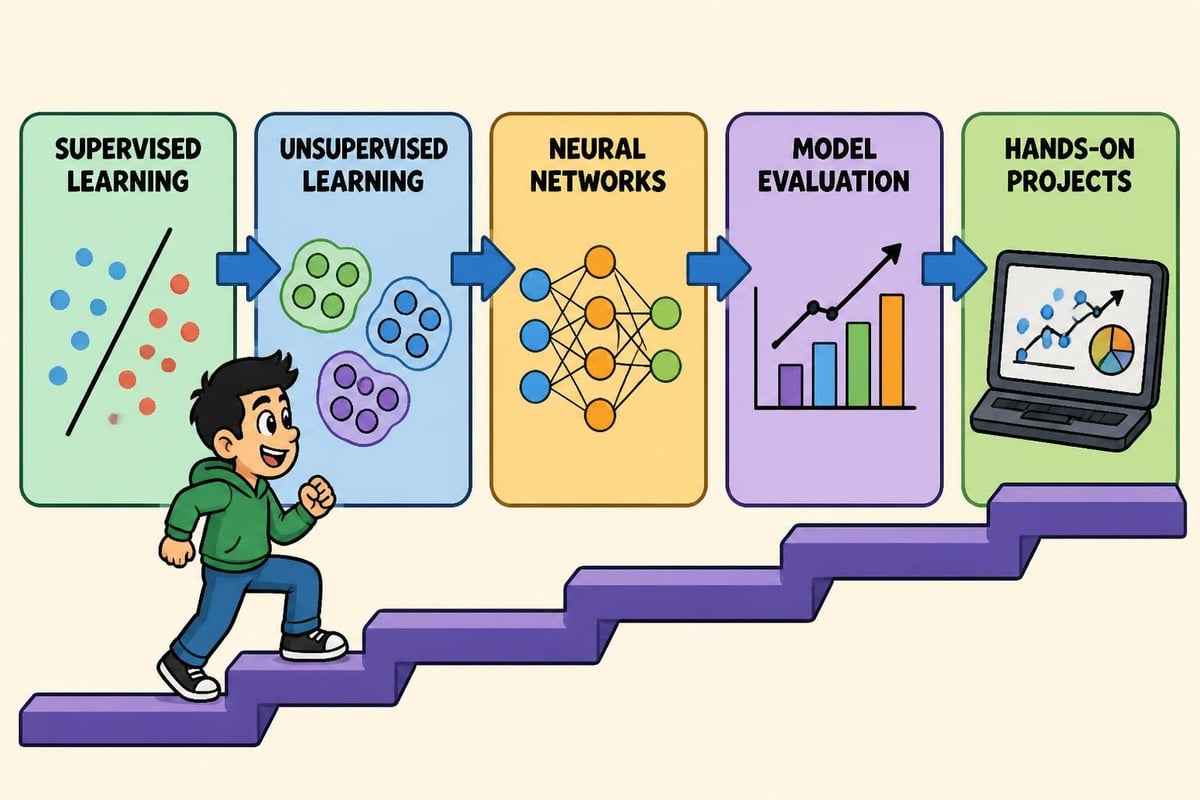
A comprehensive machine learning curriculum should cover these essential areas:
- Supervised learning algorithms including regression, classification, and decision trees
- Unsupervised learning techniques such as clustering and dimensionality reduction
- Neural networks and deep learning architectures for complex pattern recognition
- Model evaluation and optimization through cross-validation and hyperparameter tuning
- Real-world project implementation using industry-standard frameworks
The strongest programs integrate these components progressively, building from foundational concepts to advanced applications. Unlike generic coding bootcamps, specialized top machine learning courses emphasize mathematical rigor while maintaining practical relevance.
Prerequisites and Skill Level Considerations
Your background significantly influences which program will deliver the best results. Most quality ML courses require:
Mathematical Foundation:
- Linear algebra for understanding matrices and transformations
- Calculus for gradient descent and optimization
- Statistics and probability for model interpretation
Programming Competency:
- Python proficiency with libraries like NumPy and Pandas
- Understanding of data structures and algorithms
- Version control and collaborative development practices
If you're transitioning from a non-technical background, consider starting with artificial intelligence class options that provide broader context before specializing in machine learning. This approach builds confidence and ensures you understand where ML fits within the larger AI ecosystem.
Top-Tier Machine Learning Programs for 2026
The landscape of ML education has evolved dramatically, with universities, tech companies, and specialized platforms offering diverse learning paths. Each approach has distinct advantages depending on your circumstances.
University-Affiliated Programs
Academic institutions provide rigorous theoretical foundations combined with cutting-edge research insights. Stanford's Machine Learning Specialization and MIT's Professional Certificate in Machine Learning represent gold standards in this category.
| Program Feature | University Programs | Online Platforms | Corporate Training |
|---|---|---|---|
| Theoretical Depth | Exceptional | Good | Moderate |
| Practical Projects | Moderate | Excellent | Industry-Specific |
| Flexibility | Limited | High | Customized |
| Cost | $2,000-$15,000 | $300-$2,000 | Varies |
| Completion Time | 3-12 months | 2-6 months | 1-3 months |
These programs excel at teaching fundamental principles that remain relevant despite rapid technological change. However, they often lack the immediate practical application that working professionals need.
Industry-Led Certifications
Technology companies like Google, Microsoft, and Amazon offer machine learning certifications designed around their cloud platforms and tools. The Google Professional Machine Learning Engineer certification and AWS Certified Machine Learning - Specialty credential have gained significant traction among employers.
Advantages of industry certifications:
- Direct alignment with current industry practices
- Cloud platform integration and deployment skills
- Recognized credentials for career advancement
- Access to proprietary tools and frameworks
These programs work exceptionally well for professionals aiming to implement ML solutions within specific technology ecosystems. The best machine learning course from this category typically includes extensive hands-on labs and real-world case studies.
Specialized Platform Offerings
Dedicated learning platforms have emerged as powerful alternatives, combining academic rigor with practical flexibility. These platforms offer advantages that traditional institutions struggle to match:
Interactive coding environments allow immediate experimentation without complex setup. Adaptive learning paths adjust difficulty based on your progress, ensuring optimal challenge levels. Community support provides peer learning opportunities and networking connections valuable for career development.
Modern platforms incorporate AI-powered learning tools that personalize content delivery and identify knowledge gaps. This approach maximizes retention while minimizing time investment-a critical factor for working professionals managing competing priorities.
Evaluating Course Quality and Effectiveness
With countless options available, systematic evaluation prevents costly mistakes and wasted time. The best machine learning course for you depends on measurable criteria beyond marketing claims and testimonials.
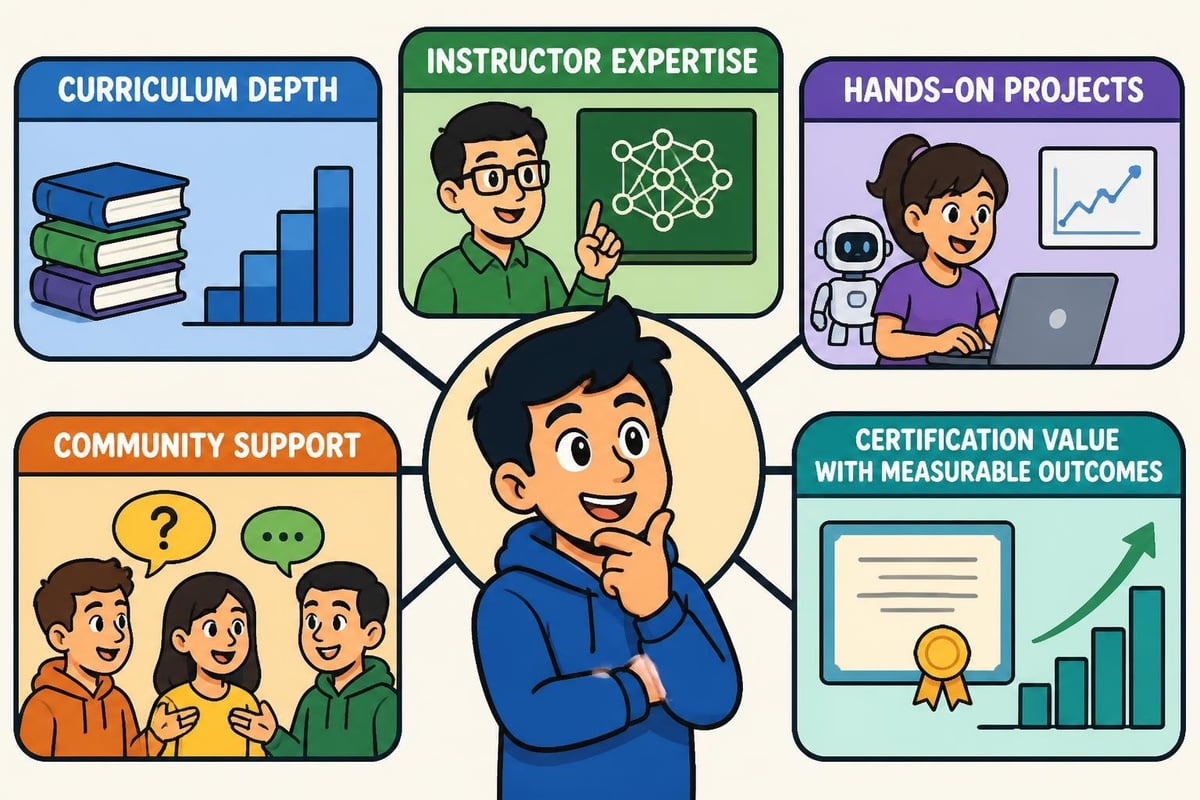
Curriculum Depth and Breadth Assessment
Examine the syllabus for:
- Coverage of both classical algorithms and modern deep learning
- Balance between theory and implementation
- Inclusion of ethical considerations and bias mitigation
- Real-world datasets and industry-relevant problems
Shallow courses focus exclusively on using libraries without explaining underlying mathematics. While this approach enables quick wins, it limits your ability to troubleshoot problems, optimize models, or adapt to new techniques. Quality programs explain the "why" behind each algorithm, enabling independent problem-solving.
Instructor Credentials and Teaching Methods
The instructor's background directly impacts learning quality. Look for educators with:
- Advanced degrees in machine learning, statistics, or related fields
- Published research or significant industry experience
- Track record of teaching complex concepts clearly
- Active involvement in the ML community
Teaching methodology matters as much as expertise. The best instructors use multiple approaches-video lectures, interactive notebooks, quizzes, and projects-to reinforce concepts through varied repetition. They provide clear explanations of complex mathematics without assuming excessive prior knowledge.
Hands-On Project Requirements
Theoretical knowledge alone doesn't prepare you for real-world ML challenges. Premium courses require projects that simulate actual business scenarios:
- Predictive modeling using messy, incomplete datasets
- Image classification with convolutional neural networks
- Natural language processing for text analysis
- Recommendation systems based on user behavior
- Time series forecasting for business metrics
These projects should challenge you to make decisions about data preprocessing, feature engineering, model selection, and performance optimization-the same decisions you'll face professionally. Portfolio-quality projects become crucial assets during job searches, demonstrating practical competency beyond certifications.
Specialized Learning Paths Within Machine Learning
Machine learning encompasses diverse subdisciplines, each requiring specialized knowledge. Your career goals should guide which specialization receives focus.
Deep Learning and Neural Networks
Deep learning has revolutionized fields from computer vision to speech recognition. Specialized courses in this area cover:
- Convolutional neural networks for image processing
- Recurrent networks and transformers for sequential data
- Generative adversarial networks for content creation
- Transfer learning and pre-trained models
This specialization demands strong computational resources and understanding of GPU utilization. If you're exploring this path, consider learning about GPU for AI training to optimize your development environment and reduce training costs.
Natural Language Processing Applications
NLP has become critical for businesses analyzing customer feedback, automating support, and extracting insights from unstructured text. The best machine learning course in this area combines linguistics foundations with modern transformer architectures.
Key NLP topics include:
- Tokenization and text preprocessing techniques
- Word embeddings and semantic representation
- Sentiment analysis and classification
- Named entity recognition and information extraction
- Large language model fine-tuning
Organizations implementing chatbots, document analysis, or content generation systems particularly value these skills. NLP specialists command premium salaries due to the complexity and business impact of their work.
Computer Vision and Image Recognition
From medical diagnosis to autonomous vehicles, computer vision applications continue expanding. This specialization requires understanding both classical techniques and modern deep learning approaches.
Practical applications range from facial recognition systems to defect detection in manufacturing. The best courses provide experience with multiple frameworks-PyTorch, TensorFlow, and OpenCV-ensuring you can work within various technical environments.
Platform-Specific Considerations for 2026
The learning platform you choose influences not just content quality but also your overall experience and career outcomes. Modern platforms differ significantly in their approach to engagement, assessment, and credential value.
Interactive Learning Environments
The most effective platforms provide cloud-based coding environments where you can experiment immediately without installation headaches. These environments typically include:
- Pre-configured libraries and dependencies
- Sample datasets for practice
- Automated testing and feedback
- Version control integration
- Collaborative features for team projects
This infrastructure eliminates the "it works on my machine" problem that frustrates beginners and wastes valuable learning time. Immediate feedback loops accelerate skill development by connecting actions to outcomes.
Community and Support Structures
Learning machine learning involves inevitable obstacles-confusing concepts, debugging challenges, and implementation questions. Access to knowledgeable support dramatically impacts success rates.
| Support Type | Response Time | Depth of Help | Best For |
|---|---|---|---|
| Instructor Q&A | 24-48 hours | High | Conceptual questions |
| Peer Forums | 1-12 hours | Variable | Code debugging |
| Mentorship | Scheduled | Very High | Career guidance |
| AI Assistant | Immediate | Moderate | Quick clarifications |
Premium programs often include mentorship from practicing ML engineers who provide career advice and portfolio feedback. This guidance proves invaluable when transitioning into ML roles or advancing to senior positions.
Certification Value and Industry Recognition
Not all certificates carry equal weight with employers. Research which credentials hiring managers actively seek:
High-value certifications demonstrate:
- Completion of rigorous, proctored assessments
- Verified identity throughout the course
- Portfolio of completed projects
- Specific technical competencies
Some employers specifically filter candidates by certain certifications, making the right credential a gateway to opportunities. However, certificates alone rarely secure positions-they must be combined with demonstrable skills and relevant projects.
Corporate Training and Team Upskilling
Organizations investing in machine learning capabilities face different considerations than individual learners. The best machine learning course for corporate training prioritizes team cohesion, practical business applications, and measurable ROI.
Customized Learning Paths for Business Goals
Generic courses rarely address your organization's specific challenges. Quality corporate programs begin with needs assessment to identify:
- Current team skill levels and gaps
- Specific business problems requiring ML solutions
- Available data infrastructure and resources
- Timeline and budget constraints
This assessment informs curriculum customization, ensuring training directly supports strategic objectives. For example, a retail company might emphasize recommendation systems and demand forecasting, while a manufacturing organization focuses on predictive maintenance and quality control.
Platforms like MammothClub excel at corporate training by offering customizable learning paths across 3,000+ courses, allowing organizations to build comprehensive upskilling programs tailored to their technology stack and business priorities.
Measuring Training Effectiveness
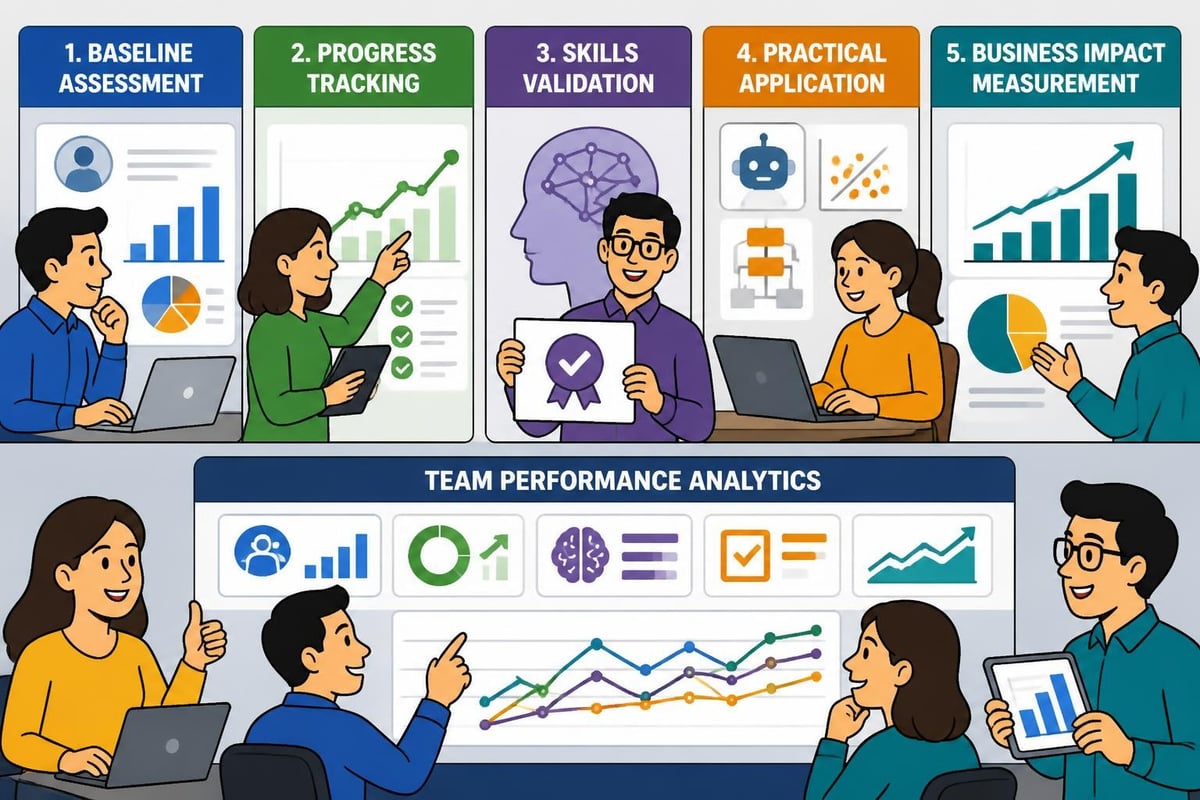
Corporate learning initiatives require accountability through measurable outcomes. Effective programs incorporate:
- Pre-assessment testing to establish baseline competencies
- Progress tracking dashboards showing completion and performance
- Skills validation through practical project assessments
- Post-training evaluation measuring application of learned concepts
- Business impact metrics connecting training to operational improvements
Advanced platforms provide detailed analytics showing which team members excel, who needs additional support, and how quickly skills translate into productive work. This data justifies training investments and guides future development priorities.
Cost-Benefit Analysis of ML Education Investment
Machine learning education represents a significant investment of time and money. Understanding the return on this investment helps you make informed decisions and select programs aligned with your budget and goals.
Pricing Models and Total Cost of Ownership
ML courses employ various pricing structures, each with implications for your budget:
Subscription-based access ($30-$100/month) provides unlimited course access but requires completing programs before subscriptions expire. This model suits disciplined learners who can commit consistent study time.
Individual course purchases ($200-$2,000) offer permanent access but become expensive when exploring multiple specializations. They work well when you've identified specific skill gaps.
Professional certifications ($3,000-$15,000) include comprehensive curricula, assessments, and credentials. Higher costs reflect greater depth and industry recognition.
Corporate site licenses (custom pricing) enable organization-wide access with volume discounts and administrative tools.
Beyond direct costs, consider opportunity costs-time away from work or other activities. The best machine learning course maximizes learning efficiency, delivering knowledge rapidly without sacrificing depth.
Career Impact and Salary Potential
Machine learning skills command premium compensation across industries. According to 2026 market data:
- Entry-level ML engineers: $95,000-$130,000
- Mid-career ML specialists: $130,000-$180,000
- Senior ML architects: $180,000-$250,000+
These figures vary by location, industry, and specialization, but consistently exceed general software development salaries. The skills gap between demand and qualified candidates continues widening, creating favorable conditions for trained professionals.
Completing a quality ML program can accelerate career transitions that might otherwise take years. Many professionals report recouping educational investments within 6-12 months through salary increases or new opportunities. When evaluating courses, consider not just the immediate cost but the lifetime earning potential unlocked by new capabilities.
Practical Implementation and Learning Strategies
Selecting the best machine learning course represents only the first step. Your approach to learning determines whether you successfully acquire applicable skills or simply accumulate certificates.
Time Management and Study Schedules
Machine learning education demands consistent, focused effort over extended periods. Most comprehensive programs require 8-15 hours weekly for 3-6 months.
Effective study strategies include:
- Dedicated time blocks scheduled like important meetings
- Active learning through coding alongside video instruction
- Spaced repetition reviewing concepts across multiple sessions
- Project-based milestones creating tangible progress markers
Avoid the temptation to consume content passively. Machine learning requires hands-on practice-you can't learn model optimization by watching videos alone. The best learners spend twice as much time coding and experimenting as watching lectures.
Building a Learning Portfolio
Your portfolio demonstrates competency more effectively than certificates. As you progress through coursework, create public repositories showcasing:
- Completed course projects with clear documentation
- Personal projects solving novel problems
- Contributions to open-source ML tools
- Blog posts explaining concepts or techniques
Quality matters more than quantity. Three excellent projects demonstrating end-to-end ML workflows impress employers more than dozens of tutorial completions. Each project should show problem definition, data exploration, model development, evaluation, and deployment considerations.
Staying Current With Rapid Evolution
Machine learning evolves continuously, with new techniques, frameworks, and best practices emerging regularly. The best machine learning course provides not just current knowledge but meta-skills for continuous learning:
- Reading and implementing research papers
- Following ML communities and conferences
- Experimenting with emerging tools
- Understanding when to adopt new techniques versus proven approaches
Building these habits ensures your skills remain relevant despite technological change. Supplement formal coursework with research papers, technical blogs, and community discussions to maintain cutting-edge knowledge.
Making Your Final Selection Decision
After evaluating options across multiple dimensions, you need a systematic decision framework. Consider these final factors before committing.
Alignment With Career Trajectory
Your current position and career goals should heavily influence course selection. Different programs serve different objectives:
- Career changers benefit from comprehensive bootcamps providing full-stack ML education
- Software developers adding ML skills need focused courses on algorithms and frameworks
- Data analysts transitioning to ML require strong emphasis on statistical foundations
- Managers overseeing ML teams need strategic understanding without implementation depth
Be honest about your starting point and desired destination. The best machine learning course for a product manager differs dramatically from the optimal choice for an aspiring research scientist. Courses that mismatch your needs waste time and create frustration.
Trial Periods and Money-Back Guarantees
Reputable platforms offer trial access or satisfaction guarantees, allowing you to evaluate teaching quality, curriculum relevance, and platform usability before full commitment. Take advantage of these offers to:
- Assess whether the instructor's teaching style matches your learning preferences
- Verify that prerequisite requirements align with your background
- Confirm that projects and examples relate to your interests
- Test platform stability and user experience
A few hours exploring course materials reveals more than extensive reviews from others with different needs and backgrounds. If a program feels wrong during trial period, trust that instinct-forcing yourself through incompatible content rarely yields good outcomes.
Long-Term Support and Updates
Machine learning's rapid evolution makes ongoing content updates essential. Quality programs commit to:
- Regular curriculum refreshes incorporating new techniques
- Updated code examples compatible with current library versions
- Additional modules covering emerging topics
- Continued community access after completion
Lifetime access to updated materials amplifies your investment value, providing reference resources throughout your career. Programs that abandon content after publication quickly become obsolete, limiting long-term utility.
For professionals seeking comprehensive, continuously updated machine learning education, exploring options like best AI ML courses online provides curated selections balancing quality, relevance, and practical applicability across various skill levels and career stages.
Finding the best machine learning course requires balancing theoretical rigor with practical application, aligning program structure with your learning style and career objectives. The right program transforms abstract algorithms into applicable skills that drive business value and career advancement. MammothClub delivers exactly this combination through 3,000+ on-demand courses, interactive bootcamps, and corporate certification programs powered by AI-driven learning tools that personalize your educational journey. Whether you're an individual professional upskilling for career growth or an organization building competitive AI capabilities, our platform provides the comprehensive, measurable training that delivers results in the rapidly evolving AI landscape.