The artificial intelligence landscape continues to evolve at breakneck speed, and professionals need validated credentials that prove their expertise with specific hardware and software platforms. Intel has emerged as a critical player in AI infrastructure, offering certification programs that validate skills in deploying, optimizing, and scaling AI solutions on Intel architecture. As organizations invest billions in AI transformation, the demand for professionals who understand Intel's AI ecosystem has surged dramatically. Whether you're a developer looking to specialize in edge AI, a data scientist aiming to optimize model performance, or an enterprise architect designing AI infrastructure, Intel's certification pathways offer structured learning and industry recognition that can accelerate your career trajectory.
Understanding Intel's AI Certification Ecosystem
Intel has developed a comprehensive certification framework that addresses different aspects of AI development and deployment. The intel ai certification portfolio spans from foundational knowledge to advanced professional credentials, each designed to validate specific competencies in Intel's AI technology stack.
The certification structure aligns with real-world job roles and industry demands. Intel recognizes that AI practitioners need more than theoretical knowledge-they must demonstrate hands-on capability with Intel's hardware accelerators, software optimization tools, and deployment frameworks.
Core Certification Tracks
Intel's certification programs focus on three primary domains:
Foundational AI Knowledge
- Understanding AI trends and business applications
- Recognizing Intel's role in the AI ecosystem
- Identifying appropriate AI solutions for business challenges
- Evaluating hardware and software requirements for AI workloads
MLOps Professional Development
- Designing end-to-end AI pipelines
- Optimizing models for Intel architecture
- Implementing production-ready AI systems
- Managing AI lifecycle from development to deployment
Edge AI Specialization
- Deploying AI models on edge devices
- Optimizing inference performance
- Managing resource constraints
- Implementing real-time AI applications
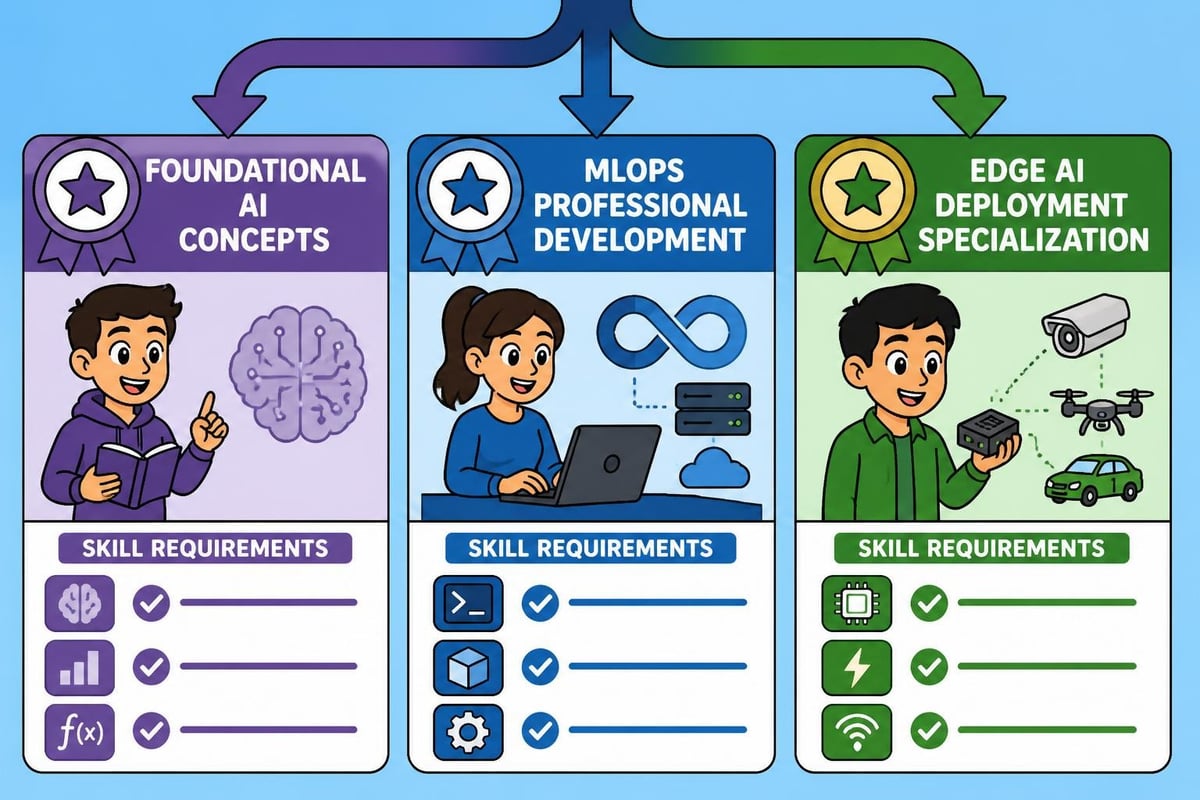
The Intel® Certified Developer - MLOps Professional credential represents one of the most comprehensive offerings, validating expertise in designing and developing AI solutions with optimized performance on Intel platforms.
Intel AI Fundamentals: Your Starting Point
For professionals new to Intel's AI ecosystem, the fundamentals track provides essential context and knowledge. The Intel® AI Fundamentals Specialization on Coursera offers a structured curriculum that covers AI trends, pipelines, and Intel's comprehensive approach to AI acceleration.
This foundational program addresses several critical competencies:
- Business Value Recognition - Understanding how AI creates measurable business outcomes
- Technology Stack Awareness - Identifying Intel's hardware and software components
- Pipeline Architecture - Designing end-to-end AI workflows
- Optimization Strategies - Recognizing performance bottlenecks and solutions
- Deployment Considerations - Planning production AI implementations
The specialization includes hands-on projects that simulate real-world scenarios, allowing learners to apply concepts immediately. Unlike generic AI courses, this program emphasizes Intel-specific optimizations and best practices that directly translate to job performance.
Key Learning Outcomes
| Competency Area | Skills Developed | Business Application |
|---|---|---|
| AI Strategy | ROI assessment, use case identification | Executive decision-making |
| Technical Architecture | Hardware selection, software optimization | Infrastructure planning |
| Performance Tuning | Model acceleration, inference optimization | Cost reduction, speed improvement |
| Production Deployment | Scalability, monitoring, maintenance | Reliable AI operations |
Many professionals combine this foundational training with broader AI certification programs to build comprehensive expertise across multiple platforms and frameworks.
Edge AI Developer Certification Program
The intel ai certification for edge deployment addresses one of the fastest-growing segments in AI applications. As organizations push intelligence to the network edge-from retail stores to manufacturing floors to autonomous vehicles-the need for professionals skilled in edge AI has exploded.
Intel's Edge AI Developer Certification Program, detailed in this Intel Community announcement, offers self-paced, hands-on courses specifically designed for deploying AI on Intel hardware at the edge.
What Makes Edge AI Different
Edge AI deployment presents unique challenges that require specialized knowledge:
- Resource Constraints - Limited computing power, memory, and energy availability
- Latency Requirements - Real-time processing demands with minimal delay
- Offline Operation - Functioning without continuous cloud connectivity
- Environmental Factors - Temperature, vibration, and durability considerations
- Security Concerns - Protecting models and data in distributed environments
The certification program teaches students to navigate these challenges using Intel's OpenVINO toolkit, Intel Neural Compute Stick, and other edge-optimized solutions. Participants learn to convert, optimize, and deploy models across various edge scenarios.
Practical Applications Covered:
- Computer vision for quality inspection in manufacturing
- Natural language processing in retail kiosks
- Predictive maintenance in industrial equipment
- Real-time analytics in smart city infrastructure
- Autonomous decision-making in robotics
Understanding GPU requirements for AI training complements edge deployment knowledge, as professionals often need to train models centrally before optimizing them for edge inference.
MLOps Professional Certification Deep Dive
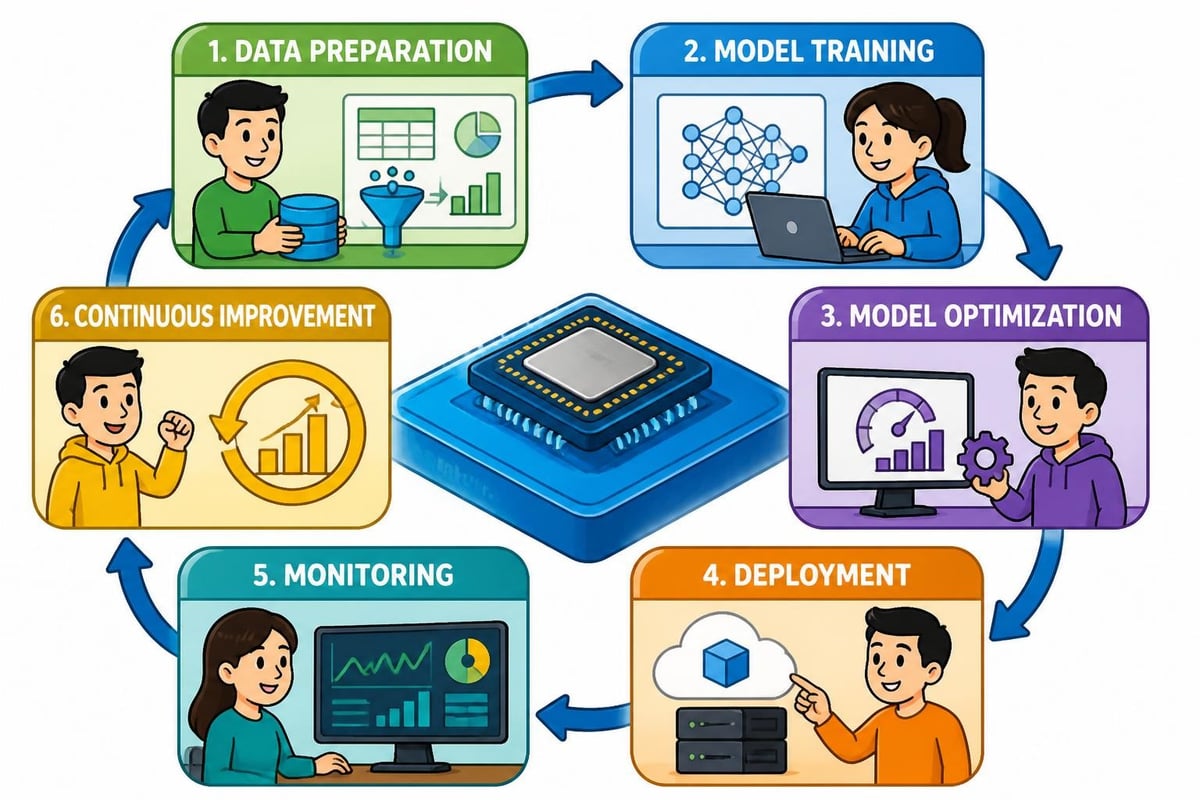
The MLOps Professional track represents the most advanced intel ai certification offering, targeting experienced practitioners who design and implement production AI systems. This credential validates capabilities that directly impact business outcomes: faster deployment, better performance, and more reliable AI operations.
Core Competency Areas
Model Development and Training
- Selecting appropriate frameworks (TensorFlow, PyTorch, ONNX)
- Implementing distributed training on Intel architecture
- Utilizing Intel's AI software optimization tools
- Managing experiment tracking and version control
Performance Optimization
- Applying Intel's optimization libraries (oneDNN, oneTBB)
- Implementing quantization and pruning strategies
- Benchmarking and profiling AI workloads
- Achieving target latency and throughput metrics
Production Deployment
- Containerizing AI applications with Intel optimizations
- Implementing CI/CD pipelines for AI models
- Managing model versioning and rollback strategies
- Monitoring model drift and performance degradation
Infrastructure Management
- Architecting scalable AI infrastructure
- Implementing resource allocation strategies
- Managing multi-node deployments
- Optimizing cloud and on-premises hybrid environments
Certification Requirements
| Component | Details | Time Investment |
|---|---|---|
| Prerequisite Knowledge | Python programming, ML fundamentals, Linux basics | Varies by background |
| Coursework | Structured modules covering theory and practice | 60-80 hours |
| Hands-on Labs | Real-world projects on Intel platforms | 40-60 hours |
| Assessment | Technical exam validating competencies | 2-3 hours |
| Practical Demonstration | Portfolio project showcasing skills | 20-40 hours |
Professionals pursuing this certification often explore complementary credentials like Microsoft AI certification courses to broaden their platform expertise and increase marketability.
Intel AI Academy Resources and Training
The Intel AI Academy provides comprehensive training, tools, and resources for developers building AI applications on Intel hardware. This ecosystem extends beyond certification to include ongoing professional development, community support, and access to cutting-edge tools.
Available Resources
Technical Documentation
- Architecture guides for Intel Xeon processors
- Optimization manuals for Intel AI accelerators
- API references for Intel software libraries
- Best practices for specific AI workloads
Development Tools
- Intel DevCloud for AI development and testing
- Model Zoo with pre-optimized models
- Profiling and debugging utilities
- Performance analysis frameworks
Learning Materials
- Video tutorials covering specific techniques
- Code samples demonstrating best practices
- Webinar recordings from Intel experts
- Research papers on AI optimization strategies
The Academy serves as a continuous learning platform, keeping certified professionals updated on new Intel technologies, optimization techniques, and industry trends.
Business Value of Intel AI Certification
Organizations investing in AI transformation need assurance that their technical teams possess validated skills. The intel ai certification provides tangible benefits for both employers and employees.
For Employers
Reduced Risk
- Verified competency in Intel-specific technologies
- Standardized skill assessment across candidates
- Reduced onboarding time for new hires
- Lower project failure rates due to technical gaps
Improved Performance
- Faster model deployment cycles
- Better utilization of Intel hardware investments
- More cost-effective AI infrastructure
- Higher quality AI solutions with fewer errors
Competitive Advantage
- Access to Intel's partner ecosystem
- Priority support from Intel technical teams
- Early access to new Intel AI technologies
- Recognition in Intel's certified partner directory
For Professionals
Career advancement opportunities multiply significantly with Intel certification. According to industry data, certified AI professionals command salary premiums averaging 15-25% over non-certified peers with similar experience.
Marketability Enhancement:
- Differentiation in competitive job markets
- Credibility with hiring managers and technical interviewers
- Portfolio evidence of practical skills
- Professional network access through Intel communities
Many professionals combine Intel credentials with AI management courses to position themselves for leadership roles that bridge technical and business domains.
Preparing for Intel AI Certification Exams
Success in intel ai certification programs requires strategic preparation that goes beyond passive learning. Candidates must develop both theoretical understanding and practical competency.
Effective Preparation Strategies
Build Foundational Knowledge First
- Complete prerequisite coursework
- Review linear algebra and statistics
- Strengthen Python programming skills
- Understand machine learning fundamentals
Master Intel-Specific Tools
- Install and configure Intel AI software
- Complete hands-on tutorials
- Build practice projects
- Experiment with optimization techniques
Engage with Community Resources
- Participate in Intel developer forums
- Join study groups with other candidates
- Attend Intel webinars and workshops
- Review success stories from certified professionals
Practice Under Realistic Conditions
- Complete timed practice assessments
- Build portfolio projects demonstrating skills
- Troubleshoot common issues independently
- Document your learning process
The Intel® AI Value course on Coursera provides excellent preparation for understanding how Intel accelerates AI journeys, covering both software and hardware solutions that appear prominently in certification assessments.
Integration with Broader AI Learning Paths
While intel ai certification focuses specifically on Intel's technology stack, it fits naturally within comprehensive AI education strategies. Professionals building complete skill portfolios often combine Intel credentials with other specialized certifications and courses.
Complementary Learning Areas
Framework Expertise
- TensorFlow and Keras optimization
- PyTorch deployment strategies
- ONNX model conversion and portability
- Scikit-learn integration with Intel libraries
Cloud Platform Integration
- Deploying Intel-optimized AI on AWS
- Azure AI services with Intel acceleration
- Google Cloud AI Platform integration
- Hybrid cloud architecture design
Domain Specialization
- Computer vision applications
- Natural language processing solutions
- Recommendation systems
- Time series forecasting
Leadership and Strategy
- AI project management
- Technical team leadership
- AI governance and ethics
- Business case development
Following a structured AI ML learning path helps professionals sequence their education logically, building foundational skills before pursuing specialized certifications like Intel's offerings.
Industry Recognition and Credential Value
The intel ai certification carries significant weight in industries where Intel architecture dominates AI infrastructure. Sectors including manufacturing, healthcare, financial services, telecommunications, and retail particularly value these credentials.
Sectors with High Demand
| Industry | Primary Use Cases | Intel Certification Relevance |
|---|---|---|
| Manufacturing | Quality inspection, predictive maintenance, robotics | High - Edge AI deployment critical |
| Healthcare | Medical imaging, diagnostics, patient monitoring | High - Performance and reliability essential |
| Financial Services | Fraud detection, risk assessment, trading algorithms | High - Low-latency inference required |
| Retail | Customer analytics, inventory optimization, checkout | Medium-High - Edge and cloud hybrid common |
| Telecommunications | Network optimization, service quality, security | Medium-High - Edge processing growing |
| Automotive | Autonomous driving, safety systems, diagnostics | High - Real-time edge AI fundamental |
Employers in these sectors actively recruit certified professionals, often listing intel ai certification as preferred or required qualifications in job postings.
Career Trajectory Impact
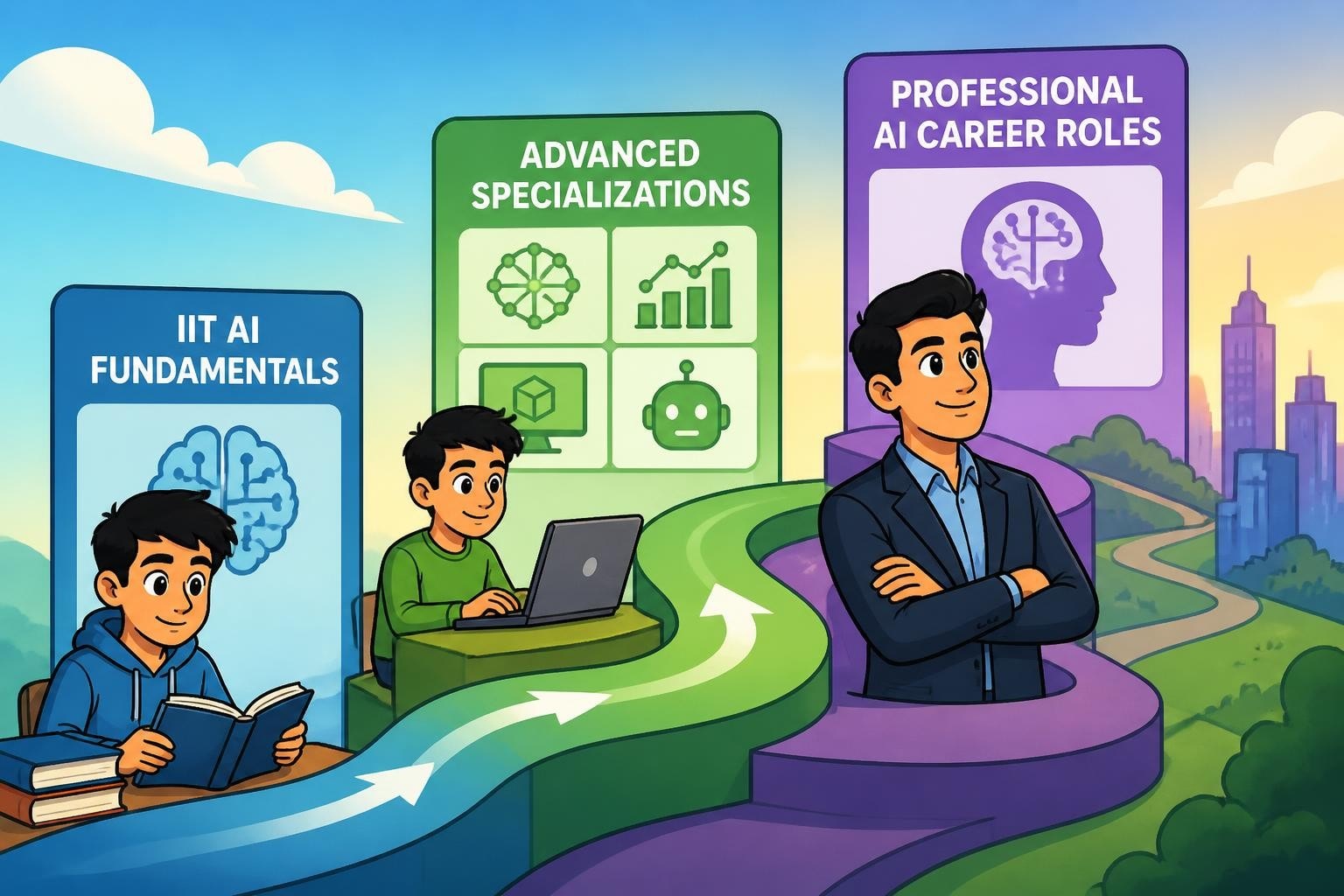
Professionals with Intel certification typically progress through roles such as:
- AI Developer → Senior AI Engineer → AI Architect
- Data Scientist → ML Engineer → MLOps Lead
- Software Engineer → AI Infrastructure Engineer → Principal Engineer
- Technical Consultant → Senior Solutions Architect → Technical Director
The certification accelerates advancement by providing verifiable evidence of expertise, reducing the time required to prove capabilities in new roles.
Maintaining and Renewing Certification
Like most technology certifications, intel ai certification requires ongoing maintenance to ensure holders remain current with evolving technologies and best practices. Intel's renewal requirements balance accessibility with rigor.
Renewal Requirements
Continuing Education
- Complete annual training modules on new Intel AI technologies
- Participate in Intel developer conferences or webinars
- Contribute to Intel AI community forums
- Publish technical content demonstrating expertise
Skills Validation
- Pass abbreviated recertification assessments
- Submit portfolio updates showing continued practice
- Demonstrate use of current Intel AI tools and libraries
- Maintain active status in Intel developer program
Professional Development
- Earn continuing education credits through Intel-approved courses
- Complete advanced specialization modules
- Mentor other certification candidates
- Contribute to open-source projects using Intel AI tools
Most professionals find renewal requirements manageable, often completing them naturally through regular work activities and professional development. Platforms offering comprehensive AI courses frequently provide content that satisfies renewal requirements while expanding broader expertise.
Return on Investment Analysis
Pursuing intel ai certification requires investment of time, money, and effort. Understanding the expected return helps professionals and organizations make informed decisions about this commitment.
Direct Costs
- Course Materials: $0-500 (many Intel resources are free)
- Exam Fees: $200-400 per certification
- Study Time: 100-200 hours depending on background
- Practice Resources: $0-300 for additional materials
- Total Investment: $200-1,200 plus opportunity cost of time
Expected Returns
Salary Impact
- Entry-level positions: 10-15% premium over non-certified peers
- Mid-career roles: 15-25% salary increase potential
- Senior positions: Access to roles with $20,000-40,000 higher compensation
- Consulting rates: $25-50 per hour premium for certified contractors
Career Acceleration
- Reduced time to promotion: Average 6-12 months faster advancement
- Expanded opportunities: Access to 30-40% more relevant job postings
- Relocation flexibility: Credentials recognized globally
- Industry mobility: Easier transitions between sectors
Organizational Benefits
- Project success rates: 15-20% improvement in AI initiatives
- Development speed: 20-30% faster model deployment cycles
- Resource efficiency: 10-25% better utilization of Intel hardware
- Support access: Enhanced technical support from Intel
Most professionals recover their certification investment within 6-12 months through salary increases, new opportunities, or improved job performance.
Common Challenges and Solutions
Candidates pursuing intel ai certification encounter predictable obstacles. Understanding these challenges and their solutions increases success probability.
Technical Complexity
Challenge: Intel's AI ecosystem includes numerous tools, libraries, and optimization techniques that can overwhelm newcomers.
Solutions:
- Start with foundational courses before advanced topics
- Focus on one tool at a time until proficiency develops
- Build simple projects before tackling complex applications
- Use Intel's structured learning paths rather than random exploration
Time Management
Challenge: Balancing certification study with work responsibilities and personal commitments.
Solutions:
- Schedule consistent study blocks rather than sporadic sessions
- Break preparation into manageable milestones
- Use commute time for video tutorials and reading
- Negotiate employer support for dedicated learning time
Hands-On Practice Gaps
Challenge: Limited access to Intel hardware for practical experience.
Solutions:
- Utilize Intel DevCloud for free remote access
- Leverage Intel's pre-configured environments
- Join study groups to share resource access
- Focus on software optimizations that work across hardware
Knowledge Integration
Challenge: Connecting theoretical concepts with practical implementation.
Solutions:
- Build portfolio projects applying certification content
- Participate in hackathons featuring Intel technologies
- Contribute to open-source AI projects
- Seek mentorship from certified professionals
Intel AI certification provides valuable credentials for professionals working with one of the industry's most prevalent AI infrastructure platforms, validating skills that directly impact organizational success in AI transformation. Whether you're just beginning your AI journey or advancing into specialized roles, these certifications offer structured learning, industry recognition, and tangible career benefits. MammothClub complements Intel certification preparation with our comprehensive library of AI courses, hands-on bootcamps, and corporate training programs designed to help you master the full technology stack. Our AI-powered learning platform tracks your progress, recommends complementary courses, and connects you with expert instructors who can accelerate your path to certification success.