The artificial intelligence revolution has transformed how organizations operate, and cloud platforms like Microsoft Azure have become essential infrastructure for deploying AI solutions at scale. A microsoft azure ai course provides professionals with the technical foundation and practical skills needed to build, deploy, and manage AI applications in enterprise environments. Whether you're transitioning into AI development, expanding your cloud expertise, or preparing for industry-recognized certifications, structured training in Azure AI services offers a competitive advantage in today's technology landscape.
Understanding Azure AI Training Pathways
Microsoft has developed a comprehensive curriculum that addresses different skill levels and career objectives. The training ecosystem ranges from foundational awareness courses to advanced developer certifications, each designed to build specific competencies in cloud-based artificial intelligence.
Foundational Learning: AI-900 Certification Track
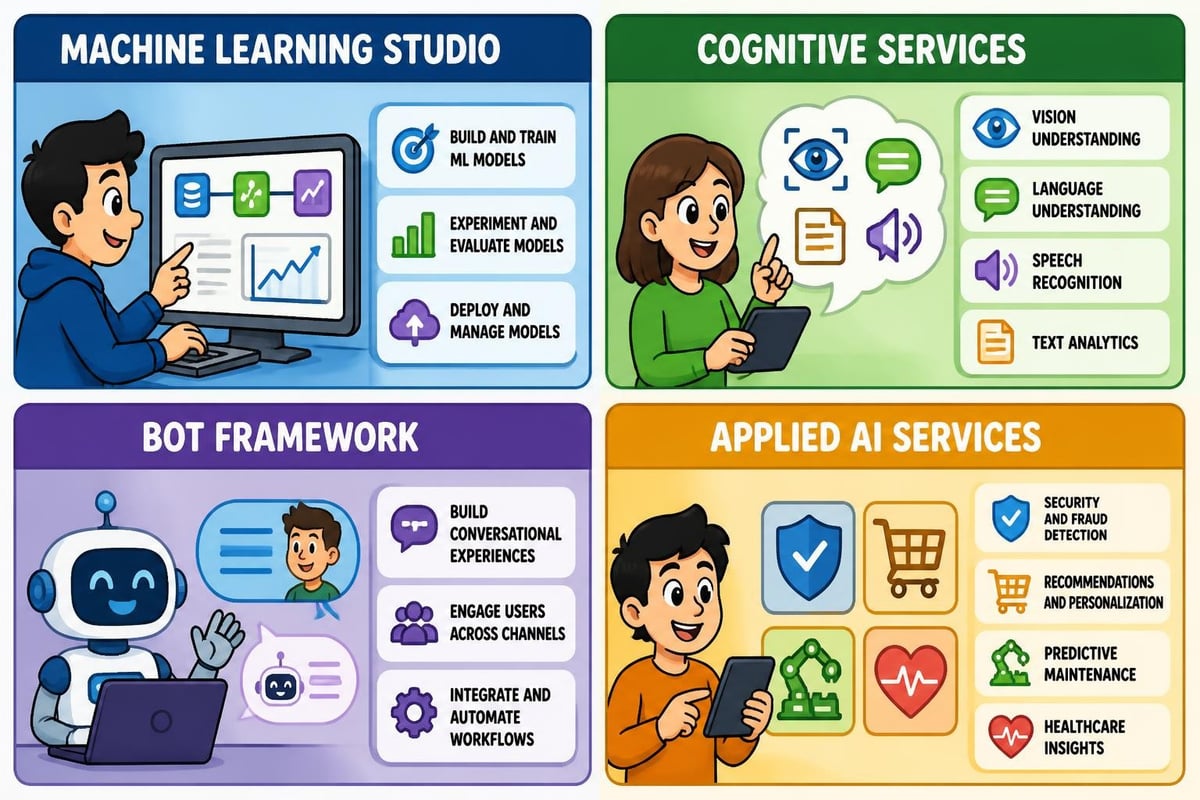
The AI-900 course from Microsoft Learn serves as the entry point for professionals new to artificial intelligence on Azure. This fundamentals-level training covers core AI concepts, machine learning principles, computer vision, natural language processing, and conversational AI without requiring extensive programming experience.
What you'll learn in an AI-900 microsoft azure ai course:
- Machine learning fundamentals and Azure Machine Learning service
- Computer vision capabilities using Azure Vision Studio
- Natural language processing with Azure Language and Translator services
- Conversational AI implementation through Azure Bot Service
- Responsible AI principles and ethical considerations
The certification validates your understanding of AI workloads and considerations for implementing them on Azure. Many professionals complete this microsoft azure ai course in 1-2 weeks through self-paced study, though instructor-led versions typically span 1-2 days of intensive training.
Developer-Focused Training: AI-102 and AI-103 Tracks
For software engineers and solution architects, the AI-103 course delivers hands-on experience building production-ready AI applications. This advanced microsoft azure ai course emphasizes practical implementation rather than theoretical concepts.
| Certification | Target Audience | Prerequisites | Focus Areas |
|---|---|---|---|
| AI-900 | Business analysts, students, career changers | None | AI concepts, service awareness |
| AI-102 | Developers, data scientists | Python/C# experience | Custom AI solutions, API integration |
| AI-103 | Advanced developers | AI-102 or equivalent | Generative AI, agentic applications |
The AI-102 track covers Azure Cognitive Services implementation, custom vision models, form recognition, search solutions, and knowledge mining. Students work extensively with Azure OpenAI Service, learning to integrate large language models into applications while managing costs and ensuring responsible deployment.
Curriculum Structure and Hands-On Components
A comprehensive microsoft azure ai course balances theoretical knowledge with practical application. Modern training platforms have evolved beyond passive video consumption to include interactive labs, real-world scenarios, and project-based assessments.
Lab Environments and Practical Exercises
Quality training programs provide sandbox environments where students can experiment with Azure services without incurring personal costs. These labs simulate enterprise scenarios:
- Building custom computer vision models to classify product images
- Implementing sentiment analysis for customer feedback systems
- Creating conversational interfaces using Language Understanding (LUIS)
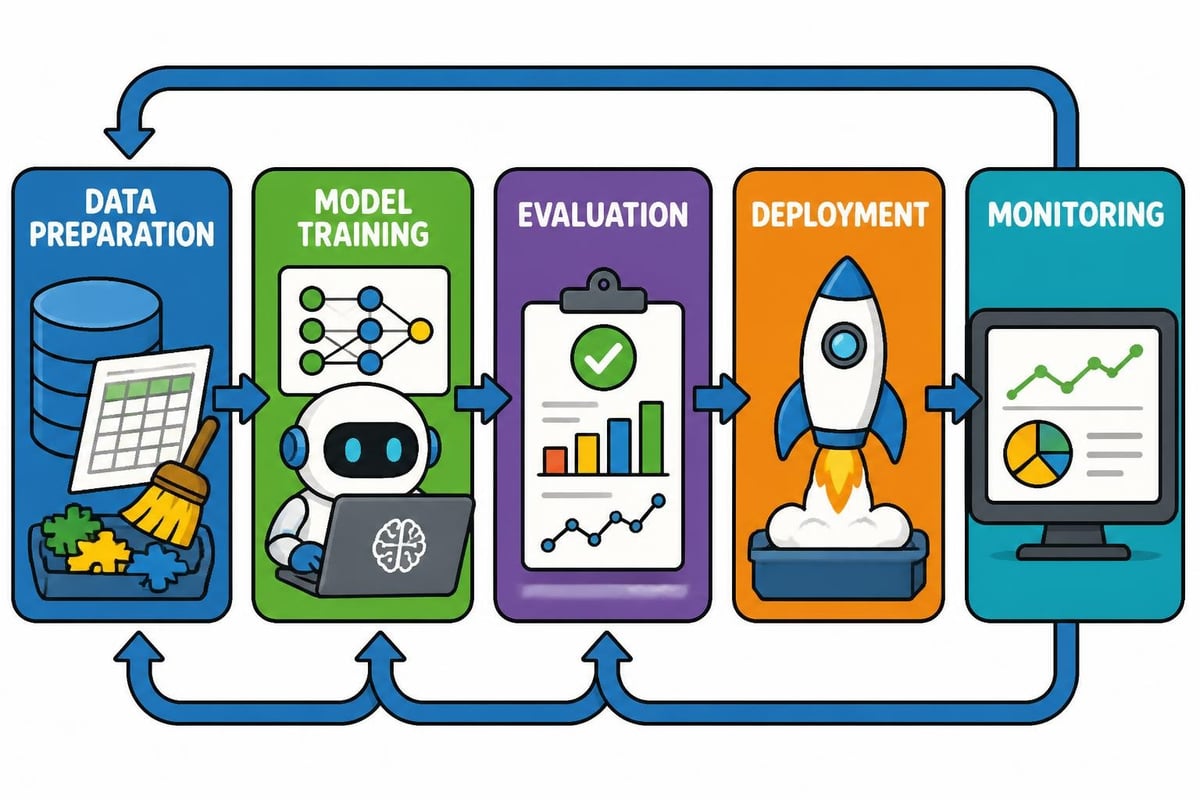
- Deploying machine learning models with automated ML pipelines
- Integrating Azure OpenAI for document summarization and content generation
The most effective microsoft azure ai course offerings include capstone projects that require students to design end-to-end solutions. For example, building a customer service automation system that combines speech recognition, language understanding, and generative AI for response synthesis.
Real-Time Development Tools
Modern Azure AI training incorporates tools that professionals use daily:
- Azure Machine Learning Studio: Visual interface for model development and deployment
- Azure CLI and PowerShell: Infrastructure automation and resource management
- Python SDK: Programmatic access to Azure AI services
- Azure DevOps: CI/CD pipelines for AI model deployment
- Jupyter Notebooks: Interactive development and documentation
These tools appear throughout the curriculum, ensuring students gain transferable skills beyond theoretical certification knowledge. At MammothClub, our AI training programs emphasize tool proficiency through interactive bootcamps that mirror workplace environments.
Certification Preparation Strategies
Passing Azure AI certifications requires more than memorizing service names. The exams test practical knowledge through scenario-based questions that mirror real implementation challenges.
Exam Format and Question Types
Microsoft certification exams typically include:
- Multiple choice questions: Testing conceptual understanding and service selection
- Case studies: Requiring analysis of business requirements and architectural recommendations
- Drag-and-drop exercises: Ordering steps in implementation processes
- Scenario analysis: Evaluating the best approach for specific constraints
A microsoft azure ai course should prepare you for these formats through practice exams and scenario walkthroughs. The AI-900 exam includes approximately 40-60 questions with a passing score of 700 out of 1000 points, while advanced certifications demand deeper technical knowledge.
Study Resources and Learning Paths
Successful candidates typically combine multiple learning modalities. The Microsoft AI Learning Hub provides official documentation and free learning paths, while platforms like Coursera offer structured courses with instructor support and peer collaboration.
Recommended study timeline for AI-900:
- Week 1-2: Complete video lectures and service overviews
- Week 3: Hands-on labs with each Azure AI service
- Week 4: Practice exams and knowledge gap remediation
- Week 5: Final review and exam scheduling
For advanced certifications like AI-102, extend this timeline to 8-12 weeks with deeper technical practice. Those pursuing artificial intelligence class options benefit from structured programs that pace content delivery and provide accountability through cohort learning.
Career Applications and Industry Demand
Organizations across industries are implementing AI solutions, creating sustained demand for professionals with verified Azure AI expertise. A microsoft azure ai course opens pathways to multiple specialized roles.
Job Roles and Salary Expectations
AI Engineer: Designs and implements machine learning solutions using Azure services. Average salary ranges from $110,000-$160,000 annually depending on experience and location. Responsibilities include model development, API integration, and production deployment.
Cloud Solutions Architect: Develops comprehensive Azure architectures incorporating AI capabilities. These professionals earn $130,000-$180,000 and must understand both infrastructure and AI service integration.
Data Scientist: Leverages Azure Machine Learning for predictive modeling and analytics. Compensation typically ranges from $100,000-$155,000 with emphasis on statistical knowledge and business impact.
AI Product Manager: Defines AI feature roadmaps and coordinates technical teams. These roles command $120,000-$170,000 and require understanding of both business value and technical feasibility.
The Bureau of Labor Statistics projects 23% growth in data science and mathematical science occupations through 2032, significantly faster than average across all occupations. Azure-specific skills compound this advantage as organizations standardize on cloud platforms.
Industry-Specific Applications
Different sectors leverage Azure AI capabilities for distinct use cases:
| Industry | Common AI Applications | Required Azure Services |
|---|---|---|
| Healthcare | Medical imaging analysis, patient risk prediction | Computer Vision, Machine Learning |
| Finance | Fraud detection, algorithmic trading, compliance | Anomaly Detector, Machine Learning |
| Retail | Personalized recommendations, inventory optimization | Recommendation Engine, Forecasting |
| Manufacturing | Predictive maintenance, quality control | IoT Edge, Computer Vision |
A microsoft azure ai course that includes industry-specific case studies provides context for applying technical skills. For professionals in specialized sectors, supplementing general Azure training with domain knowledge creates a powerful combination. Those interested in healthcare applications might explore AI medicine course content, while marketing professionals benefit from AI digital marketing course materials.
Advanced Topics and Emerging Technologies
Beyond foundational certifications, the Azure AI ecosystem continues expanding with cutting-edge capabilities. Professionals committed to staying current must engage with emerging services and paradigms.
Generative AI and Azure OpenAI Service
The integration of OpenAI's models into Azure represents a paradigm shift in application development. A modern microsoft azure ai course now includes extensive coverage of:
- Prompt engineering: Crafting effective instructions for large language models
- Retrieval-augmented generation: Combining enterprise data with generative models
- Fine-tuning: Customizing models for domain-specific applications
- Responsible AI guardrails: Implementing content filtering and safety mechanisms
The generative AI specialization on Coursera provides dedicated training in these emerging capabilities. Organizations are rapidly adopting these technologies for content creation, code generation, customer service automation, and knowledge management.
Agentic AI and Autonomous Systems
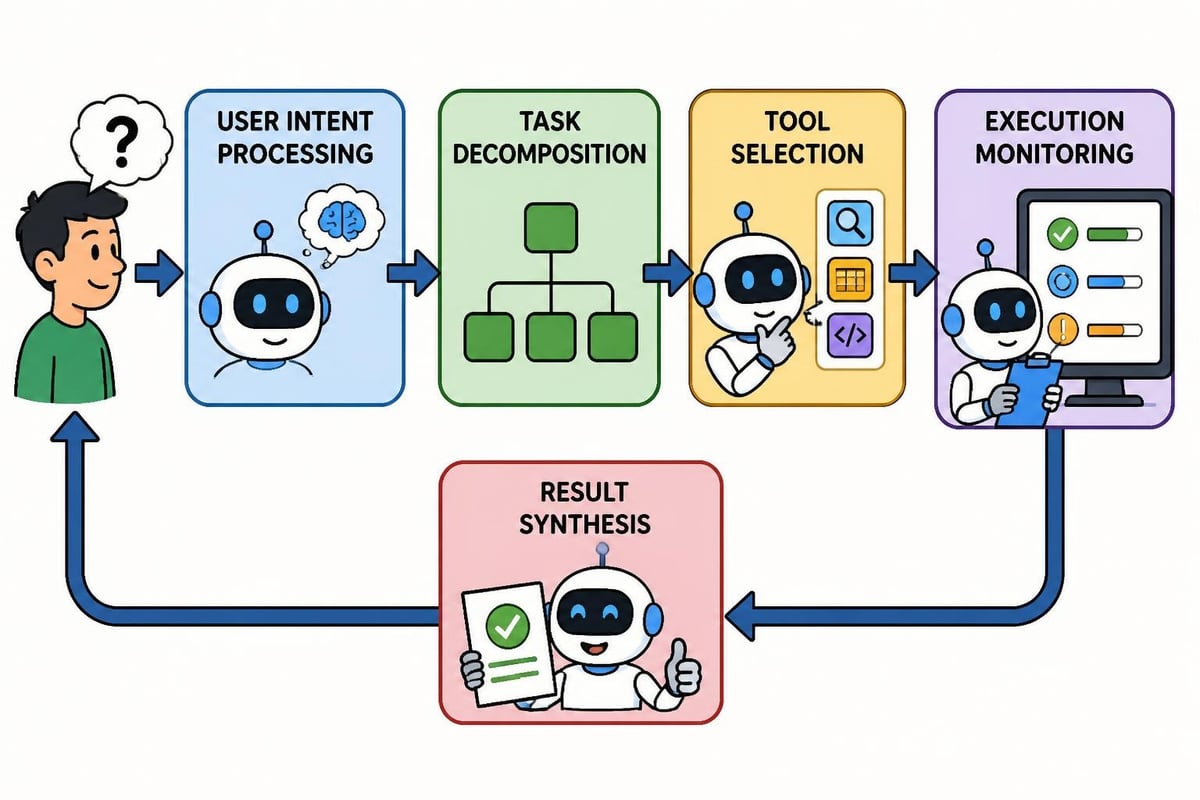
The newest frontier involves AI agents that can execute complex tasks with minimal human intervention. Azure's agent-building capabilities enable:
- Multi-step reasoning: Agents that break down complex requests into executable subtasks
- Tool integration: Connecting AI models with external APIs and databases
- Memory systems: Maintaining context across extended interactions
- Autonomous decision-making: Evaluating options and selecting optimal approaches
These capabilities appear in the AI-103 curriculum, representing the cutting edge of cloud AI development. Early adopters of agentic AI are seeing productivity improvements of 30-50% in knowledge work domains.
Azure AI Foundry and Platform Evolution
Microsoft's AI Foundry platform consolidates previously separate services into an integrated development environment. This unified approach simplifies:
- Model selection and deployment across different AI capabilities
- Lifecycle management from development through production
- Cost monitoring and optimization across AI workloads
- Collaborative development with shared resources and governance
A comprehensive microsoft azure ai course should address this platform consolidation, as it represents Microsoft's vision for enterprise AI development. Understanding the migration path from individual services to integrated solutions prepares professionals for organizational adoption patterns.
Learning Platform Selection Criteria
With numerous microsoft azure ai course options available, selecting the right training provider requires evaluating multiple factors beyond content coverage.
Instructor Quality and Support Models
Self-paced vs. instructor-led: Self-paced courses offer flexibility but require strong self-discipline. Instructor-led options provide real-time Q&A, networking opportunities, and structured accountability. Hybrid models combining recorded content with live lab sessions often deliver the best outcomes.
Instructor credentials: Look for trainers with active Azure certifications, real-world implementation experience, and teaching expertise. Microsoft Certified Trainers (MCTs) have verified technical knowledge and instructional skills.
Support availability: Quality programs offer discussion forums, office hours, or direct messaging with instructors. Response times under 24 hours indicate strong support infrastructure.
Hands-On Lab Quality
The value of a microsoft azure ai course depends heavily on lab quality:
- Azure credit allocation: Sufficient credits for experimentation without cost concerns
- Lab environment persistence: Ability to save work and return to projects
- Scenario complexity: Progression from basic tutorials to multi-service integrations
- Troubleshooting resources: Documentation for common issues and debugging guidance
Premium platforms like edX and Coursera invest heavily in lab infrastructure, while some lower-cost alternatives provide only theoretical instruction.
Certification Alignment and Update Frequency
Microsoft updates Azure services continuously, with major feature releases quarterly. Your microsoft azure ai course should:
- Match current exam objectives: Verify the curriculum aligns with the latest certification blueprint
- Include recent service updates: Cover features released within the past 12 months
- Provide exam vouchers or discounts: Many comprehensive programs include certification attempts
- Offer update notifications: Alert students when content refreshes occur
At MammothClub, we update our AI training materials monthly to reflect Azure's rapid evolution, ensuring learners prepare with current information rather than outdated content.
Integration with Broader AI Learning Paths
Azure AI skills compound when combined with complementary competencies. Strategic learners view a microsoft azure ai course as one component within a comprehensive skill development plan.
Machine Learning Foundations
Before diving into Azure-specific services, understanding core machine learning concepts creates a stronger foundation:
- Supervised learning algorithms: Linear regression, decision trees, neural networks
- Unsupervised learning techniques: Clustering, dimensionality reduction, anomaly detection
- Model evaluation metrics: Accuracy, precision, recall, F1 score, ROC curves
- Feature engineering principles: Data preprocessing, normalization, encoding
Those without this background benefit from exploring our AI ML learning path before attempting advanced Azure certifications. This preparation reduces cognitive load and improves retention of Azure-specific implementation details.
Programming Proficiency Requirements
While AI-900 requires no coding experience, advanced microsoft azure ai course tracks demand programming competency:
Python: The dominant language for AI development, used extensively in Azure Machine Learning SDK, notebook environments, and custom model development. Required proficiency includes data manipulation with pandas, API interaction, and object-oriented programming.
C#/.NET: Preferred for enterprise application integration and Azure Functions development. Understanding asynchronous programming and REST API consumption proves essential.
SQL: Critical for data preparation and feature engineering. Azure integrates with SQL Database, Synapse Analytics, and other data platforms.
Professionals lacking programming experience should budget 3-6 months for language fundamentals before attempting developer-focused Azure AI certifications. This investment prevents frustration and enables full engagement with hands-on labs.
Complementary Cloud and DevOps Skills
Azure AI services don't operate in isolation. Production deployments require broader Azure competencies:
- Resource management: Understanding resource groups, subscriptions, and cost management
- Identity and access: Implementing Azure Active Directory and role-based access control
- Networking: Configuring virtual networks, endpoints, and security perimeters
- Monitoring: Using Application Insights and Azure Monitor for performance tracking
- CI/CD: Automating deployments through Azure DevOps or GitHub Actions
The Azure training resources provide learning paths for these foundational skills. Organizations implementing AI solutions need professionals who understand the full stack, not just isolated AI services.
Corporate Training and Team Development
Organizations increasingly invest in microsoft azure ai course programs for entire teams rather than individual employees. This approach accelerates organizational AI adoption while standardizing technical approaches.
Structured Team Learning Programs
Cohort-based training: Groups progressing through curriculum together create accountability, enable peer learning, and build internal AI communities. Teams complete labs collaboratively, discussing approaches and troubleshooting collectively.
Custom curriculum development: Enterprise training often adapts standard microsoft azure ai course content to organizational use cases. Incorporating company data, internal tools, and specific business challenges increases engagement and immediate applicability.
Blended learning models: Combining self-paced foundational modules with instructor-led advanced sessions optimizes learning efficiency. Teams complete core concepts independently, then gather for specialized workshops on complex topics.
At MammothClub, our corporate certification programs serve organizations upskilling 10-1,000+ employees simultaneously. Our AI-powered dashboards track progress, identify struggling learners, and measure competency development across teams.
Measuring Training ROI
Organizations demand evidence that microsoft azure ai course investments deliver business value:
| Metric | Measurement Approach | Target Outcome |
|---|---|---|
| Certification pass rate | Track attempts vs. successes | >85% first-attempt pass rate |
| Time to competency | Weeks from enrollment to certification | 6-8 weeks for AI-900 |
| Project deployment | AI solutions launched post-training | 2-3 projects per trained team |
| Productivity gains | Time saved on AI-enabled tasks | 20-30% efficiency improvement |
Organizations seeing the strongest returns implement AI training as part of transformation initiatives rather than isolated skill development. Pairing technical training with business process redesign and executive sponsorship multiplies impact.
Building Internal AI Centers of Excellence
The most successful AI adoption stories involve creating internal expertise hubs:
Dedicated AI practice groups: Teams of 5-15 professionals focused exclusively on AI solution development and deployment. These groups complete advanced microsoft azure ai course tracks, obtain multiple certifications, and support organization-wide implementation.
Knowledge sharing programs: Regular tech talks, internal documentation, and mentorship systems that spread expertise beyond core AI teams. Certified professionals train colleagues on specific services and use cases.
Innovation labs: Protected environments where teams experiment with emerging Azure AI capabilities before production deployment. These labs reduce risk while encouraging exploration of cutting-edge technologies.
Organizations with mature AI programs report 3-5x higher AI adoption rates when formal training connects with these structural enablers. Training alone doesn't transform organizations, but it provides the essential foundation for sustainable AI integration.
Continuous Learning and Skill Currency
Azure AI evolves rapidly, with new services, features, and best practices emerging constantly. A single microsoft azure ai course provides a snapshot of current capabilities, but long-term success requires ongoing learning habits.
Staying Current with Azure Updates
Microsoft Learn paths: The official Microsoft Learning platform adds new modules monthly. Subscribing to AI-focused learning paths ensures exposure to latest capabilities.
Azure blog and announcements: Microsoft publishes weekly updates on new features, preview services, and case studies. Following these communications maintains awareness of platform evolution.
Community participation: User groups, Stack Overflow, Reddit communities, and LinkedIn groups provide practical insights and troubleshooting help beyond official documentation.
Recertification requirements: Microsoft certifications require renewal annually through continued learning activities. This policy ensures certified professionals maintain current knowledge.
Professionals who allocate 2-4 hours monthly for Azure AI learning remain competitive, while those treating initial certification as terminal education find skills degrading within 12-18 months.
Advanced Specializations and Expert Tracks
Beyond foundational and developer certifications, specialized microsoft azure ai course options address niche competencies:
- Responsible AI implementation: Fairness evaluation, bias mitigation, transparency, and governance frameworks
- MLOps engineering: Production machine learning pipelines, monitoring, and lifecycle management
- Edge AI deployment: Running Azure AI models on IoT devices and offline scenarios
- Industry-specific solutions: Healthcare AI, financial services compliance, manufacturing optimization
These specializations typically require foundational certifications as prerequisites. They prepare professionals for senior technical roles and architectural decision-making.
For those exploring responsible AI practices specifically, our responsible AI course complements Azure technical training with ethical frameworks and governance strategies.
Mastering Microsoft Azure AI through structured coursework opens diverse career opportunities while building capabilities organizations urgently need. Whether pursuing foundational awareness through AI-900 or advanced development skills through AI-103, the learning journey requires hands-on practice, scenario-based thinking, and continuous engagement with platform evolution. Ready to accelerate your AI career with comprehensive training that combines technical depth, practical application, and measurable outcomes? MammothClub offers 3,000+ AI and technology courses, interactive bootcamps, and corporate certification programs designed to help professionals and teams master Azure AI and stay competitive in the rapidly evolving artificial intelligence landscape.