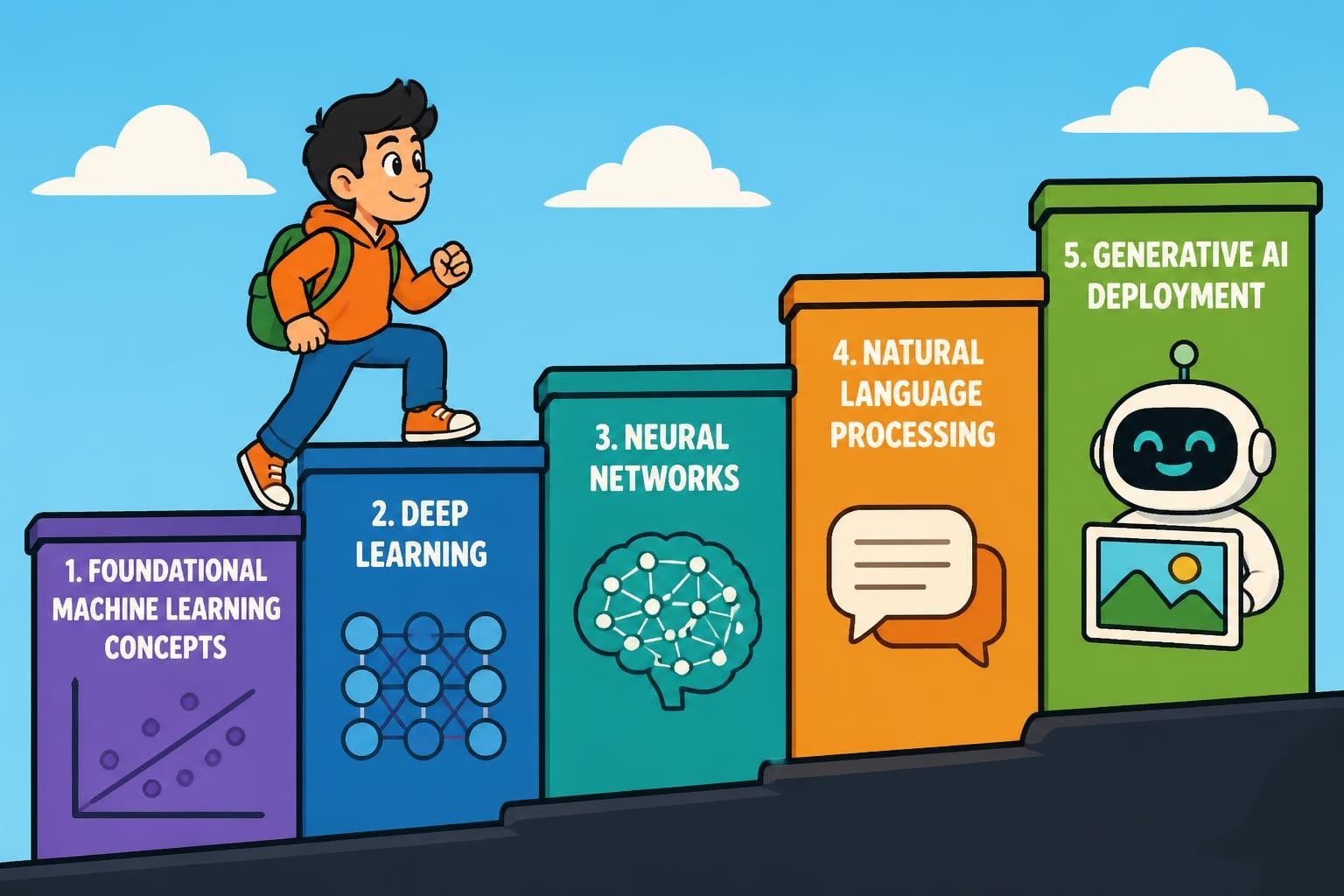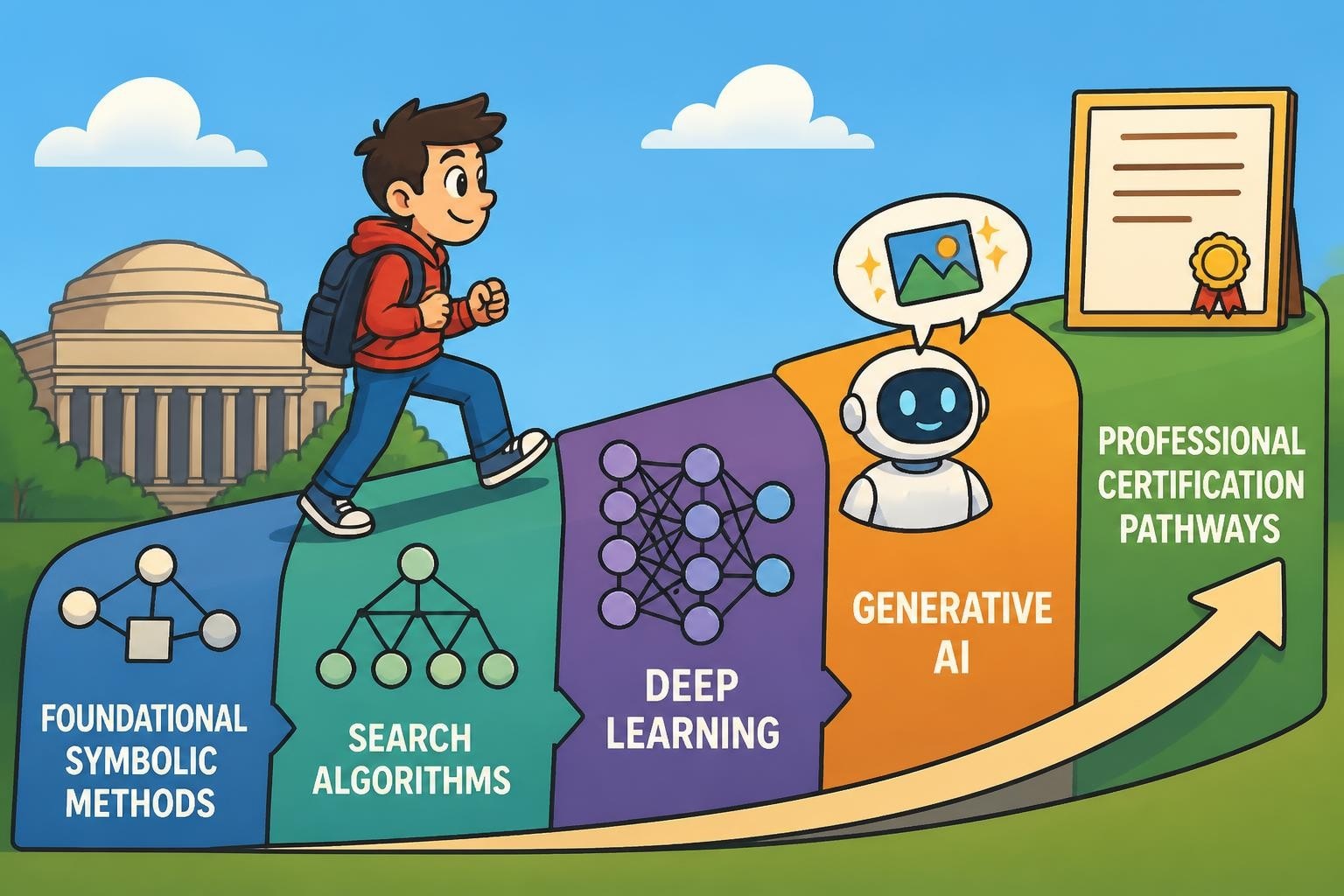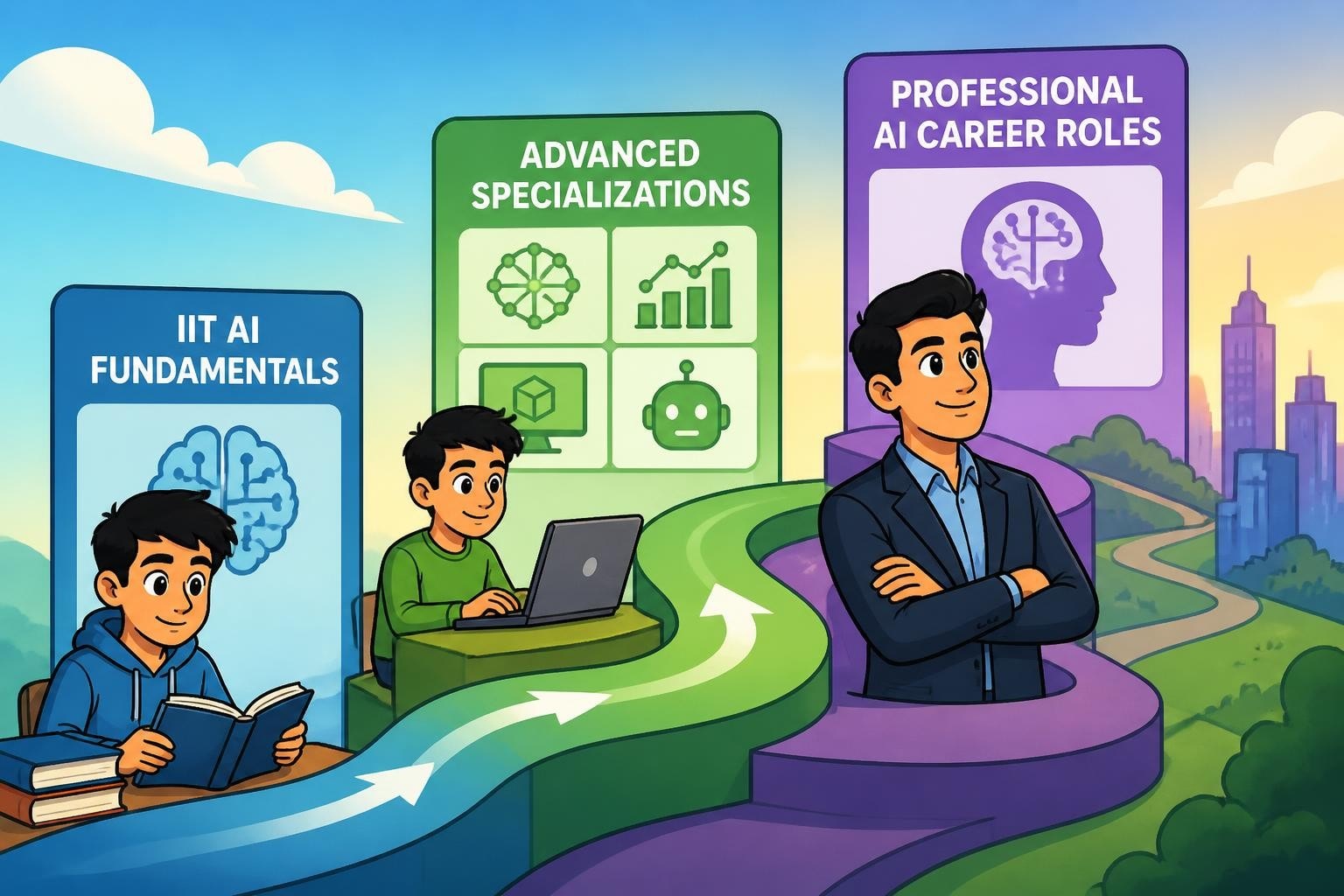
Python has become the dominant programming language for artificial intelligence development, powering everything from machine learning models to advanced neural networks. Professionals seeking to build AI applications need structured training that covers both programming fundamentals and specialized AI frameworks. A quality python for ai course bridges this gap by teaching the specific syntax, libraries, and problem-solving approaches essential for modern AI development. Understanding what these courses offer helps you choose the right path for your career advancement and ensures you develop practical skills that translate directly into workplace applications.
Core Python Fundamentals for AI Development
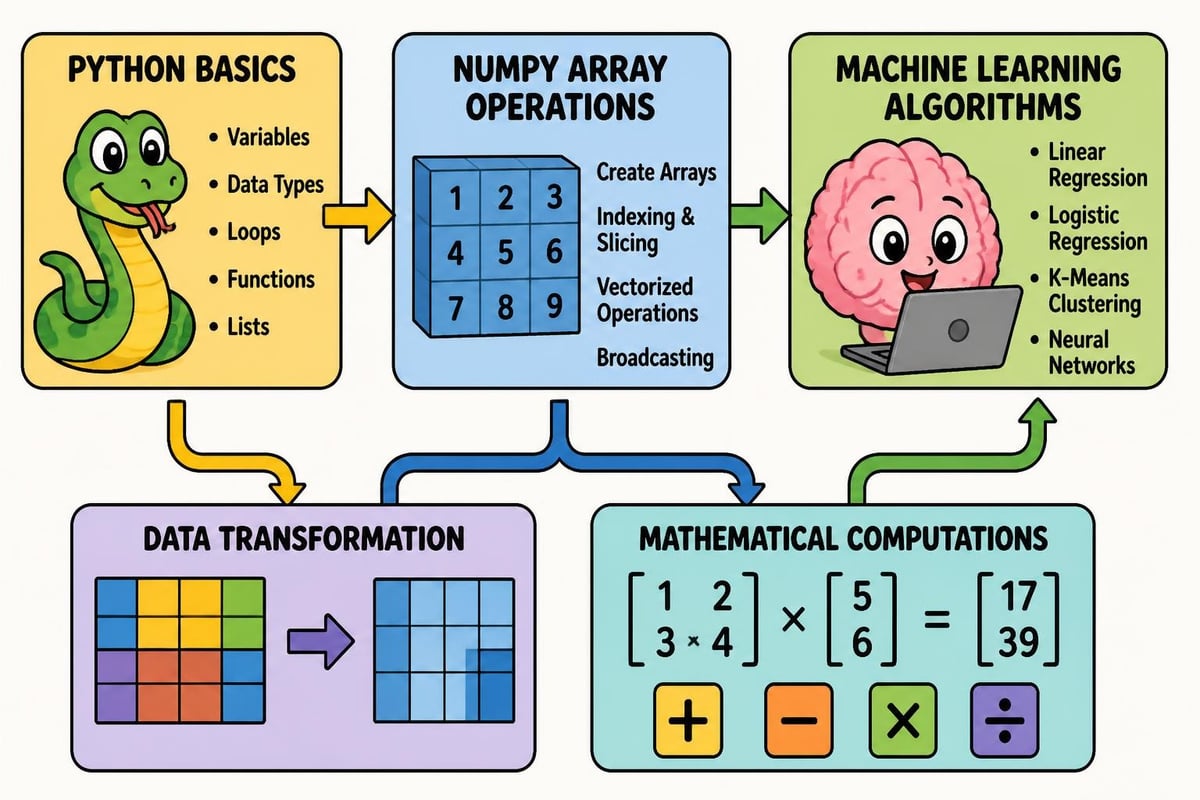
Before diving into complex algorithms, any comprehensive python for ai course establishes a solid foundation in Python programming. This includes data structures, control flow, object-oriented programming, and functional programming concepts that underpin all AI work.
Essential Programming Concepts
The programming fundamentals section typically covers variables, data types, loops, and conditional statements. These building blocks appear in every AI application you'll build. Understanding list comprehensions, lambda functions, and generators becomes critical when processing large datasets efficiently.
Key foundational topics include:
- Data structures: lists, tuples, dictionaries, and sets
- Functions and modular programming design
- Exception handling and debugging techniques
- File I/O operations for data management
- Memory optimization for large-scale processing
Classes and objects receive special attention because most AI frameworks use object-oriented design patterns. You'll learn how inheritance, polymorphism, and encapsulation apply when building custom neural network layers or preprocessing pipelines.
NumPy and Array Operations
NumPy forms the mathematical foundation for AI programming. This library handles n-dimensional arrays and provides vectorized operations that run significantly faster than standard Python loops. A foundational AI course using Python typically dedicates substantial time to NumPy mastery.
| Operation Type | Standard Python | NumPy Performance |
|---|---|---|
| Array Multiplication | 1000ms | 15ms |
| Matrix Operations | 2500ms | 25ms |
| Statistical Calculations | 800ms | 10ms |
Machine Learning Libraries and Frameworks
The transition from basic programming to practical AI happens through specialized libraries. Modern python for ai courses emphasize hands-on experience with industry-standard frameworks that professionals use daily.
Scikit-Learn for Traditional ML
Scikit-learn provides implementations of classical machine learning algorithms. You'll work with supervised learning methods like linear regression, decision trees, and support vector machines. The library's consistent API makes it straightforward to experiment with different algorithms.
Training modules cover:
- Data preprocessing and feature engineering techniques
- Model selection and hyperparameter tuning strategies
- Cross-validation and performance evaluation metrics
- Ensemble methods and boosting algorithms
- Dimensionality reduction through PCA and t-SNE
Real-world projects might include building a customer churn predictor, creating a recommendation engine, or developing a fraud detection system. These applications demonstrate how traditional ML solves business problems effectively.
Deep Learning with TensorFlow and PyTorch
Deep learning represents the cutting edge of AI capabilities. Most comprehensive courses teach both TensorFlow and PyTorch, though some specialize in one framework. IBM's Python for applied data science and AI integrates these frameworks with practical data science workflows.
PyTorch has gained popularity for its dynamic computation graphs and intuitive debugging. TensorFlow offers production-ready deployment tools and extensive mobile support. Understanding both frameworks provides flexibility across different project requirements.
Framework comparison:
| Feature | TensorFlow | PyTorch |
|---|---|---|
| Learning Curve | Moderate | Easier |
| Production Deployment | Excellent | Good |
| Research Flexibility | Good | Excellent |
| Community Support | Large | Growing |
| Mobile Integration | Strong | Developing |
Data Processing and Manipulation Skills
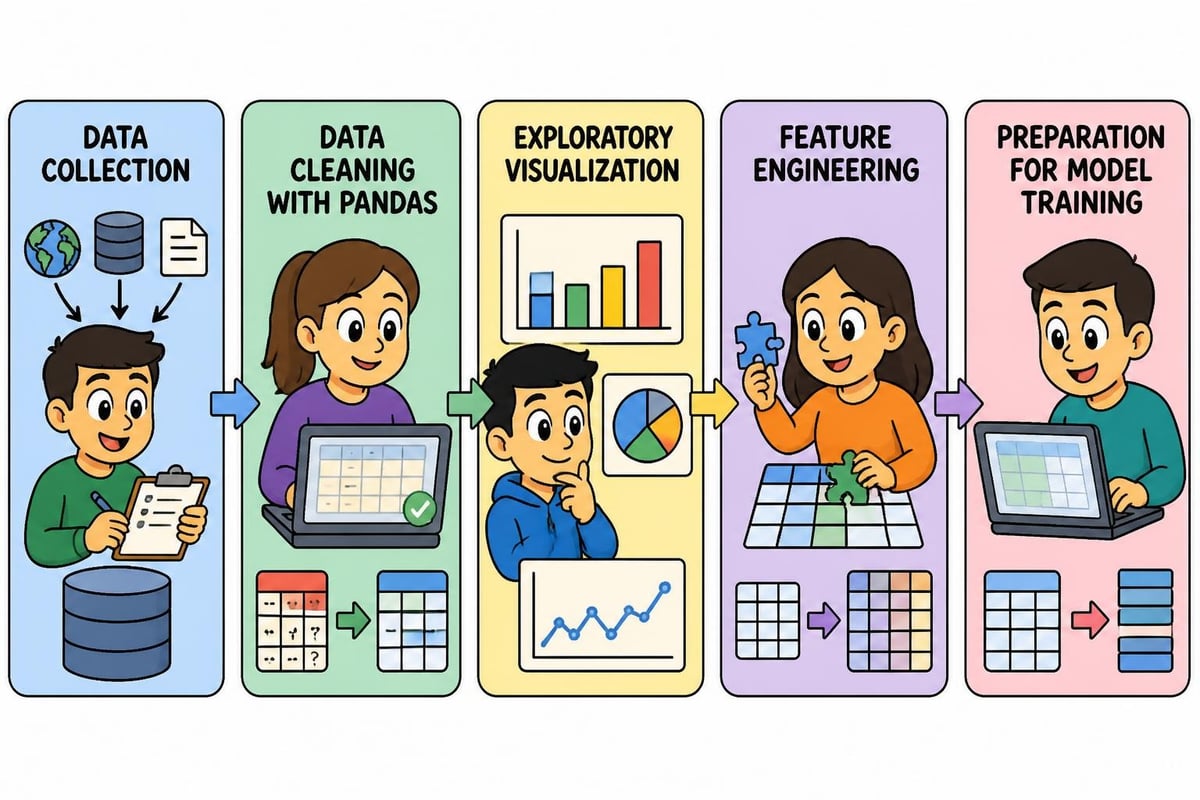
AI models require clean, structured data. A thorough python for ai course teaches data manipulation using Pandas and data visualization through Matplotlib and Seaborn.
Pandas for Data Wrangling
Pandas DataFrames become your primary tool for organizing and transforming data. You'll learn to handle missing values, merge datasets, perform group operations, and reshape data for modeling. Time series analysis receives particular attention since many AI applications work with temporal data.
Common data operations include filtering rows based on conditions, creating calculated columns, aggregating statistics across groups, and pivoting tables for different analytical perspectives. These skills directly support the AI and ML learning path that professionals follow.
Visualization and Exploratory Analysis
Understanding your data visually accelerates model development. Matplotlib provides low-level control over plots, while Seaborn offers statistical visualizations with minimal code. You'll create scatter plots, histograms, heatmaps, and distribution plots to identify patterns and outliers.
Interactive visualizations using Plotly and Bokeh help communicate findings to stakeholders. These tools generate dashboards that update dynamically as models process new data.
Natural Language Processing Applications
Language understanding represents one of AI's most practical applications. NLP modules in a python for ai course cover text preprocessing, sentiment analysis, and transformer models.
Text Processing Fundamentals
Tokenization, stemming, and lemmatization transform raw text into analyzable formats. You'll use NLTK and spaCy libraries to clean text, remove stop words, and extract linguistic features. Regular expressions become essential for pattern matching and text extraction.
Word embeddings like Word2Vec and GloVe convert words into numerical vectors that capture semantic relationships. These representations enable machines to understand that "king" relates to "queen" similarly to how "man" relates to "woman."
Transformer Models and BERT
Modern NLP relies on transformer architectures. Courses increasingly cover Hugging Face's transformers library, which provides pre-trained models for text classification, named entity recognition, and question answering. Fine-tuning BERT or GPT models for specific tasks has become standard practice.
The advanced AI applications with Python explores generative models and fine-tuning techniques that define current NLP capabilities.
Computer Vision and Image Processing
Visual AI applications span autonomous vehicles, medical imaging, and quality control systems. Python courses dedicated to AI include OpenCV and specialized deep learning architectures for image analysis.
Image Preprocessing Techniques
Before feeding images to neural networks, you'll apply transformations like resizing, normalization, augmentation, and color space conversion. OpenCV handles these operations efficiently. Data augmentation-randomly flipping, rotating, or adjusting brightness-prevents overfitting by expanding training datasets artificially.
Convolutional Neural Networks (CNNs) learn hierarchical visual features automatically. You'll implement architectures like ResNet, VGG, and EfficientNet for classification tasks. Transfer learning allows you to adapt pre-trained models to new problems with limited data.
Object Detection and Segmentation
Advanced computer vision modules teach YOLO, R-CNN, and Mask R-CNN architectures for detecting and localizing objects within images. Semantic segmentation assigns class labels to every pixel, enabling precise boundary identification.
Real applications include:
- Medical image analysis for tumor detection
- Automated quality inspection in manufacturing
- Facial recognition and emotion detection
- Autonomous vehicle perception systems
- Agricultural crop health monitoring
Reinforcement Learning Fundamentals
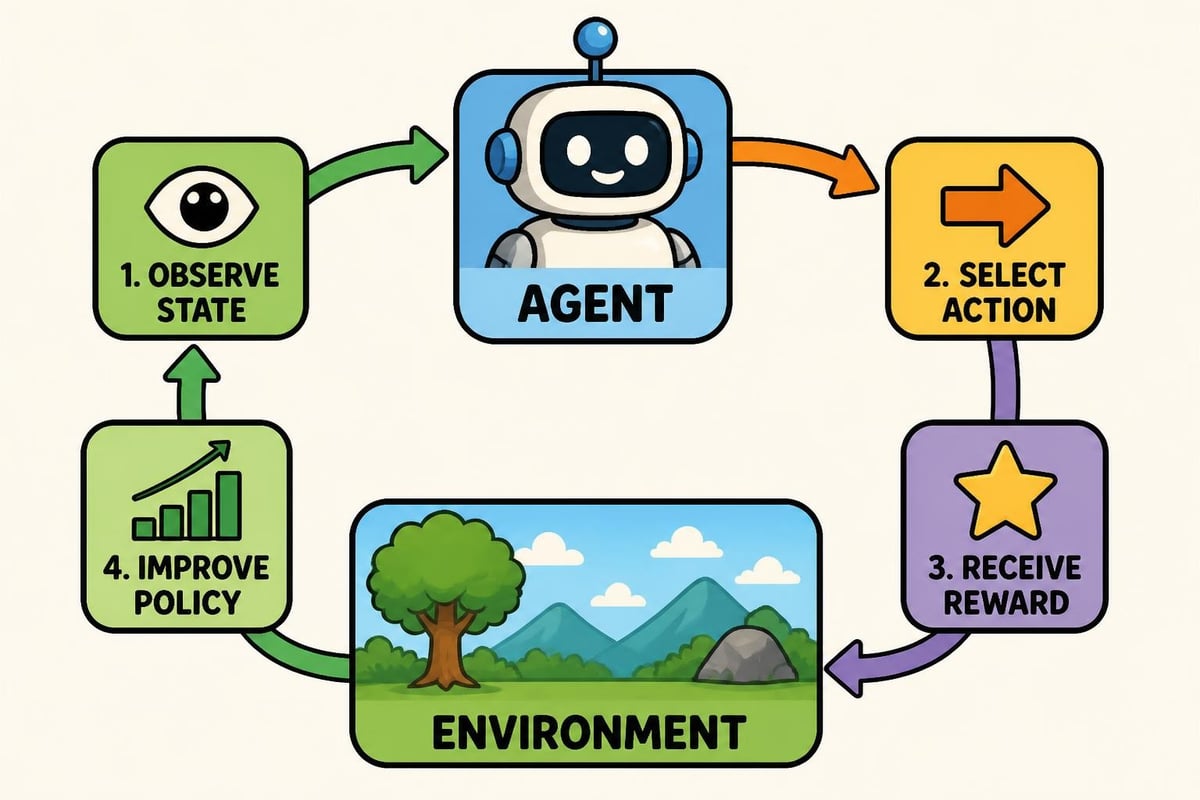
Reinforcement learning trains agents to make sequential decisions through trial and error. This approach powers game-playing AI, robotics, and optimization systems.
Q-Learning and Policy Gradients
Q-learning uses tables or neural networks to estimate action values. Policy gradient methods directly optimize decision-making strategies. You'll implement these algorithms using OpenAI Gym environments that simulate various scenarios.
The Markov Decision Process framework formalizes reinforcement learning problems through states, actions, rewards, and transition probabilities. Understanding this mathematical foundation helps you design effective reward functions.
Deep Reinforcement Learning
Combining deep neural networks with reinforcement learning creates powerful systems. Deep Q-Networks (DQN), Actor-Critic methods, and Proximal Policy Optimization (PPO) represent current best practices. Harvard's AI course provides comprehensive coverage of these algorithms with practical implementations.
Model Deployment and Production Considerations
Building models represents only half the challenge. A complete python for ai course addresses deployment, monitoring, and maintenance of AI systems in production environments.
API Development with Flask and FastAPI
Creating web APIs allows other applications to access your models. Flask provides a lightweight framework for simple deployments, while FastAPI offers automatic documentation and data validation. You'll learn to structure endpoints, handle authentication, and manage concurrent requests.
Containerization using Docker ensures your models run consistently across different environments. Kubernetes orchestrates containers at scale, managing load balancing and automatic recovery from failures.
Model Optimization and Serving
Production models require optimization for speed and efficiency. Quantization reduces model size by using lower-precision numbers. Pruning removes unnecessary connections in neural networks. These techniques maintain accuracy while decreasing inference time and memory consumption.
TensorFlow Serving and TorchServe provide specialized tools for deploying deep learning models. They handle batching, versioning, and monitoring automatically. Integration with cloud platforms like AWS SageMaker, Google AI Platform, or Azure ML further simplifies deployment workflows.
Ethical AI and Responsible Development
Modern python for ai courses increasingly emphasize ethical considerations. Bias detection, fairness metrics, and explainability techniques ensure AI systems operate responsibly.
Bias Detection and Mitigation
Training data often contains historical biases that models can amplify. You'll learn to audit datasets for demographic imbalances and test models across different population segments. Techniques like reweighting, adversarial debiasing, and fairness constraints help create more equitable systems.
Explainability tools like SHAP and LIME reveal why models make specific predictions. This transparency builds trust and enables debugging of unexpected behaviors. Understanding these concepts aligns with the principles covered in a responsible AI course.
Privacy and Security Considerations
Differential privacy adds noise to training data or model outputs to protect individual privacy. Federated learning trains models across distributed datasets without centralizing sensitive information. These approaches enable AI development while respecting data protection requirements.
Adversarial attacks demonstrate how small input perturbations can fool neural networks. Learning to defend against these threats through robust training methods and input validation becomes increasingly important.
Specialized AI Domains and Applications
Beyond general-purpose techniques, python for ai courses often include domain-specific modules that address particular industry needs.
Healthcare and Medical AI
Medical imaging analysis uses CNNs to detect diseases from X-rays, MRIs, and CT scans. Predictive models forecast patient outcomes and optimize treatment plans. Natural language processing extracts information from clinical notes and research papers.
Regulatory considerations unique to healthcare require understanding HIPAA compliance, FDA approval processes, and clinical validation methodologies.
Financial AI and Trading Systems
Algorithmic trading systems use machine learning to identify patterns and execute trades. Risk assessment models evaluate loan applications and detect fraudulent transactions. Time series forecasting predicts market movements and economic indicators.
The integration of AI capabilities with financial data processing requires specialized knowledge of market microstructure and regulatory frameworks.
Autonomous Systems and Robotics
Robotics applications combine computer vision, reinforcement learning, and control systems. Path planning algorithms navigate physical spaces while avoiding obstacles. Sensor fusion integrates data from cameras, lidar, and IMUs to build environmental understanding.
Simulation environments like Gazebo and PyBullet allow testing before deploying to physical robots, reducing development risks and costs.
Practical Project Experience
Hands-on projects cement theoretical knowledge. Quality courses include progressively challenging assignments that mirror real-world scenarios.
Typical project progression:
- Week 1-2: Linear regression for house price prediction
- Week 3-4: Image classifier using CNN architecture
- Week 5-6: Sentiment analysis on customer reviews
- Week 7-8: Recommendation system for e-commerce
- Week 9-10: Capstone project combining multiple techniques
Collaborative projects introduce version control with Git, code review practices, and team communication tools. These soft skills prove essential when working on enterprise AI initiatives.
Career Development and Certification Paths
Completing a python for ai course opens diverse career opportunities. Understanding the landscape helps you target specific roles and continue your education strategically.
Job Roles and Requirements
Machine Learning Engineers build and optimize models for production systems. Data Scientists focus on extracting insights and developing analytical solutions. AI Research Scientists advance theoretical understanding and develop novel algorithms.
Entry-level positions typically require proficiency in Python, familiarity with one deep learning framework, and portfolio projects demonstrating practical skills. Senior roles demand expertise in system design, team leadership, and business domain knowledge.
Continuing Education Resources
The AI field evolves rapidly. Staying current requires ongoing learning through research papers, conferences, and advanced courses. ArXiv publications like those analyzing Python's performance in AI development provide insights into emerging trends and optimization techniques.
Specialized certifications from cloud providers, framework-specific credentials, and advanced degrees differentiate candidates in competitive markets. Many professionals pursue top machine learning courses to expand their expertise into specific subfields.
Learning Platform Selection Criteria
Choosing the right python for ai course requires evaluating multiple factors beyond curriculum content.
Course Structure and Pacing
Self-paced courses offer flexibility but require strong self-discipline. Structured bootcamps provide accountability and peer interaction but demand intensive time commitments. Hybrid approaches balance flexibility with structured milestones.
Consider whether the course includes:
- Live instructor sessions or pre-recorded content
- Interactive coding environments or local setup requirements
- Peer review and community forums
- Office hours and technical support availability
- Project feedback and assessment quality
Practical Application Focus
Theory without practice provides limited value. Courses emphasizing implementation through coding exercises, real datasets, and production deployment considerations deliver better outcomes. Look for programs that teach debugging strategies and optimization techniques rather than just API calls.
Deep learning AI courses vary significantly in their balance between mathematical foundations and practical implementation. Your learning style and career goals should guide this selection.
Industry Trends Shaping Python AI Education
Understanding where AI development is heading helps you prioritize learning areas within a python for ai course.
Large Language Models and Foundation Models
GPT-4, Claude, and other large language models have transformed NLP applications. Courses now teach prompt engineering, fine-tuning techniques, and integration of these models into applications via APIs. Understanding token limits, context management, and cost optimization becomes essential.
Multimodal models that process text, images, and audio simultaneously represent the next frontier. Early exposure to these architectures prepares you for emerging opportunities.
AutoML and Low-Code AI Tools
Automated machine learning platforms democratize AI development but don't eliminate the need for python for ai course expertise. Understanding what happens under the hood enables you to customize and troubleshoot automated systems effectively.
Low-code tools handle common scenarios efficiently, but custom solutions still require traditional programming skills for novel problems or performance-critical applications.
Edge AI and Model Compression
Deploying models on mobile devices and IoT sensors requires aggressive optimization. Techniques like knowledge distillation, neural architecture search, and hardware-aware training adapt models for resource-constrained environments.
Edge deployment reduces latency, improves privacy, and decreases bandwidth costs compared to cloud-based inference. These considerations increasingly influence model design decisions from the outset.
Assessment and Skill Validation
Measuring learning progress helps identify gaps and demonstrates competency to employers.
Practical Coding Assessments
The best evaluation methods involve building working systems rather than multiple-choice tests. Time-boxed challenges that require debugging existing code, implementing algorithms from specifications, or optimizing performance metrics better reflect actual job requirements.
Portfolio projects hosted on GitHub showcase your capabilities to potential employers. Clear documentation, clean code structure, and reproducible results differentiate strong candidates from those who merely completed assignments.
Industry-Recognized Certifications
Cloud provider certifications from AWS, Google Cloud, and Microsoft Azure validate platform-specific skills. Framework certifications from TensorFlow and PyTorch demonstrate specialized expertise. While not universally required, these credentials signal commitment and verified knowledge.
Research examining AI-generated Python code proficiency provides insights into code quality standards and best practices that assessments increasingly measure.
Mastering Python for AI development requires structured learning that combines programming fundamentals, specialized libraries, and practical project experience. The skills gained through comprehensive training enable you to build production-ready AI systems across diverse domains. MammothClub provides access to over 3,000 on-demand courses, interactive bootcamps, and corporate certification programs designed to accelerate your AI expertise with measurable results and AI-powered learning tools that adapt to your progress.