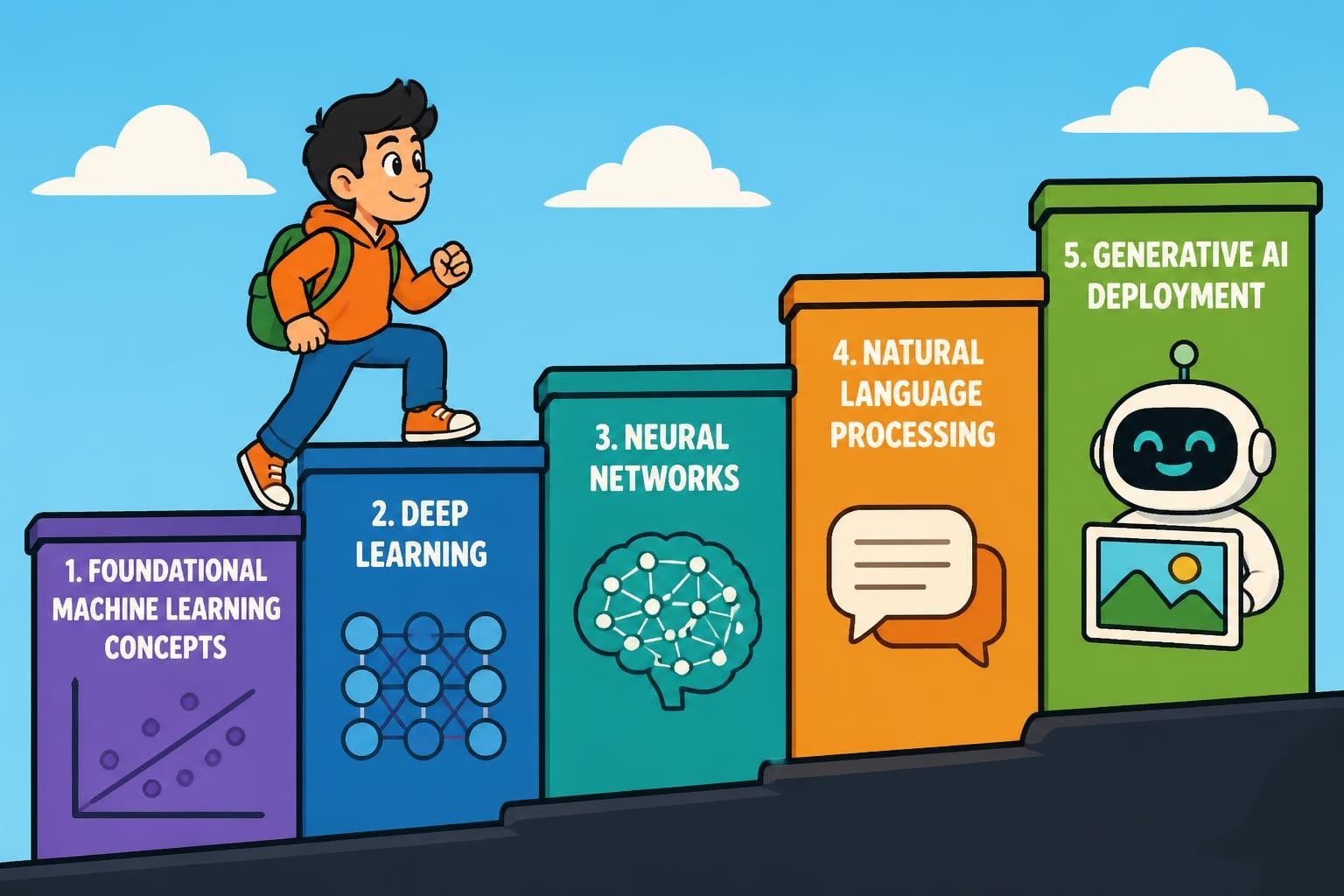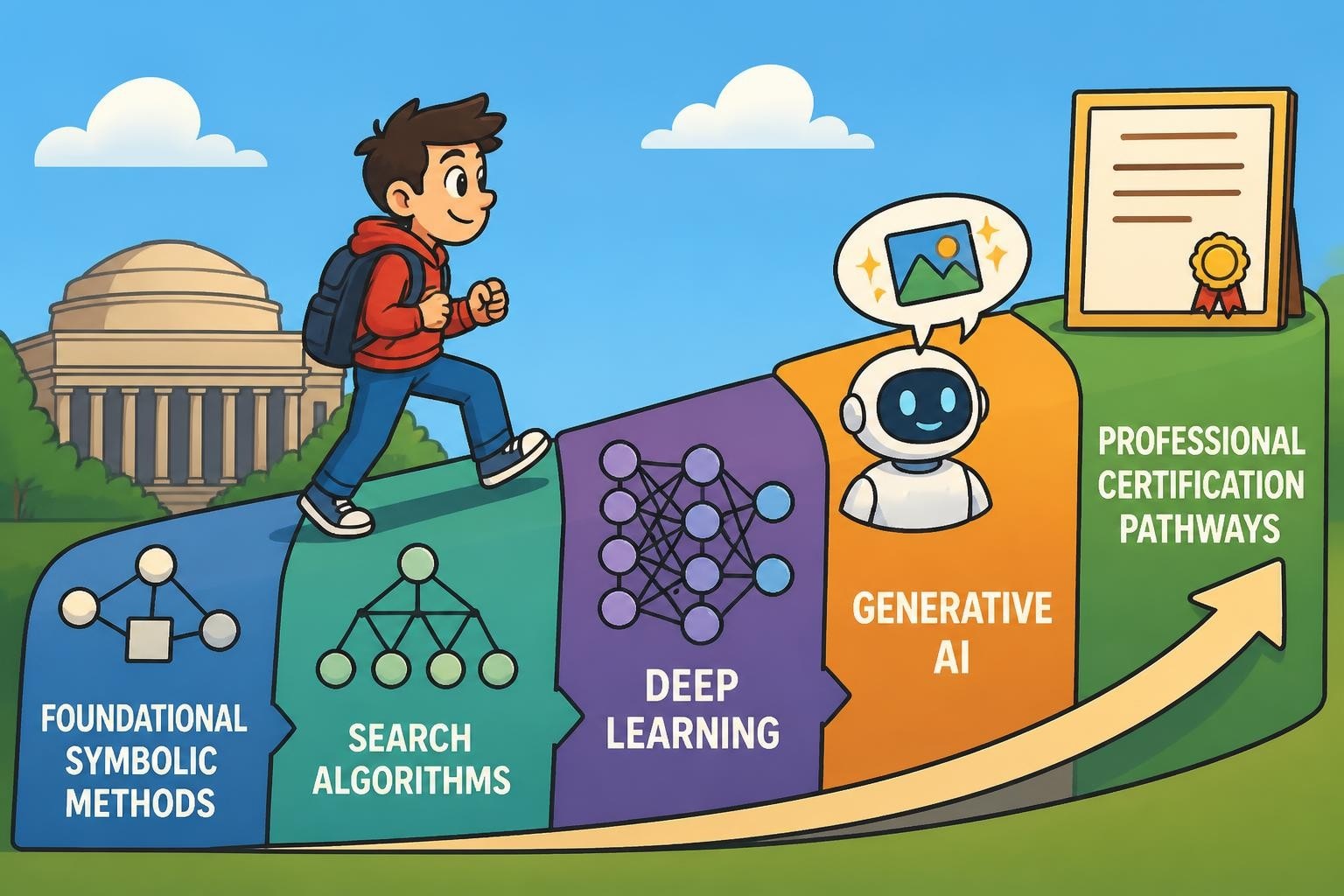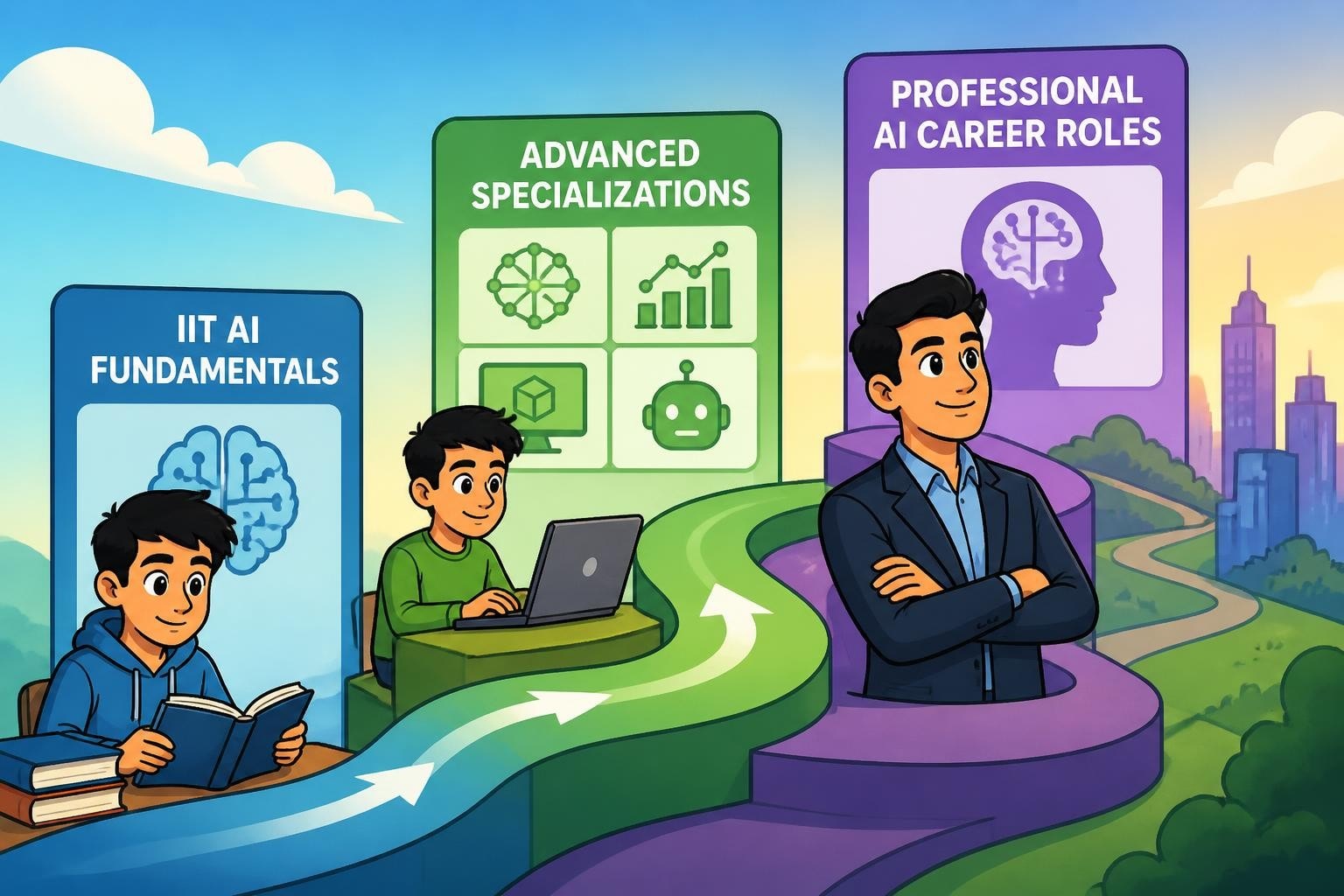
The artificial intelligence industry is experiencing unprecedented growth, with organizations across every sector scrambling to integrate AI capabilities into their operations. As demand for qualified AI professionals surges, credentialing has become essential for both individuals seeking career advancement and employers looking to validate technical competencies. An ai certification program provides structured validation of skills ranging from fundamental machine learning concepts to advanced neural network architectures, offering professionals a competitive edge while helping organizations identify qualified talent in an increasingly crowded marketplace.
Understanding AI Certification Programs in 2026
An ai certification program represents a formalized educational pathway that validates an individual's competency in artificial intelligence technologies, methodologies, and applications. These programs differ significantly from traditional degree programs by focusing on practical, immediately applicable skills rather than theoretical foundations alone.
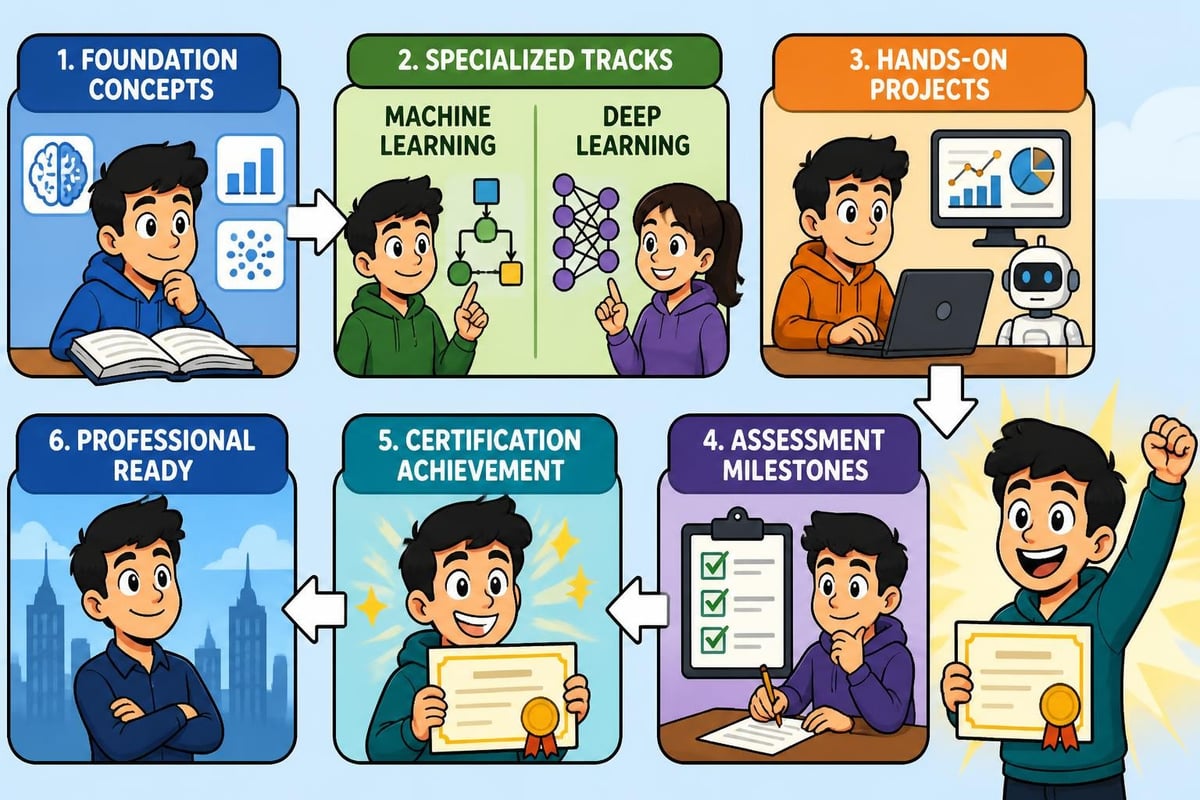
Modern AI certification programs typically include several core components:
- Structured curriculum covering machine learning, deep learning, and neural networks
- Hands-on projects using real-world datasets and industry-standard tools
- Assessment mechanisms that evaluate both theoretical knowledge and practical application
- Industry recognition from employers, professional organizations, or technology vendors
- Continuing education requirements to maintain certification validity
The landscape has evolved dramatically since 2023, when generative AI became mainstream. Today's certification programs must address emerging technologies like large language models, diffusion models, and multimodal AI systems. Organizations now prioritize candidates who can demonstrate not just technical proficiency but also ethical considerations, governance frameworks, and responsible AI deployment strategies.
Types of AI Certification Programs
The certification landscape encompasses multiple formats, each serving different professional needs and career stages. Vendor-specific certifications focus on particular technology stacks or platforms, providing deep expertise in proprietary tools and frameworks. These include programs from major technology companies validating skills in their AI infrastructure and development environments.
Vendor-neutral certifications offer broader industry recognition without tying professionals to specific platforms. Organizations like the IEEE CertifAIEd™ program emphasize ethical and trustworthy AI practices, focusing on transparency, accountability, and algorithmic bias mitigation. Similarly, the Global AI Standards Body provides credentials centered on professional standards through real-world AI system development.
| Certification Type | Best For | Duration | Recognition Level |
|---|---|---|---|
| Foundational | Career changers, beginners | 3-6 months | Industry-wide |
| Specialized | Mid-level practitioners | 6-12 months | Domain-specific |
| Advanced/Expert | Senior professionals | 12-18 months | Global recognition |
| Executive | Leaders and decision-makers | 3-6 months | C-suite acknowledgment |
Academic institutions and professional organizations also offer certification programs that blend theoretical rigor with practical application. These programs often incorporate the latest research findings, including frameworks like the Trusted Educational AI Standard, which emphasizes verifiable, stable, and pedagogically sound AI learning systems.
Choosing the Right AI Certification Program
Selecting an appropriate ai certification program requires careful evaluation of multiple factors aligned with career objectives and organizational needs. The decision should balance immediate skill requirements with long-term professional development goals.
Critical selection criteria include:
- Curriculum relevance to current industry demands and emerging technologies
- Recognition level among target employers and industry sectors
- Time commitment and flexibility for working professionals
- Cost structure including examination fees, materials, and renewal requirements
- Prerequisites and assumed knowledge levels
- Hands-on components with real-world projects and datasets
- Instructor expertise and access to mentorship or support
- Assessment rigor and credential maintenance requirements
Professional learners should investigate how certification labels communicate trustworthiness to employers and clients, as research demonstrates significant impact on perceived competency and hiring decisions. For beginners exploring AI fundamentals, resources like an AI beginner course provide essential foundation before pursuing advanced certifications.
Industry-Specific vs. General AI Certifications
Different career paths benefit from different certification approaches. Healthcare AI specialists need programs emphasizing regulatory compliance, patient privacy, and clinical validation methodologies. Financial services professionals require deep understanding of fraud detection, risk modeling, and algorithmic trading systems, which specialized programs like an AI trading course address.
Manufacturing and robotics sectors demand certifications covering computer vision, autonomous systems, and industrial automation. The International Society of Automation offers relevant credentials in automation and cybersecurity that complement AI-specific programs. Meanwhile, professionals in conversational AI and natural language processing benefit from specialized training in dialogue systems and language models.
General certifications provide broader versatility, making them valuable for consultants, researchers, and professionals in emerging AI roles. These programs typically cover machine learning fundamentals, deep learning architectures, model deployment, and MLOps practices applicable across industries. AI management courses bridge technical and leadership competencies for those moving into strategic roles.
Technical Skills Validated Through AI Certification
An effective ai certification program validates a comprehensive skill set spanning theoretical knowledge, practical implementation, and operational deployment capabilities. These competencies evolve continuously as the field advances, requiring certification bodies to update curricula regularly.
Core Technical Competencies
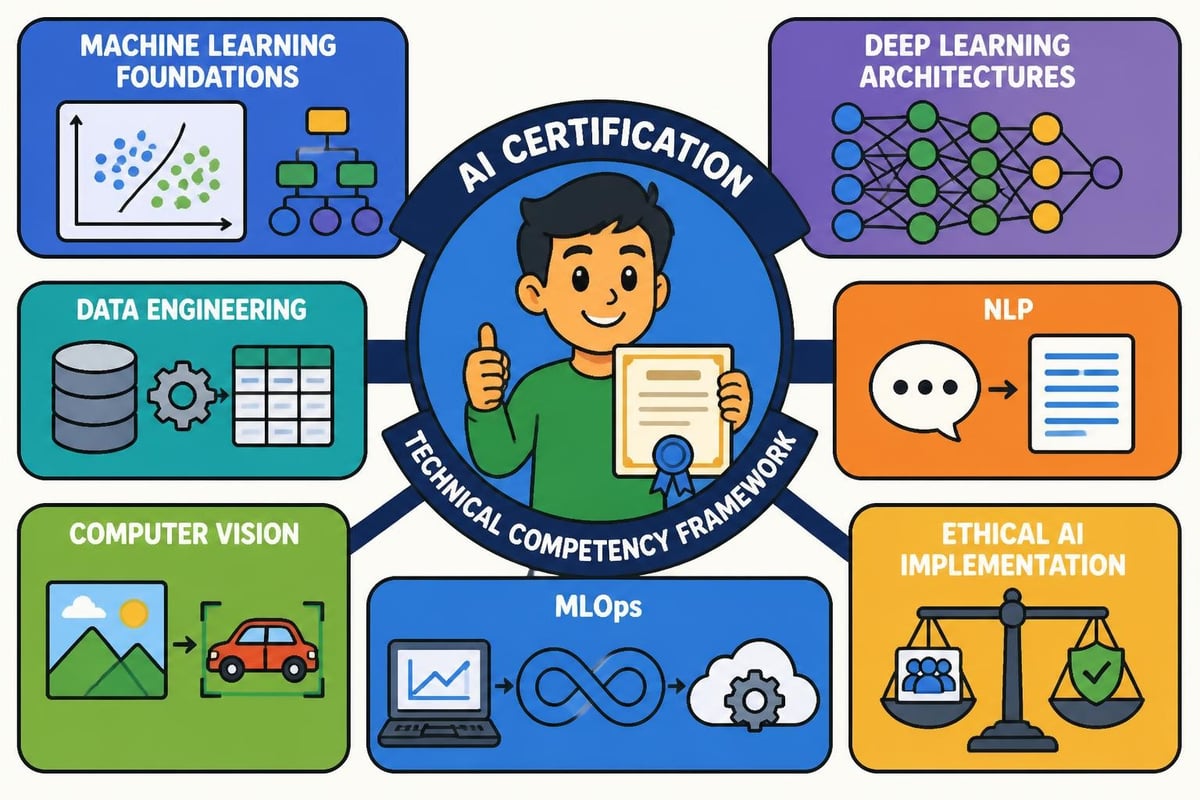
Machine learning fundamentals form the foundation of most certification programs, covering supervised and unsupervised learning, regression and classification algorithms, ensemble methods, and feature engineering. Candidates must demonstrate proficiency in model selection, hyperparameter tuning, and performance evaluation using appropriate metrics.
Deep learning competencies include:
- Neural network architectures (CNNs, RNNs, Transformers, GANs)
- Optimization algorithms and backpropagation
- Transfer learning and fine-tuning pre-trained models
- Handling overfitting and underfitting
- GPU acceleration and distributed training
Data engineering skills have become increasingly critical, as model performance depends heavily on data quality and preparation. Certification programs now emphasize data pipeline development, ETL processes, data versioning, and feature stores. Understanding of data governance, privacy regulations, and ethical data usage has transitioned from optional to mandatory in reputable programs.
Natural language processing capabilities span text preprocessing, embeddings, language models, sentiment analysis, and question-answering systems. Computer vision skills cover image classification, object detection, semantic segmentation, and generative models for image synthesis.
Deployment and Production Skills
Modern ai certification program curricula recognize that model development represents only part of the AI lifecycle. Production deployment skills have become equally important, reflecting industry reality where models must operate reliably at scale.
MLOps competencies include containerization with Docker, orchestration using Kubernetes, model versioning and registry management, continuous integration and deployment pipelines, and monitoring systems for model performance degradation. The Cloud Native Computing Foundation offers complementary training in cloud-native technologies essential for AI deployment.
Infrastructure knowledge encompasses cloud platforms, serverless computing, edge deployment for low-latency applications, and optimization for inference efficiency. Professionals must understand cost management, resource allocation, and scaling strategies for production AI systems.
Business Value of AI Certification Programs
Organizations investing in employee certification programs report measurable improvements in project success rates, innovation velocity, and competitive positioning. The business case extends beyond individual skill development to encompass team capabilities, standardization of practices, and organizational learning.
Quantifiable organizational benefits include:
| Benefit Category | Impact Metric | Typical Improvement |
|---|---|---|
| Project Success Rate | Completion within scope/budget | 35-50% increase |
| Time to Deployment | Concept to production | 40% reduction |
| Model Performance | Accuracy/precision metrics | 25-30% improvement |
| Team Productivity | Output per engineer | 45% increase |
| Innovation Rate | New AI initiatives launched | 60% growth |
Standardized certification ensures teams share common vocabulary, methodologies, and best practices, reducing communication friction and accelerating collaboration. When multiple team members complete an ai certification program, organizations observe improved code quality, better documentation practices, and more robust model validation procedures.
Risk mitigation represents another significant value driver. Certified professionals demonstrate understanding of algorithmic bias, fairness metrics, explainability techniques, and regulatory compliance requirements. This reduces organizational exposure to reputational damage, regulatory penalties, and ethical controversies associated with irresponsible AI deployment.
Return on Investment for Corporate Programs
Corporate certification programs yield returns through improved employee retention, faster talent acquisition, and enhanced employer brand. Organizations offering structured learning pathways report 40-50% higher retention rates among technical staff compared to those without development programs.
Recruitment efficiency improves as certification requirements attract pre-qualified candidates and reduce screening time. Companies can build internal talent pipelines rather than competing for scarce external expertise, particularly important given current AI talent shortages. Programs focusing on AI in business applications help non-technical staff understand AI capabilities, improving cross-functional collaboration.
Customer confidence increases when organizations can demonstrate certified expertise. In regulated industries, certification may satisfy compliance requirements or provide competitive advantages in procurement processes. The AI Governance Institute offers executive education in AI governance and GRC, addressing these organizational needs.
Building Your AI Certification Roadmap
Strategic career development in AI requires a structured progression through increasingly specialized certifications aligned with professional goals. Rather than pursuing credentials randomly, successful professionals develop multi-year roadmaps that build foundational skills before advancing to specialized domains.
Entry-Level Certification Path
Beginners should start with foundational programs covering Python programming, statistics fundamentals, and basic machine learning concepts. These typically require 100-200 hours of study and provide essential context for advanced topics. Entry-level certifications validate understanding of supervised learning, model evaluation, and simple neural networks.
Programs like those offered through Coursera's artificial intelligence courses provide accessible starting points with flexible scheduling. After establishing foundations, learners can explore specialized areas matching their interests and industry sectors.
Recommended progression for career changers:
- Python programming and data analysis fundamentals (2-3 months)
- Machine learning foundations certification (3-4 months)
- Specialized track selection (NLP, computer vision, or reinforcement learning) (4-6 months)
- MLOps and deployment practices (2-3 months)
- Advanced specialization or leadership certification (6-12 months)
Intermediate to Advanced Progression
Mid-career professionals should pursue certifications that validate depth in specific domains while broadening complementary skills. An AI engineer certification demonstrates production-ready capabilities beyond research or experimentation. These programs emphasize system design, scalability, and integration with existing technology stacks.
Advanced certifications often require prerequisite credentials, significant professional experience, and portfolio projects demonstrating real-world impact. NVIDIA's certification programs validate expertise in GPU-accelerated computing, data science workflows, and generative AI applications, appealing to professionals working with high-performance AI systems.
Research suggests that community-based AI learning approaches, which ground education in learners' lived experiences, enhance engagement and practical application. Advanced professionals benefit from programs incorporating peer learning, cohort-based projects, and industry mentorship.
Certification Maintenance and Continuous Learning
The rapid pace of AI innovation means that static credentials quickly become obsolete. Reputable ai certification program providers require ongoing professional development to maintain certification validity, ensuring holders stay current with emerging technologies and methodologies.
Typical maintenance requirements include:
- Annual continuing education units (CEUs) or professional development hours
- Participation in workshops, conferences, or advanced training
- Contribution to AI community through publications, teaching, or open-source projects
- Periodic recertification examinations covering new developments
- Demonstrated application of skills in professional projects
This ongoing learning requirement aligns with industry reality, where techniques considered cutting-edge 18 months ago may now be superseded by more effective approaches. Professionals must balance specialization depth with breadth across evolving AI subfields.
Organizations supporting certification maintenance through learning budgets, conference attendance, and dedicated development time report higher employee satisfaction and longer tenure. Platforms like MammothClub streamline continuous learning with regularly updated content libraries, interactive bootcamps, and AI-powered learning recommendations that adapt to individual progress and goals.
Emerging Certifications for 2026 and Beyond
New certification programs are emerging around generative AI, multi-modal models, AI safety, and responsible AI deployment. These reflect both technological advances and growing societal emphasis on trustworthy AI systems. Professionals should monitor developments in AI governance, explainable AI, and federated learning as these domains mature into distinct certification tracks.
Quantum machine learning, neuromorphic computing, and AI-human collaboration represent frontier areas where certification programs are just beginning to emerge. Early adopters in these specializations position themselves as subject matter experts as these technologies transition from research to production deployment.
The integration of AI ethics, bias detection, and fairness metrics into technical certifications reflects industry maturation. Programs emphasizing these competencies alongside technical skills prepare professionals for the responsible development and deployment that stakeholders increasingly demand.
Preparing for AI Certification Examinations
Success in ai certification program assessments requires strategic preparation combining theoretical study, hands-on practice, and exam-specific strategies. Most programs include multiple assessment formats testing different competency dimensions.
Study Strategies and Resources
Effective preparation balances structured learning with exploratory projects. Candidates should allocate approximately 60% of study time to guided curriculum, 30% to hands-on projects with real datasets, and 10% to exam-specific preparation including practice tests and question formats.
High-value preparation activities include:
- Building a portfolio of diverse AI projects demonstrating practical skills
- Participating in Kaggle competitions or similar data science challenges
- Contributing to open-source AI projects to gain collaborative experience
- Reading seminal papers in target specialty areas
- Implementing algorithms from scratch to deepen understanding
- Teaching concepts to others through blog posts or presentations
Time management during examinations requires practice with timed assessments. Many certifications include both theoretical questions and practical coding challenges with strict time limits. Simulating exam conditions during preparation builds comfort with time pressure and question formats.
Resources like AI specialization courses provide comprehensive coverage of exam topics with structured learning paths. Understanding hardware requirements, such as appropriate GPUs for AI training, helps candidates prepare for practical assessments involving model training.
Common Pitfalls and How to Avoid Them
Many candidates underestimate the breadth of topics covered in comprehensive certifications, focusing too narrowly on preferred areas while neglecting foundational concepts. Successful candidates maintain balanced coverage across all exam domains, even those outside their daily work.
Overreliance on memorization without conceptual understanding leads to poor performance on application-based questions. Examiners increasingly favor scenario-based assessments requiring candidates to select appropriate techniques for specific problems, explain trade-offs, and justify architectural decisions.
Inadequate hands-on practice represents another common weakness. Reading about neural networks differs dramatically from debugging convergence issues, tuning hyperparameters, and optimizing inference performance. Certification programs value practical competency, making project experience essential for success.
Pursuing an ai certification program represents a strategic investment in professional development that validates expertise, accelerates career advancement, and demonstrates commitment to excellence in this transformative field. Whether you're beginning your AI journey or advancing to specialized domains, structured certification provides measurable credibility that resonates with employers and clients. MammothClub offers 3,000+ on-demand AI and tech courses, interactive bootcamps, and comprehensive certification programs designed to help professionals and organizations master AI technologies efficiently. Our AI-powered learning tools and measurable dashboards ensure your certification journey delivers tangible results, positioning you for success in 2026's competitive AI landscape.