The search for "ai courses near me" reflects a growing urgency among professionals who recognize that artificial intelligence skills are no longer optional. In 2026, AI literacy has become as fundamental as digital literacy was a decade ago, and the quality of your training directly impacts your career trajectory. While proximity once determined educational access, today's learners face a more complex decision: balancing the benefits of local, in-person instruction against the flexibility and breadth of online platforms that deliver world-class AI education regardless of geography.
Understanding What "Near Me" Means in 2026
The definition of proximity has evolved significantly in professional education. When searching for ai courses near me, you're not just looking for a physical classroom within driving distance. You're seeking accessible, relevant training that fits your schedule, learning style, and professional context.
Local options typically include:
- Community college certificate programs with evening classes
- University extension schools offering weekend intensives
- Corporate training centers hosting vendor-certified bootcamps
- Meetup groups and professional organizations running workshops
- Regional accelerators and innovation hubs with sponsored programs
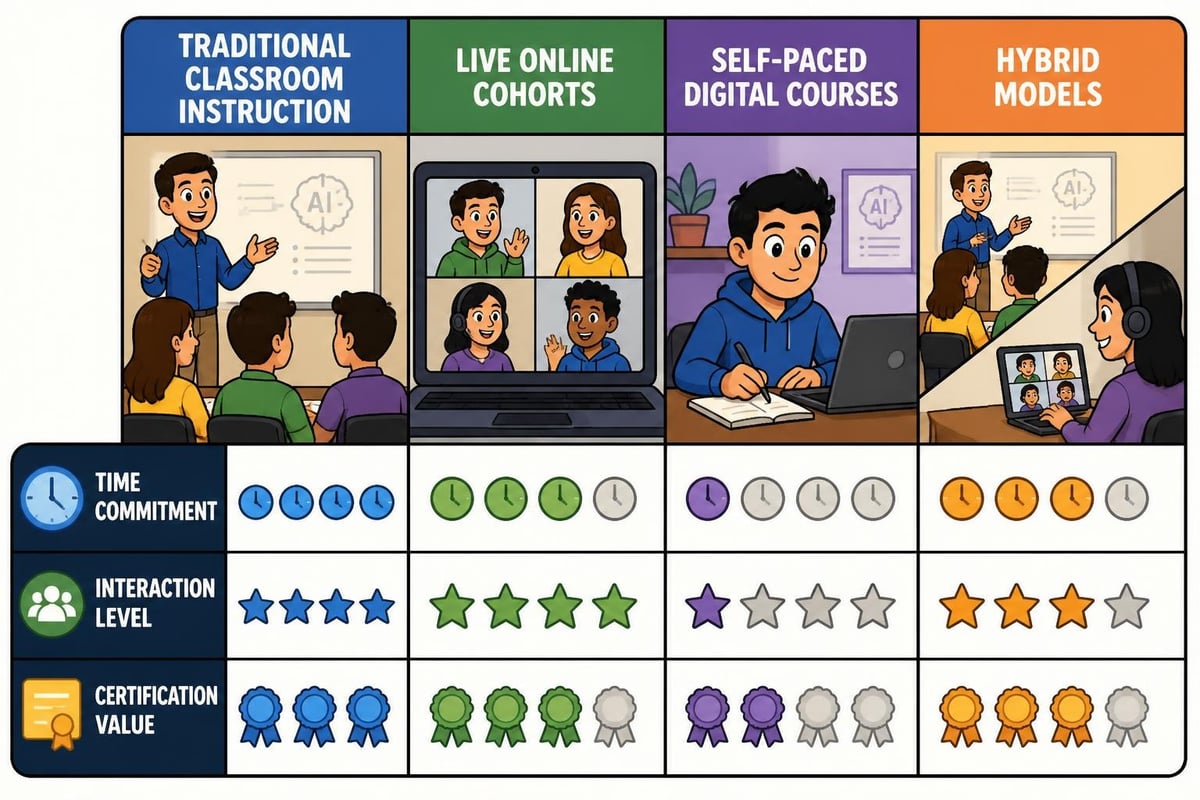
Digital-local hybrid models have emerged as well:
- Online platforms with local cohorts and networking events
- Virtual instructor-led training with regional time zones
- Corporate learning platforms deployed across office locations
- Remote bootcamps with local career services and placement support
The National Artificial Intelligence Research Resource (NAIRR) infrastructure has expanded access to computing resources and educational materials nationwide, making high-quality AI training more geographically distributed than ever before. This democratization means your "local" options now extend far beyond what's physically nearby.
Evaluating Curriculum Quality and Rigor
Not all AI courses deliver equal value. The ACM/IEEE-CS guidelines for artificial intelligence in undergraduate curricula provide a framework for assessing whether a program covers essential competencies or merely scratches the surface.
Core Components of Comprehensive AI Training
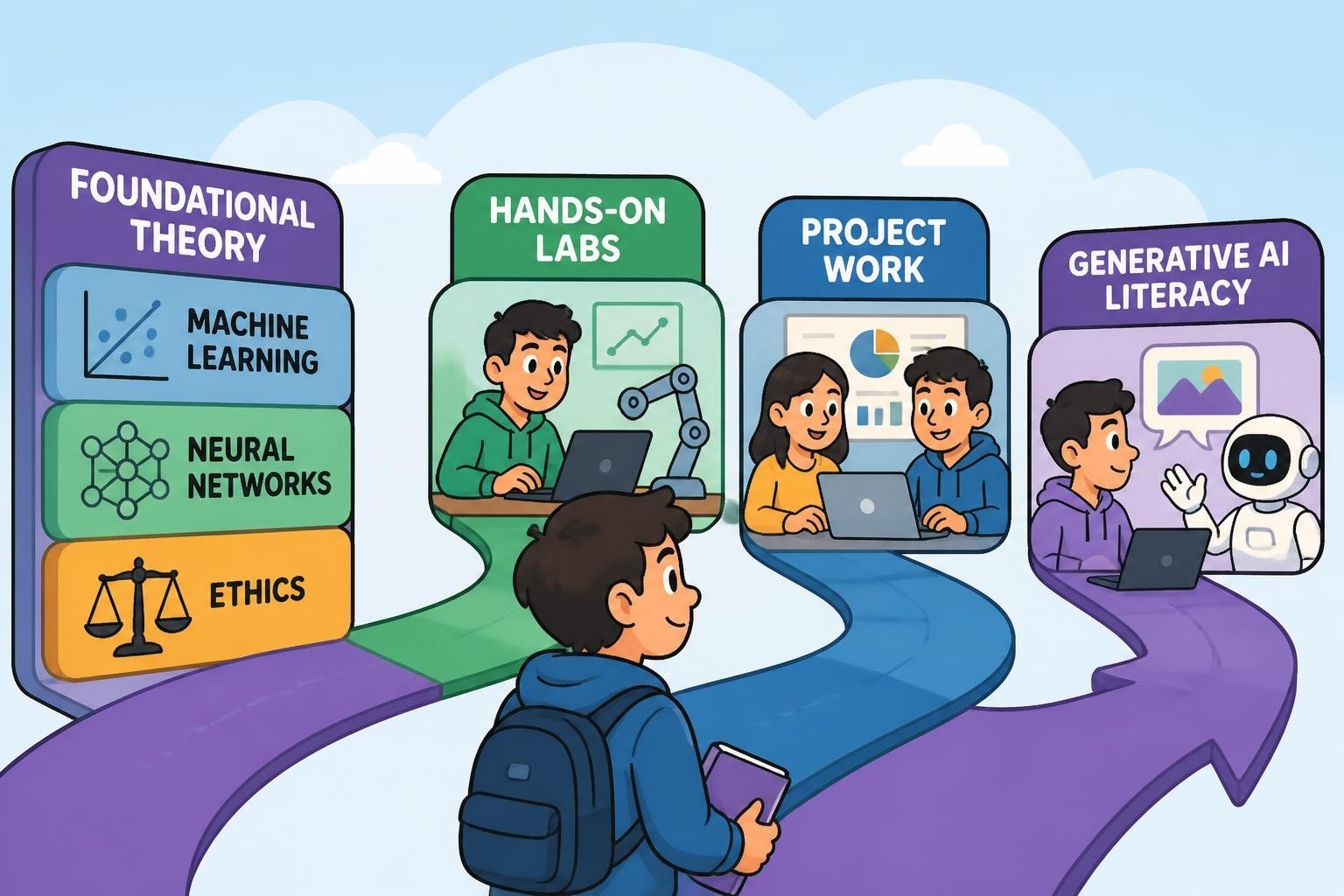
Quality programs should address these fundamental areas:
| Topic Area | Essential Coverage | Red Flags |
|---|---|---|
| Machine Learning Foundations | Supervised/unsupervised learning, neural networks, model evaluation | Only tool-based tutorials without theory |
| Programming & Data Skills | Python, data manipulation, version control, cloud platforms | GUI-only tools with no coding |
| Ethics & Responsible AI | Bias detection, fairness, transparency, governance | No mention of ethical considerations |
| Applied Projects | Real datasets, end-to-end workflows, deployment | Only pre-cleaned tutorial exercises |
| Domain Application | Industry-specific use cases and frameworks | Generic examples without context |
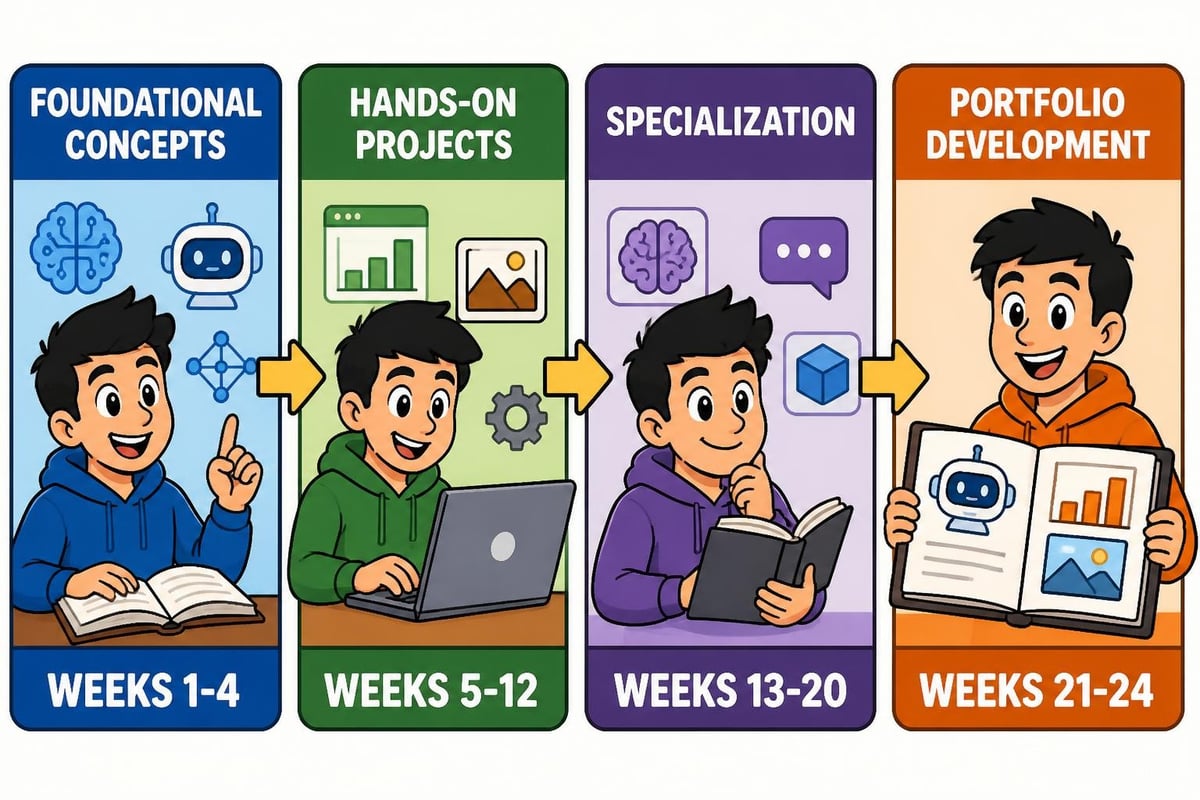
When evaluating ai courses near me, request detailed syllabi and sample projects. Programs like MIT's Professional Certificate Program in Machine Learning & AI demonstrate the depth expected from rigorous professional education, typically spanning 6-12 months with 10-15 hours weekly commitment.
Questions to ask before enrolling:
- What prerequisites are truly required versus recommended?
- Do instructors have current industry experience or published research?
- How recent are the course materials and framework versions?
- What computing resources are provided versus required?
- Are assessments project-based or multiple-choice exams?
For those seeking structured learning paths, exploring ai engineer certification options can clarify which credentials employers value most in your target industry.
Comparing Local Classroom vs. Online Learning Platforms
The choice between local and online training involves trade-offs that vary by individual circumstance. Neither approach is universally superior; effectiveness depends on your learning preferences, career stage, and available resources.
Local Classroom Advantages
In-person training excels at creating immediate accountability and professional networks within your geographic market. When you attend ai courses near me at a local institution, you're building relationships with peers who work at nearby companies, creating opportunities for collaboration and referrals that extend beyond the classroom.
Tangible benefits include:
- Face-to-face interaction with instructors during lab sessions
- Scheduled class times that create routine and discipline
- Access to on-campus computing resources and specialized hardware
- Direct exposure to local employers through guest speakers
- Regional job placement services and alumni networks
Programs like Carnegie Mellon's AI Engineering Fundamentals offer hybrid models that combine online flexibility with periodic on-campus intensives, capturing benefits from both approaches.
Online Platform Advantages
Digital learning platforms provide unmatched curriculum breadth and update frequency. While searching for ai courses near me might yield 3-5 local options, online platforms like MammothClub offer thousands of courses covering specialized topics from computer vision to natural language processing to reinforcement learning.
Strategic advantages include:
- Immediate access to courses as soon as they launch
- Learn from global subject matter experts, not just local instructors
- Study at optimal times for your schedule and cognitive patterns
- Pause and replay complex explanations until mastery
- Lower costs without commuting or relocation expenses
The gap between online and in-person outcomes has narrowed considerably. According to 2026 industry data, completion rates for cohort-based online bootcamps now match or exceed local evening programs, primarily due to better engagement tools and peer accountability systems.
Professional Certificates vs. Degree Programs
Your career objectives should drive the credential level you pursue. When evaluating ai courses near me, distinguish between short-form professional certificates designed for immediate skill application and comprehensive degree programs that provide theoretical foundations for research or specialized roles.
Professional Certificate Programs (3-12 months)
These focused programs target working professionals who need specific, applicable skills quickly. Harvard Extension School's AI certificate exemplifies this category with 4-5 courses covering machine learning, deep learning, and practical applications.
Ideal candidates for certificates:
- Mid-career professionals pivoting into AI-adjacent roles
- Software engineers adding machine learning capabilities
- Business analysts seeking to build intelligent automation
- Product managers leading AI-driven initiatives
- Data scientists updating skills for modern frameworks
Professional certificates typically emphasize applied projects over theoretical proofs, preparing learners to implement solutions rather than conduct original research. Platforms like MammothClub structure certificates as stackable credentials, letting you build expertise progressively without committing to multi-year programs.
Academic Degree Programs (1-4 years)
Master's and doctoral programs provide comprehensive theoretical grounding and research opportunities. These suit individuals targeting specialized technical roles, research positions, or leadership requiring deep AI expertise.
Consider degree programs if you're:
- Early in your career with flexibility for full-time study
- Targeting research scientist or principal engineer positions
- Planning to work on fundamental AI advances, not just applications
- Seeking immigration benefits from STEM degree programs
- Building credentials for academic or government research roles
The NSF's National AI Research Institutes network connects universities, industry, and government to advance AI research and education, offering pathways from coursework to research collaboration.
Assessing Instructor Credentials and Teaching Quality
The instructor's background significantly impacts learning outcomes, particularly for applied AI skills. When comparing ai courses near me, investigate who actually delivers the instruction and their current involvement in AI work.
Red Flags in Instructor Profiles
- Credentials from unrelated fields without demonstrable AI expertise
- No published work, GitHub repositories, or conference presentations
- Generic bios without specific technologies or methodologies mentioned
- Teaching exclusively from vendor materials without customization
- No current consulting, research, or product development work
Green Flags Indicating Quality Instruction
- Active GitHub profiles showing recent AI project contributions
- Publications in peer-reviewed venues or reputable industry blogs
- Speaking engagements at recognized AI conferences
- Consulting work with real companies solving production AI challenges
- Engagement in AI research communities and open-source projects
Platforms offering specialized training, such as no-code AI courses, often feature instructors who balance accessibility with technical depth, ensuring learners without coding backgrounds can still build functional AI solutions.
Practical Considerations: Cost, Time, and Career ROI
Beyond curriculum quality, practical factors often determine which training path you can realistically pursue. A comprehensive cost-benefit analysis should account for both obvious and hidden expenses.
Total Cost of Ownership for AI Training
| Cost Category | Local Programs | Online Platforms | Hidden Factors |
|---|---|---|---|
| Tuition/Fees | $3,000-$15,000 | $500-$5,000 | Payment plans, employer reimbursement eligibility |
| Materials | $200-$500 | $0-$200 | Cloud computing credits, software licenses |
| Transportation | $500-$2,000 | $0 | Parking, gas, public transit, wear-and-tear |
| Opportunity Cost | Higher (fixed schedule) | Lower (flexible hours) | Lost overtime, freelance income, family time |
| Networking Value | High (local connections) | Medium (global but virtual) | Industry events, job referrals, collaboration |
Time investment varies by program intensity:
- Self-paced online courses: 3-6 months at 5-10 hours weekly
- Evening local programs: 4-9 months at 6-12 hours weekly
- Full-time bootcamps: 8-16 weeks at 40-60 hours weekly
- Part-time graduate programs: 18-36 months at 10-15 hours weekly
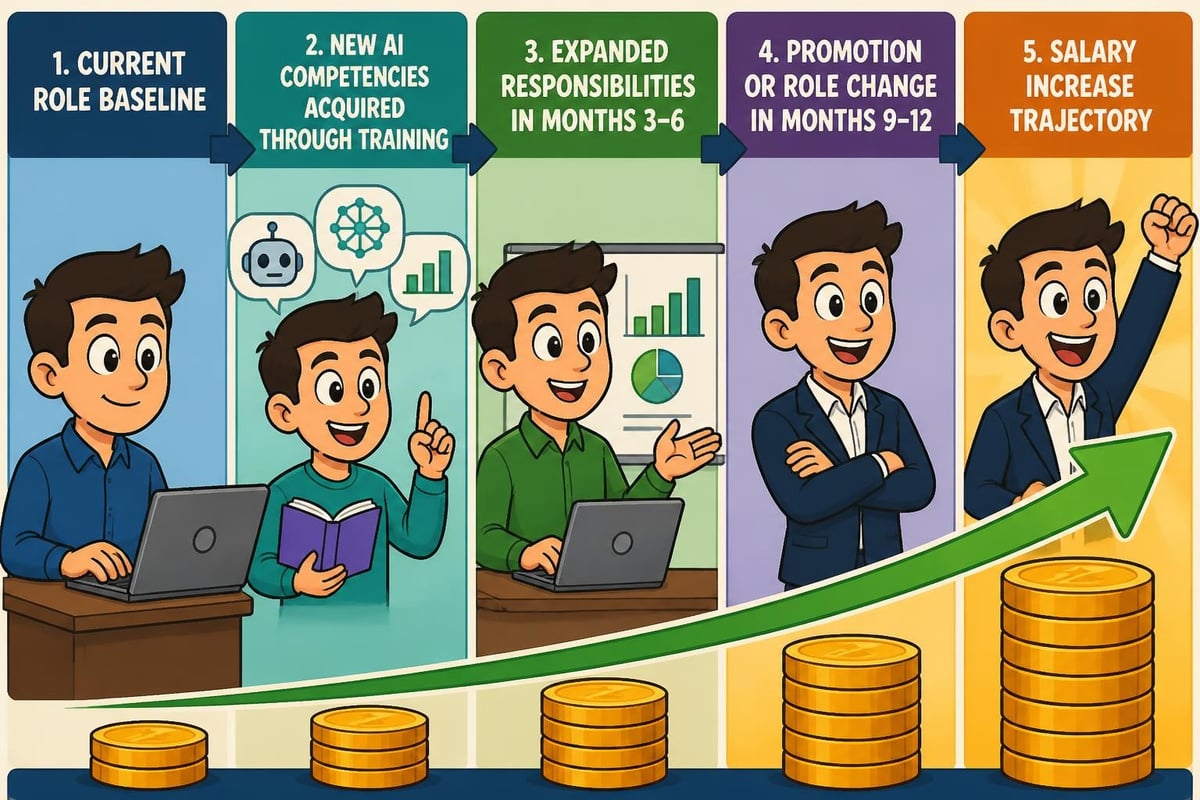
Calculate ROI by projecting salary increases against total investment. AI-skilled professionals in 2026 typically see 15-30% compensation increases within 12-18 months of completing quality training, making even expensive programs financially justifiable over 2-3 year horizons.
Industry-Specific AI Training Paths
Generic AI courses provide foundations, but industry-focused training accelerates practical application. When searching for ai courses near me, consider whether programs address your sector's specific challenges and regulatory requirements.
Finance and Banking
Financial services AI training emphasizes fraud detection, algorithmic trading, credit risk modeling, and regulatory compliance. Courses should cover fairness in lending algorithms, explainable AI for regulatory reporting, and financial time-series analysis.
Professionals in this sector benefit from specialized paths like those explored in AI specialization courses that combine technical skills with domain knowledge about market microstructure and risk management.
Healthcare and Life Sciences
Medical AI training requires understanding HIPAA compliance, clinical validation processes, and FDA software regulations. Quality programs address diagnostic imaging analysis, drug discovery applications, and clinical decision support systems.
Critical competencies for healthcare AI:
- Handling sensitive patient data with proper privacy safeguards
- Interpreting model predictions in life-critical contexts
- Understanding clinical workflows and integration points
- Validating models against medical ground truth
- Documenting decisions for regulatory review
Manufacturing and Supply Chain
Industrial AI focuses on predictive maintenance, quality control, demand forecasting, and production optimization. Training should cover sensor data processing, anomaly detection, and real-time inference on edge devices.
Marketing and Customer Experience
Marketing professionals need training in recommendation systems, customer segmentation, sentiment analysis, and personalization engines. Understanding campaign attribution and multi-touch modeling enhances AI-driven marketing effectiveness.
Those interested in marketing applications can explore resources on AI in digital marketing to understand how machine learning transforms customer acquisition and retention.
Building a Learning Community Beyond the Classroom
Successful AI practitioners don't just complete courses; they engage with ongoing learning communities that provide support, accountability, and opportunities long after formal training ends.
Local AI Meetups and User Groups
Most metropolitan areas now host regular gatherings focused on machine learning, deep learning, or specific frameworks like PyTorch or TensorFlow. These groups offer:
- Presentations from local practitioners sharing real-world case studies
- Hands-on workshops exploring new tools and techniques
- Networking with hiring managers and technical recruiters
- Peer code reviews and project feedback
- Study groups preparing for certification exams
Search platforms like Meetup.com for "machine learning [your city]" or "AI developers [your region]" to find active communities.
Online Communities and Practice Platforms
Digital communities complement local networks by providing 24/7 access to expertise and diverse perspectives. Effective platforms include:
- Kaggle: Competition-based learning with real datasets and peer benchmarking
- GitHub: Open-source project collaboration and code review
- Stack Overflow: Technical problem-solving and best practices
- Reddit (r/MachineLearning, r/learnmachinelearning): Discussion and resource sharing
- Discord/Slack groups: Real-time chat with specialized communities
The most effective learners maintain presence in both local and online communities, leveraging each for complementary benefits.
Evaluating Corporate Training Options
Many professionals gain access to AI training through employer-sponsored programs. Corporate learning platforms offer distinct advantages but come with trade-offs worth understanding.
Employer-Provided Learning Platforms
Companies increasingly subscribe to enterprise learning platforms offering curated AI curricula. When your employer provides access to platforms like MammothClub for corporate teams, you gain:
Structured advantages:
- Pre-vetted courses aligned with organizational technology stacks
- Learning paths mapped to internal career progression
- Manager visibility into skill development progress
- Integration with performance review and promotion criteria
- Cohort-based learning with colleagues facing similar challenges
Potential limitations:
- Course selection constrained to platform catalog
- Focus on tools currently used rather than emerging technologies
- Progress tracking that may create performance pressure
- Certificates that lack external market recognition
- Limited access after employment ends
For maximum benefit, combine employer-provided training with external credentials that travel with you across career moves. Platforms offering AI engineer certification programs provide portable credentials that validate skills to future employers.
Hands-On Project Requirements and Portfolio Development
The most reliable indicator of course quality is the sophistication and authenticity of required projects. When evaluating ai courses near me, examine whether assignments mirror real-world challenges or merely replicate tutorial examples.
Characteristics of Valuable Project Work
Strong projects require:
- Working with messy, real-world data requiring cleaning and feature engineering
- End-to-end implementation from data collection through deployment
- Model comparison and justification of algorithm selection
- Documentation suitable for technical and non-technical audiences
- Consideration of ethical implications and bias mitigation
Weak projects typically involve:
- Pre-cleaned datasets with obvious patterns
- Following step-by-step tutorials without independent decisions
- Focus on accuracy metrics without discussing trade-offs
- No deployment or production considerations
- Isolated technical exercises without business context
A well-constructed portfolio should demonstrate progression from foundational projects to increasingly complex work that showcases specialized expertise. Consider exploring courses like the comprehensive guide to local large language models that teach both implementation and deployment skills.
Continuous Learning and Skill Currency
AI evolves faster than most professional fields, making continuous learning essential for maintaining relevant expertise. Your initial training provides foundations, but career success requires ongoing skill updates.
Staying Current After Initial Training
Effective strategies include:
- Subscribe to research publications: Follow ArXiv, conference proceedings, and industry research blogs
- Implement new techniques monthly: Dedicate time to exploring emerging methods
- Contribute to open-source projects: Gain exposure to production-quality codebases
- Attend conferences annually: Major venues like NeurIPS, ICML, or CVPR showcase cutting-edge work
- Teach others: Explaining concepts deepens understanding and reveals knowledge gaps
The half-life of AI skills has shortened to approximately 2.5 years in 2026, meaning half of what you learn today will require updating within 30 months. This reality makes learning agility more valuable than any single skill.
Platforms like MammothClub address this challenge through continuously updated course libraries, allowing professionals to refresh specific skills without repeating entire programs. The ability to access targeted training on emerging topics like responsible AI practices through specialized courses provides efficient skill maintenance.
Making Your Final Decision
Choosing between ai courses near me requires weighing multiple factors against your specific circumstances. No single answer serves all learners; the optimal path depends on your career stage, learning preferences, time availability, and professional objectives.
Decision framework:
Choose local, in-person programs if you:
- Thrive on structured schedules and in-person accountability
- Value immediate local networking for job search
- Have reliable access to a quality program within commuting distance
- Prefer real-time interaction for complex technical questions
- Can commit to fixed class times for 3-6 months
Choose online learning platforms if you:
- Need maximum schedule flexibility for work-life balance
- Want access to specialized topics not offered locally
- Learn effectively through self-directed study
- Prefer learning from multiple instructors across various topics
- Value cost efficiency and elimination of commuting time
Choose hybrid approaches if you:
- Want foundations from structured programs plus specialized deep-dives
- Can allocate budget across multiple learning modalities
- Benefit from combining local networking with global expertise
- Need different formats for different learning objectives
The most successful learners often blend approaches, using structured programs for comprehensive foundations while supplementing with targeted online courses for specialized skills. MammothClab's extensive course catalog enables this blended strategy, offering both broad learning paths and focused technical training.
Finding quality AI training in 2026 requires looking beyond geographic proximity to evaluate curriculum rigor, instructor expertise, hands-on project requirements, and alignment with your career goals. Whether you choose local classroom instruction, online platforms, or a hybrid approach, the key is selecting training that delivers applicable skills and recognized credentials while fitting your schedule and learning style. MammothClub eliminates the geographic constraints of traditional "near me" searches by delivering 3,000+ AI and tech courses, interactive bootcamps, and professional certifications through an AI-powered platform that makes world-class training accessible regardless of location-helping you build job-ready skills that advance your career in the AI era.