The artificial intelligence revolution has fundamentally transformed how professionals approach career development and organizational training. As businesses integrate AI technologies at unprecedented rates, the demand for structured, high-quality ai learning courses has surged beyond traditional educational boundaries. Whether you're a professional seeking to pivot into AI roles, a developer expanding technical capabilities, or an organization building internal AI competency, understanding the landscape of AI education has become essential for staying competitive in 2026's rapidly evolving job market.
Understanding the AI Learning Course Ecosystem
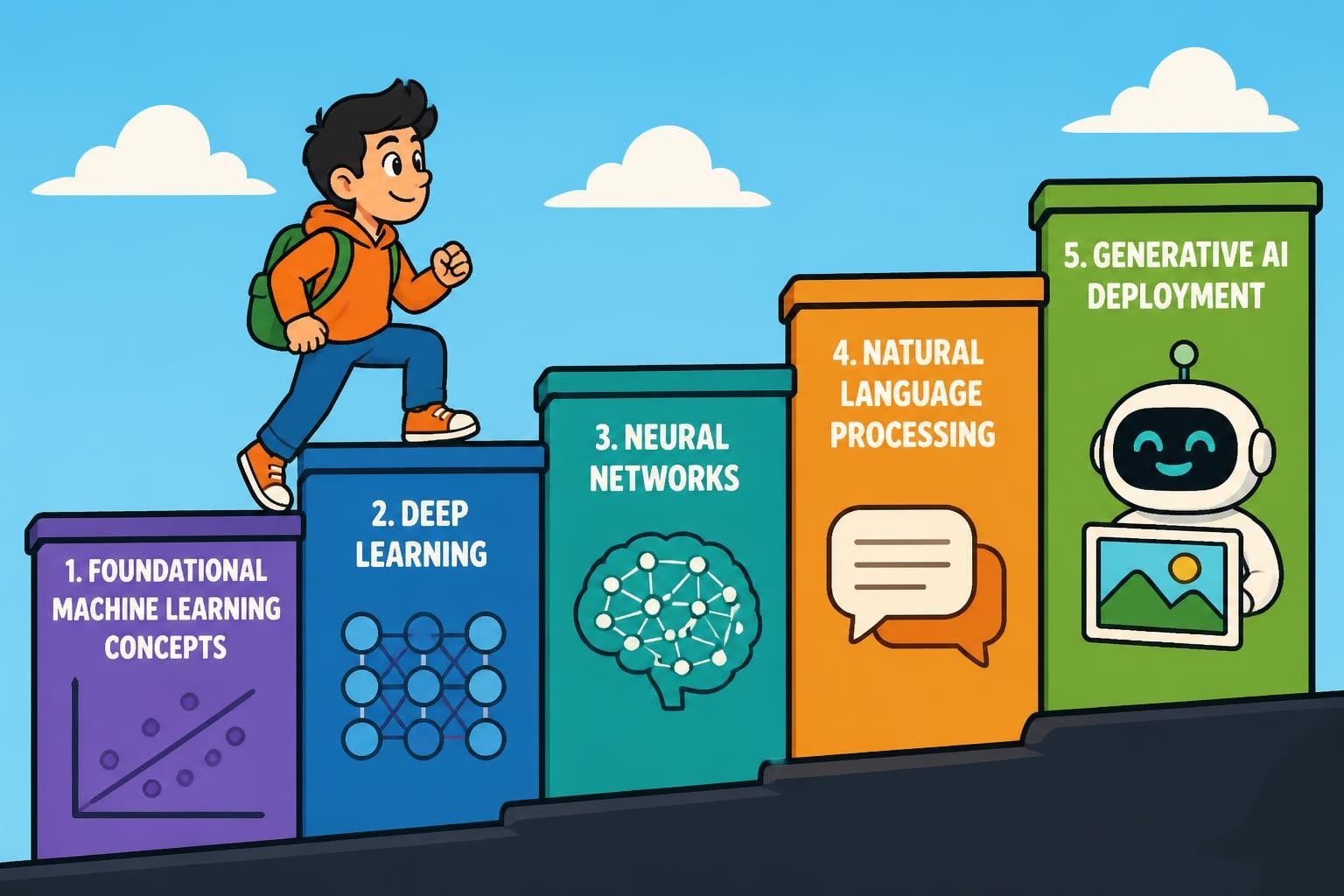
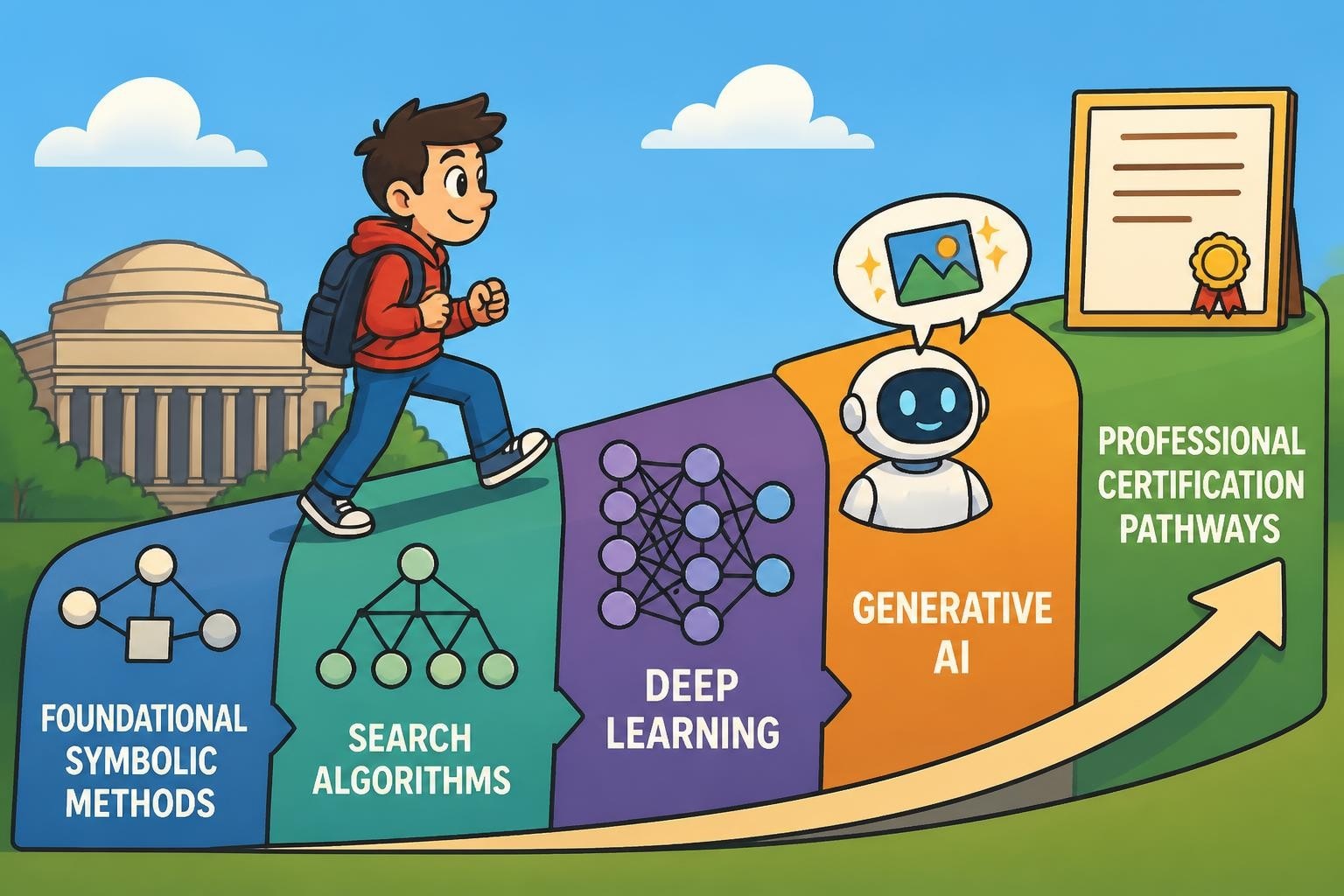
The educational infrastructure surrounding artificial intelligence has evolved dramatically over the past several years. Modern ai learning courses encompass everything from foundational concepts to specialized applications in computer vision, natural language processing, and reinforcement learning. These programs typically follow structured pathways designed to build competency progressively, starting with mathematical foundations and advancing through hands-on implementation.
Types of AI Learning Programs Available
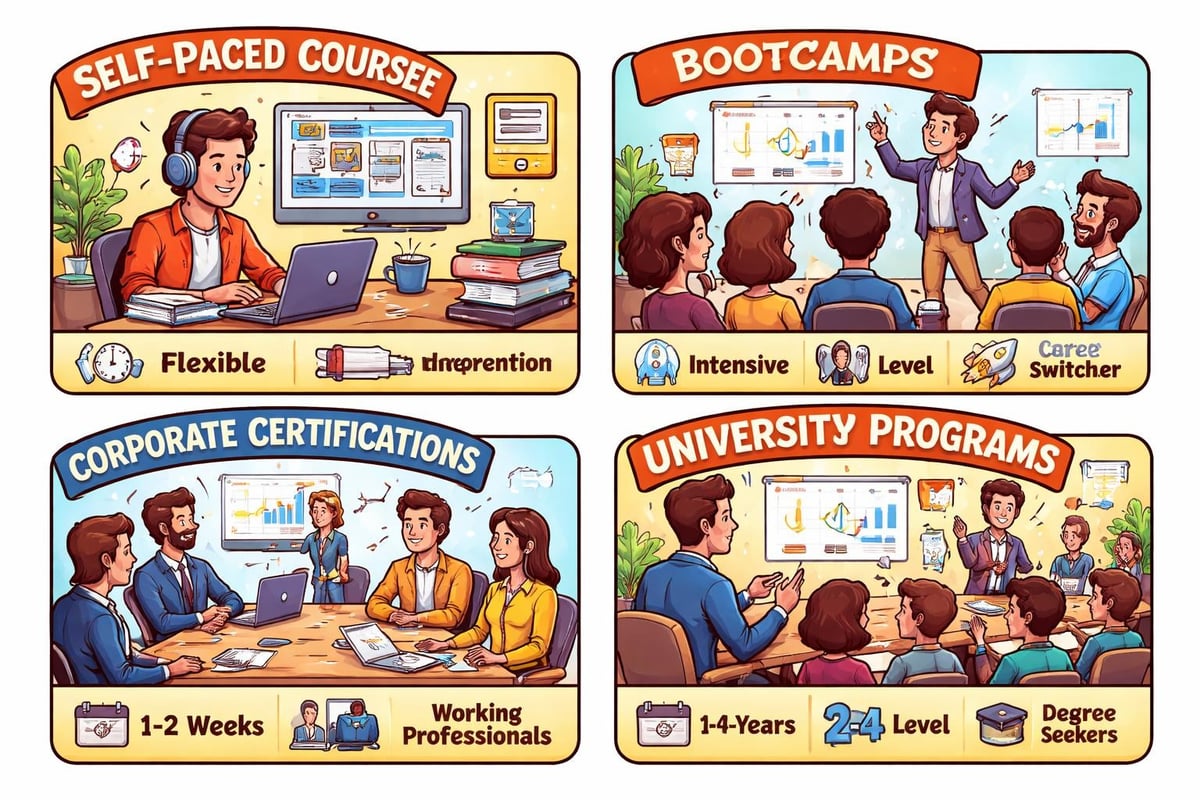
Today's learners can choose from several distinct formats based on their goals, timeline, and preferred learning style. Each format offers unique advantages for different professional contexts.
On-Demand Video Courses provide maximum flexibility, allowing learners to progress at their own pace through recorded lectures, demonstrations, and coding exercises. These programs work particularly well for busy professionals balancing training with full-time responsibilities.
Interactive Bootcamps compress intensive learning into focused timeframes, typically ranging from 8 to 16 weeks. These immersive experiences combine live instruction, peer collaboration, and project-based assessments to accelerate skill development.
Corporate Certification Programs align with organizational needs, offering standardized curricula that ensure consistent competency across teams. These structured pathways often include assessment dashboards and progress tracking for learning and development managers.
University Partnerships blend academic rigor with practical application, frequently featuring professors and researchers who contribute to cutting-edge AI development. Programs like the Elements of AI demonstrate how academic institutions can make foundational AI education accessible to global audiences.
Core Curriculum Components in Quality AI Courses
Effective ai learning courses share common structural elements that ensure learners develop both theoretical understanding and practical capabilities. The curriculum architecture matters significantly, as poorly sequenced content can leave learners with knowledge gaps that undermine their ability to implement AI solutions effectively.
Foundational Mathematics and Statistics
Before diving into neural networks and deep learning frameworks, quality programs establish mathematical literacy. This foundation includes linear algebra for understanding data transformations, calculus for optimization algorithms, probability theory for uncertainty modeling, and statistics for evaluating model performance.
Most learners appreciate when courses contextualize these mathematical concepts within AI applications rather than treating them as abstract prerequisites. The connection between matrix operations and image processing, for example, makes linear algebra immediately relevant.
Programming and Development Skills
Python dominates the AI ecosystem, with libraries like TensorFlow, PyTorch, and scikit-learn serving as industry standards. Comprehensive ai learning courses dedicate significant time to programming competency, ensuring learners can translate conceptual knowledge into functioning code.
| Skill Area | Key Technologies | Typical Course Hours |
|---|---|---|
| Python Fundamentals | NumPy, Pandas, Matplotlib | 20-30 hours |
| Machine Learning Libraries | scikit-learn, XGBoost | 30-40 hours |
| Deep Learning Frameworks | TensorFlow, PyTorch, Keras | 40-60 hours |
| Cloud Platforms | AWS SageMaker, Google Cloud AI | 15-25 hours |
Beyond syntax and library functions, advanced programs cover version control, containerization with Docker, and deployment pipelines that mirror professional development workflows.
Machine Learning Theory and Practice
The core of any comprehensive curriculum revolves around machine learning concepts, progressing from supervised learning through unsupervised methods and ultimately to reinforcement learning. Quality courses balance theoretical explanations with hands-on implementation, ensuring learners understand both the "how" and "why" behind algorithmic choices.
Supervised learning modules typically cover:
- Regression techniques for continuous predictions
- Classification algorithms for categorical outputs
- Ensemble methods for improved accuracy
- Cross-validation strategies for model evaluation
Unsupervised learning sections explore clustering, dimensionality reduction, and anomaly detection, while advanced programs introduce reinforcement learning concepts applicable to robotics, game playing, and optimization problems.
Evaluating Course Quality and Credibility
The proliferation of AI education has created a crowded marketplace where quality varies dramatically. Professionals investing time and resources into ai learning courses need frameworks for evaluating program credibility and potential return on investment.
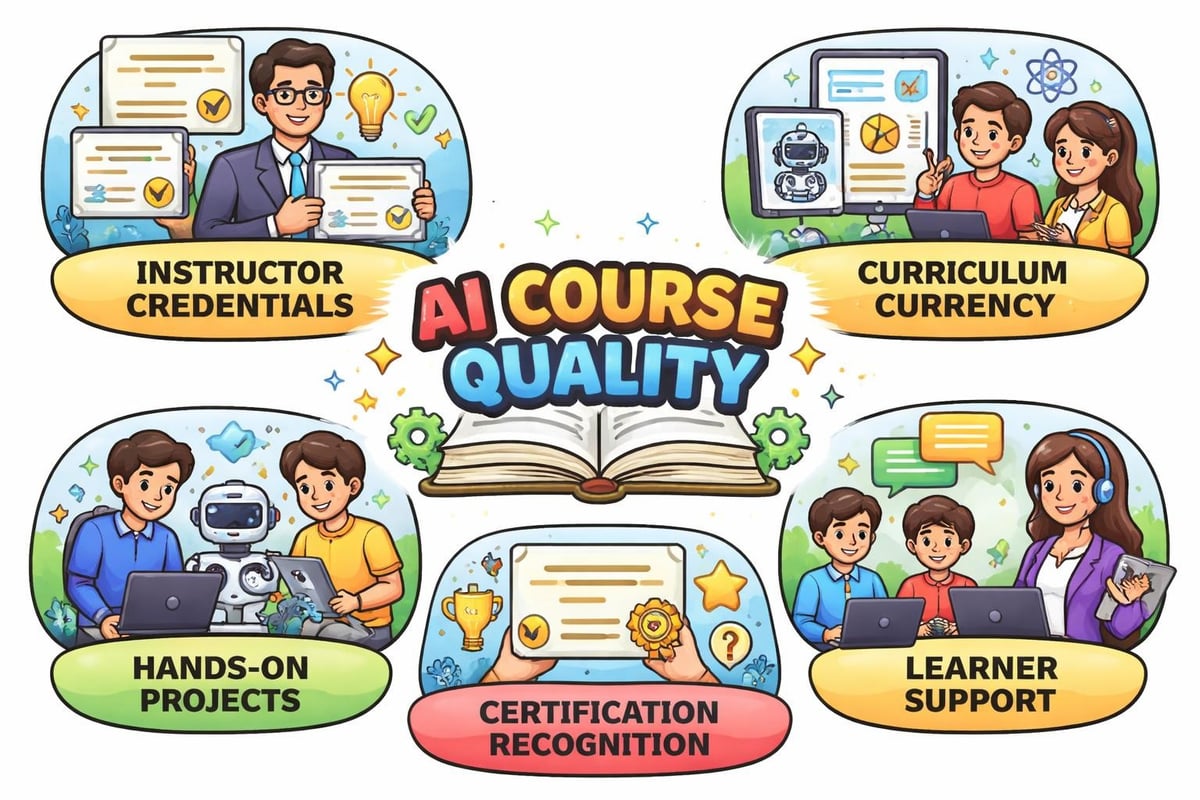
Instructor Expertise and Industry Connection
The best courses feature instructors with genuine AI research or implementation experience. Academics like Stuart J. Russell, whose textbook "Artificial Intelligence: A Modern Approach" has educated generations of AI practitioners, demonstrate the value of learning from established authorities. Similarly, industry practitioners who have built production AI systems bring practical insights that purely theoretical instructors may lack.
Research the instructor backgrounds thoroughly. Have they published peer-reviewed papers? Contributed to open-source AI projects? Built AI systems for recognizable organizations? These credentials signal depth of knowledge that translates into more valuable instruction.
Curriculum Alignment with Industry Standards
Professional ai learning courses should reflect current industry practices rather than outdated approaches. The Artificial Intelligence Index Report 2024 provides comprehensive data on AI advancement trends that inform curriculum relevance. Courses updated regularly to incorporate recent developments in transformer architectures, large language models, and computer vision techniques demonstrate commitment to current best practices.
Examine whether programs cover:
- Modern neural network architectures (transformers, attention mechanisms)
- Ethical AI considerations and bias mitigation
- Model interpretability and explainability
- Production deployment and MLOps practices
- Recent frameworks and tools gaining industry adoption
Assessment Methodology and Certification Value
Meaningful assessment goes beyond multiple-choice quizzes. Quality programs incorporate project-based evaluations where learners solve realistic problems, implement algorithms from scratch, and debug complex systems. These assessments build portfolios that demonstrate capability to potential employers or clients.
Certifications vary in market recognition. While some credentials carry significant weight in hiring decisions, others provide minimal differentiation. Research whether AI certifications from specific providers are recognized by employers in your target industry or geography.
Specialized AI Learning Paths for Different Career Goals
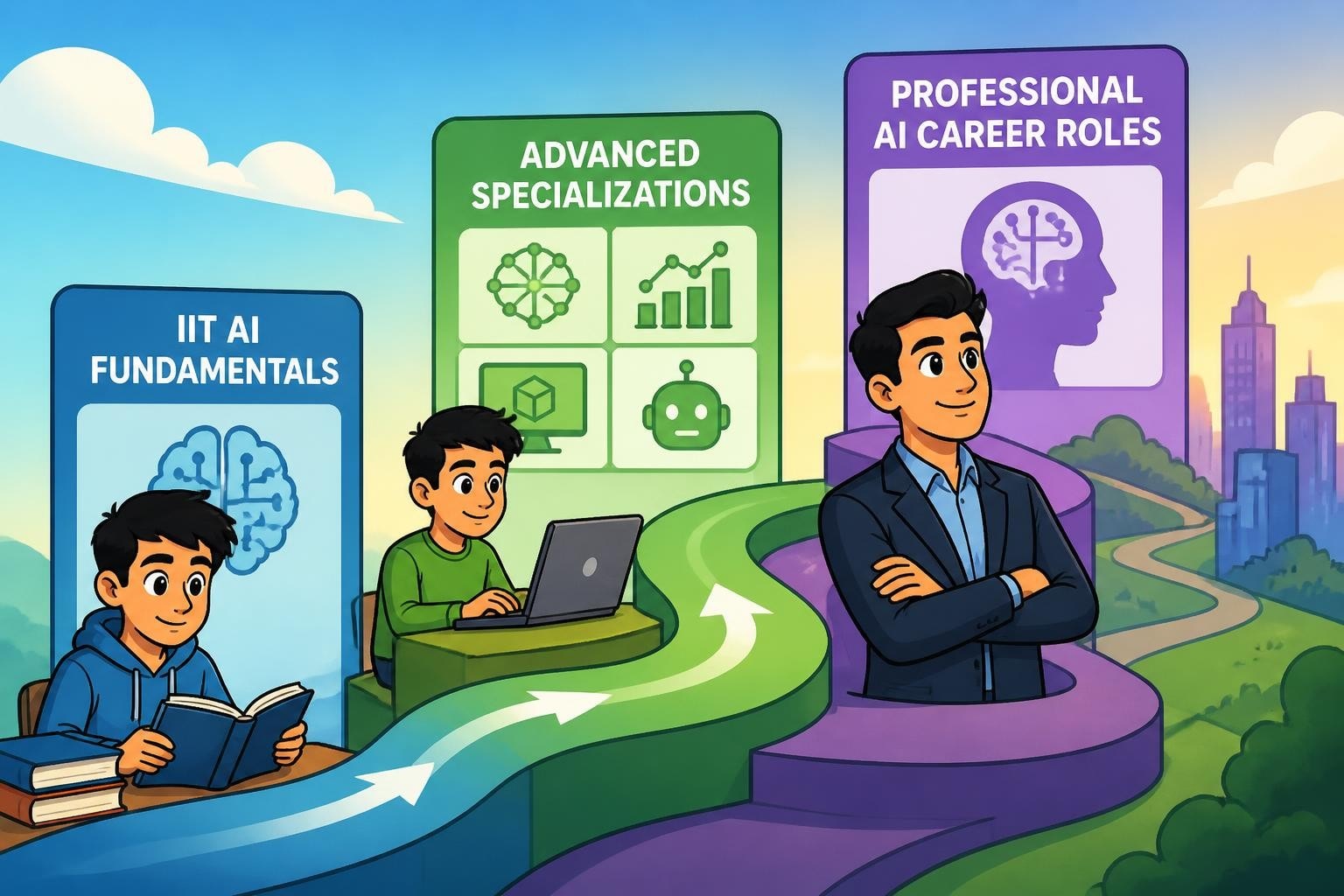
The broad field of artificial intelligence encompasses numerous specializations, each requiring distinct skill sets and knowledge areas. Professionals should select ai learning courses aligned with specific career objectives rather than pursuing generic overviews.
Data Science and Analytics Focus
For professionals aiming to extract insights from organizational data, AI courses emphasizing statistical modeling, data visualization, and predictive analytics provide the most relevant foundation. These programs typically spend less time on deep learning and more on regression models, decision trees, and ensemble methods that solve common business problems.
Software Engineering and AI Integration
Developers integrating AI capabilities into existing applications need different competencies than researchers pushing algorithmic boundaries. Courses for this audience emphasize API usage, model deployment, performance optimization, and production monitoring rather than deriving algorithms from first principles.
Research and Advanced Algorithm Development
Academic or research-oriented paths require deeper theoretical grounding in mathematics, optimization theory, and cutting-edge architectures. These advanced ai learning courses often draw from recent papers, encourage participation in competitions like Kaggle, and emphasize reproducible research practices.
Domain-Specific AI Applications
Specialized applications in healthcare, finance, autonomous vehicles, or natural language processing benefit from courses that combine AI fundamentals with domain knowledge. A conversational AI course would cover linguistics and dialogue systems alongside technical implementation, while healthcare AI programs integrate medical ethics and regulatory compliance.
Building Effective Corporate AI Training Programs
Organizations face unique challenges when implementing ai learning courses across teams with varying technical backgrounds and immediate business needs. Successful corporate training programs balance standardization with flexibility, ensuring consistent baseline competency while allowing specialization aligned with role requirements.
Assessing Organizational AI Readiness
Before launching training initiatives, organizations should evaluate current team capabilities, infrastructure requirements, and strategic AI objectives. This assessment identifies knowledge gaps, determines whether foundational AI beginner courses or advanced specializations better serve immediate needs, and establishes success metrics for measuring training impact.
Key readiness factors include:
- Existing data infrastructure and quality
- Current team technical skill distribution
- Hardware resources for model training
- Leadership commitment to AI transformation
- Clear use cases with business value
Creating Learning Pathways for Different Roles
Effective corporate programs recognize that data engineers, business analysts, product managers, and executives require different AI competencies. Rather than forcing uniform training, successful approaches create role-specific pathways that share common foundational modules but diverge into specialized tracks.
| Role | Focus Areas | Recommended Course Duration |
|---|---|---|
| Data Scientists | Full stack ML/DL, feature engineering, model optimization | 120-200 hours |
| Software Engineers | ML integration, deployment, API development, monitoring | 60-100 hours |
| Business Analysts | AI applications, data interpretation, use case identification | 40-60 hours |
| Product Managers | AI capabilities, limitations, project scoping, ethics | 30-50 hours |
| Executives | Strategic AI, competitive landscape, risk management | 15-30 hours |
This differentiation ensures training remains relevant and immediately applicable rather than overwhelming non-technical staff with unnecessary depth.
Measuring Training ROI and Business Impact
Organizations investing significantly in ai learning courses need frameworks for evaluating effectiveness beyond completion rates. Meaningful metrics connect training to business outcomes, whether through successful AI project deployment, reduced time-to-implementation, improved model performance, or measurable productivity gains.
Advanced learning platforms provide analytics dashboards tracking individual progress, knowledge retention, skill application, and team competency growth over time. These insights enable continuous program refinement based on actual learning outcomes.
Free Resources and Premium Course Options
The ai learning courses landscape includes both freely available resources and premium paid programs, each serving different learner needs and contexts. Understanding the tradeoffs helps professionals and organizations make informed investment decisions.
High-Quality Free Educational Resources
Several world-class institutions and organizations have made AI education freely accessible. The Elements of AI course from the University of Helsinki has reached millions of learners worldwide, demonstrating that cost barriers need not prevent quality education. Similarly, massive open online courses from leading universities provide structured learning without financial investment.
Free resources work particularly well for:
- Initial exploration before committing to specialized training
- Supplementing paid courses with alternative explanations
- Building foundational knowledge on limited budgets
- Accessing cutting-edge research through platforms like arXiv
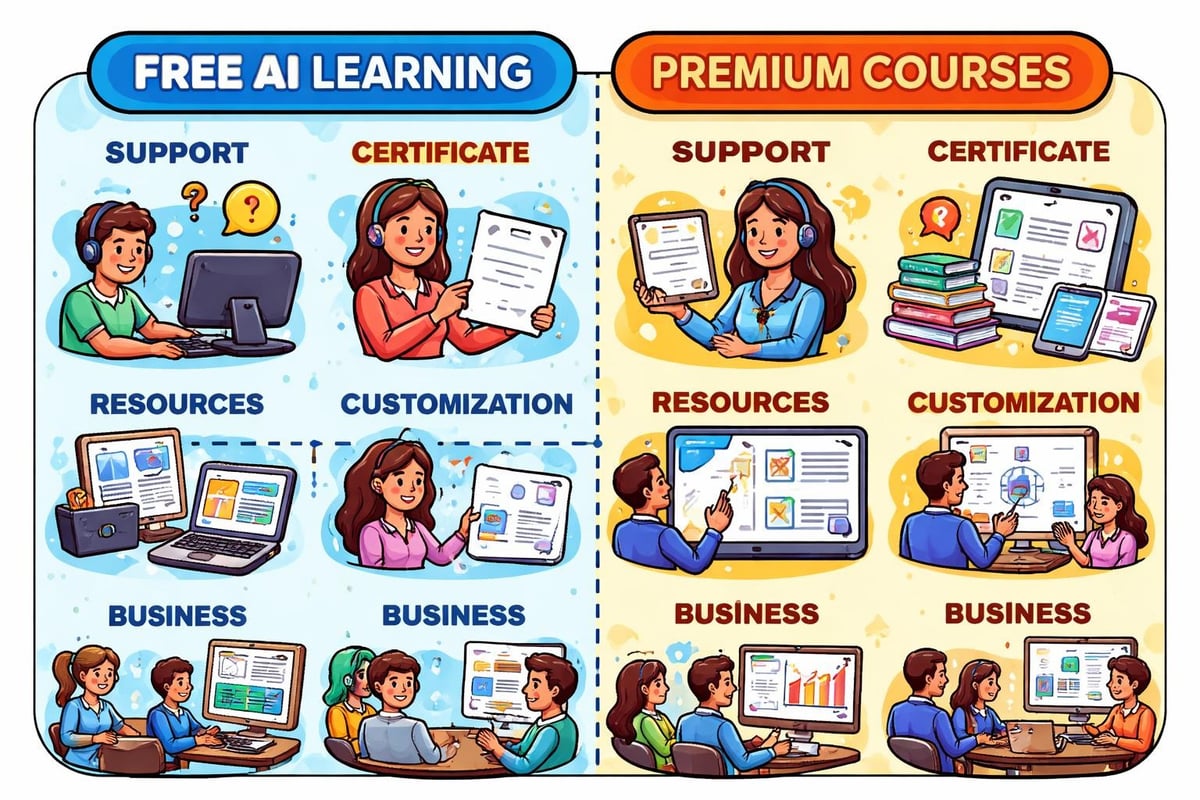
However, free courses often lack personalized support, structured certification pathways, hands-on labs with cloud resources, and corporate features like progress tracking or team management.
When Premium Courses Justify Investment
Paid ai learning courses typically offer advantages that accelerate learning and improve outcomes for serious professionals. These benefits include live instruction with immediate feedback, access to instructors for question resolution, project reviews and mentorship, computational resources for training models, recognized certifications with market value, and curated learning paths reducing decision paralysis.
For organizations, premium platforms provide administrative dashboards, custom content development, integration with learning management systems, compliance reporting, and dedicated support. Platforms like MammothClub offer comprehensive course catalogs with these enterprise features that free resources cannot match.
Emerging Trends Shaping AI Education
The field of AI education continues evolving as rapidly as AI technology itself. Understanding emerging trends helps learners and organizations make forward-looking training decisions that remain relevant as the landscape shifts.
AI-Powered Personalized Learning
Modern ai learning courses increasingly incorporate artificial intelligence into the learning experience itself. Adaptive platforms analyze learner performance, identify knowledge gaps, and adjust content difficulty dynamically. These systems recommend supplemental resources, predict areas of struggle before learners encounter them, and optimize pacing based on individual retention patterns.
Personalization extends beyond content to include preferred learning modalities, optimal session length, and even time-of-day recommendations based on performance patterns. This meta-application of AI to AI education creates more efficient skill development.
Trustworthy and Verifiable AI Education
As AI systems influence critical decisions in healthcare, finance, and public policy, education must emphasize responsible development practices. The TEAS: Trusted Educational AI Standard framework addresses the need for verifiable, pedagogically sound AI learning systems that prioritize trustworthiness alongside technical competency.
Quality courses now integrate ethics modules throughout curricula rather than treating responsible AI as an afterthought. This includes bias detection and mitigation, fairness metrics, transparency requirements, privacy preservation techniques, and regulatory compliance frameworks.
Public Engagement and Democratization
Initiatives like We Are AI: Taking Control of Technology recognize that AI literacy extends beyond technical practitioners to the broader public affected by AI systems. This trend toward democratization influences course design, making foundational concepts accessible without requiring advanced mathematics or programming backgrounds.
Simplified introductions help business leaders make informed strategic decisions, policymakers craft appropriate regulations, and citizens engage meaningfully with AI's societal implications.
Integration with Specialized Research Institutions
Leading research organizations like the Australian Institute for Machine Learning and Kempner Institute for the Study of Natural and Artificial Intelligence increasingly collaborate with educational platforms to translate cutting-edge research into accessible learning content. This connection between research frontiers and practical education reduces the lag between breakthrough discoveries and their incorporation into professional training.
Selecting the Right Course for Your Goals
With thousands of ai learning courses available across multiple platforms, making optimal selections requires systematic evaluation aligned with specific objectives, constraints, and learning preferences.
Defining Clear Learning Objectives
Begin by articulating concrete goals: Are you seeking career transition into AI roles? Building specific capabilities for current responsibilities? Exploring AI for strategic awareness? Preparing for particular certifications? Different objectives suggest different course characteristics, duration commitments, and depth requirements.
Specific goals enable more precise course evaluation. Rather than searching broadly for "AI courses," narrow to relevant specializations like computer science AI courses for academic preparation or AI and ML courses for comprehensive skill development.
Matching Prerequisites to Current Skill Level
AI courses vary dramatically in assumed background knowledge. Some require advanced calculus, linear algebra, and programming proficiency as prerequisites, while others start from absolute fundamentals. Honest self-assessment prevents frustration from courses that move too quickly or boredom from excessive review.
Check course descriptions for:
- Required mathematical background
- Expected programming experience
- Familiarity with specific tools or frameworks
- Time commitment and pacing assumptions
When uncertain about prerequisites, short courses in artificial intelligence can provide orientation without major time investment.
Evaluating Time Commitment and Format Preferences
Realistic assessment of available time prevents course abandonment. Consider whether your schedule accommodates:
- Self-paced programs requiring consistent weekly discipline
- Intensive bootcamps demanding full-time focus for weeks
- Evening or weekend live sessions
- Asynchronous content with flexible deadlines
Different formats suit different learning styles and life circumstances. Visual learners may prefer video-heavy courses, while those who learn by doing might prioritize project-based programs with extensive hands-on labs.
Considering Certification and Career Impact
If certification matters for your career goals, research credential recognition in your target industry or geography. Some employers highly value certifications from specific providers, while others prioritize demonstrated project work over formal credentials.
Review best AI courses based on outcomes metrics like hiring rates, salary impact, or career advancement among previous learners rather than marketing claims alone.
Maximizing Learning Outcomes from AI Courses
Enrollment in quality ai learning courses provides necessary but insufficient conditions for skill development. Learners who apply specific strategies extract significantly more value from identical content compared to passive participants.
Active Learning and Project Implementation
Reading about neural networks differs fundamentally from implementing them. Maximize retention and understanding through active engagement:
- Code examples from scratch rather than copying solutions
- Modify provided implementations to test understanding
- Apply concepts to personal projects beyond course assignments
- Teach concepts to others, forcing clear articulation
- Participate in course forums answering peer questions
This active approach transforms passive consumption into genuine skill building.
Building a Portfolio of Demonstrated Work
Employers and clients care less about course completion certificates than evidence of capability. Throughout your learning journey, develop public demonstrations of competency through GitHub repositories with documented projects, Kaggle competition submissions showing ranking improvement, blog posts explaining complex concepts, contributions to open-source AI projects, or deployed applications solving real problems.
Quality portfolios showcase both technical implementation and communication skills, differentiating you from others who completed identical courses.
Connecting Theory to Practical Applications
Abstract algorithms gain meaning through application to concrete problems. For each major concept, identify real-world applications:
- How do recommendation systems use collaborative filtering?
- Where do companies apply anomaly detection algorithms?
- What products depend on natural language processing?
- Which industries benefit from computer vision?
This contextualization makes knowledge sticky and immediately applicable rather than theoretical.
Maintaining Learning Momentum Beyond Course Completion
AI evolves rapidly, making continuous learning essential. After completing initial ai learning courses, establish sustainable learning habits including regular reading of research papers, following AI practitioners on social media, attending virtual conferences and webinars, participating in online communities, and experimenting with new frameworks as they emerge.
The most successful AI professionals view formal courses as launching points rather than destinations, embracing lifelong learning as career strategy.
The landscape of ai learning courses in 2026 offers unprecedented opportunities for professionals and organizations committed to building genuine AI capabilities. Success requires matching learning pathways to specific goals, combining theoretical foundations with hands-on implementation, and maintaining continuous skill development beyond formal coursework. MammothClub provides the comprehensive platform, expert instruction, and enterprise features that transform learning investments into measurable business results, helping you stay competitive as AI reshapes every industry.