The ability to ai train effectively has become one of the most critical differentiators for professionals and organizations in 2026. As artificial intelligence reshapes industries from healthcare to finance, the demand for comprehensive AI training programs has exploded. Companies investing in structured AI education report 43% higher productivity gains and significantly faster implementation cycles compared to those attempting to learn through trial and error alone. Whether you're an individual professional looking to future-proof your career or a business leader responsible for upskilling entire teams, understanding how to approach AI training strategically determines your competitive position in an AI-driven economy.
Understanding What AI Train Really Means in 2026
The phrase "ai train" encompasses far more than traditional classroom learning or generic online courses. It represents a comprehensive approach to building competencies across multiple dimensions of artificial intelligence implementation and deployment.
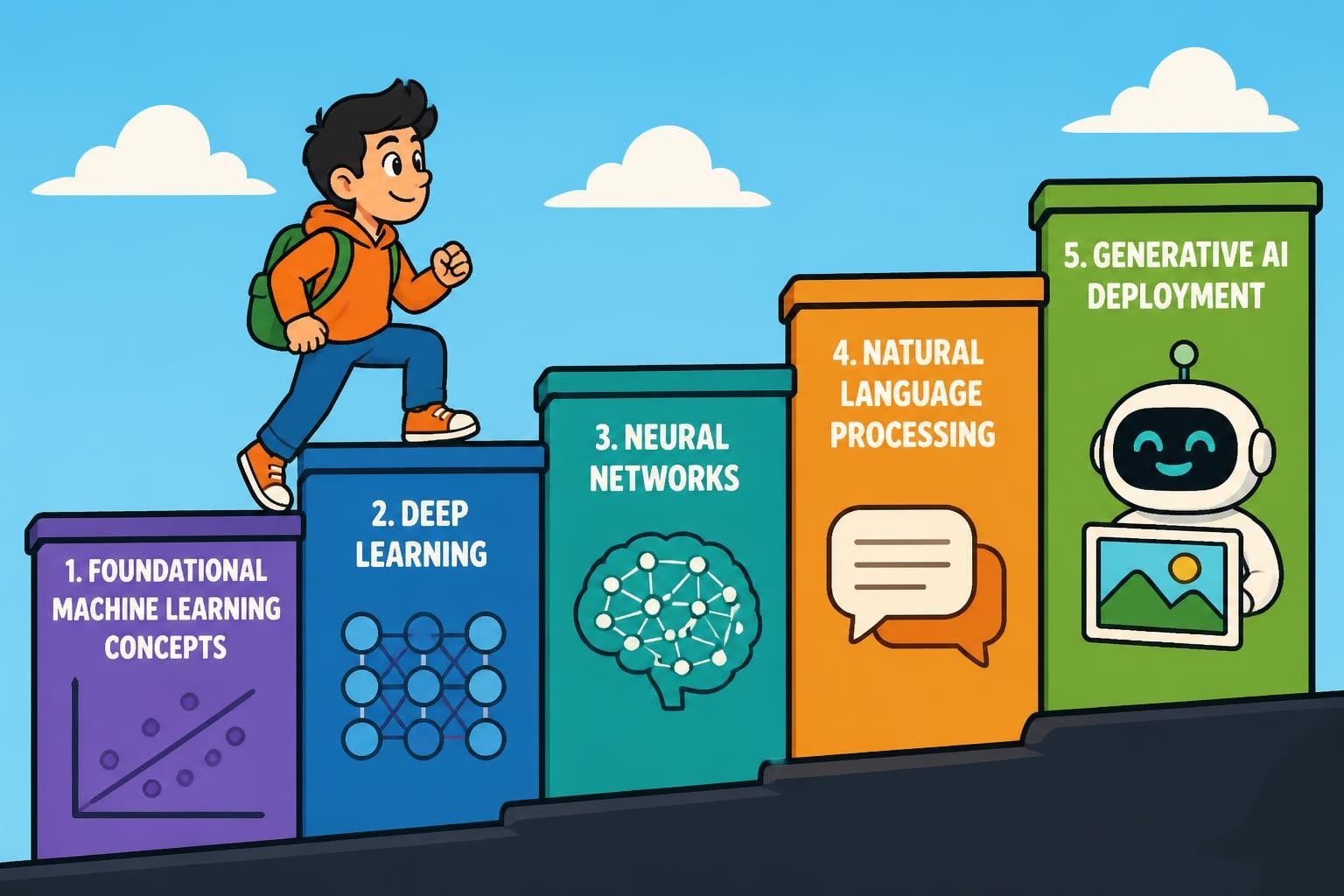
Modern AI training programs address four critical skill categories:
- AI literacy and conceptual understanding of how models work, their limitations, and appropriate use cases
- Technical proficiency in tools, frameworks, and programming languages essential for AI development
- Strategic application of AI solutions to solve real business problems
- Ethical and responsible AI practices that ensure compliance and trustworthiness
According to research on minimum skills for AI use, professionals need fundamental competencies including effective communication with AI systems, critical evaluation of outputs, and responsible deployment practices. These baseline skills create the foundation upon which specialized expertise can be built.
The Evolution From Theory to Practice
Traditional education models focused heavily on theoretical knowledge, leaving graduates unprepared for real-world implementation challenges. Modern approaches to ai train emphasize hands-on experience with actual datasets, production environments, and collaborative projects that mirror workplace scenarios.
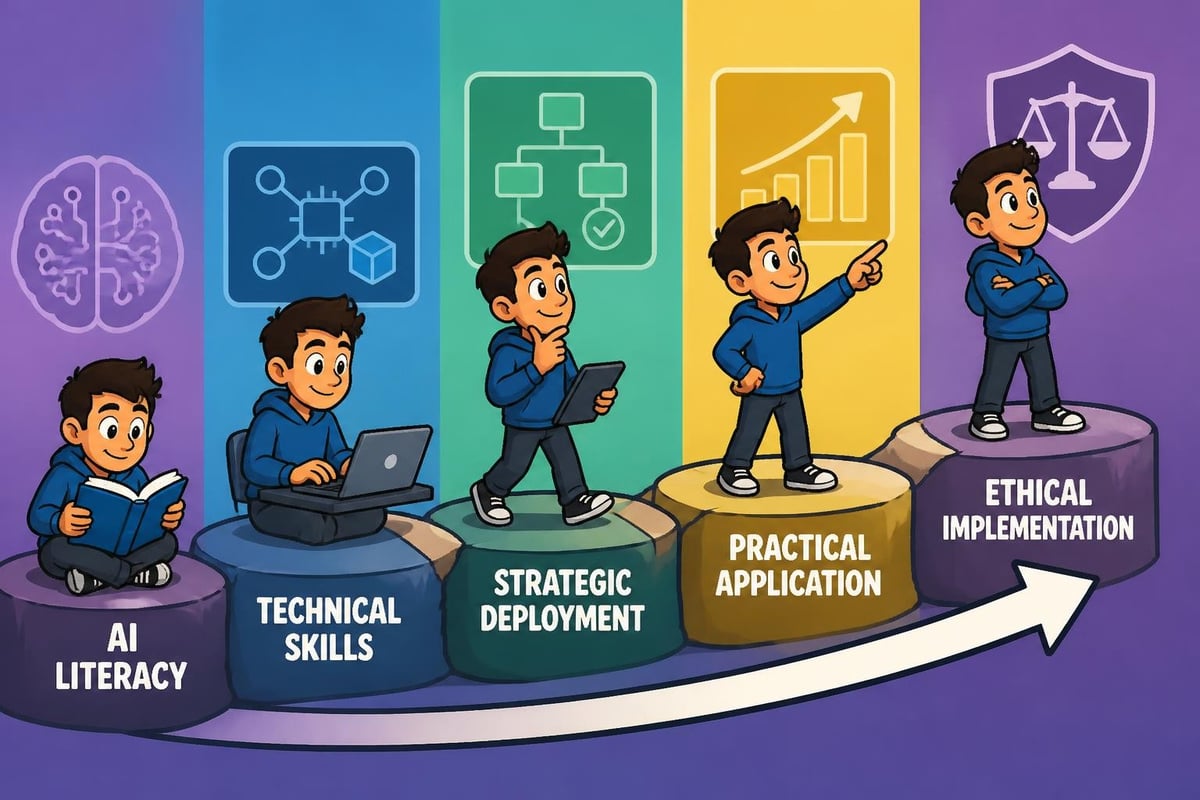
The shift toward practical application reflects what employers actually need. A data scientist who can explain gradient descent in perfect detail but cannot clean messy enterprise data or communicate findings to non-technical stakeholders provides limited value. Programs that successfully ai train participants balance theoretical foundations with applied practice, ensuring learners can immediately contribute to organizational AI initiatives.
Choosing the Right AI Training Path for Your Goals
Not all AI training programs deliver equal value. The market includes everything from free YouTube tutorials to intensive bootcamps costing tens of thousands of dollars. Selecting the right program requires clarity about your current skill level, career objectives, and learning style preferences.
| Training Type | Best For | Time Investment | Cost Range | Key Benefits |
|---|---|---|---|---|
| Self-paced courses | Beginners exploring AI | 3-6 months | $0-$500 | Flexibility, broad exposure |
| Bootcamps | Career changers | 12-24 weeks | $5,000-$20,000 | Intensive, job-focused |
| Certification programs | Professionals upskilling | 6-12 months | $1,000-$5,000 | Credibility, structured path |
| Corporate programs | Teams and organizations | Ongoing | Variable | Customized, scalable |
For professionals just beginning their AI journey, comprehensive options like an AI beginner course provide essential foundations without overwhelming technical complexity. These introductory programs cover machine learning basics, neural networks, and practical applications while building comfort with AI terminology and concepts.
Evaluating Program Quality and Relevance
When you ai train through any program, certain quality indicators separate exceptional learning experiences from mediocre ones. Look for curricula that include real datasets rather than sanitized academic examples, instructors with current industry experience, and opportunities for peer collaboration on projects.
The best programs also stay current with rapidly evolving AI capabilities. A course created in 2024 may already be outdated if it doesn't cover recent advances in large language models, multimodal AI, or emerging ethical frameworks. Check when content was last updated and whether programs commit to regular refreshes.
Critical evaluation criteria include:
- Hands-on project components that build portfolio-worthy work
- Industry recognition through partnerships or employer endorsements
- Support systems including mentorship, community forums, or office hours
- Career services that connect training to employment opportunities
- Measurable outcomes with transparent completion and placement rates
Organizations looking to ai train multiple team members should prioritize platforms offering corporate dashboards, progress tracking, and customizable learning paths. Resources focused on AI in business applications help teams understand practical implementation within their specific industry context.
Technical Foundations Every AI Practitioner Needs
Effective AI implementation requires more than understanding algorithms. Professionals must develop competencies across data management, infrastructure, and deployment that support the entire AI lifecycle.
Data Quality and Preparation Challenges
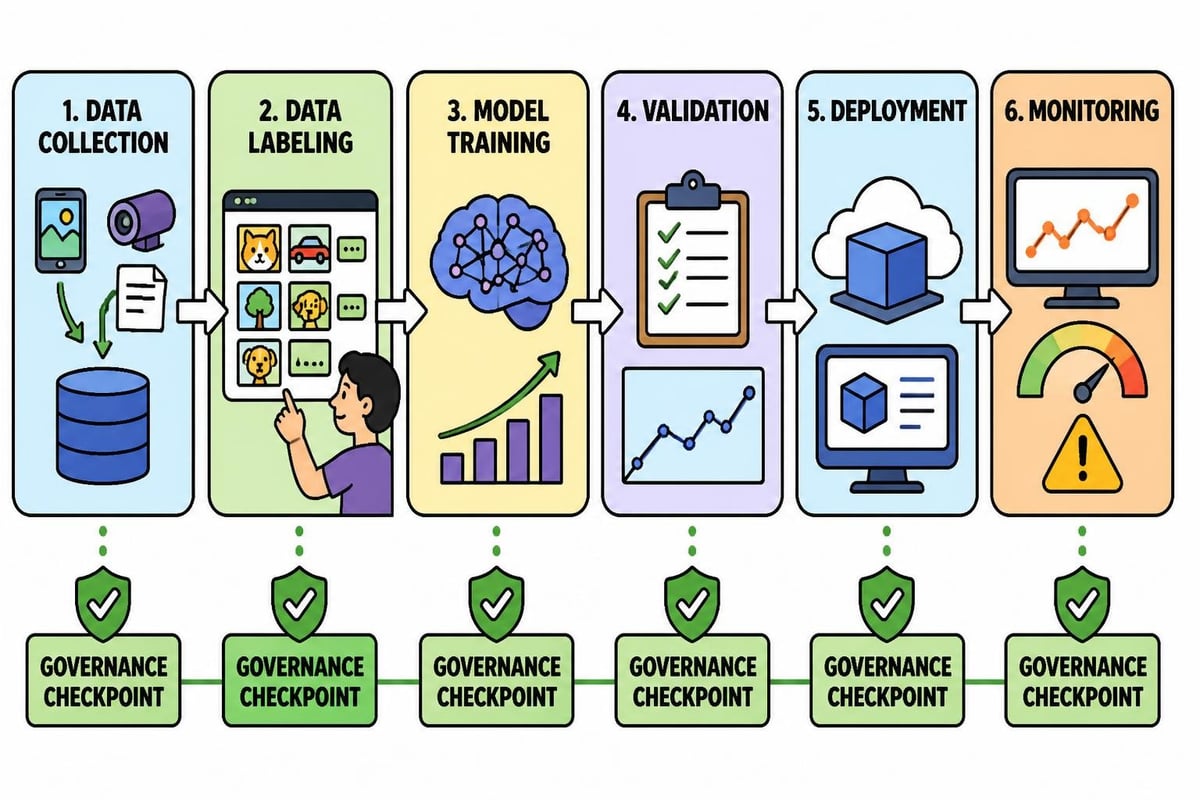
Poor data quality represents the single largest obstacle to successful AI initiatives. Models trained on incomplete, biased, or incorrectly labeled data produce unreliable outputs that undermine trust and adoption. Organizations frequently underestimate the effort required to clean data before it derails AI strategy.
When you ai train professionals in data preparation, cover these essential practices:
- Data profiling to understand distributions, missing values, and anomalies
- Labeling strategies that ensure consistency and accuracy across large datasets
- Validation frameworks that catch quality issues before they impact model training
- Documentation standards that maintain data lineage and transformation history
The importance of data governance extends beyond technical correctness. Scaling AI relies more on governance than technology, with clear ownership, access controls, and quality standards determining whether AI initiatives deliver business value or create compliance nightmares.
Understanding Hardware and Infrastructure Requirements
Many professionals underestimate the computational resources required to ai train sophisticated models. While cloud providers offer scalable infrastructure, understanding hardware fundamentals helps optimize costs and performance.
GPU requirements for AI training vary dramatically based on model complexity and dataset size. A small neural network might train effectively on laptop hardware, while large language models require clusters of specialized accelerators costing millions of dollars. Knowing when to use CPUs, GPUs, or TPUs prevents both under-provisioning that slows development and over-provisioning that wastes budget.
Cloud-based training environments provide flexibility but introduce new challenges around data transfer, network latency, and cost management. Professionals who ai train in these environments learn to balance performance requirements against budget constraints while maintaining security and compliance standards.
Navigating Common AI Training Challenges
Even well-designed programs encounter obstacles that slow progress and frustrate learners. Anticipating these challenges and developing strategies to overcome them separates successful AI education initiatives from those that fail to deliver meaningful skill development.
The Skill Erosion Problem in Automated Environments
As AI tools become more sophisticated, they paradoxically threaten the development of fundamental skills. When auto-completion writes code, when no-code platforms build models, and when AI assistants debug problems, learners miss critical practice developing core competencies.
Research on preserving data science skills in the AI era emphasizes the importance of deliberate practice with foundational concepts. Programs that effectively ai train participants balance productivity tools with structured exercises that build deep understanding rather than surface-level familiarity.
Strategies to prevent skill erosion include:
- Starting projects without AI assistance to build foundational competency
- Requiring manual implementation of key algorithms before using libraries
- Peer code reviews that evaluate understanding, not just functional output
- Regular assessments that test conceptual knowledge independent of tools
Talent Acquisition and Knowledge Transfer
Organizations face severe talent shortages in AI roles, with demand far outpacing supply of experienced practitioners. Traditional hiring strategies prove insufficient, making internal training programs essential for building the teams needed to execute AI strategies.
When companies ai train existing employees rather than competing for scarce external talent, they gain several advantages. Internal candidates already understand business context, organizational culture, and domain-specific requirements. They can apply AI solutions to real problems immediately rather than spending months learning the business.
However, knowledge transfer from experienced practitioners to newcomers remains challenging. Experts often struggle to articulate tacit knowledge developed through years of practice. Structured mentorship programs, collaborative project work, and documentation requirements help bridge this gap.
Building Organizational AI Training Programs That Scale
Individual learning represents only part of the equation. Organizations must develop comprehensive training strategies that build collective AI capabilities across teams and departments.
Creating Competency Frameworks and Learning Paths
Effective corporate AI training begins with clear competency frameworks that define required skills at different proficiency levels. These frameworks map learning objectives to business outcomes, ensuring training investments deliver measurable value.
| Proficiency Level | Key Competencies | Typical Roles | Training Focus |
|---|---|---|---|
| AI Awareness | Basic understanding, use cases | All employees | Literacy, ethics, tools |
| AI Application | Tool proficiency, problem-solving | Analysts, managers | Practical implementation |
| AI Development | Model building, deployment | Engineers, scientists | Technical depth, optimization |
| AI Strategy | Architecture, governance | Leaders, architects | Business alignment, scaling |
When you ai train at the organizational level, customize learning paths for different roles rather than forcing everyone through identical programs. Marketing professionals need different AI competencies than software engineers, though both benefit from shared foundational knowledge.
Platforms supporting AI specialization courses enable personalized learning journeys that match individual career goals while supporting organizational objectives. This approach maintains engagement by ensuring relevance while building the diverse skill sets modern AI initiatives require.
Measuring Training Effectiveness and ROI
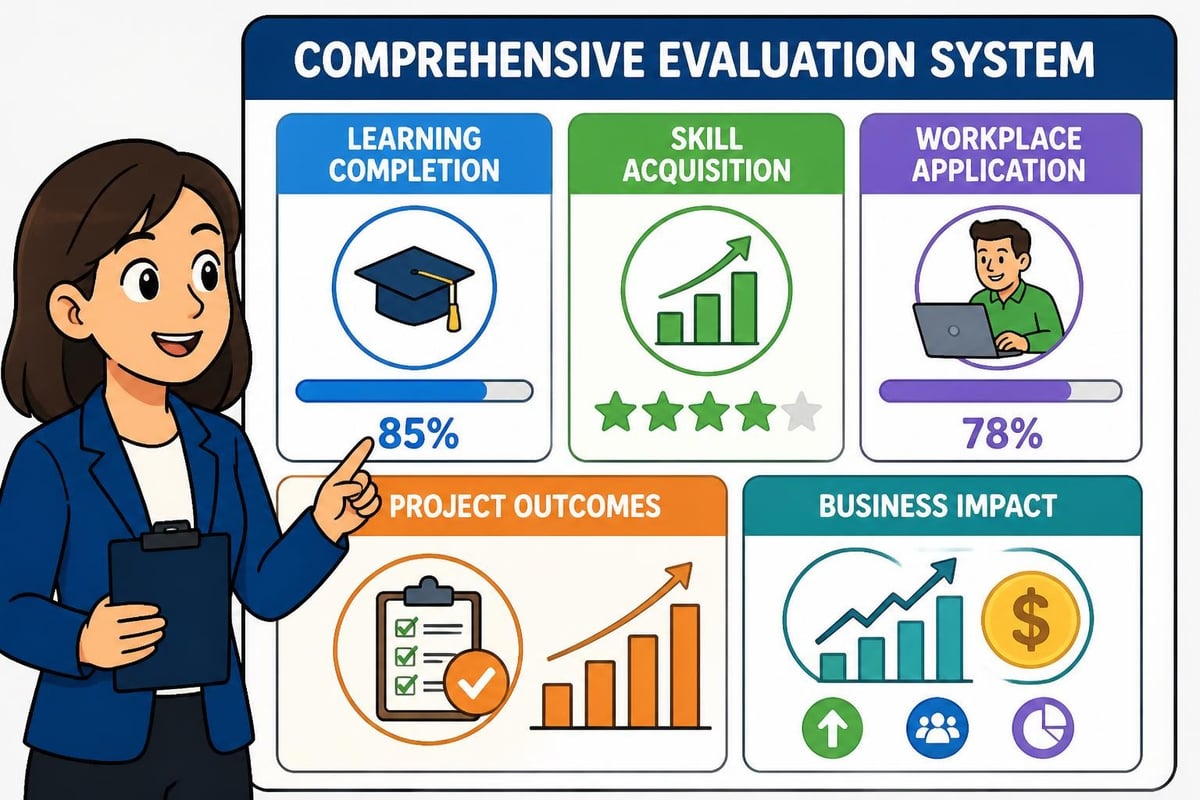
Training investments require justification through measurable business outcomes. Organizations that successfully ai train teams track metrics beyond simple completion rates, connecting learning activities to performance improvements and business results.
Key performance indicators for AI training programs include:
- Time to competency measured by ability to complete real tasks independently
- Project success rates comparing AI initiatives before and after training
- Quality metrics such as model accuracy, deployment speed, and production stability
- Business impact including cost savings, revenue growth, and efficiency gains
- Retention rates showing whether training reduces turnover in critical roles
Regular assessments throughout training programs identify knowledge gaps early, allowing course corrections before they compound. Post-training evaluations at 30, 60, and 90 days reveal whether skills transfer to workplace application or fade without reinforcement.
Advanced Topics for Experienced AI Practitioners
Professionals who have mastered foundational skills need continued education in emerging techniques, specialized domains, and leadership capabilities that extend beyond pure technical work.
Specialized AI Domains and Applications
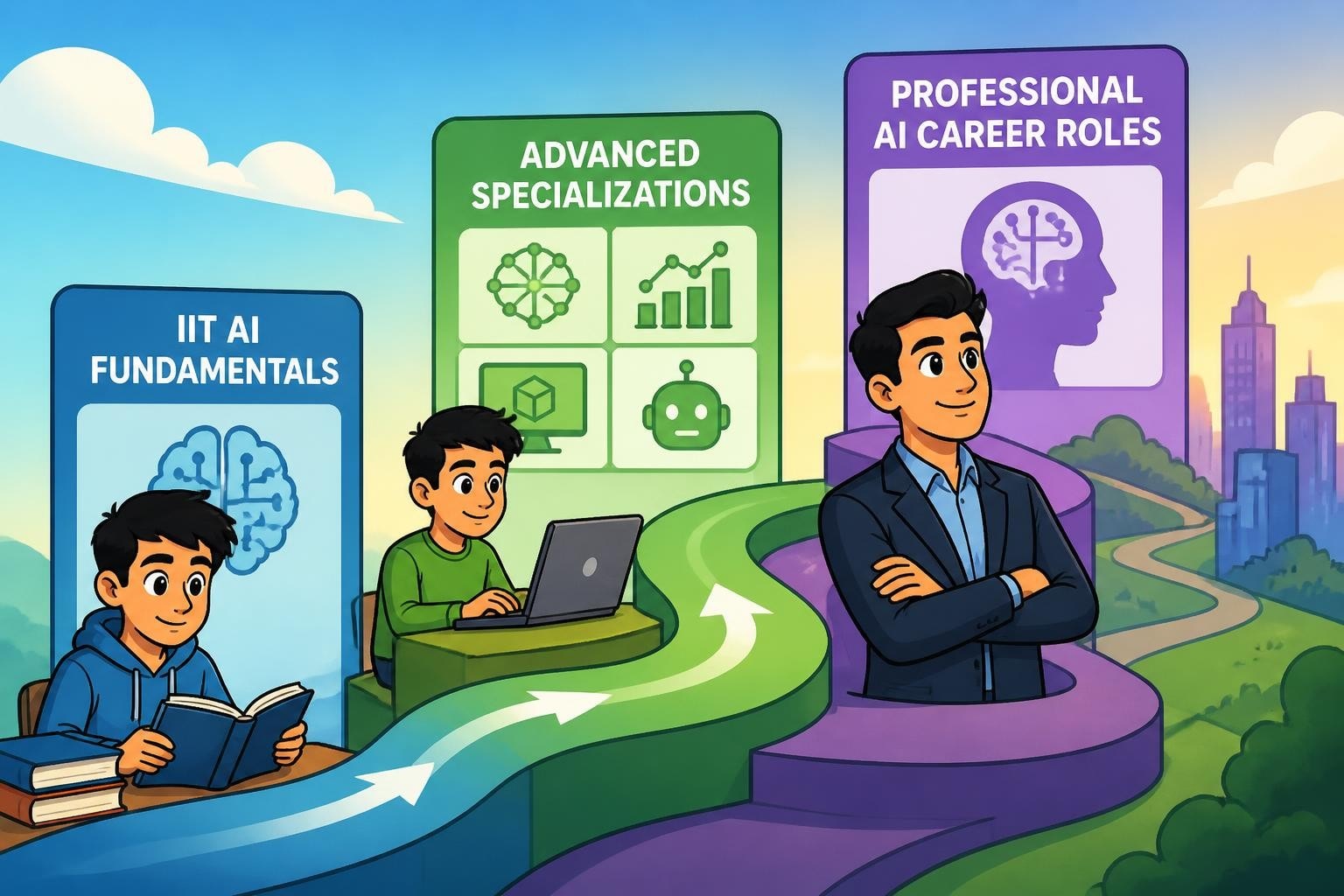
As AI matures, specialization becomes increasingly valuable. Generalist knowledge provides a foundation, but deep expertise in specific applications creates competitive advantage. When experienced professionals ai train in advanced topics, they focus on narrow domains where they can become recognized experts.
High-value specialization areas include:
- Computer vision for manufacturing quality control, medical imaging, or autonomous systems
- Natural language processing for customer service automation, content generation, or document analysis
- Reinforcement learning for robotics, game AI, or optimization problems
- Generative AI for creative applications, synthetic data, or personalized content
Specialized domains often require understanding both AI techniques and domain-specific knowledge. Medical AI demands familiarity with clinical workflows and regulatory requirements. Financial AI needs expertise in risk models and compliance frameworks. Programs offering AI and ML courses across different industries help professionals bridge technical and domain expertise.
Leadership and Strategic AI Implementation
Technical excellence alone doesn't guarantee successful AI initiatives. As practitioners advance, they must develop leadership competencies that include stakeholder management, resource allocation, and strategic planning.
Senior professionals who ai train in leadership topics learn to navigate common pitfalls including unrealistic expectations, scope creep, and organizational resistance. They develop communication skills that translate technical concepts for executive audiences and build coalitions across departments to support AI adoption.
Understanding the main challenges in AI model training from a strategic perspective helps leaders anticipate obstacles and allocate resources appropriately. Issues around data quality, infrastructure costs, talent constraints, and ethical considerations require executive attention, not just technical solutions.
Staying Current in a Rapidly Evolving Field
AI capabilities advance so quickly that knowledge from six months ago may already be outdated. Professionals committed to long-term careers in AI must develop strategies for continuous learning that extend beyond formal training programs.
Building a Personal Learning Ecosystem
Effective continuous learning combines multiple information sources and learning modalities. When you ai train beyond structured programs, create a personal ecosystem that includes academic research, industry publications, community participation, and hands-on experimentation.
Components of a robust learning ecosystem:
- Academic papers through arXiv, research conferences, and university publications
- Industry blogs from leading AI companies and practitioners
- Community forums including Reddit, Stack Overflow, and specialized Discord servers
- Podcasts and videos for passive learning during commutes or exercise
- Side projects that provide hands-on practice with new techniques
Following thought leaders on social platforms provides early signals about emerging trends. Participating in open-source projects builds skills while contributing to the broader AI community. Attending conferences, even virtually, exposes you to diverse perspectives and cutting-edge research before it becomes mainstream.
Balancing Depth and Breadth in Ongoing Education
The tension between specialization and generalization intensifies as careers progress. Deep expertise in specific areas creates value but risks obsolescence if those technologies become less relevant. Broad awareness across AI domains provides flexibility but may lack the depth required for complex problems.
Most successful AI practitioners alternate between periods of deep focus building specialized expertise and broader exploration maintaining awareness of adjacent fields. They ai train strategically, investing heavily in foundational skills with staying power while sampling emerging areas to identify promising specializations.
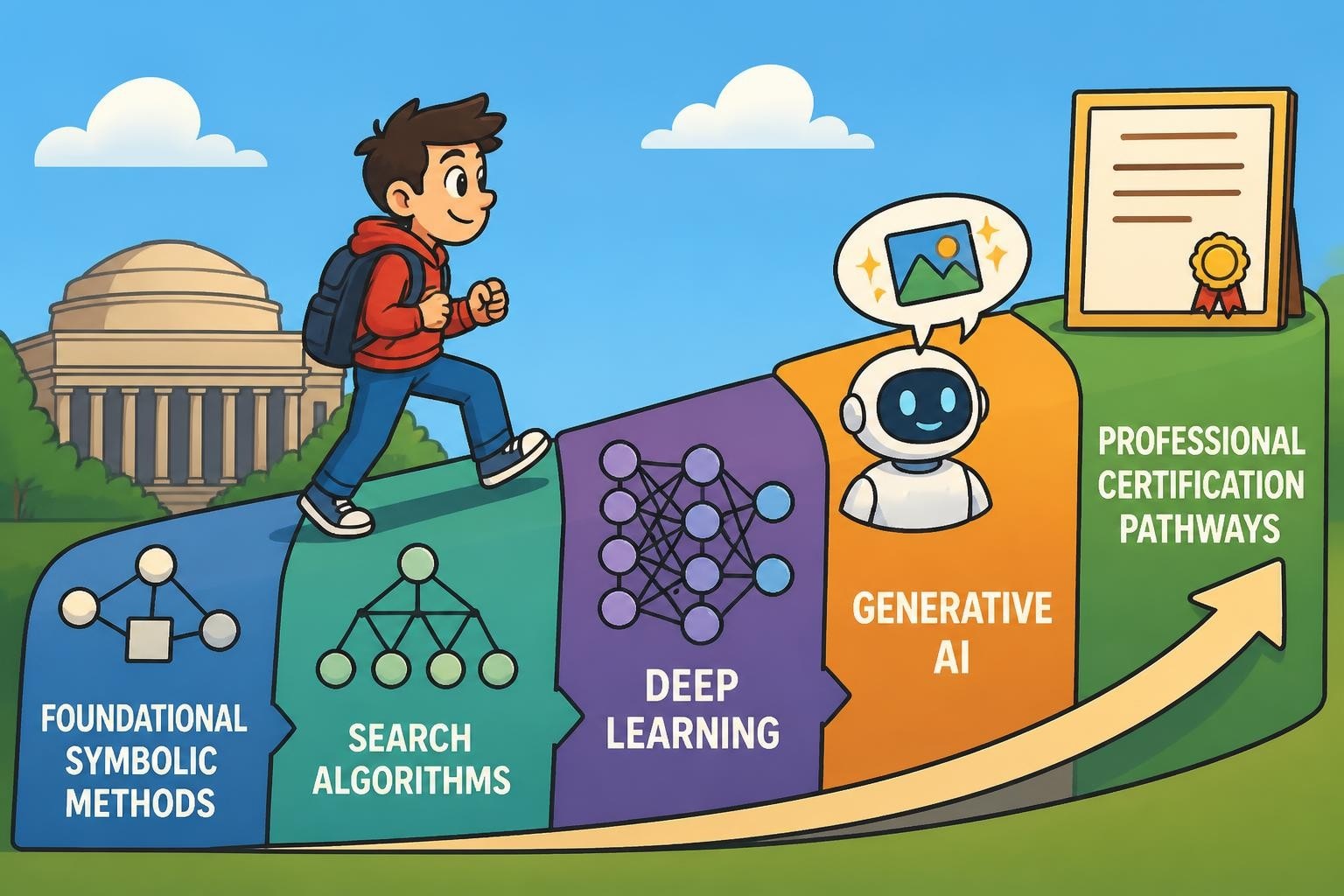
Certifications provide structured paths for expanding expertise while demonstrating competency to employers. Options like AI engineer certification validate technical skills through standardized assessments, offering credential value beyond self-directed learning.
Ethical AI and Responsible Development Practices
As AI systems influence increasingly consequential decisions, ethical considerations move from theoretical discussions to practical implementation requirements. Professionals must understand not just how to build AI systems, but when deployment is appropriate and how to ensure fairness, transparency, and accountability.
Understanding Bias, Fairness, and Transparency
AI systems inherit and often amplify biases present in training data, algorithmic design, and deployment contexts. When you ai train in ethical AI practices, you learn to identify these biases and implement mitigation strategies throughout the development lifecycle.
Common bias sources include historical discrimination in training data, unrepresentative sampling that excludes important populations, and proxy variables that correlate with protected characteristics. Addressing these issues requires both technical interventions like debiasing algorithms and organizational changes including diverse development teams and inclusive design processes.
Transparency presents unique challenges for AI systems, particularly deep learning models whose decision-making processes resist simple explanation. Professionals working with AI must balance model performance against interpretability requirements, choosing architectures appropriate for the deployment context and stakeholder needs.
Regulatory Compliance and Governance Frameworks
The regulatory landscape for AI continues evolving rapidly across different jurisdictions and industries. Professionals who ai train in compliance topics stay ahead of changing requirements rather than scrambling to achieve conformance after regulations take effect.
Governance frameworks provide structure for responsible AI development and deployment. These frameworks typically address data privacy, algorithmic transparency, human oversight, security controls, and accountability mechanisms. Organizations implementing strong governance report fewer compliance issues and higher stakeholder trust.
Dedicated AI ethics courses explore these topics in depth, preparing professionals to navigate complex ethical dilemmas and build systems that respect human values while delivering business value.
Successfully navigating AI training in 2026 requires strategic thinking about skill development, continuous learning, and practical application. Whether you're just beginning your AI journey or leading organizational transformation, choosing the right learning path and maintaining commitment to ongoing education determines long-term success. MammothClub provides comprehensive AI training solutions with over 3,000 courses, interactive bootcamps, and corporate programs designed to help professionals and teams build the skills needed to thrive in an AI-driven future.