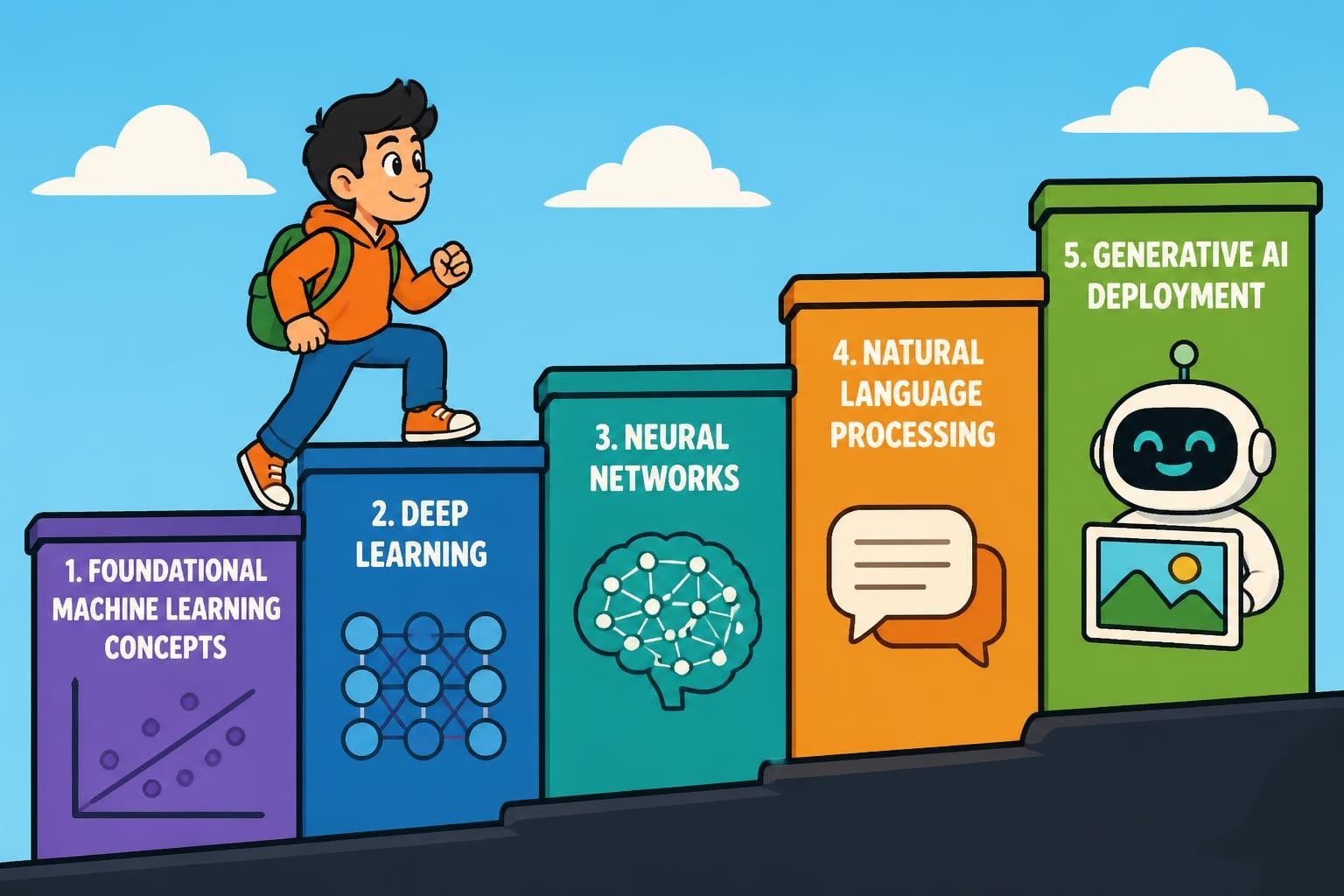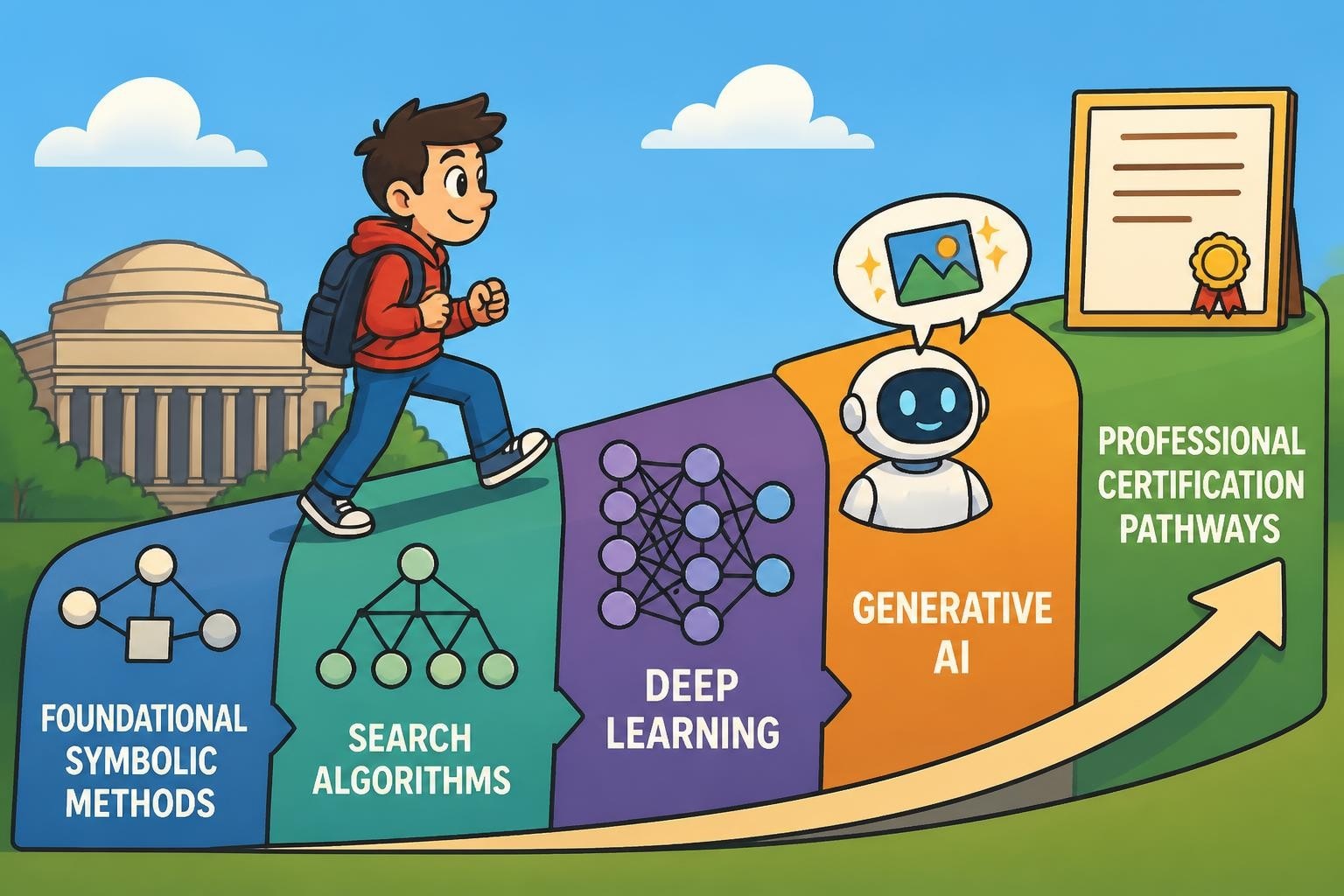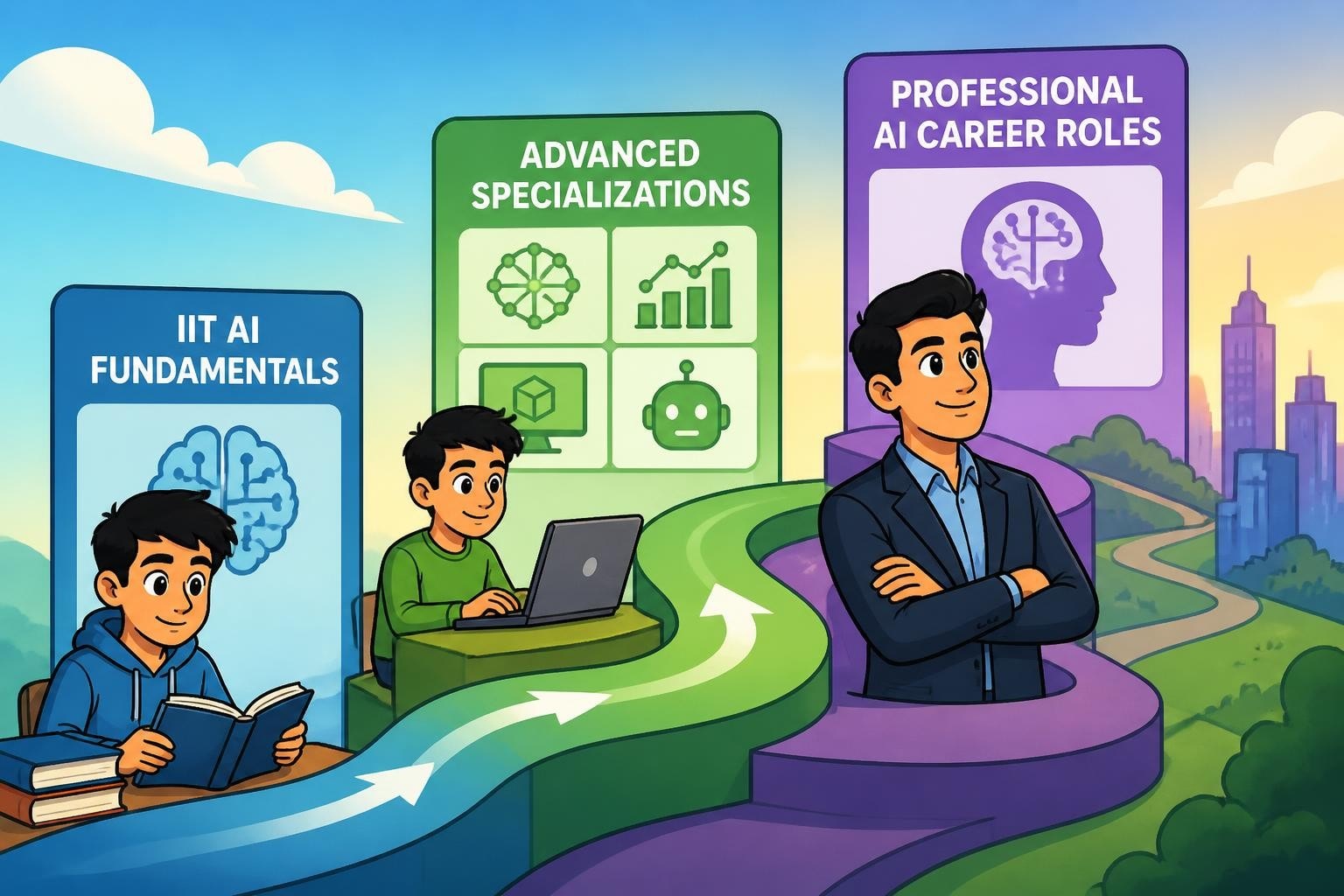
The artificial intelligence revolution demands professionals who understand both fundamental concepts and practical implementation. Microsoft's azure ai 900 fundamentals certification has emerged as the gateway credential for anyone entering the AI field in 2026, validating essential knowledge across machine learning, computer vision, natural language processing, and responsible AI practices. Whether you're a business analyst exploring AI capabilities, a developer transitioning into machine learning, or an IT professional managing cloud infrastructure, this foundational certification provides the conceptual framework and Azure-specific knowledge needed to participate confidently in AI initiatives.
What the Azure AI 900 Fundamentals Certification Covers
The AI-900: Azure AI Fundamentals exam validates your understanding of core AI and machine learning concepts alongside practical knowledge of Azure's AI services. The exam structure divides into four primary domains, each weighted differently to reflect its importance in real-world AI projects.
Core AI Concepts and Workload Types
This foundational section comprises approximately 15-20% of the exam and establishes your grasp of what AI actually means in business contexts. You'll need to distinguish between different AI workload types:
- Machine learning workloads that identify patterns and make predictions from historical data
- Computer vision applications that process and analyze visual information
- Natural language processing systems that understand and generate human language
- Conversational AI solutions like chatbots and virtual assistants
- Knowledge mining workflows that extract insights from unstructured content
Understanding these distinctions matters because selecting the wrong AI approach wastes resources and produces poor results. A chatbot project requires different architecture, training data, and evaluation metrics than an image classification system.
Machine Learning Fundamentals on Azure
Machine learning represents 25-30% of the azure ai 900 fundamentals exam content. This section tests both theoretical understanding and practical Azure knowledge.
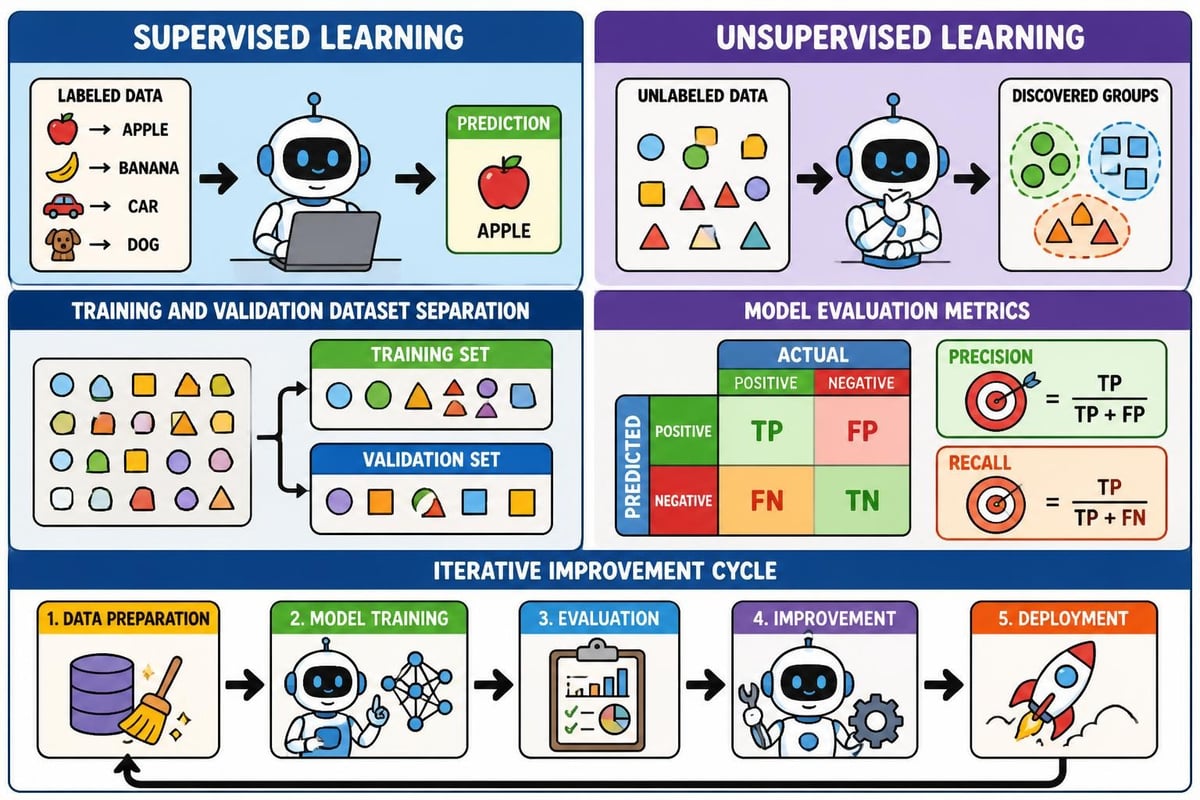
Key concepts you must understand:
| Concept | What It Means | Azure Service |
|---|---|---|
| Supervised Learning | Training with labeled examples | Azure Machine Learning |
| Unsupervised Learning | Finding patterns without labels | Azure ML clustering |
| Regression | Predicting continuous values | Azure ML designer |
| Classification | Categorizing into groups | Automated ML |
The getting started with AI on Azure learning path provides hands-on practice with these concepts through interactive modules. You'll learn how Azure Machine Learning workspace components work together: datastores for managing training data, compute targets for running experiments, pipelines for orchestrating workflows, and models registered for deployment.
Automated Machine Learning (AutoML) receives significant exam attention because it democratizes ML for professionals without deep data science backgrounds. You should understand when AutoML makes sense versus custom model development, which algorithms it tests automatically, and how to interpret the resulting model explanations.
Computer Vision Capabilities in Azure
Computer vision accounts for roughly 20-25% of exam questions and covers Azure's services for image and video analysis. Modern businesses use these capabilities for quality control, medical imaging, retail analytics, and content moderation.
Azure Computer Vision Service
This multi-purpose API handles numerous visual analysis tasks through simple REST calls or SDK integration. Exam topics include:
- Image analysis - Detecting objects, generating captions, identifying brands, recognizing celebrities
- Optical Character Recognition (OCR) - Extracting printed and handwritten text from images
- Spatial analysis - Understanding people movement and occupancy in physical spaces
- Face detection - Identifying faces and attributes (but not facial recognition for identification)
Custom Vision and Form Recognizer
Beyond pre-built models, Azure enables custom vision solutions. Custom Vision service lets you train image classifiers and object detectors with your own labeled images. This matters for industry-specific use cases where general models underperform.
Form Recognizer (part of Azure AI Document Intelligence in 2026) extracts structured data from documents, receipts, invoices, and business cards. Understanding its pre-built models versus custom models distinguishes beginners from those ready for real implementations.
Practical applications professionals encounter:
- Manufacturing defect detection requiring custom-trained classifiers
- Healthcare document processing extracting patient information
- Retail shelf monitoring counting products and detecting stockouts
- Security systems analyzing video feeds for unusual activities
Those exploring responsible AI course options will find computer vision raises particular ethical considerations around surveillance, bias in facial analysis, and consent that the exam addresses.
Natural Language Processing and Azure AI Services
NLP represents 20-25% of the azure ai 900 fundamentals certification and demonstrates how machines understand human language. Azure provides multiple services addressing different NLP challenges.
Azure AI Language Service
Previously called Text Analytics, this unified service offers:
- Sentiment analysis determining positive, negative, or neutral tone
- Key phrase extraction identifying main topics and concepts
- Named entity recognition finding people, places, organizations, dates
- Language detection identifying which language text contains
- Entity linking connecting entities to knowledge base entries
Question Answering and Language Understanding
Question answering creates conversational knowledge bases from FAQs, manuals, and documents. Users ask natural language questions and receive precise answers extracted from your content.
Conversational Language Understanding (CLU) builds more sophisticated apps that interpret user intent and extract relevant entities. For example, booking a flight requires understanding the intent (book flight) plus entities (destination, date, passenger count).
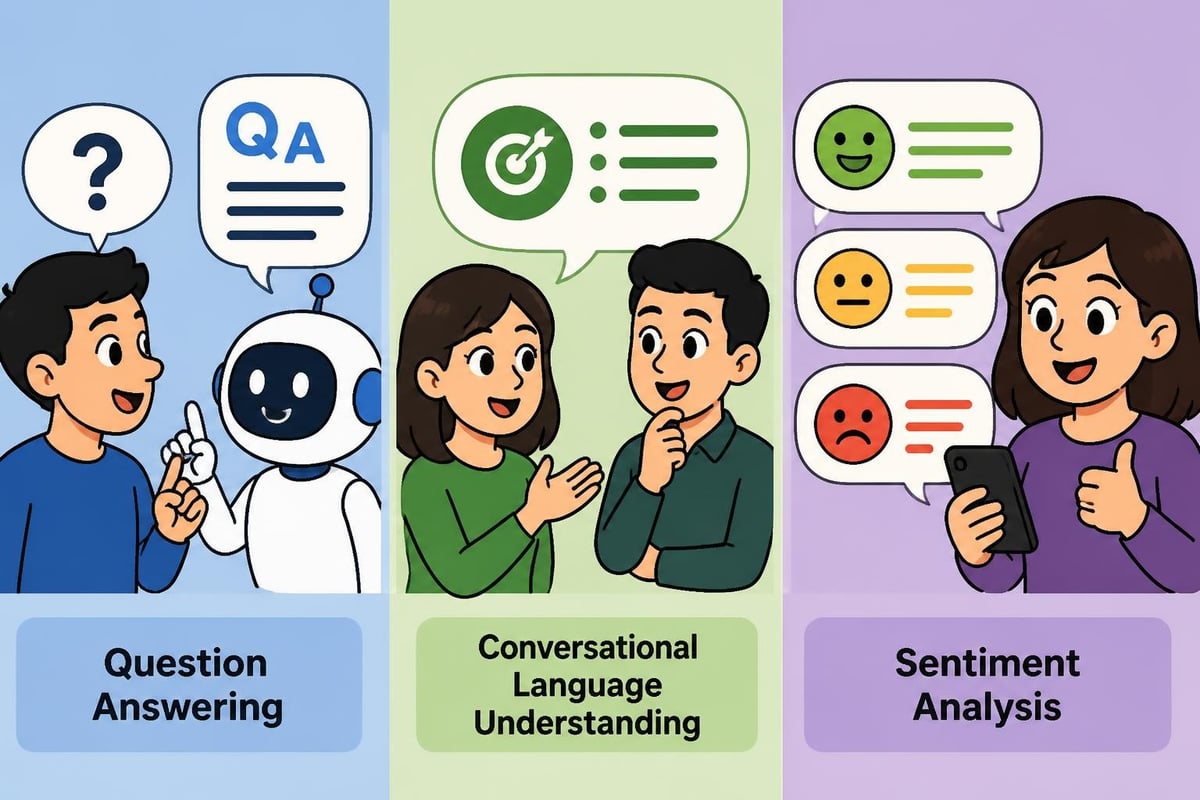
Service selection decision tree:
| Your Need | Recommended Service | Example Use Case |
|---|---|---|
| Answer questions from docs | Question Answering | IT helpdesk assistant |
| Understand commands | Language Understanding | Smart home control |
| Analyze customer feedback | Sentiment Analysis | Product review monitoring |
| Extract information | Entity Recognition | Resume parsing system |
The artificial intelligence Microsoft course offerings at MammothClub include hands-on labs with these services, providing practical experience beyond theoretical knowledge.
Conversational AI and Azure Bot Service
Chatbots and virtual agents constitute the practical application of NLP capabilities. The exam covers both the Azure Bot Service framework and the Power Virtual Agents no-code alternative.
Azure Bot Service Architecture
Understanding bot components matters for the certification:
- Bot logic processing user inputs and generating responses
- Channels connecting bots to Teams, Slack, websites, SMS
- Azure Bot Framework SDK for code-based development
- Language models powering natural conversation
Power Virtual Agents enables business users to build bots without coding through graphical interfaces. You should know its capabilities, limitations compared to custom bots, and integration points with other Azure services.
Key conversational AI concepts tested:
- Multi-turn conversations maintaining context across messages
- Dialogs structuring conversation flows and gathering information
- Prompts requesting specific user inputs with validation
- Cards and adaptive cards creating rich interactive responses
Organizations building customer service automation or internal productivity assistants need professionals who understand these architectural decisions. The rise of large language models in 2026 has enhanced conversational capabilities, making this knowledge increasingly relevant for business applications.
Responsible AI Principles and Governance
Microsoft emphasizes responsible AI throughout the azure ai 900 fundamentals exam, reflecting real-world requirements for ethical AI deployment. This section typically comprises 15-20% of questions but influences every other domain.
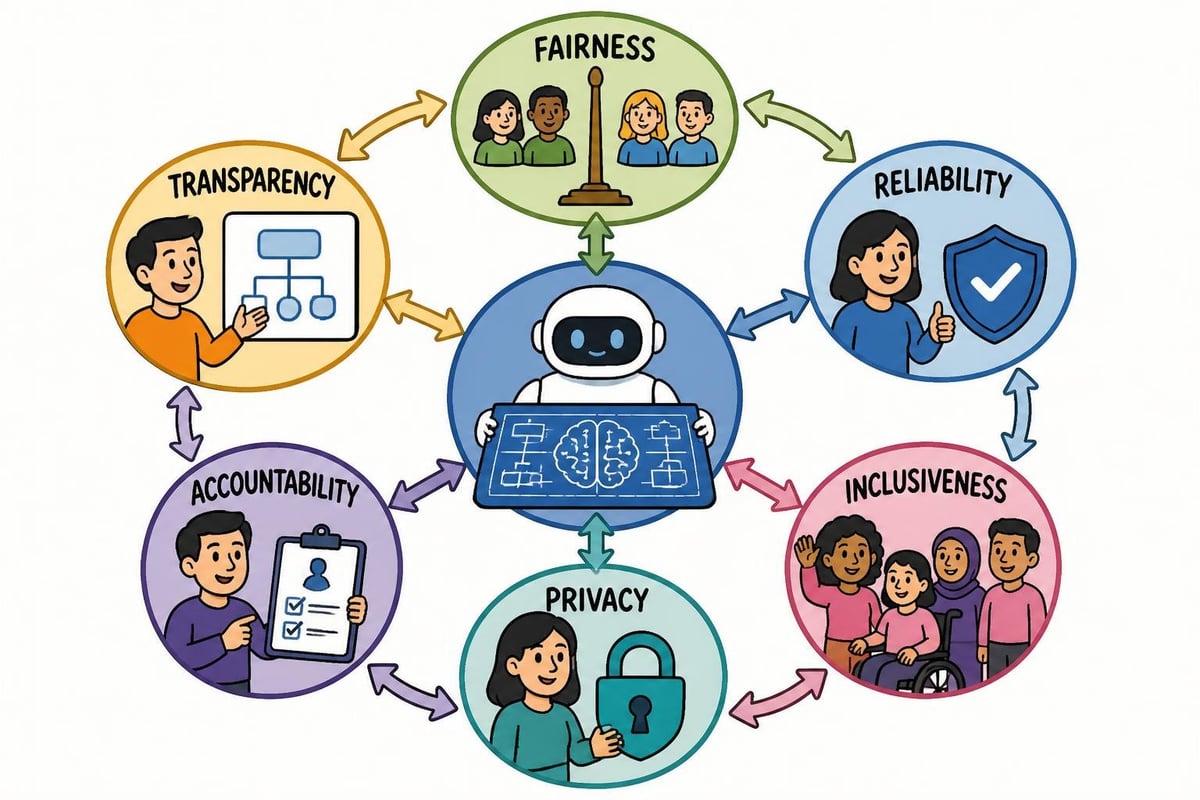
Six Core Principles
Microsoft's responsible AI framework establishes guidelines every AI practitioner must understand:
- Fairness - AI systems should treat all people equitably without discriminatory bias
- Reliability and Safety - Systems must perform consistently and handle edge cases safely
- Privacy and Security - Personal data requires protection through design and governance
- Inclusiveness - AI should benefit everyone regardless of abilities or circumstances
- Transparency - Users deserve to understand how AI systems make decisions
- Accountability - Humans remain responsible for AI system outcomes
The shared responsibility model for AI clarifies which security and compliance aspects Microsoft handles versus customer obligations. Understanding this division prevents dangerous assumptions about automatic protection.
Practical Implementation Considerations
Beyond principles, the exam tests practical knowledge of implementing responsible AI:
| Challenge | Mitigation Strategy | Azure Tool |
|---|---|---|
| Biased training data | Diverse datasets, fairness metrics | Fairlearn toolkit |
| Model opacity | Explanations and interpretability | Model explanations in ML |
| Data privacy | Differential privacy, encryption | Azure confidential computing |
| Unintended harm | Testing, monitoring, human oversight | Model monitoring dashboards |
Real-world AI projects fail when teams ignore these considerations. A hiring algorithm showing gender bias creates legal liability. A medical diagnosis system that underperforms for certain demographics causes patient harm. The certification validates you understand these risks before they materialize.
Those pursuing best AI courses should prioritize programs addressing ethics and governance alongside technical skills, as regulatory frameworks continue tightening globally.
Azure AI Services Architecture and Deployment
Understanding how Azure organizes and delivers AI capabilities helps you navigate the platform efficiently. Microsoft has consolidated previously scattered services under unified offerings in 2026.
Azure AI Foundry Platform
Azure AI Foundry represents Microsoft's unified platform for building, testing, and deploying AI solutions. The exam covers its role in:
- Centralizing access to Azure OpenAI Service, Computer Vision, Language, and other APIs
- Providing model catalogs with pre-built and customizable options
- Offering development environments with integrated testing tools
- Managing deployments across development, staging, and production
Service Provisioning and Management
You must understand how to create and configure AI service resources:
- Resource creation through Azure Portal, CLI, or infrastructure-as-code
- Endpoint configuration setting up API access points
- Key management securing access through authentication
- Pricing tiers selecting appropriate capacity and features
- Monitoring and logging tracking usage and performance
Common resource types and their purposes:
- Azure Cognitive Services multi-service resource - Single endpoint for multiple AI APIs with consolidated billing
- Single-service resources - Dedicated instances of specific services like Computer Vision
- Azure Machine Learning workspace - Comprehensive environment for custom ML development
- Azure OpenAI Service - Access to GPT-4, DALL-E, and other foundation models
The Azure AI developer resources overview provides quickstarts and SDKs for hands-on practice with these deployment patterns.
Effective Exam Preparation Strategies
Passing the azure ai 900 fundamentals certification requires more than reading documentation. A structured approach combining theory, hands-on practice, and strategic studying produces better results.
Study Resource Priorities
Focus your preparation on:
- Microsoft Learn official training paths covering all exam objectives
- Hands-on labs in Azure Portal experimenting with services
- Practice assessments identifying knowledge gaps
- Documentation deep-dives on specific services and concepts
- Community forums understanding common misconceptions
Avoid relying solely on third-party exam dumps, which teach memorization rather than understanding. The exam periodically updates to reflect Azure service evolution, rendering outdated materials counterproductive.
Hands-On Practice Requirements
You cannot pass this certification through reading alone. Azure provides free tiers and trial credits enabling practical exploration:
- Create Computer Vision resources and analyze sample images
- Build a simple QnA bot from FAQ documents
- Train an Automated ML model on sample datasets
- Test sentiment analysis on customer review text
- Experiment with Form Recognizer on invoice samples
Many professionals leverage AI and ML courses online that include guided labs and sandbox environments, reducing the complexity of setting up practice resources independently.
Time Management and Exam Format
The AI-900 exam provides 45-60 minutes to complete 40-60 questions. This tight timeframe demands efficient question processing:
- Read questions carefully identifying what's actually being asked
- Eliminate obviously incorrect answers first
- Flag uncertain questions for review rather than getting stuck
- Watch time remaining and pace accordingly
- Save complex scenario questions for final review if needed
Question types you'll encounter:
| Type | Description | Strategy |
|---|---|---|
| Multiple choice | Single correct answer | Eliminate wrong options first |
| Multiple response | Multiple correct answers | Read all options carefully |
| Scenario-based | Case study with follow-ups | Understand context before answering |
| Drag-and-drop | Order or match items | Verify logic before submitting |
Career Value and Next Steps After Certification
The azure ai 900 fundamentals certification serves multiple career trajectories. Understanding where it fits in your professional development maximizes its return on investment.
Who Benefits Most From This Certification
This entry-level credential particularly helps:
- Business analysts evaluating AI solutions for feasibility and requirements gathering
- Project managers overseeing AI initiatives and communicating with technical teams
- Sales engineers demonstrating Azure AI capabilities to prospective customers
- IT administrators managing Azure environments that include AI services
- Developers beginning AI specialization from traditional application development
The certification validates foundational knowledge without requiring deep programming or mathematics backgrounds. This accessibility makes it ideal for professionals entering AI from adjacent fields.
Advanced Certifications and Learning Paths
AI-900 serves as the foundation for more specialized Microsoft credentials:
- AI-102: Azure AI Engineer Associate - Designing and implementing AI solutions using Azure services
- DP-100: Azure Data Scientist Associate - Creating and operationalizing machine learning models
- AI-050: Developing Generative AI Solutions - Building applications with Azure OpenAI Service
Professionals pursuing machine learning courses should view AI-900 as establishing baseline knowledge before tackling advanced material requiring mathematical and programming expertise.
Integration With Broader AI Education
The certification complements but doesn't replace comprehensive AI education. Consider it one component within a larger learning journey:
- Foundational certifications (AI-900) establish vocabulary and conceptual frameworks
- Specialized courses dive deep into specific domains like NLP or computer vision
- Hands-on projects build practical skills through real implementations
- Soft skills development addresses communication, ethics, and stakeholder management
Organizations implementing corporate certification programs often combine AI-900 with role-specific training, creating structured pathways from awareness through expert-level capabilities.
Common Pitfalls and How to Avoid Them
Understanding where candidates typically struggle helps you prepare more effectively for the azure ai 900 fundamentals exam.
Confusing Similar Services
Azure's AI portfolio includes overlapping services addressing similar problems differently. Exam questions frequently test whether you can distinguish:
- Azure Machine Learning vs. Automated ML vs. Custom Vision - Different tools for training models with varying complexity and control
- Question Answering vs. Language Understanding - FAQ retrieval versus intent-based conversation
- Computer Vision vs. Custom Vision vs. Face API - General image analysis versus custom classifiers versus face-specific features
Create comparison charts highlighting when to use each service based on requirements, technical constraints, and team capabilities.
Overlooking Responsible AI
Some candidates dismiss responsible AI sections as common sense, underestimating their exam weight. Microsoft intentionally emphasizes these principles because real-world AI deployments fail when teams ignore ethics and governance.
Study specific implementation approaches:
- How to evaluate models for bias across demographic groups
- What transparency means in practice (model cards, user notifications)
- Privacy-preserving techniques like differential privacy
- Human-in-the-loop patterns maintaining oversight
Neglecting Hands-On Experience
Reading about Computer Vision differs drastically from actually calling the API, interpreting responses, and handling errors. Theoretical knowledge alone leaves you unprepared for scenario-based questions describing real implementation challenges.
Budget at least 10-15 hours for hands-on Azure Portal practice beyond studying documentation and courses.
Memorizing Without Understanding
The exam tests conceptual understanding and application, not memorization of service names or API parameters. Questions present scenarios requiring you to:
- Select appropriate services given business requirements
- Identify responsible AI concerns in deployment plans
- Recommend solutions addressing specific constraints
- Troubleshoot common implementation issues
Focus on understanding why certain approaches work rather than memorizing what services exist.
Keeping Skills Current After Certification
Azure AI services evolve rapidly, with new capabilities, updated APIs, and enhanced models releasing continuously. Your certification validates knowledge as of exam day, but maintaining relevance requires ongoing learning.
Following Azure AI Updates
Microsoft announces significant changes through multiple channels:
- Azure Updates page filtering for AI and machine learning announcements
- Microsoft Learn documentation revision histories showing service changes
- Azure AI Blog featuring new capabilities and customer case studies
- Tech Community forums where product teams discuss upcoming features
Set up alerts or RSS feeds ensuring you catch major announcements affecting certified knowledge areas.
Continuing Education Approaches
Practical strategies for staying current:
- Subscribe to monthly Azure newsletters highlighting AI service updates
- Participate in Microsoft virtual events and webinars on AI topics
- Experiment with new service features as they enter preview
- Join professional communities discussing Azure AI implementations
- Contribute to open-source projects using Azure AI services
Platforms like MammothClub continuously update course content reflecting the latest Azure capabilities, making ongoing education more efficient than self-directed research alone.
Preparing for Recertification
Microsoft periodically updates certification requirements, sometimes requiring renewal assessments or continuing education credits. Track your certification expiration date and renewal requirements through your Microsoft Learn profile.
Many professionals schedule recertification attempts 18-24 months after initial certification, allowing time to gain practical experience while knowledge remains fresh. This timing also ensures you learn updated Azure capabilities rather than simply reviewing outdated material.
Mastering the azure ai 900 fundamentals certification provides the essential knowledge foundation for participating effectively in AI initiatives, whether you're implementing solutions, managing projects, or advising stakeholders on Azure capabilities. The exam validates you understand both fundamental AI concepts and the practical Azure services that bring those concepts to production. Ready to accelerate your AI learning journey? MammothClub offers comprehensive Azure AI training paths, hands-on labs, and certification prep resources designed to help professionals and teams build job-ready skills efficiently. Explore our platform to access expert-led courses, interactive practice environments, and measurable progress tracking that transforms certification study into career advancement.