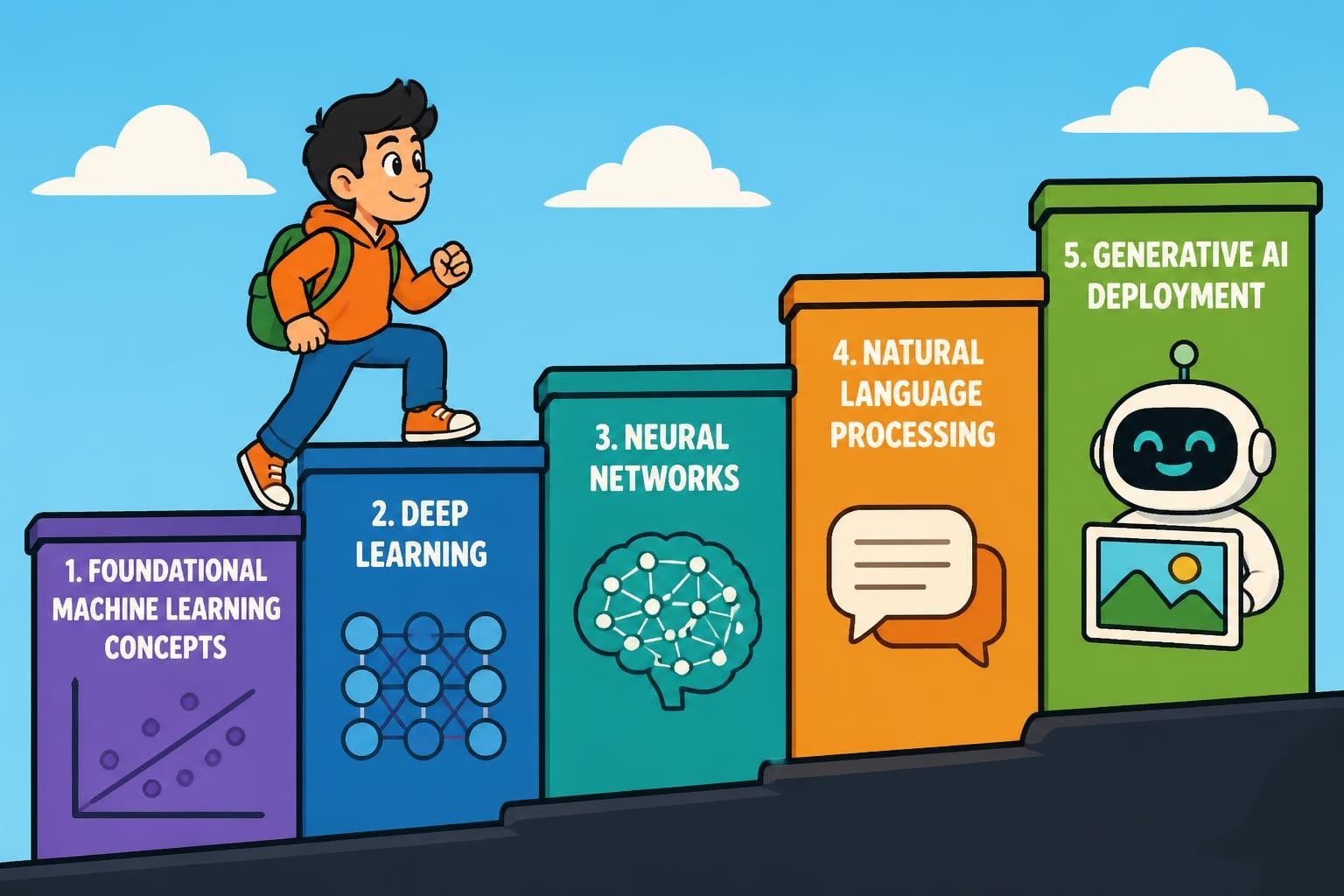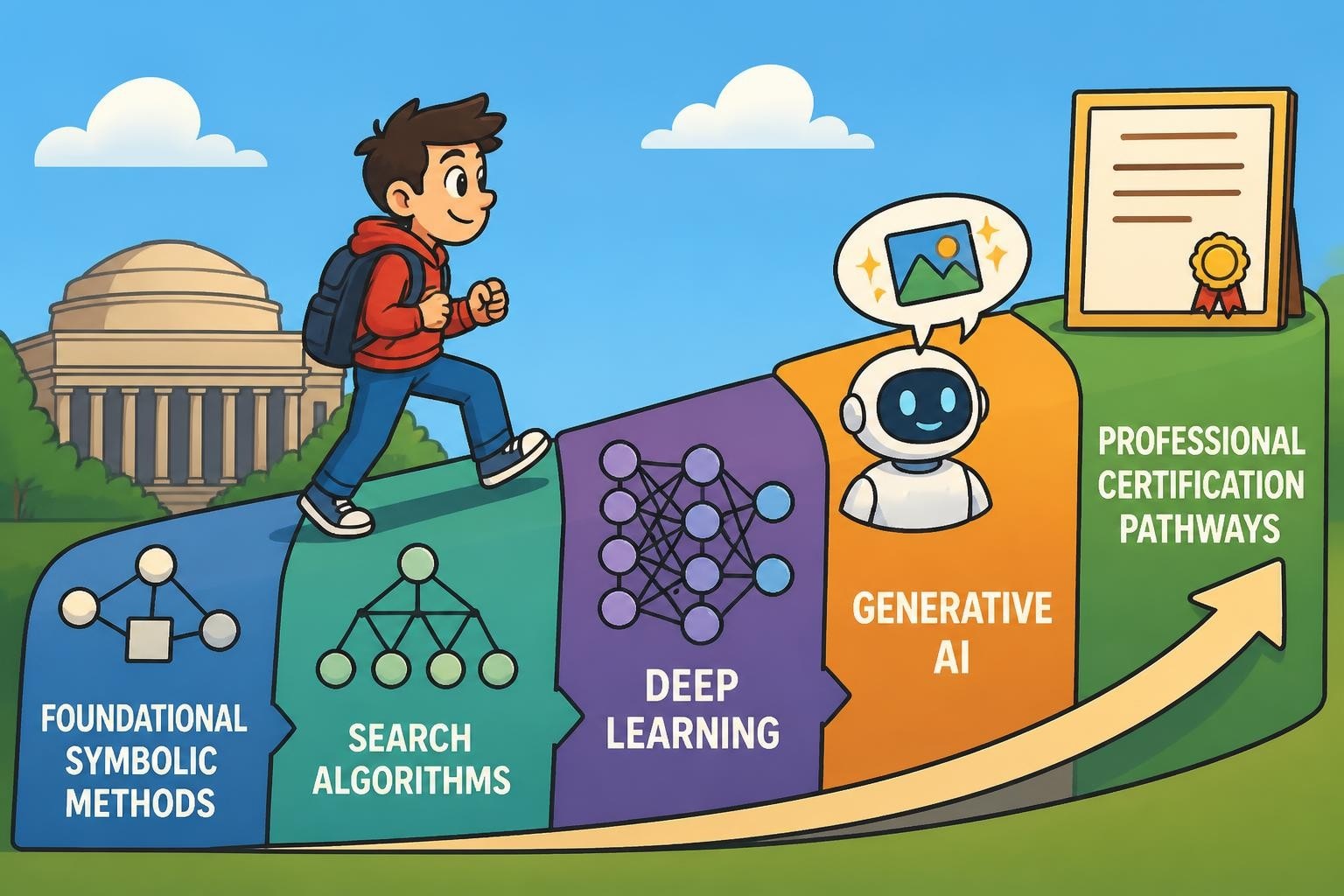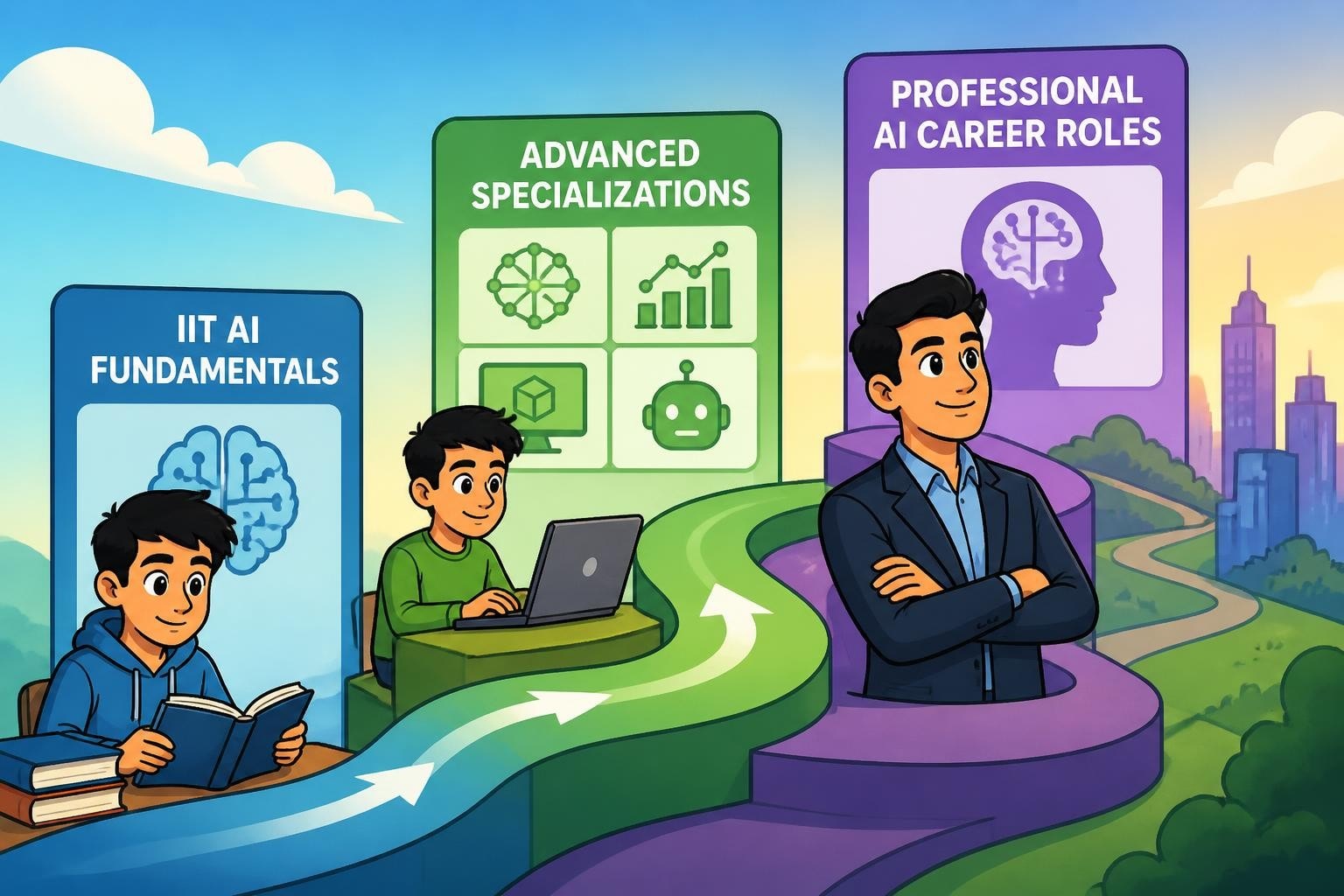
The artificial intelligence revolution has fundamentally transformed how professionals approach career development in 2026. With organizations across every industry racing to implement AI solutions, the demand for skilled practitioners has never been higher. Taking ai courses online has become the most efficient path for professionals to build expertise without disrupting their careers, offering flexibility, comprehensive content, and hands-on practice that traditional education struggles to match. Whether you're a business leader seeking strategic AI literacy or a developer building technical expertise, understanding the landscape of online AI education is critical for making informed decisions about your learning investment.
Understanding the Modern AI Learning Landscape
The market for ai courses online has matured significantly over the past few years, evolving from basic introductions to comprehensive learning ecosystems. Professionals now face thousands of options spanning multiple platforms, teaching styles, and specialization areas.
What Makes Online AI Education Different in 2026
Today's AI learning platforms have shifted from passive video consumption to interactive, project-based experiences. Modern ai courses online incorporate live coding environments, real-time feedback from AI tutors, and collaborative projects that mirror actual workplace scenarios.
Key features that define quality AI courses include:
- Hands-on labs with cloud-based computing resources
- Industry-recognized certifications from major tech companies
- Project portfolios that demonstrate practical competency
- Adaptive learning paths that respond to your progress
- Integration with professional development frameworks
The most effective platforms now offer AI-powered personalization that adjusts content difficulty, suggests supplementary resources, and identifies knowledge gaps. This represents a fundamental shift from the one-size-fits-all approach that dominated earlier online education.
For beginners specifically, platforms like Coursera offer foundational AI courses that establish core concepts before advancing to specialized topics.
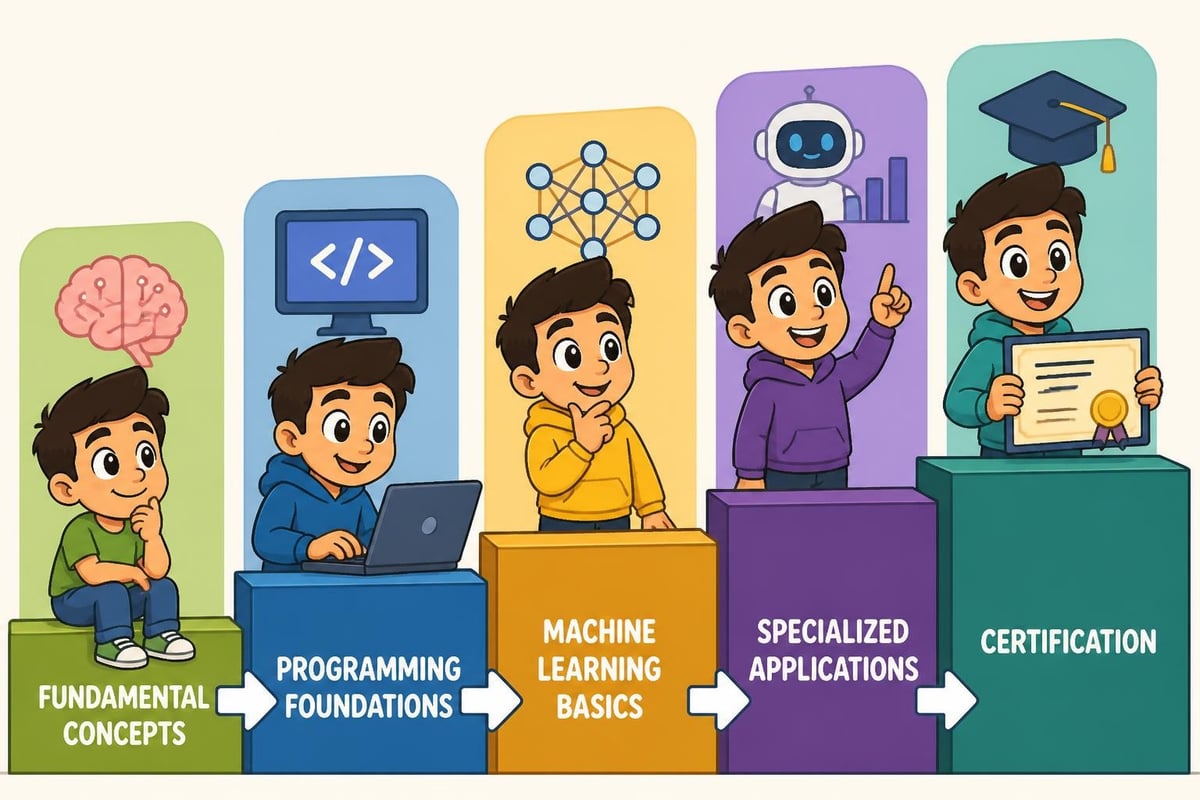
Choosing the Right AI Course for Your Career Goals
Your learning objectives should drive every decision about which ai courses online to pursue. A marketing professional implementing AI tools needs dramatically different training than a software engineer building machine learning models.
Business Leaders and Non-Technical Professionals
If you're focused on strategic AI implementation rather than coding, courses like AI For Everyone by Andrew Ng provide the conceptual framework without requiring programming knowledge. These programs help you understand AI capabilities, limitations, and organizational impact.
Business-focused learners should prioritize:
- Understanding AI use cases across industries
- Evaluating vendor solutions and build-versus-buy decisions
- Managing AI projects and cross-functional teams
- Addressing ethical considerations and bias mitigation
- Calculating ROI and measuring AI initiative success
For executives and managers, exploring AI in business applications provides practical frameworks for leading AI transformation initiatives within organizations.
Developers and Technical Practitioners
Technical professionals need ai courses online that emphasize implementation skills, algorithm understanding, and framework proficiency. Your learning path typically progresses through Python programming, data manipulation, machine learning fundamentals, and specialized areas like computer vision or natural language processing.
| Learning Stage | Focus Areas | Typical Duration |
|---|---|---|
| Foundation | Python, statistics, linear algebra | 2-3 months |
| Core ML Skills | Supervised/unsupervised learning, model evaluation | 3-4 months |
| Deep Learning | Neural networks, TensorFlow, PyTorch | 3-5 months |
| Specialization | NLP, computer vision, reinforcement learning | 4-6 months |
Programs like Udacity's AI Programming with Python Nanodegree provide structured paths through these technical foundations with portfolio projects that demonstrate competency to employers.
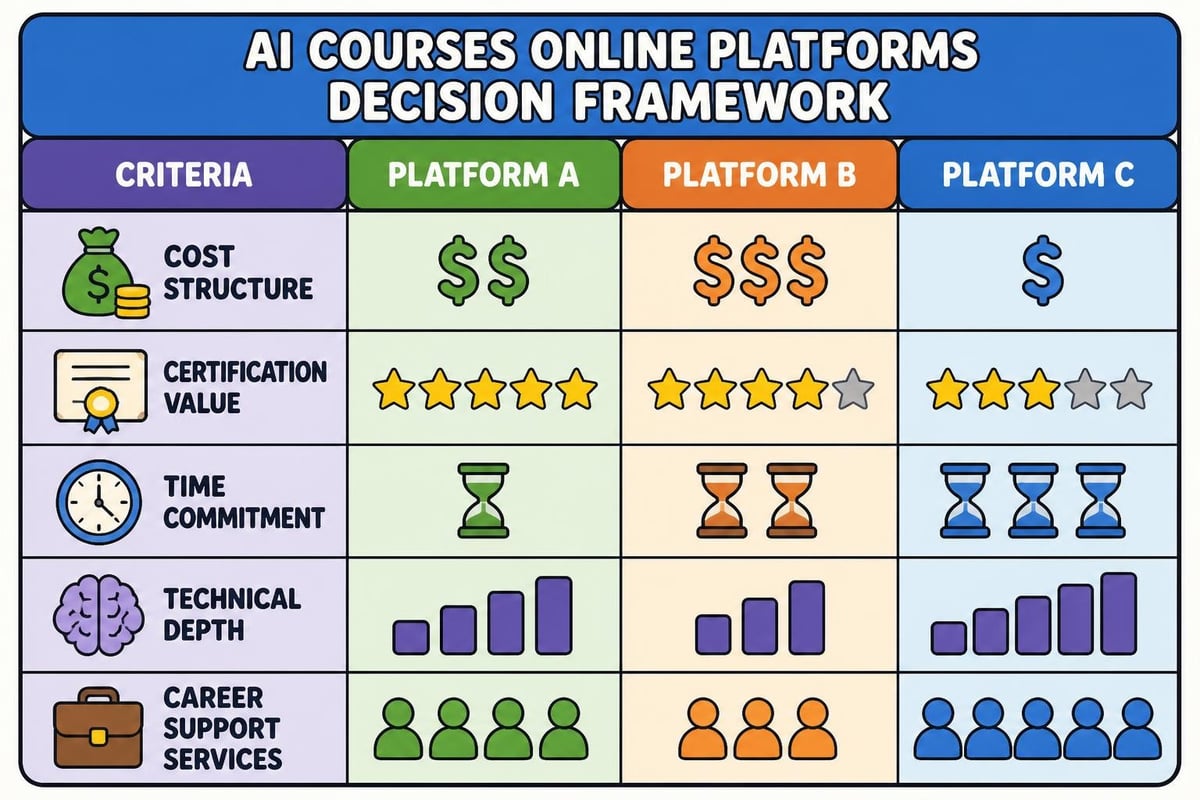
Platform Comparison: Where to Take AI Courses Online
The platform you choose dramatically impacts your learning experience, career outcomes, and return on investment. Each major provider offers distinct advantages depending on your circumstances.
University-Backed Programs
EdX and Coursera partner with leading universities to offer academic-quality instruction. Columbia University's Artificial Intelligence course on edX exemplifies rigorous academic approaches that dive deep into theoretical foundations.
Advantages of university-backed programs:
- Academic credibility and recognized credentials
- Theoretical depth that prepares you for advanced study
- Access to research-focused perspectives on emerging AI trends
- Structured curricula designed by experienced educators
These programs typically require more time investment but provide stronger foundational understanding that supports long-term career growth.
Industry-Focused Learning Platforms
Platforms emphasizing practical skills and industry certifications have gained significant traction. MammothClub's approach of combining 3,000+ on-demand courses with interactive bootcamps and corporate programs reflects this market demand for immediately applicable knowledge.
The advantage of industry-focused platforms lies in their responsiveness to market needs. Course catalogs update frequently to reflect current tools, frameworks, and methodologies that employers actively seek.
Free and Open Educational Resources
For professionals exploring AI before committing to paid programs, resources like Khan Academy's AI curriculum provide accessible entry points. These free options help you validate interest and aptitude before investing in comprehensive certification programs.
Certification Paths That Accelerate Career Advancement
Not all certifications carry equal weight with employers. Understanding which credentials deliver career impact helps you invest learning time strategically.
Deep Learning and Advanced Specializations
For technical professionals, Andrew Ng's Deep Learning Specialization on Coursera has become an industry-recognized benchmark. This series of courses signals to employers that you possess practical neural network implementation skills, not just theoretical knowledge.
Advanced certifications demonstrate commitment and competency in specialized areas:
- Computer Vision: Object detection, image segmentation, facial recognition
- Natural Language Processing: Sentiment analysis, translation, chatbot development
- Reinforcement Learning: Game AI, robotics, optimization problems
- Generative AI: Large language models, image generation, content creation
Those pursuing vendor-specific paths should investigate offerings like Azure AI certifications, which validate proficiency with specific cloud platforms and tools that enterprises actively use.
Graduate-Level Programs and MicroMasters
Columbia University's Artificial Intelligence MicroMasters on edX represents the convergence of online flexibility with graduate-level rigor. These programs often provide credit toward full master's degrees while delivering immediately applicable knowledge.
MicroMasters programs offer unique benefits:
- Graduate-level curriculum at a fraction of traditional tuition costs
- Stackable credentials that can lead to full degrees
- Deeper theoretical foundations than typical bootcamps
- University recognition that carries weight with employers
For professionals considering eventual master's degree enrollment, MicroMasters provide a low-risk way to test graduate education while earning recognized credentials.
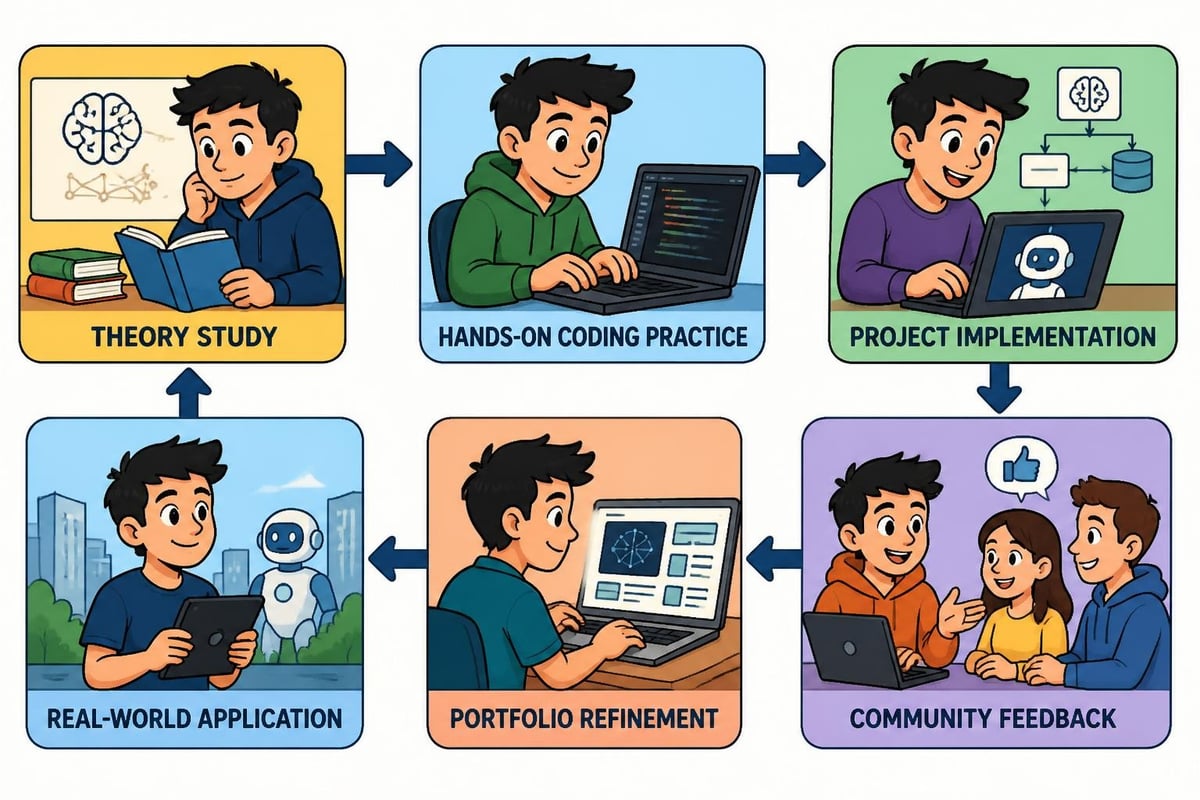
Building Practical Skills Through Project-Based Learning
The gap between completing ai courses online and performing actual AI work often surprises learners. Employers consistently prioritize demonstrated capability over course completion certificates.
Portfolio Development Strategies
Your learning journey should produce tangible artifacts that showcase your abilities. Effective portfolios include:
- End-to-end machine learning projects showing data collection, cleaning, model training, and deployment
- Domain-specific applications relevant to your target industry (healthcare diagnostics, financial forecasting, customer segmentation)
- Code repositories with clear documentation and reproducible results
- Written case studies explaining your problem-solving approach and results
- Deployed applications that others can interact with online
Platforms emphasizing project work provide structured guidance through this portfolio development. The Machine Learning Specialization from the University of Washington incorporates multiple projects that can serve as portfolio foundations.
Leveraging AI Learning Communities
The most successful learners actively participate in communities surrounding their ai courses online. Discussion forums, study groups, and collaborative projects accelerate understanding while building professional networks.
Consider these community engagement strategies:
- Join platform-specific Discord servers or Slack channels
- Participate in Kaggle competitions related to your course topics
- Contribute to open-source AI projects on GitHub
- Attend virtual meetups and webinars hosted by course instructors
- Share your learning journey and projects on LinkedIn or personal blogs
For those exploring specialized areas, resources like AI robotics courses often come with active communities working on similar challenges.
Navigating Emerging AI Specializations in 2026
The AI field continues fragmenting into increasingly specialized domains. Understanding these niches helps you position your skills strategically.
Generative AI and Large Language Models
The explosion of generative AI applications has created massive demand for professionals who understand prompt engineering, fine-tuning, and responsible deployment. Courses addressing ChatGPT and generative AI applications have emerged as high-priority learning paths for both technical and non-technical professionals.
This specialization requires understanding:
- Transformer architecture and attention mechanisms
- Prompt engineering techniques for different use cases
- Fine-tuning approaches for domain-specific applications
- Ethical considerations around generated content
- Integration patterns for enterprise deployment
AI Ethics and Responsible Development
As AI systems influence increasingly consequential decisions, expertise in AI ethics has transitioned from optional to essential. These courses address bias detection, fairness metrics, transparency requirements, and regulatory compliance frameworks.
Organizations now actively seek professionals who can navigate the intersection of technical capability and ethical responsibility, making this specialization valuable across roles.
Industry-Specific AI Applications
Vertical specializations offer competitive advantages in crowded job markets. AI applications in healthcare, finance, manufacturing, and retail each involve unique challenges, datasets, and regulatory considerations.
| Industry | Key AI Applications | Specialized Knowledge Required |
|---|---|---|
| Healthcare | Diagnostic imaging, drug discovery, patient monitoring | HIPAA compliance, medical terminology, clinical workflows |
| Finance | Fraud detection, algorithmic trading, credit scoring | Financial regulations, risk management, time-series analysis |
| Manufacturing | Predictive maintenance, quality control, supply chain optimization | Industrial processes, IoT integration, real-time systems |
| Retail | Demand forecasting, personalization, inventory optimization | Consumer behavior, seasonal patterns, recommendation systems |
Maximizing ROI from Your AI Education Investment
Taking ai courses online requires significant time and often financial investment. Ensuring maximum return requires strategic approaches to learning and career development.
Time Management for Working Professionals
Most professionals pursue AI education while maintaining full-time jobs. Successful learners typically dedicate 10-15 hours weekly, scheduling consistent study blocks rather than sporadic intensive sessions.
Effective time management strategies include:
- Morning study sessions before work begins
- Lunch breaks for watching shorter lecture segments
- Weekend blocks for hands-on project work
- Using commute time for audio content or reading
- Scheduling specific project milestones on your calendar
Platform features like offline video downloads and mobile learning apps help maximize otherwise unproductive time.
Employer Sponsorship and Professional Development Budgets
Many organizations maintain learning and development budgets that cover ai courses online. Presenting a clear business case that connects your learning goals to organizational needs significantly increases approval likelihood.
When requesting employer support, emphasize:
- Specific skills you'll develop and how they apply to current projects
- Potential ROI through improved efficiency or new capabilities
- Industry benchmarking showing competitors' AI investments
- Certification recognition and credential value
- Knowledge transfer plans to share learning with colleagues
MammothClub's corporate certification programs specifically address organizational upskilling needs with dashboards that track team progress and demonstrate training ROI.
Transitioning from Learning to Employment
Course completion marks the beginning, not the end, of your AI career development. Translating coursework into job opportunities requires deliberate positioning.
Successful career transitions typically involve:
- Resume optimization highlighting specific technologies, frameworks, and methodologies
- LinkedIn profile updates with completed certifications and portfolio links
- Informational interviews with professionals in target roles
- Contributing to open-source projects in your area of interest
- Writing technical blog posts demonstrating your understanding
- Networking at AI meetups and industry conferences
Certifications from recognized platforms provide conversation starters with recruiters and hiring managers. Exploring resources about AI engineer certification paths helps you understand which credentials carry the most weight in your target market.
Creating Your Personalized Learning Roadmap
Generic advice about ai courses online rarely addresses individual circumstances. Building a customized learning plan based on your current skills, career goals, and available time delivers better outcomes than following standard recommendations.
Assessment and Goal Setting
Begin by honestly evaluating your current technical foundation. Do you need Python programming basics, or can you jump directly into machine learning algorithms? Understanding your starting point prevents wasted time on material you've already mastered or frustration from attempting advanced content prematurely.
Your learning roadmap should address:
- Short-term goals (3-6 months): Specific skills or certifications you'll complete
- Medium-term goals (6-12 months): Career milestones like promotion, role change, or project leadership
- Long-term goals (1-3 years): Advanced specializations or leadership positions
Selecting Complementary Courses
Rather than randomly accumulating certifications, build coherent skill stacks that complement each other. A professional focusing on AI implementation in business contexts might combine business strategy courses, technical AI fundamentals, and AI management training.
Example learning stacks for different career paths:
Data Scientist Path:
- Statistical foundations and probability
- Python for data science
- Machine learning fundamentals
- Deep learning and neural networks
- Specialized application area (NLP, computer vision, etc.)
AI Product Manager Path:
- AI for non-technical professionals
- Product management fundamentals
- Data-driven decision making
- AI ethics and responsible development
- Industry-specific AI applications
ML Engineer Path:
- Advanced Python programming
- Cloud computing platforms (AWS, Azure, or GCP)
- MLOps and model deployment
- Distributed systems and scalability
- Production monitoring and maintenance
Continuous Learning Beyond Initial Certification
AI technology evolves rapidly, making continuous education essential for sustained career relevance. Successful AI professionals allocate ongoing time for learning new techniques, frameworks, and applications.
Building a sustainable learning habit involves:
- Following leading AI researchers and practitioners on social media
- Reading recent papers from conferences like NeurIPS, ICML, and CVPR
- Experimenting with newly released models and frameworks
- Participating in online competitions and challenges
- Teaching others through mentorship or content creation
The landscape of ai courses online in 2026 offers unprecedented opportunities for professionals committed to building AI expertise. Whether you're pursuing technical mastery through programming-intensive nanodegrees or strategic understanding through business-focused programs, the key to success lies in matching your learning path to specific career objectives while maintaining consistent practice and community engagement. MammothClub provides the comprehensive platform, adaptive learning tools, and measurable dashboards that transform AI education from passive consumption into active career development, helping you build the expertise that keeps you competitive in an AI-driven economy.