The artificial intelligence landscape has evolved dramatically, creating unprecedented demand for skilled professionals who can build, deploy, and manage AI systems. Finding the best online courses for AI requires understanding not just course content, but also learning methodologies, instructor expertise, industry recognition, and practical application opportunities. Whether you're transitioning into AI from another field, advancing your current technical skills, or building organizational capabilities, the right course can accelerate your journey from theory to real-world implementation.
Understanding the AI Learning Landscape in 2026
The market for AI education has matured significantly, moving beyond simple introductory courses to specialized tracks covering everything from natural language processing to computer vision. Today's best online courses for AI emphasize hands-on projects, real datasets, and deployment scenarios rather than pure theory.
Academic institutions have opened their coursework to global audiences. MIT's Introduction to Deep Learning offers rigorous, research-informed content that balances mathematical foundations with implementation. Similarly, Stanford's CS231n provides deep expertise in convolutional neural networks and visual recognition tasks.
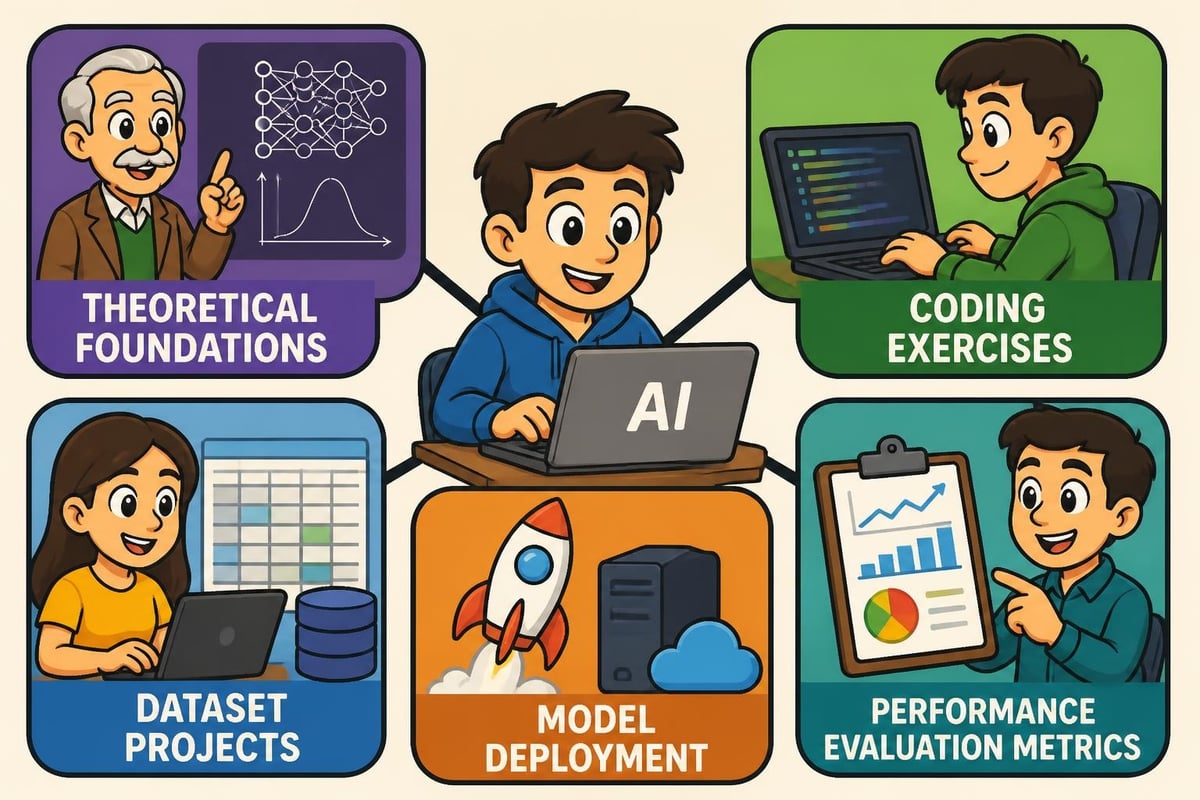
Industry-backed programs have also gained prominence. Google's Machine Learning Crash Course demonstrates how major technology companies structure practical, application-focused curricula with interactive visualizations and real-world case studies.
Key Criteria for Evaluating AI Courses
Not all AI courses deliver equal value. Research published in the International Journal of Educational Technology in Higher Education identifies critical success factors for AI education, including instructor expertise, pedagogical approach, assessment quality, and community support.
Essential evaluation criteria include:
- Curriculum depth: Does the course cover fundamental concepts like neural networks, optimization algorithms, and model evaluation thoroughly?
- Practical application: Are students building real models with actual datasets, not just theoretical exercises?
- Industry relevance: Does the content reflect current practices, tools, and frameworks used in production environments?
- Learning support: What resources exist for struggling students-office hours, forums, project feedback?
- Career outcomes: Can graduates demonstrate measurable skill improvements or career advancement?
The best online courses for AI also address ethical considerations and responsible development practices. UNESCO's guidance on generative AI in education emphasizes the importance of incorporating fairness, transparency, and privacy principles into technical training.
Top AI Course Categories for Different Learning Goals
Foundational Machine Learning Programs
Beginners need courses that build intuition before diving into complex mathematics. The best online courses for AI beginners typically start with supervised learning, progress through unsupervised methods, and conclude with neural network fundamentals.
Fast.ai's Practical Deep Learning for Coders exemplifies this approach, prioritizing hands-on coding and rapid prototyping over extensive mathematical prerequisites. Students build working models in the first lesson, then progressively understand the underlying theory.
| Course Type | Best For | Time Commitment | Prerequisites |
|---|---|---|---|
| Introductory ML | Career switchers | 8-12 weeks | Basic Python |
| Deep Learning Fundamentals | Software engineers | 10-16 weeks | Python, calculus |
| Specialized Domains (NLP, CV) | ML practitioners | 6-10 weeks | ML basics |
| MLOps & Deployment | DevOps engineers | 8-12 weeks | ML + cloud basics |
For professionals seeking no-code AI solutions, platforms now offer visual programming interfaces that allow business analysts and domain experts to build AI applications without extensive coding knowledge.
Specialized Domain Tracks
Once foundational knowledge is established, specialization becomes critical. Stanford's CS224n course on Natural Language Processing provides comprehensive coverage of transformer architectures, attention mechanisms, and large language model fine-tuning-essential skills for the current AI landscape.
Computer vision specialists benefit from courses emphasizing convolutional architectures, object detection, and image segmentation. These programs typically include projects using frameworks like PyTorch and TensorFlow, with datasets ranging from MNIST to ImageNet.
Emerging specialization areas include:
- Reinforcement learning for autonomous systems
- Generative AI and diffusion models
- AI for time series forecasting
- Federated learning and privacy-preserving ML
- AI safety and alignment
MammothClub's comprehensive guide to local large language models demonstrates how specialized courses address specific deployment scenarios and technical constraints that general AI courses may overlook.
Professional Certification Programs
Certifications validate skills for employers and clients. The best online courses for AI that lead to recognized credentials combine comprehensive curricula with standardized assessments.
Industry certifications from major cloud providers have gained significant traction. Azure AI Engineer Associate certification paths prepare learners to design, implement, and monitor AI solutions using Microsoft's cloud infrastructure.
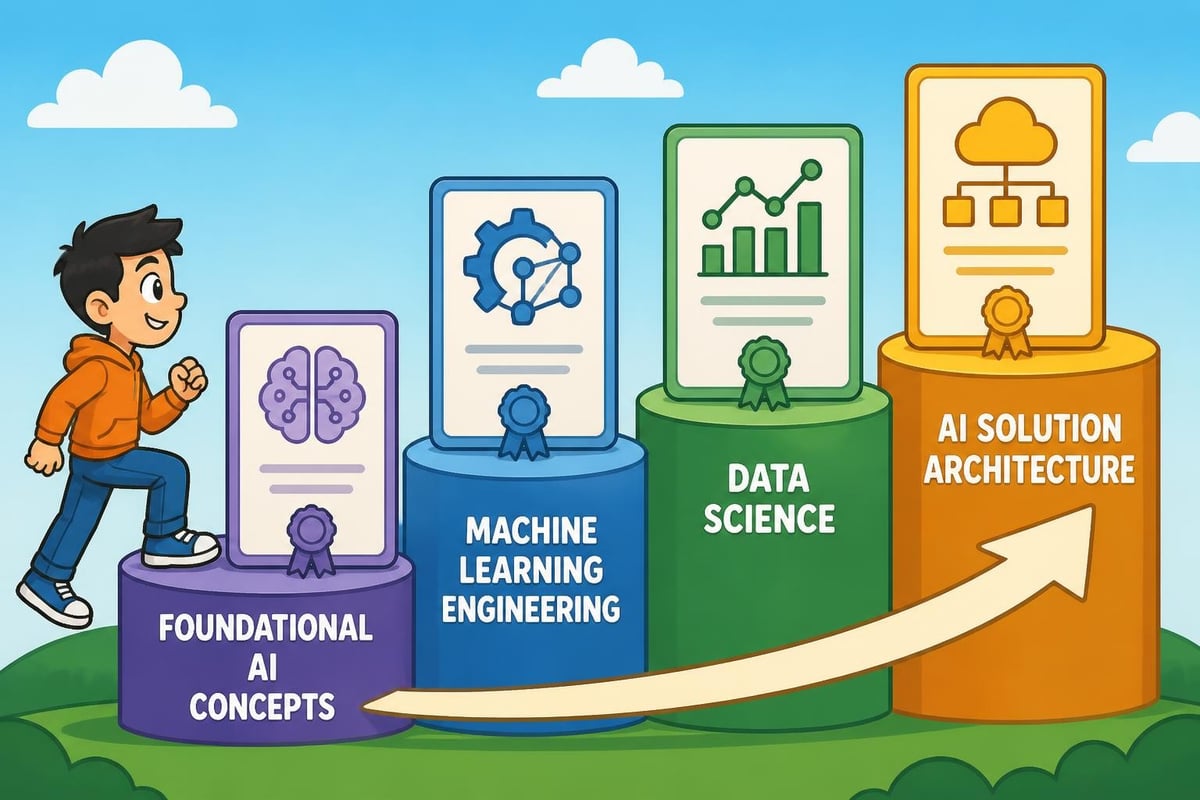
Similarly, NVIDIA AI certifications focus on GPU-accelerated computing, deep learning deployment, and performance optimization-critical skills for production AI systems.
Building an Effective AI Learning Path
Sequencing Your Education
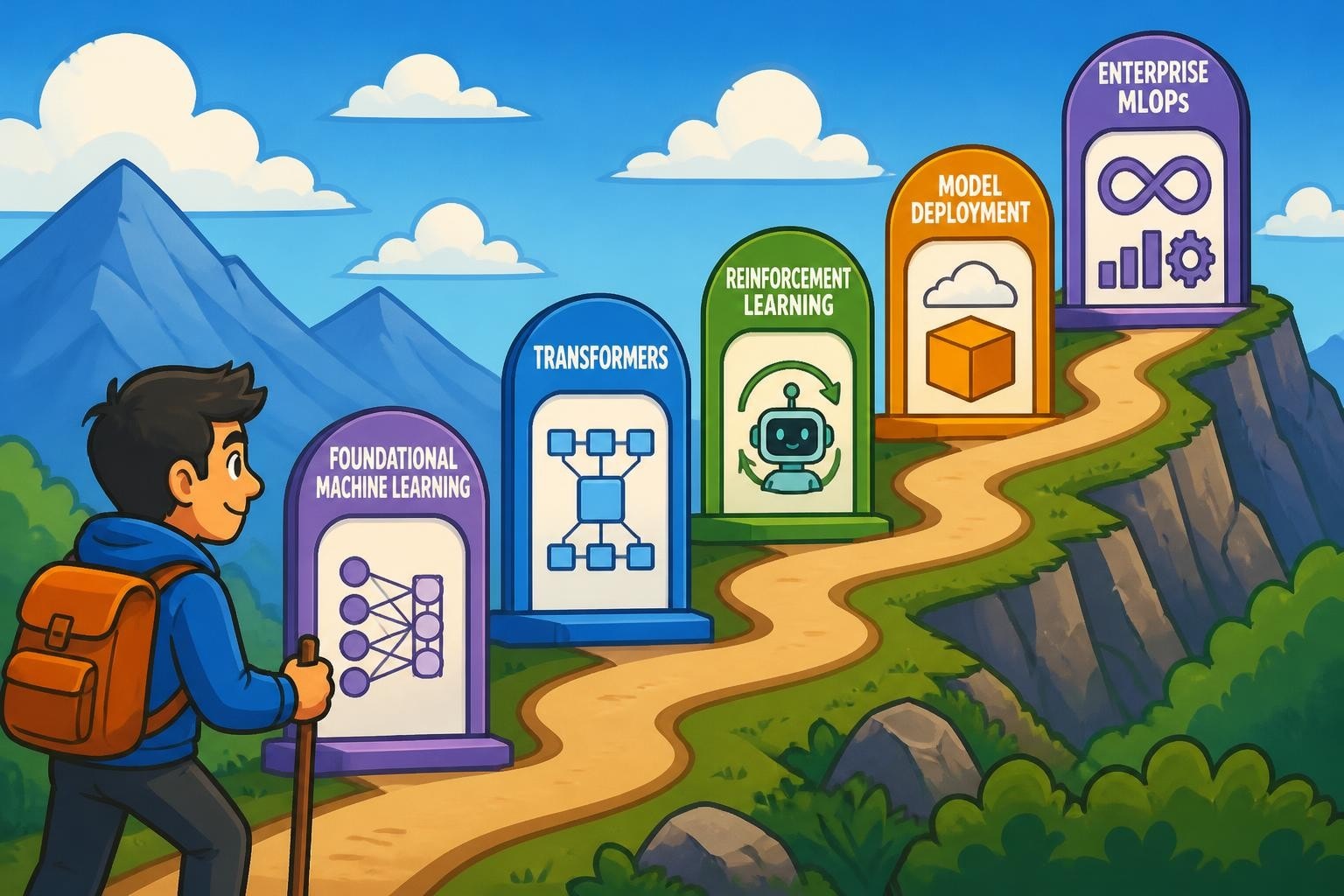
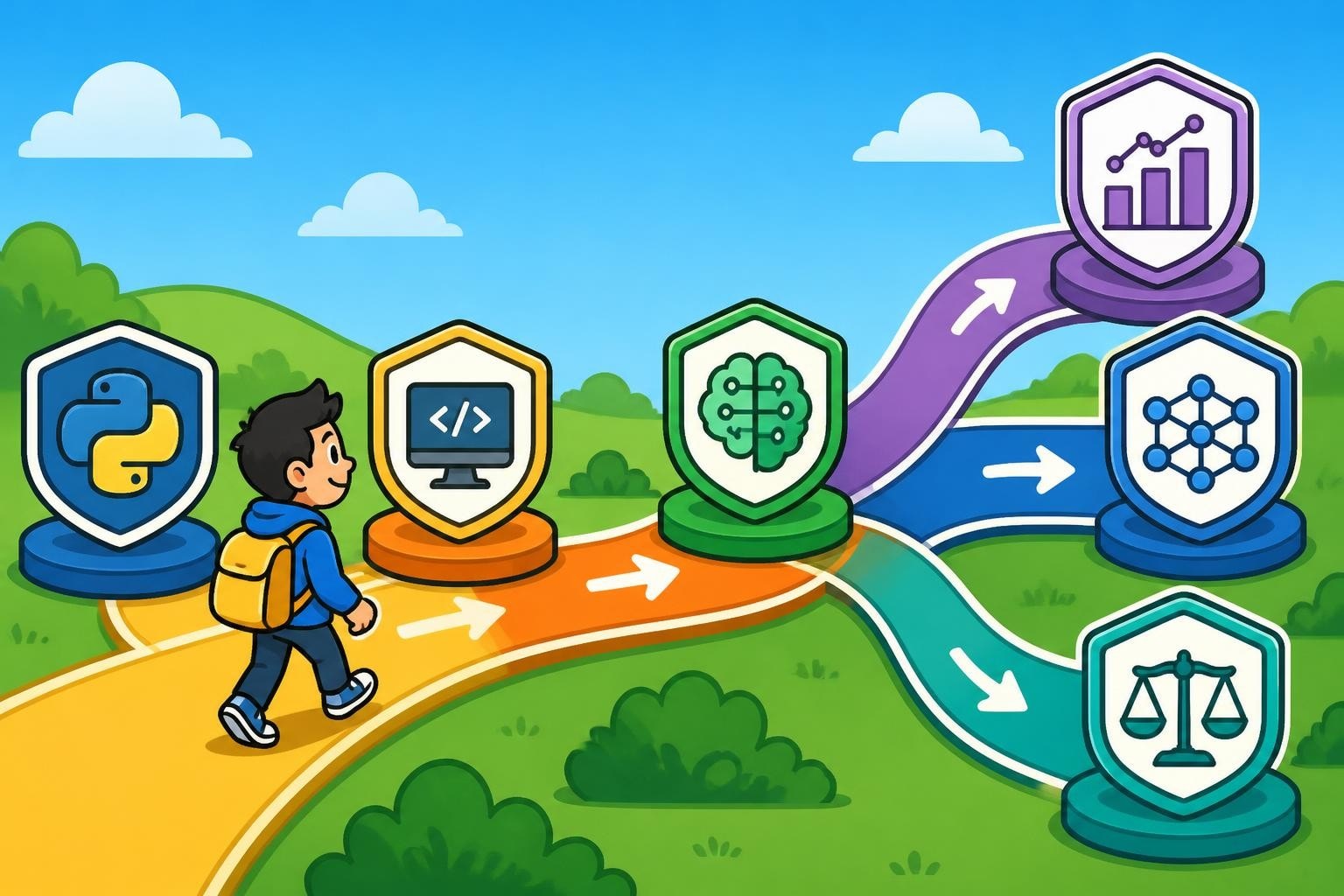
Strategic course sequencing accelerates learning and prevents knowledge gaps. A typical progression begins with Python programming fundamentals, advances through statistics and linear algebra, then tackles machine learning algorithms before deep learning architectures.
Recommended learning sequence:
- Foundation phase (Weeks 1-8): Python, NumPy, Pandas, data visualization, basic statistics
- Core ML phase (Weeks 9-20): Supervised learning, unsupervised learning, model evaluation, feature engineering
- Deep learning phase (Weeks 21-32): Neural networks, CNNs, RNNs, transformers, optimization techniques
- Specialization phase (Weeks 33-44): Domain-specific applications, advanced architectures, research papers
- Production phase (Weeks 45-52): MLOps, deployment, monitoring, scaling, maintenance
This structure allows learners to build conceptual understanding before tackling implementation complexity. Research from systematic reviews on AI in education confirms that scaffolded learning approaches produce better long-term retention and transfer.
Balancing Theory and Practice
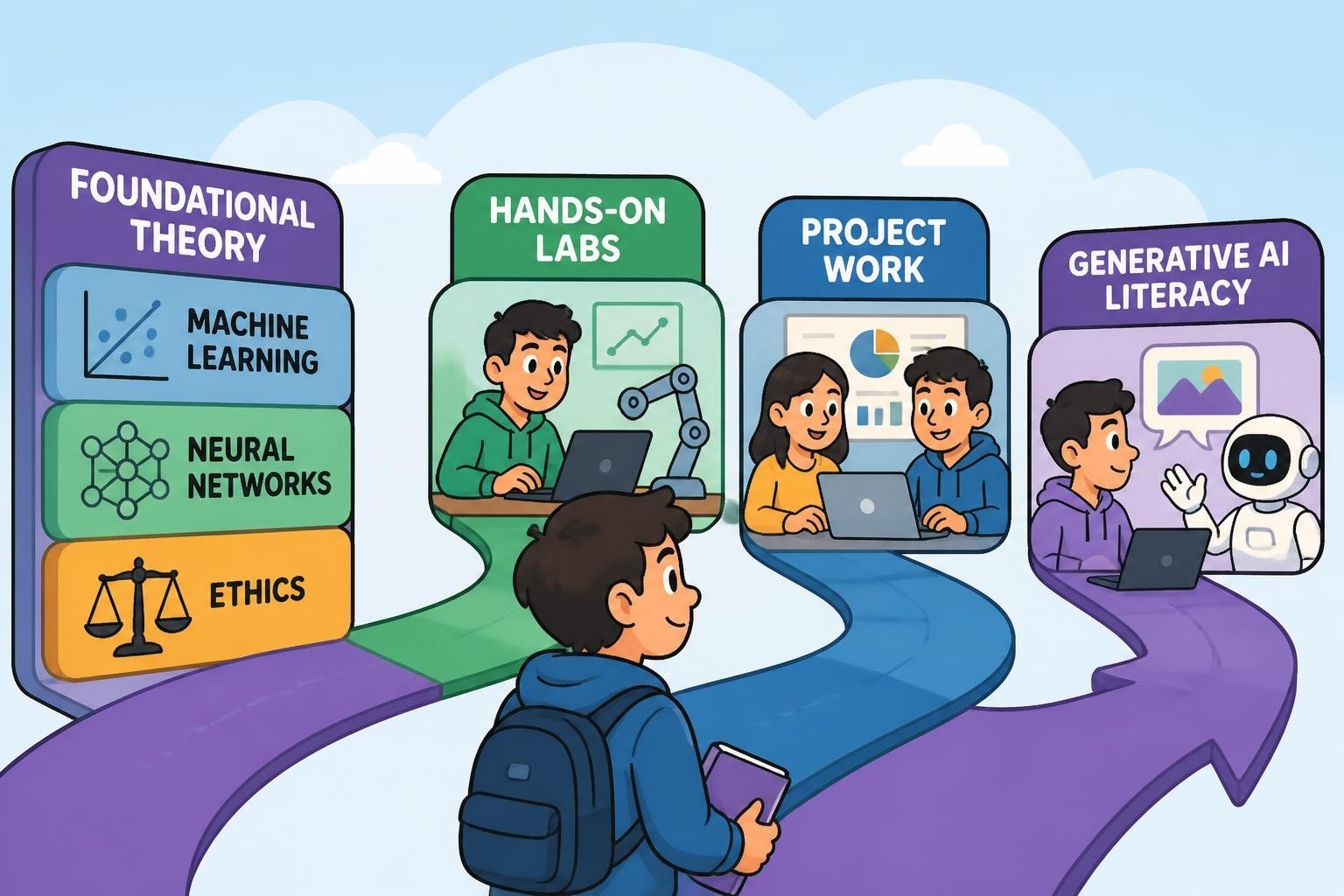
The best online courses for AI integrate theoretical rigor with practical application. Pure theory creates knowledge that doesn't transfer to real problems; pure practice produces solutions without understanding why they work.
Effective courses alternate between concept introduction, mathematical formulation, coding implementation, and project application. For example, a lesson on convolutional neural networks might begin with biological inspiration, progress through mathematical convolution operations, implement layers in PyTorch, then apply the architecture to an image classification task.
| Learning Component | Time Allocation | Purpose |
|---|---|---|
| Video lectures | 25% | Concept introduction and theory |
| Reading/documentation | 20% | Depth and reference material |
| Coding exercises | 30% | Implementation practice |
| Projects | 20% | Integration and application |
| Peer interaction | 5% | Collaboration and feedback |
Platforms like MammothClub emphasize this balance through AI-powered learning tools that adapt content delivery based on individual progress and comprehension patterns.
Leveraging Community and Mentorship
Solo learning has limitations. The best online courses for AI incorporate community features including discussion forums, study groups, code reviews, and mentorship opportunities.
Active communities help learners debug code, understand confusing concepts, and discover new resources. Many successful AI practitioners attribute their growth to peers who challenged their thinking and shared different problem-solving approaches.
Community benefits include:
- Real-time answers to technical questions
- Code review and optimization suggestions
- Career advice from practitioners
- Collaborative project opportunities
- Accountability and motivation
For those exploring responsible AI practices, community discussions provide diverse perspectives on ethical dilemmas that arise when deploying AI systems in sensitive domains.
Domain-Specific AI Course Recommendations
Healthcare and Life Sciences
AI applications in healthcare require specialized knowledge beyond general machine learning. Courses focused on medical imaging, drug discovery, and clinical decision support systems address unique challenges including regulatory compliance, data privacy, and interpretability requirements.
AI in drug discovery courses cover molecular property prediction, protein structure analysis, and generative chemistry-skills that combine biology domain knowledge with cutting-edge AI techniques.
Healthcare AI courses must emphasize:
- HIPAA compliance and data security
- Interpretable models for clinical decision support
- Handling imbalanced datasets (rare diseases)
- Integration with electronic health records
- Regulatory approval processes (FDA, EMA)
Finance and Trading
Financial institutions increasingly rely on AI for risk assessment, fraud detection, algorithmic trading, and customer service. The best online courses for AI in finance combine quantitative finance principles with machine learning techniques.
AI trading courses teach time series forecasting, sentiment analysis of market news, portfolio optimization, and backtesting strategies. These programs often require understanding of financial instruments, market microstructure, and regulatory constraints.
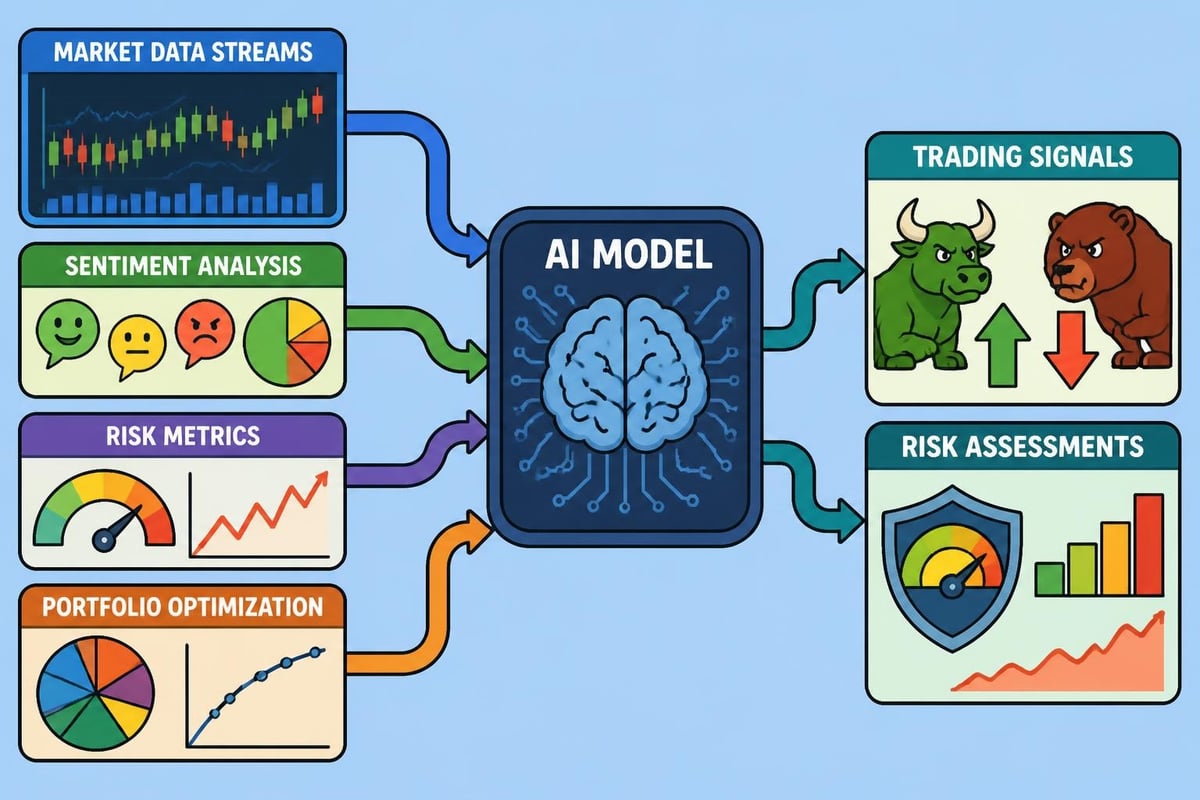
Financial AI courses should address:
- Time series analysis and forecasting
- Anomaly detection for fraud prevention
- Natural language processing for news and reports
- Reinforcement learning for portfolio management
- Regulatory compliance and model explainability
Marketing and Business Applications
Marketing professionals need AI skills tailored to customer segmentation, personalization, content optimization, and campaign performance prediction. AI in digital marketing courses focus on practical applications that drive business outcomes rather than pure technical depth.
These courses typically cover:
- Customer lifetime value prediction
- Recommendation systems
- A/B testing and experimentation
- Natural language generation for content
- Computer vision for visual content analysis
Business-focused AI education emphasizes ROI measurement, stakeholder communication, and integration with existing marketing technology stacks.
Advanced Learning Strategies for AI Mastery
Project-Based Learning Approaches
Building real projects accelerates skill development beyond passive content consumption. The best online courses for AI incorporate capstone projects that simulate actual industry challenges with messy data, unclear requirements, and performance constraints.
Effective projects include:
- Dataset creation: Collecting and cleaning data from APIs or web scraping
- Model development: Experimenting with different architectures and hyperparameters
- Performance optimization: Improving accuracy, speed, or resource efficiency
- Deployment: Making models accessible via APIs or web interfaces
- Monitoring: Tracking model performance and data drift over time
Students who complete substantial projects develop portfolio pieces that demonstrate capabilities to potential employers. These projects also reveal knowledge gaps that aren't apparent from completing isolated exercises.
Staying Current with Research
AI evolves rapidly, with significant breakthroughs published monthly. The best online courses for AI teach not just current techniques but also how to consume research papers, evaluate new methods, and integrate innovations into existing systems.
Research literacy skills include:
- Reading academic papers efficiently (abstract, conclusions, methods)
- Implementing algorithms from paper descriptions
- Evaluating claims through replication studies
- Identifying practical applications of theoretical work
- Contributing to open-source implementations
Advanced learners often supplement courses with reading groups, arXiv subscriptions, and conference attendance (virtual or in-person) to maintain cutting-edge knowledge.
Building Production-Ready Skills
Academic exercises differ substantially from production systems. Courses that prepare students for industry careers incorporate MLOps practices, including version control for models, automated testing, continuous integration/deployment, and monitoring infrastructure.
Production-focused curricula cover:
- Experiment tracking: Using tools like MLflow or Weights & Biases
- Model versioning: Managing different model iterations and datasets
- Deployment options: Cloud services, edge devices, on-premise servers
- Performance monitoring: Detecting accuracy degradation and data drift
- A/B testing: Safely rolling out new models to production traffic
Understanding GPU infrastructure for AI training becomes essential when scaling models beyond laptop development to production workloads.
Corporate AI Training Programs
Team Upskilling Strategies
Organizations face unique challenges when building AI capabilities across teams. The best online courses for AI at the enterprise level offer cohort-based learning, custom content integration, and progress dashboards for training managers.
Successful corporate AI programs include:
- Role-based learning paths: Different curricula for data scientists, engineers, and business analysts
- Internal use case integration: Applying course concepts to company-specific challenges
- Collaborative projects: Cross-functional teams working on actual business problems
- Executive education: Leadership training on AI strategy and governance
- Certification tracking: Validating skills and measuring program ROI
MammothClub's corporate certification programs provide customized learning paths with AI-powered dashboards that help organizations measure training effectiveness and skill development across hundreds or thousands of employees.
Measuring Training Effectiveness
Organizations investing in AI education need metrics beyond course completion rates. Effective measurement systems track skill acquisition, project outcomes, and business impact.
| Metric Category | Example Measures | Collection Method |
|---|---|---|
| Engagement | Completion rate, time spent, forum participation | LMS analytics |
| Knowledge | Assessment scores, certification pass rate | Testing platforms |
| Application | Projects completed, models deployed | Portfolio review |
| Business Impact | Revenue from AI features, cost savings | Business analytics |
Regular skill assessments identify knowledge gaps and inform curriculum updates, ensuring training investment delivers measurable returns.
Building Internal AI Communities
Beyond formal courses, successful organizations foster internal AI communities where practitioners share learnings, troubleshoot challenges, and collaborate on innovations. These communities accelerate knowledge transfer and prevent duplicated effort.
Internal communities typically include:
- Regular tech talks and paper reading groups
- Shared repositories of code and models
- Internal conferences or demo days
- Mentorship programs pairing experienced and new AI practitioners
- Cross-team collaboration on common infrastructure
Choosing the Right Course for Your Goals
Assessing Your Current Skill Level
Accurately evaluating your starting point prevents frustration from courses that are too advanced or boredom from courses that are too basic. Most platforms offer diagnostic assessments or prerequisite checklists to guide course selection.
Self-assessment questions:
- Can you write Python functions and classes comfortably?
- Do you understand matrix operations and basic calculus?
- Have you worked with data using Pandas or similar libraries?
- Can you explain supervised vs. unsupervised learning?
- Have you trained any machine learning models before?
Honest answers guide you toward foundational AI courses or more advanced specializations depending on your current capabilities.
Aligning Course Selection with Career Goals
Different career paths require different skill combinations. Research scientists need deep theoretical knowledge and publication experience; machine learning engineers need production deployment skills; AI product managers need broad technical literacy with business acumen.
Career path alignment:
- Research scientist: Deep learning theory, mathematics, paper implementation, publishing
- ML engineer: Software engineering, MLOps, deployment, scaling, monitoring
- Data scientist: Statistics, experimentation, visualization, business communication
- AI product manager: Technical breadth, use case identification, stakeholder management
- Domain specialist: Industry knowledge + AI application (e.g., healthcare AI, finance AI)
Platforms offering diverse content libraries like MammothClub allow learners to assemble custom learning paths combining foundational courses with specialized tracks aligned to specific career objectives.
Budget and Time Considerations
The best online courses for AI span wide price ranges from free university content to premium bootcamps costing thousands of dollars. Time commitments vary from self-paced programs allowing years to complete to intensive bootcamps demanding 60+ hours weekly.
Program type comparison:
- Free university courses: Zero cost, self-paced, no support, academic focus
- Platform subscriptions: $30-100/month, self-paced, community support, practical focus
- Bootcamps: $5,000-20,000, 12-24 weeks, intensive support, career services
- Corporate programs: Varies, customized timing, team-based, business alignment
- Degree programs: $10,000-100,000+, 1-3 years, comprehensive, academic credentials
Budget-conscious learners can combine free resources with affordable platform subscriptions, gradually building skills before considering expensive bootcamps or degrees. Time-constrained professionals benefit from modular courses allowing progress in small increments rather than requiring large continuous blocks.
Selecting the best online courses for AI requires matching curriculum quality, learning format, and specialization focus with your current skills, career goals, and available resources. Whether you're beginning your AI journey, deepening technical expertise, or building organizational capabilities, the right educational pathway accelerates progress from theoretical understanding to practical implementation. MammothClub offers a comprehensive solution with 3,000+ AI and tech courses, interactive bootcamps, and corporate training programs designed to help professionals and teams upskill efficiently with AI-powered learning tools that make training measurable and results-driven.